Navigating the World of Stainless Steel Cookware: Is a 20-Piece Pot Set Worth It?
So, you’re eyeing a shiny new stainless steel pot set, maybe even that comprehensive 20-piece stainless steel cookware set you’ve seen touted for professional kitchens. It’s a big investment, no doubt, and figuring out if it’s the right move for your kitchen can feel like a whole culinary project in itself. This guide cuts through the marketing fluff, helping savvy shoppers understand what really matters when weighing the value of a substantial stainless steel pot set. We’ll explore if those larger collections truly deliver on their promise, especially with features like 3-ply stainless steel frying pans and induction compatibility.
Quick Answer Box:
For many home cooks, a robust 20-piece stainless steel pot set can be a significant upgrade, offering versatility and durability that pays dividends over time. The “worth it” factor largely hinges on your cooking frequency, kitchen space, and how much you value features like even heat distribution and professional-grade performance. If you regularly cook varied meals and appreciate longevity, such a comprehensive stainless steel cookware set often justifies its position in your kitchen.
What to Look For (The Buying Criteria)
Buying a stainless steel pot set isn’t just about grabbing the biggest box on the shelf. It’s about making an informed decision that’ll serve your cooking habits for years. There are a few crucial factors often overlooked, but they make all the difference.
-
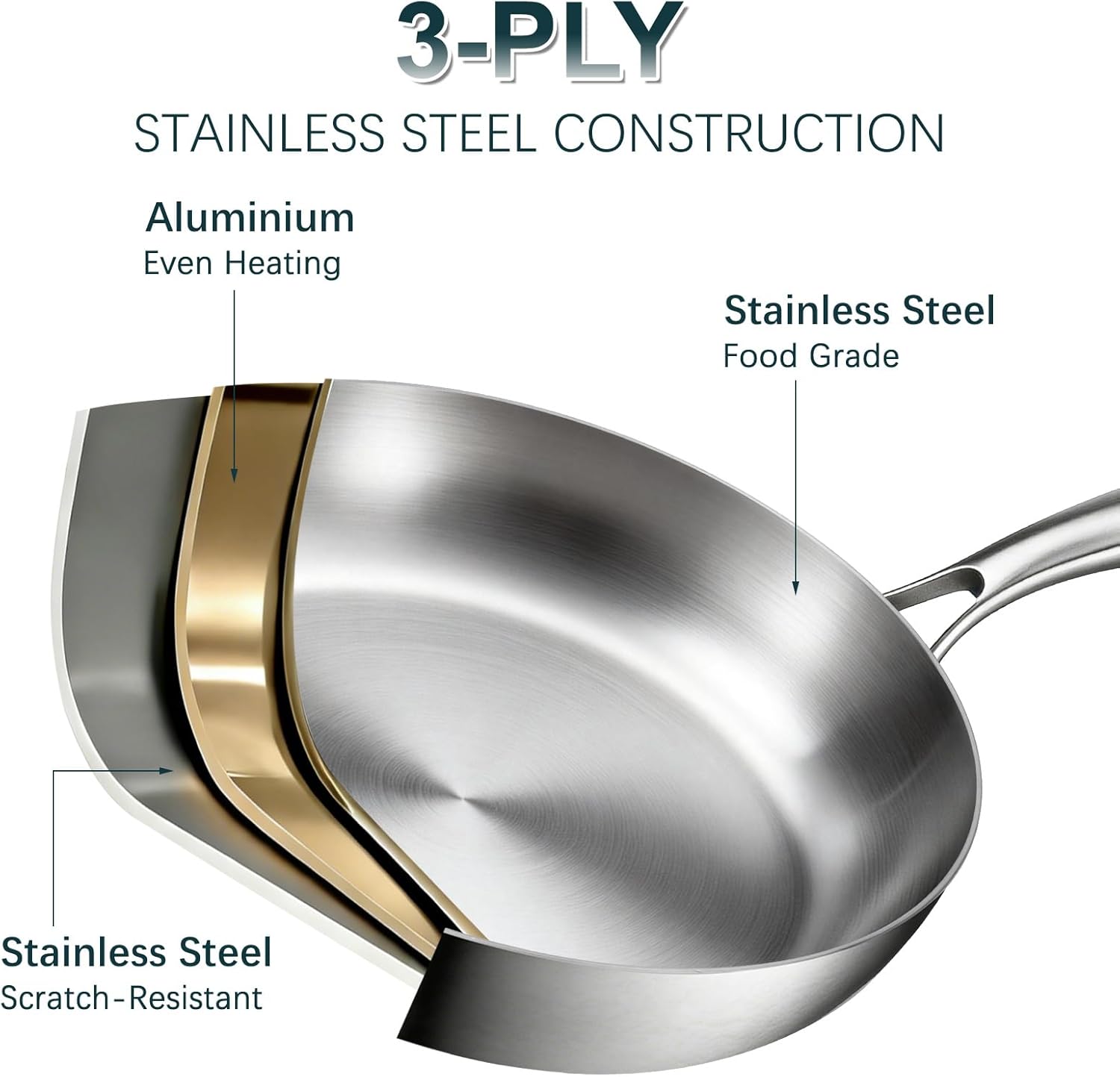
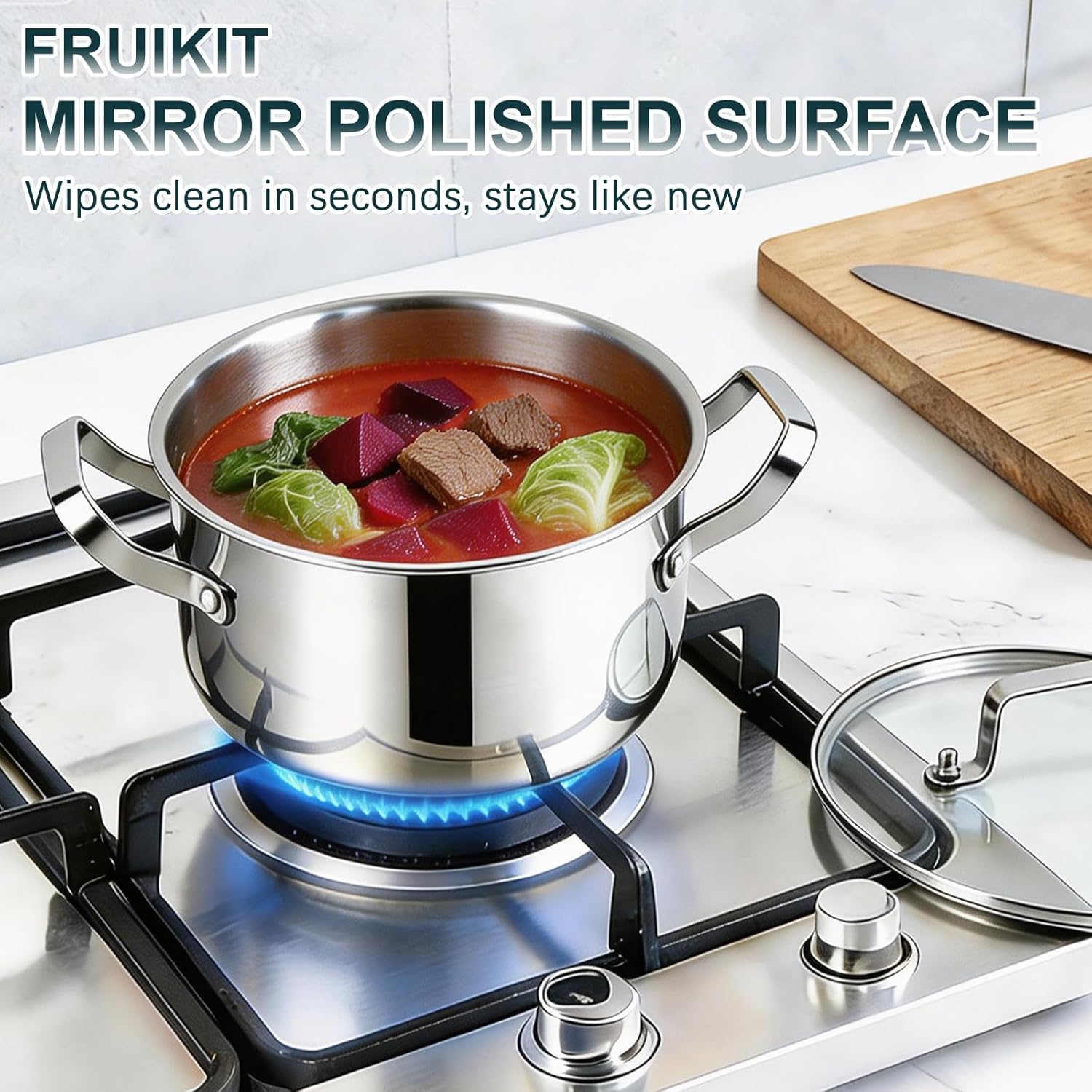
Construction Quality (Especially Tri-Ply or Multi-Clad): This is paramount, honestly. A good stainless steel pot set isn’t just stainless steel all the way through; that’d be terrible for even heating. Look for 3-ply stainless steel or multi-clad construction. This means a core of aluminum or copper sandwiched between layers of stainless steel. Aluminum offers fantastic heat conductivity, spreading warmth rapidly and uniformly across the entire cooking surface. Copper? Even better at heat transfer, though often driving up the cost. Without this layering, you’re stuck with hotspots, which translates to uneven cooking and constant stirring. That’s just a recipe for frustration. The downside? These layered pieces are usually heavier and can be pricier. You can also find impact-bonded bases, where the aluminum disc is only at the bottom; these are usually less expensive but don’t give you the same edge-to-edge heating.
-
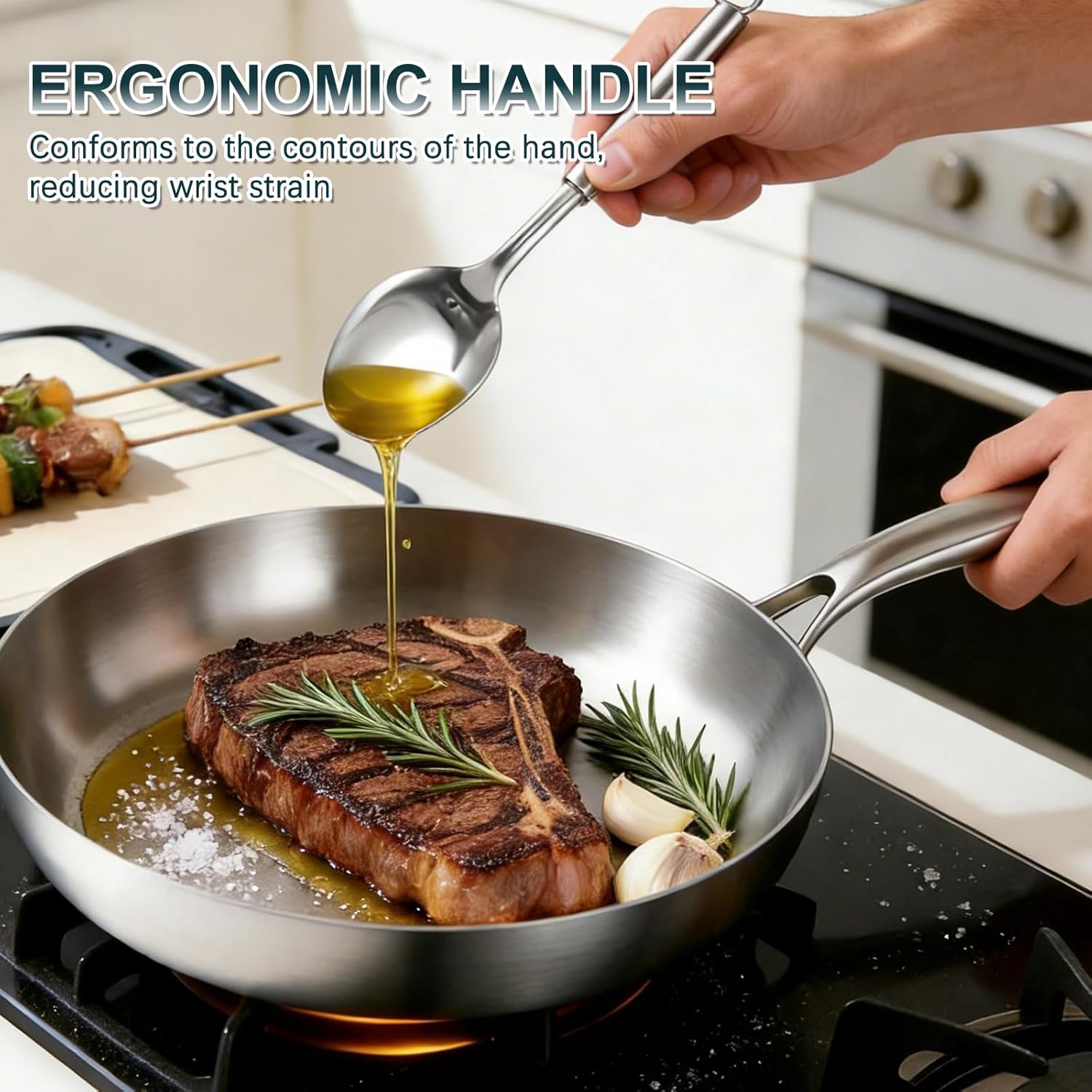
Ergonomics and Handle Design: Think about how you actually use cookware. Do the handles feel good in your hand? Are they riveted securely, or just spot-welded? Riveted handles are generally more durable, less prone to loosening over time, and handle heavy pots better. Cheap handles can get surprisingly hot, making oven mitts a constant necessity, even on the stovetop. Some handles are hollow or designed to stay cooler. This isn’t just a comfort thing; it’s a safety feature. Nobody wants to grab a screaming hot handle by accident. But a super cool handle might mean it’s less sturdy or more complex to clean, a minor trade-off perhaps.
-
Lid Fit and Material: Lids might seem trivial, but they play a big role. A snug-fitting lid locks in moisture and heat, crucial for simmering, steaming, or just keeping food warm. Glass lids let you peek without releasing steam, which is convenient, but they’re also more fragile than stainless steel lids. Metal lids, while opaque, tend to be more durable and can withstand higher oven temperatures. A poorly fitting lid just lets all the good stuff escape. You want something that feels substantial, not flimsy. Sometimes glass lids get cloudy or etched over time in the dishwasher, too. Just a thought.
-
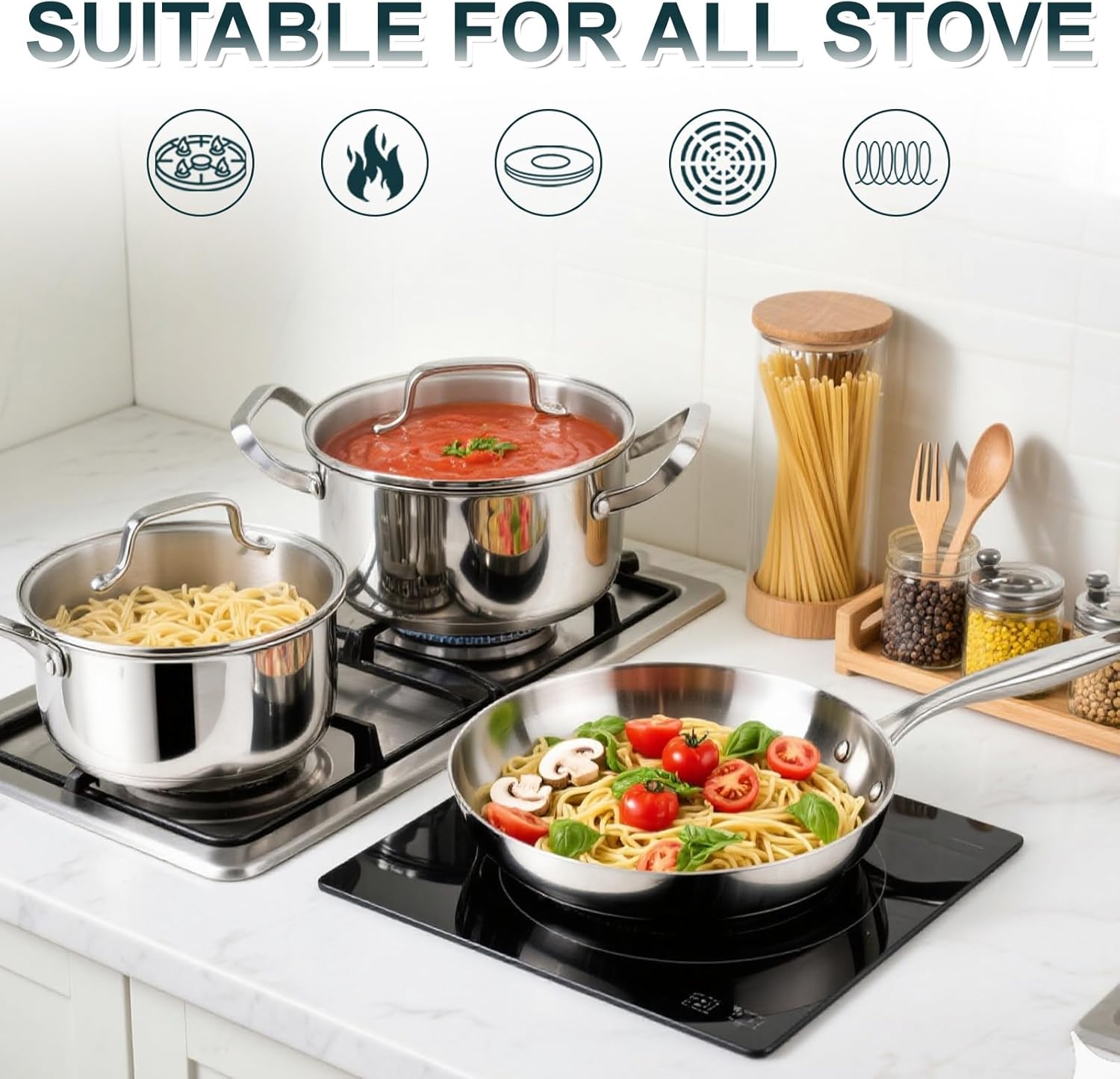
Induction Compatibility and Oven Safety: Most modern kitchens, or future ones you might move to, often feature induction cooktops. If your stainless steel pot set isn’t induction compatible, you’re limiting its future usefulness. This means the base needs a magnetic layer. Similarly, check for oven safe temperatures. A set designed to go from stovetop to oven without a hitch, perhaps for finishing a dish or keeping it warm, offers incredible versatility. Think about those recipes that start on the hob and end in the oven. Not all handles, especially those with plastic components, are built for high oven heat. Always double-check the temperature limits. A 20-piece set that boasts this versatility? That’s a strong selling point.
-
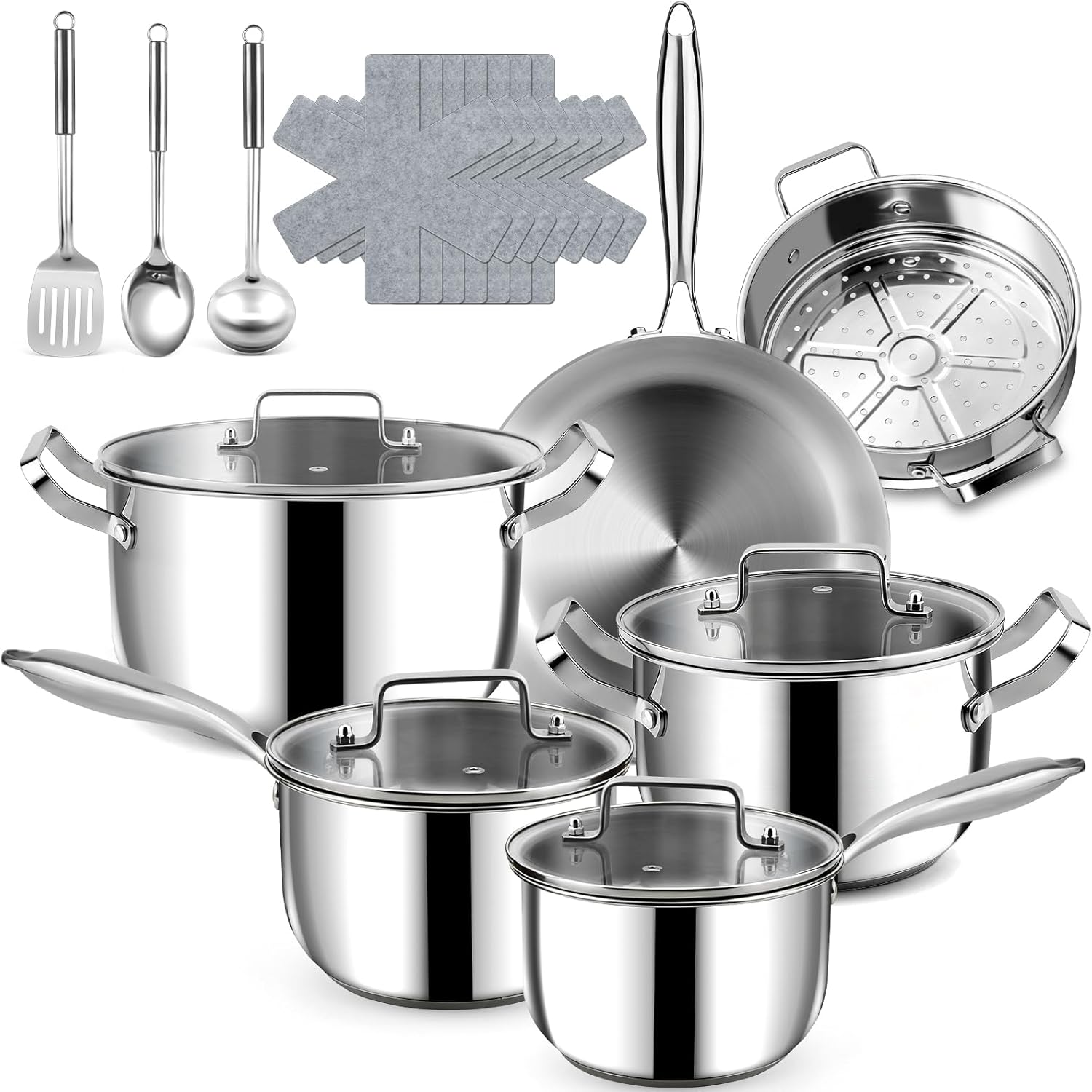
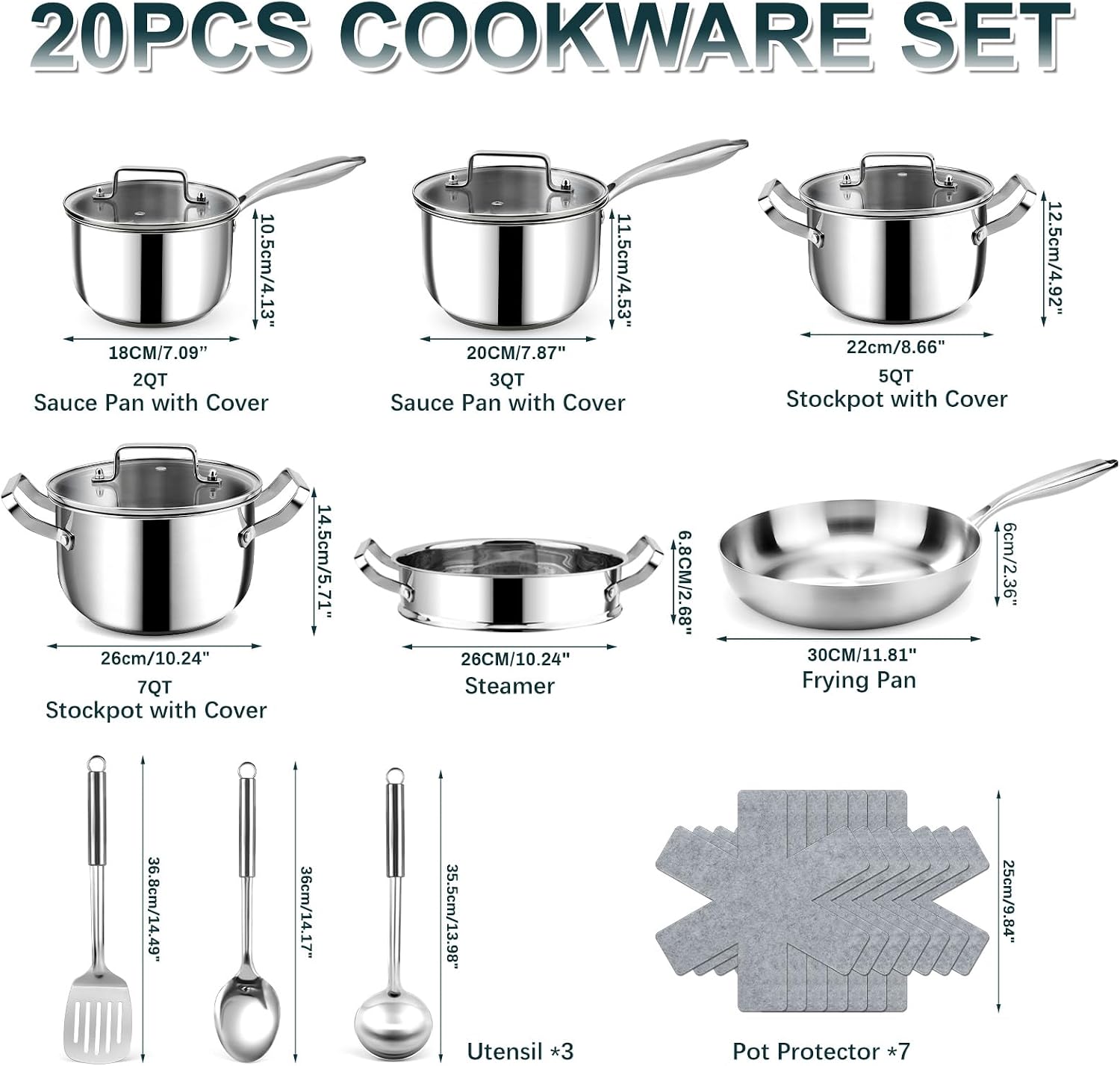
Set Composition and Practicality: A “20-piece set” sounds impressive, right? But what’s actually in it? Is it 20 useful pieces, or a bunch of extra-small measuring cups and serving utensils that inflate the count? Look for a good range of saucepans, a stockpot, a sauté pan, and at least one quality 3-ply stainless steel frying pan. Do you really need four tiny saucepans and a steamer insert you’ll use once a year? Consider what you actually cook. A huge set takes up a ton of storage, and if half of it just gathers dust, well, that’s not exactly practical, is it? Sometimes a smaller, curated set of, say, 7-10 essential pieces offers more actual value than a sprawling collection with too many niche items.
-
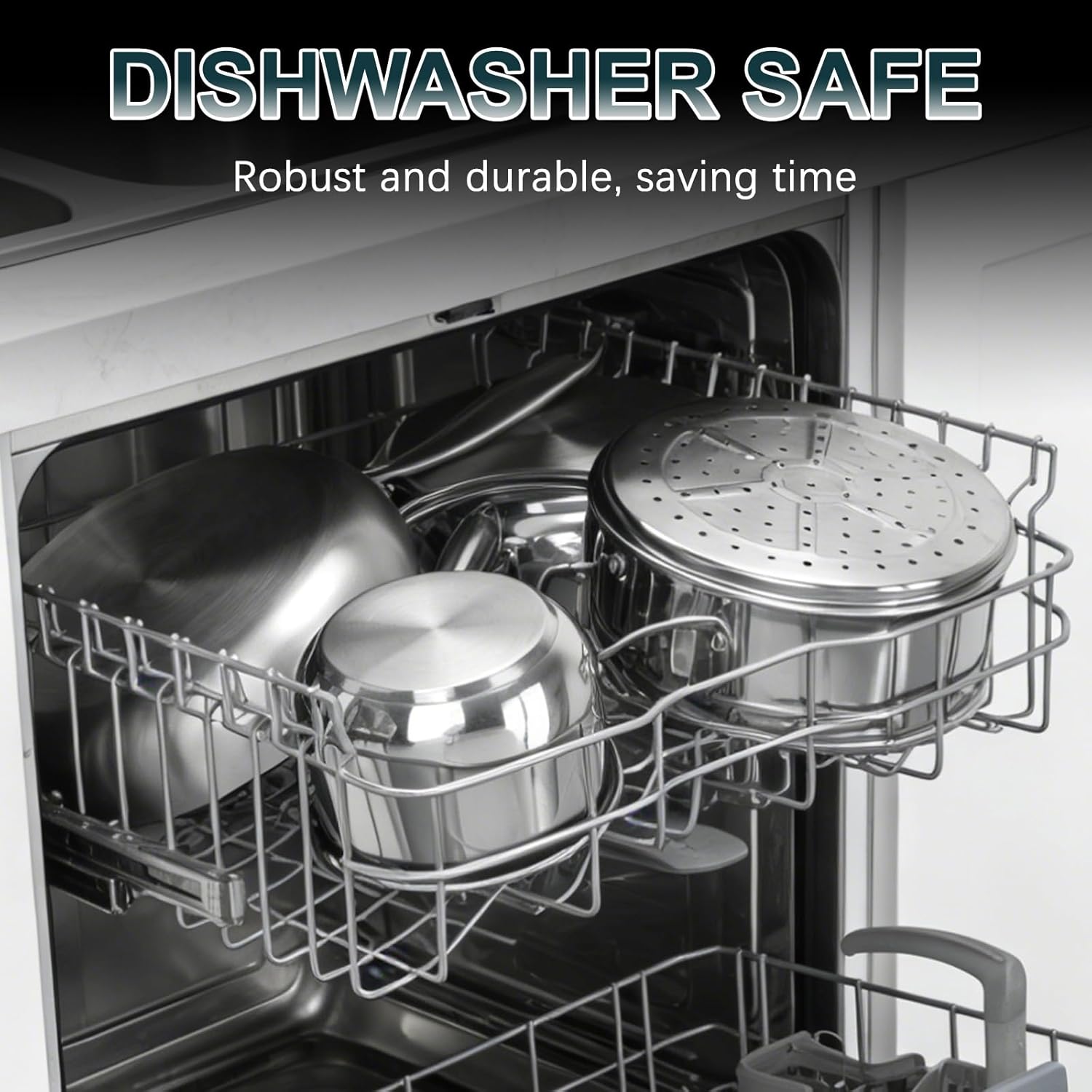
Ease of Cleaning and Maintenance: A big plus for stainless steel cookware is its general resilience. Many sets claim to be dishwasher safe, which is a huge convenience. However, sometimes harsh detergents can cause discoloration over time, or stubborn food residue still requires a good hand scrub. While stainless steel is less reactive than, say, copper, it can still stick, especially if not preheated properly. Look for smooth interiors with no hard-to-reach crevices where food can get trapped. Proper care will extend its life, so be prepared for some elbow grease now and then, even with high-end pieces. This isn’t a non-stick situation, after all.
How to Match the Product to Your Situation
Buying a comprehensive stainless steel pot set isn’t a one-size-fits-all deal. Your cooking habits, kitchen setup, and even your lifestyle play a huge role in determining which type of set will actually serve you well. Here are a few common scenarios to help you figure it out.
-
The Aspiring Home Chef (and Occasional Entertainer): You enjoy cooking most nights. Maybe you experiment with new recipes, try different cuisines, and occasionally host dinner parties where multiple dishes are on the go. You appreciate quality tools that perform consistently. For you, a professional kitchen cooking set boasting 3-ply or multi-clad construction across all its pieces is probably a smart move. The even heat distribution will save you headaches, and the durability means these pots and pans will withstand frequent use. A 20-piece stainless steel cookware set might actually be appropriate here, ensuring you have the right vessel for every culinary task, from a small saucepan for sauces to a large stockpot for soups or pasta. You’re thinking long-term investment, not just a quick purchase.
-
The Everyday Family Cook (Seeking Reliability): Your kitchen is a busy hub. Meals are often prepared for a family, sometimes batch cooking for the week. You need reliable, sturdy cookware that can handle daily wear and tear, go in the dishwasher, and doesn’t demand overly delicate handling. You prioritize practicality and durability over absolute top-tier performance on every single piece. A mid-range stainless steel pot set with good quality, perhaps 3-ply bases but not necessarily full multi-clad walls, could be your sweet spot. Focus on a practical selection of sizes that fit your family’s needs – maybe two frying pans, a few saucepans, and a decent stockpot. You likely won’t need every single item in a 20-piece collection, so a slightly smaller, more focused set might offer better value for your budget and storage space. Induction compatibility is probably a must for future-proofing.
-
The Space-Conscious Urban Dweller (Or Beginner): Maybe you have a smaller kitchen, or you’re just starting out and don’t cook elaborate meals every single day. Storage is a premium, and you don’t want a colossal set taking over your limited cabinet space. You still want the benefits of stainless steel – durability, non-reactivity, oven safety – but without the bulk and perhaps the higher price tag of a sprawling collection. For you, a smaller, essential stainless steel pot set is the way to go. Think 5-8 core pieces: one or two saucepans, a frying pan, and a versatile stockpot. While the idea of a 20-piece set is alluring, consider if you truly have the room, or if you’ll end up frustrated by clutter. You can always add specialty pieces later as your cooking habits evolve. Durability is still key, but perhaps a budget-friendly option with sturdy construction will suffice until you’re ready for a bigger commitment.
Comparing Stainless Steel Cookware Tiers
When you start digging into stainless steel pot sets, you’ll quickly notice price tags swinging wildly. This usually reflects the construction method, brand reputation, and overall finish. Knowing these tiers helps you decide where to put your hard-earned cash.
| Type/Tier | Best For | Price Tier | Key Feature | Watch-Out
| Type/Tier | Best For
| Type/Tier | Best For New All-Clad (All-Clad D3, D5, D7 or similar tier) | Serious home cooks, professionals, those prioritizing absolute best performance and durability. | Premium | Full 5-ply (or more) construction from rim to rim; often features specialized handles designed to stay cool. | Substantial weight, higher initial cost; some users might find handle designs less comfortable than others. |
| Mid-Range Tri-Ply | Enthusiastic home cooks, families, those seeking a balance of performance, durability, and value. | Mid-range | 3-ply disc-bonded base or full 3-ply construction on essential pieces, like the main frying pan and saucepans. | May not have the same uniform heat up the sides as full multi-clad across all pieces; some sets might include less critical items or slightly thinner gauge steel. |
| Budget Impact-Bonded | Beginners, occasional cooks, those with smaller budgets or limited storage space who still want stainless steel benefits. | Budget-friendly | Stainless steel with an aluminum disc impact-bonded to the bottom for heat conduction. | Prone to hotspots on the sides, can discolor more easily than higher-end pieces, typically lighter gauge materials that might warp under high heat. |
Scenarios for a Comprehensive Stainless Steel Pot Set
Thinking about a stainless steel pot set means thinking about how you’ll really use it. A 20-piece stainless steel cookware set is a commitment, and it needs to earn its keep. Let’s consider where such a large collection shines.
-
The Culinary Project Enthusiast: You’re not just making dinner; you’re creating meals. Maybe you’re brining a chicken, simmering a complex stock, sautéing vegetables for a side, and reducing a sauce all at once. This kind of simultaneous cooking demands multiple pots and pans of varying sizes. A robust set, especially with a solid 3-ply stainless steel frying pan for that perfect sear and a large stockpot for broths, becomes an indispensable arsenal. You won’t be scrambling for another pan or trying to make do with a too-small vessel. It’s about having the right tool for every step of an intricate recipe.
-
Frequent Large Gatherings and Entertaining: If your home is often the central gathering spot for family and friends, you know the struggle of juggling multiple dishes. A big stainless steel pot set lets you prepare a turkey, boil pasta for a crowd, cook a big batch of rice, and keep a side dish warm without running out of suitable cookware. The induction compatible and oven safe features are particularly useful here, allowing you to move items seamlessly from stove to oven for different stages of cooking or for simply keeping food warm until serving. It transforms your kitchen into a more efficient, less chaotic space during those high-pressure cooking moments. This is where a big set really justifies itself.
-
Kitchen Renovation or Complete Overhaul: Starting fresh? Or maybe you’ve just inherited a mish-mash of ancient, mismatched cookware? A 20-piece stainless steel cookware set can be a foundational purchase. It provides a cohesive, uniform look and consistent cooking performance across all your pieces. Instead of buying individual items and worrying about material compatibility or handle differences, you get a full suite designed to work together. This is especially true if you’re upgrading to an induction stovetop. Getting a whole new stainless steel pot set at once ensures everything is ready to go, from the smallest saucepan to the largest roaster. You save yourself the hassle of piecing it together over time.
Common Mistakes When Buying Stainless Steel Cookware
People often trip up when choosing a new stainless steel pot set. It’s easy to get caught in marketing speak or overlook some practical realities. Here are a few blunders I’ve seen folks make time and again.
-
Prioritizing Quantity Over Quality: It’s tempting, isn’t it? That huge 20-piece stainless steel cookware set for a suspiciously low price. But often, those massive sets skimp on the critical elements, like proper 3-ply stainless steel construction. You end up with a lot of cheap, thin pots that scorch easily and don’t last. A smaller, well-constructed set of 7-10 pieces from a reputable manufacturer will outperform a huge, flimsy collection every single time. It’s about getting good tools, not just many tools. Seriously, I’ve seen people spend way too much on features they never use, or on pieces that just don’t perform.
-
Ignoring Weight and Balance: Stainless steel can be heavy, especially multi-clad pieces. Many buyers don’t actually pick up and feel the pots before committing. A heavy stockpot filled with liquid can be genuinely difficult, even dangerous, to maneuver if the handles are poorly balanced or too small. You need to consider who will be using the cookware. A lightweight pan might seem appealing initially, but it’s often a sign of thinner, less effective metal that won’t hold heat as well. There’s a sweet spot. Don’t underestimate how important that feel in your hand is.
-
Forgetting About Storage: A 20 PCS Pots and Pans Set sounds fantastic until you try to fit it into your existing kitchen cabinets. Many people fall in love with the idea of a comprehensive collection but entirely overlook the practicalities of storage. Will they nest properly? Do you have enough space for a big stockpot and a professional kitchen cooking set’s worth of frying pans and saucepans? If your kitchen is compact, a huge set will quickly become a source of frustration, not joy. You might find yourself storing seldom-used items in the garage, which defeats the purpose of having them readily available.
-
Expecting Non-Stick Performance: This is a big one. Stainless steel, by its nature, is not non-stick. You can achieve excellent non-stick-like results with proper technique – preheating, using enough fat, and not overcrowding the pan – but it’s not the same as a coated non-stick frying pan. People get frustrated when their eggs stick, blame the pan, and revert to inferior cookware. Understand that stainless steel is for browning, searing, and developing fond (those delicious browned bits at the bottom of the pan), not for flipping delicate pancakes without a care. It requires a different approach, a little learning curve, but the results are worth it.
Why, How, What: Unpacking Your Stainless Steel Cookware Set
Curiosity about your kitchen gear is a good thing. Let’s tackle some fundamental questions about a stainless steel pot set.
-
Why choose stainless steel over other materials?
Stainless steel is incredibly durable, non-reactive to acidic foods (unlike aluminum or cast iron), and it cleans up fairly well. It’s also generally oven and dishwasher safe, which is a massive convenience for busy households. Unlike non-stick coatings, it won’t scratch or degrade with high heat, making it a long-term investment. It’s a workhorse, plain and simple. -
How does 3-ply construction make a difference in a frying pan?
The 3-ply stainless steel frying pan is designed for superior heat distribution. The inner layer of aluminum or copper rapidly conducts heat from the burner across the entire bottom and up the sides of the pan. This eliminates hot spots, so your food cooks evenly, preventing burning in one spot while another remains undercooked. It’s about control and consistency. -
What does “induction compatible” really mean for a stainless steel pot set?
“Induction compatible” means the base of the cookware has magnetic properties, typically through a layer of magnetic stainless steel. Induction cooktops work by creating an electromagnetic field that directly heats the pot itself, rather than heating a burner which then heats the pot. Without that magnetic base, your fancy new stainless steel pot set just won’t work on an induction hob. So, if you have or plan to get one, this feature is non-negotiable.
FAQ
Q: Is a 20-piece stainless steel pot set too much for a small kitchen?
A: Honestly, probably. A 20-piece set takes up a lot of space. If your kitchen is small, you’re better off with a curated set of essential pieces, perhaps 7-10 items, focusing on quality and versatility. You can always add specialty items later as needed.
Q: Can I use metal utensils on stainless steel cookware?
A: Yes, generally! One of the big advantages of stainless steel is its durability. You can typically use metal spatulas and spoons without worrying about scratching or damaging the cooking surface, unlike with non-stick coatings. Just avoid anything super abrasive like steel wool for routine cleaning, as it can scratch the finish.
Q: How do I prevent food from sticking to my stainless steel frying pan?
A: The key is proper preheating and enough fat. Heat the pan over medium heat for a minute or two, add oil or butter, and let it shimmer before adding food. If the pan isn’t hot enough, food will bond with the surface. Don’t overcrowd the pan either.
Q: Is stainless steel cookware safe for my health?
A: Yes, it’s considered very safe. Stainless steel is non-reactive, meaning it won’t leach chemicals or metallic tastes into your food, even with acidic ingredients. It’s a stable, inert material often preferred by professional chefs for its reliability and safety.
Q: Are all stainless steel pot sets induction compatible?
A: No, not all. For a stainless steel pot set to be induction compatible, it must have a magnetic base. Always check the product description for specific mention of “induction compatible” or “induction ready” before purchasing, especially if you have an induction cooktop.
Q: What’s the difference between 3-ply and 5-ply stainless steel construction?
A: Both refer to layers of different metals, typically stainless steel and aluminum/copper, bonded together for heat distribution. 3-ply usually means stainless steel-aluminum-stainless steel. 5-ply simply adds more layers (e.g., steel-aluminum-copper-aluminum-steel), often leading to even better heat conductivity, but also more weight and a higher price. More layers usually mean faster, more responsive heating.
Q: How do I clean burned food from stainless steel pots?
A: Don’t panic! For stubborn burned-on bits, fill the pot with a little water and a few tablespoons of baking soda, bring it to a simmer, then let it cool. The residue should lift easily. A little vinegar can help too. Bar Keepers Friend is also a popular and effective cleaner for stainless steel.
Final Recommendation:
Deciding on a stainless steel pot set ultimately comes down to your cooking ambition and practical needs. If you’re a serious home chef who cooks frequently, entertains often, and values consistent performance across a wide array of cooking tasks, investing in a premium or high-quality mid-range 20 PCS Pots and Pans Set with full multi-clad or strong 3-ply construction from a known brand will absolutely be worth the cost. You’ll appreciate the durability, even heat distribution, and versatility (hello, induction compatible and oven safe). This type of professional kitchen cooking set really is a workhorse, giving you the right tool for almost anything.
However, if you’re an everyday cook, have less storage, or are just starting out, a smaller, focused mid-range stainless steel pot set is probably a smarter choice. Look for essential pieces with solid 3-ply bases, especially for your frying pan. You’ll get the benefits of stainless steel without the overwhelming quantity or hefty price tag that comes with a full 20-piece collection. Remember, value isn’t just about how much you get; it’s about how much you use and how well it performs for your specific situation. Choose wisely.
#Stainless #Steel #Cookware #Set #PCS #Pots #Pans #Set #3Ply #Stainless #Steel #Frying #Pan #Professional #Kitchen #Cooking #Set #Induction #Compatible #Oven #Dishwasher #Safe