Deciding on Dish Towels: Are Premium Kitchen Towels Worth the Investment?
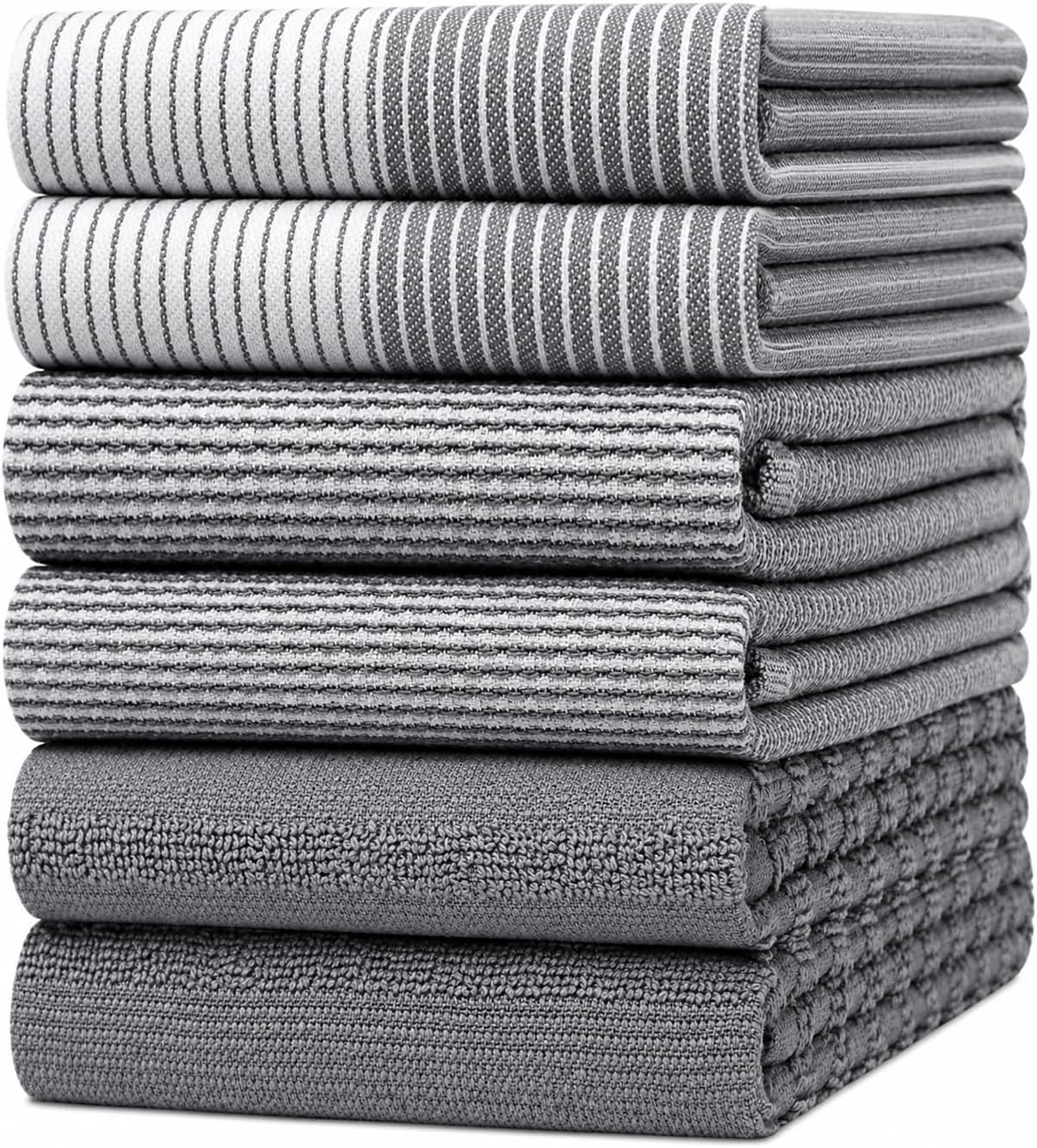
This guide cuts through the fluff to talk straight about kitchen towels, specifically the kind marketed as “premium.” We’re diving into whether a higher-end option, like those 100% cotton, 20″x28″ dish towels often found in sophisticated grey shades, actually makes sense for your home. If you’re tired of grabbing a towel only to find it’s more decorative than functional, or you’re wondering if spending a bit more on your kitchen linen set truly pays off, you’re in the right place. We’ll explore the real value behind highly absorbent, durable dish towels with practical features like hanging loops.
Quick Answer Box:
Premium kitchen towels, especially those made from 100% cotton with a blend of flat and terry weaves, absolutely offer tangible benefits over their cheaper counterparts. While they come with a higher upfront cost, their superior absorbency, durability, and better lint control can justify the investment for daily heavy use, ultimately saving frustration and perhaps even money long-term. For casual users, simpler options might suffice, but anyone regularly tackling kitchen messes will appreciate the upgrade.
What to Look For (The Buying Criteria)
When you’re sifting through endless options for kitchen towels, it’s easy to get lost. Marketing speak often sounds convincing, but what really matters when you’re wiping down counters or drying a delicate glass? We’re talking substance here, things that impact daily kitchen life.
Material Matters — It’s Not Just “Cotton”
Look, “100% cotton” sounds convincing on paper, doesn’t it? But not all cotton is created equal. You’ve got your basic cotton, which can be fine, then you have higher-grade cottons with longer fibers. These longer fibers mean less lint, more strength, and a softer feel right out of the package. A significant factor here is how tightly the cotton is woven; a loose weave means quicker wear and less absorbency, despite being cotton. The tradeoff? Those higher-grade, denser cottons often take longer to dry themselves, which can be a nuisance if you’re rotating through them rapidly.
Weave Type: Flat, Terry, or a Combination?
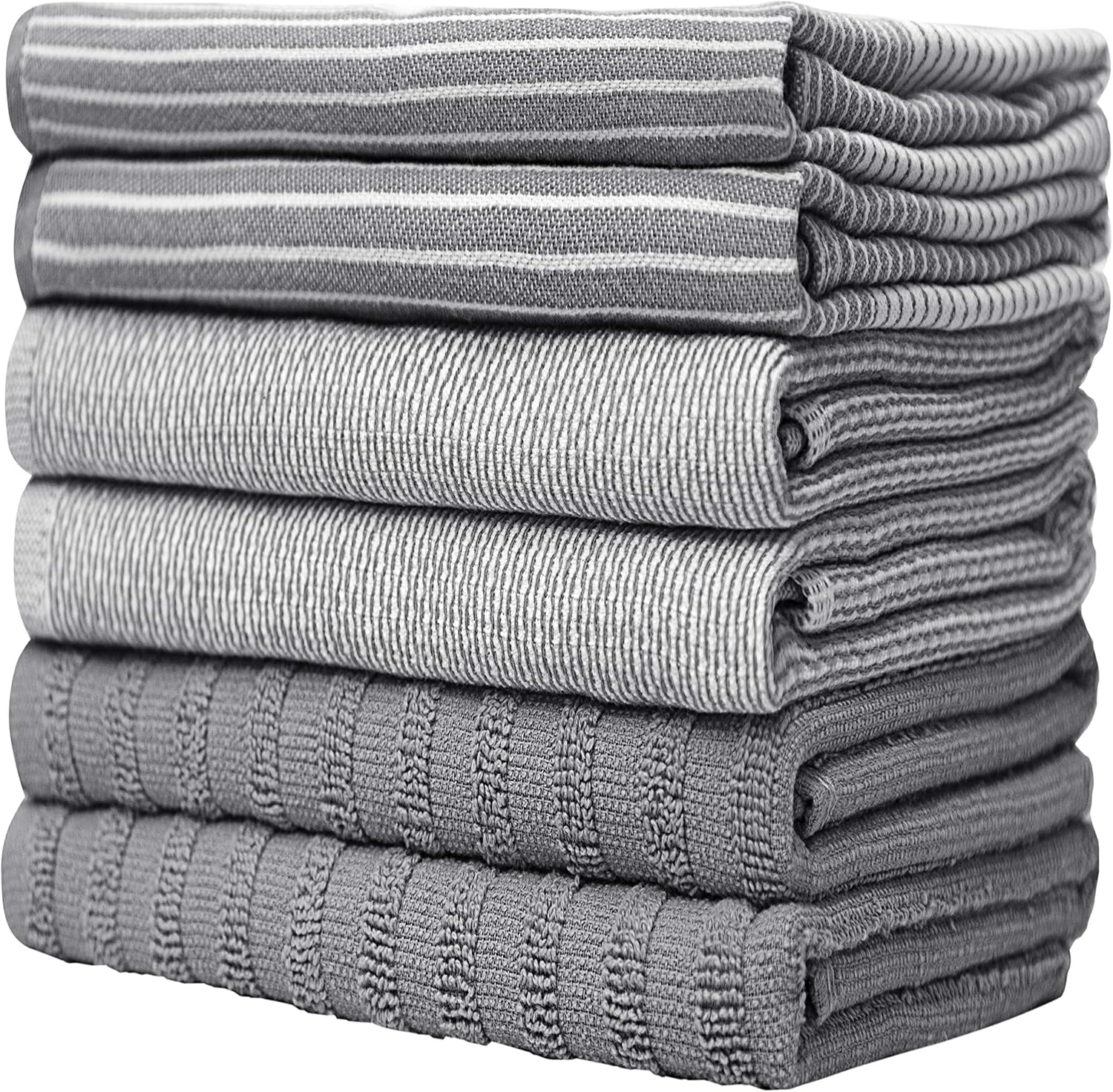
This is a big one, something a lot of folks overlook. Terry weave, the looped pile fabric, is your workhorse. It’s built for soaking up spills, just like a bath towel. It excels at sheer volume. Flat weave, sometimes called a flour sack towel or glass towel, is thinner, smoother, and designed for polishing, streak-free drying of dishes, and wrapping baked goods. They’re often lint-free. Many premium kitchen towel sets, like the 20″x28″ grey ones we’re talking about, cleverly combine both — maybe a flat weave on one side for drying glasses, and a terry loop on the other for tackling a spill. This versatility is a real plus. But it can also mean they’re bulkier to store.
Absorbency: More Than Just a Claim
Every towel claims to be “highly absorbent.” Naturally, right? But what does that actually mean? It boils down to fiber density and weave structure. A towel that genuinely absorbs quickly and thoroughly won’t just push water around; it’ll lift it. This quality is crucial for drying dishes efficiently or wiping up spills without leaving a damp residue. You want a towel that feels substantial, not flimsy. The downside to extreme absorbency is usually a longer drying time for the towel itself, potentially leading to mildew smells if not air dried properly after heavy use. No one wants that.
Durability & Construction: Built to Last (or Not)
A premium kitchen towel shouldn’t fall apart after a few washes. We’re talking reinforced edges, sturdy stitching, and a fabric that holds up to repeated laundering and the general abuse of kitchen duty. Cheap towels often fray at the edges, threads pull, and they quickly lose their shape. A well-constructed towel, even after dozens of cycles through the washing machine, should still feel robust. What’s the catch? Better construction adds to the cost. Sometimes, manufacturers will cut corners, making them seem premium initially, but they don’t hold up. So, you might pay more without getting the longevity you expect.
Size and Features: Beyond the Basic Rectangle
A standard 20″x28″ size is quite generous, offering plenty of surface area for various tasks. Smaller towels can feel inadequate for anything more than a small spill. Then there are those thoughtful touches, like hanging loops. A small thing, sure, but having a loop means you can hang your dish towel on a hook, letting it air dry properly and keeping it off the counter. It’s a simple convenience, but it makes a difference. Without them, you’re constantly folding, draping, or tossing them into the laundry pile prematurely.
Aesthetics: Does Grey Matter?
Okay, so grey kitchen towels. Is the color just a fashion statement? For some, yes. For others, a neutral like grey hides stains better than white but still looks clean and modern. It integrates well with various kitchen decors. While performance is paramount, a cohesive look certainly contributes to a pleasant kitchen environment. No real tradeoff here, just personal preference. But don’t let color be the only driving factor in your choice.
How to Match the Product to Your Situation
Finding the right kitchen towels isn’t about picking the “best” one. It’s about matching them to your kitchen life. Are you a gourmet chef, a busy parent, or someone who mostly uses their kitchen for reheating leftovers? Your answer dictates your towel needs.
The Avid Home Cook / Entertainer:
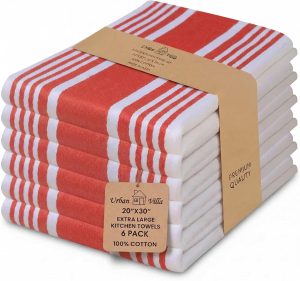
You’re constantly chopping, stirring, and wiping. Spills are a daily occurrence, and drying delicate glassware for dinner parties is a regular chore. You need highly absorbent, durable dish towels that won’t lint up your wine glasses. For you, the Premium Kitchen Towels 6 Pack 100% Cotton, 20″x28″ Dish Towels – Grey with both flat and terry weaves are practically a necessity. They handle everything from soaking up big splashes to providing a streak-free shine. You’ll likely go through several in a day, so a pack of six is essential. These save time and reduce frustration when you’re in the thick of it.
The Busy Parent / Family Dynamo:
Your kitchen is a war zone of crumbs, sticky fingers, and milk spills. You need towels that can withstand constant abuse, frequent washing, and still come out relatively unscathed. Durability is key, as is immediate absorbency. While the premium option might seem like an indulgence, its robust construction means it’ll survive more washes, making it a surprisingly economical choice in the long run. Hanging loops are a bonus, making it easy for anyone to keep the towels off the floor. You value reliability above all else.
The Casual Cook / Apartment Dweller:
Your kitchen sees lighter duty. Maybe a quick breakfast, reheating dinner, occasional light cooking. You don’t need industrial-strength absorbency for massive spills every hour. You might prioritize ease of storage and a lower initial cost. For this user, a simpler, more budget-friendly set of cotton dishcloths might suffice. You still want something that works, of course, but the incremental performance gains of a truly premium towel might not be worth the added expense for your specific usage patterns. Don’t overspend on features you won’t fully utilize.
Comparing Kitchen Towel Tiers
Let’s break down the general categories you’ll encounter when shopping for kitchen towels. It’s not always clear what you’re getting, is it?
| Type/Tier | Best For | Price Tier | Key Feature | Watch-Out |
|---|---|---|---|---|
| Basic Cotton Dishcloths | Light cleanups, drying hands, general utility | Budget-friendly | Simple construction, easily replaced | Thin, less absorbent, prone to lint and quick wear. |
| Everyday Kitchen Towels | Moderate daily use, decent absorbency | Mid-range | Better weave, more durable than basic options | May still lint, absorbency can fade over time. |
| Premium Kitchen Towels | Heavy duty, specific tasks, long-term value | Premium | Superior absorbency, combined weaves, durability | Higher upfront cost, can take longer to dry. |
- Basic cotton dishcloths are your entry point. They’re cheap, you get a bunch, but they often feel flimsy and just push water around rather than absorb it.
- Everyday kitchen towels strike a balance. They usually offer a step up in material and absorbency, making them suitable for most household tasks without breaking the bank.
- Premium kitchen towels, like the 100% cotton, 20″x28″ dish towels in grey, truly shine when you demand performance. They are built to tackle serious spills and offer a lint-free finish.
Scenario-Specific Towel Choices
Sometimes, the choice isn’t just about your cooking habits, but the specific tasks at hand. Kitchen towels aren’t one-size-fits-all.
When You’re Drying Delicate Dishes & Glassware:
This is where lint-free performance is paramount. No one wants to spend time washing dishes only to find tiny fibers clinging to their stemware. For this specific task, the flat-weave side of a premium kitchen towel set is your ally. The smoother surface glides over glass, leaving behind a sparkling, streak-free finish. Basic terry cloths, while absorbent, often shed fibers and cause frustration here. It’s a subtle difference, but one that makes a huge impact on presentation and cleanliness.
Tackling Large Spills & Messes:
A broken glass of water, an overflowing pot, a splatter of sauce — these demand immediate, robust absorbency. Here, the terry weave reigns supreme. The looped pile on premium kitchen towels, designed for maximum liquid retention, can handle a significant volume of fluid quickly. Thin, flat-weave towels would simply become saturated too fast, requiring multiple towels for a single spill. You need that bulk and those thirsty loops.
For Everyday Hand Drying & Light Wipes:
Sometimes you just need to dry your hands or quickly wipe a countertop after a quick splash. For these lighter duties, you don’t necessarily need the full might of a heavy-duty premium towel. A mid-range cotton dishcloth or even a slightly used premium one that’s been rotated out of “primary drying” duty can work perfectly. The key is having enough available, so you’re not constantly reaching for a damp, overworked towel. And let’s be real, a quick hand dry doesn’t need a perfectly pristine, lint-free surface.
Common Mistakes When Buying Kitchen Towels
It’s surprisingly easy to get this wrong, isn’t it? People often fall into traps that leave them frustrated with their kitchen linen.
One big mistake? Prioritizing aesthetics over actual function. Sure, those cute novelty towels with witty sayings look charming in the store, but if they’re thin, poorly woven, and barely absorb a drop, they’re just counter dressing. Don’t let pretty patterns distract you from material quality. You’ll end up with a drawer full of useless fabric.
Another common blunder is buying too few. A 6-pack of kitchen towels might seem like a lot initially, but when you’re cooking regularly, you cycle through them fast. You need a dirty one for general wiping, a clean one for drying hands, another for dishes, maybe one for cleaning spills. Having a small stash means you’re constantly running out, leaving you reaching for paper towels or a less-than-ideal substitute. Stock up, folks.
People also often neglect the washing instructions. These aren’t bath towels, necessarily. High heat can sometimes damage specific weaves or finishes, making them less absorbent over time. Or, conversely, not washing them hot enough with appropriate detergent leads to lingering smells and reduced hygiene. Treat your dish towels right, and they’ll treat you right.
Finally, confusing “multi-purpose” with “does everything well.” Some towels try to be jack-of-all-trades. A premium kitchen towel set with both flat and terry weaves aims for versatility, but a single towel can’t always perform every task at 100% efficiency. Expecting one basic dishcloth to dry a delicate glass perfectly and mop up a huge spill is setting yourself up for disappointment. Understand the strengths of each towel type.
Why/How/What Kitchen Towels?
Why should I care about premium kitchen towels if cheaper ones exist?
Because cheaper ones often frustrate more than they help. They lint, they don’t absorb, they fall apart quickly. Premium kitchen towels, like the 100% cotton large flat and terry linen set, offer genuine performance improvements, saving you time and effort in the kitchen. They hold up longer, meaning you’re not constantly replacing them. It’s about efficiency and reducing daily annoyance.
How do hanging loops on dish towels actually help?
A simple hanging loop provides a designated, hygienic place to air dry your kitchen towel. Instead of crumpling it on the counter or tossing it over a faucet (where it might not dry properly), the loop lets you hang it. This helps prevent mildew, ensures it’s accessible, and generally keeps your kitchen tidier. It’s a small design detail that offers a big practical benefit.
What’s the real difference between a flat weave and a terry weave in kitchen towels?
A flat weave is smooth and dense, designed for polishing and streak-free drying, excelling with glass and polished surfaces because it leaves no lint. Terry weave, with its characteristic loops, is built for maximum absorbency and scrubbing power. It’s what you want for soaking up liquids or tackling caked-on messes. Often, the right kitchen towel sets offer both, giving you the right tool for the job.
Key Takeaways for Smart Kitchen Towel Shopping
- Material Matters More Than You Think: “100% cotton” is just a starting point. Look for denser weaves and longer fibers for true absorbency and durability.
- Weave Versatility Wins: A blend of flat and terry weaves in a set offers the best of both worlds – polishing power and serious spill absorption.
- Invest Where It Counts: For frequent cooking or entertaining, premium options with superior construction offer long-term value and less frustration.
- Don’t Skimp on Quantity: You’ll need more towels than you think. A 6-pack is a good starting point for a busy kitchen.
- Mind the Details: Small features like hanging loops or a specific size (like 20″x28″) actually impact daily usability and hygiene significantly.
FAQ About Kitchen Towels
Are 100% cotton kitchen towels always the best choice?
For most kitchen tasks, yes, 100% cotton is generally the preferred material due to its natural absorbency, durability, and soft feel. Blends can offer benefits like quicker drying, but they often sacrifice some absorbency. For premium performance, pure cotton is hard to beat.
How often should I change my kitchen towels?
If you’re an active cook, you should be changing your dish towels daily, or even more frequently if they become heavily soiled or damp. Dirty towels can harbor bacteria, so regular replacement and washing are crucial for kitchen hygiene. Don’t push it too far.
Can I use the same kitchen towel for drying dishes and wiping counters?
It’s generally not recommended to use the same towel for both tasks. A towel used for wiping down surfaces, especially raw food prep areas, can transfer germs to clean dishes. It’s much safer to designate separate towels for different kitchen duties.
Why do my new kitchen towels sometimes shed lint?
Many new cotton towels, even high-quality ones, have loose fibers from the manufacturing process. A few washes before first use, especially with a cup of white vinegar in the rinse cycle, can help significantly reduce lint shedding. It gets better.
What’s the ideal size for kitchen towels?
A generous size like 20″x28″ is considered ideal because it offers ample surface area for drying larger dishes, wiping spills, and folding for various tasks. Smaller towels can feel inadequate, while much larger ones might be cumbersome.
Do grey kitchen towels show stains less than white ones?
Yes, typically grey kitchen towels are more forgiving when it comes to minor stains, splatters, and general grime compared to crisp white towels. They can maintain a cleaner appearance between washes, which is a practical benefit for busy kitchens.
Final Recommendation:
So, is a premium kitchen towel set, like those highly absorbent 100% cotton, 20″x28″ dish towels in grey with both flat and terry weaves and hanging loops, truly worth it? For most active home kitchens, absolutely. The initial cost might be higher than a bulk pack of basic dishcloths, but the frustration saved from lint-covered glassware, perpetually damp counters, and towels that fall apart after a few washes is immeasurable. These aren’t just towels; they’re genuine kitchen tools that make daily chores easier.
If your kitchen sees heavy, daily use – if you’re cooking, cleaning, or entertaining frequently – investing in a quality set like this will pay dividends. You’ll get superior absorbency, better durability, and the right texture for every task, from polishing to spill control. Don’t think of it as an indulgence; consider it a smart, long-term investment in your kitchen’s efficiency and cleanliness. For lighter use? Sure, stick to something simpler. But if you demand performance, the premium option makes a solid case for itself.
#Premium #Kitchen #Towels #Pack #Cotton #20×28 #Dish #Towels #Grey #Large #Flat #Terry #Kitchen #Linen #Set #Hanging #Loops #Highly #Absorbent #Washing #Drying #Dishes