Smart Finish is the feature that sold me on dual-zone cooking. Two different foods, two different times and temperatures, both ready at the same moment. The marketing made it sound like a conductor bringing an orchestra in together.
The reality is more like a conductor and an orchestra that each need their own stage, their own lighting rig, and twice the floor space. Smart Finish works. It does what it says. But the conditions required for it to matter are narrower than the marketing suggests.
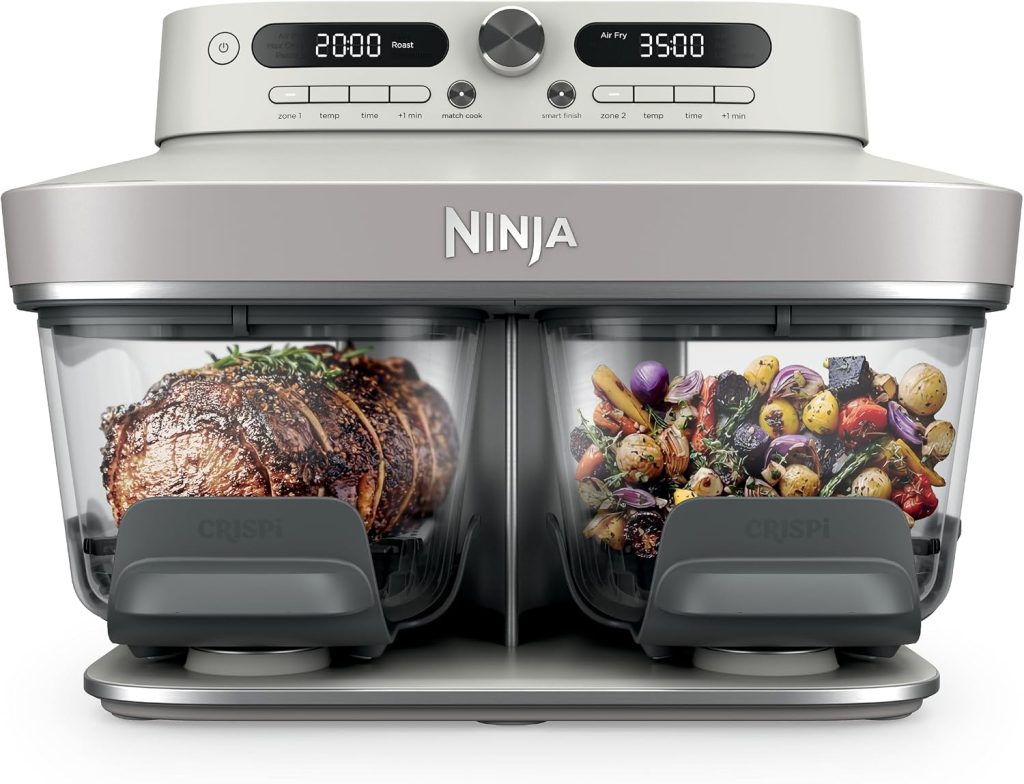
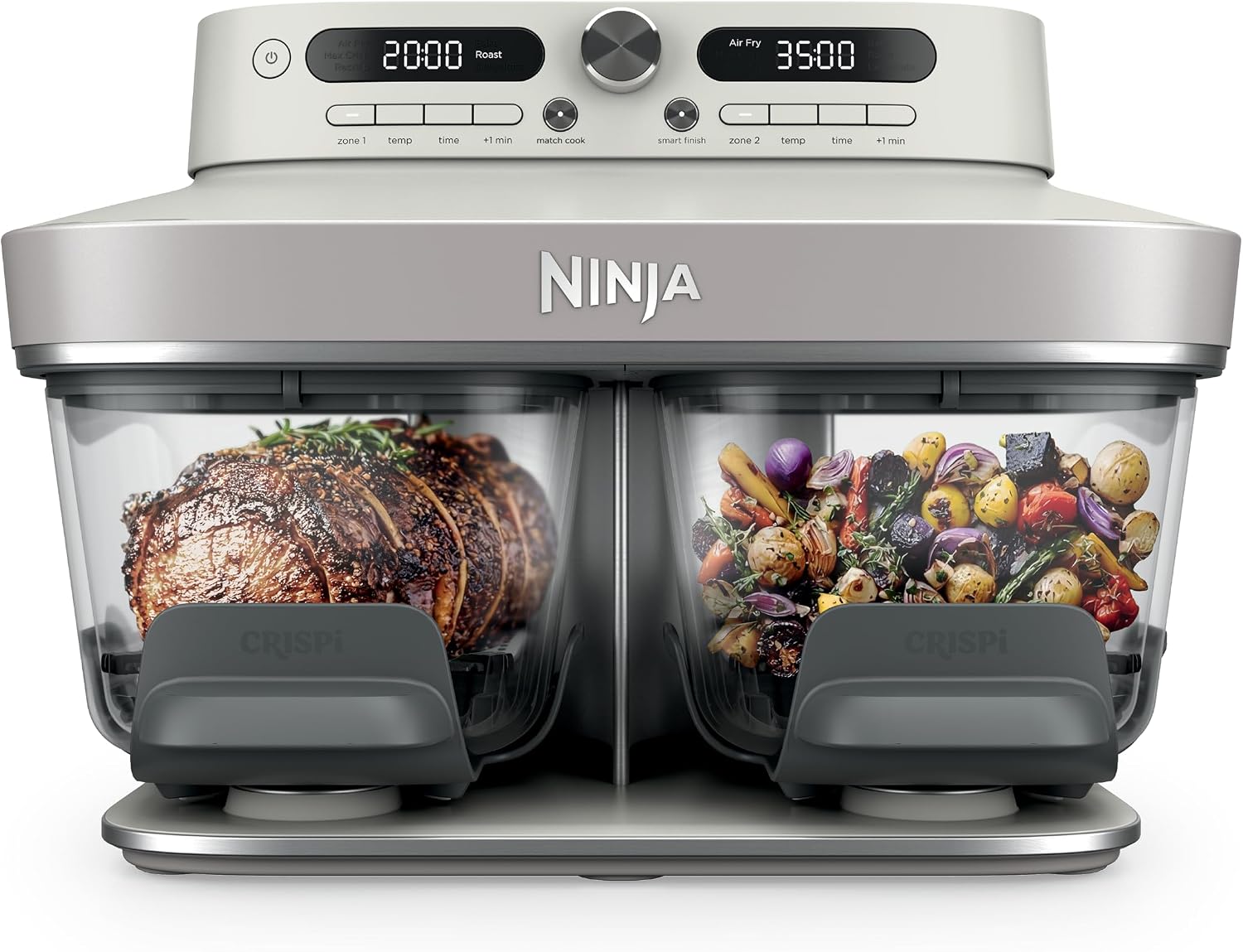
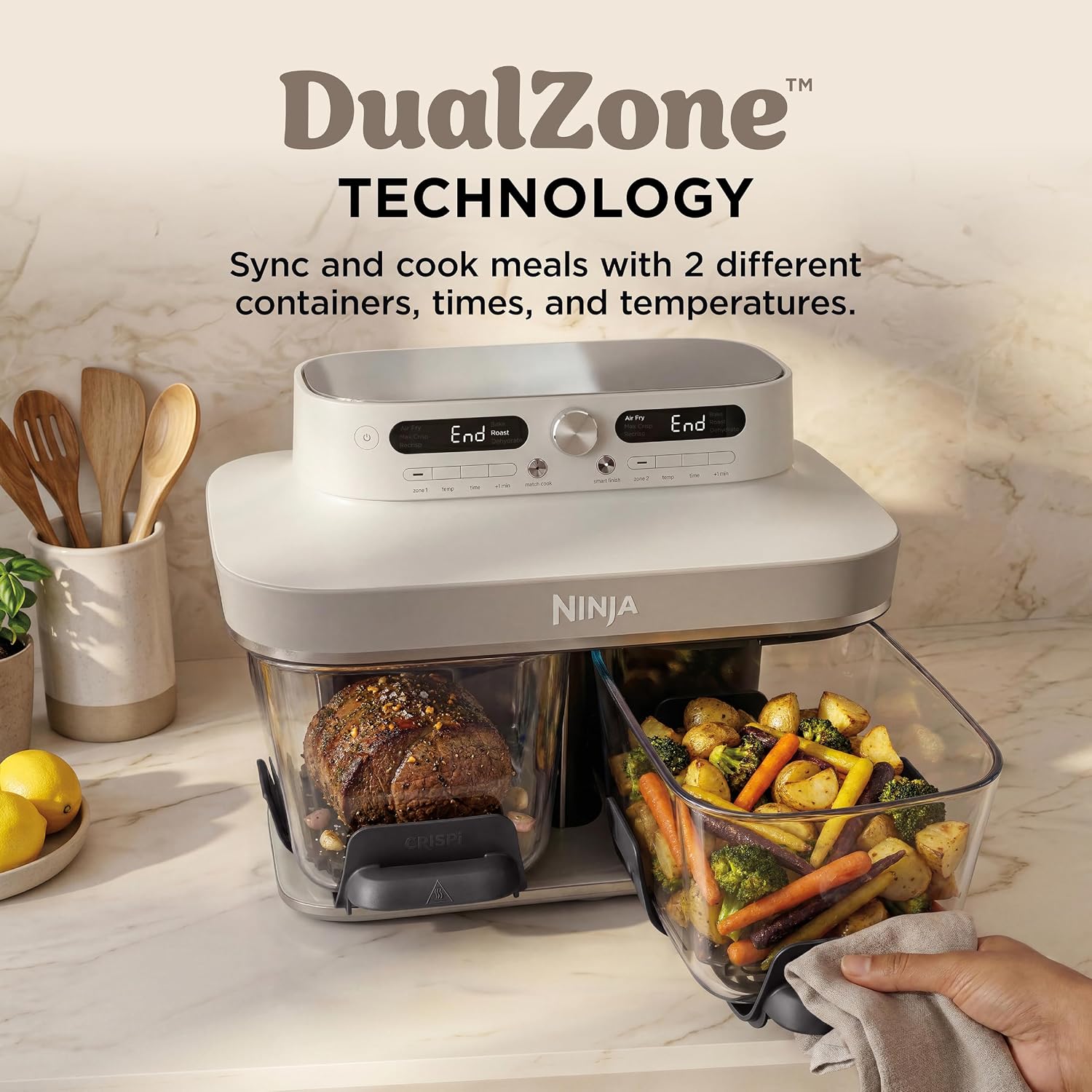
Here is the honest version. The Ninja Crispi DualZone gives you two independent 4-quart glass containers, 8 quarts total, with the ability to cook two things two ways and finish together. The glass is PFAS-free. The containers have storage lids. It is well engineered. And I keep asking myself how often the average household actually needs two different temperatures at the same time.
When DualZone earns its keep
Salmon in one zone at one temperature, asparagus in the other at another, both done together. Chicken wings in one, fries in the other, synced. Meal prep with two components. Entertaining, where timing matters.
If that is your regular cooking pattern, the DualZone is genuinely excellent. Smart Finish staggers the start times so the thing that takes longer starts first, and everything lands together. Match Cook mirrors one zone’s settings to the other for double-batch cooking at full 8-quart capacity. These are thoughtful features, designed by people who watched real cooking.
But. And this is the but that determines whether you should buy it. If most of your meals are one dish, one temperature, the second zone sits empty. An empty zone is not just unused capacity. It is counter space, money, and complexity you paid for and do not use. I have owned a dual-basket fryer. The second basket got used about thirty percent of the time. The other seventy percent, I was cooking in one basket and storing the other one.
Two 4-quarts is not one 8-quart
This is the capacity subtlety. Two independent 4-quart containers give you flexibility, but neither container fits the things a single 8-quart vessel fits. A whole chicken. A large tray of wings in one layer. The big single items.
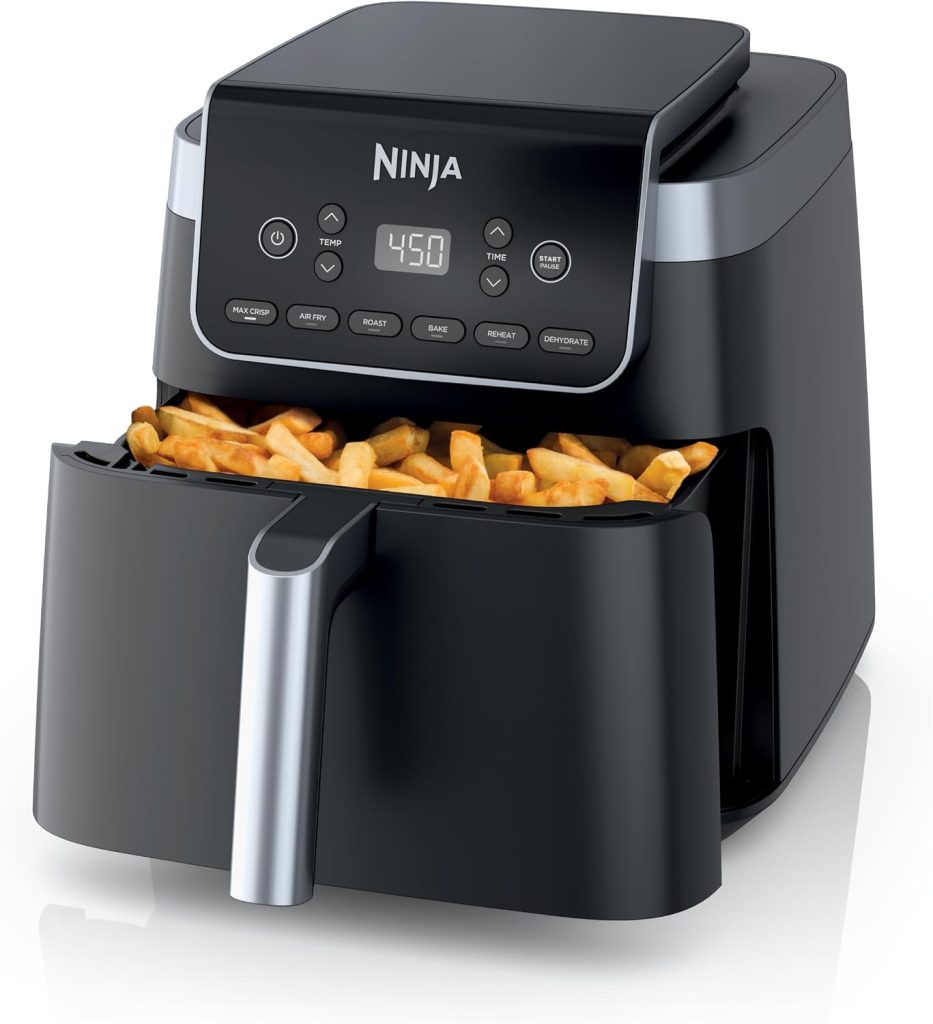
The Crispi Pro with its single 6-quart vessel handles large single dishes better. The DualZone handles varied multi-dish meals better. They are different answers to different questions, and the wrong choice is buying the DualZone for big single batches or the Pro for two-temperature cooking. Match the machine to the meals you actually cook, not the meals in the commercial.
Glass, twice
Everything I said about glass in the Crispi reviews applies here, doubled. PFAS-free, non-reactive, visible cooking, dishwasher safe, heavier than coated metal, breakable on tile, do not thermal-shock it.
The storage lids deserve a mention. Both containers come with lids, so leftovers go straight to the fridge in the cooking vessel. With two zones, you often have two leftovers. The lid situation is genuinely well thought out.
Replacement container economics apply twice over. Two glass vessels means two potential replacements. Check the price of one replacement container and multiply. That is your five-year ownership math on the glass. I keep hammering this because it is the number that determines whether glass is a good deal or an expensive habit.
The footprint nobody photographs
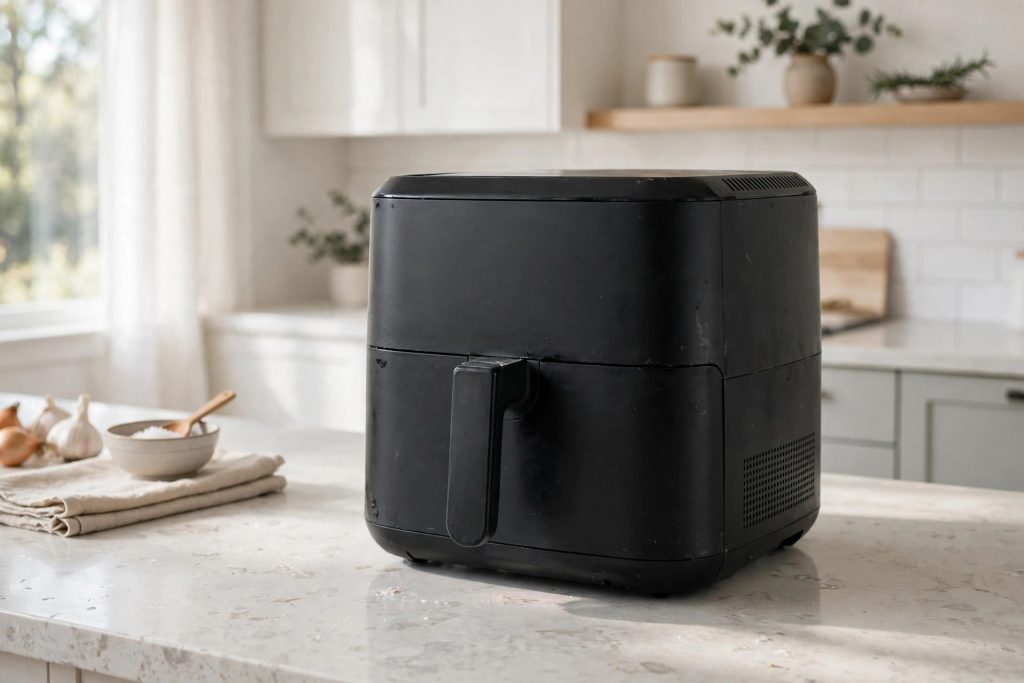
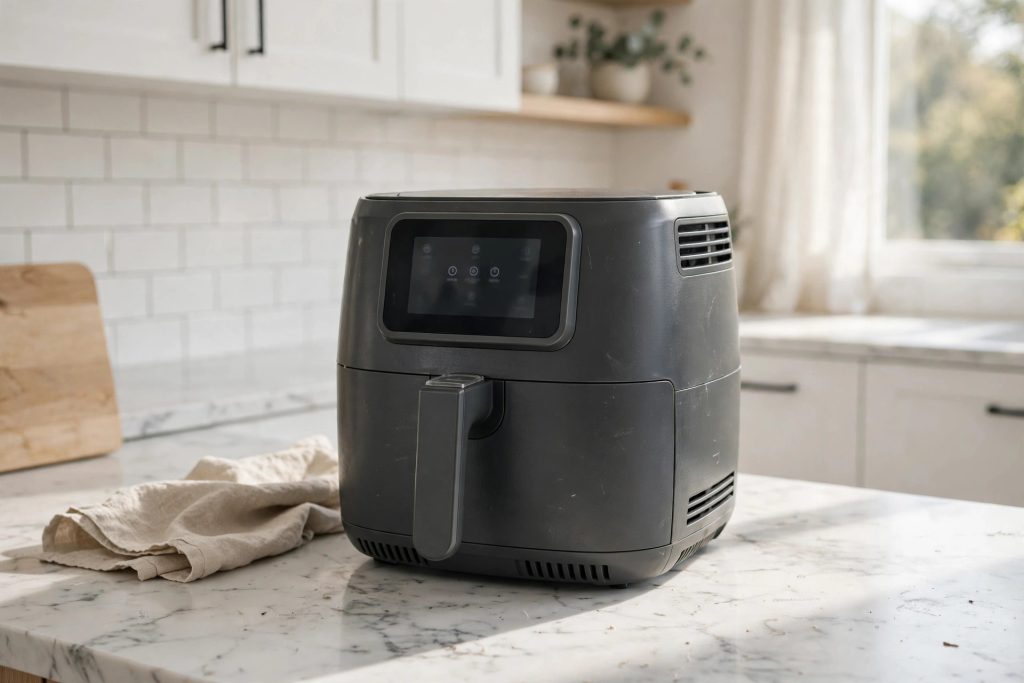
Two zones side by side need width. The DualZone is a wide appliance. Wider than a single 8-quart basket unit, because each zone needs its own housing, its own controls, its own clearance.
Measure your counter width, not just depth. This is the unit that fits fine front-to-back and then eats the space where the cutting board lived. In a small kitchen, width is often the scarcer dimension. The tape-measure ritual applies. Tape out the full width. Live with it for a day.
This site contains affiliate links. We may earn a commission on qualifying purchases.
Smart Finish, examined
Let me give the feature its due, because when it works, it is satisfying. You set zone one for 25 minutes at 400, zone two for 12 minutes at 375, and the machine figures out when to start zone two so both finish together. No mental math. No hovering.
The limitation is that it only solves timing, not planning. You still have to prep both dishes, season both, load both. The machine synchronizes the end. The beginning is still on you. For complex meals, this is a genuine help. For simple meals, it is a feature waiting for a use case.
There is also a learning curve. The controls for two zones are more complex than one, inevitably. More buttons, more modes, more ways to set zone two when you meant zone one. I did that. More than once. The food was fine. My pride was not.
Against the coated dual-zone
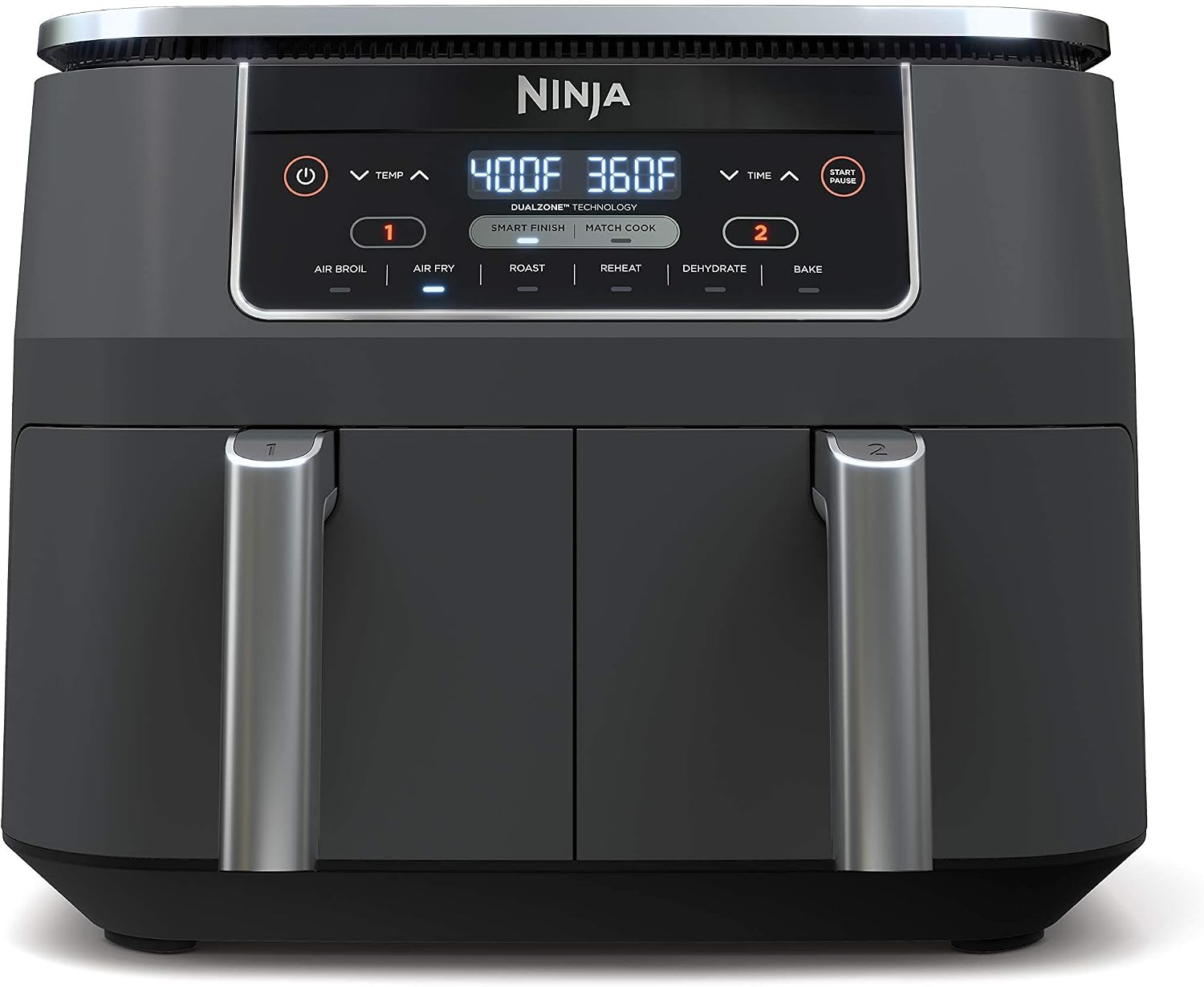
The Ninja DZ201 is the coated-basket dual-zone alternative. Same two-zone concept, traditional non-stick baskets instead of glass. Lighter. Less fragile. Coating degradation curve applies.
The choice between them is the glass choice. If PFAS-free and visible cooking matter to you, the Crispi DualZone. If you want lighter, cheaper, and you are fine with coatings, the DZ201. Both do the Smart Finish trick. The glass is the differentiator, and it costs more, because glass always costs more.
The question that decides it
How many nights a week do you cook two different things at two different temperatures.
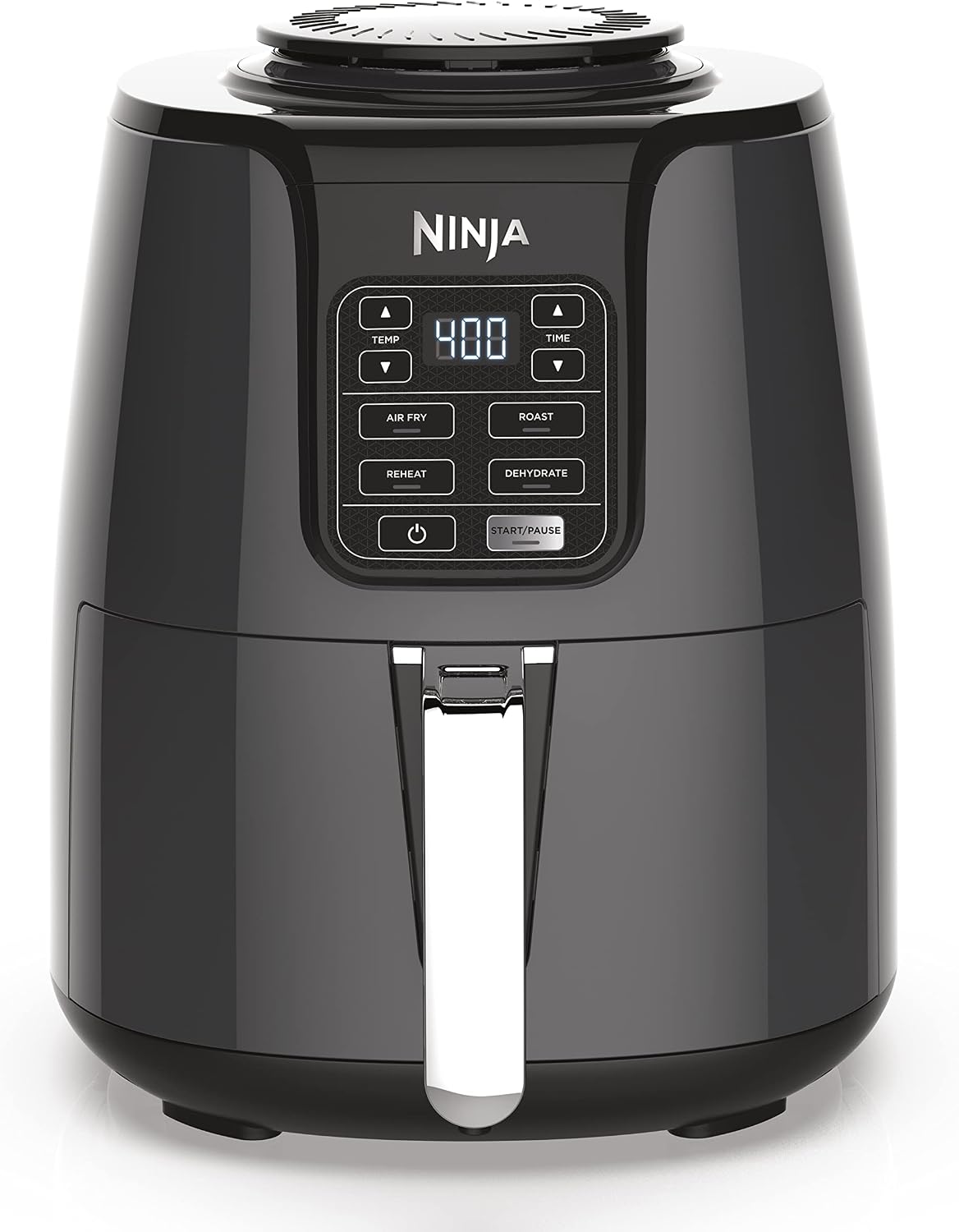
Three or more, the DualZone is a strong buy. One or fewer, get the single-zone Crispi 4-in-1 or the Pro and save the money and the counter. Two is the awkward middle, where I lived, and where I eventually admitted the second zone was mostly a very expensive storage container.
The orchestra conductor is good at his job. I just do not host many concerts.