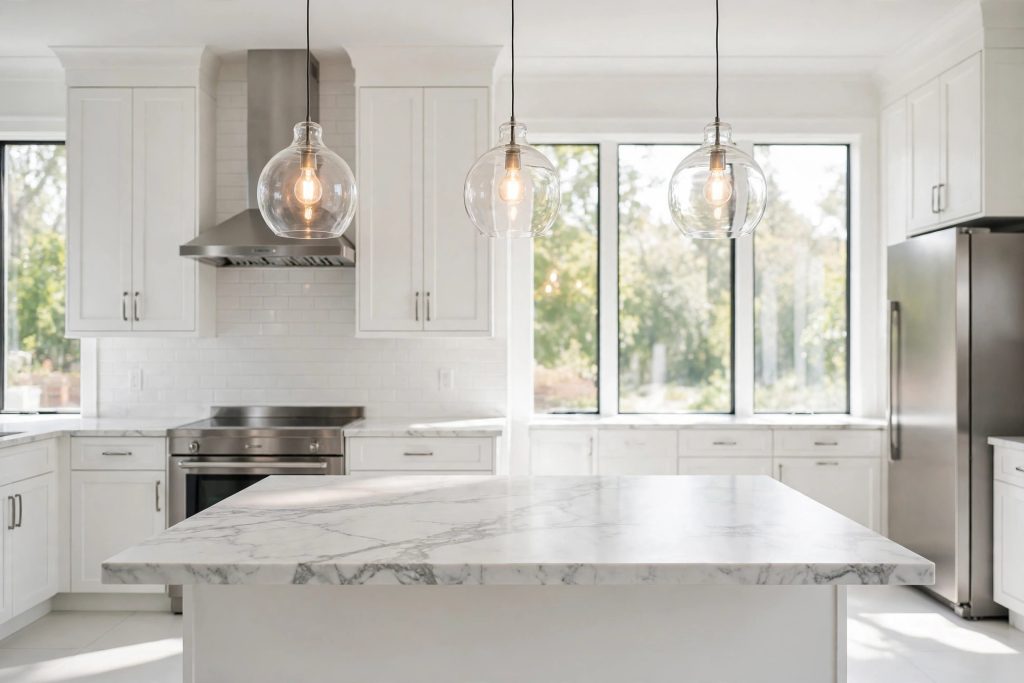
Quick answer: For a standard kitchen island, hang pendant lights so the bottom of each shade sits 30–36 inches above the countertop, space them 24–30 inches apart (center to center), and choose pendants with a diameter about 12 inches less than your island’s depth. Plan on roughly one pendant for every 2 feet of island length — a 6-foot island usually takes 3. Get these three numbers right and almost any style will look intentional.
How Many Pendant Lights Does a Kitchen Island Need?
The short version: count one pendant for every 2 feet of island length — a 4-foot island needs 2, a 6-foot island needs 3.
Related: See our What Size TV Should I Get for My Living Room? for a detailed comparison.
Related: See our What Size Rug Do I Need for My Living Room? for a detailed comparison.
Related: See our What Size Dining Table Do I Need? A Complete Buying Guide for a detailed comparison.
The fastest sizing formula lighting designers use is simple: measure your island’s length in feet and divide by two. That gives you a reliable starting point. Then round based on the table below and on how wide each pendant is — fewer, larger pendants and more, smaller ones can both work on the same island.
| Island length | Typical number of pendants | Why it works |
|---|---|---|
| Under 5 ft | 2 small pendants (or 1 linear fixture) | A single row of two keeps a short island balanced |
| 5–7 ft | 2–3 pendants | The most common island size; 3 is the safe default |
| 7–9 ft | 3 pendants | Even coverage without crowding the ends |
| Over 9 ft | 3–4 pendants | Long islands need the extra fixture for even light |
One important check: multiply the number of pendants by the spacing rule below (24–30 inches apart) and make sure the total fits your island with about 12 inches of breathing room at each end. If the math is tight, go with fewer, slightly larger pendants rather than squeezing in one more.
What Size Should Each Pendant Be?
The short version: each pendant’s diameter should be about 12 inches less than your island’s depth — on a standard 24-inch-deep island, that means pendants up to about 12 inches wide.
Island depth, not length, decides how wide your pendants can be. The widely used rule is island depth minus 12 inches: a 24-inch-deep island suits pendants up to 12 inches in diameter, while a 30-inch-deep island can handle pendants up to about 18 inches. Go wider than that and the shades start to overhang the counter edge, which looks top-heavy and puts the fixtures in the way of anyone working at the island.
| Island depth | Maximum pendant diameter | Typical look |
|---|---|---|
| 24 in (standard) | Up to ~12 in | Mini or medium pendants, glass or metal |
| 27–30 in | Up to ~15–18 in | Medium shades, drum or bell shapes |
| 36 in or more (wide/double-sided) | Up to ~20–24 in | Large statement pendants |
When you’re between sizes, size down rather than up: an undersized pendant just looks minimal, while an oversized one dominates the whole kitchen. If you love a big statement shade, hang fewer of them to keep the visual weight in balance.
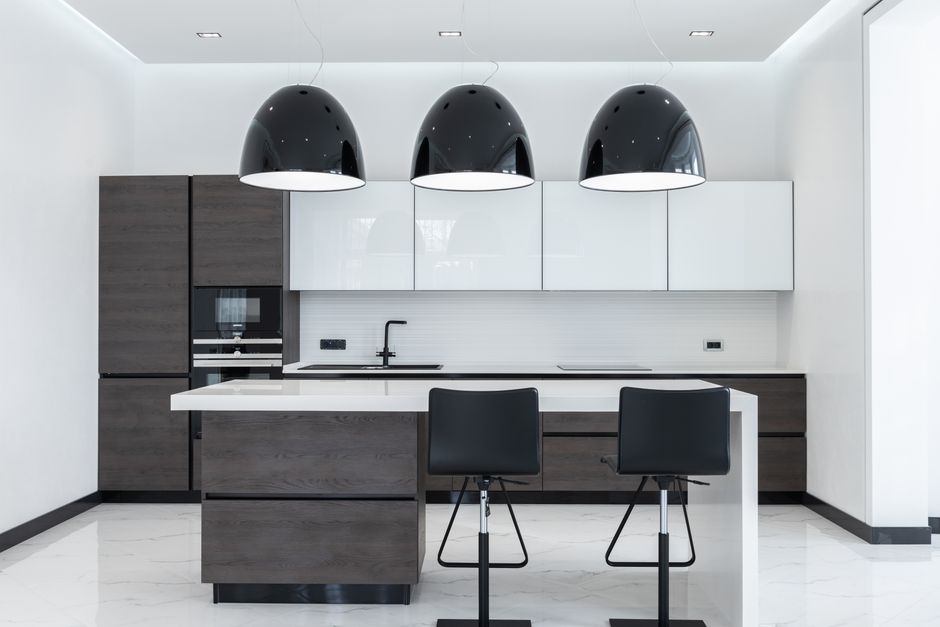
How Far Apart Should Pendant Lights Be Spaced?
The short version: space pendants 24–30 inches apart, measured center to center, and leave about 12 inches between the center of each end pendant and the edge of the island.
Even spacing is what makes a row of pendants look professional instead of improvised. Start by marking the center of the island, then work outward in equal steps. The 12-inch end margin keeps the outer pendants from hanging past the counter edge, and the 24–30-inch gap between fixtures gives each pendant its own visual “territory” so the row reads as a rhythm rather than a cluster.
Quick sanity check for a 6-foot island with 3 pendants: 12 inches from each end leaves 48 inches of working space, and two 24-inch gaps fit exactly. The math working out this cleanly is why 3 pendants over a 6-foot island is the most common setup you’ll see.
How High Should Pendant Lights Hang Above the Island?
The short version: the bottom of each shade should sit 30–36 inches above the countertop — low enough to light your work, high enough to see across the island.
This is the measurement people get wrong most often. Hang pendants lower than 30 inches and they block sightlines and conversation across the island; hang them higher than 36 inches and the light diffuses before it reaches the counter, while the fixtures look disconnected and floaty.
- 8-foot ceilings (standard): 30–36 inches above the counter is the sweet spot.
- 9-foot ceilings: add about 3 inches — aim for 33–39 inches.
- 10-foot or vaulted ceilings: add about 6 inches, and consider a longer cord or stem so the pendants don’t get lost in the height.
- Always measure from the countertop, not the floor — standard counters are 36 inches high, but a raised bar-height section changes the math.
Practically speaking, adjustable cords or chains are worth prioritizing when you shop: you can fine-tune the height after installation instead of committing to a fixed drop. You can browse adjustable-height pendant lights to compare cord lengths and shade sizes before you decide on a final layout.
Choosing a Pendant Style That Fits Your Kitchen
The short version: match the pendant’s visual weight to your kitchen — open glass shades for small kitchens, larger solid shades to anchor a big island.
Size and spacing do the structural work; style is where the kitchen’s personality comes in. A few principles keep the choice grounded:
- Small kitchens: clear glass or open-cage pendants keep sightlines open and make the room feel larger. Solid shades can visually chop a compact kitchen in half.
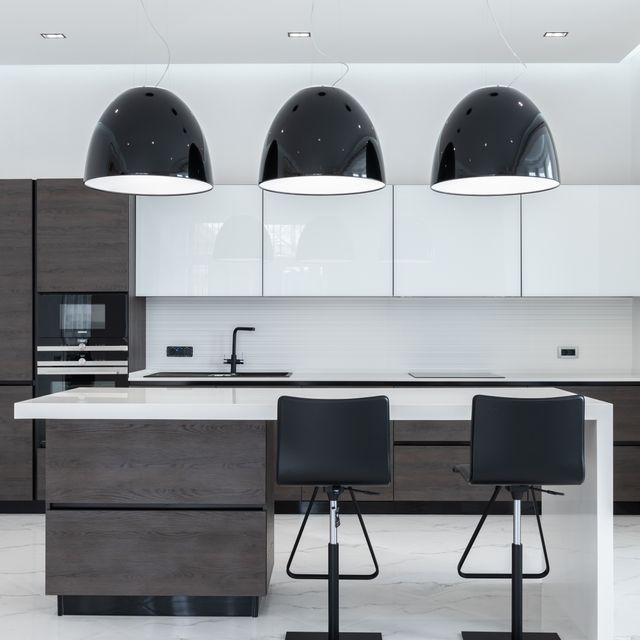
- Large islands: substantial shades — drums, bells, or wide domes — hold their own against a big expanse of counter. Tiny mini-pendants get swallowed.
- Finish coordination: matching your pendants to the faucet or cabinet hardware (brass, matte black, brushed nickel) makes the whole kitchen look designed rather than assembled.
- Light quality: put pendants on a dimmer switch. Full brightness for food prep, low and warm for dinner — one fixture, two moods.
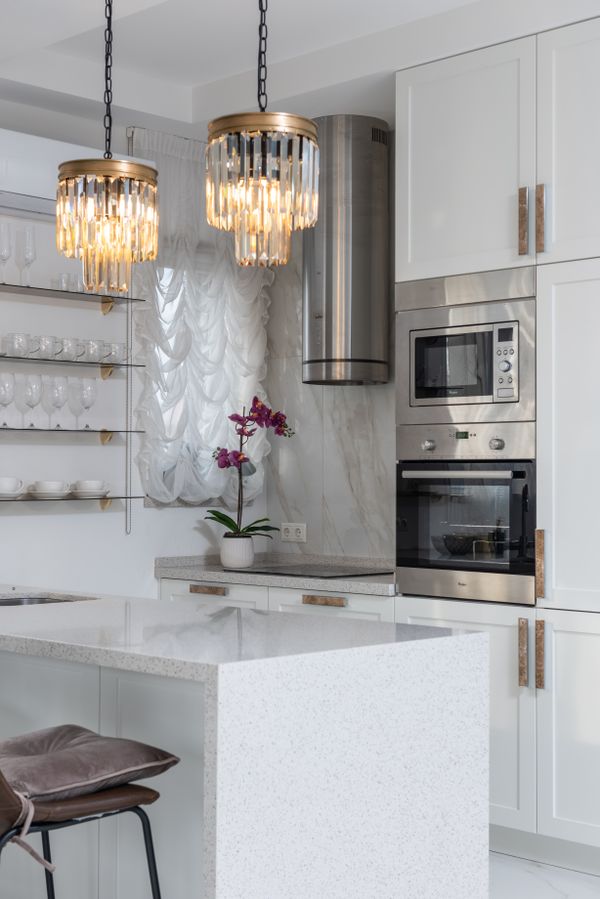
If you’re still narrowing down shapes, compare glass pendant light styles and sizes side by side to see how different diameters look against real island dimensions.
5 Pendant Light Mistakes to Avoid
The short version: nearly every pendant regret comes from wrong height or wrong scale — measure twice, hang once.
- Hanging them too high — above 36 inches the light never really reaches the counter and the pendants look stranded.
- Hanging them too low — below 30 inches blocks eye contact across the island and puts shades at head height for tall cooks.
- Choosing pendants wider than the island-minus-12 rule — oversized shades crowd the counter edge and dominate the room.
- Uneven spacing — eyeballing it almost always drifts; mark center points with painter’s tape before drilling.
- Skipping the dimmer — pendants without dimming are stuck at one brightness, which is either too harsh for evenings or too dim for prep.
Frequently Asked Questions
How many pendant lights do I need for a 6-foot island?
Three. Using the one-pendant-per-2-feet rule, a 6-foot island takes 3 pendants spaced about 24 inches apart, with roughly 12 inches from each end of the island.
How high should pendant lights hang over a kitchen island?
The bottom of each shade should be 30–36 inches above the countertop for standard 8-foot ceilings. Add about 3 inches of height for each additional foot of ceiling height.
Can pendant lights be too big for a kitchen island?
Yes. If a pendant’s diameter exceeds your island’s depth minus 12 inches, it will overhang the counter edge and look top-heavy. When in doubt, choose the smaller size.
Should pendant lights match my kitchen faucet?
They don’t have to, but coordinating finishes (for example, brass pendants with a brass faucet) makes the kitchen look cohesive. Mixed metals work too, as long as you repeat each finish at least twice in the room.
Do I need an electrician to install pendant lights?
If you’re swapping pendants into an existing fixture location, many homeowners handle it themselves after turning off the breaker. If you need new wiring, new junction boxes, or a dimmer added, hire a licensed electrician — and check local code requirements.
What size pendant light works for a 10-foot island?
Use 3–4 pendants, depending on their diameter: three larger shades (15–18 inches) or four medium ones (12 inches or so), spaced 24–30 inches apart.
The Bottom Line
Sizing pendant lights comes down to three measurements: one pendant per 2 feet of island length, a diameter about 12 inches less than your island’s depth, and a hang height of 30–36 inches above the counter. Space them evenly with about a foot of margin at each end, put them on a dimmer, and the style you love will look like it was always meant to be there.
Common Questions About Kitchen Island Pendant Lights
How high should pendant lights hang above a kitchen island?
Hang pendant lights so the bottom of each shade sits 30 to 36 inches above the countertop — low enough to light your work surface, high enough to see and converse across the island.
This is the measurement people get wrong most often: hang them lower and they block sightlines, hang them higher and the light diffuses before it reaches the counter. For 9-foot ceilings add about 3 inches, and for 10-foot or vaulted ceilings add about 6 inches with a longer cord or stem.
Always measure from the countertop, not the floor — a raised bar-height section changes the math.
How many pendant lights do I need for my kitchen island?
Count one pendant for every 2 feet of island length: a 4-foot island needs 2 pendants, a 6-foot island needs 3.
Then sanity-check with the spacing rule: pendants 24 to 30 inches apart center to center, with about 12 inches between the center of each end pendant and the island's edge. For a 6-foot island with 3 pendants, 12 inches from each end leaves 48 inches of working space and two 24-inch gaps fit exactly.
If the math is tight, go with fewer pendants rather than crowding them.
What size pendant lights should I get for a kitchen island?
Size each pendant's diameter to about 12 inches less than your island's depth — on a standard 24-inch-deep island, that means pendants up to about 12 inches wide.
Island depth, not length, decides pendant width. When you are between sizes, size down rather than up: an undersized pendant just looks minimal, while an oversized one dominates the whole kitchen.
If you love a big statement shade, hang fewer of them to keep the visual balance.
How far apart should pendant lights be spaced?
Space pendants 24 to 30 inches apart measured center to center, and leave about 12 inches between the center of each end pendant and the edge of the island.
Even spacing is what makes a row of pendants look professional instead of improvised: mark the island's center first, then work outward in equal steps. The 12-inch end margin keeps outer pendants from hanging awkwardly close to the edge.
Adjustable cords or chains are worth prioritizing so you can fine-tune height after installation.
What style of pendant lights looks best over a kitchen island?
Match the pendant's visual weight to your kitchen: open glass or cage shades for small kitchens to keep sightlines open, and larger solid shades like drums or domes to anchor a big island.
Coordinate the finish with your faucet or cabinet hardware — brass, matte black, or brushed nickel — so the kitchen looks designed rather than assembled. And put pendants on a dimmer switch: full brightness for food prep, low and warm for dinner.
Style is where the kitchen's personality comes in; size and spacing do the structural work.