LEVOIT Core 300S Review: Smart Wi-Fi Air Purifier with 22dB Sleep Mode
Shopping for a bedroom air purifier comes down to one nagging question: is the smart version actually worth the premium, or should you just buy the plain one? This guide breaks down the LEVOIT Core 300S — the Wi-Fi-connected take on one of the most popular compact purifiers around — and compares it honestly against its non-smart sibling and the tower-style competition.
Written for allergy sufferers, light sleepers, and pet owners who want cleaner air without a PhD in filtration specs.
Related: See our hOmeLabs 50-Pint Dehumidifier Review for a detailed comparison.
Related: See our Honeywell HUL520W MistMate Review for a detailed comparison.
Quick Answer
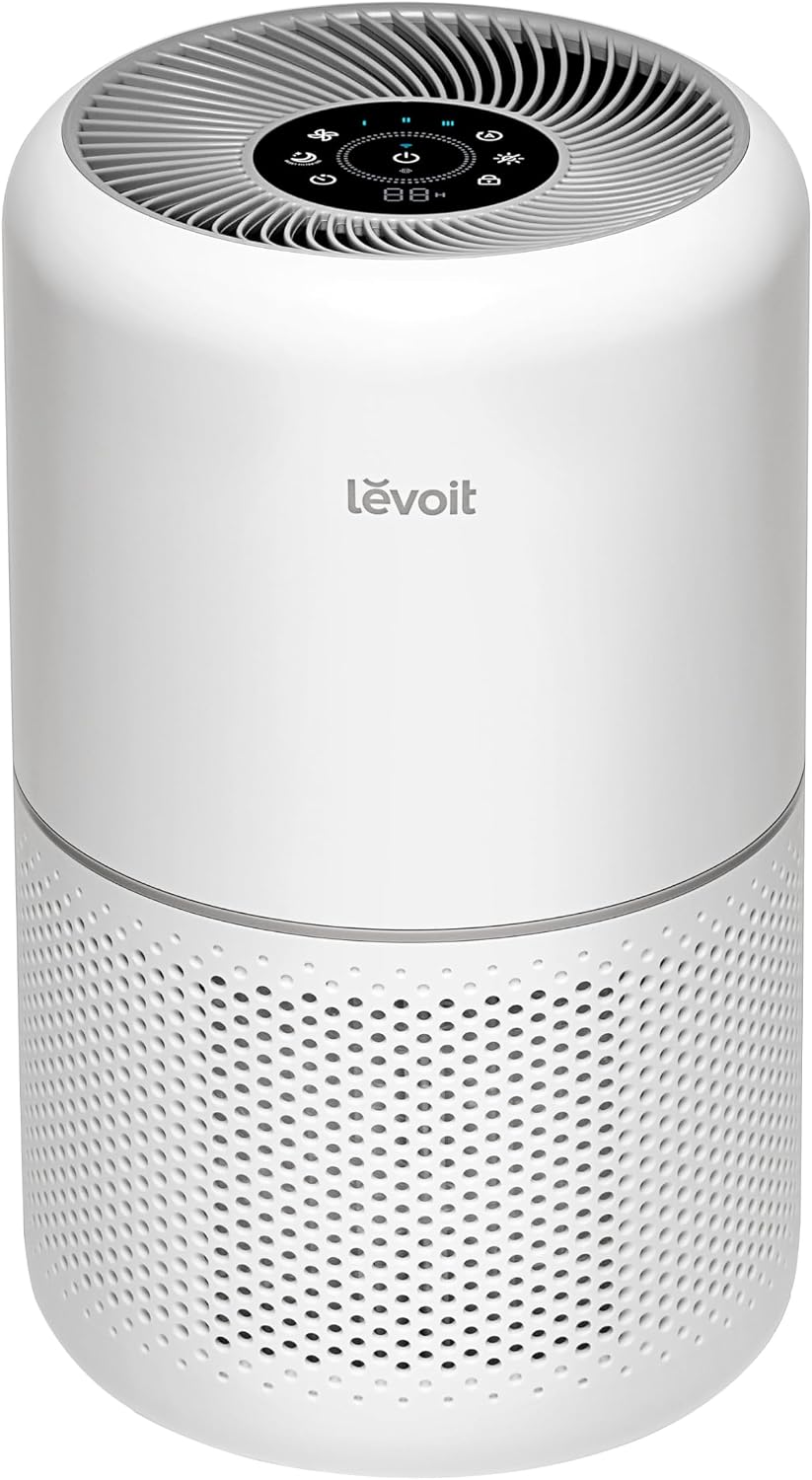
Short version: the LEVOIT Core 300S is a compact HEPA air purifier with Wi-Fi app control, an auto mode that adjusts fan speed on its own, and an advertised 22 dB sleep mode quiet enough for a nightstand.
It’s the right pick if you want app control and set-and-forget automation in a bedroom or small room. If you’d never open the app, save money with the non-smart Core 300. For bigger rooms, the GermGuardian AC4825E tower covers more square footage.
What to Look For in a Bedroom Air Purifier
Air purifiers look simple — a fan, a filter, a box. But the details decide whether yours actually gets used or ends up unplugged in a closet by March.
Room size and CADR: match the machine to the space
CADR (clean air delivery rate) tells you how much filtered air a purifier pushes out. The Core 300S is a compact unit designed for bedrooms and small rooms, not open-plan living areas. Undersizing means the purifier runs on high constantly — loud and inefficient.
Measure your room before buying. A purifier rated for a small bedroom will struggle in a combined living-dining space, no matter what the marketing implies.
Noise: the spec that matters most at night
The advertised 22 dB sleep mode is the Core 300S’s headline feature — roughly the volume of rustling leaves, and genuinely quiet enough for most sleepers. But sleep mode moves less air, and on high, any compact purifier gets noticeably loud.
The practical move: run it on high for an hour before bed, then drop to sleep mode overnight. Light sleepers should be honest about their sensitivity — what’s “whisper-quiet” in a review might still bug you at 2 am.
Smart features: genuinely useful or just an app?
The 300S adds Wi-Fi, app control, voice assistant compatibility, and auto mode, which adjusts fan speed based on sensed air quality. Auto mode is the real win — the purifier ramps up when you cook or the dog shakes off, then quiets down on its own.
But if you’d never open the app, you’re paying for hardware you’ll ignore. The non-smart Core 300 filters the same air. Be honest about which camp you’re in.
Filter type and replacement cost
A true HEPA filter captures the fine particles that trigger allergies — dust, pollen, pet dander. The Core 300S uses a 3-stage system with HEPA-grade filtration. Replacement filters are the hidden ongoing cost of every purifier; the manufacturer suggests swapping roughly every 6 to 8 months depending on use.
Footprint and looks
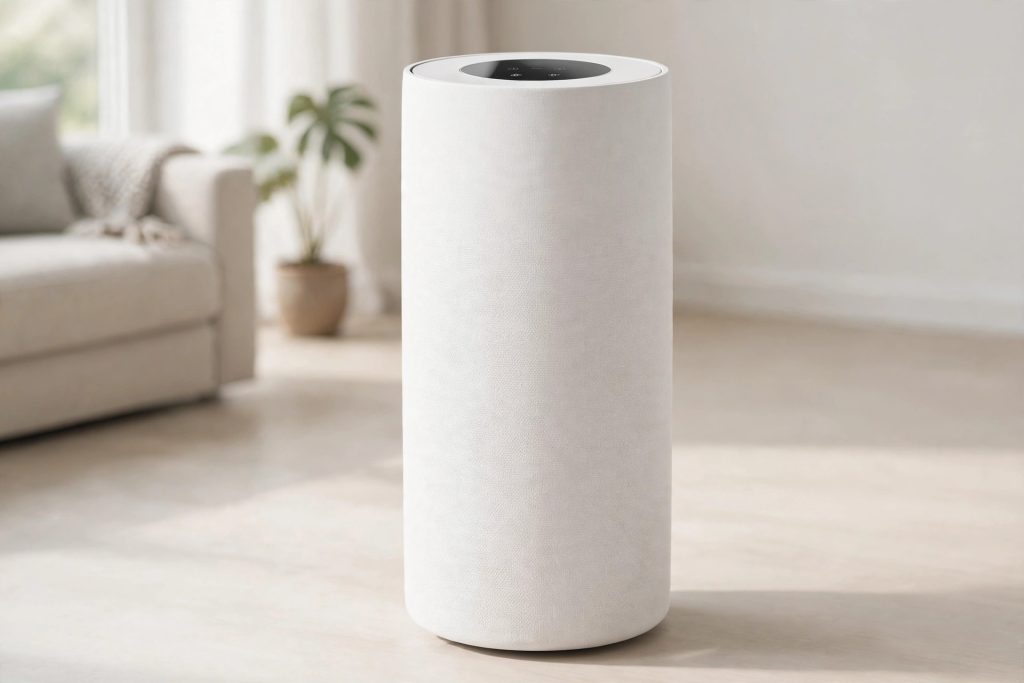
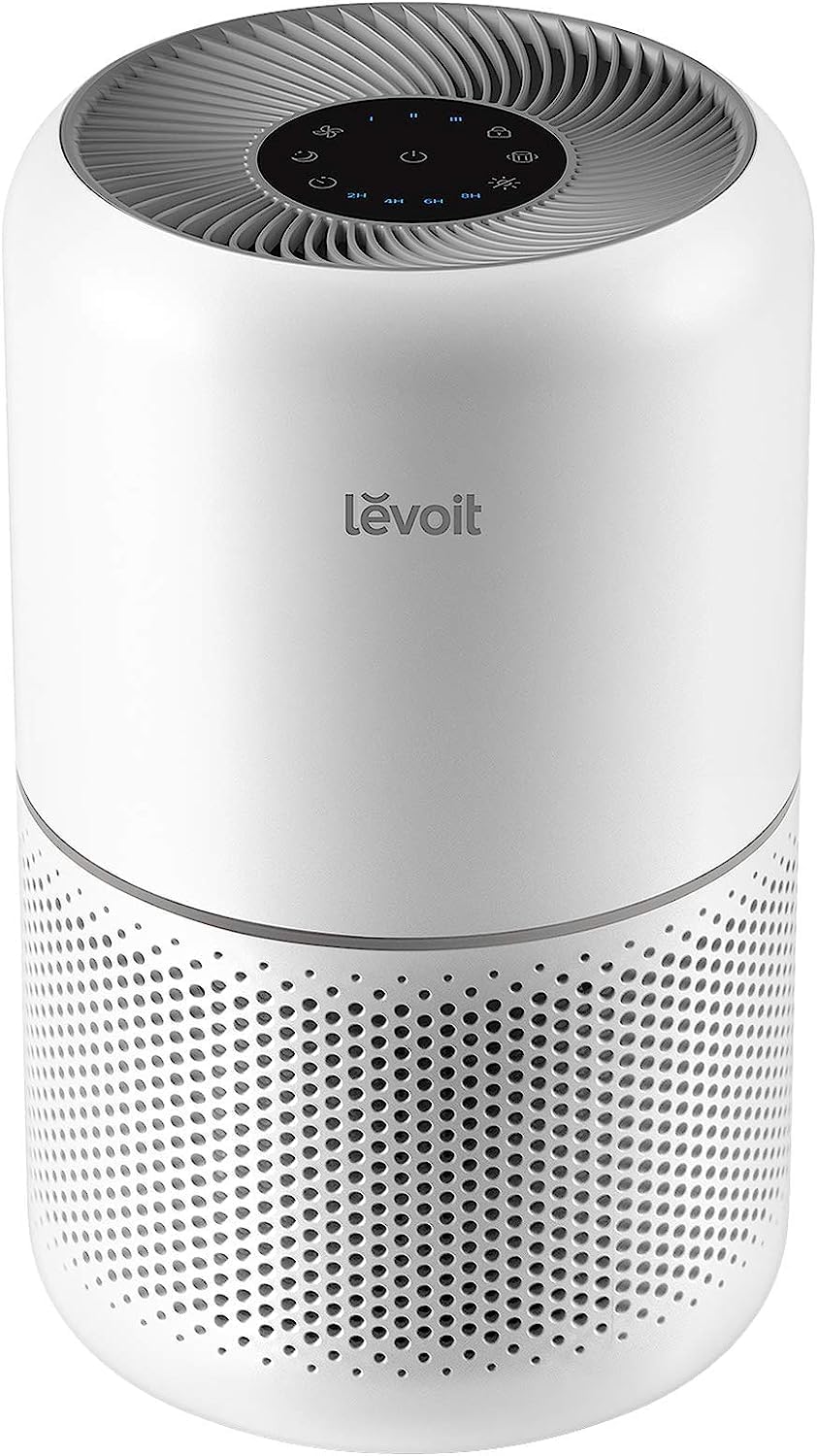
Bedroom purifiers live in visible spots. The Core 300S is a compact cylinder that tucks beside a nightstand without screaming “appliance.” Tower units like the GermGuardian clean bigger rooms but look like, well, towers. If it’ll sit next to your bed for years, pick something you don’t mind looking at.
Display lights and night mode
Nothing ruins a dark bedroom like a glowing control panel. Check that the display dims or turns off — the Core 300S’s sleep mode handles this. It’s a small detail that matters every single night.
How to Match the Purifier to Your Situation
The allergy sufferer. You wake up congested and suspect the bedroom. What you need: a HEPA unit running consistently in the room where you sleep, with a filter you replace on schedule. Smart features are a bonus; consistent runtime is the actual medicine. Don’t expect miracles in week one — give it a couple of weeks of nightly use before judging.
The light sleeper. Noise is your whole decision. Sleep mode specs matter more than CADR bragging rights. Place the unit across the room rather than right by your pillow, run it hard before bed, and let sleep mode hold the line overnight.
The pet owner. Dander is relentless, and it settles everywhere. You want a purifier that can run for long hours without driving you crazy — auto mode earns its keep here, ramping up after the dog comes inside and settling down after. Budget for more frequent filter changes; pet households clog filters faster.
Comparing the Tiers: Smart Compact vs. the Alternatives
| Type / Tier | Best For | Price Tier | Key Feature | Watch Out |
|---|---|---|---|---|
| Smart compact (Core 300S) | Bedrooms, app-control fans | Mid-range | Wi-Fi + auto mode | You pay for smart features |
| Non-smart compact (Core 300) | Set-it-and-forget-it users | Budget-friendly | Same filtration, manual controls | No auto-adjusting fan |
| Tower purifier (GermGuardian AC4825E) | Larger rooms | Budget-friendly to mid-range | UV-C light, tall tower design | Louder on high, bigger footprint |
| Large-room / whole-home units | Open-plan spaces | Premium | High CADR output | Overkill (and noisy) for bedrooms |
The smart compact tier is the sweet spot for bedrooms — automation plus quiet operation. The non-smart tier makes sense if an app sounds like a chore; the air gets just as clean. Tower purifiers win on coverage for bigger spaces but lose on bedroom manners. Whole-home units are for people with whole-home problems.
Questions People Ask Before Buying
Is the LEVOIT Core 300S worth the extra money over the regular Core 300?
The LEVOIT Core 300S is worth the extra money over the regular Core 300 if you’ll actually use the smart features — Wi-Fi app control, voice commands, and especially auto mode, which adjusts the fan speed based on sensed air quality without you touching anything. If you like the idea of the purifier quietly ramping up when air quality dips and settling down on its own, the premium pays for itself in convenience. But here’s the honest part: both models filter air through the same HEPA-grade system, so the air coming out is equally clean. If you’d never open the app and you’re fine twisting a dial, the regular Core 300 gives you the same clean air for less.
Do air purifiers actually help with allergies?
Air purifiers with true HEPA filtration genuinely help with airborne allergy triggers like pollen, dust mites, and pet dander — they capture the fine particles floating in your room air before you breathe them in, which is why they’re routinely recommended as part of a bedroom allergy-control strategy. They’re most effective in the room where you spend the most continuous hours, which is why bedrooms are the classic use case. The realistic expectation: a purifier reduces your overall exposure, it doesn’t eliminate allergies, and it does nothing for triggers embedded in bedding or carpets. Pair it with washing sheets regularly and it becomes part of a system that actually moves the needle.
What room size can the LEVOIT Core 300S handle?
The LEVOIT Core 300S is designed for bedrooms and small rooms — think a typical master bedroom or a home office, not an open-plan living area, since its compact fan and filter are sized for smaller air volumes and will struggle in big open spaces. Putting one in a huge space means it runs on high constantly without ever really catching up. The rule of thumb: match the purifier to the room, and when in doubt, size up slightly rather than down. For large living rooms, a tower-style unit with higher output is the more honest choice.
How often do you need to replace the filter, and what does it cost?
The manufacturer recommends replacing the Core 300S filter roughly every 6 to 8 months, though pet owners and heavy users will need fresh filters sooner since dander and dust clog things faster — making the filter the real long-term cost of ownership beyond the unit itself. Stick with the manufacturer’s own filters rather than cheap third-party versions, since filtration performance and fit are tuned to the original. Set a calendar reminder; a clogged filter quietly turns your purifier into an expensive fan.
Core 300S vs. GermGuardian AC4825E — which is better for a bedroom?
For a bedroom, the LEVOIT Core 300S is the better pick — it’s compact, has a genuinely quiet sleep mode, and the auto mode handles air quality without waking you up to adjust settings, which is exactly the combination light sleepers and allergy sufferers need most. The GermGuardian AC4825E is a 22-inch tower built for larger rooms, with a UV-C light as its signature extra; in a bedroom it’s bigger, and on higher speeds it’s louder than most sleepers want. Choose the GermGuardian when the room is large or you specifically want the UV-C feature.
The Light Sleeper’s Bedroom
This is the Core 300S’s home turf. The play: run it on a higher speed for an hour before bed while you’re brushing your teeth and winding down, then switch to sleep mode when the lights go out. The display dims, the fan drops to that advertised near-silent level, and the room’s air stays clean through the night.
Placement matters as much as settings. Across the room beats right next to the pillow — you still get clean air without the fan noise inches from your ear. And keep the bedroom door closed; a purifier can’t clean the whole house.
Allergy Season Survival
When pollen counts spike, consistency beats intensity. Run the purifier every night, keep windows closed during high-pollen hours, and change out of “outside clothes” before getting into bed — your clothes ferry pollen straight to the pillow.
Auto mode shines here: on days when the air is thick, the 300S ramps up on its own instead of waiting for you to notice you’re sneezing. It’s the closest thing to a purifier with common sense.
Pet Owners and Dander
Pets mean a constant supply of dander, and no purifier fixes that at the source. What it does: keep the ambient level down between cleanings. Run it in the room where the pet spends the most time, vacuum regularly with a HEPA vacuum, and accept that filters are now a line item in your budget.
One underrated trick: run the purifier on high for 30 minutes after vacuuming or brushing the dog. That’s when the most particles are airborne, and it’s exactly when filtration does the most good.
Common Mistakes Purifier Owners Make
Shoving it in a corner. Purifiers need breathing room — jammed against a wall or behind furniture, the airflow chokes and performance tanks. Give it a foot or two of clearance on the intake sides. It looks tidier in the corner. It works worse in the corner.
Only running it during flare-ups. Filtration is cumulative. Running the purifier only when you’re already sneezing is like starting to save for retirement at 60. Let it run daily and the baseline particle level stays low.
Never replacing the filter. A saturated filter doesn’t just stop helping — it strains the motor and can start shedding what it captured. The app reminds you; listen to it.
Expecting it to fix the source. A purifier won’t dehumidify a damp room, kill mold at its source, or compensate for a smoking habit indoors. It’s an air cleaner, not a renovation. Match the tool to the actual problem.
Why, How, and What: Quick Explainers
Why do purifiers have a “sleep mode” anyway?
Because nobody keeps a loud appliance running next to their bed. Sleep mode drops the fan to its lowest speed — less air moved, but dramatically less noise, plus a dimmed display. The trade-off is real: filtration slows down too. That’s why the “blast before bed, sleep mode overnight” routine works so well — you bank clean air early, then maintain it quietly.
How does auto mode decide the fan speed?
A small sensor samples the air for particle levels and the purifier adjusts the fan to match — ramping up when it detects a spike (cooking smoke, a dusty gust through the window) and settling back down as the air clears. It’s not lab-grade measurement, but as a practical automation it works: the machine reacts faster than you would.
What does HEPA actually capture — and what doesn’t it?
HEPA-grade filters capture the vast majority of fine airborne particles: dust, pollen, pet dander, smoke particles. What they don’t capture: gases and odors from chemicals (that needs activated carbon, which the 300S includes as part of its 3-stage filter), and anything that isn’t airborne — dust settled in carpets stays put until you vacuum. Think of HEPA as excellent at its job within its lane.
Frequently Asked Questions
Does the Core 300S work without Wi-Fi?
Yes. Wi-Fi is purely additive — without it, the purifier runs fine on manual controls like the non-smart version. You lose app control, voice commands, and remote scheduling, but filtration works exactly the same. If your router dies, your air stays clean.
How loud is sleep mode, honestly?
The advertised 22 dB is very quiet — comparable to rustling leaves or a whisper, and most people sleep through it without noticing. The honest caveat: noise perception is personal, and ultra-light sleepers sometimes still prefer the unit across the room rather than on the nightstand. Try it for a few nights before deciding.
Can you leave it running all day?
Yes, purifiers are designed for continuous operation, and many owners run theirs 24/7. Continuous running keeps the baseline particle level low instead of letting it rebuild between sessions. It uses little electricity on low speeds — roughly comparable to a light bulb. Just keep up with filter replacements since constant use fills them faster.
Does it remove odors or just particles?
The HEPA layer targets particles; the activated carbon layer in the 3-stage filter handles common household odors like cooking smells and pet odors. It helps noticeably with everyday smells. It won’t eliminate strong chemical odors or smoke damage — for that you’d need serious ventilation, not a compact purifier.
Where should you place it in a bedroom?
Somewhere with clear airflow on all sides — not jammed in a corner or behind the dresser. Near the bed but not right against your pillow is the sweet spot for sleepers. Elevated slightly (on a nightstand-height surface) can help circulation, but floor placement works fine as long as air moves freely around it.
Do you need to keep windows and doors closed?
For the best results, yes — at least in the room being purified. An open window invites a constant stream of outdoor pollen and dust that the purifier has to fight endlessly. That doesn’t mean sealing yourself in; it means giving the machine a fair fight during the hours it runs.
Final Recommendation
Buy the LEVOIT Core 300S if you want a bedroom purifier you can set and forget — the auto mode and app control genuinely remove the fiddling, and the quiet sleep mode is the real deal for light sleepers.
Buy the regular Core 300 if an app sounds like a chore; the air gets just as clean. And if your room is large, skip both compacts and get the GermGuardian tower instead — the right size beats the right features every time.
Compare Top Air Purifiers
Three proven picks side by side — choose the one that fits your needs.
LEVOIT Core 300S
Wi-Fi app control, auto mode, and an advertised 22 dB sleep mode made for bedrooms.
LEVOIT Core 300
Same core filtration without the smart features — simpler controls, usually easier on the wallet.
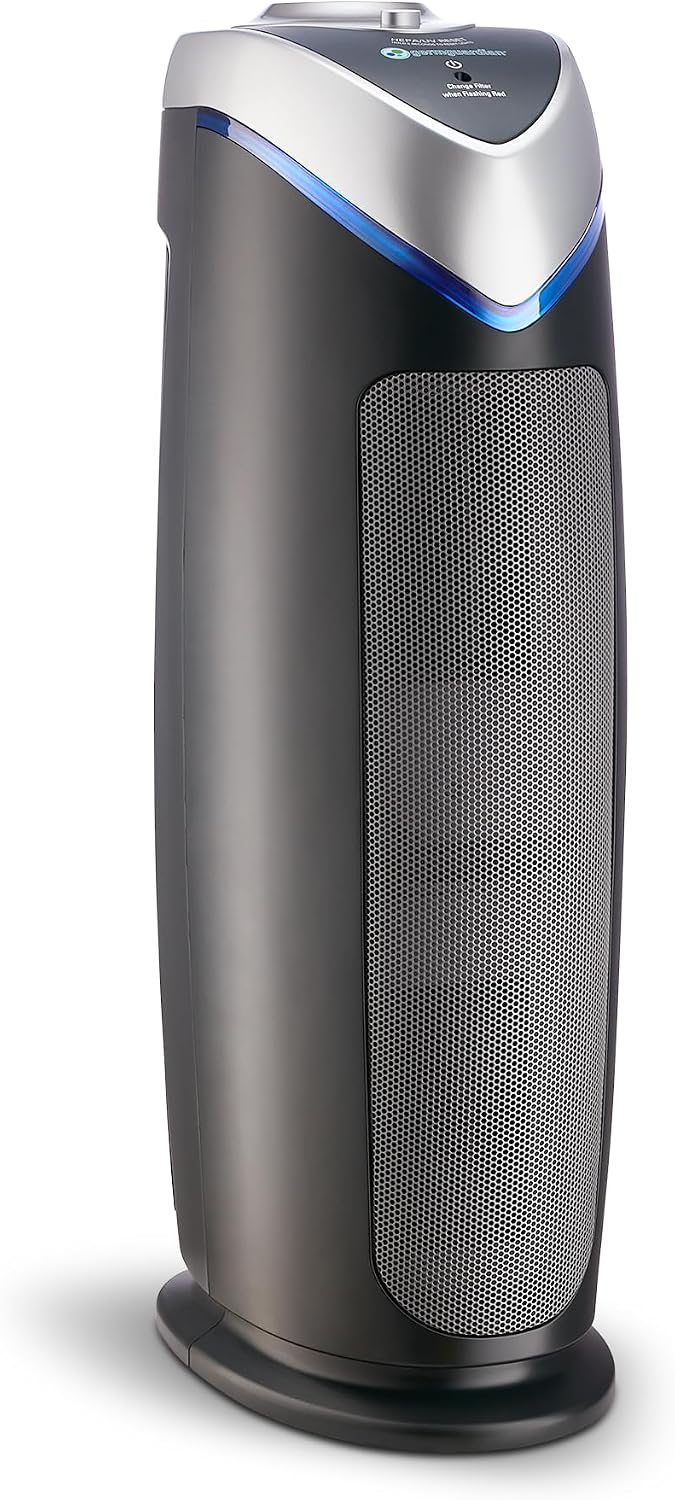
GermGuardian AC4825E
22-inch tower with a UV-C light, built for larger rooms that a compact unit can’t cover.
Prices and availability may vary — tap any product to check the current listing.
Decision Tree: Which Air Purifier Fits You?
You want a bedroom purifier with app control and auto mode → LEVOIT Core 300S.
You want the same clean air without smart features → LEVOIT Core 300 — simpler, usually costs less.
Your room is large, or you want the UV-C feature → GermGuardian AC4825E tower.
You’re purifying an open-plan living space → Size up to a large-room unit; compacts will struggle.
Key Takeaways
The LEVOIT Core 300S pairs HEPA-grade filtration with Wi-Fi, auto mode, and an advertised 22 dB sleep mode.
Match the purifier to the room — compacts suit bedrooms, towers suit larger spaces.
Run it consistently, not just during flare-ups; filtration is cumulative.
Budget for replacement filters every 6 to 8 months — sooner with pets.
Give it breathing room: corners and blocked intakes kill performance.
Common Questions About LEVOIT Core 300S Air Purifiers
Is the smart version of the LEVOIT Core 300S worth the premium?
The Wi-Fi app control, scheduling, and air quality monitoring are genuinely convenient — adjusting from the couch and automating schedules has real daily value — but the core filtration is the same as the non-smart sibling, so you're paying for convenience, not cleaner air.
Buy smart if you'll use the app; buy basic if you just want clean air.
Neither choice filters better; they just interact differently.
How quiet is the LEVOIT Core 300S in sleep mode?
At around 22dB in sleep mode, it's quieter than a whisper and effectively silent in a bedroom — most people can't hear it over normal room tone, which is why it's such a popular bedroom pick. Higher fan speeds are audible but still reasonable, and for light sleepers, sleep mode is the feature that matters most.
Higher fan speeds are audible but still reasonable.
For light sleepers, sleep mode is the feature that matters most, and this one delivers.
What room size is the Core 300S good for?
It's designed for bedrooms and small-to-medium rooms — roughly up to 200 square feet for effective air changes — which covers the spaces where most people actually need purification. Oversizing a purifier for a big open-plan living area leaves it underpowered, so size the purifier to the room.
Oversizing a purifier for a big open-plan living area leaves it underpowered.
Size the purifier to the room, and for large spaces, consider a bigger model or two units.
Core 300S vs the non-smart Core 300: which should I buy?
Buy the 300S if you want app control, voice assistant integration, and scheduling — buy the plain 300 if you want the same filtration for less money and don't care about smart features. The filters, noise levels, and cleaning performance are essentially identical, so it's a lifestyle choice, not a performance one.
The filters, noise levels, and cleaning performance are essentially identical.
It's a lifestyle choice, not a performance choice.
How much do LEVOIT replacement filters cost over time?
Replacement filters typically last 6 to 8 months and cost a moderate amount per filter, making the annual running cost reasonable compared to the purchase price — but factor it in, because it's the real long-term cost of owning any purifier.
Third-party filters exist but vary in quality.
Budget roughly one to two filters per year for honest cost planning.