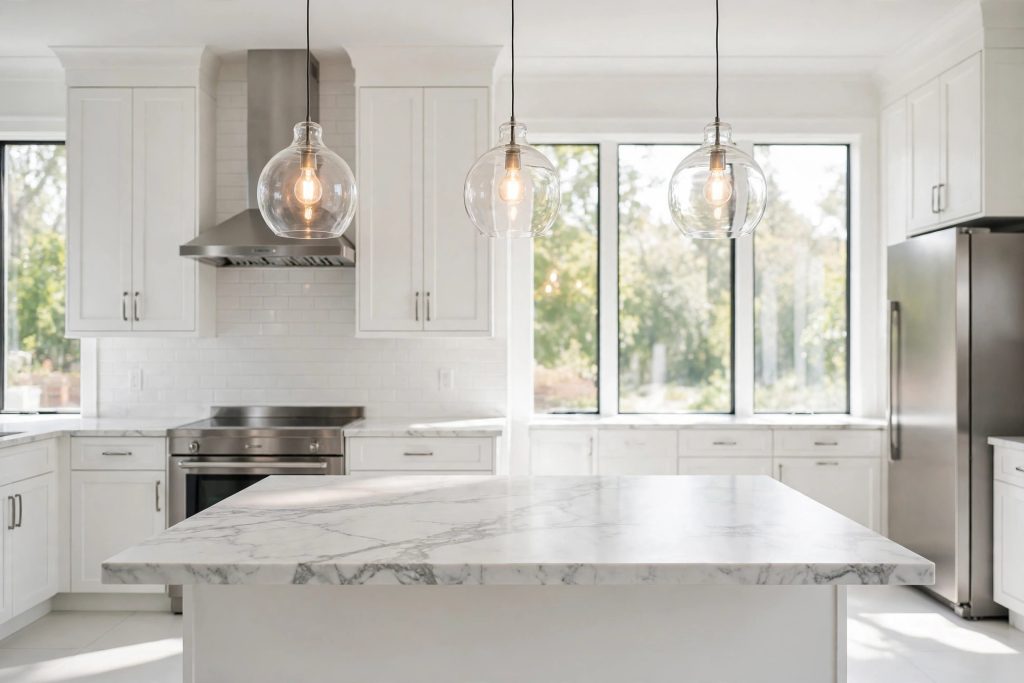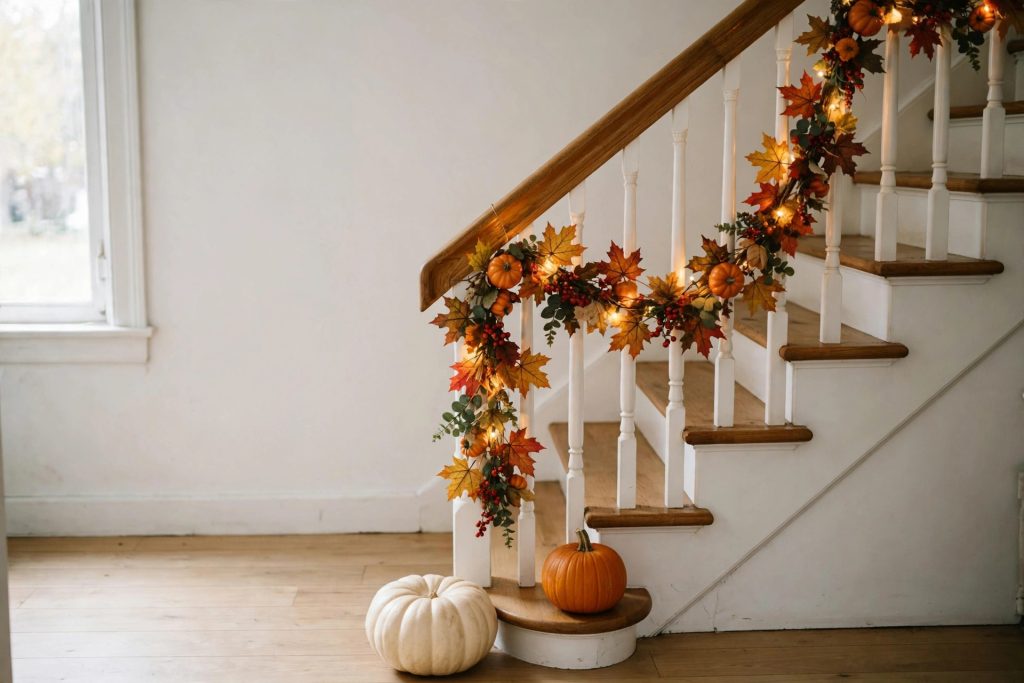
The laundry basket is how I found out. Coming down my own stairs in socks, both hands full of towels, hip out looking for a handrail that was wearing a full wrap of lighted garland. The rail was in there somewhere. Under about two inches of wired maple leaves and a strand of lights, arranged by me, photographed by me, praised by me that morning.
My hip found the newel post first.
Stairs are the one surface in a house that has a job during an emergency. Everything else — mantel, console table, the wreath on the door — is allowed to be pure decoration. A handrail is not. It is the thing your hand expects to close around at 2 a.m., half asleep, when something downstairs has gone wrong and you are moving faster than your eyes are working. Any halloween staircase decorations plan that starts with wrapping the rail has quietly demoted a safety device to a photo prop, and the product photos never show you a hand actually trying to grip the thing.
Then there is the math, which the listings seem determined to keep from you. A swagged garland — the drapey one, tied at every third or fourth baluster — needs about one and a half times the length of your rail run. A full wrap needs closer to double. My rail measures just under 11 feet, call it 12 once you add the drop down the newel post. The garland size half the seasonal listings push hardest is 9 feet. Nine feet of garland on a 12-foot rail gives you a swag that ends, visibly, two-thirds of the way up, and a bare section of balusters that makes the whole staircase look like it gave up. I have bought that exact strand. Twice, if I am honest, because the first time I blamed my measuring.
So where does the garland go, if not on the rail?
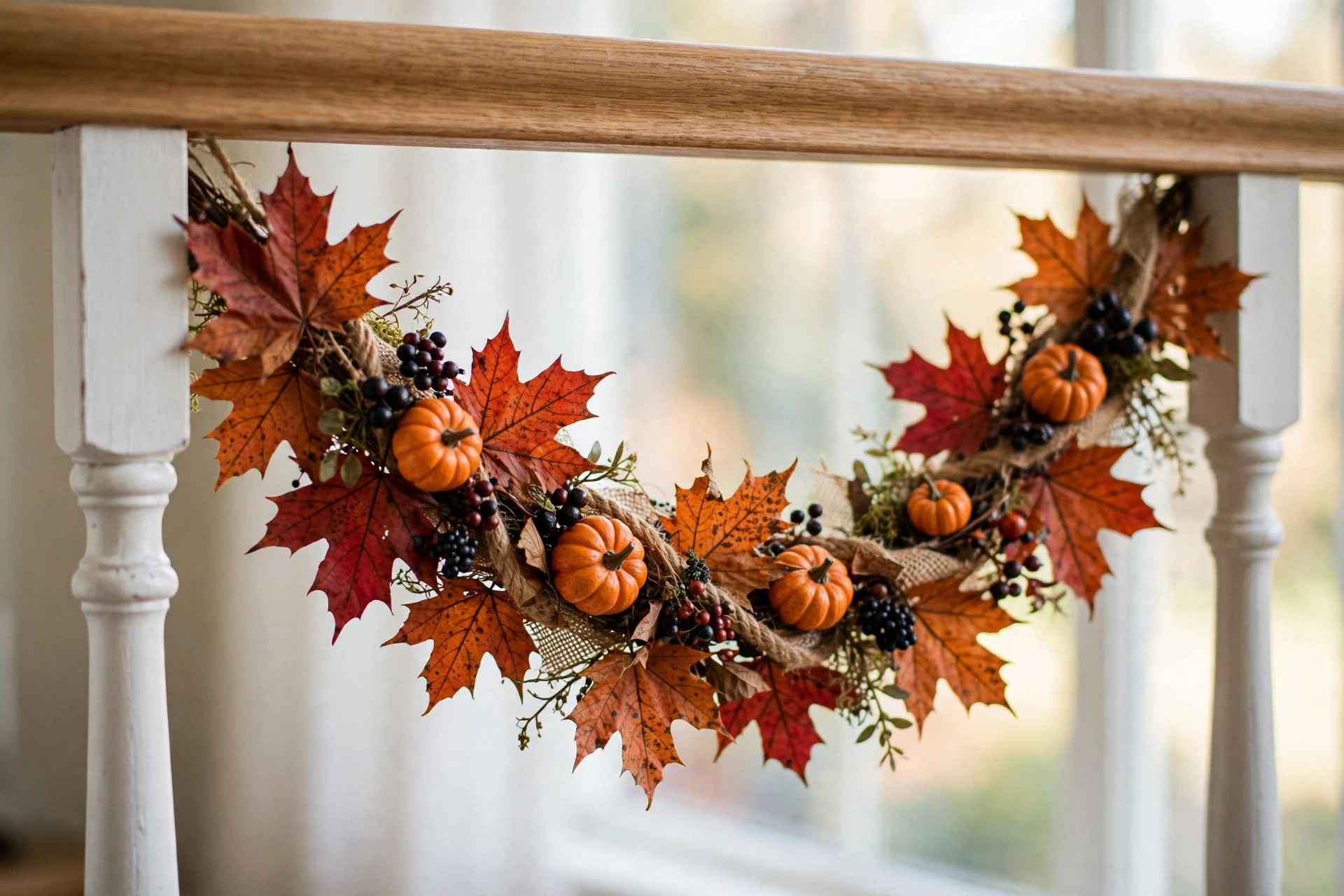
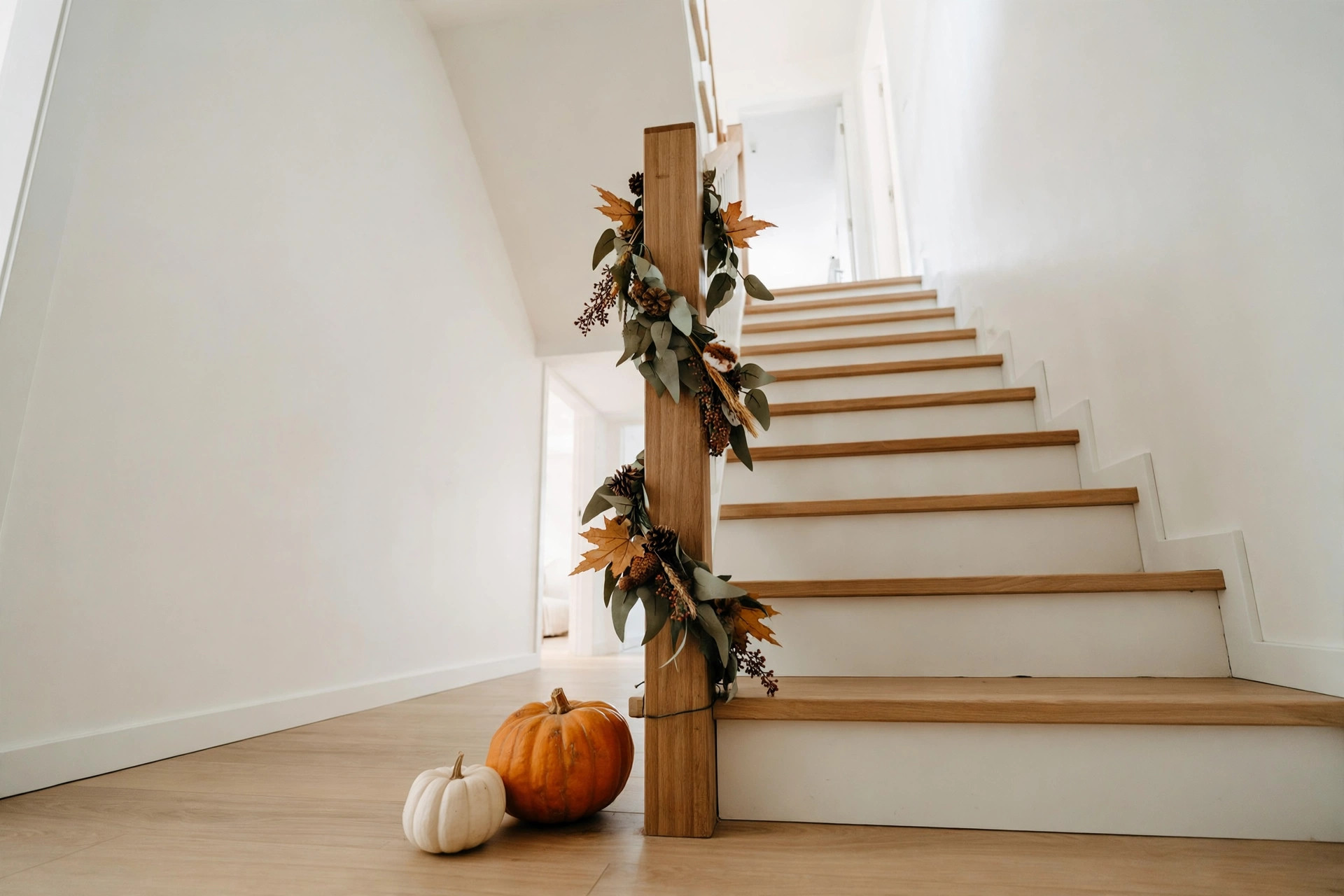
Below the grip line — swagged between the balusters, woven low near the steps, or parked on the newel post. Those are the three placements that survive October in a house where people actually use the stairs, and they are not interchangeable. The swag is the classic look and the most expensive in footage, because every dip spends length you already paid for. The low weave, run in and out of the balusters near the treads, keeps the rail completely free, and at night the lights sit close to the steps where your eye travels anyway. The newel post wrap is the cheap date of the three: one short strand, one post, ten minutes, and it photographs like you did the whole staircase.
When you test the tie points, do not just look at them — grab the garland and give it a firm shake, the way a coat sleeve or a backpack strap will grab it by accident. Lateral play is the whole story. A swag that slides a half inch in your hand on day one will be pooling on a tread by the end of week two, and the fix at that point involves a step ladder and language.
I used to call the full wrap the committed option, the one serious decorators chose. Actually, no. That is not right. What I meant was it photographs the best for the longest continuous stretch, which is a different claim, and in a house with kids, older knees, or anyone carrying anything, it is the first of the three I would talk you out of. Keep the rail naked. Your hand will thank you on a night I cannot predict and neither can you.
The underside is where cheap garland confesses
Before any strand goes up, turn it over. Check the underside seams and cut ends on this stuff, because that is where the factory’s honesty lives. On a cheap garland the wire core simply ends — snipped, exposed, occasionally sharp — and those ends spend a month rubbing against varnish, paint, and every sweater cuff that brushes past. Two winters of that and the underside of a handrail can look sanded. Not by you. By a nine-dollar decoration.
The bend test takes ten seconds. Bend a section into a shallow curve and let go. A wire-cored garland holds most of the bend, which is why a swag cut from it is still a swag on October 28. A floppy plastic-stemmed one springs nearly flat, and gravity spends four weeks arguing with it, and gravity is undefeated in my house. Ends looped or capped, core that holds a bend. That is the whole inspection, and it happens at the kitchen counter, not on a ladder.
Can’t I just line the steps with pumpkins? It photographs so well
You can, for about one photograph, and then somebody has to walk down those steps in the dark. A standard tread gives you roughly 10 to 11 inches of depth, and a socked adult foot uses most of it. Set a modest 4-inch pumpkin on that tread and the walking surface left is about 7 inches — shorter than the foot trying to use it. The math ends the idea all by itself. Pumpkins belong in two places on a staircase: clustered at the base of the newel post, on the floor, where they read as an exclamation point — the same clearance logic I worked through for the entryway Halloween setup — or on the landing, pushed to the wall side, out of the turning path of anyone carrying a laundry basket. Which, again, is how I found out.
The honest truth about lights on a staircase
Battery strands with a timer are the default on stairs, and it is not close. A plug-in strand has to reach an outlet, and on most staircases that means a cord crossing a landing or dropping down a wall where feet and vacuum cleaners go looking for trouble. I ran a plug-in set one year — before the laundry basket incident, I was younger and bolder — and the cord lasted four days before a vacuum wheel found it. I have not run plug-in lights on stairs since, so the newer flat-cord versions I genuinely cannot judge. They might be fine. They are just not going on my staircase to find out.
Battery boxes bring their own small stupidity. The pack has weight, and the natural place a strand wants to end is at the base of the newel post, tread side, exactly where every pair of shoes rounding the corner kicks it. Tuck it behind the post, floor side, out of the traffic line. And the timer is not a convenience feature on stairs, it is the entire point: a 6-hour timer means the lights come on at dusk and die before midnight without anyone hunting a switch in the dark, which was, let us remember, the original problem. Plug-in strands can stay where they belong, up on the Halloween mantel decor, near an outlet and away from feet.
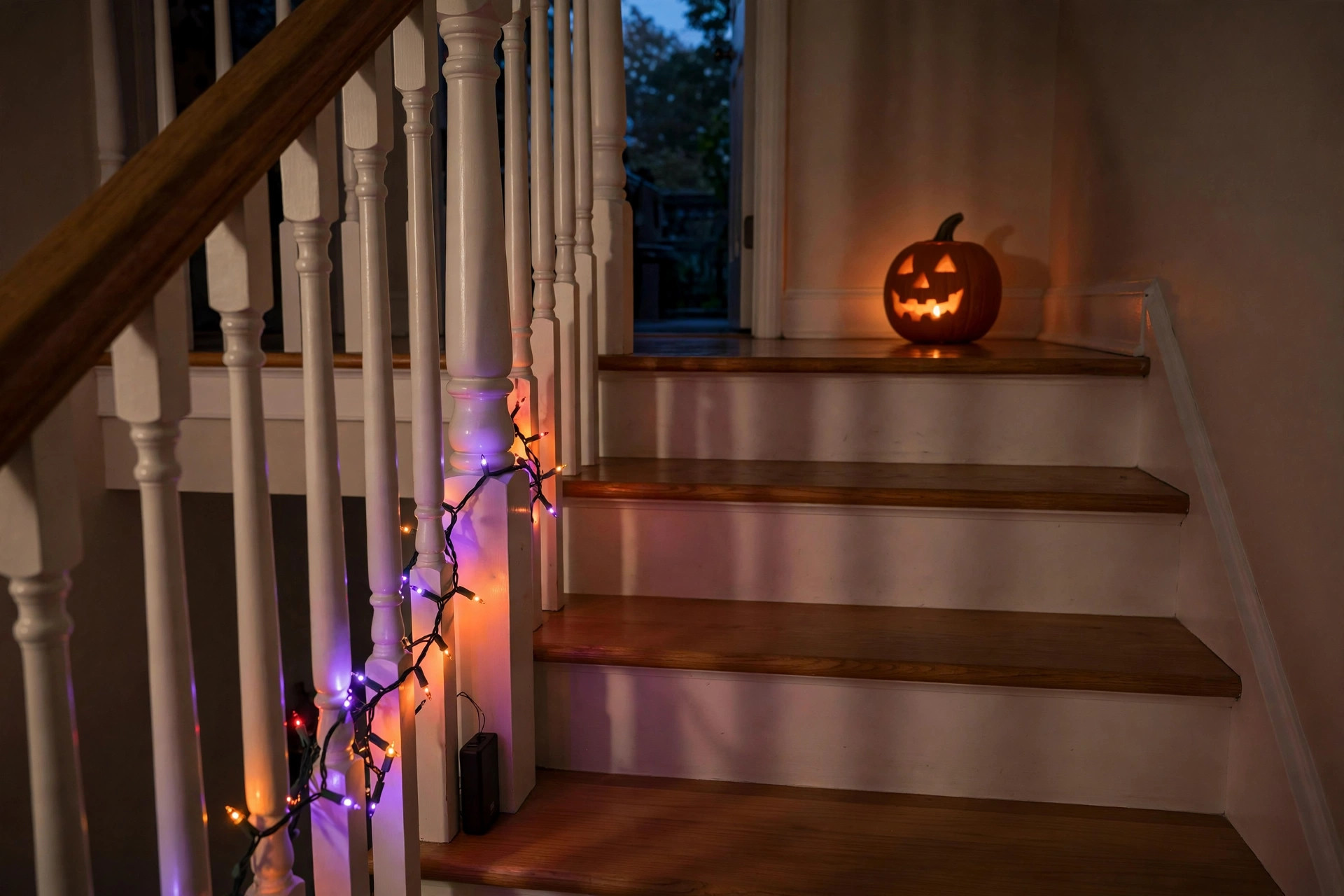
What survives in my own house, after several Octobers of buying the wrong lengths: one swag run on the balusters, footage bought by the formula and not by hope. A short wrap on the newel. Lights low, on a timer, battery pack where shoes cannot find it. The rail itself bare wood, doing its one job. It is a shorter list than the cart I filled in September. It always is.
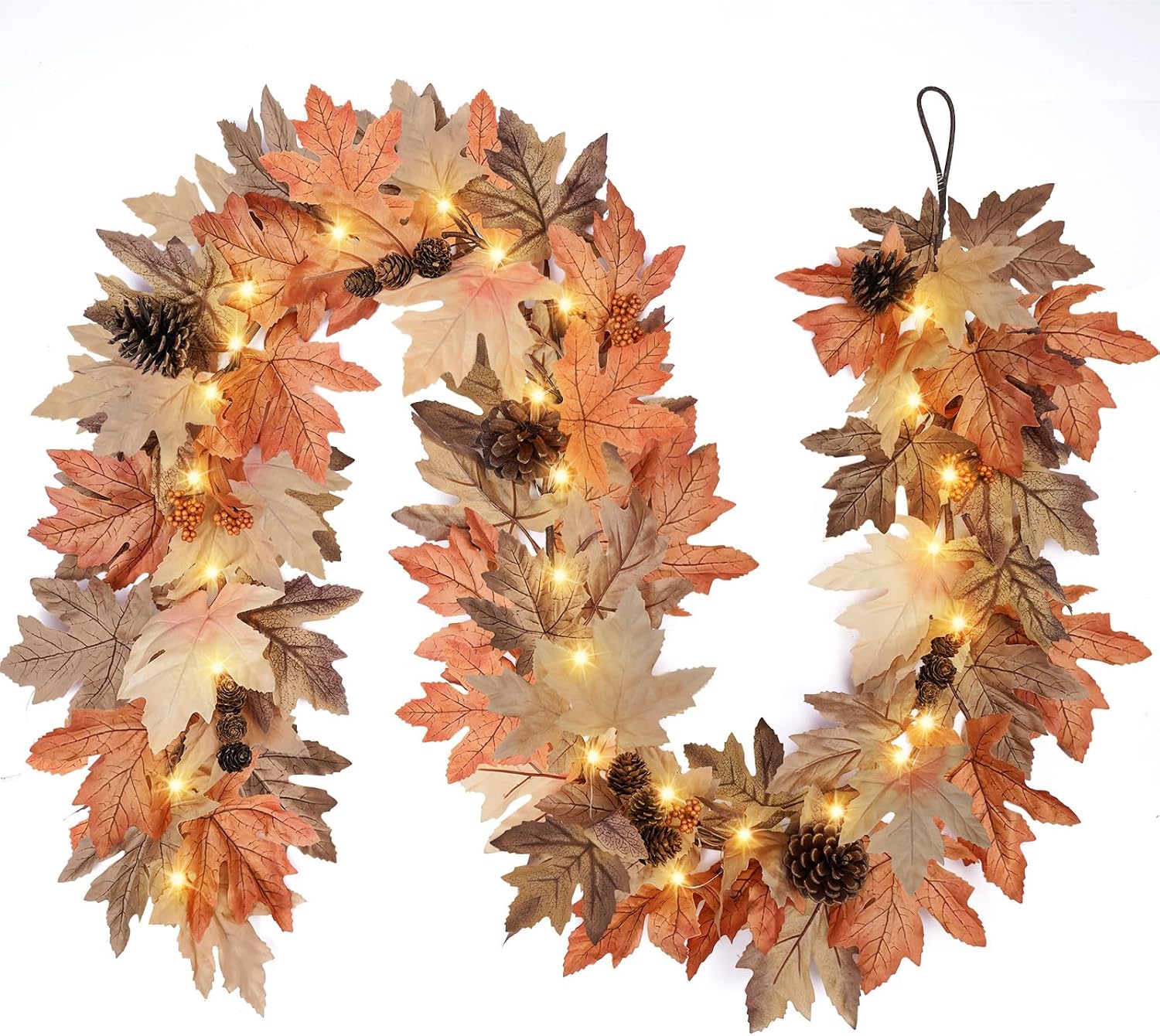
Maple leaves, berries and pine cones on a 6ft strand · built-in timer, so buy it in pairs for any rail over 8 feet
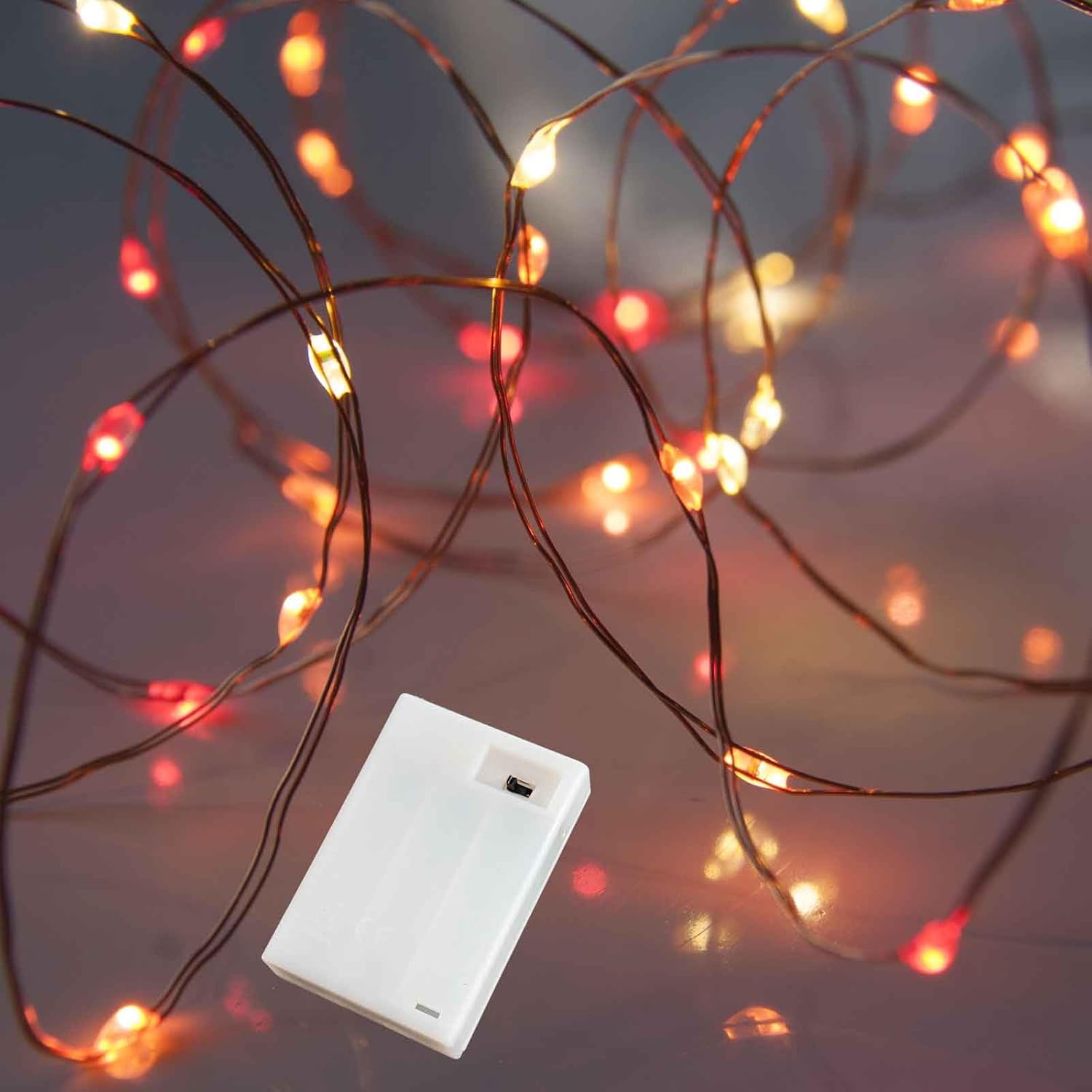
Red, orange and yellow LEDs on a battery strand · sized for the low baluster weave, no outlet hunt
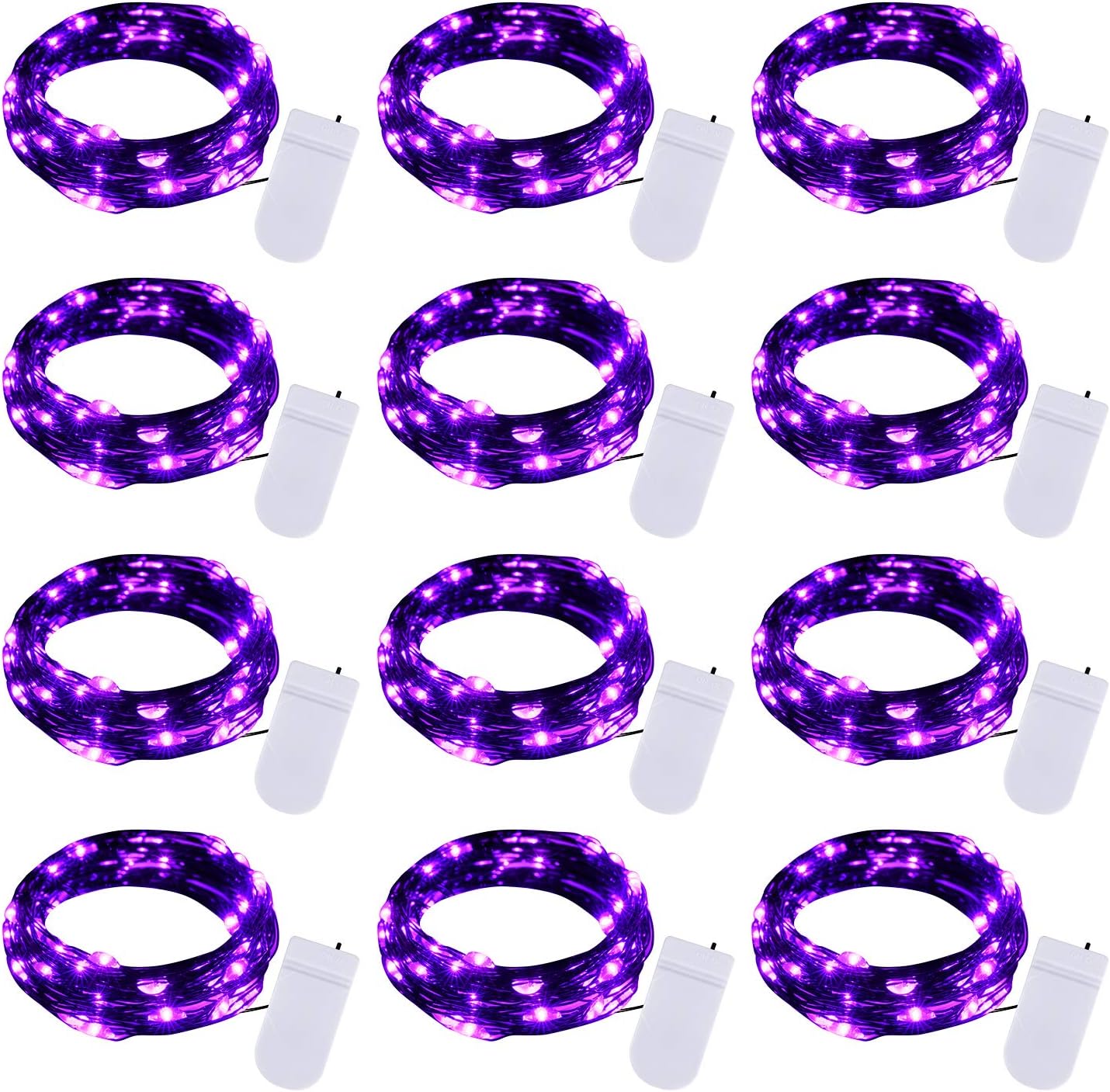
Twelve short purple strands in one box · the newel post, the landing corner, and spares for when one pack dies in week three
Frequently Asked Questions
How much garland do I need for a 12-foot banister, really?
Eighteen feet for a swag, about twenty-four for a full wrap, and twelve feet exactly will disappoint you in either style. The swag figure is the one most people are shopping for: measure the rail run, multiply by one and a half, then round up to whatever strand sizes exist, because garland comes in fixed lengths and the leftover foot or two disappears into the newel post wrap anyway. Two 9-foot strands is the common answer, with the join hidden at a baluster where a tie covers the seam.
Will garland ties scratch a painted handrail?
They can, yes, though the ties usually get blamed for damage the garland itself did. The scratching comes from exposed wire ends at the cut points, dragged a few millimeters every time someone brushes past or the swag gets adjusted. Fabric-covered ties, or a strip of felt under each tie point, mostly solve it. Wrapping tighter does not — it just presses the wire ends in harder. I learned that one on a painted rail I had to touch up in November, which is a stupid month to be touching up a handrail.
My staircase has no banister at all. Is the whole idea dead?
No, it just moves. Open and floating staircases take the decoration at the two ends instead of along the run: a cluster at the base — pumpkins, a short strand wound through them, one light source — and a smaller matching moment at the landing, plus a wall piece on removable hooks if the wall allows it. It reads as intentional rather than unfinished, oddly. The same base-and-landing logic runs the front porch Halloween setup outside, where there is also no rail worth trusting.
Kids and a dog use my stairs fifty times a day. What is the least annoying setup?
The low weave, battery lights on a timer, and nothing on the treads at all. Woven low along the balusters, the garland sits below the dog’s leash arc and mostly out of the path of small hands carrying things down — mostly, because no decoration survives a determined six-year-old and I am not going to pretend otherwise. Skip anything scented on stairs, skip anything with a cord, and expect to re-tie one section around the middle of the month. Ten minutes. It is the cheapest maintenance this holiday asks of you, honestly.
This site contains affiliate links. We may earn a commission on qualifying purchases.