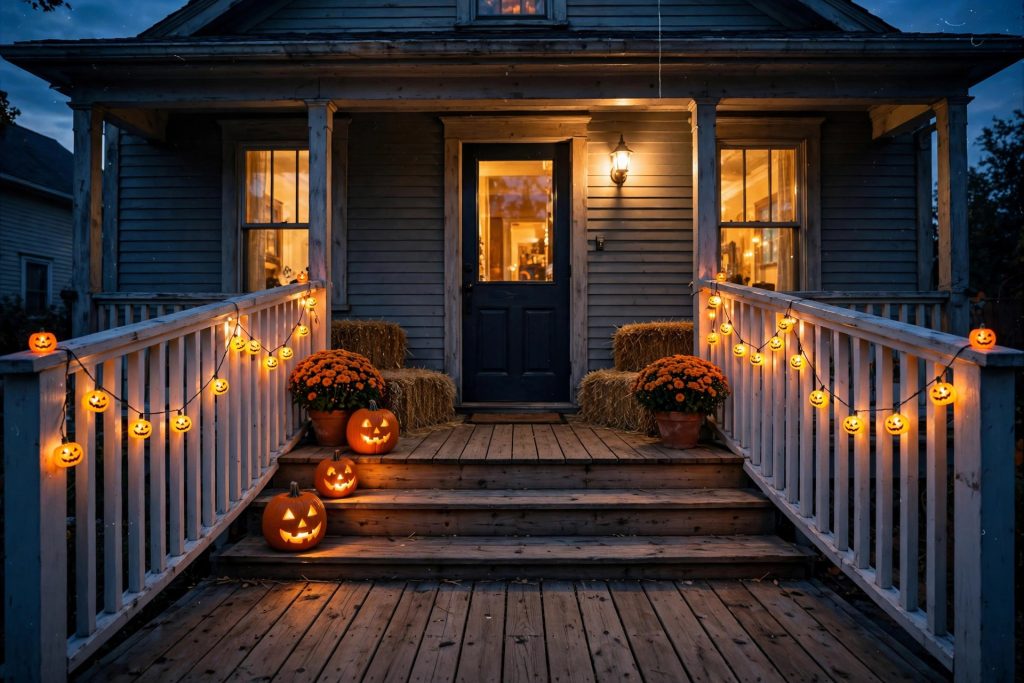
Your front porch is the first thing trick-or-treaters see on Halloween — and the last thing they remember. A well-decorated porch doesn’t need a horror-movie budget; it needs a plan, good lighting, and a few oversized pieces that read well from the street. This guide walks you through exactly how to do it, step by step.
Related: See our How Do I Decorate for a Pink Halloween? (2026 Styling & Buyi for a detailed comparison.
Related: See our How to Decorate a Dining Table for Halloween? for a detailed comparison.
Related: See our How to Decorate a Living Room for Halloween? for a detailed comparison.
The Quick Answer
To decorate a front porch for Halloween: pick one theme, layer lighting (string lights plus glowing jack-o’-lanterns), add pumpkins at three heights (steps, porch floor, railing), include one large statement piece visible from the sidewalk, and weatherproof everything. Start setting up 2–3 weeks before Halloween, but carve real pumpkins only 3–5 days before the 31st.
Step 1: Pick a Theme Before You Buy Anything
The short version: one clear theme looks expensive; five mixed themes look like a yard sale.
The single biggest mistake people make is buying decor one item at a time with no plan. Before you spend a dollar, choose one lane:
- Classic spooky — orange and black, jack-o’-lanterns, bats, witches. Never fails, always reads as “Halloween” from the curb.
- Elegant harvest — pumpkins, hay bales, mums, lanterns. Festive without being scary; great if you also want decor that works through Thanksgiving.
- Haunted house — skeletons, cobwebs, fog, creepy lighting. Maximum drama, but it takes more pieces to look intentional.
- Cute and kid-friendly — friendly ghosts, smiling pumpkins, purple and orange lights. Ideal if your porch gets heavy trick-or-treater traffic.
Write your theme down. Every item you consider has to pass one test: does it fit the theme? If not, it stays in the store.
Step 2: How Much Decor Does a Porch Actually Need?
The short version: decorate three zones — entry, steps, and railing — and vary the heights.
Pros decorate in zones, not by counting items. Cover these three, and your porch looks complete:
- The entry: your front door is the focal point. Frame it symmetrically — a matching pair of hay bales, planters of orange mums, or tall corn stalks on both sides instantly looks “designed.”
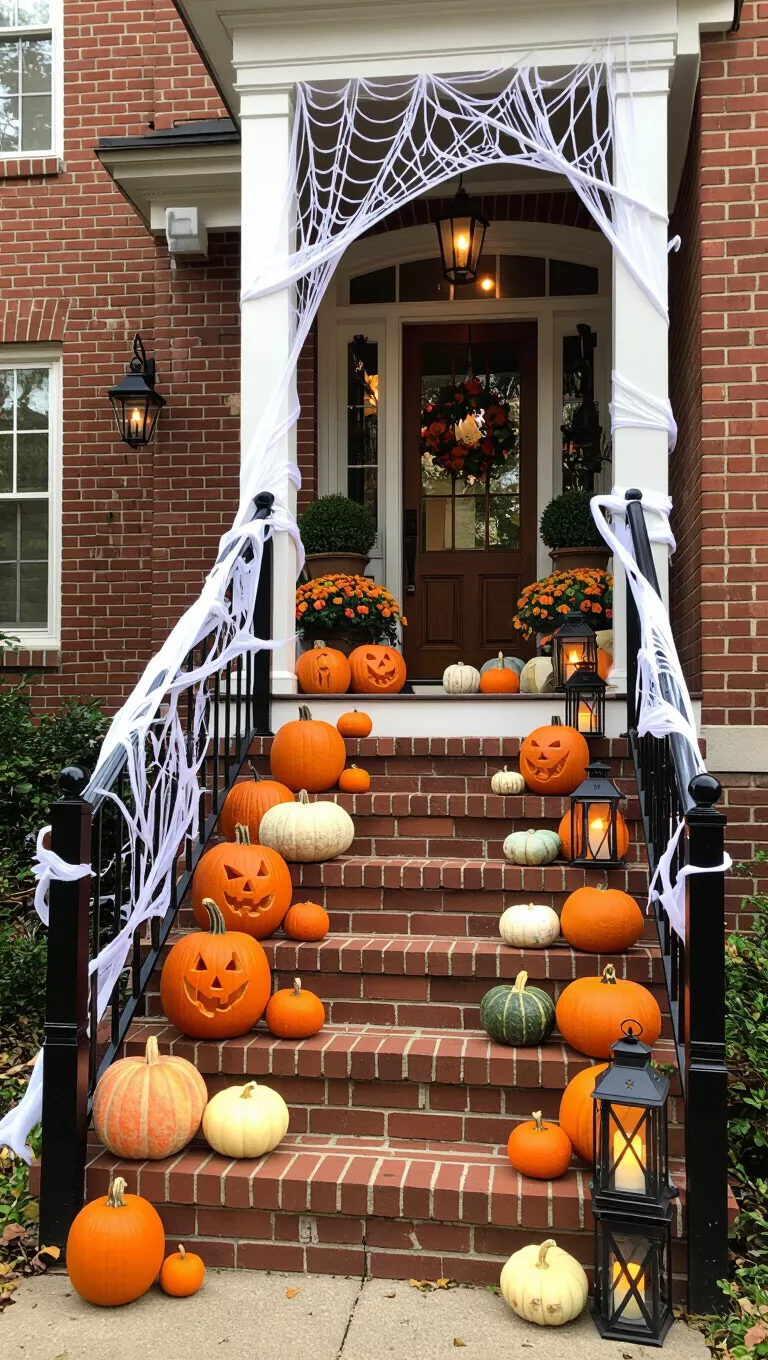
- The steps: line steps with jack-o’-lanterns or lanterns in descending sizes. Three pumpkins in small-medium-large reads far better than three identical ones.
- The railing: drape lights or garland along the full length. This is what catches the eye from the street at night.
One more rule of thumb: group items in odd numbers (3, 5, 7). Even groupings look flat; odd groupings look natural. And leave the walkway itself clear — decorations spilling onto the path are a tripping hazard for trick-or-treaters.
Step 3: Lighting — The One Thing That Makes or Breaks It
The short version: if your porch is lit after dark, it looks decorated; if it isn’t, it doesn’t — no matter how many props you own.
Halloween is a nighttime holiday. A porch that glows after sunset needs surprisingly few decorations to make an impression, while an unlit porch full of props disappears by 7 PM. Layer two kinds of light:
- Ambient string lights along the railing or porch ceiling — warm white for elegant themes, orange or purple for spooky ones. LED strings use very little electricity (a full string typically draws only a few watts), so leaving them on all evening costs next to nothing.
- Focal glow — lit jack-o’-lanterns or LED candles on the steps. This is the light people photograph.
Swap real candles for LED or battery-operated lights inside pumpkins and lanterns. Open flames on a porch with dry leaves, hay, and costumes is a fire risk — and LED versions look just as good in photos.
Our Porch Lighting Pick
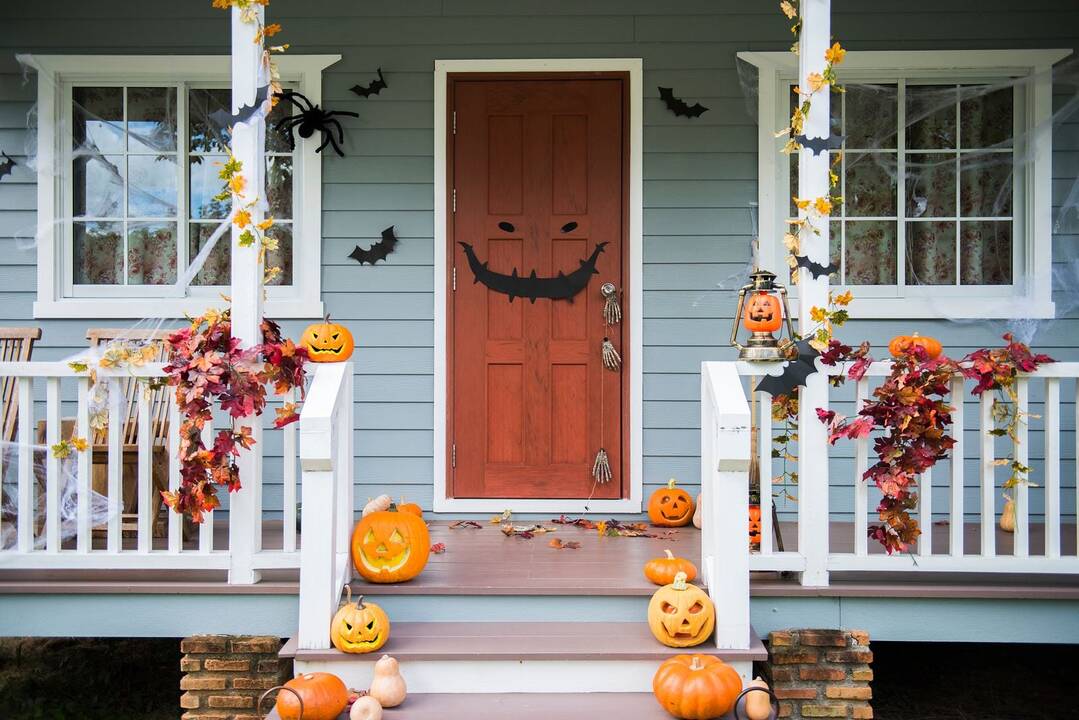
Spooky LED Pumpkin String Lights for Halloween
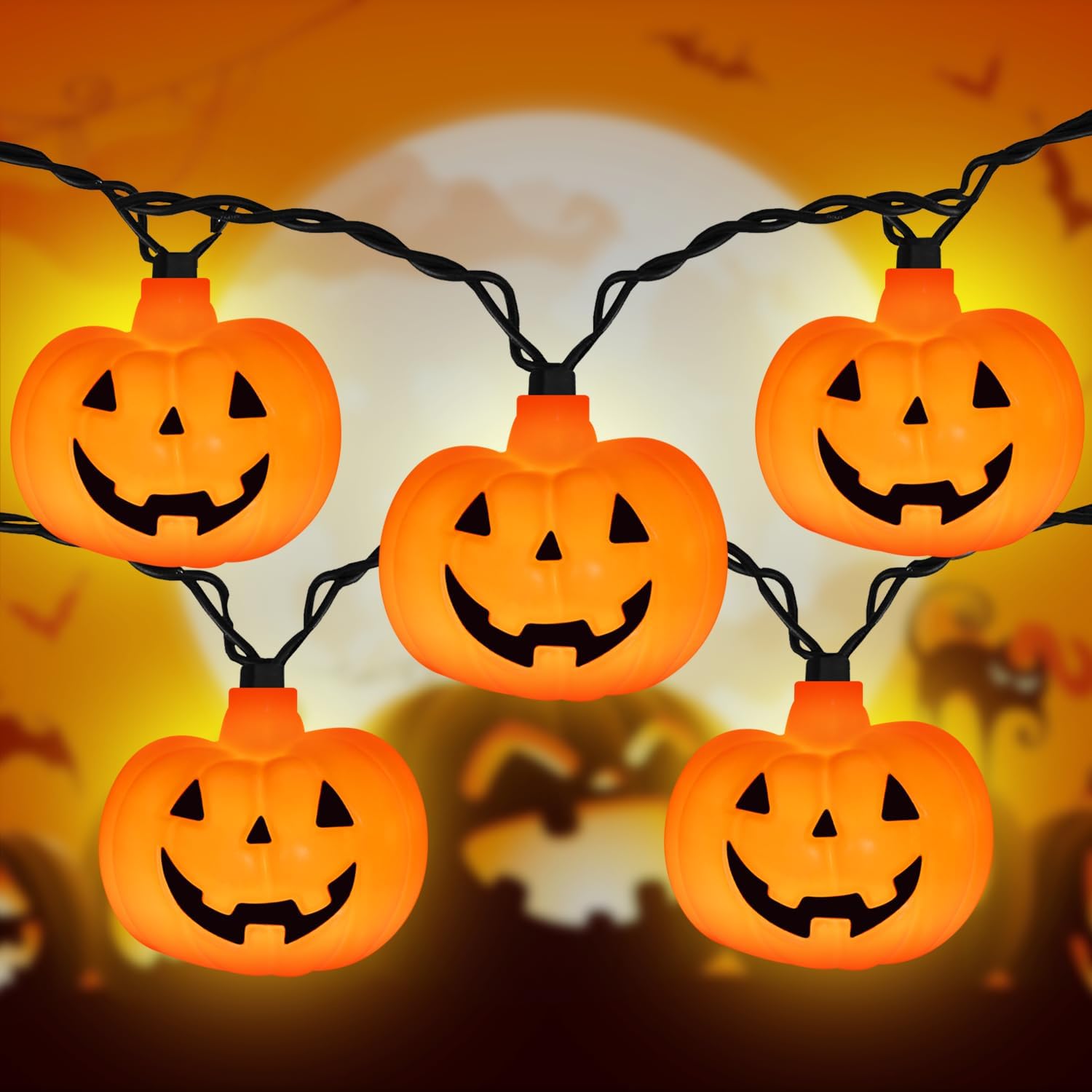
An 8.5 ft plug-in LED string of smiling jack-o’-lantern faces — exactly the kind of railing light this guide is built around. We covered the full buying criteria (power source, weatherproofing, durability) in our in-depth review of these pumpkin string lights.
Step 4: Real vs. Faux Pumpkins — What Holds Up Outdoors?
The short version: use real pumpkins for carving close to Halloween; use faux for everything displayed early.
Once carved, a pumpkin lasts only 3–10 days outdoors — closer to 3–5 days in warm weather, up to a week in cool (50–60°F) air. Uncarved pumpkins keep for 8–12 weeks. So the timing strategy is simple:
- Early October: set out uncarved pumpkins, faux carved pumpkins, hay bales, mums, and corn stalks. These survive weeks of weather.
- 3–5 days before Halloween: carve your jack-o’-lanterns and put them out. They’ll look fresh on the 31st instead of collapsing into mush.
Faux pumpkins have gotten genuinely good — foam and resin versions carve like the real thing and can be reused for years, which makes them the sustainable choice if you decorate every October. Mix them in freely; nobody can tell at night.
Step 5: Go Big on a Budget — Large-Scale Pieces With the Most Impact
The short version: one oversized piece beats ten small ones, especially from the sidewalk.
Small decorations vanish at distance. From 30 feet away, nobody sees your 4-inch skeleton — they see silhouettes and scale. If the budget is tight, spend it on one or two large items:
- A 5–6 ft figure or prop (skeleton, ghost, witch) placed where it’s visible from the street.
- Projected or silhouette window scenes — a cut-out haunted scene taped inside a lit window costs almost nothing and looks spectacular.
- Overgrown cobwebs with large spiders stretched across the porch ceiling or bushes — high visual impact, very low cost.
DIY tip: cornstalks, hay bales, and mums from a local farm stand usually cost less than big-box Halloween props and double as Thanksgiving decor afterward.
Step 6: Weatherproof Everything (or Regret It)
The short version: check every label for outdoor use, elevate electronics off the ground, and bring fabric items in before rain.
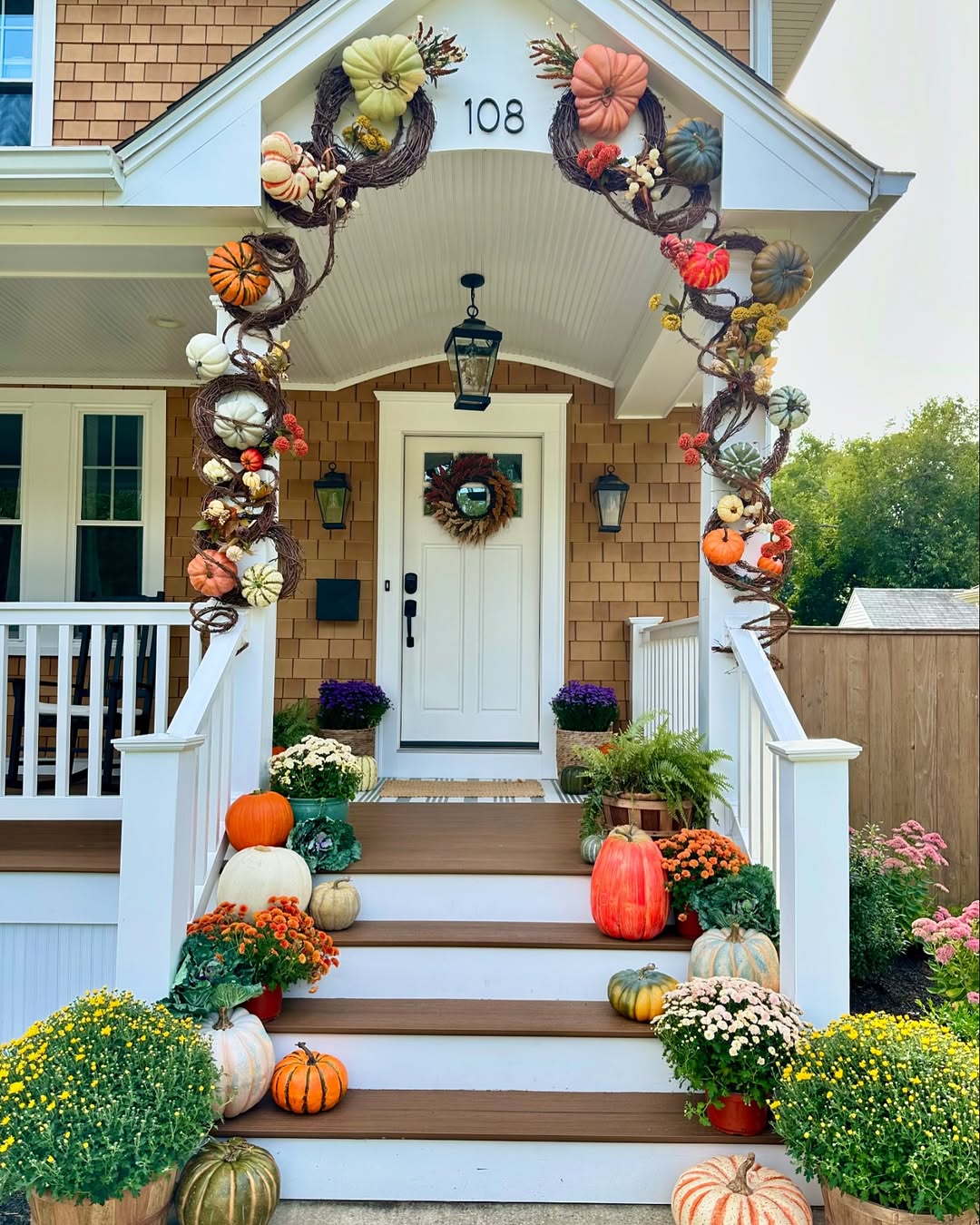
October weather is unpredictable, and nothing kills the vibe like soggy decor. A few non-negotiables:
- Use only outdoor-rated lights and extension cords. Indoor-rated strings in rain are a genuine electrical hazard.
- Keep plugs and battery packs elevated and covered — a plastic container with holes cut for cords works as a cheap weatherproof box.
- Bring fabric ghosts, paper bats, and cardboard cutouts inside before forecasted rain, or spray them with a fabric waterproofing treatment.
- Anchor lightweight props. A toppled 6-ft skeleton in the neighbor’s yard is funny once; after that it’s litter.
When Should You Put Up Halloween Porch Decorations?
The short version: non-perishable decor 2–3 weeks before Halloween; carve real pumpkins 3–5 days before.
Most neighborhoods start seeing decorations around mid-October, and there’s no penalty for being early with durable items. The only thing with a real deadline is carved pumpkins (see the 3–10 day rule above) and anything with fresh flowers or foliage. A good timeline:
- Early October: lights, hay bales, mums, corn stalks, faux pumpkins, large props.
- Week of Halloween: carved jack-o’-lanterns, final cobwebs, window silhouettes.
- November 1: pull the spooky stuff, keep the harvest elements — pumpkins and mums carry you straight into Thanksgiving.
Frequently Asked Questions
How do I decorate a small porch for Halloween?
Go vertical. Hang bats or ghosts from the porch ceiling, drape lights along the railing, and use the door itself as the centerpiece with a wreath or window silhouette. Small porches look cluttered fast, so limit yourself to one theme and three decoration types.
How can I make my porch look spooky without spending much?
Lighting plus one large DIY element. Orange string lights (LED strings are cheap to run), a sheet ghost or cardboard silhouette, and carved pumpkins cost very little and read clearly from the street. Hit a farm stand for hay bales and corn stalks — they’re usually cheaper than Halloween-store props.
Are battery-operated or plug-in Halloween lights better for a porch?
Plug-in if you have an outdoor outlet nearby — consistent brightness, no battery swaps. Battery-operated if you need lights where no outlet reaches (wreaths, railings far from the house); choose sets with a built-in timer so they don’t drain overnight.
How do I keep squirrels from eating my porch pumpkins?
Uncarved pumpkins are the main target. A light spray of diluted vinegar or a commercial repellent on the skin deters most squirrels; faux pumpkins sidestep the problem entirely. Bring prized carved pumpkins in overnight if squirrels are aggressive in your area.
The Bottom Line
A great Halloween porch comes down to a theme, three decorated zones, and lighting that works after dark. Start with durable pieces in early October, add carved pumpkins the week of Halloween, and weatherproof anything with a plug. Do that, and your porch will be the one kids point at from the sidewalk.
Common Questions About Halloween Front Porch Decorations
How do I decorate my front porch for Halloween on a budget?
Pick one theme, invest in lighting, and buy one oversized statement piece — that formula looks expensive for very little money. String lights plus glowing jack-o'-lanterns do more visual work than a dozen small trinkets scattered around. Shop secondhand for the big pieces and use real pumpkins for cheap volume.
Shop secondhand and end-of-season sales for the big pieces, use real pumpkins for cheap volume, and let one clear theme tie everything together. A focused ten-dollar porch beats a scattered hundred-dollar one every time.
When should I put up Halloween porch decorations?
Set up the main display two to three weeks before Halloween — early enough to enjoy it, late enough that weather exposure stays manageable. Save carving real pumpkins for three to five days before the 31st so they still look fresh.
Inflatables and lights can go up with the main display; run them on a timer so they greet evening visitors automatically. Take everything down within a few days after Halloween before November weather destroys it.
How do I decorate a small porch for Halloween?
Go vertical and concentrate on the doorway — a wreath, a garland-framed door, stacked pumpkins at two heights, and one hanging element create full impact in minimal square footage. Small porches fail when decor spreads thin instead of clustering. Cluster decor at the doorway — a wreath, stacked pumpkins, and one hanging element — rather than spreading it thin across the porch.
Use the steps and railing as display tiers: pumpkins on steps, lights along the railing, one statement piece beside the door. Every item should be visible from the sidewalk; anything only visible up close is wasted on a small porch.
Real vs faux pumpkins — which is better for outdoor decorating?
Use both strategically: faux pumpkins for the early-season display since they survive weeks outdoors unscathed, and real carved jack-o'-lanterns for the final few days when their glow matters most. Uncarved real pumpkins last weeks and look great. They are perfect flanking the door for the full season while carved ones wait for the final days.
Carved pumpkins rot fast — three to five days in warm weather. If Halloween week runs warm where you live, lean harder on faux pumpkins and save one or two real ones for carving close to the night.
How do I weatherproof Halloween porch decorations?
Weight or stake everything — October wind is the number one decoration killer, and even sheltered porches get surprising gusts. Use sandbags inside inflatables, museum putty under lightweight pieces, and zip ties on anything hung from railings or hooks. Keep electrical connections off the ground and under cover, and bring fabric elements inside during heavy rain.
Choose outdoor-rated lights and extension cords, keep electrical connections off the ground and under cover, and bring fabric or paper elements inside during heavy rain. A display that survives the month beats a bigger one that blows apart in week one.