
Your living room is where Halloween is actually felt — the movie night on the couch, the party before trick-or-treating, the late-October evenings with the lights turned low. Unlike the front porch, this is the room your guests spend the most time in, and it doesn’t take a truckload of plastic props to make it feel right. One styled mantel, layered lighting, and a few pumpkins do about 80% of the work.
This guide shows you exactly how to decorate a living room for Halloween in a single afternoon, without spending a fortune or turning your space into a novelty shop.
The Quick Answer
To decorate a living room for Halloween: make the mantel (or main shelf) your focal point with pumpkins, candles, and one accent light; layer warm, low lighting with LED candles and string lights; dress the coffee table with a pumpkin cluster and seasonal textiles; add black paper silhouettes to windows and mirrors for the classic spooky look. Decorate 2–3 weeks before Halloween; carve real pumpkins only 3–5 days before the 31st.
Step 1: Make the Mantel Your Focal Point
The short version: one well-styled mantel beats a dozen scattered decorations — concentrate your effort where eyes land first.
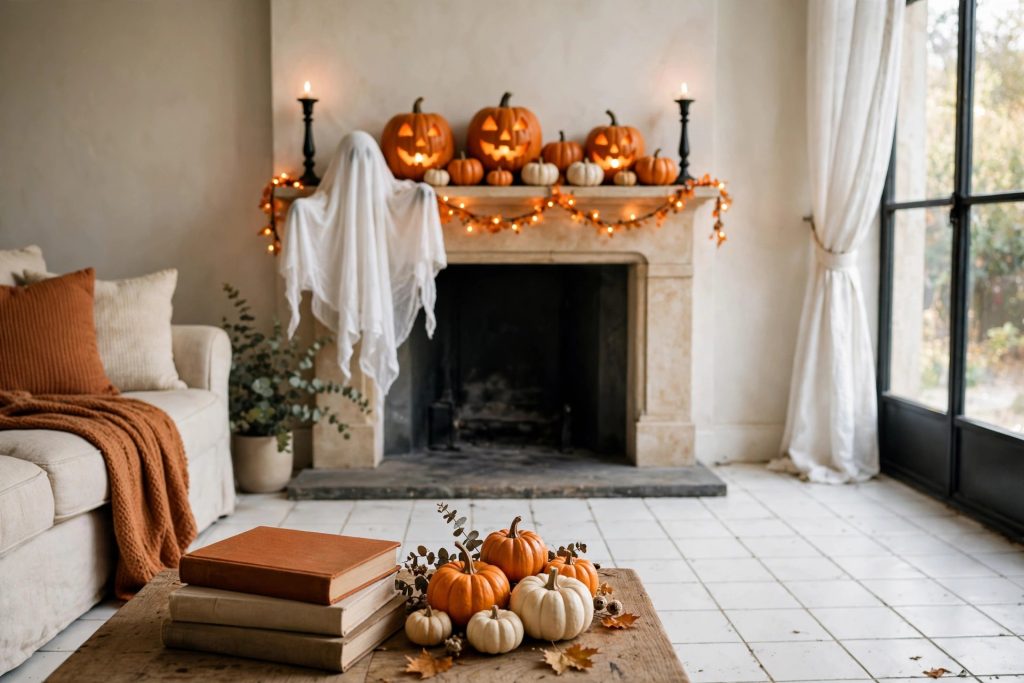
Every living room has a natural focal point — usually the fireplace mantel, or the main bookshelf if you don’t have one. Start there and make it the star. A simple, reliable formula: pumpkins in three sizes across the mantel, candlelight between them, and one glowing accent piece to pull it all together. The glow is what sells it — a softly lit ghost or pumpkin figure reads “Halloween” instantly, even in daylight, and after dark it becomes the mood-setter for the whole room.
Keep tall items toward the ends and lower ones in the center, just like a tablescape. Three candles grouped at varying heights look intentional; one lone candle in the middle looks like an afterthought. If your mantel is narrow, a single garland of orange string lights swagged across the front does double duty: it defines the mantel’s edge and adds the warm glow everything else sits in.
Our Pick: Spooky Ghost LED Night Light

A ghost-shaped LED night light with a soft, spooky glow — no open flame, so it sits safely on a mantel, shelf, or bookcase. It’s the kind of accent light this guide calls for: one small glowing piece that makes the whole vignette read as Halloween. Read our full review of the spooky ghost night light for details.
Step 2: Layer Spooky Lighting
The short version: Halloween living rooms are made by light, not stuff — warm low lighting does more than any prop.
Lighting is the single biggest lever in a Halloween living room. Start by turning the overheads down or off in the evenings, then rebuild the light from three layers:
- Candle clusters: group LED taper or tealight candles in threes at varying heights on the mantel, side tables, and bookshelves. Battery-powered flameless candles flicker convincingly, cost little to run for hours, and are safe around kids, pets, and fabric.
- String lights with intent: drape orange, purple, or warm-white string lights along the mantel edge, a curtain rod, or around a mirror frame. LED strings draw only a few watts, so you can leave them on all evening guilt-free.
- One accent glow: a ghost night light, a jack-o’-lantern, or a lantern on the coffee table gives the room a “source” of Halloween light — the thing guests’ eyes keep coming back to.
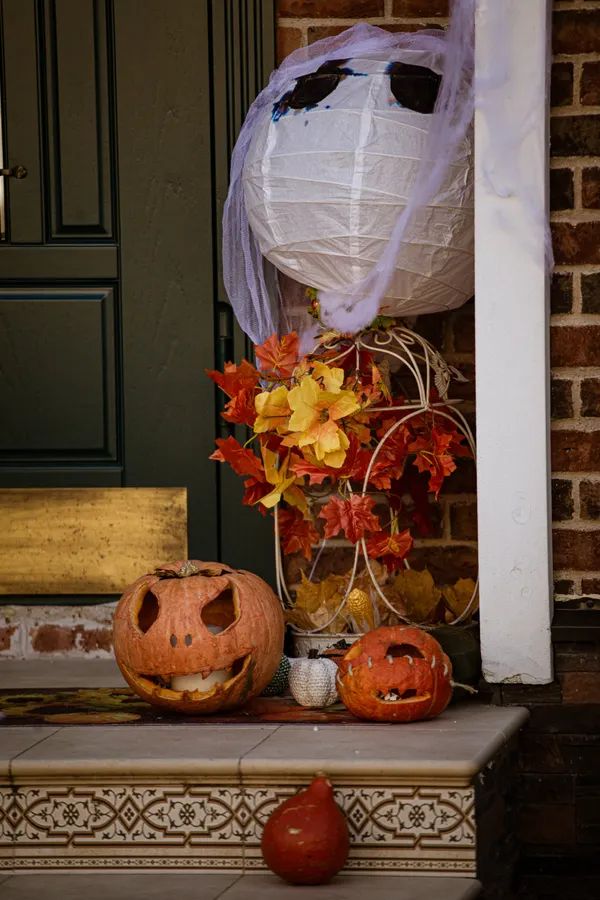
The trick is keeping it warm. Cool white or blue light reads clinical; warm amber, orange, and deep purple read spooky-cozy. If you already decorated your front porch for Halloween, echo the same light color inside so the house feels like one plan from the street to the sofa.
Step 3: Dress the Coffee Table and Soft Furnishings
The short version: a pumpkin cluster plus one seasonal textile swap transforms the coffee table and sofa with almost no money.
The coffee table is your second focal point. Group five to seven pumpkins — real, foam, or a mix — in different sizes and two colors (orange plus white or deep green looks richer than all-orange). Set them on a tray or a folded dark throw so they read as one arrangement instead of scattered produce. Tuck in one sprig of dried eucalyptus or faux berries for texture.
Then swap two textiles: a rust, burgundy, or charcoal throw over the sofa arm and one or two cushion covers in a Halloween or fall print. You don’t need a full bedding set of skeletons — two swapped pieces signal the season while everything else stays normal, which keeps the room cozy instead of costume-y. Faux pumpkins are worth the small investment here: they get reused year after year, while a carved real pumpkin lasts 3–10 days (less in a warm living room).
Step 4: Add Window and Wall Silhouettes
The short version: black paper bats and cat silhouettes on windows are the cheapest high-impact Halloween decor that exists.
This is the oldest trick in the book and still the best value. Cut bats, cats, or witches from black construction paper or cardstock and stick them to windows, mirrors, and glass cabinet doors. From inside, they read as playful decoration; from the street at night with the lights on, they project the classic haunted-house silhouette.
A few placement rules: cluster bats in odd numbers (three, five, seven) flying in one direction rather than scattering singles; keep them off the center of the TV wall where they’ll fight for attention; and put the biggest silhouette on the largest window, where it reads from outside. One afternoon of cutting gives you enough silhouettes for every window in the room — and they store flat for next year.
Step 5: Timing and Quantity Cheat Sheet
The short version: set up 2–3 weeks early, keep decor to three zones, and carve pumpkins last.
| Task | When / How |
|---|---|
| Set up the full living room | 2–3 weeks before Halloween (doubles as fall decor until then) |
| Carve real pumpkins | 3–5 days before October 31st (warm rooms shorten their life) |
| Decor zones | Three: mantel/shelf, coffee table, windows — not every surface |
| Candle groupings | Odd numbers (3 or 5) at varying heights per cluster |
| Flames near fabric | LED flameless only near throws, garlands, and paper decor |
Mistakes to Avoid
The short version: don’t decorate every surface, don’t mix four themes, and don’t use real candles near fabric.
- Decorating every surface: a living room covered in props feels like a store display, not a home. Three decorated zones with breathing room between them look richer than twenty scattered items.
- Theme soup: cute ghosts plus gory haunted-house plus elegant harvest plus goth. Pick one lane — playful, spooky, or elegant — and make every item pass the test.
- Real flames near fabric: throws, paper bats, faux cobwebs, and dried botanicals are flammable. LED candles everywhere near textiles; real candles only on stone, glass, or metal surfaces.
- Buying single-use everything: pieces that work for fall and Thanksgiving too (plain pumpkins, black candlesticks, amber glassware, string lights) cost less per use than Halloween-only novelties that live in a bin eleven months a year.
The Bottom Line
A Halloween living room needs three decorated zones and great lighting: a styled mantel with pumpkins and one glowing accent, a coffee table pumpkin cluster with seasonal textiles, and window silhouettes for the classic spooky read. Layer warm LED light through all of it, decorate 2–3 weeks before Halloween, and keep real flames away from fabric. Pair it with your Halloween dining table and the house is done — inside and out.
Common Questions About How to Decorate a Living Room for Halloween?
How do I decorate my living room for Halloween without it looking tacky?
For most anyone hosting for the season, layered lighting and a tight color palette do most of the work: nailing the core buying factors covers the essentials (faux pumpkins are worth the small investment here: they get reused year after year), keeping the choice simple without overspending on features you will not use.
Faux pumpkins are worth the small investment here: they get reused year after year, while a carved real pumpkin lasts 3–10 days (less in a warm living room)..
What is the easiest way to decorate a living room for Halloween?
The design details covered in this review: the core buying factors are the details that matter most (faux pumpkins are worth the small investment here: they get reused year after year) — get that right and the rest of the decision is easy.
Faux pumpkins are worth the small investment here: they get reused year after year, while a carved real pumpkin lasts 3–10 days (less in a warm living room)..
How can I decorate for Halloween on a budget?
The design details covered in this review: getting the core buying factors right sets a sensible ceiling (faux pumpkins are worth the small investment here: they get reused year after year), so you can stay inside it without giving up the result you want. Spend more only for durability or scale, not for looks.
Faux pumpkins are worth the small investment here: they get reused year after year, while a carved real pumpkin lasts 3–10 days (less in a warm living room)..
What colors work best for Halloween living room decor?
The design details covered in this review: the core buying factors are the details that matter most (faux pumpkins are worth the small investment here: they get reused year after year) — get that right and the rest of the decision is easy.
Faux pumpkins are worth the small investment here: they get reused year after year, while a carved real pumpkin lasts 3–10 days (less in a warm living room)..
When should I start decorating for Halloween?
The design details covered in this review: the core buying factors are the details that matter most (faux pumpkins are worth the small investment here: they get reused year after year) — get that right and the rest of the decision is easy.
Faux pumpkins are worth the small investment here: they get reused year after year, while a carved real pumpkin lasts 3–10 days (less in a warm living room)..