Quick Answer: How Do You Decorate Your Yard for Halloween?
The short version: A memorable Halloween yard needs just three things: one oversized anchor (an inflatable, a giant spider web, or a cluster of lit jack-o’-lanterns) visible from the street, weatherproof anchoring (stakes, tethers, and sandbags), and night lighting (LED spotlights or string lights on a timer). Plan one weekend afternoon to set up, decorate in the first half of October, and you’ll have a display that photographs well and survives autumn wind.
Step 1: Pick One Anchor, Not a Crowd
The short version: Every great yard display has a single hero piece; everything else plays a supporting role.
Yard decorating fails for one reason: too many small pieces scattered across the lawn, each one invisible from the sidewalk. The fix is a single anchor — one big, readable silhouette that tells passersby what the scene is about. From there, build outward with smaller props that echo the theme.
Anchors that work at street distance:
- Oversized inflatable (8–12 ft): The fastest way to fill a yard. Inflatables self-inflate in a few minutes with a built-in blower and glow from within once their LED lights kick in. A 10-footer reads clearly from 100+ feet away, which is exactly the viewing distance that matters.
- Giant spider web + spider: A 200-inch web stretched across a tree or porch columns, paired with an oversized spider, turns any corner of the yard into a haunted-house vignette — and costs far less than an animatronic.
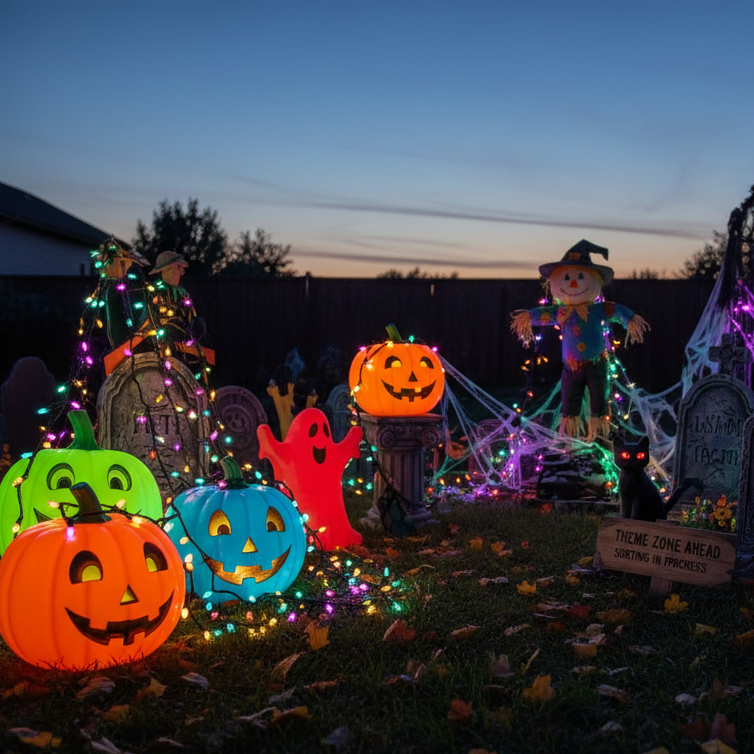
- Lighted pumpkin cluster: Three to five oversized jack-o’-lantern lights at staggered heights make a warm, friendly focal point that works for houses with small kids.
- Skeleton or yard stakes: Posable skeletons and yard stake figures (witches, ghosts) sit between the ground and eye level, filling the mid-range the way furniture fills a room.
Whichever anchor you choose, stand at the curb and check it before committing. If you can’t name what you’re looking at within two seconds, the piece is too small or too busy for your lot.
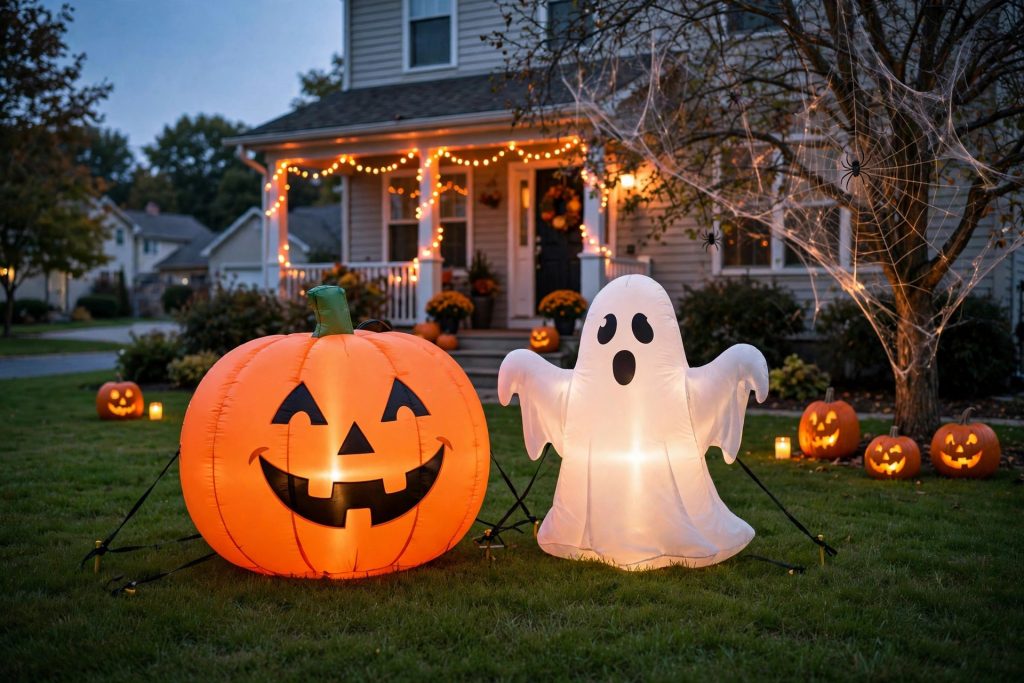
Our Pick for the Yard Anchor: 10FT LED Outdoor Halloween Inflatable Pumpkin Ghost Combo
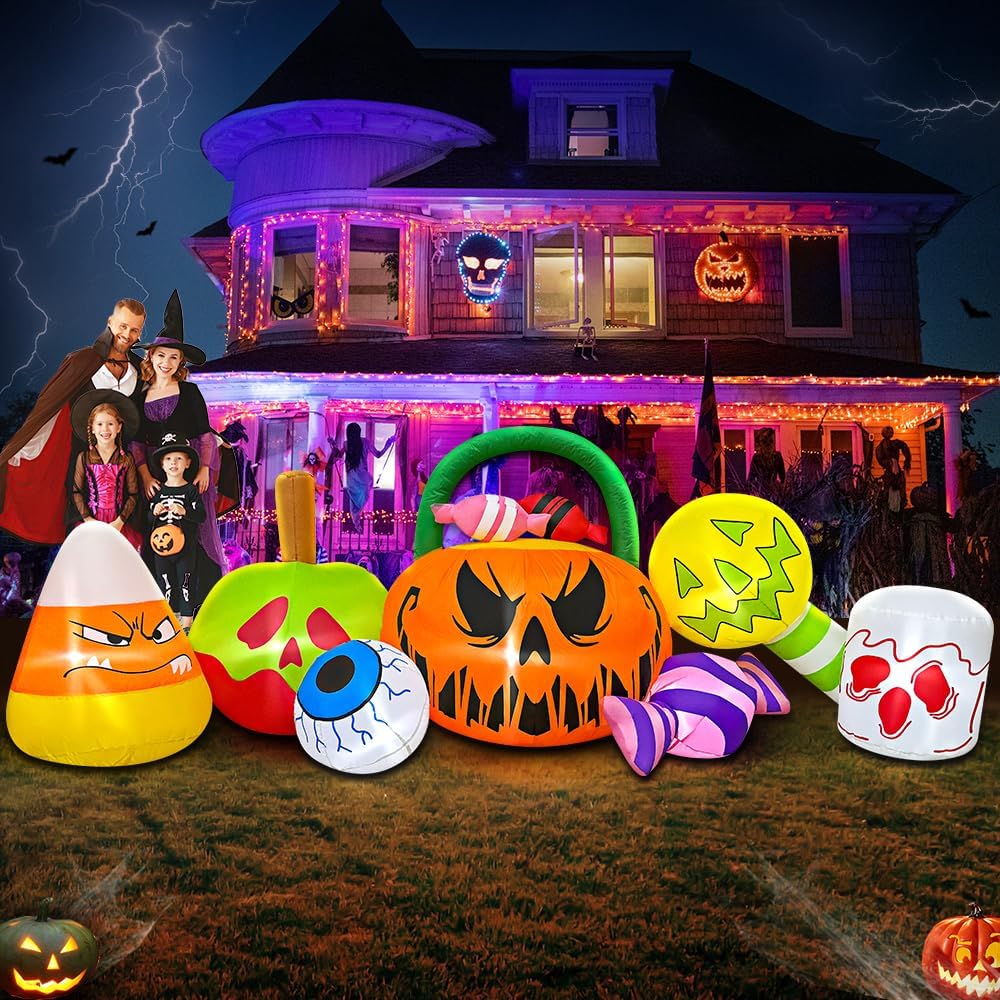
A 10-foot LED-lit inflatable pairing a pumpkin with ghosts — big enough to read from the street, self-inflating with a built-in blower, and lit from inside for after-dark impact. Read our full review of the Halloween inflatable pumpkin ghost combo for details.
Step 2: Size Props to Your Lot (Not the Store Shelf)
The short version: Measure your setback from the street first — a 30-foot viewing distance needs 4-foot-plus pieces to read.
A Halloween inflatable that looks massive in a store aisle can vanish on a real lawn. Use this simple rule of thumb: decorations need to be roughly one-tenth the width of your viewing distance to register as a “piece” rather than a speck.
| Street-to-display distance | Anchor height that reads well | Supporting props |
|---|---|---|
| Under 20 ft (townhouse/small yard) | 4–6 ft | 2–4 pieces |
| 20–50 ft (typical suburb) | 8–10 ft | 3–6 pieces |
| 50+ ft (large lot) | 10–12+ ft | 6–10 pieces |
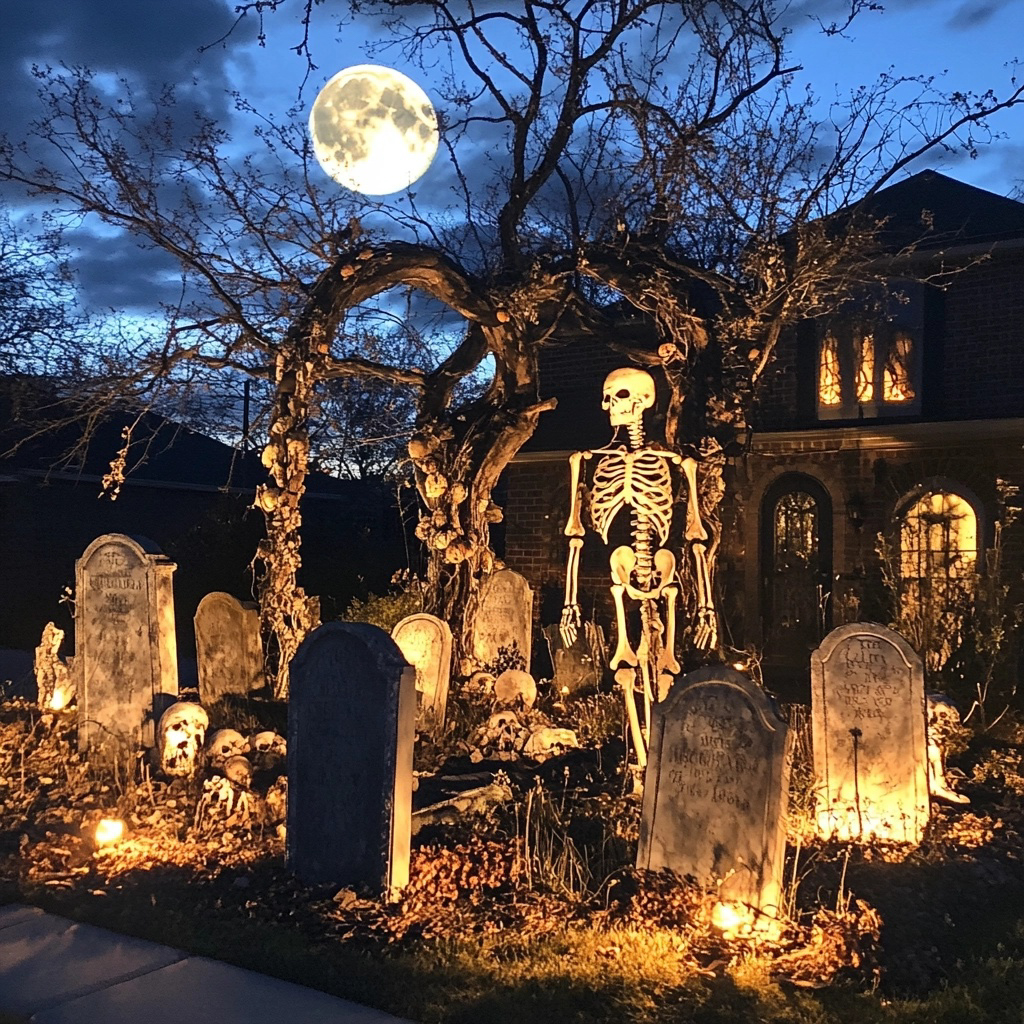
Also mind vertical space: inflatables taller than your eaves look intentional; ones that disappear behind parked cars don’t. And keep at least three feet of clear walkway between any prop and the path trick-or-treaters will use — decoration should never block a safe route.
Step 3: Anchor Everything Against October Wind
The short version: Fall wind destroys more yard displays than rain does — stakes, tethers, and sandbags are non-negotiable for anything lightweight.
This is the step beginners skip and regret. A gust that barely ruffles a porch wreath can carry a 10-foot inflatable across the yard. Do the anchoring right and the display survives the whole season:
- Use every stake and tether that comes in the box. Push ground stakes in at an angle, away from the decoration, so the tethers pull the piece down and outward — angled stakes resist pullout far better than vertical ones.
- Add sandbags or bricks for heavy pieces. Weighing down the base with sandbags, pavers, or bricks is the most reliable wind insurance for tall skeletons and inflatables; landscape fabric or mulch over them keeps the finish clean.
- Clear sharp objects. Set inflatables on flat ground away from branches, thorns, fence pickets, and yard debris that can puncture the material. A puncture-repair patch kit (often included) fixes small tears if they happen.
- Keep the blower dry. Plug into an outdoor-rated, GFCI-protected outlet with a weatherproof cover, and position the blower and adapter where water can’t pool. Most inflatables are designed to be left up overnight, but in severe wind or heavy rain, deflate them or lay tall pieces down — ten minutes of caution beats a torn display.
- Never block utilities. Keep props clear of power lines, mailboxes, and the sidewalk edge.
Step 4: Light It So the Night Does the Work
The short version: Half of Halloween decorating is lighting — LED spotlights, string lights, and timers turn a daytime yard into a nighttime scene.
Daylight shows the props; night shows the mood. Plan the lighting as deliberately as the props:
- Spotlights from below. One or two ground spotlights aimed up at the anchor create drama that a flat floodlight can’t. Orange or purple LEDs read “Halloween”; warm white reads “harvest”.
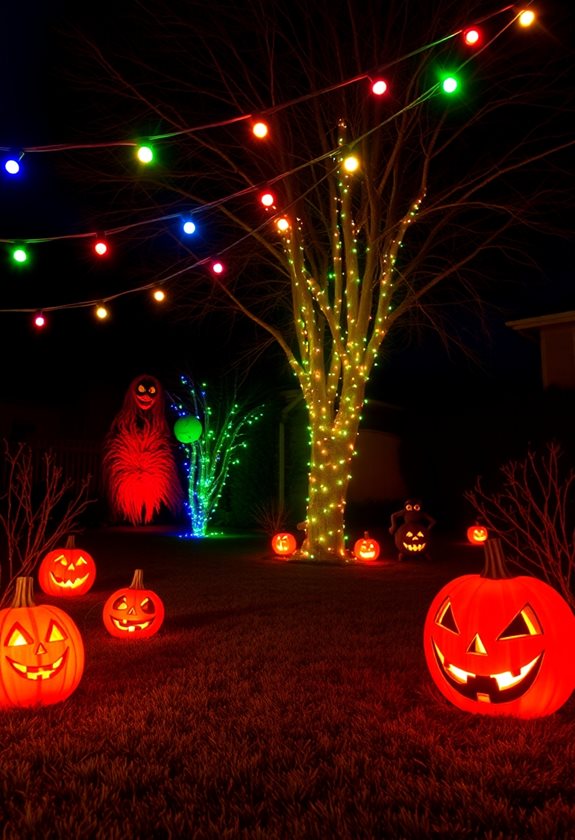
- String lights for edges. Outline rooflines, fence rails, or trees with orange, purple, or warm-white LED strings to define the display’s boundaries from down the block.
- Timers do the work. Most LED strings and many spotlights have dusk-to-dawn timers, so the yard lights itself every evening without you remembering a switch. LEDs also use a fraction of the power of old incandescent sets, so running them for hours costs almost nothing.
- LEDs near anything flammable — always. Real candles near dry straw, fake cobwebs, or fabric props are a fire risk outdoors; battery or plug-in LEDs remove it entirely.
Test it the way your audience sees it: walk to the street after dark on setup night and look back. If the anchor is glowing but the rest is pitch black, add a string light or two in the middle ground to connect the scene.
Step 5: Time It and Reuse It
The short version: Put the yard up in the first half of October — early enough to enjoy, late enough that most households haven’t beaten you to it.
Surveys put the decorating consensus squarely in October: a National Retail Federation survey found about 58% of Americans decorate in October, and a YouGov poll found 42% consider October 1–15 the earliest acceptable time for outdoor displays. The practical sweet spot is the first two weekends of October — before porch pumpkins start to soften, with the full two-week run-up to the 31st still ahead.
Then make it reusable, because Halloween yard gear is an investment:
- Deflate inflatables fully, wipe them down, let them air-dry, and fold them loosely into a storage bin — cramming a damp inflatable into its box is how mildew starts.
- Store string lights coiled (never knotted), and keep stakes and tethers bagged with the piece they belong to.
- LED sets last many seasons; replacing individual dead bulbs beats rebuying whole strands.
For the rest of the house, pair the yard with our guides on decorating a front porch for Halloween and Halloween window decorations — the yard, porch, and windows are one continuous display to anyone approaching the house.
Mistakes to Avoid
- Too many small pieces. One big anchor beats a dozen lawn trinkets that nobody can see from the street.
- Skipping the stakes. Every lightweight piece needs stakes, tethers, or sandbags. October wind is the real enemy.
- Blocking the walkway. Keep at least 3 feet clear for trick-or-treaters — atmosphere should never be a tripping hazard.
- Real candles outdoors. Always LEDs near cobwebs, straw, fabric, or paper props.
- No night test. Always walk to the street after dark on setup night and adjust the lighting from the viewer’s perspective.
FAQ: Halloween Yard Decorations
How do I keep Halloween yard decorations from blowing away?
Anchor everything. Use the stakes and tethers that come with each piece (drive stakes in at an angle), add sandbags or bricks to the base of tall items like inflatables and skeletons, and in severe wind or heavy rain, deflate inflatables or lay tall pieces down until it passes.
Can I leave Halloween inflatables up overnight?
Yes, they’re designed for it — most have weather-resistant fabric and run continuously on a built-in blower. That said, turn the blower off during severe weather, keep it dry, and use a timer so the lights (not necessarily the blower) run on a dusk-to-dawn cycle.
How early should I put up outdoor Halloween decorations?
The first two weeks of October is the consensus sweet spot — October 1–15 is when most people consider outdoor displays acceptable, and it gives you a full two-plus weeks of evenings to enjoy the work. If you decorate in late September, stick to harvest-style pieces (pumpkins, gourds) and add the spooky props in October.
What outdoor Halloween decorations are best for windy areas?
Low, heavy, and tethered. Ground-hugging displays (pumpkin clusters, stake figures) survive wind better than tall inflatables. If you want an inflatable anyway, double up the tethers, weigh the base with sandbags, and be ready to deflate it on the worst-weather days.
Are LED Halloween lights safe to leave on all night?
Yes. LEDs run cool and use very little power, so dusk-to-dawn timer operation is standard practice. Just use outdoor-rated, GFCI-protected outlets with weatherproof covers, and keep cords off wet walkways.
The Bottom Line
A great Halloween yard comes down to one anchor piece big enough to read from the street, real anchoring against October wind, and LED lighting on a timer so the night does the work. Set it up in early October, walk to the curb after dark to fine-tune, and fold everything up dry on November 1st for next year. Pair the yard with our living room Halloween guide for a whole-house look, inside and out.
Common Questions About Halloween Yard Decorations
How do I decorate my yard for Halloween?
You need three things: one oversized anchor visible from the street, weatherproof anchoring so it survives October, and night lighting so the display works after dark. One big readable silhouette beats twenty small scattered pieces every time. Plan one weekend afternoon for setup, decorate in early October, and photograph the display at night to check the effect.
Plan a single weekend afternoon for setup in early October, light it with LED spotlights or string lights on a timer, and build outward from the anchor with smaller props that echo the theme. Photograph it at night to check the effect.
What is the best large Halloween yard decoration?
A 10-foot inflatable, a giant spider web with an oversized spider, or a cluster of large lit jack-o'-lanterns all work as anchors — the key is one big silhouette readable from the sidewalk, not the specific prop. Pick the anchor that fits your lot size and storage reality.
Inflatables give the most size per dollar and store small, but need constant power and calm nights. Rigid props cost more and store bigger but shrug off wind. Match the anchor type to your weather and storage.
How do I keep Halloween yard decorations from blowing away?
Stake, tether, and weight everything — October wind destroys more displays than any other cause. Use the included stakes plus guy lines on inflatables, sandbags on lightweight props, and spiral ground anchors for larger pieces. Take inflatables down ahead of forecasted storms; no decoration is worth a midnight rescue mission.
Position the display with your yard's wind exposure in mind, not just its looks from the street. Take inflatables down or deflate them ahead of forecasted storms; no decoration is worth a midnight rescue mission.
Can I leave Halloween inflatables up overnight?
Yes, if they are staked and tethered properly — most outdoor inflatables are designed for continuous seasonal use. Put them on a timer so the blower rests during the day, which extends motor life and saves electricity. Most outdoor inflatables are designed for continuous seasonal use when properly secured.
Bring them in or deflate ahead of high winds and heavy rain, since a waterlogged inflatable strains its blower. A timer plus weather awareness is the whole maintenance routine.
How early should I put up outdoor Halloween decorations?
The first half of October is the sweet spot — early enough to enjoy the display for weeks, late enough that sun and weather exposure stays reasonable. Serious displays often go up the first weekend of October. Plan takedown within a few days after Halloween before November weather destroys what is left.
Inflatables and lights handle the full month fine; save delicate elements and carved pumpkins for closer to Halloween. And plan takedown within days after the 31st — November weather is unkind to anything left standing.