Drawer count is the easiest number to print on a listing, so it’s the number every listing prints. Six drawers. Nine drawers. Ten. None of it tells you whether a folded sweater actually fits — that depends on the depth of the box behind the pretty front, and it’s the one measurement sellers bury.
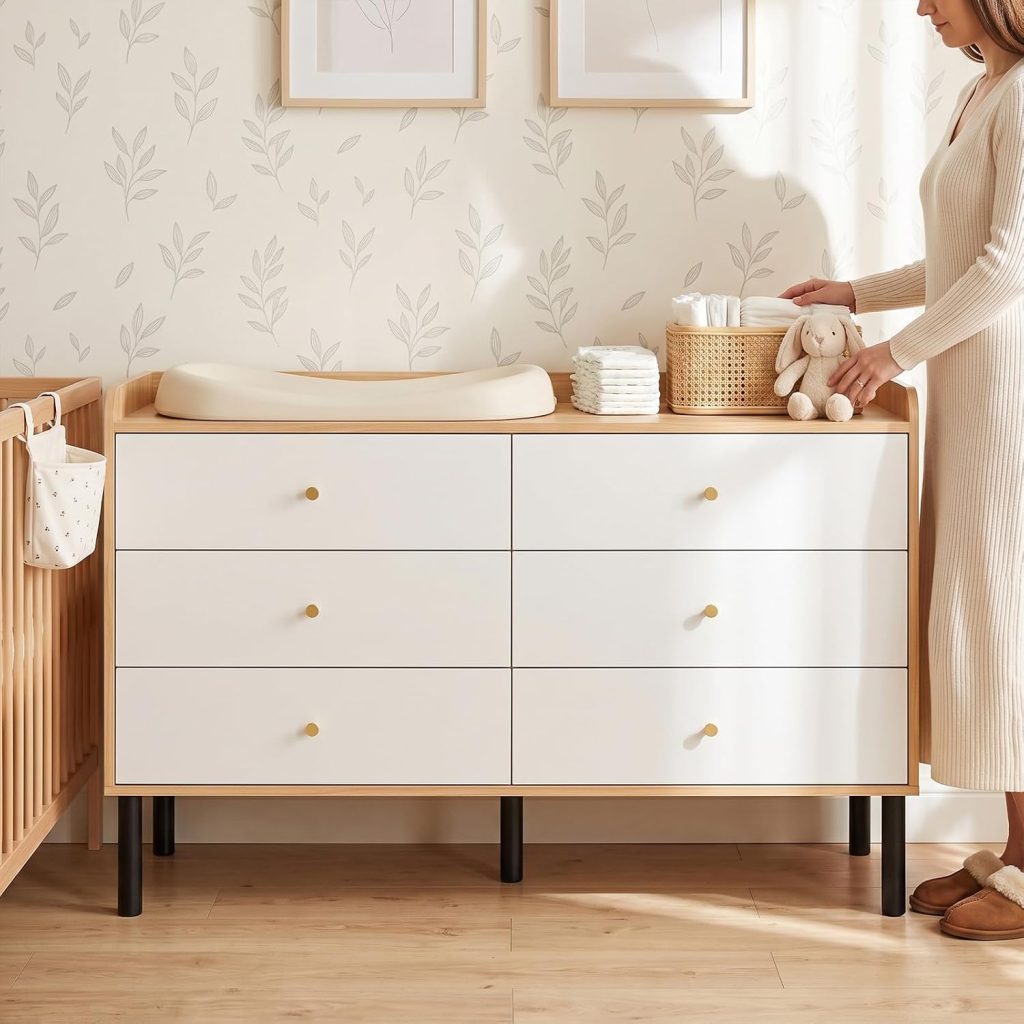
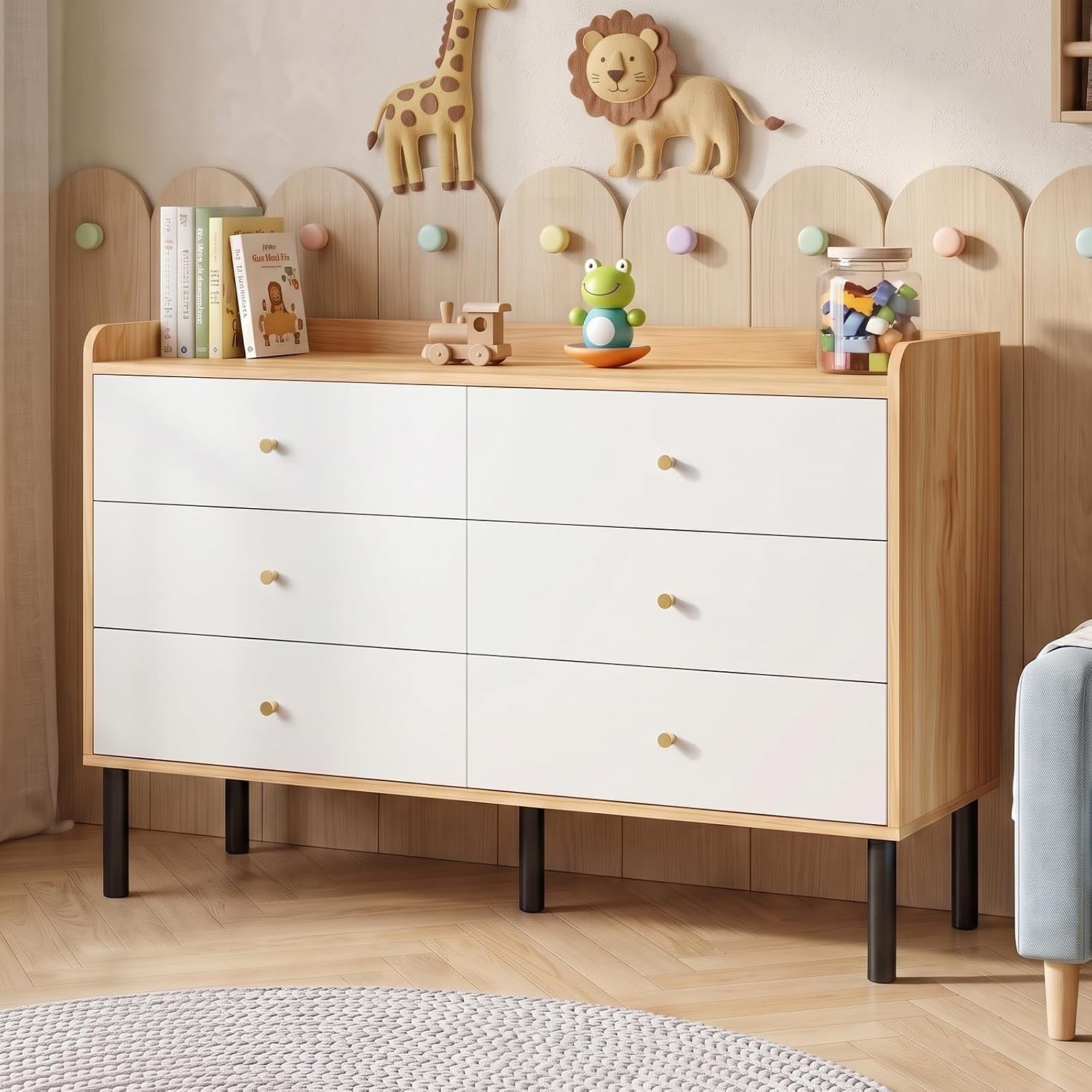
This guide anchors on the LYNSOM 6-drawer wood dresser — a compact double dresser, just under four feet wide, with white drawer fronts in a natural wood-tone case, small round knobs, and a raised lip running around the top. Two fabric dressers keep it honest: the WLIVE 7-drawer fabric dresser in white, and the long, low Huuger 63-inch fabric dresser that doubles as a TV stand. Wood box versus fabric bin is the real argument in this category, and the drawer fronts are not where it’s settled.
Quick Answer
Buy the drawer box, not the drawer count. A compact wood dresser like the LYNSOM — rigid drawers on slides, roughly five inches of usable depth inside — suits one person’s folded everyday clothes, a nursery that later becomes a kids’ room, or an entryway that needs a real top surface. Choose fabric drawers only when light weight and easy moving matter more than a decade of daily use, and size up or add a tall chest if two adults plan to share six drawers.
Compare Top Dressers
Three proven picks side by side — choose the one that fits your needs.
LYNSOM 6-Drawer Wood Dresser
Rigid wood drawer boxes on slides in a two-tone case with a lipped top — the permanent-room pick.
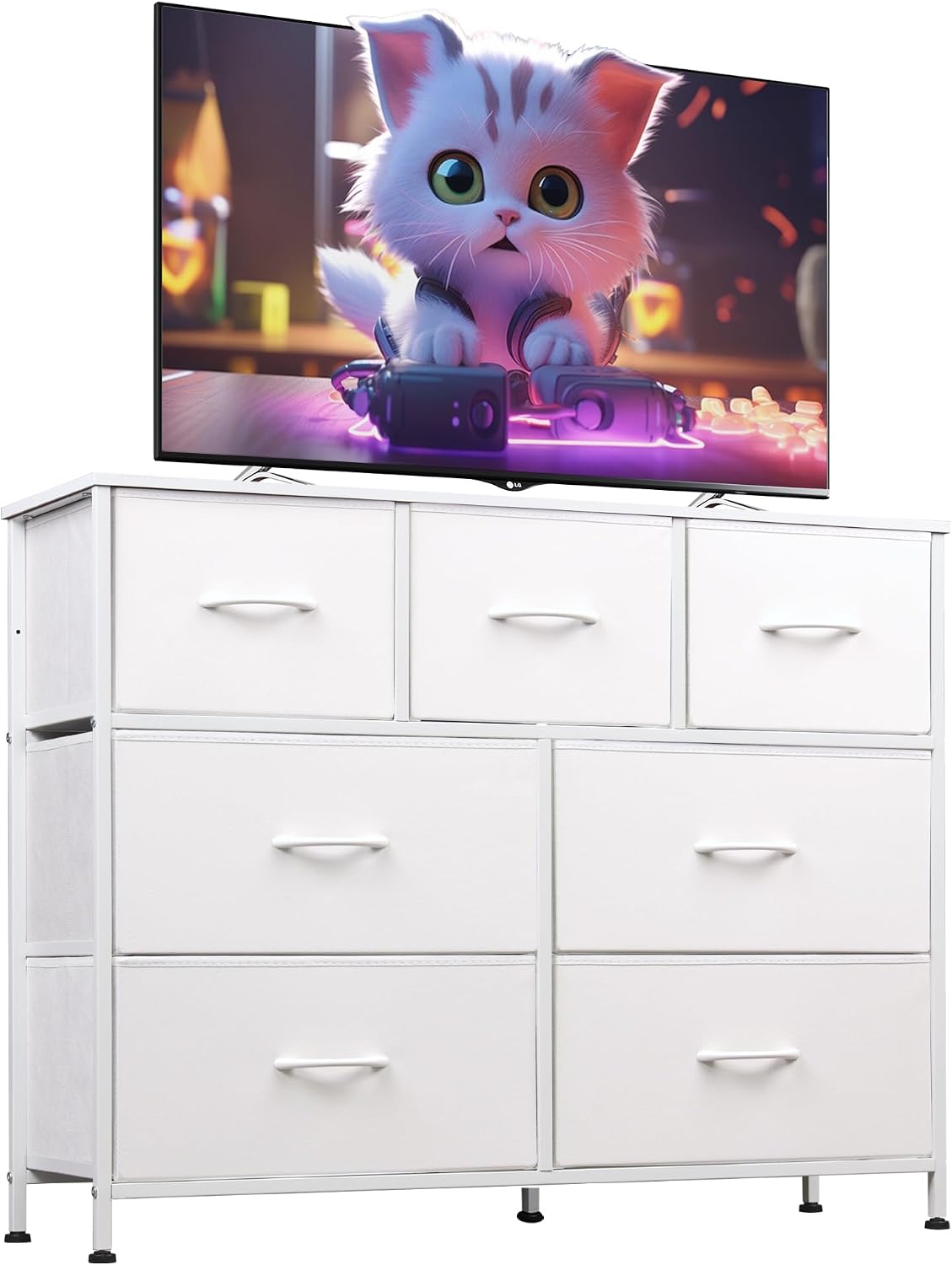
WLIVE 7-Drawer Fabric Dresser
Feather-light fabric bins in a steel frame — the renter and closet pick that moves when you do.
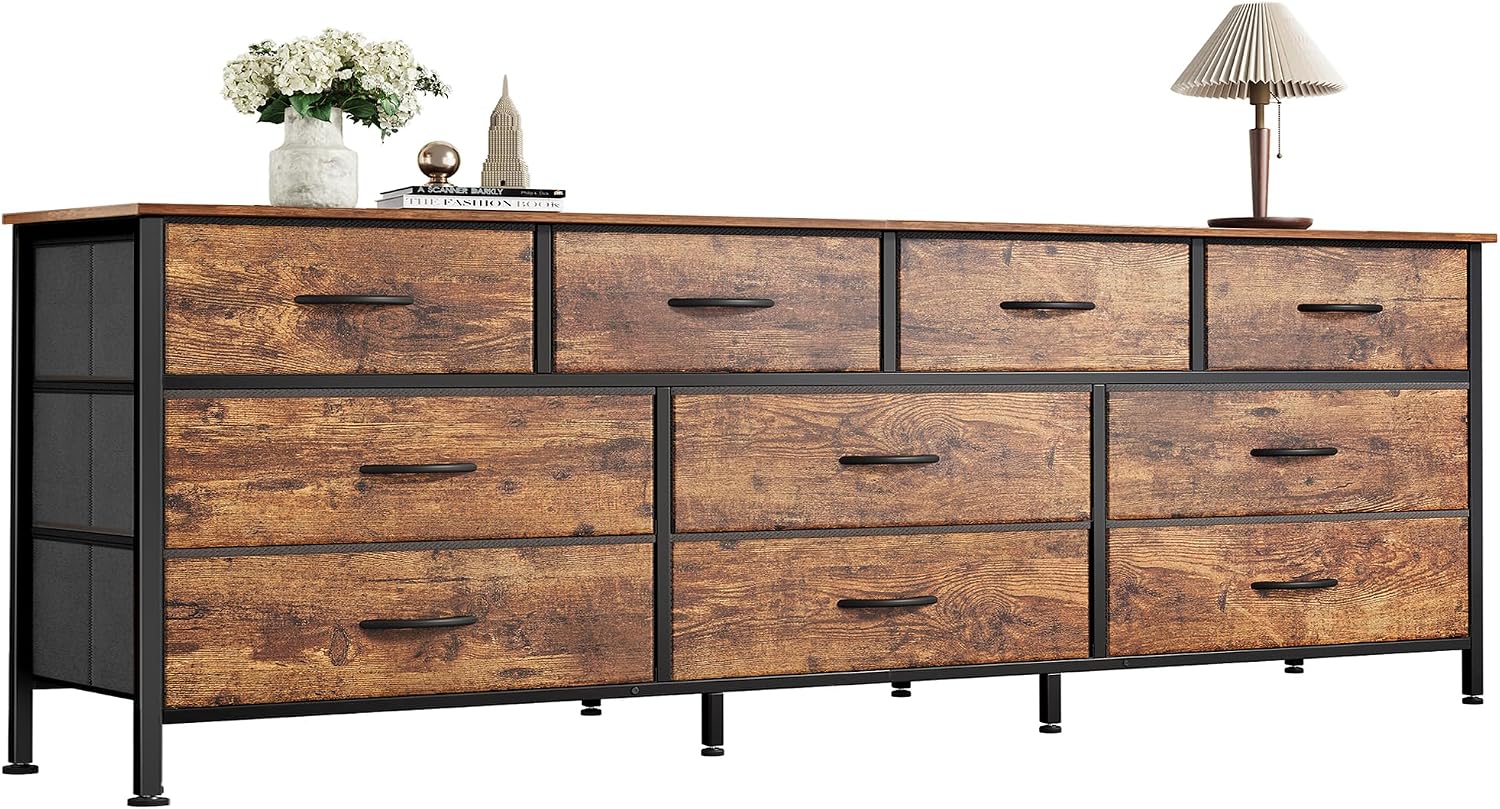
Huuger 63-Inch 10-Drawer Dresser
Ten fabric drawers stretched along a long wood top — storage and a TV stand in one footprint.
Prices and availability may vary — tap any product to check the current listing.
What to Look For in a Dresser
Six things decide whether a dresser earns its floor space. Drawer count is not one of them.
1. Interior depth, not front height
A drawer front can be eight inches tall while the box behind it holds barely five inches of clothes. The front is furniture styling. The box is storage. Bulky folded items — jeans, hoodies, anything knitted — need that interior height in a single stack layer, or they spring back, catch on the drawer above, and teach you to dread laundry day.
The LYNSOM is honest once you know where to look. Its six drawers are wide, genuinely wide, and the interior runs on the shallower side: brilliant for tees, underwear, baby and kids’ clothes, and folded linens; limiting for a serious chunky-knit collection. That’s not a flaw so much as a job description. The trade-off every compact dresser makes is depth for footprint, and pretending otherwise is how people end up with sweaters stored on top of the dresser they bought to store sweaters in.
2. Wood box on slides versus fabric bin
This is the category’s dividing line. A wood drawer box holds its shape under load, glides on a slide, and opens one-handed while your other arm carries the laundry basket. A fabric bin hangs in a steel frame, flexes when you pull it, and slowly bows where the heavy things live. Neither is a scam. They are different tools priced accordingly.
Where fabric quietly wins: weight and moves. The WLIVE and the Huuger can be carried by one person, room to room, apartment to apartment. A wood case is a two-person lift and a commitment to the room it’s in. Where fabric loses: years three to ten. If this dresser is your primary bedroom storage, buy the box. If it’s a closet overflow or a guest room, the bin is fine and the savings are real.
3. Width, footprint, and the pull-out zone
A dresser needs more floor than its own footprint. Each drawer travels most of its depth toward you, and you stand in the rest. Budget roughly a yard of clear floor in front, or you’ll be opening drawers from the side like a safe-cracker. At just under 48 inches wide, the LYNSOM fits the short wall most bedrooms offer — the one between the door swing and the corner — where a 60-inch double dresser simply will not go.
Depth matters the other way, too. A case around 16 inches deep swallows folded clothes laid front-to-back; much deeper and the back third becomes a lost-property office. Compact is not a euphemism here. For a lot of bedrooms, compact is the correct size and the oversized dresser is the mistake.
4. The top is a second piece of furniture
People shop drawers and live with the top. It holds the lamp, the books, the charging phone, the mirror’s reflection of all three. The LYNSOM’s raised lip — a shallow fence around the top surface — sounds like a styling quirk until the first bottle rolls off a lipless dresser at 2 a.m. It also makes the top work as a changing surface in a nursery, which is exactly how this dresser is most often pictured, and honestly? It’s a good second job.
Plan the top before the dresser arrives. A lamp sized for the combined height of dresser plus shade, as we worked through in our ceramic table lamp guide for console and dresser tops, keeps the surface from feeling like a shelf of leftovers. The trade-off of a lipped top: large flat items like trays and TVs sit less happily than on a dead-flat surface. Know which top life you actually live.
5. Stability, legs, and the anchor you must fit
Short legs lift a dresser visually and let a vacuum underneath — and raise its centre of gravity. Loaded drawers pulled open shift weight forward, fast. Every dresser in this guide should be anchored to the wall, full stop; a nursery dresser doubly so, because toddlers treat open drawers as stairs, and they are not wrong about the geometry.
Check what the legs are doing, too. Six legs on a wide case, like the LYNSOM’s layout, spread load and stop the middle sag that makes centre drawers drag after a year. Four legs on a long fabric frame, as on the Huuger, ask the frame to stay true instead — fine at fabric weights, one more reason heavy loads belong in wood.
6. Slides, knobs, and daily friction
You will open these drawers thousands of times. Small frictions compound. Slides should let a drawer travel far enough to reach the back without unloading the front — a drawer that opens two-thirds is a drawer with a hidden compartment you didn’t ask for. Knobs should be grippable with one finger’s worth of effort; the LYNSOM’s small round knobs are fine for clothes-weight drawers and mercifully easy to swap if your taste changes.
And a word for the quiet test: a good drawer closes with a soft thud, not a clatter and not a shove. Listings can’t tell you that. Construction can — rigid boxes in a square case close kindly, flexing bins in a racked frame never quite do.
How to Match a Dresser to Your Situation
The solo folded-clothes minimalist. One person, a wardrobe that mostly folds, a bedroom with one short wall. This is the LYNSOM’s home fixture: three drawers for tops, two for bottoms, one for the small stuff, and a top that holds a lamp and a life. You’ll fill it exactly, which is the point.
The nursery that has to grow up. A low, lipped dresser works as a changing surface now and a kids’ dresser for a decade after — small clothes in shallow drawers is a feature here, not a limit. Anchor it before the baby arrives, not after the first climb. Pair it with a mirror they can grow into, like the options in our arched full-length mirror guide, and the room only needs repainting, not refurnishing.
The renter who moves every year or two. Be honest with yourself and buy fabric. The WLIVE goes up fast, comes apart faster, and weighs little enough to move without a strategy meeting. The Huuger version stretches the same idea along a wall and holds a TV while it’s at it. Your deposit and your spine will both notice the difference — just budget to replace fabric bins on a years-not-decades clock.
Dresser Types Compared
| Type / Tier | Best For | Price Tier | Key Feature | Watch-Out |
|---|---|---|---|---|
| Compact wood double dresser (LYNSOM) | One person’s main bedroom storage, nurseries | Mid-range | Rigid drawers on slides, lipped top | Shallower drawer interiors; two-person lift |
| Standard fabric dresser (WLIVE 7-drawer) | Renters, closets, guest rooms | Budget | Very light steel frame, fast assembly | Bins bow under heavy clothes; no slides |
| Long low fabric dresser / TV stand (Huuger 63-inch) | Living rooms, shared walls, TV duty | Budget to mid-range | Ten bins across a long wood top | Fabric limits per-drawer weight; long footprint |
| Tall chest of drawers | Tiny bedrooms, second storage piece | Mid-range and up | Storage stacked up, not across | Highest tip risk; top surface mostly unusable |
The compact wood dresser is the default adult answer — real drawers, modest footprint, a top that works. The standard fabric dresser wins whenever the dresser itself has to be portable, and loses whenever it’s asked to be permanent. The long fabric TV-stand dresser trades drawer strength for sheer spread: ten bins along one wall swallows a household’s worth of miscellaneous. The tall chest is the specialist — buy it when floor space, not storage volume, is your actual shortage.
Three Rooms, Three Different Dressers
The primary bedroom
Here the dresser is furniture, full-time. Wood box, slides, anchored, top styled like you meant it. A compact double dresser centred on the short wall, mirror above or beside, lamp at the combined height that doesn’t glare into the bed. The LYNSOM’s two-tone front — white drawers, natural case — earns a specific mention: it lightens a small bedroom in a way an all-dark case doesn’t, and it hides scuffs on the drawer fronts better than mid-tone wood does. Small mercies, daily.
The nursery that converts
Changing surface on top (that lip again), nappies and clothes in the shallow drawers below, everything reachable one-handed at 3 a.m. — that one-handed test is the whole nursery brief, and it’s why slides beat bins here. Later the same case takes school clothes without complaint. If your hallway needs storage instead, a slimmer piece like the one in our narrow console table guide fits where no dresser will.
The entryway and hallway
A low dresser near the door swallows gloves, chargers, dog leads, and the post nobody files. Shallow drawers stop being a limit and start being the system — small things in shallow boxes don’t bury each other. Fabric can work here too, in a closet-adjacent hallway, but a front-door dresser gets seen by every guest you have. Buy the one that looks like furniture, because in an entryway, it is.
Common Mistakes Dresser Buyers Make
Counting drawers instead of measuring one. Ten shallow bins hold less usable clothing than six honest boxes. Take your bulkiest folded sweater, note its height, and shop with that number in your head.
Forgetting the pull-out zone. The dresser fit the wall in the showroom of your imagination. Then the drawer met the bed frame. Measure the open drawer plus yourself, standing in front of it, before ordering.
Skipping the anchor because it feels solid. It feels solid empty, in the middle of the room, with every drawer shut. That is the one configuration nobody lives with. Fit the strap the day it arrives.
Buying for the wardrobe you wish you had. A dresser sized for a minimalist capsule, owned by a person with forty tees, becomes a dresser with clothes on top of it. Count your actual folded piles. Then buy.
Why, How, and What
Why do dresser drawers get shallower as drawer counts rise? Because the case height is fixed by furniture convention — a top you can use, at a height you can reach. Slice that height six ways and each box is workable. Slice it ten ways and each box is a tray. Manufacturers chase the count because the count is what’s printed in search results. You live with the slice.
How should you organise six drawers so the system survives laundry day? By frequency, top to bottom. Daily clothes in the top drawers at hand height, weekly things below, rare and bulky at the bottom where the bending is worth it. One drawer per category, no drawer shared between two — shared drawers are where systems go to die. And leave one drawer slightly underfilled. A system with no slack becomes a pile.
What should you check in the first week with a new dresser? Whether the case stayed square. Drawers that dragged on day one drag forever, but drawers that start dragging on day five are telling you the frame racked or the floor isn’t level — fixable now with a shim or a re-tighten, permanent later. Also check the top lip, the anchor strap’s tension, and whether the bulkiest thing you own truly fits its drawer. Week one is when honesty is still free.
Questions People Ask Before Buying
Is a wood dresser worth it over a cheaper fabric dresser?
A wood dresser is worth it over a fabric dresser when the drawers will hold everyday clothes for years, because rigid drawer boxes on slides keep their shape under load, open with one hand, and do not bow, sag, or tear the way fabric bins slowly do. Fabric drawers have a real place — closets, guest rooms, a first apartment you will leave in a year. But a bin that flexes every time you pull it is a bin you fight daily, and the fight gets worse as the fabric softens. The LYNSOM sits on the wood side of that line: proper drawer boxes, on slides, in a framed case. Pay for that when the dresser is furniture. Save with fabric when it is storage wearing a furniture costume.
How deep should dresser drawers be for sweaters and jeans?
For folded jeans and mid-weight sweaters, a dresser drawer needs roughly five to six inches of usable interior height per stack layer, because bulky knits compress poorly, spring back against shallow sides, and turn a nominally large drawer into two usable garments and a lot of trapped air. This is the number listings hide. They give you the dresser’s outside dimensions and the drawer front’s height, and neither tells you the depth of the box inside. The LYNSOM’s drawers are wide and honest for tees, underwear, and kids’ clothes, but the interior is on the shallower side — chunky knits will live two to a stack, not four. Measure your bulkiest folded item before you fall for any drawer count.
Is a 47-inch dresser big enough for two people?
A 47-inch dresser is big enough for two people only when both wardrobes lean light and folded, because six wide drawers split three-and-three leaves each person one drawer each for tops, bottoms, and small items, with no spare drawer for the overflow every shared dresser eventually collects. Couples make it work by moving the overflow elsewhere — hanging space for the bulky stuff, a closet shelf for off-season clothes. What doesn’t work is pretending six drawers are eight. If both of you own serious sweater collections, go wider or go taller with a chest, and let a compact double dresser like this one serve a single person properly instead of two people badly.
Should I anchor a dresser to the wall even if it feels sturdy?
Yes, anchor a dresser to the wall even when it feels rock solid standing empty, because a dresser becomes top-heavy exactly when a child climbs open drawers or several loaded drawers slide out at once, shifting the centre of gravity forward past the feet in seconds. Empty-floor stability is a showroom trick. The dangerous configuration is a loaded dresser with its drawers open — which is, not coincidentally, exactly how people use dressers. Anchoring takes minutes, costs nothing beyond the strap most units include, and disappears behind the case. There is no version of this trade where skipping it wins.
Can a low dresser double as a changing surface or a TV stand?
A low, wide dresser can double as a changing surface or a TV stand when its top is flat, lipped, or braced enough to keep items from sliding off, its height puts the screen or the baby at a comfortable level, and the unit is anchored against tipping. The LYNSOM’s raised lip around the top is built for exactly this second job — bottles, frames, and remotes stay put instead of migrating off the back edge. Height is the other half: a top around the low thirties of inches suits a changing pad and keeps a bedroom TV below eye level from the bed. Anchor it first. A dresser doing double duty carries double consequences if it tips.
Frequently Asked Questions
How long does a flat-pack wood dresser like this take to put together?
Plan on a slow afternoon rather than a quick half hour. A six-drawer case means six drawer boxes to build on top of the frame, and drawers are where flat-pack time actually goes. Work on carpet or a blanket so the two-tone fronts don’t scuff, keep the knob hardware separate per drawer, and don’t fully tighten the case until the drawers slide true — a slightly racked frame makes every drawer feel broken.
Are fabric dresser drawers really that bad?
No — they’re honest tools at a fair job. Fabric bins are light, cheap to ship, forgiving in a closet, and fine for socks, tees, and guest-room overflow. They fail as primary bedroom furniture: the sides bow under jeans, the bottoms sag, and there’s no slide, so every opening is a two-handed tug. The WLIVE and Huuger in the comparison earn their place for renters and spare rooms. Just don’t ask a fabric bin to do a drawer box’s decade.
What is the difference between a dresser and a chest of drawers?
Width versus height. A dresser is low and wide — drawers in two columns, a long top that can hold a mirror, a lamp, or a TV. A chest is tall and narrow, stacking drawers in a single column for rooms where floor space is scarcer than wall height. Small bedrooms with one free wall usually want the chest. Rooms where the top surface matters — and it usually does — want the dresser.
How do I stop wood dresser drawers sticking in humid months?
Start with the boring cause: a loaded drawer sags a fraction and drags. Lighten it, then check the slides are clean and the case is level — a dresser leaning on uneven floor twists every drawer in it. A rub of plain candle wax or a silicone-free drawer lubricant along the slide path fixes most seasonal sticking. If one drawer sticks and the rest glide, swap it with another slot; the answer is usually the drawer, not the weather.
Can I change the knobs on a two-tone dresser?
Yes, and it’s the cheapest personality change flat-pack furniture allows. Single-screw knobs swap in minutes with no new holes. On a natural-and-white case like the LYNSOM, black knobs sharpen the contrast and wood knobs soften it. Keep the originals in a labelled bag inside the bottom drawer — the next owner, or your next mood, will want them.
Where should a dresser go in a small bedroom?
On the wall that leaves a clear pull-out zone — you need the drawer’s full travel plus room to stand in front of it, roughly a yard of clear floor. Avoid the wall the door swings into, and avoid blocking the window wall if the dresser plus a mirror would eat the room’s only light. In the smallest rooms, a low dresser under the window often beats a tall chest anywhere: the top stays useful and the sightline stays open. Pair it with a properly sized lamp for the top — our guide to choosing a ceramic table lamp for a console or dresser top covers the combined-height maths.
Final Recommendation
If this dresser is your main bedroom storage and you wear folded clothes daily, buy wood drawers on slides in the widest case your short wall allows — the LYNSOM if roughly four feet is your wall, something wider if it isn’t. Its shallower drawers suit tees, small clothes, and linens better than a chunky-knit archive, and saying so plainly is the whole review: right box, right job.
If the dresser must move with you, live in a closet, or hold a TV in a rental living room, buy fabric without a shred of guilt — the WLIVE for a compact tower of bins, the Huuger when you need the long, low spread. Just don’t cross the streams. Fabric asked to be permanent sags; wood asked to be portable resents you. Pick which life you’re actually dressing for.
Decision Tree: Which Dresser Fits You?
One person, permanent room, mostly folded clothes? → LYNSOM 6-drawer wood dresser. Anchor it, style the top, done for years.
Nursery now, kids’ room later? → LYNSOM again — lipped top for changing duty, shallow drawers sized for small clothes, anchor fitted before day one.
Renting, moving soon, or furnishing a guest room? → WLIVE 7-drawer fabric dresser. Light, quick, and honestly priced for a shorter service life.
Need storage and a TV stand along one long wall? → Huuger 63-inch fabric dresser. Ten bins of spread; keep the heavy things in the middle drawers.
Key Takeaways
Drawer depth decides what fits; drawer count decides what the listing says. Measure your bulkiest folded item first.
Wood boxes on slides are for permanent rooms. Fabric bins are for portable lives. Both are honest — mismatching them to the job is the only real mistake.
A compact 47-inch dresser serves one person properly. Two people sharing six drawers need light wardrobes or a second piece.
The top is half the furniture: a lipped top, a correctly sized lamp, and an anchor strap fitted on day one.
Compare Top Dressers
Three proven picks side by side — choose the one that fits your needs.
LYNSOM 6-Drawer Wood Dresser
Rigid wood drawer boxes on slides in a two-tone case with a lipped top — the permanent-room pick.
WLIVE 7-Drawer Fabric Dresser
Feather-light fabric bins in a steel frame — the renter and closet pick that moves when you do.
Huuger 63-Inch 10-Drawer Dresser
Ten fabric drawers stretched along a long wood top — storage and a TV stand in one footprint.
Prices and availability may vary — tap any product to check the current listing.