Most entryways fail in the same quiet way. Keys land on the kitchen counter, mail migrates to the dining table, and the hallway itself stays empty — a corridor you pass through, not a place that does any work. A console table fixes that, but only if you pick the right shape for the wall you actually have. This guide looks at the Yaheetech console table with drawer as the main pick, then sets it against a much longer Tribesigns model and a three-drawer VASAGLE, because the honest answer to “which console table should I buy” depends less on style than on one measurement and one habit: how long is your wall, and how much loose clutter do you generate?
Short on time? The compact Yaheetech suits most standard hallways. Long wall or a floating sofa — read the comparison before you decide.
Quick Answer
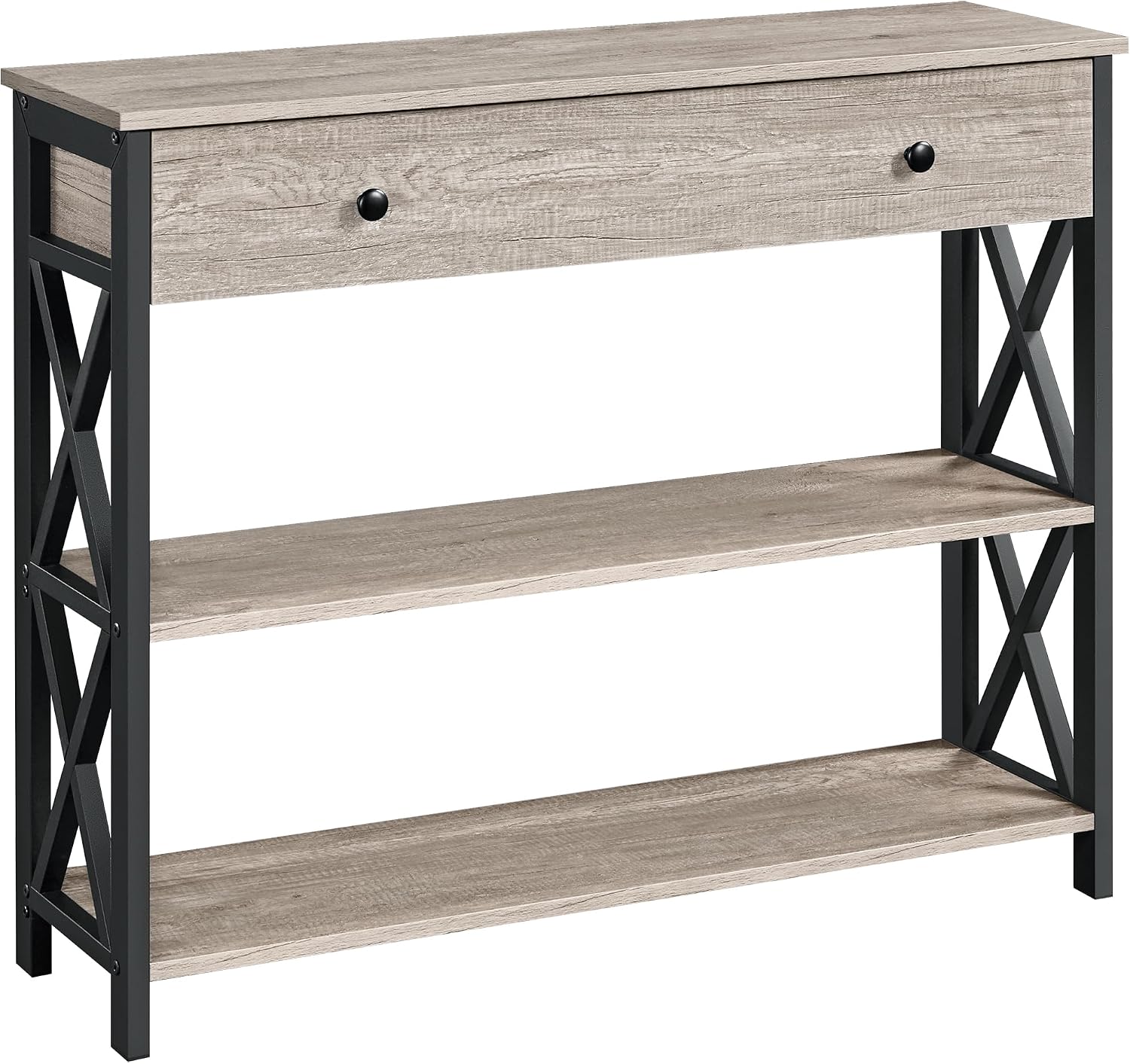
For a typical entryway, the Yaheetech console table with drawer is the safest buy: roughly 39.5 inches wide and 12 inches deep, one wide drawer for the small mess, two open shelves below, and a metal frame that resists wobble. Choose the 63-inch Tribesigns instead for a long wall or sofa back, or the VASAGLE if you want three sorted drawers rather than one big one.
Compare Top Console Tables
Three proven picks side by side — choose the one that fits your needs.
Yaheetech Console Table with Drawer
Compact 39.5-inch width, one wide drawer plus two open shelves below for baskets and shoes.
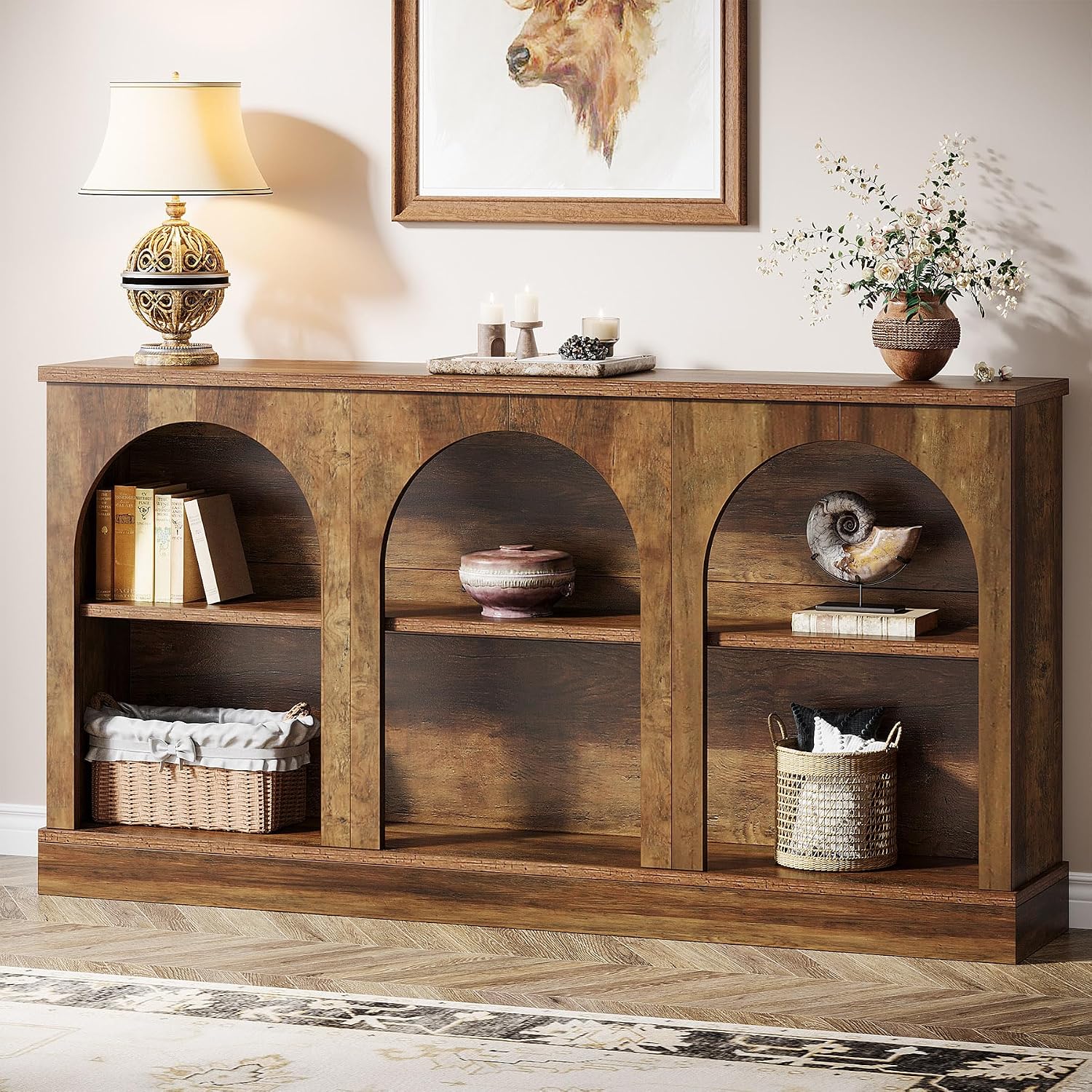
Tribesigns 63-Inch Farmhouse Console Table
Extra-long open design for a sofa back or long wall, with arched storage compartments underneath.
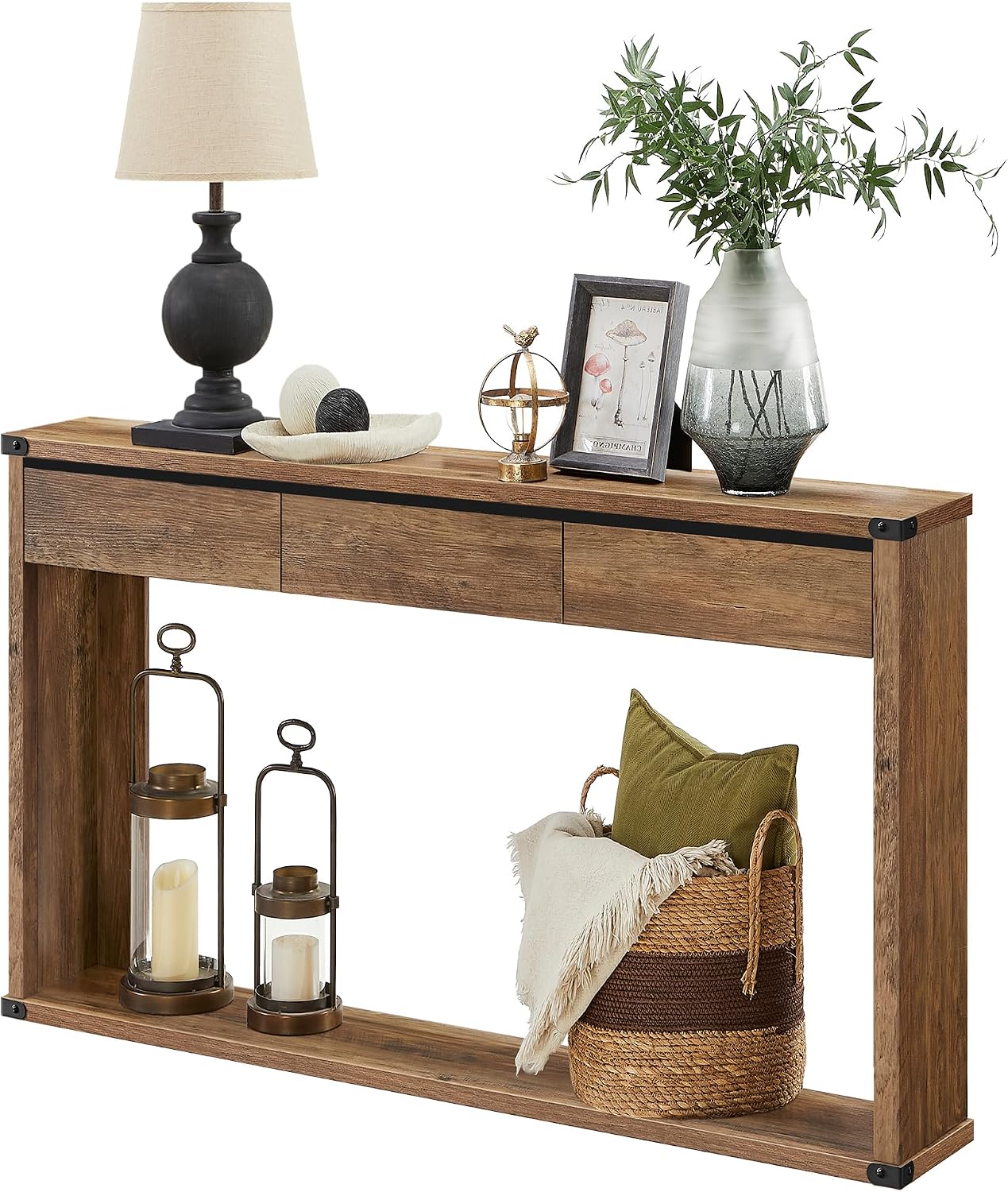
VASAGLE 47.2-Inch Console Table with 3 Drawers
Three separate drawers for sorting mail and small gear, plus a low shelf for a single large basket.
Prices and availability may vary — tap any product to check the current listing.
What to Look For in a Console Table
Depth first, always
Depth decides whether a hallway still works as a hallway. Around 12 inches is the sweet spot most people land on after returning their first, too-deep attempt. You get room for a lamp base, a tray, a small plant. You keep a clear path for shoulders, laundry baskets, and the dog. The trade-off is real though: at 12 inches, large coffee-table books overhang and wide storage boxes simply don’t fit. If your plan involves big baskets, measure the basket, not the catalogue photo.
One wide drawer or several small ones?
A single wide drawer swallows everything — sunglasses, leads, tape measure, the charger nobody admits to owning. It’s fast, and it’s chaos inside within a month. Three smaller drawers, like the VASAGLE layout, force a rough sort: mail in one, keys and wallets in another, household bits in the third. Neither is objectively better. Be honest about whether anyone in your house will maintain a sorting system. Most households won’t, which is why the single drawer keeps winning.
Open shelves below — useful or just dust?
Open lower shelves earn their keep when they hold things that look decent in public: baskets, a shoe tray, a stack of books, a plant that can handle low light. They fail when they become the place empty boxes go to be forgotten. The Yaheetech gives you two shelf levels, which sounds generous until you realise tall boots and larger baskets only fit the bottom one. Plan what goes where before the table arrives, not after.
Frame and wobble
Narrow tables live or die by sideways stability. A frame with cross-bracing — the X sides on the Yaheetech are the obvious example — resists the racking you feel when you lean on one end to put shoes on. Plain four-leg designs can be fine in solid wood. In flat-pack engineered wood, bracing matters more. Wobble is also the first thing guests notice, even if they never say so.
Height against sofa backs and switches
Around 31 to 33 inches works for most walls. Behind a sofa, the top should sit at or just below the sofa back, so lamps read as part of the seating rather than perched behind it. In a hallway, check light switches and thermostats before ordering — a table that’s two inches too tall can block the thing you reach for ten times a day. Ask me how I know.
Finish and the wet-coat problem
Entryway furniture takes weather. Wet umbrellas, dripping coats, muddy paws on the lower shelf. Engineered-wood tops handle a wiped-up spill fine; standing water left overnight is what lifts edges. Grey-wash and rustic finishes hide scuffs and dust better than glossy black or pure white, which show every mark by the door. Looks matter. Maintenance matters more, three months in.
Matching a Console Table to Your Situation
The drop-zone hallway
Four people, one front door, everything lands within six feet of it. This is the Yaheetech’s home turf. Drawer for the daily scatter, lower shelves for shoe trays and a basket per kid if you’re feeling ambitious. If your hallway wall is under four feet, don’t size up hoping it’ll motivate tidiness. It won’t.
The floating sofa in an open-plan room
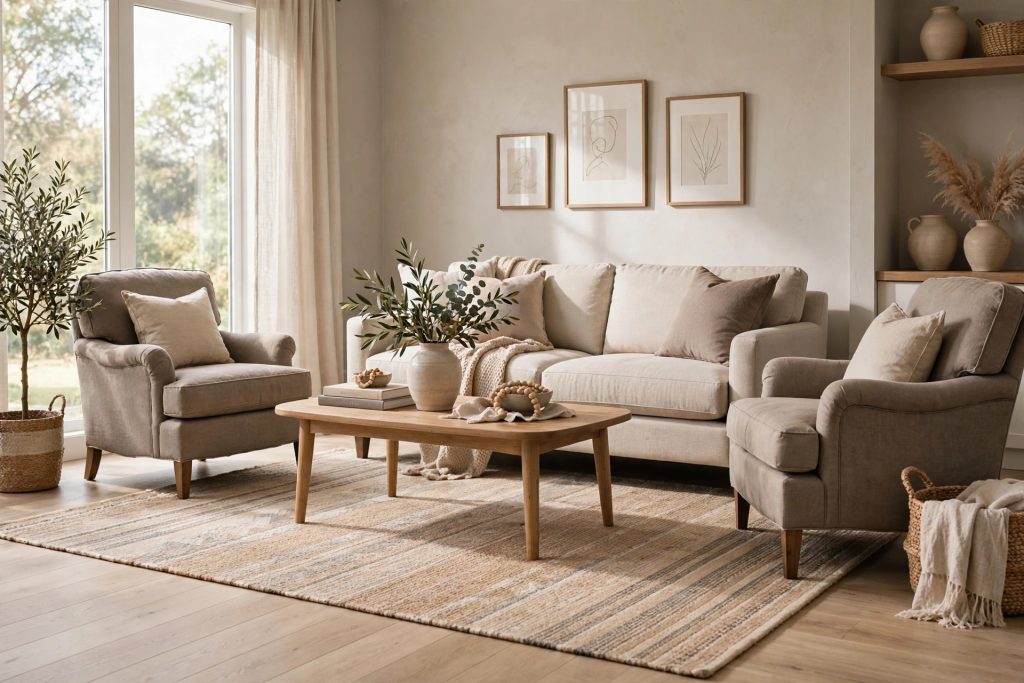
A sofa with its back to the room looks unfinished and collects remotes on the floor behind it. A long console — the Tribesigns at 63 inches — gives lamps a home and turns dead space into a display shelf. There’s a catch. If the walkway behind the sofa is also your route to the kitchen, keep the depth slim and skip floor baskets behind it, or you’ll be stepping over them nightly. Pairing it with a storage ottoman bench nearby handles the throws and extra cushions the open shelves shouldn’t have to.
The small apartment with no real entryway
The door opens straight into the living room and the “entryway” is one short wall. A compact console still works — it draws a line between arriving and living. Keep styling minimal: lamp, tray, done. A compact console pairs well with a small velvet loveseat for compact living rooms because both pieces stay under the visual weight a tiny room can carry. What doesn’t work is the extra-long model. It’ll dominate the wall and remind you daily that you measured with optimism.
Console Table Types Compared
| Type | Best For | Price Tier | Key Feature | Watch-Out |
|---|---|---|---|---|
| Compact with drawer | Standard hallways, drop zones | Budget to mid-range | Hidden storage plus open shelves | Drawer becomes a junk drawer fast |
| Extra-long open | Sofa backs, long blank walls | Mid-range | Maximum display and basket space | Everything stays visible, dust included |
| Multi-drawer | Households that sort by person | Mid-range | Separate drawers keep categories apart | Small drawers reject bulky items |
| Ultra-narrow charging | Behind sofas in tight rooms | Budget | Very slim depth, sometimes with outlets | Too shallow for lamps with wide bases |
The compact drawer model is the default for a reason — it hides the worst of the mess while keeping shelves for things that look fine out. The extra-long open type wins on presence; a 63-inch table changes how a room reads, but it shows every object you own. Multi-drawer models suit organised households and frustrate everyone else, because a drawer that’s too small for the thing in your hand might as well not exist. Ultra-narrow charging tables solve one specific problem — a sofa against a wall with no reachable outlet — and compromise on almost everything else.
Three Rooms, Three Different Answers
Narrow Victorian hallway
High ceilings, skinny corridor, doors everywhere. Depth is non-negotiable here, length is whatever’s left between door frames. A compact table in a grey wash reads calm against busy wallpaper, and the lowest shelf takes a boot tray that saves the floorboards. Wall art above it should sit higher than feels natural — the table surface will fill with objects, and the eye needs somewhere to rest. Our guide to matching dining chair height to your table covers the same measure-first logic if you’re furnishing the room at the other end of that hallway.
Open-plan living area
Here the console is furniture, not hallway equipment. The long Tribesigns with its arched compartments works almost like a low bookcase — books in one arch, a basket in another, breathing room in the third. Resist filling every compartment. Empty space is what separates styled from stored.
Rental with a no-drilling rule
You can’t anchor to the wall, so stability has to come from the frame itself and from loading the lowest shelf heaviest — books low, lamp centred, nothing top-heavy. Felt pads under the feet protect the deposit. And keep the anti-tip strap in the drawer; the next home may allow it.
Common Mistakes When Buying a Console Table
Measuring the wall, not the walkway. The table fits the wall perfectly and the hallway becomes an obstacle course. Measure what’s left to walk through, with the front door open.
Buying length for a wall that has a doorway swing. A 63-inch table overlapping a door arc gets clipped weekly. The corner loses. Every time.
Treating the drawer as a tidiness system. A drawer hides clutter; it doesn’t organise it. If finding keys inside it takes longer than finding them on an open tray, the tray was better.
Skipping the lamp test. Lamp bases vary wildly. Check the base diameter against the table depth before ordering either one, or you’ll own a lamp that only fits diagonally.
Why, How, and What
Why do entryways collect clutter so fast?
Because arriving home is a transition, not a task. Hands are full, minds are elsewhere, and the first flat surface wins. A console table doesn’t stop the behaviour — it gives it a designated, bounded place to happen, ideally with a drawer so the evidence isn’t on display.
How do you style a console table without it looking staged?
Work in odd numbers, vary heights, and leave gaps. Lamp tall, stack of books low, one object with some texture between them. Then remove one thing. Staged rooms have every inch accounted for; lived-in rooms — the ones people actually relax in — always have a bit of slack.
What should never live on a console table?
Anything wet, anything that leaks, and anything you’ll be annoyed to move when you clean — which, by a door, is often. Plant pots need trays. Candle wax on an engineered-wood top is a permanent souvenir. And the fishbowl idea from social media? Just no.
Questions People Ask Before Buying
Is a console table with a drawer actually worth it, or is an open shelf enough?
A drawer is worth it if your entryway collects small loose things every day, because keys, mail, dog leads, and chargers disappear into one closed spot instead of spreading across the top where every visitor can see the mess you meant to tidy yesterday. Open shelves look airier, no question. They also show everything. The Yaheetech layout splits the difference — one wide drawer on top for the ugly small stuff, open shelves below where baskets and books actually look fine on display.
How narrow does an entryway console table need to be?
Most hallways work best with a console table around twelve inches deep, because that leaves clear walking room on both sides, still fits a lamp base and a catch-all tray on top, and keeps shoulders and shopping bags from clipping the corners every time you pass. Go much deeper and the hallway starts to feel pinched, especially with a front door swinging inward. Shallower than about ten inches and lamp bases get wobbly. Twelve is the boring number that keeps working.
Can I put a console table behind a sofa instead of in the hallway?
Yes, and behind a sofa is often the smarter spot, because the table hides the plain back panel, gives lamps a home at the right height, and creates a landing strip for drinks and remotes without crowding the coffee table in front of you. Measure the sofa back first. The console should sit at or just below that height, and if your sofa floats in the middle of a room, a longer model like the Tribesigns fills the span better than a compact entryway piece.
Yaheetech with a drawer or the longer Tribesigns — which should I choose?
Choose the Yaheetech if your hallway is short and clutter is the real problem, and choose the Tribesigns if you have a long blank wall or a sofa back to fill, because length only helps when the wall can actually take it without blocking a doorway swing. The VASAGLE sits between them. Three smaller drawers instead of one wide one, which suits households that sort mail and small gear by person rather than dumping it all in together.
Will an engineered-wood console table hold a lamp and heavy books?
A well-braced engineered-wood console table handles a lamp, a stack of books, and everyday entryway loads without drama, provided you spread weight across the top, keep the heaviest baskets on the lowest shelf, and anchor tall narrow pieces to the wall as the instructions suggest. The metal X sides on the Yaheetech do real work here, resisting the side-to-side racking that makes cheap flat-pack tables feel nervous. What these tables dislike is standing water and dragging — lift, don’t slide.
Frequently Asked Questions
What height should a console table be?
Around 32 inches suits most entryways and sofa backs. Much taller and lamps tower over the seating; much shorter and the table reads as a bench that lost its way. Check it against your sofa back or your hip height in the hallway — the top should feel natural to drop keys onto without looking down.
Do I need to anchor a narrow console table to the wall?
In a house with kids, large dogs, or a vacuum that gets swung around corners, yes. A 12-inch-deep table is stable under normal use, but a toddler pulling up on the edge changes the maths fast. Most models include a simple anti-tip strap, and fitting it takes minutes.
How do I stop an entryway console table looking cluttered?
Give the top three jobs at most — a lamp, a tray, and one decorative object is a workable rule. Everything else belongs in the drawer or in baskets on the lower shelves. Clutter is rarely about owning too much stuff. It’s about the top surface having no rules at all.
Can a console table work in a small apartment entryway?
Yes, if you pick a compact width and keep the depth near 12 inches. A 39.5-inch model fits the short wall most apartments actually have beside the door. Skip the extra-long versions — a table that forces you to sidestep it every morning will annoy you within a week.
What is the difference between a console table and a sofa table?
Almost nothing in construction. Sofa table is just the name used when the same narrow, long table sits behind a couch instead of against a hallway wall. Height matters more than the label: behind a sofa, match the back height; in a hallway, standard height works.
How do I clean an engineered-wood console table top?
A barely damp cloth, then a dry one. Standing water is the enemy of these finishes — coasters under vases and plant pots are not optional decoration, they’re what keeps the top from bubbling at the edges after a few months of watering day.
Final Recommendation
Buy the Yaheetech console table with drawer if your hallway is a standard width and your problem is daily clutter with nowhere to hide — it’s the balanced pick, compact enough for most walls and braced well enough to feel settled. Buy the Tribesigns if the wall is long or the sofa back is bare and you want open, display-led storage. Buy the VASAGLE if three separate drawers match how your household actually sorts things. Skip all three if your walkway would drop under about 30 inches of clear space; a wall-mounted shelf will serve you better and nobody will bruise a hip on it.
Decision Tree: Which Console Table Fits You?
Wall under 48 inches + daily clutter? Yaheetech with drawer.
Long wall or floating sofa? Tribesigns 63-inch.
Household sorts mail and gear by person? VASAGLE 3-drawer.
Clear walkway would fall below 30 inches? Skip the table, mount a shelf.
Key Takeaways
Depth near 12 inches keeps hallways walkable. A drawer hides daily scatter; open shelves suit baskets and books. Brace against wobble, anchor if kids or big dogs share the hall, and measure the walkway — not just the wall.
Compare Top Console Tables
Three proven picks side by side — choose the one that fits your needs.
Yaheetech Console Table with Drawer
Compact 39.5-inch width, one wide drawer plus two open shelves below for baskets and shoes.
Tribesigns 63-Inch Farmhouse Console Table
Extra-long open design for a sofa back or long wall, with arched storage compartments underneath.
VASAGLE 47.2-Inch Console Table with 3 Drawers
Three separate drawers for sorting mail and small gear, plus a low shelf for a single large basket.
Prices and availability may vary — tap any product to check the current listing.