Nightstand listings lead with drawer counts and charging ports. Nobody leads with height — which is odd, because height is the one spec you feel every single night. A top that lands two inches below your mattress turns every reach for water into a small, blind expedition. Two inches too high, and the lamp looms over the pillow like a streetlight.
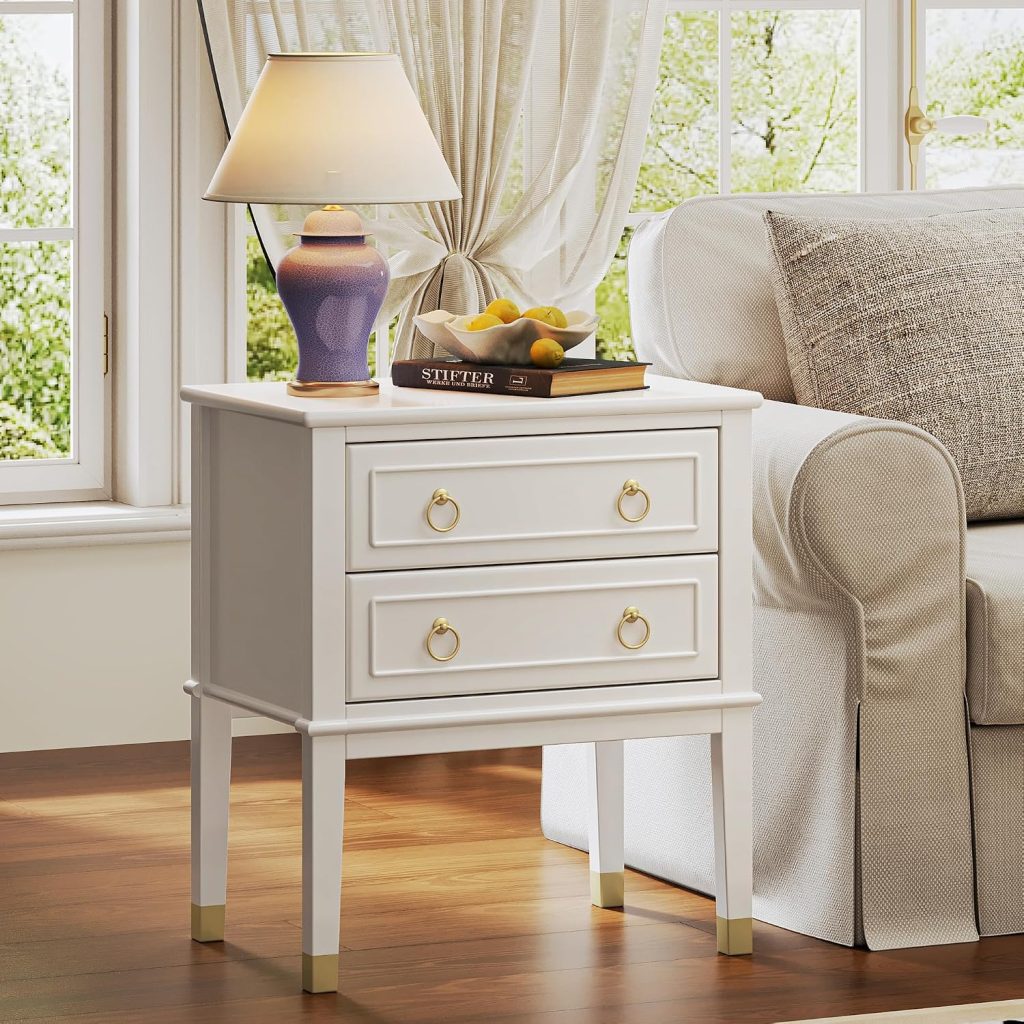
This guide anchors on the Huuger 27.6-inch tall nightstand — a white, two-drawer bedside table on long raised legs, with a charging panel built into the top: AC outlets beside USB-A and USB-C. Two very different tables keep it honest: the Yoobure nightstand with charging station, a black steel-frame piece with three fabric drawers, an open shelf, and LED lighting, and the Christopher Knight Home Logan nightstand, a brown mid-century two-drawer in wood tones with rounded tapered legs and no electronics at all. Height, drawer construction, and charging — those are the three arguments in this category. Everything else is styling.
Quick Answer
Match the nightstand top to your mattress top, within a couple of inches, before you compare anything else. The tall Huuger suits today’s thick mattresses and high bed setups, adds rigid wood drawers on slides, and puts charging where your hand actually lands. Pick the Yoobure for small rooms, dorms, and light bedside loads on a budget. Pick the Logan when you want furniture first — real drawer boxes, a warm wood finish, and no panels or cords to age out.
Compare Top Nightstands
Three proven picks side by side — choose the one that fits your needs.
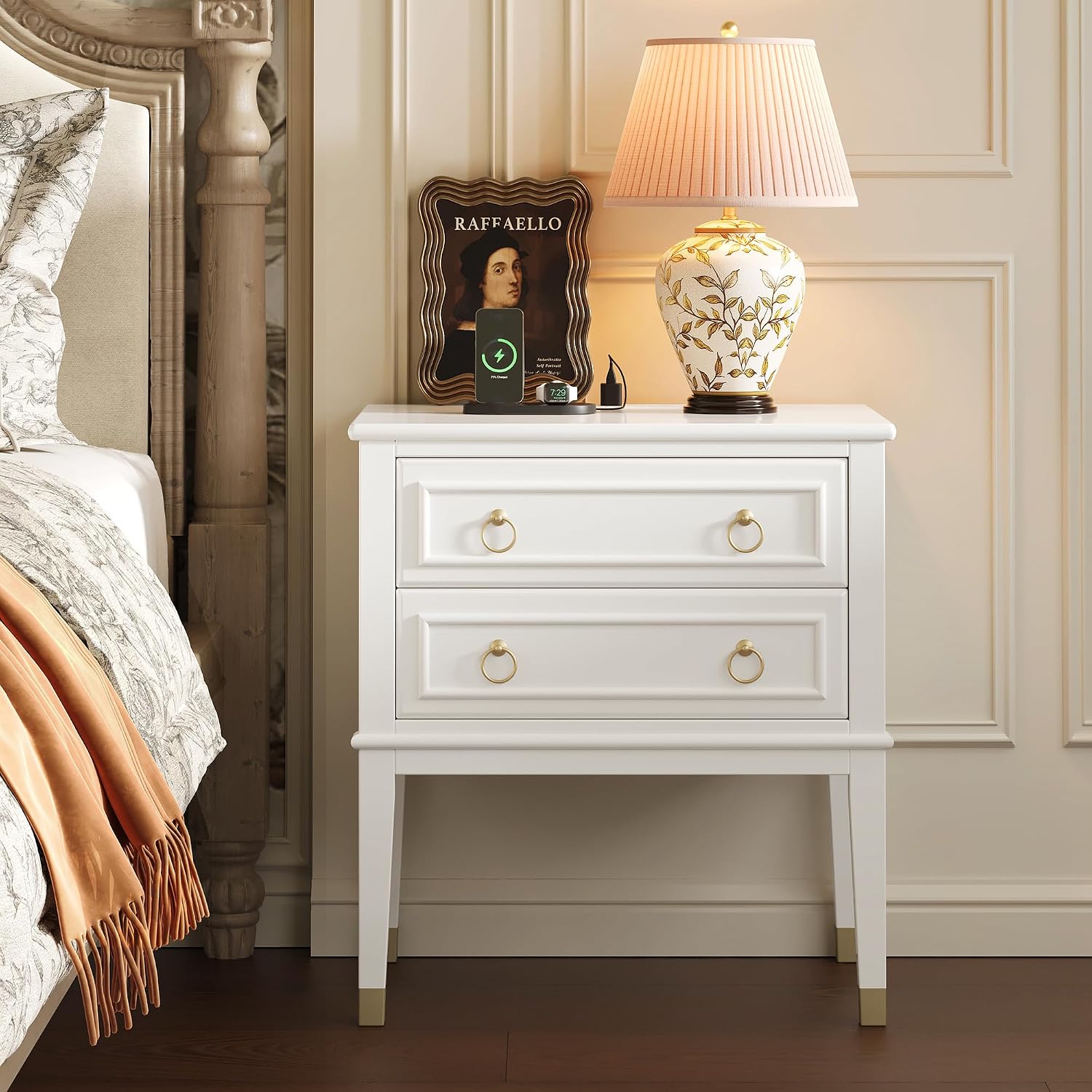
Huuger 27.6-Inch Tall Nightstand
Tall stance for thick mattresses, rigid wood drawers, and a charging panel set into the top — the modern-bed pick.
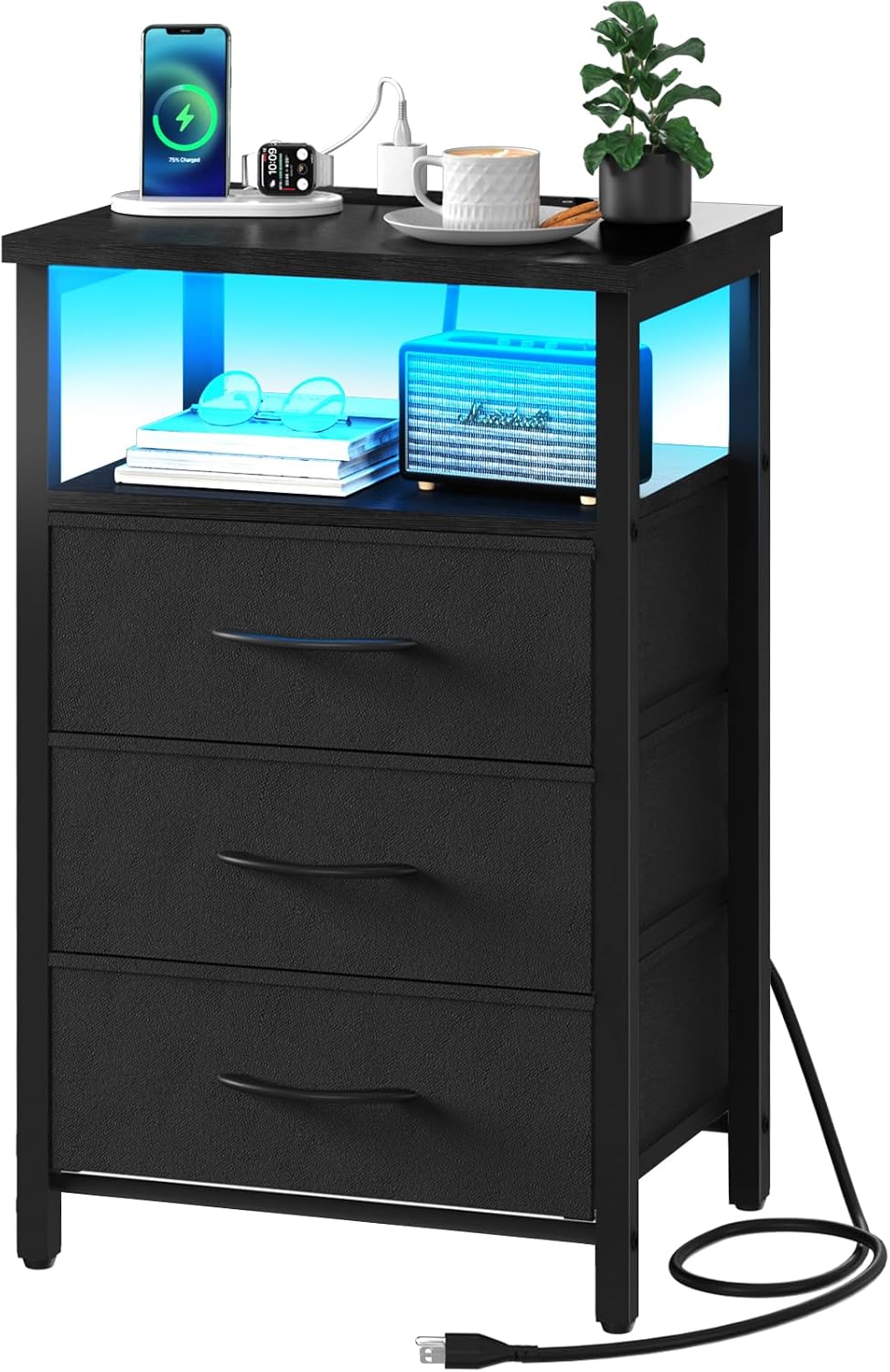
Yoobure Nightstand with Charging Station
Three fabric drawers, an open shelf, and LED light in a narrow frame — the small-room and dorm pick.
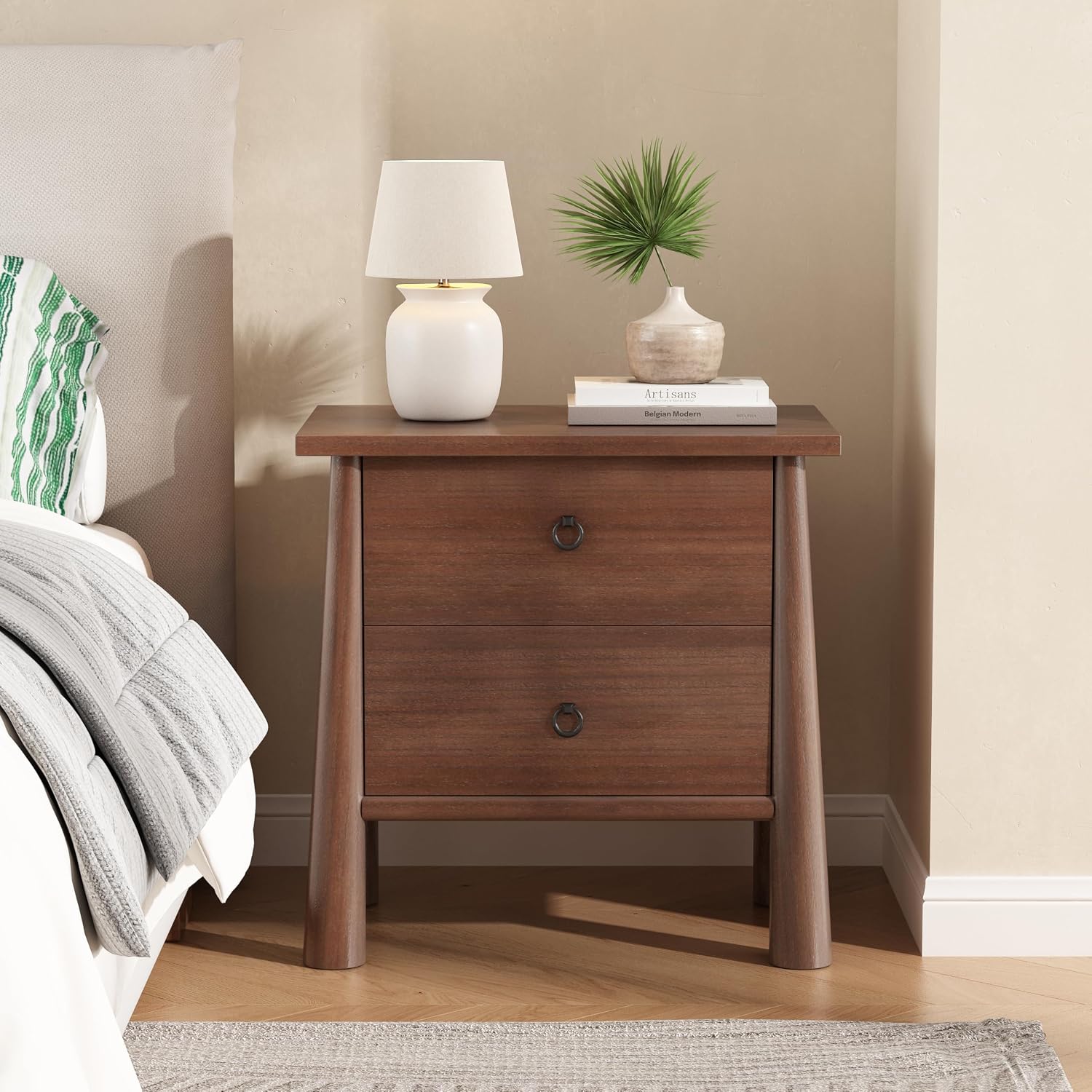
Christopher Knight Home Logan Nightstand
Warm wood tones and rounded mid-century legs with no electronics at all — the furniture-first pick.
Prices and availability may vary — tap any product to check the current listing.
What to Look For in a Nightstand
Six things decide whether a nightstand works at 3 a.m., which is the only hour that matters. Drawer count is not one of them.
1. Height against the mattress top, not the frame
Measure from the floor to the top of your made bed. That number — not the headboard height, not the frame height printed on a listing — is your target. Level is ideal. An inch or two above the mattress still works, because setting things down onto a slightly raised surface is easy. Below the mattress is where life gets annoying: the glass hides behind the bed’s edge, the phone slides into the gap, and you fish for both by touch.
Beds have quietly grown. Thick mattresses, pillow tops, toppers, and adjustable bases that rest high push sleeping surfaces well past the height older nightstands were built for. The Huuger’s answer is stance, not storage: legs a little over eleven inches long lift a fairly standard two-drawer box to just under 28 inches overall. The trade-off is real — long legs mean a higher centre of visual lightness but also more wobble to manage on carpet, covered below. If your bed is low and platform-style, this much height overshoots. Measure first. Ten seconds with a tape saves a return.
2. Top surface: the lamp-base test
A nightstand top hosts four permanent tenants: a lamp, a phone, a glass, and a book. The lamp never moves, so start there. Its base needs full contact — a base hanging half an inch off the back edge will eventually get elbowed into the wall gap, usually at the worst hour. You want the lamp’s base plus a hand’s width of clear surface in front of it. Anything less and the nightly shuffle begins, book evicting glass, glass evicting phone.
Depth matters as much as width here. A deep top swallows the lamp and still leaves a landing strip; a shallow top in a wide case can feel generous in photos and cramped in bed. And pair the top with the right lamp while you’re at it — our ceramic table lamp sizing guide works through the combined-height maths, because a tall nightstand plus a tall lamp can push light above reading level entirely.
3. Charging: built in, or bring your own
Built-in charging earns its keep only when the ports sit where a half-asleep hand lands — on the top surface or the front face. The Huuger’s panel is set into the top itself: two AC outlets, a USB-A, and a USB-C, spread out enough that a lamp plug and two cables coexist without a wrestling match. That layout kills the floor power strip, which kills the cord nest behind the bed, which is the actual prize.
But be honest about the downside. A charging panel is electronics living inside furniture, and furniture is a ten-year purchase while charging standards turn over faster than that. The USB-C port will age gracefully; the rest of the panel is a snapshot of today’s cables. A separate, good-quality strip costs little, hides behind any nightstand, and upgrades in minutes. Built-in wins on tidiness and reach. Separate wins on future-proofing. The Logan skips the question entirely — no panel, no cord, nothing to date — and for a guest room that trade is often the smart one.
4. Drawer boxes versus fabric bins, bedside edition
The same fight as the dresser category, with a different verdict. A rigid wood drawer box on slides opens one-handed, holds its shape, and shrugs off a decade of nightly use. A fabric bin flexes, needs two hands on a bad day, and bows if you load it with hardcovers. Beside a bed, though, the loads are light — a book, a remote, cables, tissues — and light loads forgive fabric in a way a drawer full of jeans never will.
So the ranking flips by room. For a primary bedroom you plan to keep, wood boxes win; it’s the same logic we applied when choosing a wood dresser with real drawer boxes over fabric bins for daily clothes. For a dorm, a first apartment, or a spare room that hosts twice a year, the Yoobure’s three fabric drawers are honestly sufficient — and the money saved buys the lamp. Just don’t store the heavy stuff in them. Fabric remembers every overload.
5. Depth and the forgotten wall gap
Every charging nightstand has a cord, and every cord needs somewhere to fall. Push a deep nightstand flush to the wall and the plug becomes the spacer — the case floats an inch or two out, drawers included, and small things start disappearing down the back. Shallower cases forgive this. Deeper ones demand a plan: a recessed outlet, a flat plug, or accepting the gap and vacuuming it monthly.
The Huuger runs wide rather than deep-shelved, which helps twice — the top gains landing space while the case stays manageable against the wall, and its power cord is long enough to reach an outlet that isn’t directly behind the bed. Check cord length on any charging model before buying. A short cord quietly decides where your furniture goes, and it will choose badly.
6. Legs, wobble, and carpet honesty
Tall nightstands on long legs look light and airy. They also turn into tuning forks on thick carpet if the feet are small and the floor is soft. The fix is boring and effective: seat the unit, load it, then push-test it from the side. A slight rock on day one becomes a rattle by month three. Felt pads, a firmer placement, or a thin board under the feet on deep pile all work.
Legs do pay rent, though. The raised stance lets a robot vacuum pass underneath, keeps the bottom drawer off a cold floor, and makes the whole piece read smaller than its storage suggests — useful in tight rooms. The Logan takes the opposite stance: shorter, rounded, tapered legs that keep the case visually grounded and the wobble question mostly theoretical. Two honest answers to the same problem. Pick by floor, not by photo.
How to Match a Nightstand to Your Situation
Three shoppers, three different right answers. The category only looks confusing when you shop someone else’s bedroom.
The thick-mattress owner
Your bed grew. Maybe it was the new mattress, maybe the topper, maybe the adjustable base that parks higher than the old frame ever did. Your current nightstand now sits in a ditch beside it, and the lamp switch lives below pillow level. You don’t need more storage. You need altitude. The Huuger was drawn for exactly this bed: tall stance, standard drawer box, charging on top because reaching down for a fallen cable was the original problem. Trade-off to accept: on a low platform bed in the guest room, this same table will look like it’s standing on tiptoe. It’s a one-bed solution.
The dorm and first-apartment mover
Your constraints are square footage and a lease, in that order. The Yoobure’s pitch is density: three drawers, an open shelf, charging, and a light, stacked into a narrow steel frame one person can carry up stairs and out again in a year. The LED strip sounds like a gimmick until the first night it replaces a separate night light in a room with one outlet. What you give up is permanence — fabric drawers and a frame at this tier are a few years of furniture, not a decade. That’s fine. Furniture that matches your lease length is not cheap furniture; it’s correctly scoped furniture.
The furniture-first traditionalist
You keep things. Your bedroom set has survived two moves and you plan for it to survive a third, and the idea of a USB port dating your furniture genuinely bothers you. The Logan is your table: two wood-tone drawers, rounded mid-century legs, no panel, no cord, nothing to yellow or obsolesce. Charging gets handled by a discreet strip behind it, replaced whenever standards change. The honest cost: no storage tricks, no shelf, no light — just two good drawers and a top. For a room that already works, that’s not a compromise. It’s restraint. Finish the wall above it properly, though — a bare wall over a low, warm-toned table looks unfinished; an arched full-length mirror on the adjoining wall balances the proportions better than art squeezed over the headboard.
Nightstand Types Compared
| Type / Tier | Best For | Price Tier | Key Feature | Watch-Out |
|---|---|---|---|---|
| Tall charging nightstand (Huuger) | Thick mattresses, high bases | Mid-range | Height plus top-panel charging | Panel ages faster than the furniture |
| Fabric-drawer charging nightstand (Yoobure) | Dorms, rentals, small rooms | Budget-friendly | Three drawers, shelf, and LED in a narrow frame | Fabric drawers resent heavy loads |
| Classic wood nightstand (Logan) | Permanent, traditional bedrooms | Mid-range | Rigid drawers, warm finish, zero electronics | No shelf or charging — top and drawers only |
| Open-shelf side table | Guest rooms, minimal bedside kits | Budget-friendly | Lightest footprint, fastest setup | Everything you own stays on display |
The tall charging tier exists because mattresses changed, not because marketing needed a feature — if your bed is high, it’s the only tier that fixes the reach problem and the cord problem in one purchase.
Fabric-drawer charging models win on storage per inch and per dollar, and lose on lifespan; they’re the right answer precisely when the room itself is temporary.
Classic wood is the quiet tier: nothing to demonstrate, nothing to date, and the drawers will outlast two charging standards — provided the room doesn’t need the extra shelf or ports.
Open-shelf tables are honest minimalism for guest rooms and tidy sleepers, and a daily eyesore for anyone whose bedside kit includes more than a book and a glass.
Three Beds, Three Different Nightstands
The adjustable base that parks high
Adjustable bases rest higher than the frames they replace, and owners rarely re-measure the room afterwards. Everything beside the bed is suddenly short. A tall nightstand restores the geometry: top near mattress level, lamp switch reachable without sitting up, charging on the surface instead of in the pit behind the base — a pit, note, that a moving base makes genuinely hostile to floor strips. This is the Huuger’s home turf, and the scenario it was sized for.
The twelve-inch gap beside a dorm bed
Some rooms offer a slot, not a space. The nightstand has to fit between bed and wall, hold a phone, a bottle, coursework, and medication, and ideally light itself. Narrow steel-frame models like the Yoobure exist for this slot: storage stacked vertically, shelf for the book, drawers for the clutter, LED standing in for the lamp there was never room for. Width is the spec here. Everything else is negotiable.
The guest room that hosts twice a year
Guest rooms need a surface, a drawer for the things guests forget to bring, and nothing that requires instructions. Charging panels are wasted here — guests bring their own cables and leave before the panel earns anything. A classic wood nightstand like the Logan, a decent lamp, and an empty drawer with a spare cable in it outperforms any smart furniture. Spend the difference on the mattress. Guests remember the mattress.
Common Mistakes Nightstand Buyers Make
Measuring the frame instead of the mattress
The single most common error in this category. Headboards tower, rails sit low, and neither touches your glass of water. The mattress top is the only height that matters, and it changes every time you add a topper. Measure the made bed, in the evening, with bedding on. That’s the surface you live at.
Buying the pair before testing one
Pairs photograph beautifully and commit you twice. If the height is wrong, it’s wrong on both sides of the bed. Buy one, live with it for a week — reach for the glass, find the switch, open the drawer with sleepy hands — then order its twin. The week’s delay costs nothing. The double return costs plenty.
Ignoring where the cord falls
Charging nightstands get bought for tidiness and then installed with the cord draped over the top because the outlet sits behind the headboard. Before ordering, look at your actual outlet: its position decides whether the panel’s cord drops neatly behind the case or performs across the front. A longer cord and a flat plug solve most of it. Finding out after assembly solves none of it.
Overloading fabric drawers with books
Fabric bins fail slowly and then all at once — the bottom panel bows a little more each month until the drawer drags. Hardcovers are the usual culprit; a stack of them weighs more than everything else in the drawer combined. Keep fabric drawers for the soft and the light, and give books the shelf or the wood drawer. The bin will repay the kindness for years.
Why, How, and What
Why have nightstands gotten taller?
Because beds did. Mattresses thickened, toppers became standard, and adjustable bases raised the sleeping surface — while the default nightstand height stayed where it was in the era of thin mattresses on low frames. Tall models are the correction, not a fashion. The extra height usually comes from longer legs rather than a bigger case, which is why tall nightstands keep standard drawers: the storage never changed, only the stance did.
How do you stop a tall nightstand wobbling on carpet?
Work through it in order. First, seat all four feet properly — long legs on deep pile often rest on the carpet’s surface rather than the floor beneath, so press the unit down and let it settle overnight before judging. Second, load it; an empty tall table wobbles more than a full one. Third, add felt pads or a thin rigid board under the feet if the rock persists. Check again after a week, because carpet compresses and a table that was true on day one can lean by day seven.
What belongs in the top drawer, specifically?
The things you reach for without light: medication, lip balm, tissues, the remote, a phone cable. That’s the drawer’s whole job — blind retrieval. The bottom drawer takes the daytime overflow: current book, notebook, chargers not in use. What doesn’t belong in either is the archive — old letters, dead batteries, three generations of cables. A nightstand drawer is a tool station, not a memory box, and it works only while everything in it is findable by touch.
Questions People Ask Before Buying
Is a tall nightstand worth it for a thick mattress?
A tall nightstand is worth it when your mattress top sits high, because reaching down in the dark for water, glasses, or a phone is exactly how things get knocked onto the floor at 3 a.m., and a top that lands level with the mattress removes that blind downward reach entirely. Modern beds keep getting taller — thick mattresses, toppers, adjustable bases that park high. The standard nightstand height was set in a thinner-mattress era and nobody updated it. The Huuger in this guide stands just under 28 inches, most of the extra height carried in its long legs, which is the honest way to gain height: the storage box stays standard, the stance does the work. If your mattress top is low, skip tall entirely. A high top next to a low bed makes the lamp tower over you.
How tall should a nightstand be compared with the mattress?
A nightstand should stand roughly level with the top of your mattress, within a couple of inches either way, because that height lets you set down a glass, reach a lamp switch, and pick up a phone without lifting your shoulders off the pillow or groping below the bed’s edge. Measure the mattress top, not the bed frame — frames lie, since side rails and headboards sit at unrelated heights. A tape measure from floor to the top of the made bed takes ten seconds and settles the question before money moves. Slightly above the mattress beats slightly below it. A glass set down an inch too low gets found by elbow, not by hand.
Is built-in charging on a nightstand actually useful, or a gimmick?
Built-in charging is genuinely useful when the outlets sit on the top or front where you can reach them half-asleep, because it replaces the power strip on the floor, keeps cords off the bedding, and puts a USB-C port where tonight’s phone and tomorrow’s alarm actually live. Placement is the whole game. Ports hidden on the back panel are a gimmick — you’ll plug in once and never touch them again. The Huuger’s panel sits in the top surface itself, with AC outlets beside USB-A and USB-C, so the lamp, phone, and watch all land within one arm’s sweep. The honest trade: a built-in panel is furniture, and furniture outlives charging standards. A separate quality strip stays easier to upgrade in five years.
Are fabric drawers on a nightstand a deal-breaker?
Fabric drawers are not a deal-breaker on a nightstand the way they can be on a dresser, because bedside storage is light — a book, a remote, spare cables, tissues — and loads that small rarely bow the sides or sag the bottom the way folded jeans do. Context decides. In the dresser guide the same fabric construction lost points because dresser drawers carry real weight daily. Beside a bed, the math flips: a fabric bin holding a paperback and a lip balm is under almost no stress, and the Yoobure in the comparison adds three of them plus an open shelf and LED lighting for small rooms. Fabric fails bedside only when you store hard, heavy objects — a stack of hardcovers will still test the bottom panel.
Should I buy a single nightstand or a matching pair?
Buy the pair when two people sleep in the bed, even if the second side looks emptier, because mismatched heights and tops on either side of the same mattress read as an accident, and matching pairs cost noticeably less per unit than two singles bought in separate orders later. Symmetry is doing quiet work in every bedroom photo you’ve ever liked. Two different tables can work — deliberately different, same height, similar visual weight. Accidentally different just looks unfinished. One exception: a single sleeper in a small room gains real floor space by running one nightstand and a wall shelf on the other side. Intentional asymmetry beats a cramped pair.
Frequently Asked Questions
What if my two sides of the bed need different heights?
It happens more than listings admit — one partner on an adjustable base, or a mattress topper on one side only. Match the nightstand to each side’s mattress height separately and keep the finish and hardware family the same, so the pair reads as siblings rather than strangers. Height differences of an inch or two disappear once lamps and books land on top. What jars the eye is different styles at different heights, not two heights alone.
Do tall nightstands tip over more easily?
Height alone doesn’t tip a nightstand; a narrow footprint and a top-heavy load do. A tall unit on long legs, like the Huuger, actually keeps its drawer box — the heavy part — at standard height, with air below. The wobble risk lives in carpet: long legs on thick pile can rock until the feet settle or you add felt pads and a firm placement. Push-test any nightstand after loading it, and keep the heaviest drawer lowest. Wall anchoring is dresser logic for rooms with climbing toddlers, and a loaded, drawer-open nightstand deserves the same strap in that house.
Can a nightstand with charging replace a bedside lamp’s outlet?
Yes, and that is quietly its best use. The lamp plugs into the nightstand’s own AC outlet, the switch stays at pillow height, and the wall outlet behind the bed — the one nobody can reach without moving furniture — stops mattering. Check the panel layout before buying: you want the lamp’s plug and two charging cables to fit without fighting for the same corner. Panels that spread the outlets across the top, rather than clustering them, win this test.
How much top surface does a nightstand really need?
Enough for a lamp base, a phone, a glass of water, and tonight’s book — without any of them overlapping. In practice that means a top at least as deep as your lamp’s base plus a hand’s width in front. Narrow tops force the nightly shuffle where the book evicts the glass. The Huuger’s top is on the generous side for its footprint because the case is wide rather than deep-shelved. Measure your lamp base first. It is the tenant that never moves.
Are LED lights on a nightstand worth having?
For small rooms, dorms, and anyone who reads or games after lights-out, a soft LED strip under an open shelf — the Yoobure’s party trick — replaces a separate night light and keeps the main lamp off. For a calm, traditional bedroom, it’s decoration you’ll switch off in a week. Neither answer is wrong; they’re different rooms. If you share the bed with a light-sensitive partner, a dimmable low shelf light disturbs less than a full bedside lamp. If you sleep in total darkness, save the money and skip the light show.
How long does a flat-pack nightstand take to assemble?
A two-drawer wood nightstand is an evening project, not a weekend one — the case, two drawer boxes, and a charging panel to seat and connect. Fabric-drawer frames like the Yoobure go together faster because the drawers arrive as fold-flat bins. Work on a rug so painted fronts don’t scuff, keep each drawer’s hardware in its own pile, and test the charging panel before the back panel goes on. That last step is the one people skip and regret through a finished case.
Final Recommendation
If your mattress top sits high — and a tape measure, not a guess, should tell you — buy the tall one. The Huuger pairs the corrected height with rigid drawers and top-surface charging, which is the complete answer to the modern bedside: reach, storage, and power in one stance. Its panel will age before its drawers do, and that’s an acceptable trade for a decade of not fishing cables out of the dark.
If the room is small, rented, or temporary, buy the Yoobure and spend the savings on bedding — fabric drawers are the right tool for light loads and short leases. If the room is permanent and calm, buy the Logan and let a replaceable strip handle charging forever. Wrong height is the only indefensible purchase here. Everything else is taste.
Decision Tree: Which Nightstand Fits You?
Mattress top sits high, cords everywhere? → Huuger tall nightstand. Height fixes the reach; the top panel fixes the cords.
Small room, dorm, or a lease under two years? → Yoobure. Three fabric drawers, a shelf, and light in a narrow frame you can carry out alone.
Permanent bedroom, furniture you keep for a decade? → Christopher Knight Home Logan. Wood drawers, warm finish, no electronics to date.
Guest room? → Logan again, or the simplest wood table you like. Guests need a surface and an empty drawer, not a charging spec sheet.
Key Takeaways
Measure the mattress top, not the frame. Nightstand height within a couple of inches of it is the whole game.
Built-in charging is worth it only when the ports sit on the top or front — and a separate strip still wins on future-proofing.
Fabric drawers fail under dresser loads but serve light bedside duty honestly; wood boxes are for the rooms you’re keeping.
Buy one nightstand first, live with it a week, then order the matching second.
Compare Top Nightstands
Three proven picks side by side — choose the one that fits your needs.
Huuger 27.6-Inch Tall Nightstand
Tall stance for thick mattresses, rigid wood drawers, and a charging panel set into the top — the modern-bed pick.
Yoobure Nightstand with Charging Station
Three fabric drawers, an open shelf, and LED light in a narrow frame — the small-room and dorm pick.
Christopher Knight Home Logan Nightstand
Warm wood tones and rounded mid-century legs with no electronics at all — the furniture-first pick.
Prices and availability may vary — tap any product to check the current listing.