What does a fan speed actually buy you? That is the question I kept circling with the Cosori TurboBlaze, because the whole machine is built around a claim most brands never make out loud. Five fan speeds. A DC motor. Up to 450 degrees. Most air fryers give you one fan setting, which is on, and a temperature dial, and call it done. This one lets the fan run slow for proofing dough and fast for the hard sear, and I have spent weeks trying to work out which of my dinners genuinely changed because of it, and which ones just felt fancier while I stood there watching through the basket gap.
Some numbers first, since the numbers are the honest part. Six quarts of basket, which in my kitchen means a whole chicken if the chicken is modest, or two pounds of thighs with space around them, and space around food is the entire game with hot air. The temperature range runs from about 90 degrees at the proofing end to 450 at the top, and 450 is a real difference, not a spec-sheet one. Frozen fries at 450 finished in about 13 minutes in my notes, a minute or two faster than my older 400-degree machine, with edges that went properly dark instead of politely golden. I wrote down 13. I also wrote down that I forgot to shake them and it still mostly worked, which tells you something about airflow doing the job your wrist usually does.
The ceramic coating is the other headline, PFAS-free, and here is where my data gets thinner and I know it. Ceramic surfaces start out slicker than the traditional nonstick on my last basket, eggs-release slick, almost annoying slick, food sliding when you go to flip it. Everything I have read and everything my own pans have taught me says ceramic gives that up faster, over months, in exchange for the chemistry people are trying to avoid. Mine is, let me count, maybe five months in. Still slick. I cannot tell you where it lands at month eighteen, nobody honestly can yet, and any review that promises you an answer is selling you one.
Noise. Nobody puts decibels in the listing, so, my phone app, which is not a lab instrument and I know it, said low sixties at a meter away on the highest fan speed, roughly dishwasher conversation level, and noticeably less on the middle speeds where most cooking actually happens. The DC motor is the reason. It also explains the price gap against the house brand machines, a gap I resented at checkout and have thought about less with every week the thing just, runs, without the startup groan my old one had developed.
There is a window of sorts in my attention, not the basket. No light inside. You pull the basket to look, like every other machine, and every pull dumps heat. A small thing. It adds up across a winter of weeknight cooking in a way I did not expect to care about and do.
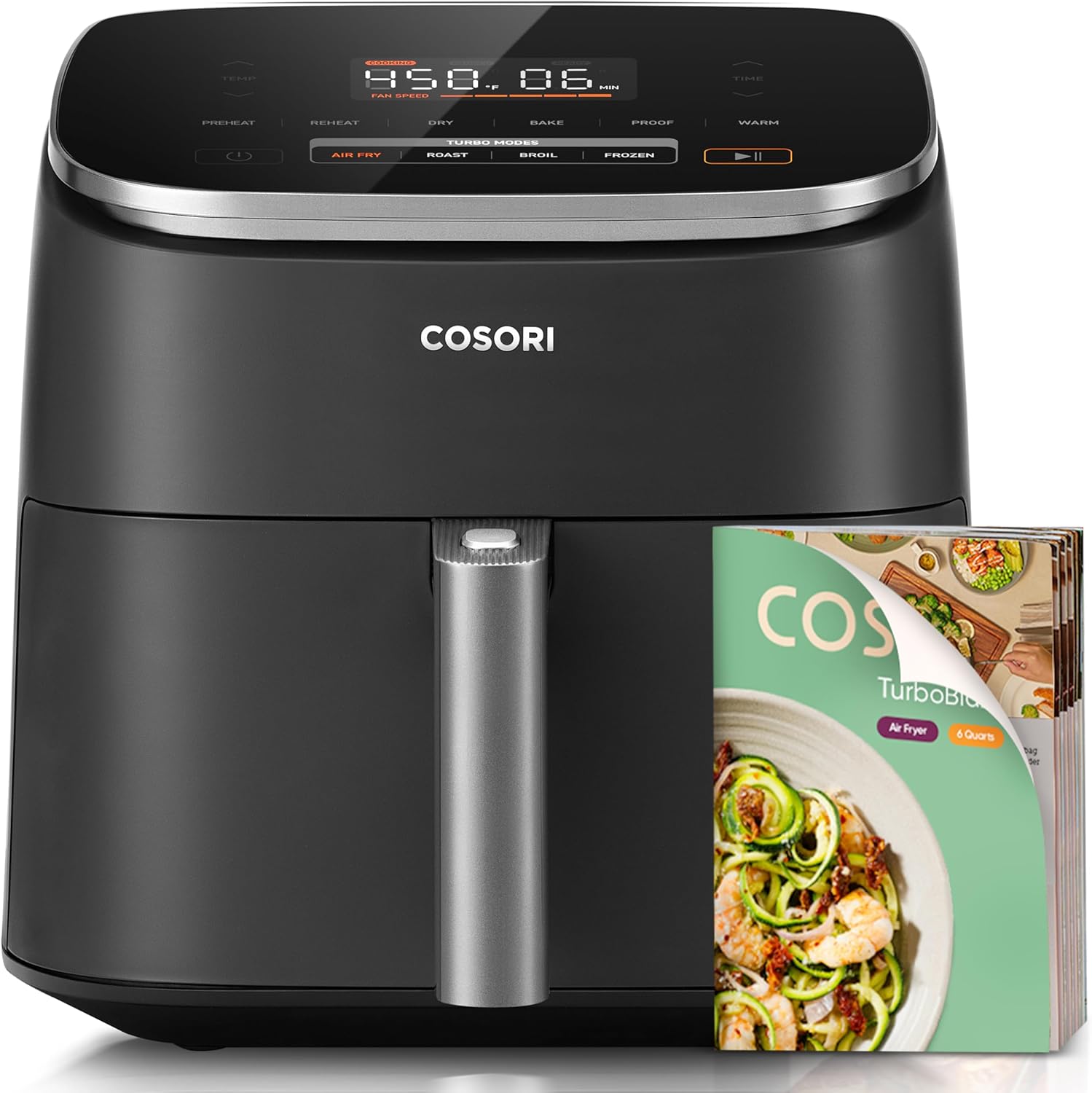
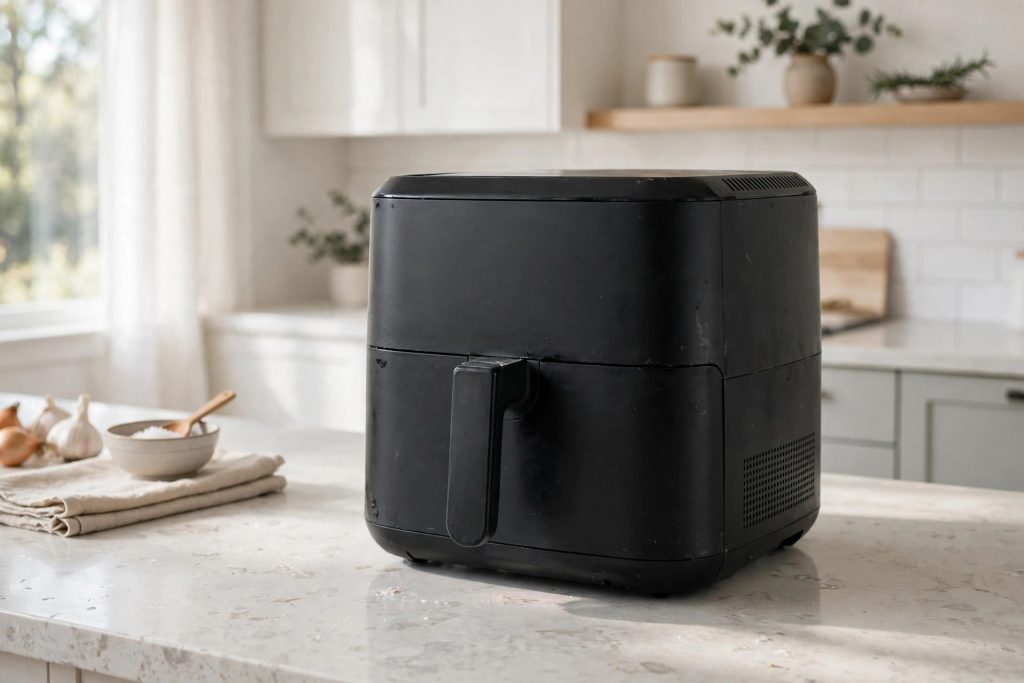
Five fan speeds, up to 450 degrees, ceramic-coated basket and plate
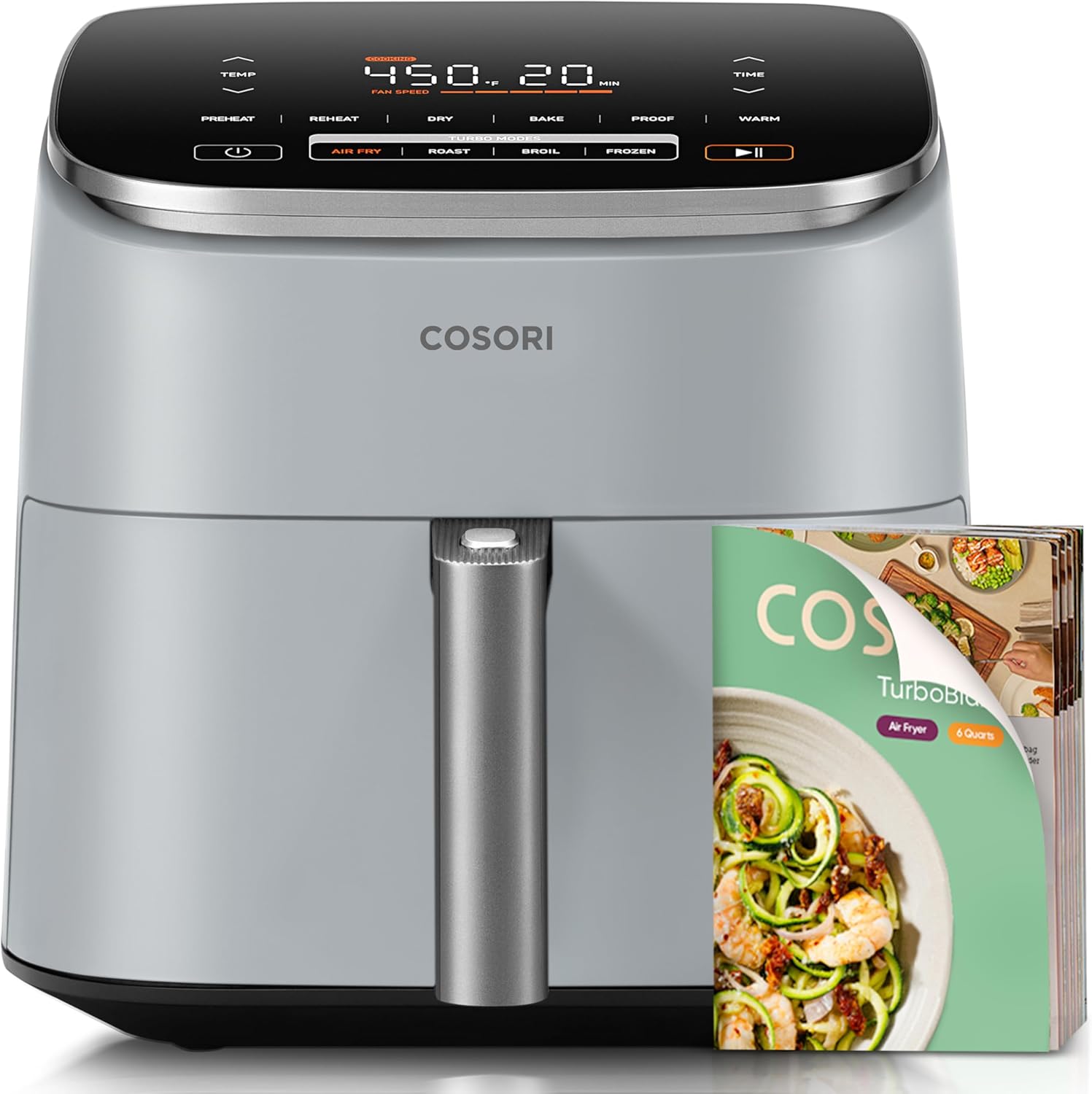
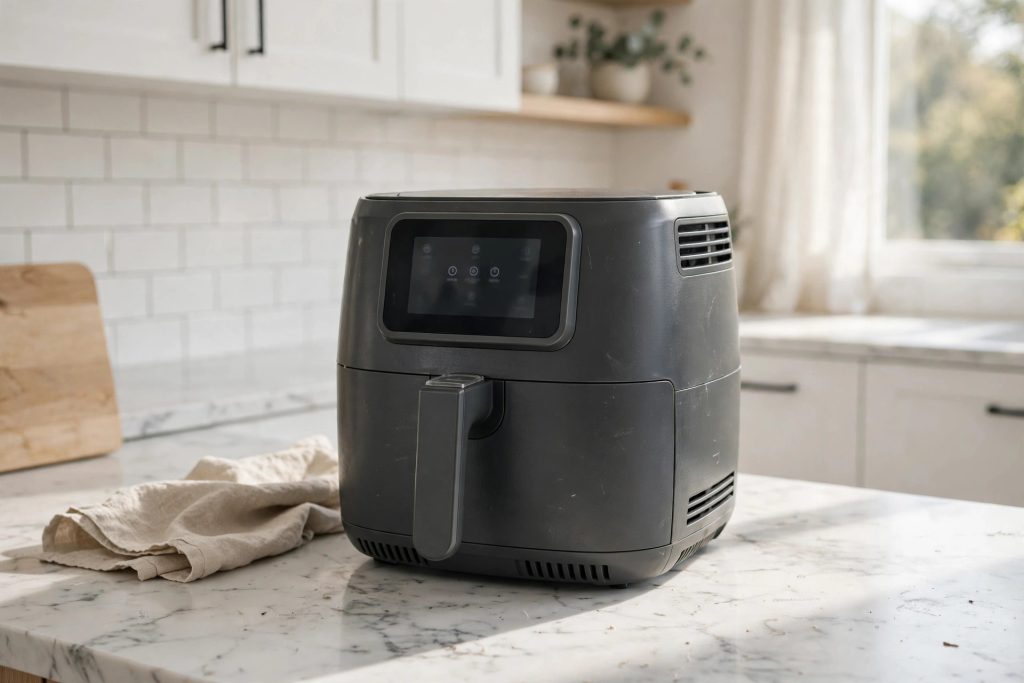
Same 9-in-1 machine in the light gray finish
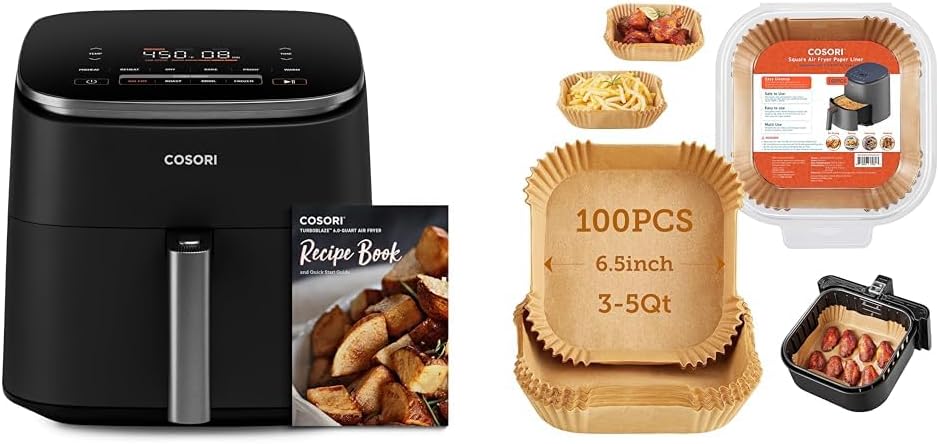
TurboBlaze bundle with square disposable liners for sticky food days
Prices and availability change often. The button shows the current listing.
The nine functions are the part of the listing I trust least, not because they fail, they do not, but because functions on a shared fan and element are mostly temperature and fan pairings wearing name tags. Air fry, roast, bake, broil, dehydrate, frozen, proof, reheat, keep warm. I use four. I suspect you will use four, and they will not be the same four, and the machine is better understood as a wide range with a few saved pairings than as nine appliances. The proof function at the low end genuinely surprised me, dough rising in a closed warm box in January when my kitchen sits at 64 degrees. That one earned its tag.
Cleanup data, since I tracked it for no good reason beyond habit. Basket and crisper plate, dishwasher, roughly twice a week since it arrived. The ceramic still releases with a wipe on the nights I hand wash, and the plate has not warped, which my previous machine’s plate did, audibly, a little oil-can pop as it heated. I keep waiting for the coating to start its decline at the corners. So far the corners are holding and my prediction is losing, and I would rather report that than tidy it up.
Actually, one correction to my own notes. I wrote earlier that the fries took 13 minutes at 450. That was the second batch. The first batch, straight from a cold start with no preheat, took 17, and the difference between those two numbers is the difference between the brochure’s life and yours. Preheat is three minutes on this one. Count it. Everyone who tells you a time without saying whether the machine was hot is telling you half a time.
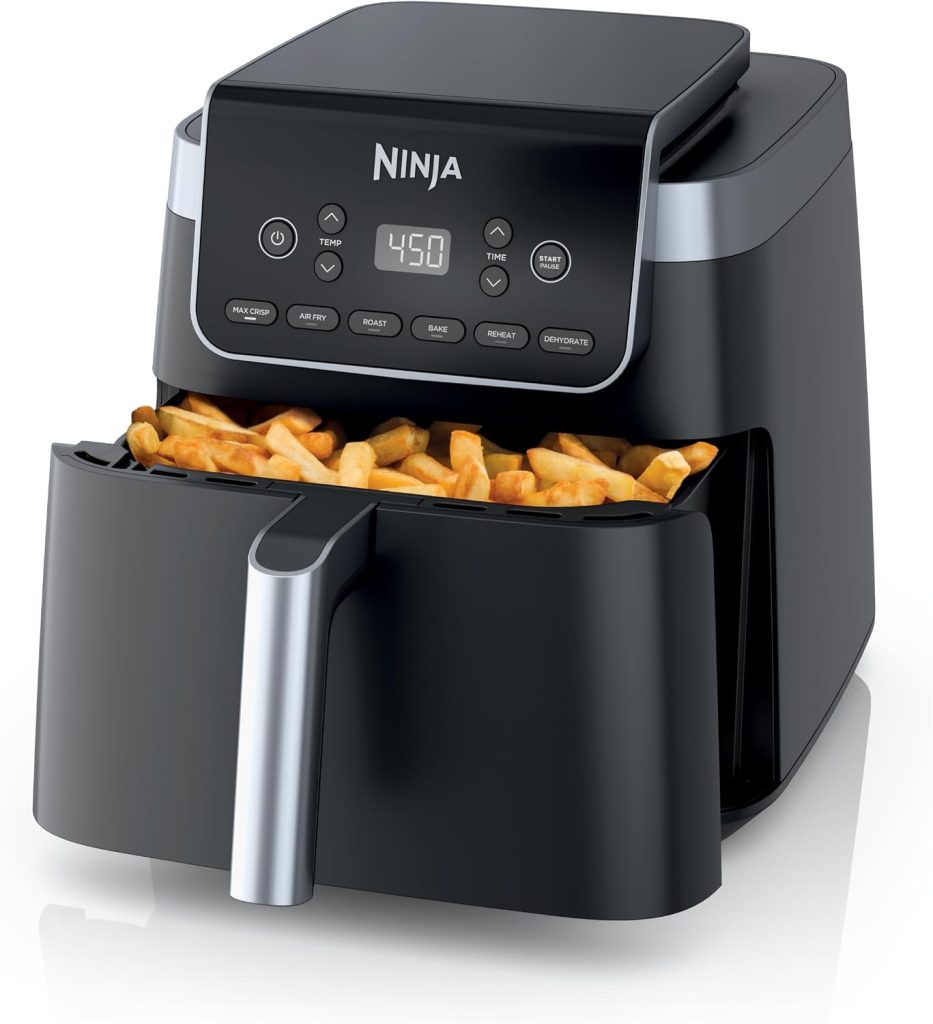
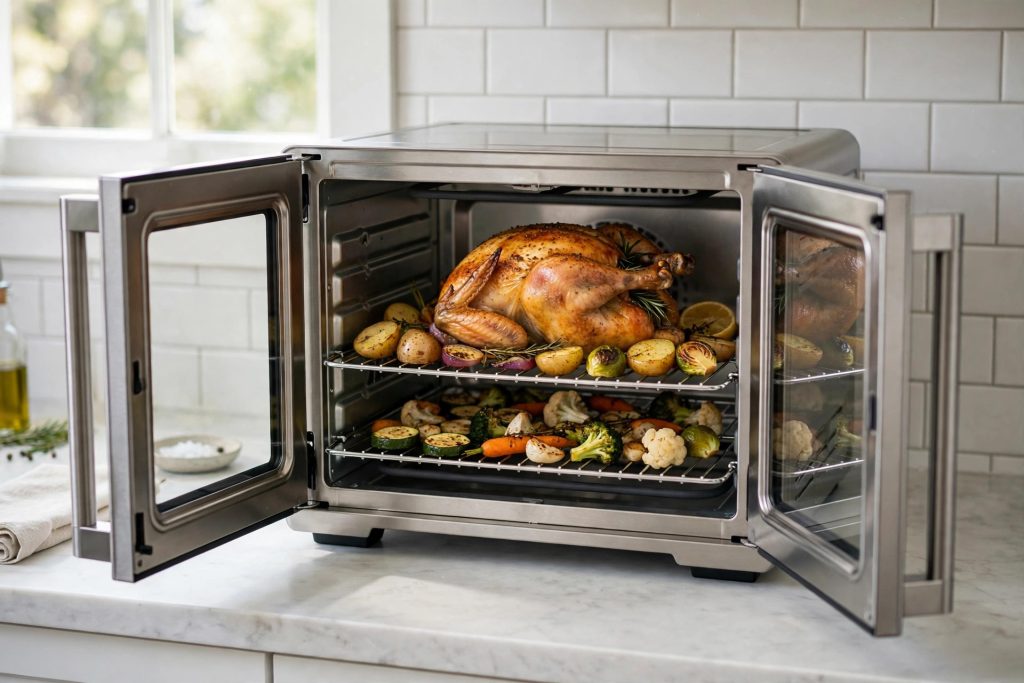
The light gray version and the dark gray version are the same machine wearing different coats, and there is a bundle that adds a hundred paper liners, which I have opinions about that do not fit this paragraph. Liners protect the coating and blunt the airflow a little, both things are true at once, and which truth wins depends on whether you are cooking wings or reheating a croissant. For the liner question specifically, the Ninja XL MaxCrisp review is not about liners at all, it is just the other big-basket machine I measured against, and the Emeril Lagasse French door oven review covers the countertop-oven end of the same argument. The Chefman rotisserie air fryer review is there if you want the spinning-basket answer instead. I have not cooked on the rotisserie one. That gap in my knowledge stays a gap.
Counter footprint, measured because I measure everything now. About a foot deep with the basket closed, and it wants a few inches behind it for the exhaust, same as everything in this class. It slides under my cabinets with the cord wrapped, barely, and barely is a word that has started arguments in kitchens smaller than mine. Six quarts is family size. Family size is also cabinet size. The listing will not do that addition for you.
Frequently Asked Questions
450 degrees versus the usual 400. Is that a real difference or a number on a box?
It is real, and it is smaller than it sounds. You feel it on frozen things and on skin, chicken skin especially, where the extra heat renders fat a bit faster and the finish goes darker at the edges. On a tray of vegetables I would struggle to pick the 450 batch out of a lineup. The honest way to say it is that the top temperature buys you a minute or two and a darker edge, and whether that is worth money depends on how much of your cooking is frozen fries and wings. Mine is, embarrassingly, a lot. Someone cooking mostly fresh vegetables would notice the fan speeds long before they noticed the ceiling.
The ceramic coating is supposed to be the safe option, but I keep reading it wears out faster. Both things?
Both things, as far as I can tell from five months and a drawer of older pans. Ceramic starts slicker and historically gives up its release sooner than the older style coatings, we are talking a gradual fade over a year or two of heavy use rather than a sudden failure, and in exchange you are not cooking on the chemistry a lot of people are trying to move away from. Mine has not faded yet. I use wooden and silicone tools on it, I do not stack pans on top of it in the sink, and I still expect the corners to go first because corners always go first. If you need a coating that behaves identically in year three, I cannot promise you this is it. I cannot promise you the other kind is either, which is the part of the conversation nobody enjoys.
Do the paper liners actually protect the basket, or do they just make the food worse?
They protect the basket. They also cost you airflow, and both halves of that sentence survive every test I have run. With wings, the liner pooled fat and the bottoms steamed a little, still fine, not great. With pastries and reheats, no visible downside and cleanup took ten seconds. The bundle with a hundred liners makes sense if your cooking leans toward the sticky and the sauced. If your cooking leans toward things that need hard air underneath, naked basket, accept the wash. I go back and forth by the week, which I realize is not an answer, except it kind of is.
Five fan speeds. Which one do I actually cook on?
The middle ones, almost always, whatever the display calls them on a given function. The top speed is for the hard finish, the last few minutes on skin and frozen edges. The lowest is for proofing and dehydrating, jobs where you want air moving like a slow room fan rather than a storm. What the speeds really change is how forgiving the machine is when you walk away, because a slightly slower fan widens the gap between done and too far. I burned garlic bread exactly once learning that. Once was the tuition.
The question I started with, what a fan speed buys you, is still sitting on my counter unanswered in the way I wanted. I have the times written down, the noise numbers, the coating holding at month five, and none of it adds up to the sentence I keep trying to write. The TurboBlaze is the machine I reach for. I reach for it while still composing my argument about why, and dinner, most nights, does not wait for the argument to finish.
This site contains affiliate links. We may earn a commission on qualifying purchases.