This site contains affiliate links. We may earn a commission on qualifying purchases.
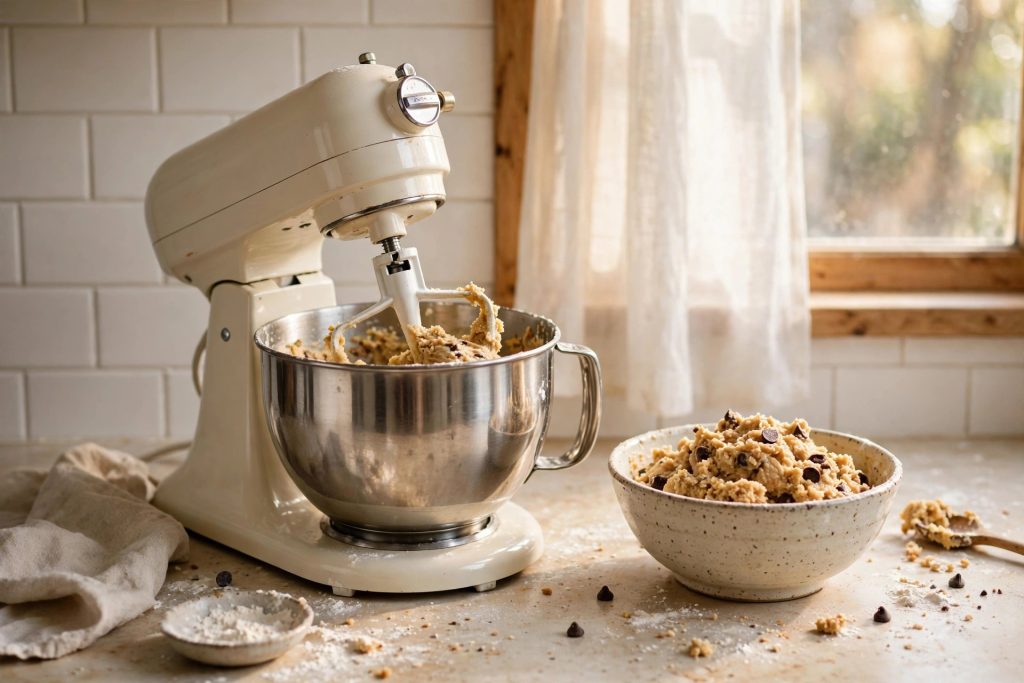
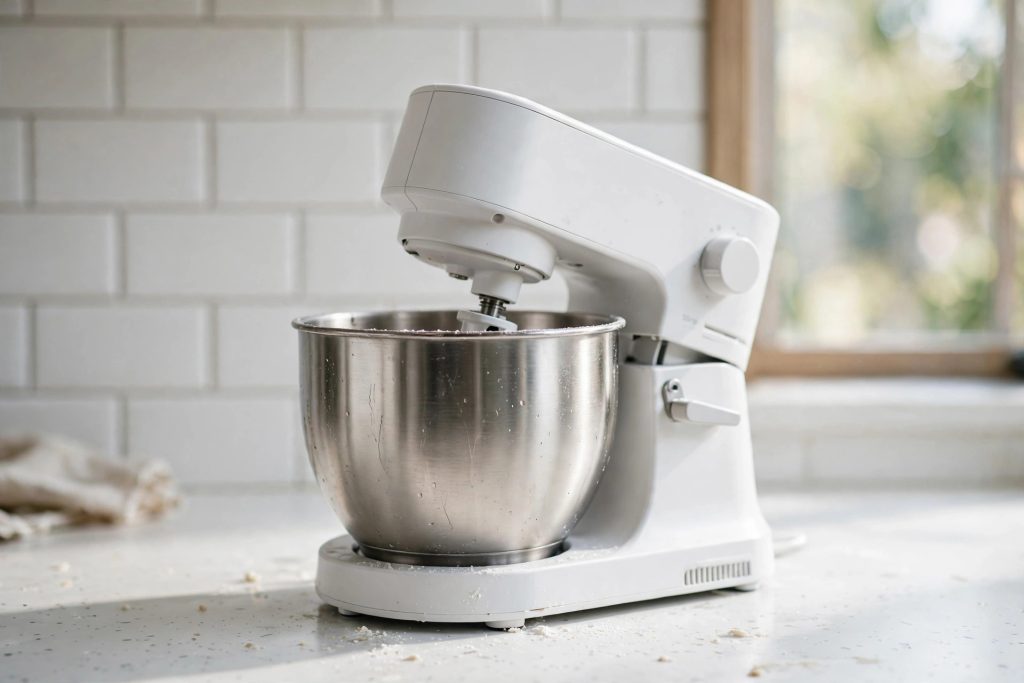
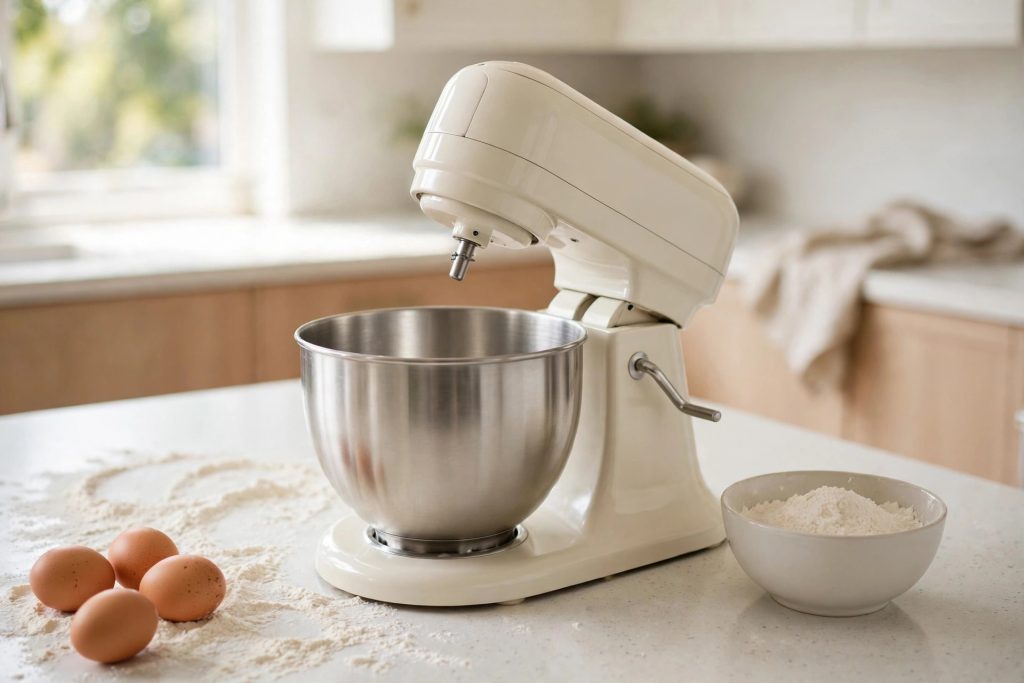
Nobody tells you that a tilt-head mixer is a hinge with a motor attached, and that the hinge, not the motor, decides how the machine feels at year five. I fix small appliances. Motors come to me dead sometimes, sure, but the stand mixers on my bench are usually alive and loose, heads nodding a few millimeters under load, a wobble the owner describes as it just feels tired lately. The Martha Stewart 5.3-quart tilt-head is built on that same hinge as every other tilt-head in its class, 660 watts, twelve speeds on the dial, a stainless bowl, and the parts of it that will matter in five years are the parts no listing photographs. The pin. The planetary. The little grease that dries on its own schedule.
Start with what is genuinely good. The silicone edge beater is the smartest thing in the box, a flat beater with a flexible edge that wipes the bowl as it turns, which retires the stop-scrape-stop rhythm that makes people hate creaming butter. It is the attachment owners of other brands buy separately, later, for real money, and here it simply comes with the machine, along with the whisk and the dough hook and a splash guard with a pour chute. The 5.3-quart bowl is the honest home size too, a double batch of cookies without drama, dough for two loaves at the comfort edge, and the whole unit weighs just over nine pounds, light enough to move one-handed, which sounds minor until your shoulder files a complaint after the four hundredth pantry trip.
Twelve speeds, then, because the dial is where the marketing lives on this one. Twelve steps on a mixer dial are not twelve gears. On machines of this class the steps that matter are the bottom two and the top two. The middle is a gradient you will use as three speeds no matter how many numbers are printed. Mid speeds wander, on good machines too. What you want is a low speed that is truly low, slow enough to fold flour without a dust cloud, and a top speed that does not fade under cream. This machine’s low end is respectably low. That sentence is worth more than the twelve.
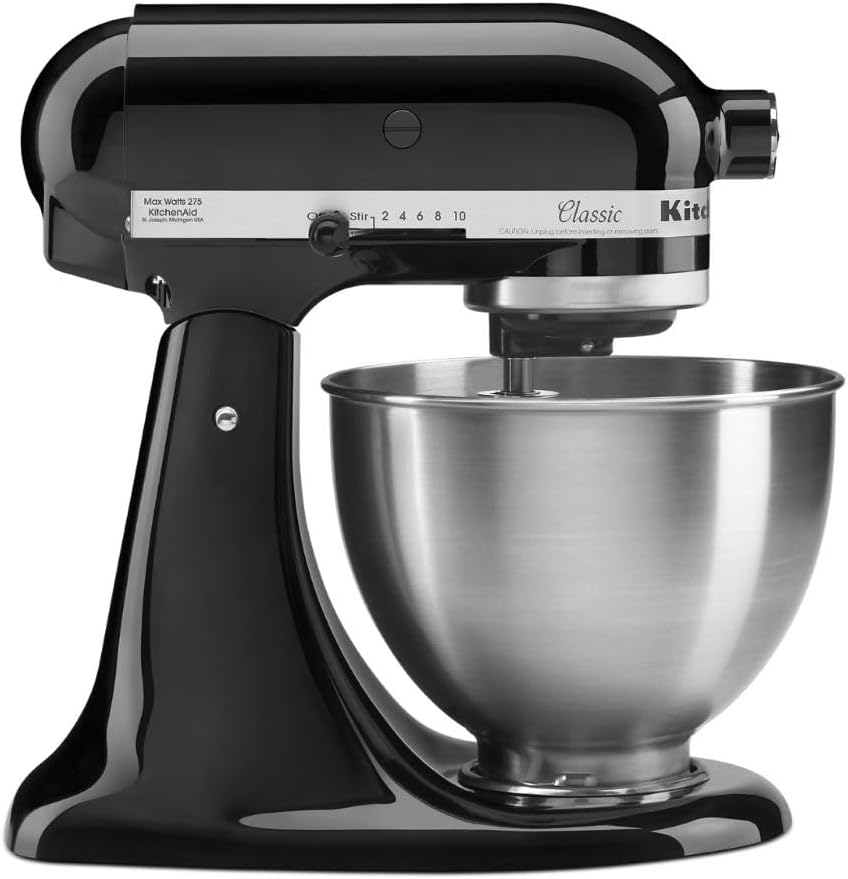
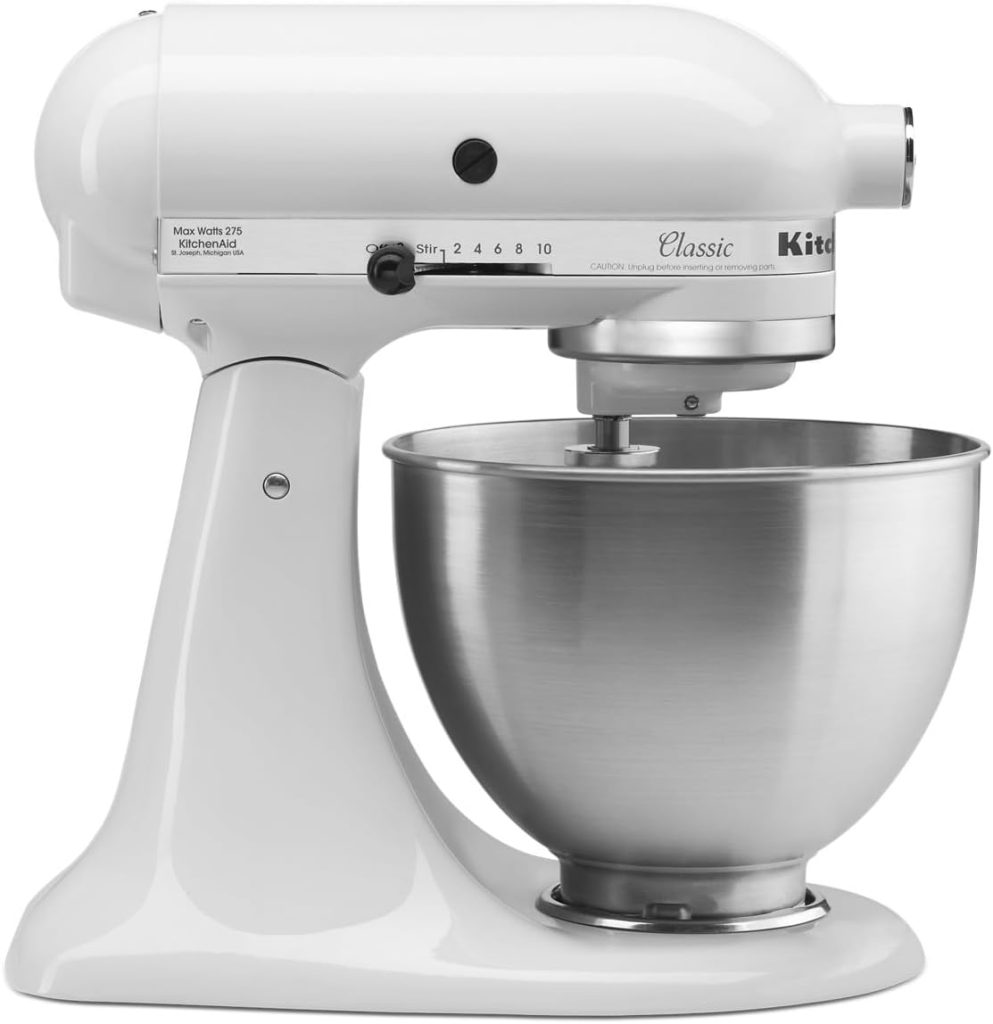
Now the disclosure, because this page used to skip it and a repair bench teaches you what skipped disclosures cost. The Martha Stewart mixer is sold mainly through department-store channels, and when I checked the big marketplaces for this rewrite I could not confirm a live listing for it that I would stake this page’s name on. Those are three tilt-head machines I could verify today, in the same size neighborhood, a KitchenAid Classic at 4.5 quarts, an Artisan at 5, and the little 3.2-quart Kitchen in the box, and everything I say about hinges and beaters applies to them and to the Stewart alike.
The hinge talk, in detail, since it is the point. A tilt-head locks down onto a base and pivots on a pin. Under dough load the head wants to nod, and the lock and pin take that argument every batch. When the pin works loose over years, and it does, on every brand, the nod grows, the beater clearance drifts, and the bottom of the bowl starts keeping secrets, an unmixed stripe of flour that shows up in every bake. The fix is cheap and almost nobody does it. Reseat or replace the pin, reset the beater height with the adjustment screw most owners never find, ten minutes, and the tired machine stands up straight again. The site’s KitchenAid Classic review is full of owners discovering this years late.
Weight cuts both ways and I should be fair about it. Nine pounds is a joy to carry and a question under load, because a mixer that walks is a mixer that is too light for its dough or sitting on the wrong feet. Under a stiff dough at speed two, light machines shimmy, a slow migration across the counter that ends at the edge if nobody is watching. Wipe the counter first. Anchor it with a hand for the first minute of dough.
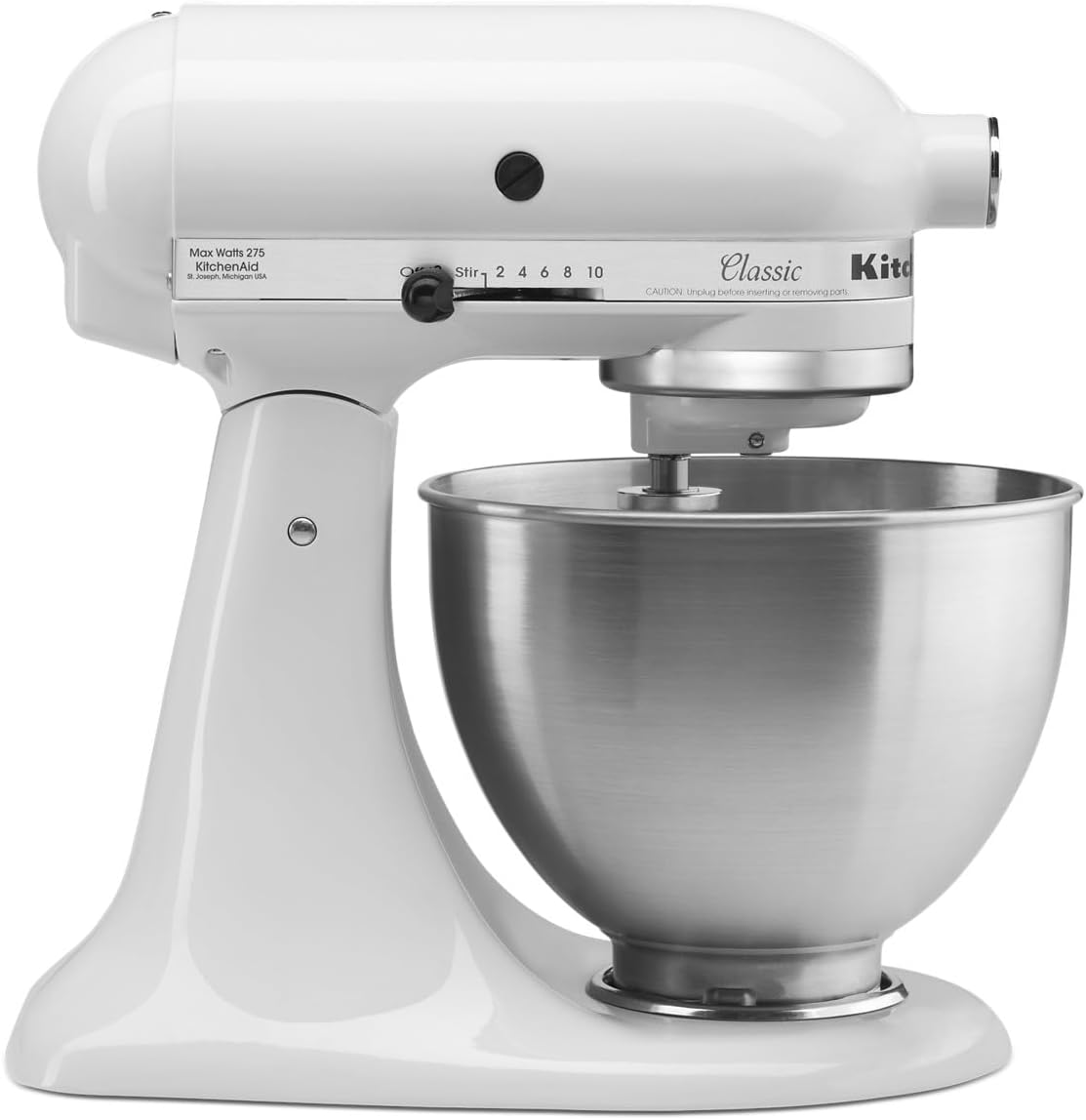
The benchmark hinge – deep parts support, beater adjustment screw, decades of spares
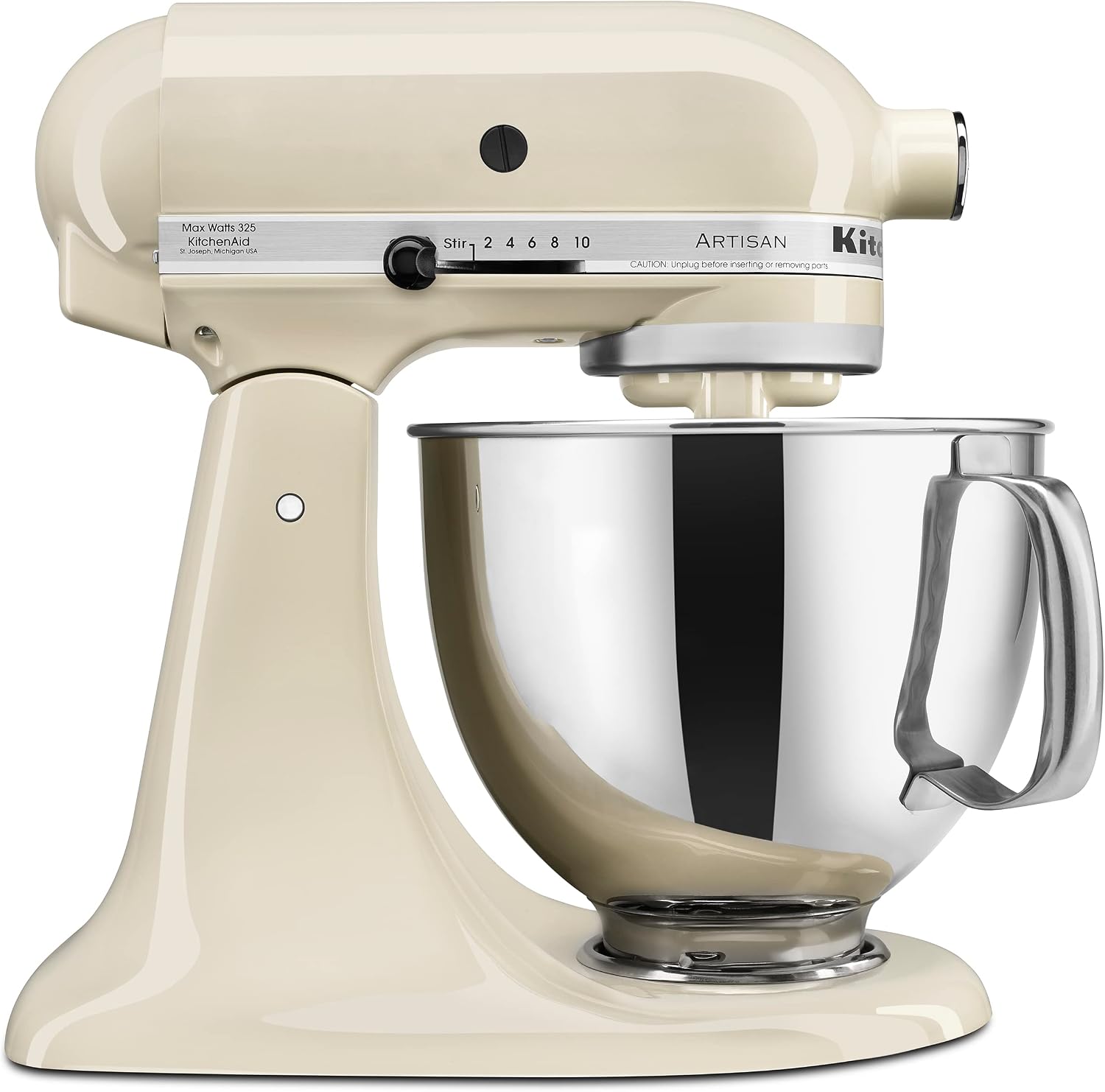
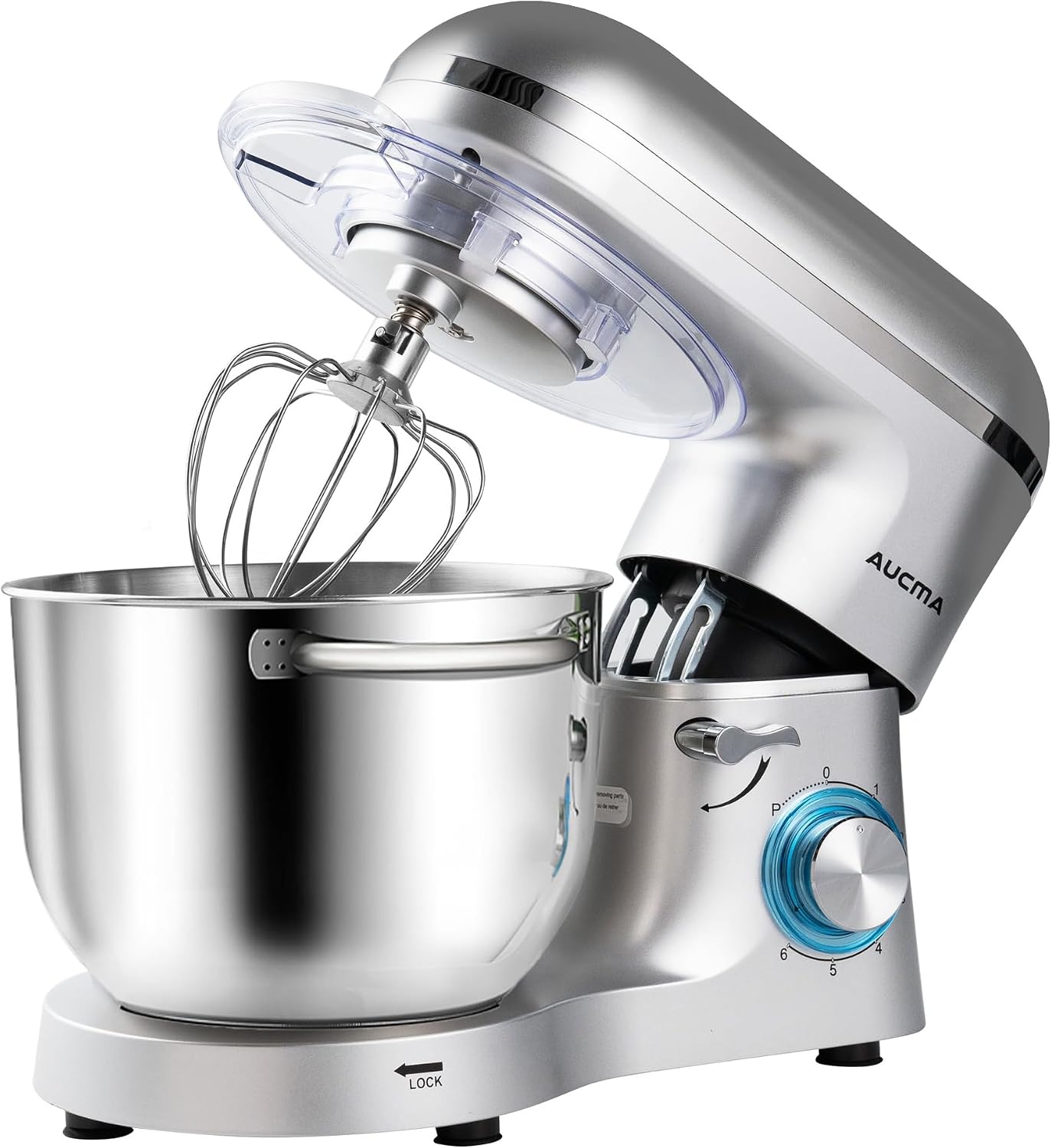
The 5-quart step-up – closest bowl to the Stewart 5.3, huge attachment ecosystem
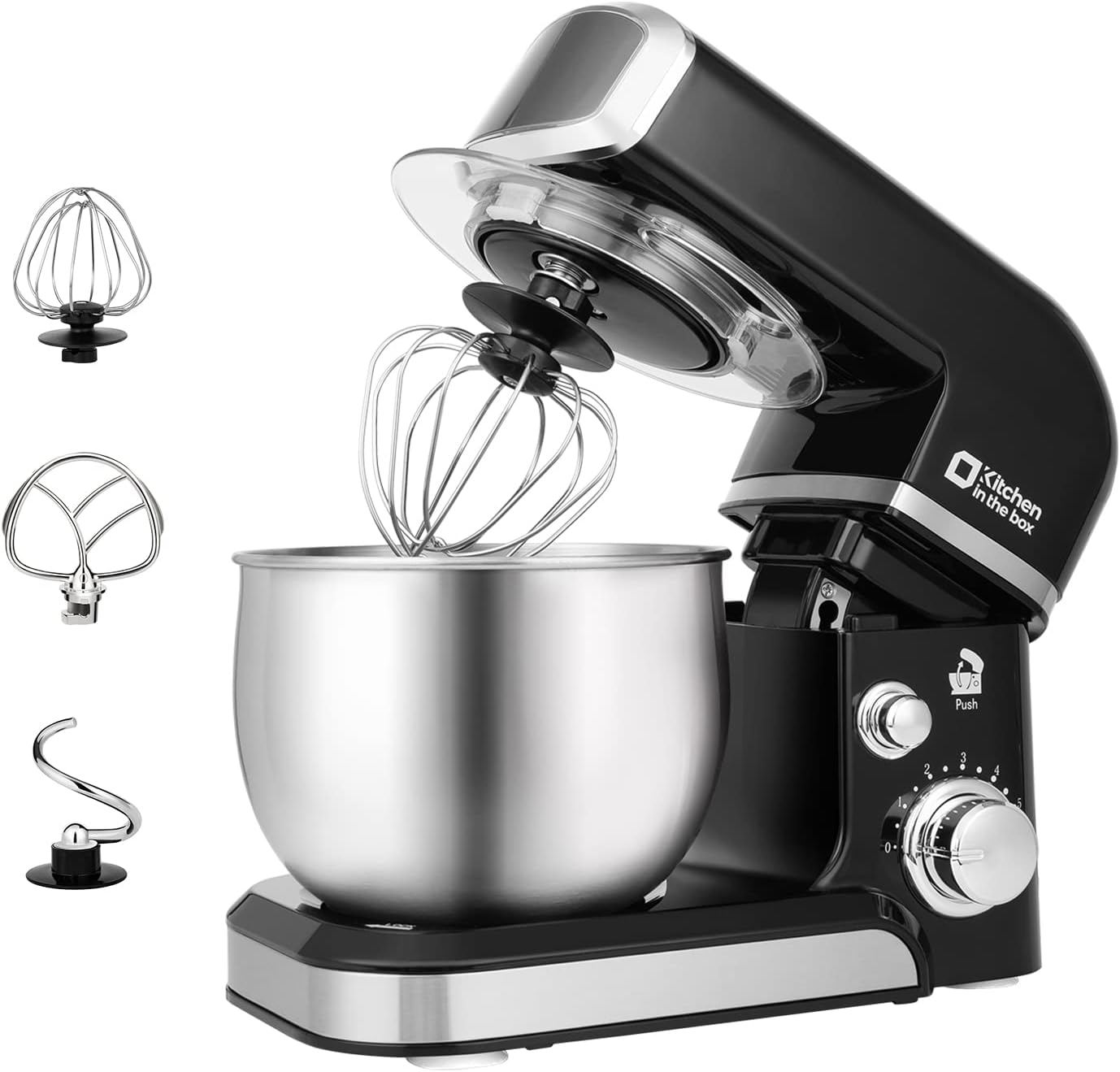
The small-kitchen seat – light, portable, honest about its batch size
Prices and availability change often. The button shows the current listing.
The planetary is the next thing nobody tells you. That is the gearbox plate under the head that carries the beater in its orbit, and it runs in grease that thins and migrates over years of warm kitchens. A mixer that starts leaving a faint grey weep at the shaft, or a drip that lands in the bowl, is not dying. It is asking for a repack, a cleaning and fresh food-grade grease, a job any decent shop does and many owners do at a kitchen table with a video playing. The Stewart’s warranty runs two years, which is a year better than much of its class, and warranties matter for electronics. For grease, the calendar is the warranty, and the calendar does not send reminders.
Beater clearance is the adjustment I wish I could bill the manufacturers for explaining. There is a screw, on most tilt-heads it faces you when the head is up, and a quarter turn decides whether the beater kisses the bowl or hovers above a permanent stripe of unmixed flour. Machines ship set for the flat beater, and swapping attachments changes the story by a hair, which is all it ever takes. If your batters keep a pale seam at the bottom, do not blame the recipe and do not blame the motor. Find the screw. The Kitchen in the box review on this site shows the same seam haunting a mixer a third of the price, because geometry does not care what you paid.
Actually, no. I said earlier that the middle speeds wander and let it sound like a shrug, and I want to take the shrug back, because one version of wandering is a symptom. A healthy stepped dial gives you speeds that are unevenly spaced but repeatable, same today, same next month. A sick one gives you a speed that surges, drops, hunts under a steady load, and that is contacts carboning up or a board going tired, and it gets worse, not better, and it is worth a warranty claim while the warranty is young. Repeatable is fine. Hunting is a message. Machines talk constantly, and most of my job is translation.
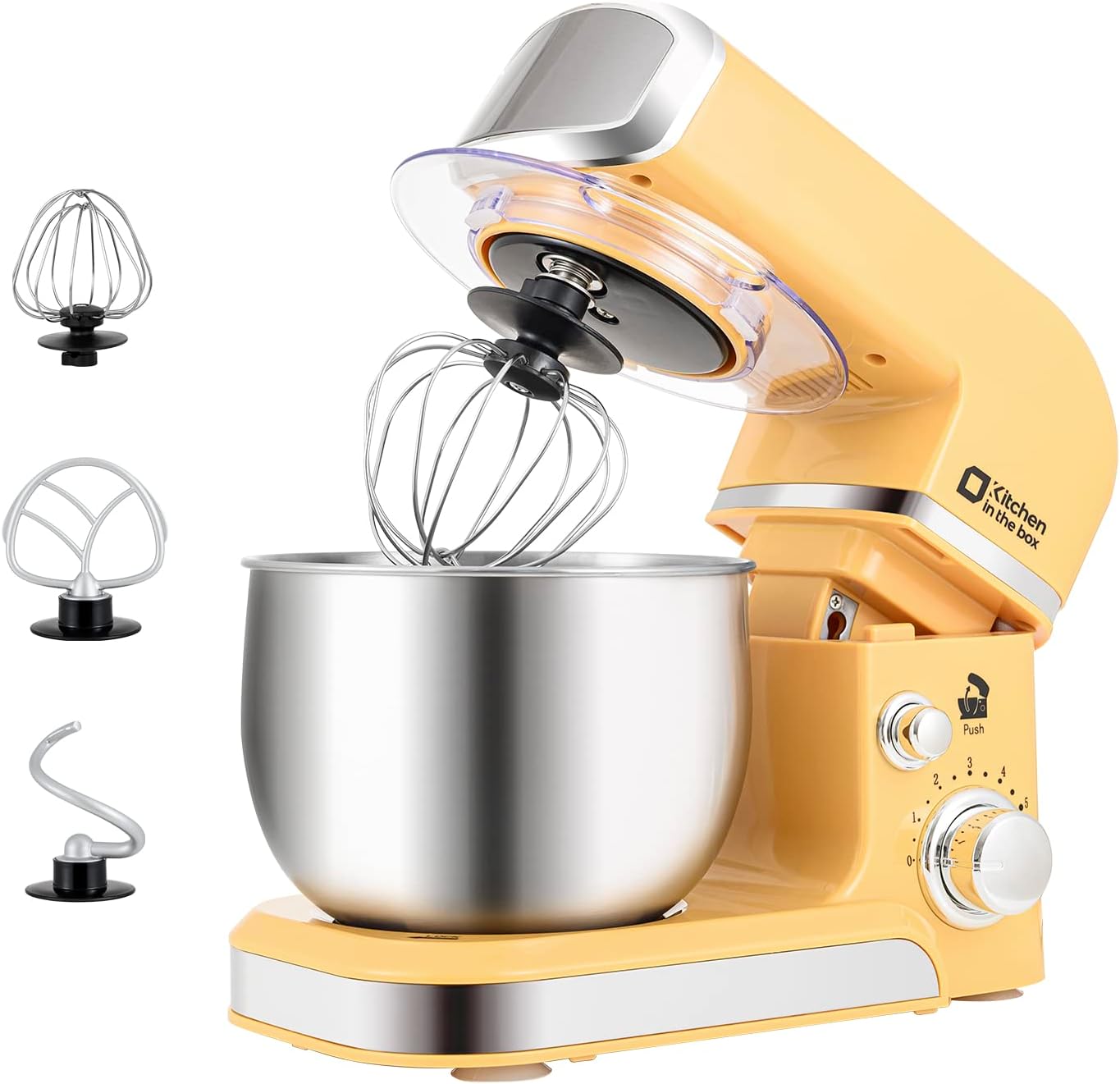
Dough capacity, the short honest version, because the 5.3 on the box will be read as a promise. A 5.3-quart tilt-head is a two-loaf machine if the dough is kind and a one-loaf machine if it is stiff, and the flour ceiling sits around four cups before the climb-and-strain show starts, less for whole grains that drink water and fight back. The compact 3.2-quart mixer review on this site drew the same line at its own size, and the line is drawn by torque and hinge, not by bowl volume. Bowls are measured in quarts. Dough is measured in resistance.
What I cannot judge, and will not pretend to, is this machine’s ten-year story, because it has not lived ten years yet and neither has anyone’s example of it. The brand behind it is new to motors even if the name is old in kitchens. The parts question, whether the edge beater and the pin and the board will be orderable in year six, is the only real gamble in the box, and it is a gamble every newer brand asks you to take. Price that in and the machine makes sense.
Frequently Asked Questions
My tilt-head mixer nods and wobbles under dough. Is the motor dying?
Almost certainly not the motor, and this is the happiest diagnosis I give. The nod lives in the hinge, the pivot pin and the head lock taking the dough’s argument batch after batch, slowly working loose over years. A wobble that grows is the pin asking to be reseated or replaced and the lock asking to be checked, a cheap job, often a kitchen-table job, and it restores the machine’s posture completely. Motors die with smells and silence. Hinges die with a nod. Learn the nod and you will save yourself a replacement you never needed.
Do 12 speeds actually mix better than 6 or 10?
At the bowl, no. What you use is a true low for folding, a middle for batters, a high for whipping, and everything printed between those is gradient. Machines differ in how honest the low end is and whether the top end holds under load, not in the count on the dial. A six-speed machine with a genuinely slow first step will treat your flour better than a twelve-speed whose first step starts at a jog. If two machines are side by side, ignore the biggest number on each box and ask about the smallest speed instead. That is where mixing is won.
There is a stripe of unmixed flour at the bottom of every batter. What is actually wrong?
Clearance, nine times out of ten, and it is the most fixable fault in the whole category. The beater is hovering a hair too high, set at the factory for a different attachment or drifted there as the head settled. Most tilt-heads hide an adjustment screw that raises and lowers the head by exactly the hair you need. A quarter turn, a test with a coin-thick gap in mind, and the stripe retires. Edge beaters like the silicone one change the math slightly because the flexible edge is meant to touch. Order of operations. Screw first, hinge second, despair never.
How much dough can a 5.3-quart tilt-head really handle?
Less than the bowl suggests. Comfort is around four cups of flour for a standard sandwich dough, two modest loaves, with the hook working rather than straining. Stiff doughs and whole grains cut that further, because resistance is the real unit here and the hinge and motor split the bill. Past the comfort line you get the climb, dough walking up the hook, the head nodding. It will survive an occasional overload, not a routine of them. If your baking life is big stiff batches weekly, this class of machine is the wrong class at any brand, and a bowl-lift or a bigger motor is the honest answer nobody enjoys hearing at the counter.
Is it a problem that this brand has not made mixers for long?
It is a question rather than a problem, and it is the right question. The mechanism is a known design, hinges and planetaries and stepped dials, nothing experimental moving your batter around. What a young appliance line cannot prove is the tail, parts on a shelf in year six, a replacement edge beater that still exists, a board that can still be ordered. Two years of warranty covers the early failures, which are the common ones. After that you are relying on the maker’s commitment to its own catalog. From the bench, those two futures look identical in year one, which is the most honest thing I can tell you.
On my bench right now there is a tilt-head from a brand that no longer sells parts, hinge pin worn to an oval, owner unwilling to let it go, and I am about to machine a pin for it by hand, which tells you everything about these machines and the people who keep them.
This site contains affiliate links. We may earn a commission on qualifying purchases.