This site contains affiliate links. We may earn a commission on qualifying purchases.
Nobody tells you about the moat. The listing photographs for this machine show a handsome wooden bucket on a clean counter, a summer afternoon implied just out of frame, and what they do not show — what no listing for a salt-and-ice machine has ever shown — is the geography of meltwater that a working bucket creates around itself. A 6-quart canister needs a frozen jacket to churn against, and that jacket is ice and rock salt packed into the gap around it, and ice, given twenty-plus minutes of motor warmth and a summer kitchen, does the one thing ice does. It melts, downward and outward, and the bucket weeps condensation on its outer walls while it is at it. The splash zone is real. Measure your counter all you like; it is the two feet around the machine that need planning.
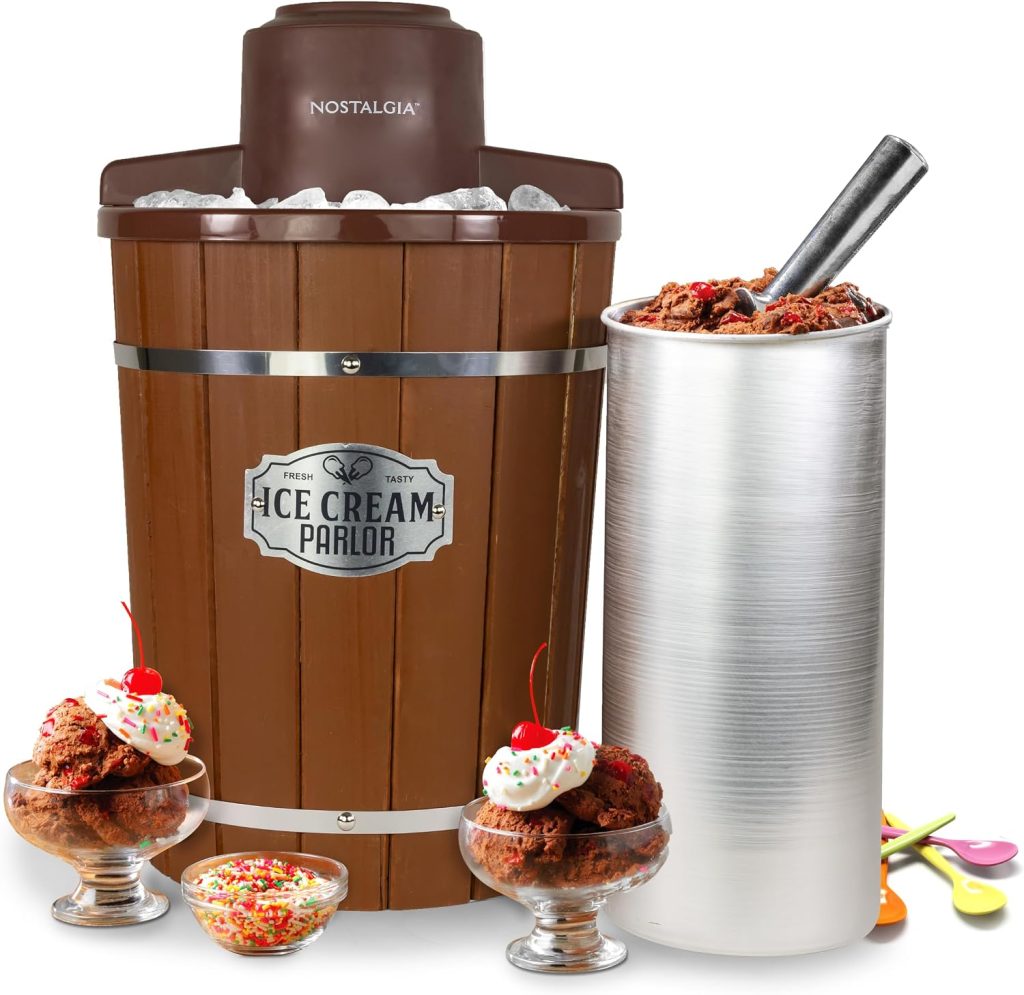
Now the machine itself, because underneath the moat it is a genuinely old and sound idea wearing a retro costume. A metal canister sits in the middle of the bucket. The ice cream base goes in the canister, a dasher turns inside it, and the space between canister and bucket wall is packed with ice and rock salt — the salt dragging the ice’s temperature below freezing, which is the entire trick, the same trick as the hand-crank machines this one is styled after. The electric motor on top replaces the crank and the uncle who used to be assigned to it. That is the whole mechanism, and its simplicity is a feature in the specific way that matters for a seasonal appliance: there is very little in it that can become obsolete, and the parts that wear are the parts you can see.
Six quarts, the box says, and here the arithmetic needs a chaperone. Six quarts is the canister’s class, and ice cream base expands as it churns — air is being folded in the whole time, which is rather the point — so the fill line sits well below the rim, around two-thirds if you want the dasher to have a life it can sustain. Call the honest batch four quarts of base becoming roughly five of finished ice cream, give or take the recipe’s ambitions. That is still a party-sized output, and it is the machine’s actual argument: not speed, not tidiness, volume. A freezer-bowl machine makes dessert for a family. This bucket makes dessert for a street.
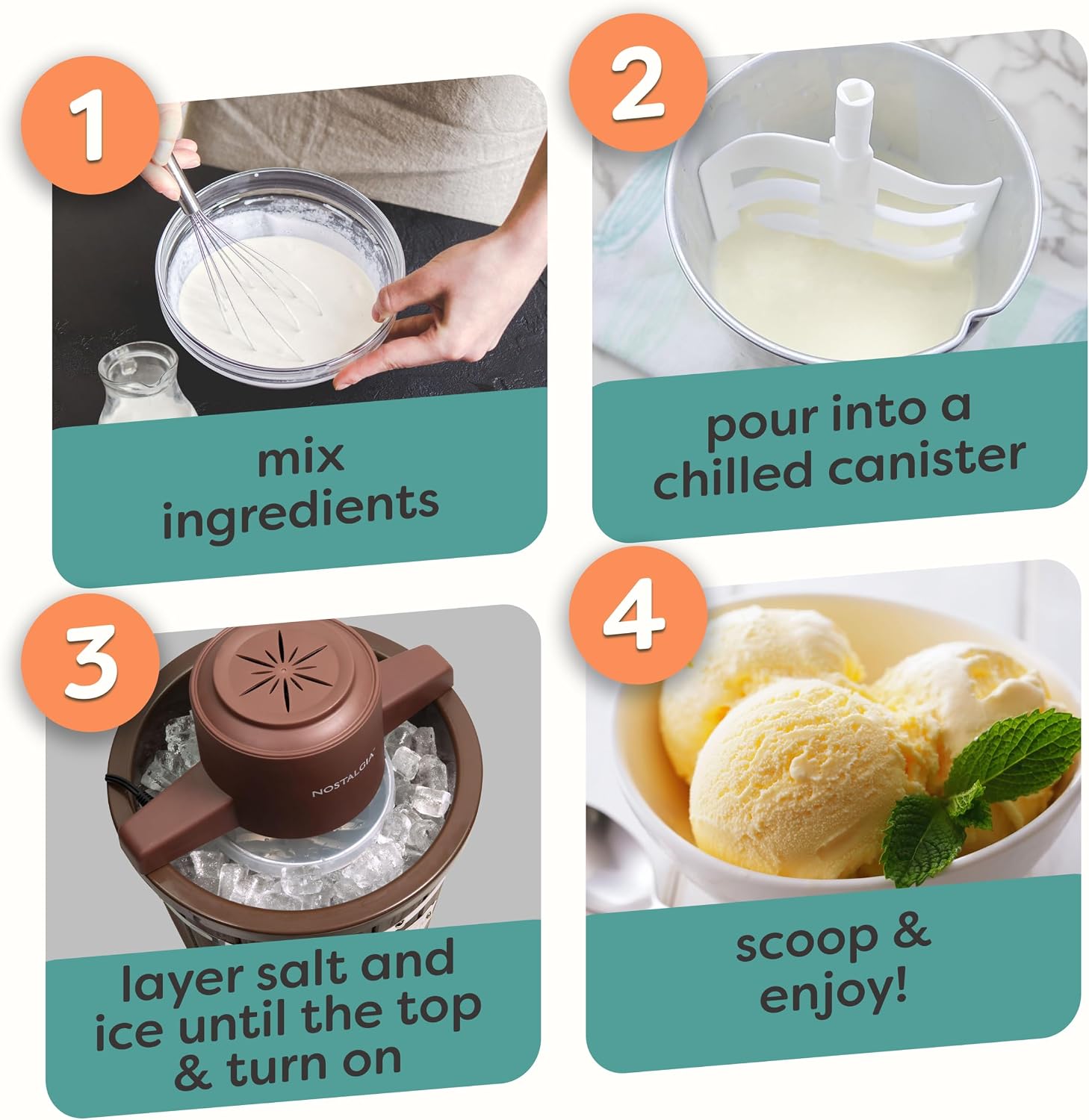
The twenty minutes needs its own cross-examination. Twenty minutes, says the box, and the claim is true inside a frame the box does not draw: twenty minutes of churning, counted from the moment a cold base meets a packed bucket. The base must be cold going in — cooked, chilled, ideally made the day before — because a warm base against melting ice is a race the ice loses, and the ice itself must be crushed, layered with salt, packed down. Start the clock at the grocery list and homemade ice cream in twenty minutes is true the way dinner in twenty minutes is true when someone else did the prep. Start it where the box starts it and the number holds. Every appliance in my kitchen keeps its own private definition of when the clock starts. This one’s is just easier to catch.
The texture argument, which is the real argument
Why tolerate the moat at all? Because the churn is different, and the difference is in the mouth. A salt-and-ice jacket gets colder than a freezer bowl’s stored cold and holds its temperature against a big batch, so the base freezes fast and evenly along the canister wall while the dasher keeps the crystals small and keeps folding. The result is the dense, old-fashioned texture the retro styling is promising — less air than a soft freezer-bowl batch, more chew, the consistency of a scoop shop’s back room rather than a fro-yo counter. The mechanism is not marketing: colder jacket, bigger batch, continuous scrape. Physics is allowed to be a flavor argument.
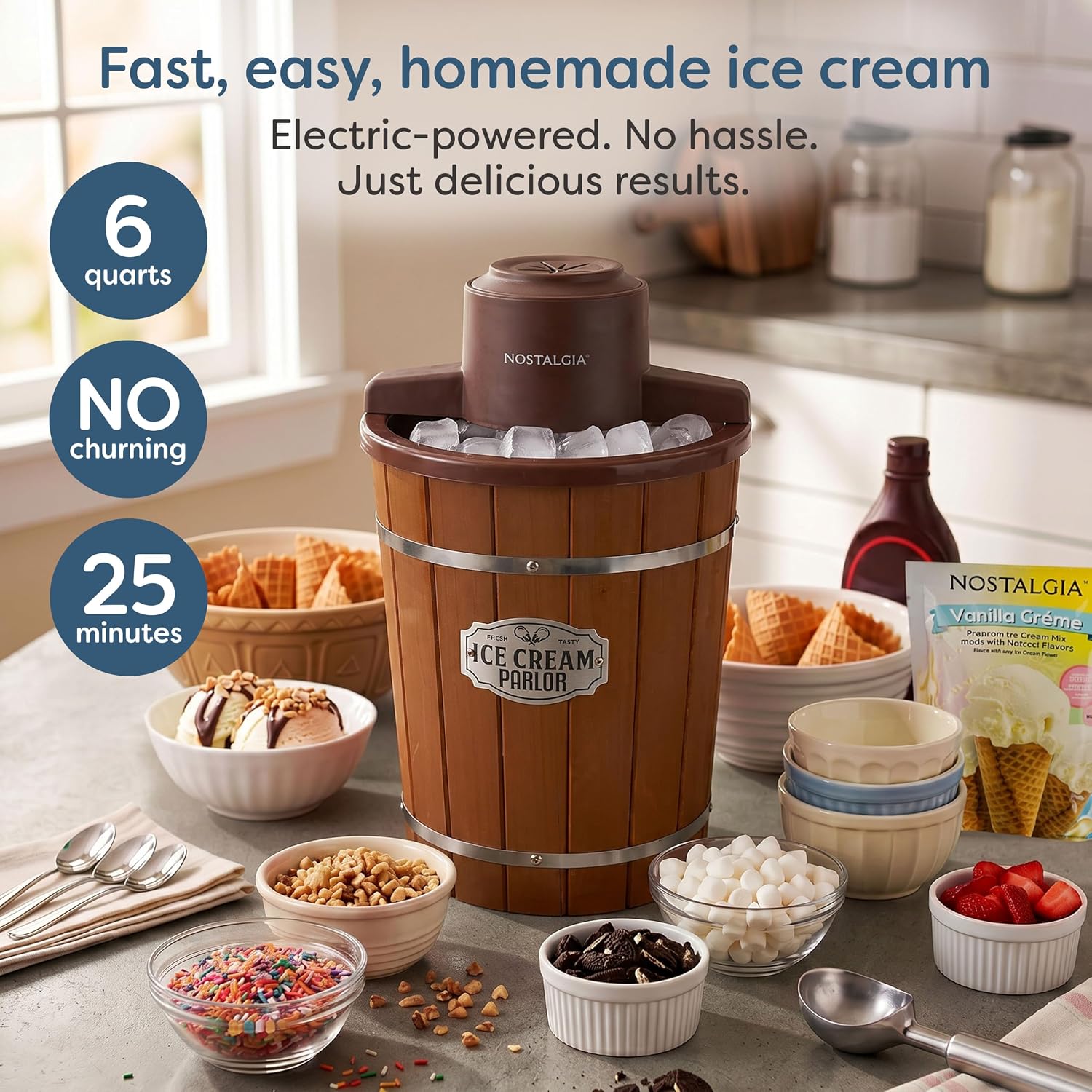
The subject — wooden bucket, metal canister, dasher, and an electric motor doing the cranking your grandparents did by hand
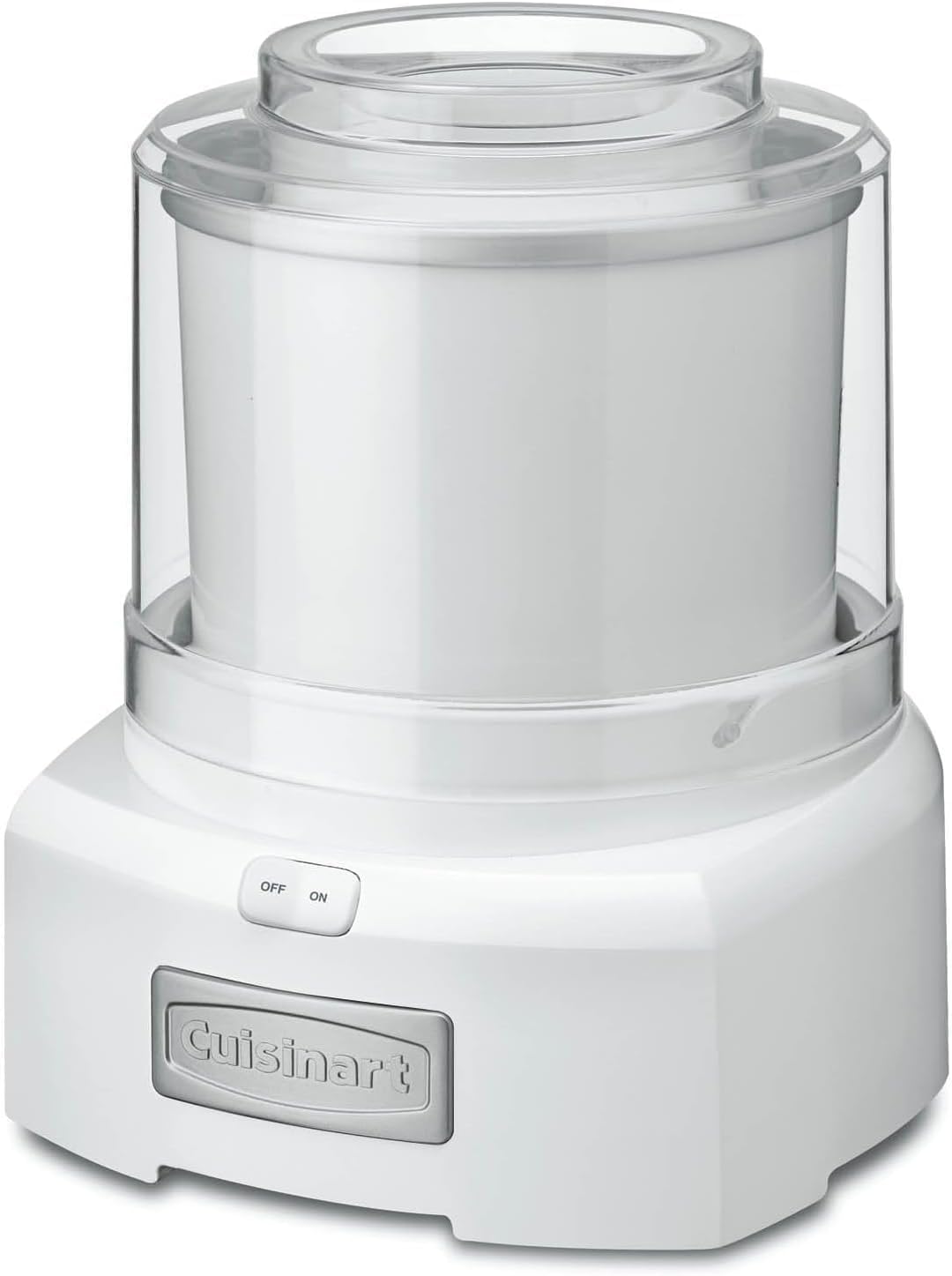
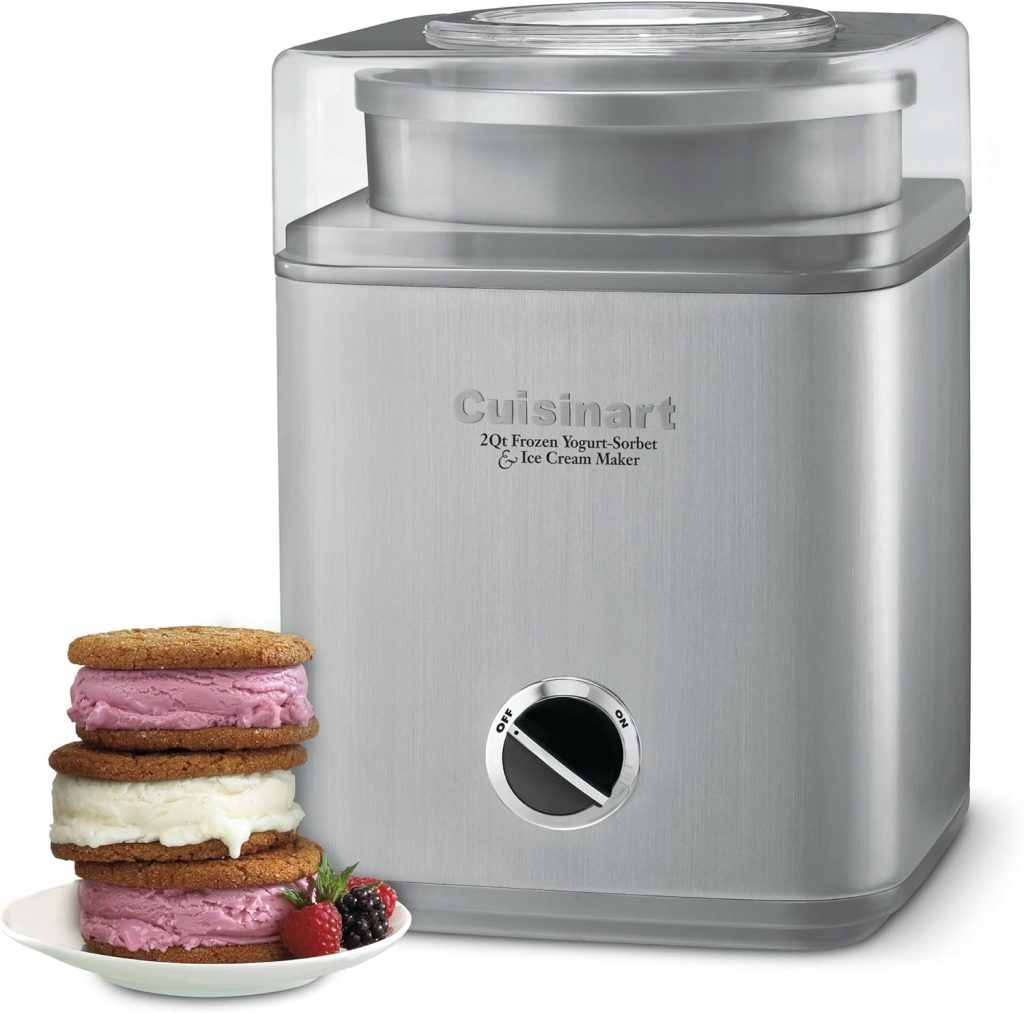
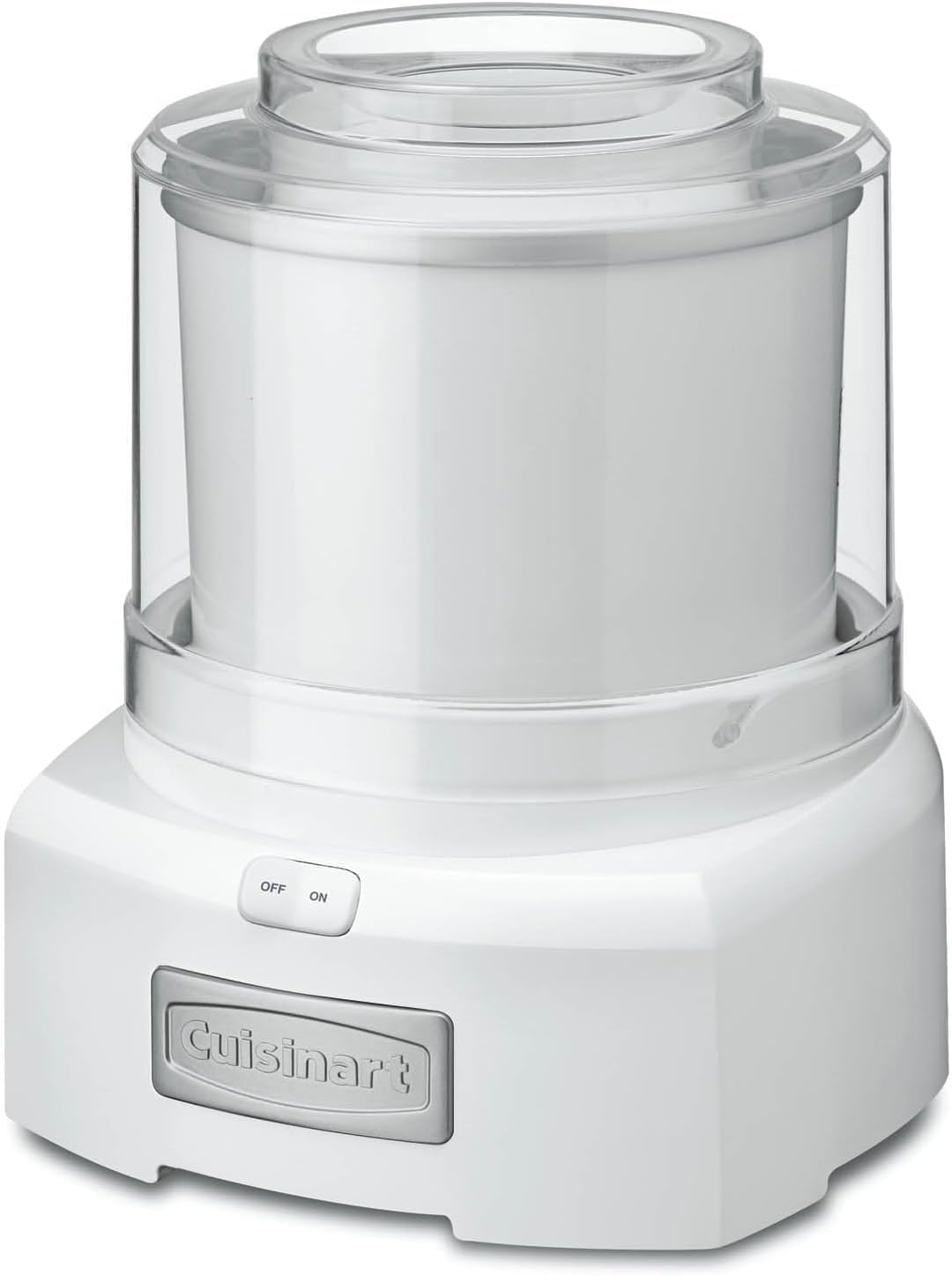
The freezer-bowl alternative — 1.5 quarts, no ice, no salt, and a bowl that must live in your freezer a day ahead
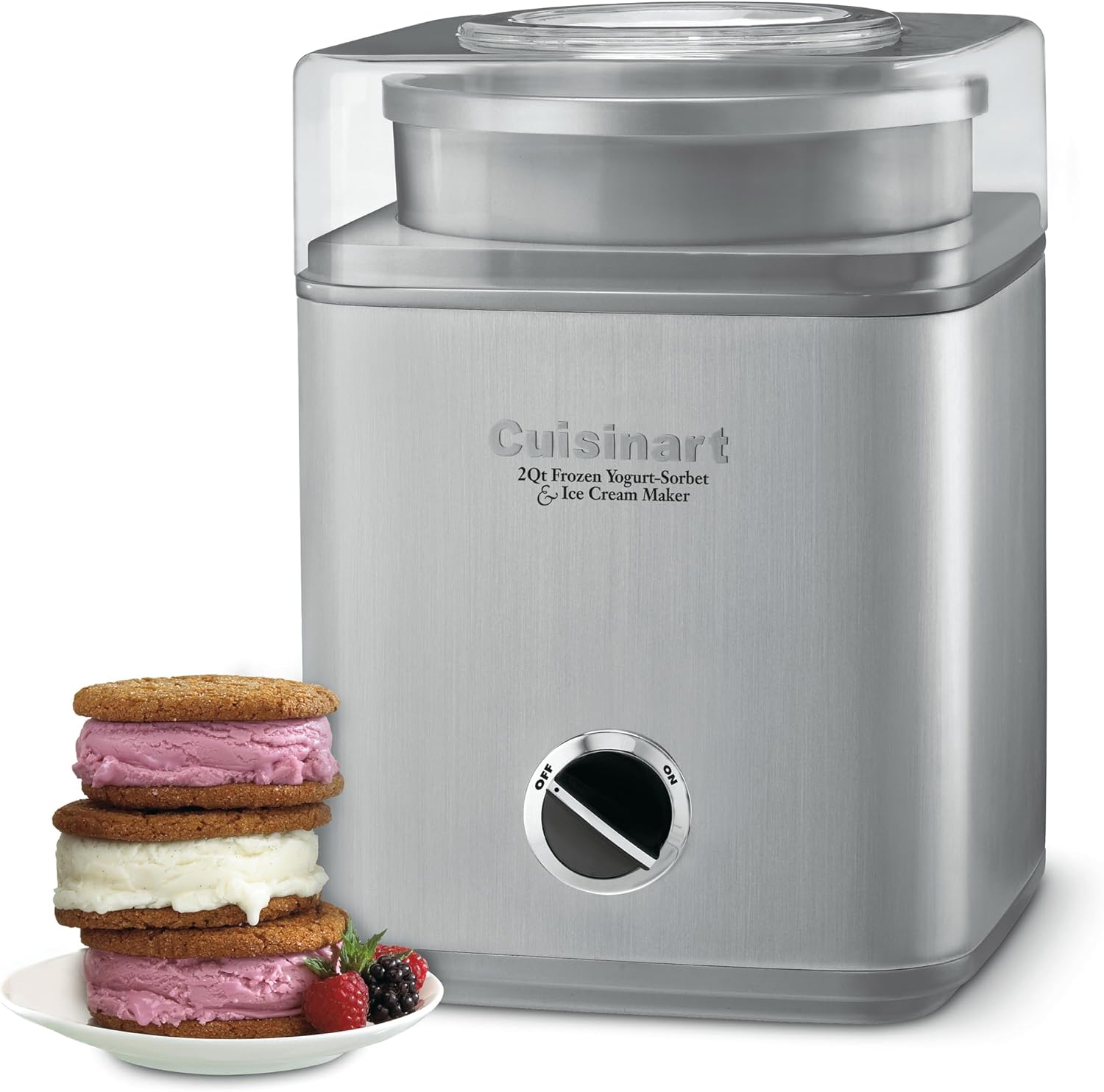
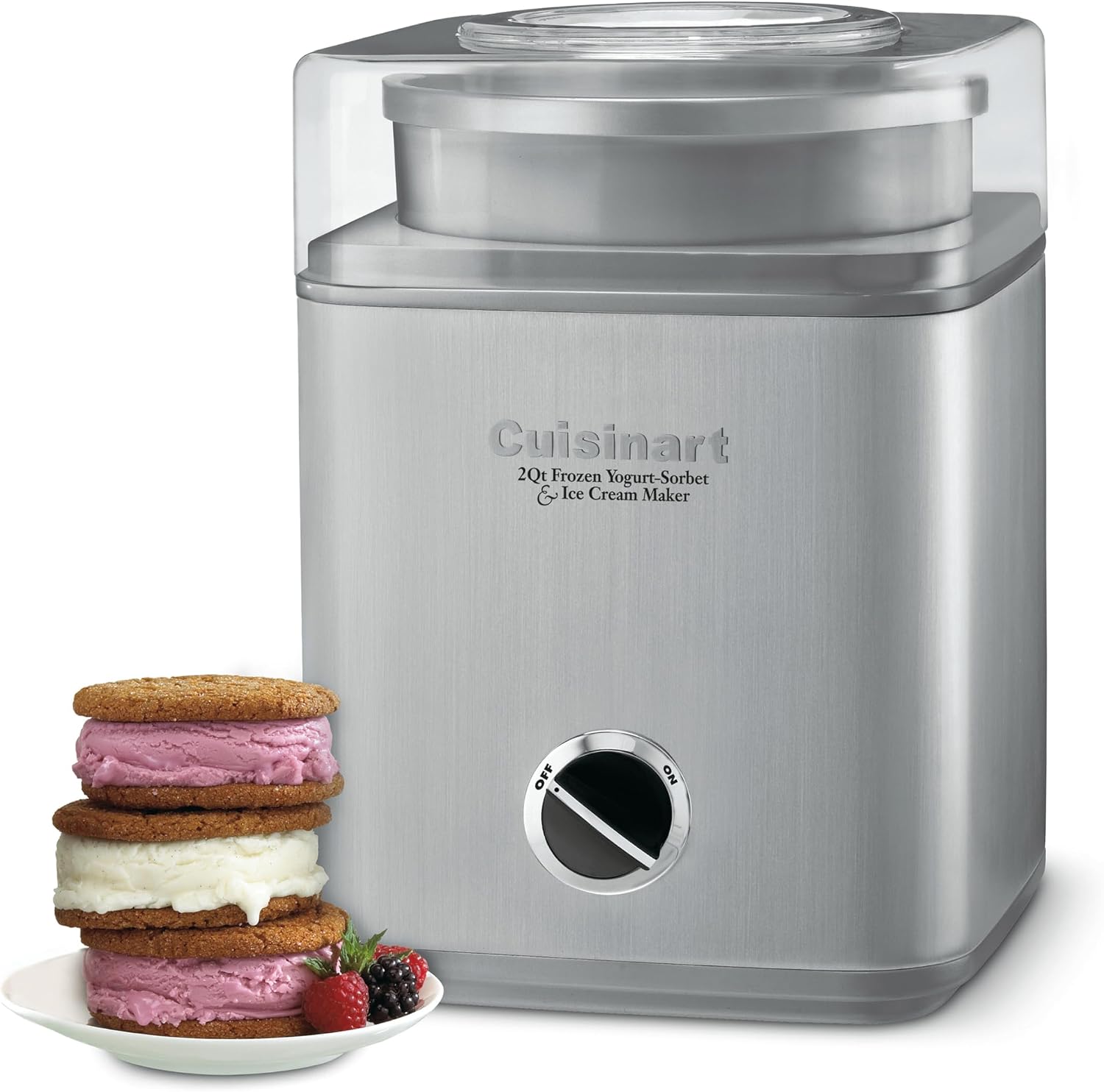
The slightly larger freezer-bowl sibling — 2 quarts and the same day-ahead freezer discipline
Prices and availability change; the listing is the final word.
The two smaller machines in the row make the opposite trade and make it honestly. The freezer-bowl design stores its cold in a double-walled bowl that must freeze solid ahead of time — a full day in a real freezer, not an afternoon of optimism — and then churns a modest batch with no ice, no salt, and no moat at all. The 1.5-quart in the middle box is the weeknight version of homemade: a base made in the morning, a bowl that lives in the freezer permanently, dessert without a production. The 2-quart beside it stretches the batch for households that found the smaller bowl’s output gone before the cook sat down. What neither can do is improvise. A freezer bowl that is not frozen is a bowl, and the spontaneous Saturday decision that sends someone out for ice and rock salt is a decision this bucket can say yes to and the bowls cannot. In the Chefman Iceman Trio review, a compressor machine removes even that constraint — no pre-freezing, no ice — at a price and a counter footprint that belong to a different decision entirely.
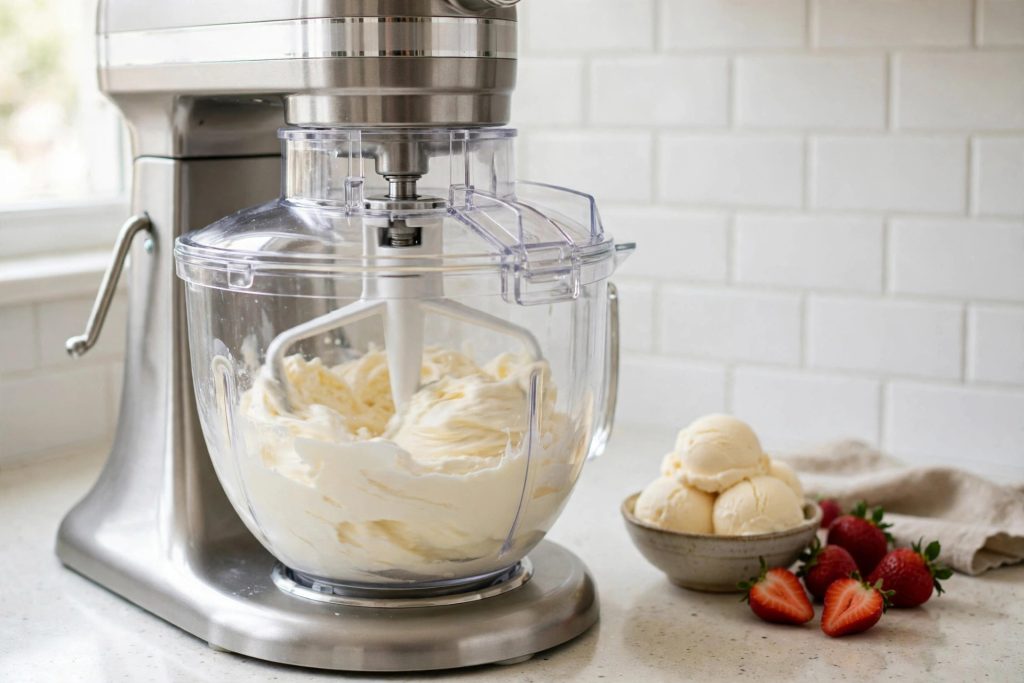
Storage is the chapter nobody writes, so: the bucket is the size of a small trash can, because it is one, roughly — a cylinder that wants a garage shelf or a pantry corner for the ten months it is not earning. The canister and dasher nest inside it, which helps, and the motor sits on top like a hat. The freezer bowls ask the opposite rent: small machine, permanent freezer tenancy for the bowl, which in a crowded freezer is its own monthly negotiation. In the KitchenAid ice-cream attachment review, an ice-cream attachment for a stand mixer tries to dodge both rents by borrowing a motor you already own, and lands in a third set of compromises I will not spoil here. Every ice cream method charges rent somewhere. The only real choice is which room of the house pays it.
A scene, briefly, because this machine manufactures them. Fourth of July, some year I will keep to myself, the bucket churning on a porch because the kitchen’s splash zone had been formally declared unacceptable, kids orbiting at the exact distance where they could hear the motor change pitch as the base thickened — and the motor does tell you, the sound drops and labors as the freeze takes hold, the oldest doneness signal in this category, older than timers. The ice cream was vanilla with too much vanilla, because I was in charge. It was also dense in the way I have been describing for six paragraphs and could not have been made, that day, in that quantity, by anything else I own. The moat stayed outside. Everybody understood the assignment except the dog.
What I cannot speak to is this model’s motor longevity across a decade of summers — mine is a sample of one household’s seasons, and motors are where seasonal appliances go to vary quietly between production runs. The bucket, the canister, the dasher: those I would bet on, because there is nothing in them to betray you. Treat the motor as the consumable heart it is, keep the receipt somewhere findable, and know that the design’s century-old bones do not depend on any single motor’s luck.
Questions that come up
How much ice and rock salt does a 6-quart batch actually take?
Plan on more than feels reasonable the first time, because the gap between canister and bucket wall is a bigger volume than it looks. The working pattern is layers — ice, a scattering of rock salt, ice again — packed up the canister’s full height, with the ratio somewhere around a cup of rock salt to several pounds of ice for a full run, and a top-up of both partway through as the first pack melts and settles. Running short mid-churn is the classic first-batch failure: the jacket thins, the freeze slows, and the dasher is suddenly stirring cold soup with great commitment. Buy the extra bag. Leftover ice has other careers. Leftover salt keeps. A batch that never froze is the only real waste in the whole operation.
Can I churn a half batch in the 6-quart canister?
You can, and the machine will not object, but understand what changes. The dasher is sized for the canister, and a shallow fill gives it less to fold against, so the batch takes on air unevenly and the freeze along the wall does more of the work than the scrape. Smaller batches also finish faster — check earlier than the recipe’s time, and listen for the motor’s pitch to labor. The honest answer is that this machine’s virtues are volume virtues. Households that mostly churn a quart at a time are the freezer bowls’ natural constituency, and there is no shame in the smaller tool for the smaller habit. Buy for the batch you make six times a year, not the one you make once.
Why must the base be chilled before churning?
Because the jacket’s cold is a budget, not a supply. The ice and salt can pull a finite amount of heat out of the canister before the jacket itself warms past usefulness, and a warm base spends most of that budget just getting down to freezing, leaving too little to finish the freeze firmly before the melt wins. A base chilled overnight arrives already cold, so nearly the whole budget goes into the freeze itself — faster set, smaller crystals, the dense texture this style of machine exists for. A base churned warm is not ruined, exactly — it is soft and coarse by comparison, and better after hours in the freezer. The chilling is not a suggestion in the recipe. It is half the machine.
How do I know when the ice cream is done?
Listen first. The motor’s sound is the instrument this design has used for a century: as the base thickens and firms, the dasher meets resistance and the motor’s pitch drops into a laboring note, steady and strained. That change is the signal that the freeze has taken — the mixture has reached the soft, dense consistency that will firm into scoopable ice cream after a few hours of hardening in the freezer. Churning far past that point gains nothing; the dasher cannot fold what has gone too firm, and the motor only complains louder. Pull it at the laboring note, transfer it, freeze it hard. Everyone wants to churn until it looks like the store-bought tub. It will look like that later, in the freezer, which is doing the last quiet part of the job for free.
Bucket machine or freezer bowl — which should a first-timer buy?
Count your real occasions, not your imagined ones. If the dream is a few big summer gatherings — a bucket on a porch, a line of kids, volume as the whole point — the salt-and-ice machine is the honest tool, and its demands (ice, salt, a chilled base, a tolerant splash zone) are event demands, paid a few times a year. If the dream is Tuesday-night dessert in family-sized amounts, the freezer bowl wins on tidiness and loses only on spontaneity, since the bowl must already be frozen when the mood strikes. The mistake is buying the event machine for the weeknight habit, or the weeknight machine and then resenting it at the family reunion. The two designs are not rivals. They are answers to different calendars, and your calendar is the spec sheet.
The bucket is back on its shelf now, canister nested, motor resting on top like a hat on a fence post, waiting for the next date on the calendar that justifies it. It will weep its small moat again. Someone will declare the porch the splash zone again. And the motor will drop into that laboring note at the moment the freeze takes hold, and a kid who has never heard it before will learn, the way kids have learned for a hundred summers, exactly what done sounds like.
This site contains affiliate links. We may earn a commission on qualifying purchases.