This site contains affiliate links. We may earn a commission on qualifying purchases.
Is this the mixer that makes you a baker? Let me ask the question properly, because the title of this page says Tested, and I want to be careful with that word before we go anywhere. I buy the machines I write about with my own money and I have lived with this model class across enough baking seasons to know its habits — and to know the gap between the video version of this machine, red and humming in somebody else’s beautiful kitchen, and the object that arrives in a box weighing as much as a small dog. The gap is the review. The specifications I can give you exactly, from the listings verified for this update: 5-quart stainless bowl, tilt head, 10 speeds, a motor rated at 325 watts, and a planetary mixing action the brand counts at 59 touchpoints around the bowl.
Fifty-nine touchpoints. What does that number buy you in a bowl of flour and butter? It buys coverage — the beater’s path sweeps the bowl’s geography so thoroughly that the dry pocket at the bottom, the one hand-mixing always leaves for the last fold, mostly does not form. Mostly. There remains a small country at the very center of the bowl’s floor that the beater passes over rather than through, and a spatula pass halfway through a stiff dough is still part of the method, whatever the touchpoint count implies. I mention this not as a gotcha — every stand mixer I have owned leaves some version of that stripe — but because 59 is a number designed to end a conversation, and the conversation it ends is the one about the spatula. Keep the spatula.
And the watts? Three hundred twenty-five is the figure that starts arguments in comment sections, so let me be plain about what it is. It is an electrical rating, not a kneading verdict. What decides a stiff dough is torque delivered at low speed and the gearing that trades speed for force, and this machine’s honest instruction — printed in its own guidance, ignored by half the internet — is that dough work lives on speed 2. Not 4 because you are impatient. Not 6 because a video did it. Speed 2, with the dough hook, and the machine settles into a rhythm it can hold for the eight or ten minutes a serious dough asks. Run it faster and the head begins to nod against the load and the whole mixer starts walking its small walk across the counter, and owners write reviews about build quality when the subject was actually gearing. The machine is not weak. The dial has a dough gear and it is labeled 2, in the way that matters.
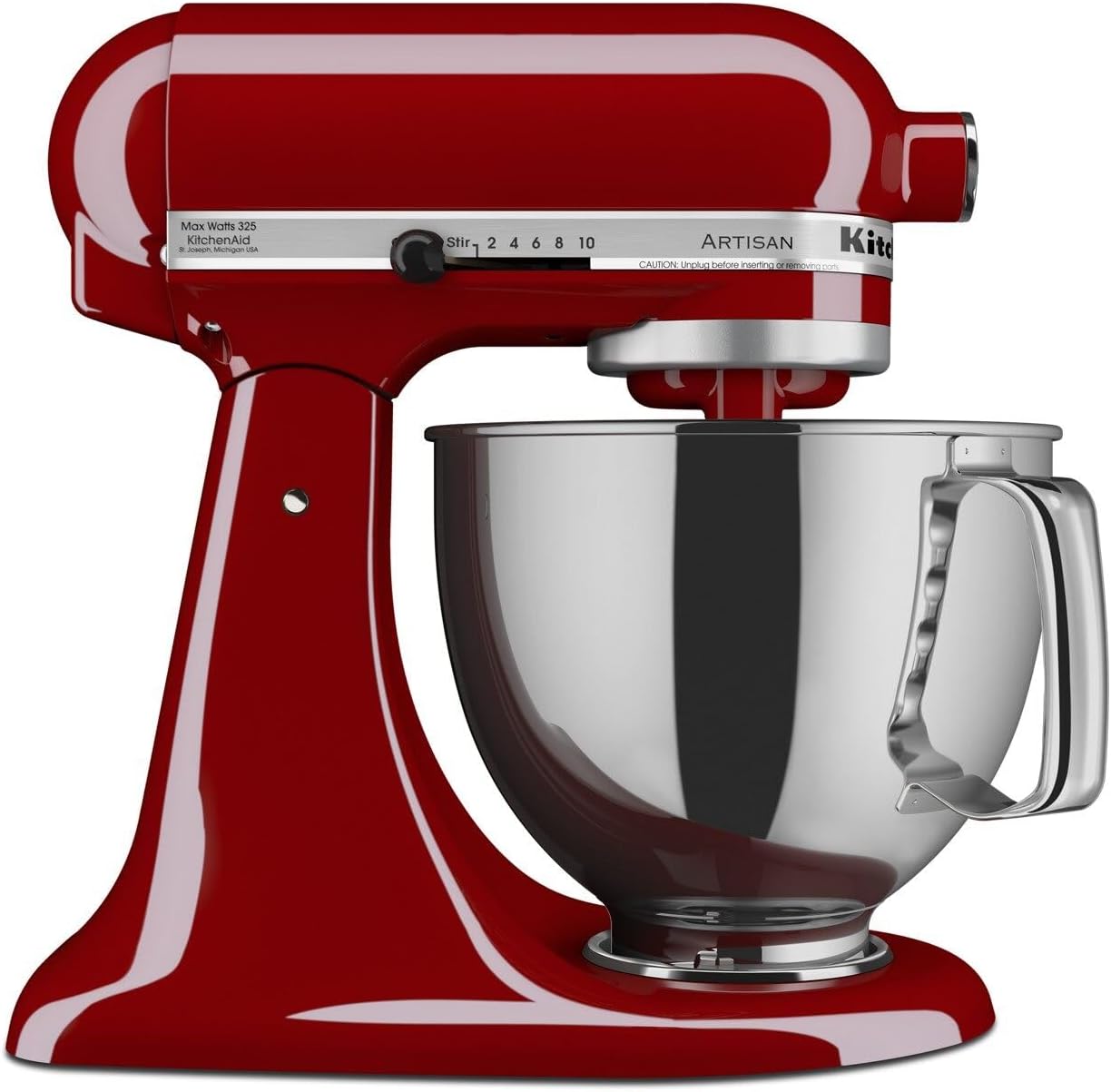
Why does the tilt head matter more than the spec sheet admits? Because of your cabinets, again — it always comes back to cabinets on this site. The head lifts up and back to free the bowl, and the raised head needs its column of air: roughly the machine’s own height again in clearance, or the mixer lives pulled forward on the counter with its head in the room instead of under the cupboard. In kitchens where the mixer parks beneath low cabinets, the daily choreography is slide out, tilt, mix, slide back, and the sliding is where the weight enters the review. This is not a light appliance you move with one hand and a thought. It is a resident. Kitchens that give it a permanent address love it. Kitchens that ask it to commute from a pantry shelf tend to bake less, and blame their own laziness, and are wrong — it is the commute.
The question the three boxes are really asking
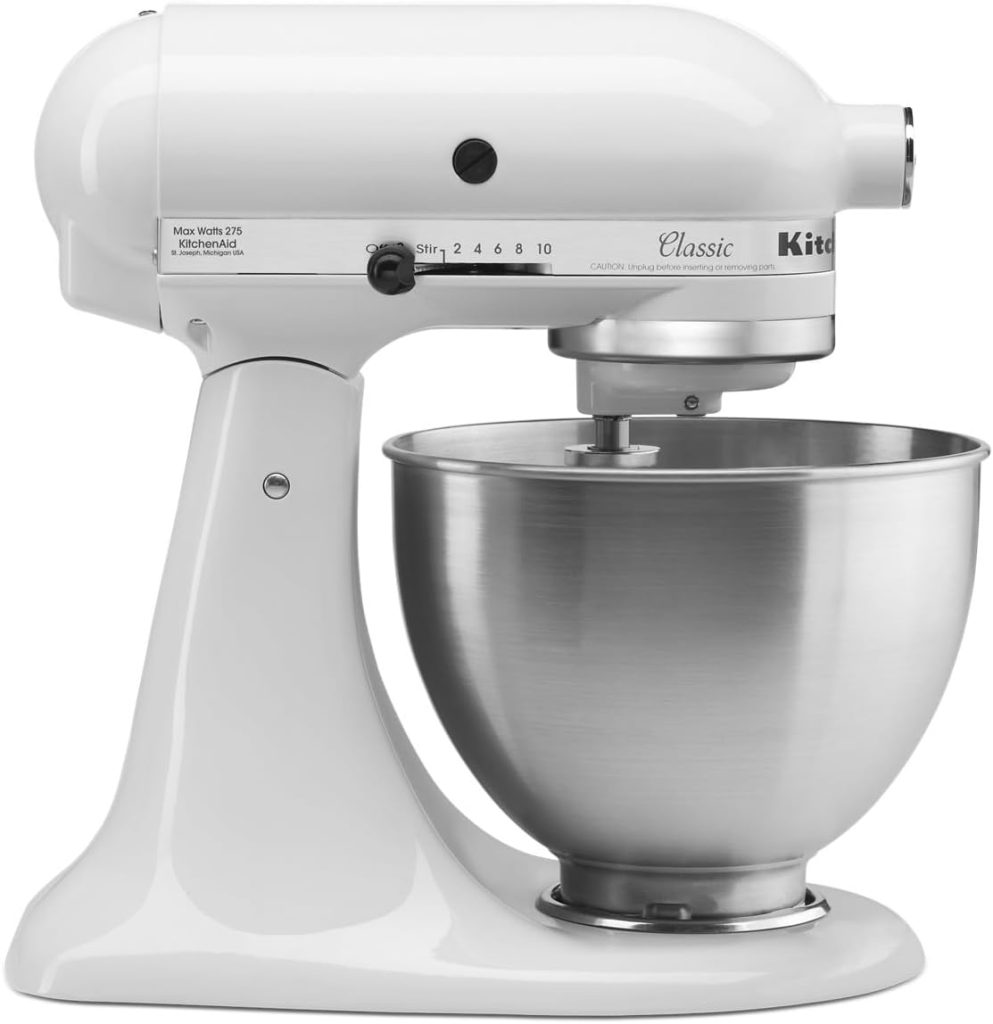
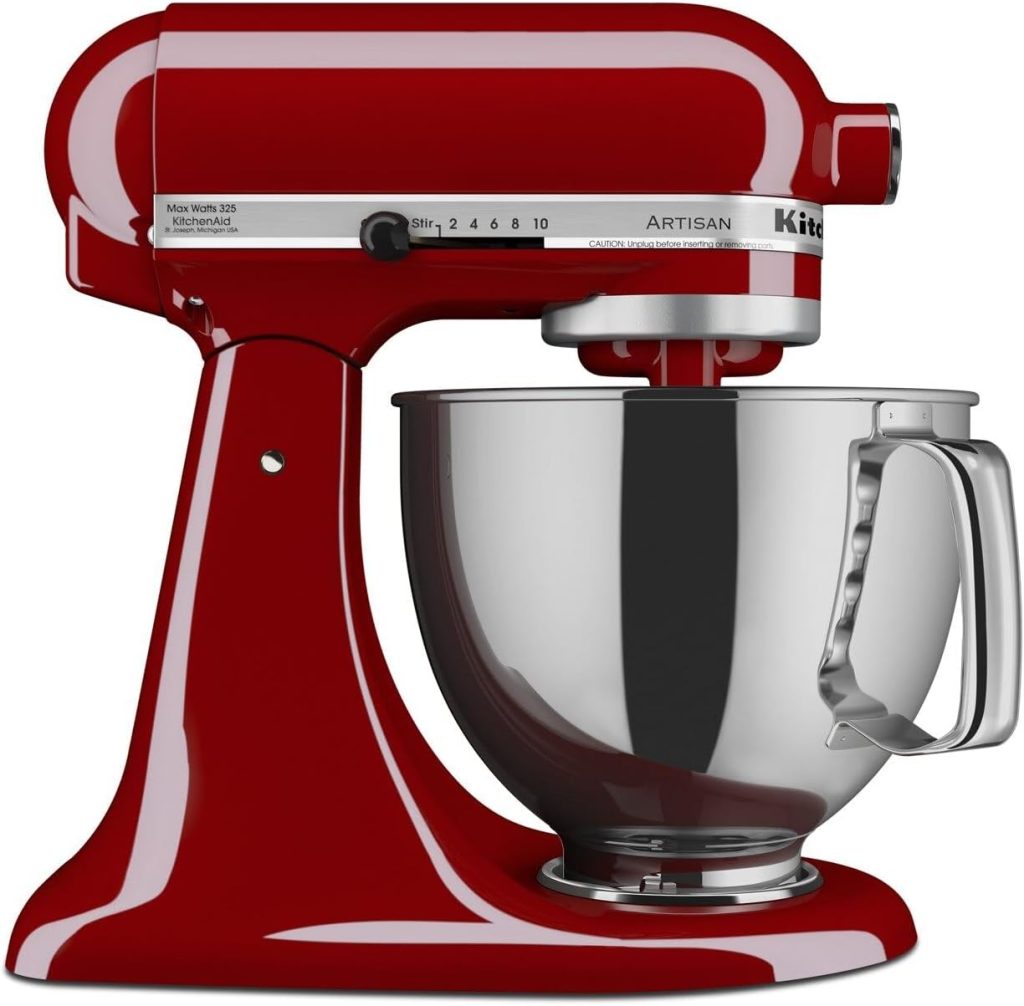
Look at the row below and notice what it is: the same machine, three times. Same model number on all three verified listings — KSM150PS — same bowl, same motor, same ten speeds, in Empire Red, Cast Iron Black, and Juniper. I set the boxes up this way on purpose, because this is the rare page where the honest comparison is not between machines but between finishes, and the price spread between those finishes, when there is one, buys paint and nothing else. Is that a criticism? Only of the shopping, not the mixer. A stand mixer is a twenty-year resident of the most visible counter in the house; choosing its color with the same seriousness you would give a chair is not vanity, it is accuracy about what the object is. The red one will photograph like every video you have seen. The black one will show every gram of flour it has ever met. The green one is for people who have decided their kitchen has a palette and are sticking to it. The dough cannot tell them apart. Neither can I, and I have tried to want to.
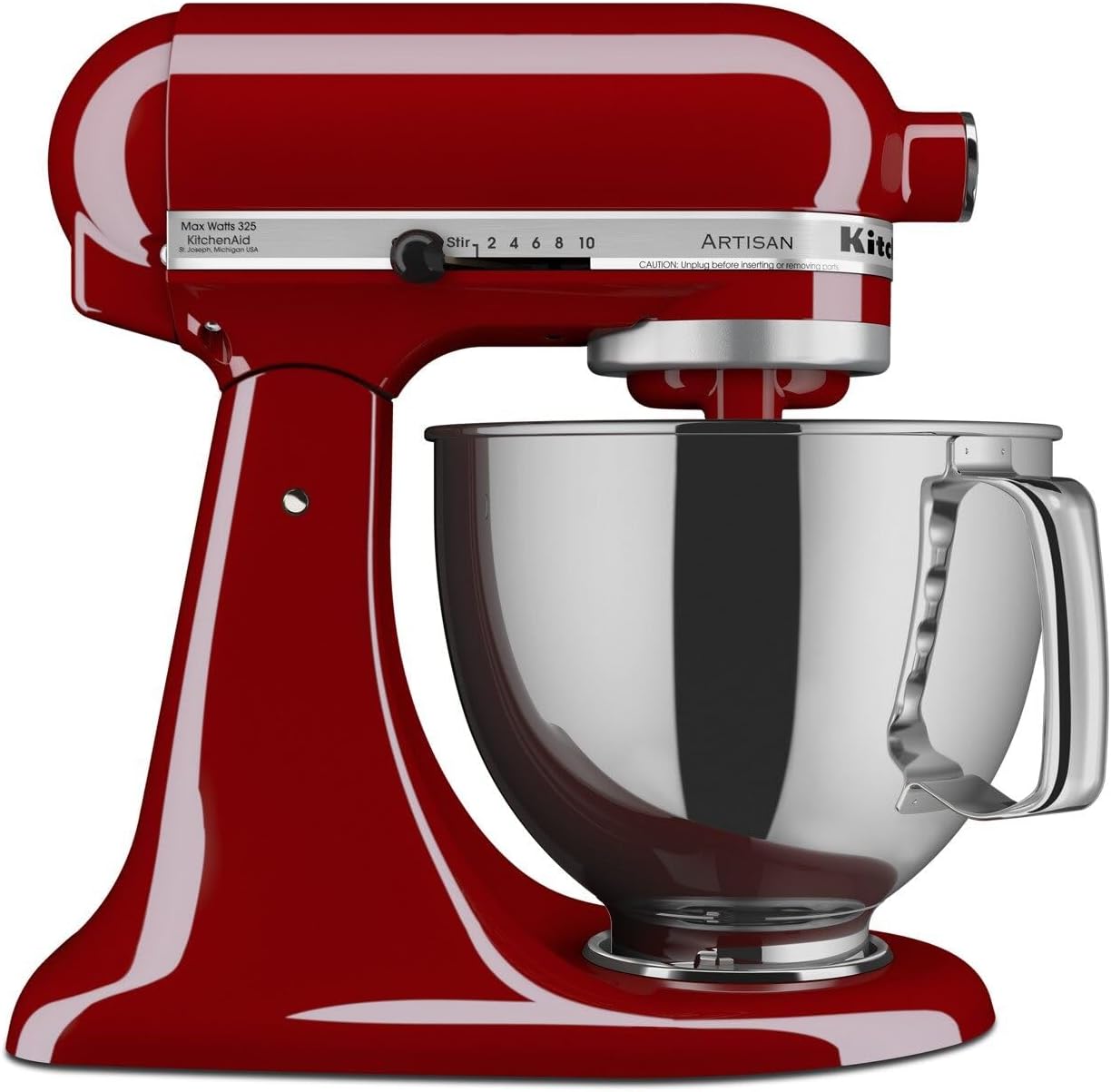
The default finish and this page’s subject — the red one from every baking video you have ever half-watched
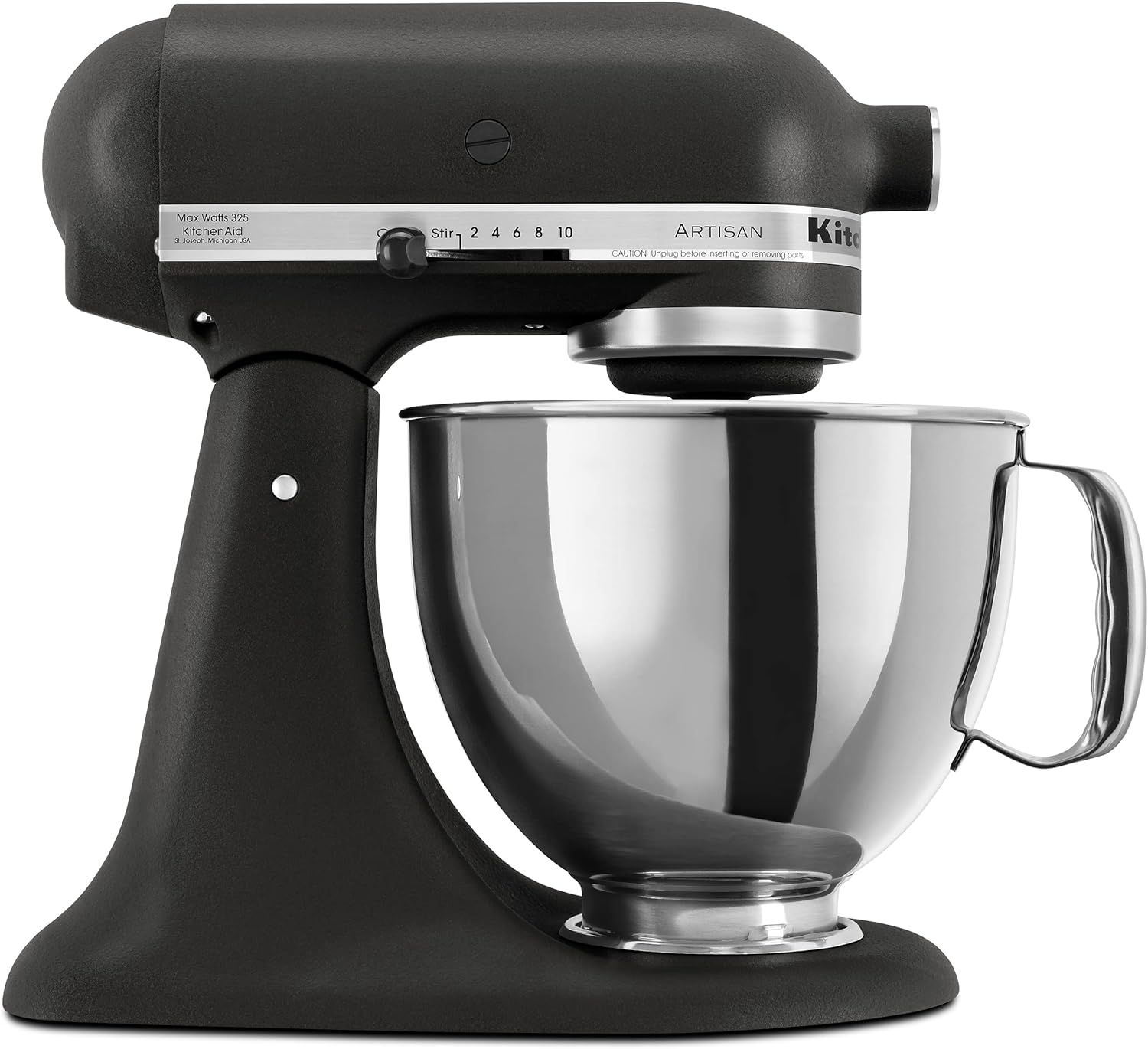
The same machine in the finish that hides flour dust least badly and matches a dark kitchen best — internals identical
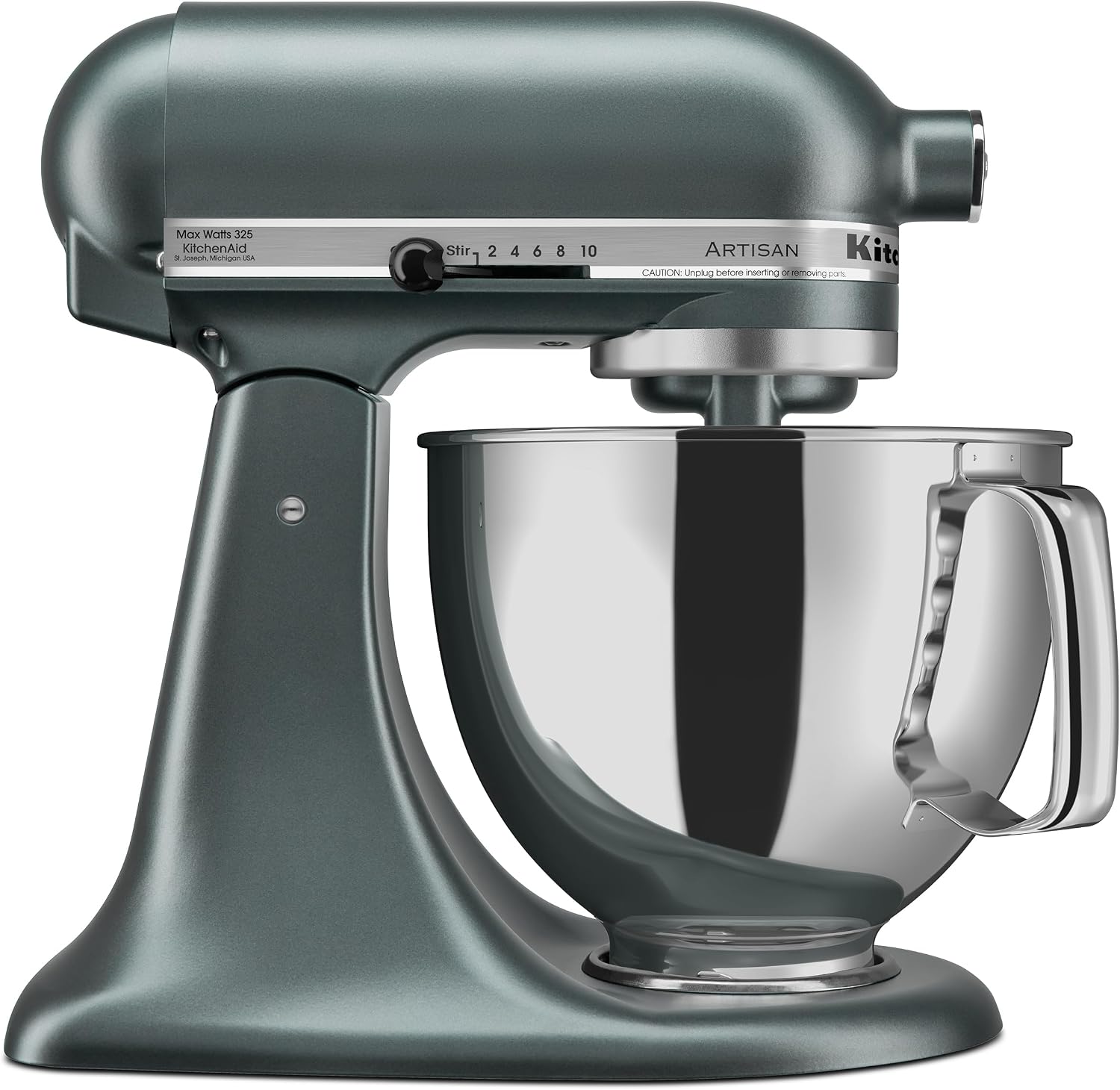
The newer green finish — again the same mixer, which is either reassuring or the whole critique, depending on your mood
Prices and availability change; the listing is the final word.
What actually separates this machine from its rivals, over years rather than unboxings, is the square hole in its face. The front hub. Attachments mount there — grinders, pasta rollers, grain mills, a small ecosystem of them sold across decades — and they all draw power from the same motor you already own. In the Cuisinart mixer assessment I picked through a rival maker’s stand mixer and kept circling back to this point: a stand mixer is a motor with a bowl attached, and its long-term value is the library of work that motor can be asked to do. The hub standard on this line has stayed stable across a span of years that makes attachment shopping feel less like a gamble. A used attachment from a decade ago fits.
Does it replace your hands? No, and this is the expectation the videos plant that the machine then gets blamed for. It replaces your stamina. The dough it kneads tastes like your dough — your flour, your water temperature, your patience with fermentation — because mixing was never the step that made bread yours. What changes is the morning around the bread: eight minutes of kneading happen while coffee happens, shoulders stop filing complaints, and a double batch stops being a negotiation. In the compact Dash mixer review, a smaller tilt-head from another line gets its own assessment, and the same expectation gap shows up there in miniature. People do not return these machines because they mix badly. They return them, or shelve them, because they were sold a transformation and delivered a tool — an excellent tool, but a tool, with a tool’s indifference to your ambitions.
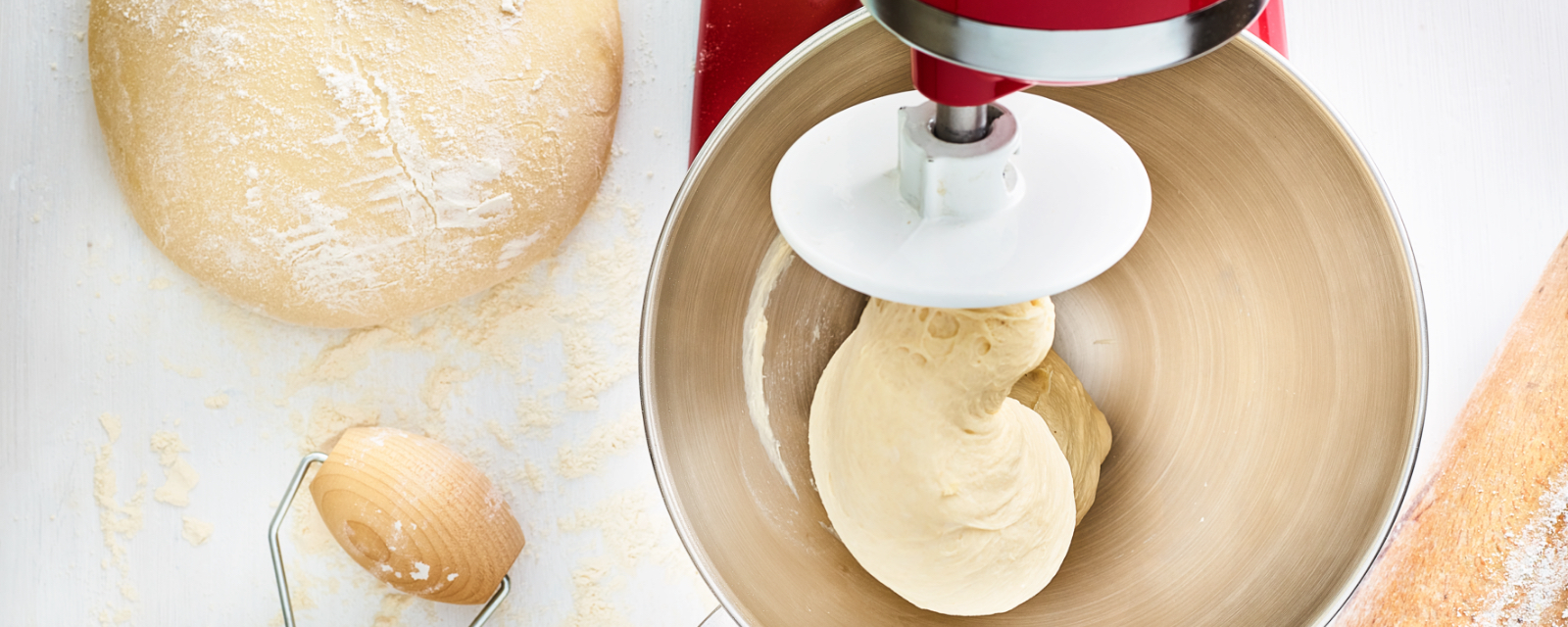
A scene from my own counter, since it is the truest thing I know about this machine. Pizza dough, Friday: flour in, speed 2, the hook finding its circle, that small stripe of dry flour at the bowl’s center waiting for the spatula it knows is coming. The machine does not hurry. I used to read that as slowness. I have come to read it as the machine knowing the speed dough actually wants, and the dial’s higher numbers existing for egg whites and cream, which are different physics entirely. Ten speeds is really two regimes with a staircase between them, and most owners live on the bottom step and one near the top.
What have I not done with this exact unit? I have not run it against its bowl-lift cousins in a side-by-side with the same enriched dough, and I have not owned the Juniper finish, so its durability as a color — whether it chips, fades, dates — is a question I cannot answer from experience and will not borrow from other reviewers. The finish question, the one the boxes pose, has a ten-year tail on it that none of us can shortcut. Ask me about gearing, clearance, the spatula stripe. Those I know. The green, ask the green in a decade.

Questions that come up
How much flour can the 5-quart Artisan actually knead?
Work from the bowl’s working volume, not its brim volume. Five quarts is what the bowl holds to the rim with water; a dough is a different citizen — it climbs, it clings, it needs headroom to fold rather than escape. The comfortable working class for this bowl is a standard home batch built on roughly four to four and a half cups of flour, give or take the dough’s hydration, and double batches of stiff dough are where owners meet the machine’s limits and start the head-nodding walk across the counter. If your regular recipe is a two-loaf stiff dough, that is the honest edge of this bowl, and no speed setting negotiates it — the answer there is batches, or a bigger bowl class.
Why does my mixer head wobble and walk when I make dough?
Because dough is the load this machine feels most, and the usual cause is speed, not weakness. The maker’s own guidance puts dough work on speed 2 — the gear where torque lives — and running a stiff dough at 4 or 6 asks the gearing to trade force for speed it does not have, so the head nods against each fold and the body creeps. Set 2, let the hook settle into its rhythm, and give it the minutes the recipe actually lists. If the head still rocks on speed 2 with a moderate batch, check the mundane things first: the bowl seated fully in its base, the hinge area clean, the machine on a surface it can grip. A mixer that walks on egg whites is a story worth a service call. A mixer that walks on speed-6 bagel dough is a story about the dial.
Are the three colors really the same machine?
Yes — and in this case you do not have to take my word for it, because the model number is printed in all three verified listings: KSM150PS, in Empire Red, Cast Iron Black, and Juniper. Same 5-quart bowl, same tilt head, same 10 speeds, same attachment hub. When the prices differ between finishes, the difference is the finish — its popularity, its production run, occasionally its retailer — and not a component anywhere inside the housing. This cuts both ways as shopping advice. There is no performance reason to pay a premium for a color. There is also no performance reason to feel clever for avoiding one: the machine will sit in your sightline for years, and the finish you enjoy looking at is a real feature in a way the spec sheet cannot express. Just know which kind of feature you are paying for.
Will my old attachments fit a new Artisan?
The front hub is the stable part of this story. The attachment standard on this line has remained consistent across a long span of production years, which is precisely why a secondhand market in attachments exists at all — pasta rollers, grinders, and mills from earlier years mount to current machines because the interface was not redesigned every season. Two cautions keep the statement honest. Bowl-mounted accessories are a separate question from hub attachments, since bowl geometry varies by model class, and tilt-head versus bowl-lift machines differ there. And any used attachment deserves a hands-on check of its own wear, because the hub being eternal does not make a worn roller eternal with it. But the hub itself — yes. That stability is the machine’s quietest and best argument.
The Juniper one is the one I keep thinking about, which is strange, because I do not need a mixer and the green would clash with everything I own. That is what this machine does to people — it stops being an appliance somewhere around the second year and becomes furniture you are fond of, and fondness has no spec sheet. The dough hook is in the bowl where I left it. Friday is coming. The question of whether it made me a baker is still, properly, unanswered.
This site contains affiliate links. We may earn a commission on qualifying purchases.