This site contains affiliate links. We may earn a commission on qualifying purchases.
Let me tell you how this story ends, because the ending is why I read French-door ovens the way I do. It ends at a returns desk — not this brand, I want that clear from the first paragraph, a different French-door box with the same elegant swing — with the oven back in its carton and a customer explaining that the doors were beautiful and the chicken was fine and the kitchen simply could not hold the machine’s manners. The tray came out toward her stomach. The doors wanted room her cabinets had already promised to other things. Nobody at the desk argued. French-door ovens do not come back because they cook badly. They come back because a kitchen is a fixed amount of space wearing a fixed arrangement of handles, and this shape of machine spends space in a direction nobody measured.
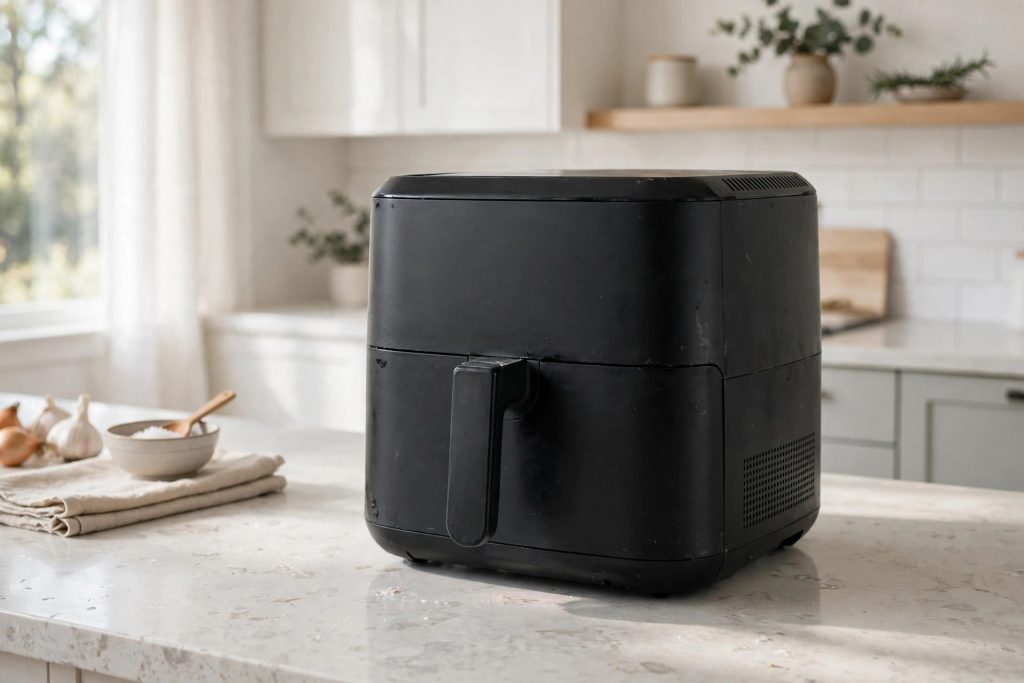
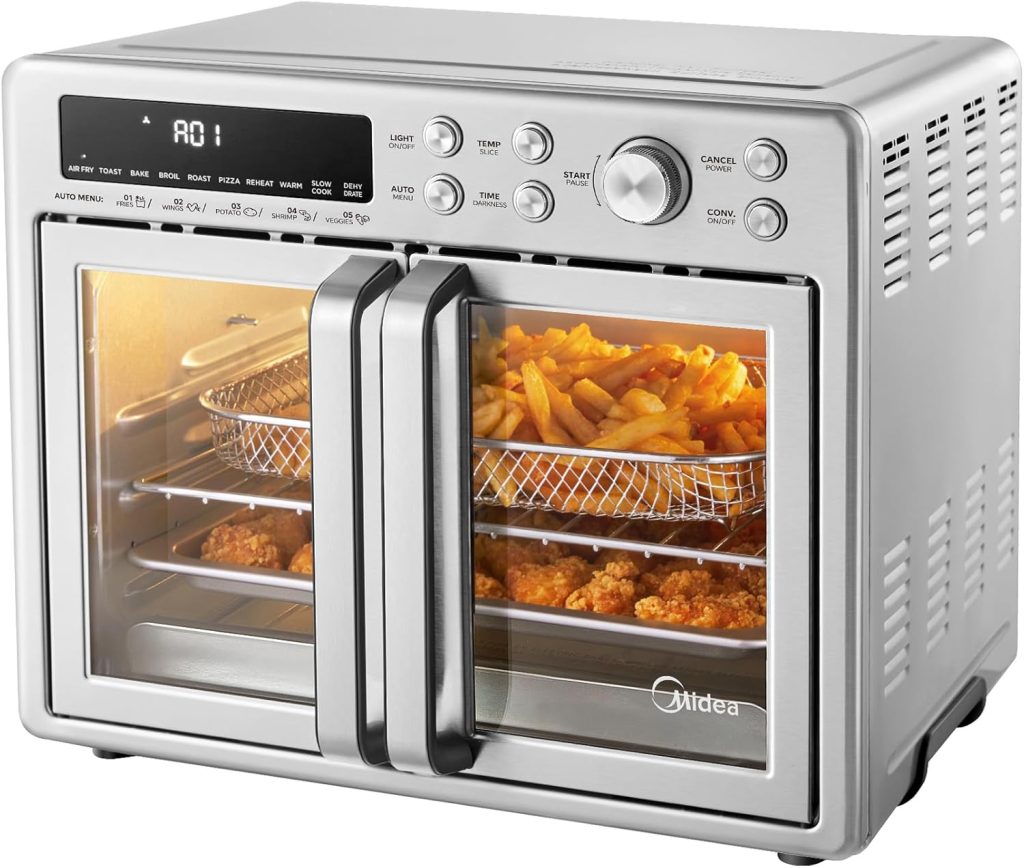
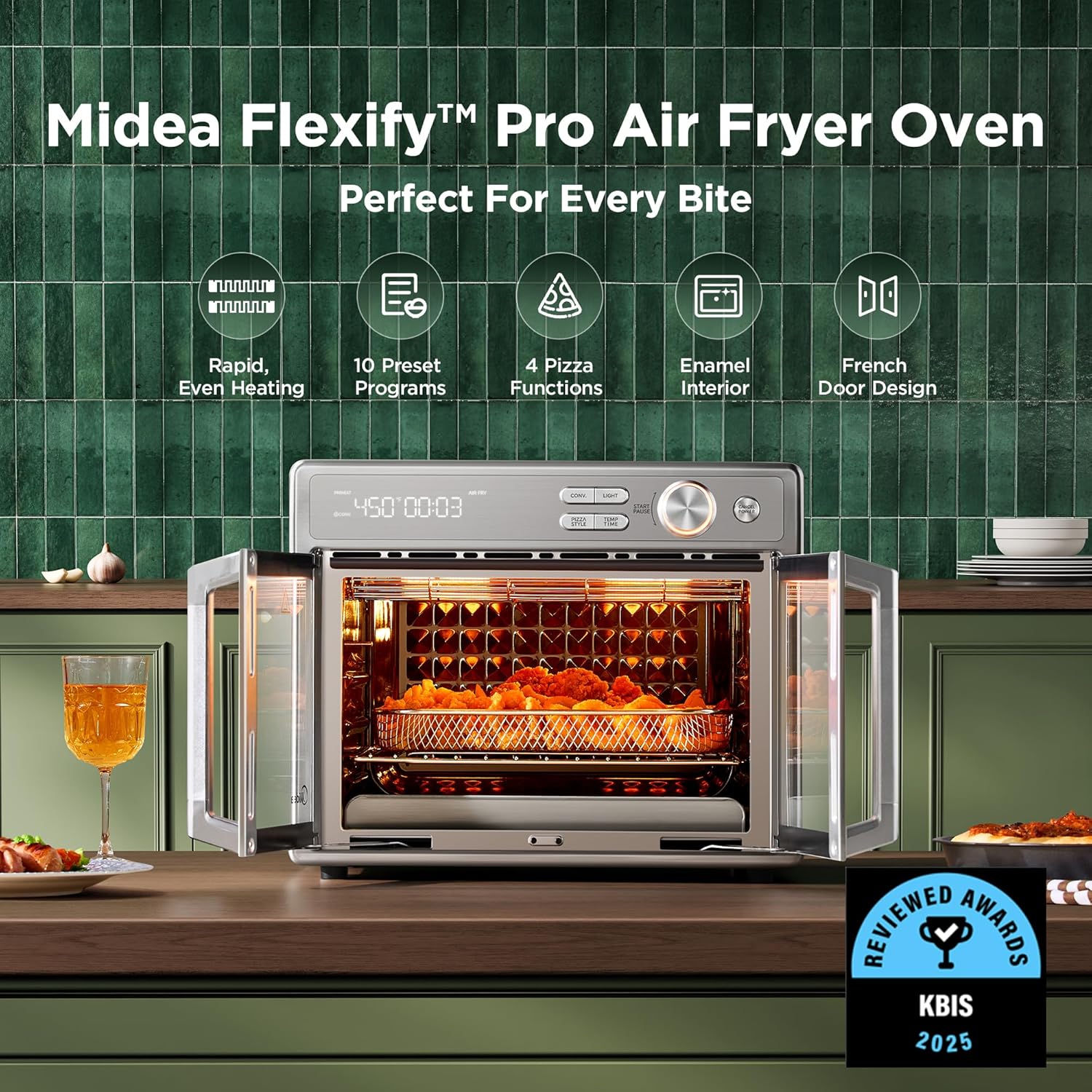
Which brings me to the name problem on this very page, because returns desks teach you to read names like contracts. The title up top says Slim, and says 8-in-1. The verified listing behind the first box below says Classic, and the Classic is the 26.4-quart machine whose own function count runs to ten — air fry, roast, bake, broil, toast, pizza, reheat, slow cook, dehydrate, warm, I counted them off the panel the way you count change. There is a slimmer sibling in this family — its photograph is the first body image further down, and it is a genuinely narrower box — but the listing I could verify for this update, the one the price button points at, is the Classic. If Slim is the machine your counter needs, shop for the Slim by its own listing and its own dimensions, and do not let this page’s title blur the two into one purchase. Names drift. Cartons do not.
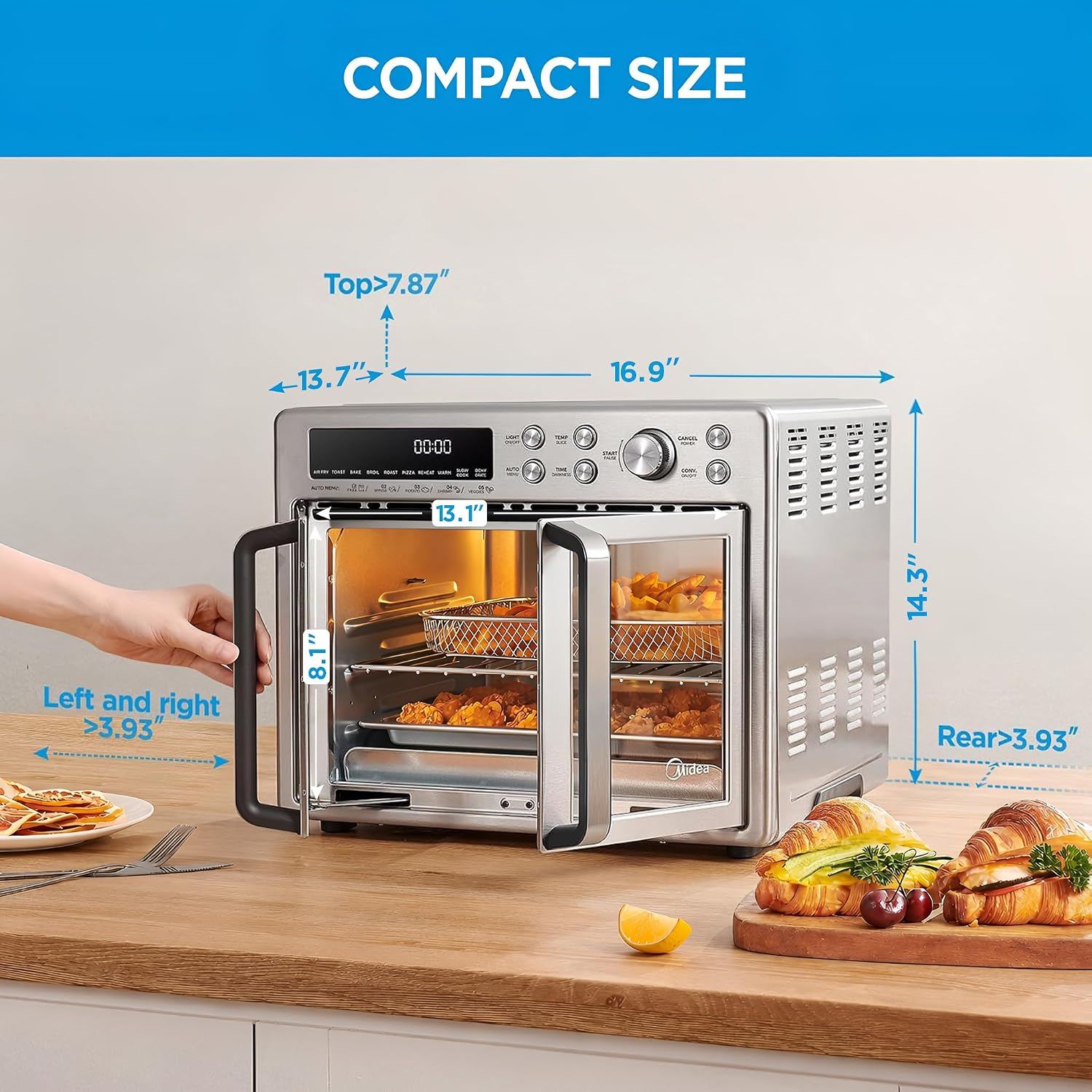
The door mechanics themselves deserve a slower look than they usually get, because the French-door arrangement is a real answer to a real annoyance and I refuse, on principle, to let the returns-desk view be the whole story. A drop-down door on a countertop oven parks itself horizontally in front of the cavity, hot, crumb-catching, exactly where your forearms want to travel. French doors swing sideways instead, linked, so one handle opens both, and the opening stays clear for the tray. What the swap costs is lateral room — the doors at full swing want their arcs on both sides — and a center meeting strip where the two doors close, which collects the same grease film every meeting strip in every kitchen collects. The doors are not the risk. The arcs are. Measure across, not just back.
Now the depth, because depth is where this class of machine quietly eats the counter. The box footprint is the number on the listing. The working footprint is the box, plus the inches behind it that hot appliances need to breathe, plus the full travel of a tray sliding out toward your stomach with dinner on it — eight more inches, give or take, of temporary counter that must be empty at the exact moment you are least inclined to clear it. I have watched this measurement fail in kitchens that had done every other measurement right. They measured the niche. They measured the height under the cabinet. Nobody stood in front of the space with their arms out pretending to hold a hot tray. Pretend. It takes four seconds and it is the whole review.
The capacity number, translated
Twenty-six point four quarts is a volume figure — the whole cavity, rack slots and corners and the space under the lowest position counted in — and volume figures are true the way a theater’s capacity is true: every seat exists, and not every seat can see. The working translation of this oven is the greatest-hits list the brand itself leads with. A 12-inch pizza. Six slices of toast. A whole chicken in the 4-to-5 pound class with air still able to move around it. Those three objects are the honest spec, and a household whose biggest regular job fits inside them will find the cavity generous. A household whose biggest job is a sheet-pan dinner for six will find the number was counting corners. In the Flexify Pro review I took apart the Pro sibling of this machine and the same translation held there — the pizza and the chicken tell you more than the quarts ever will.
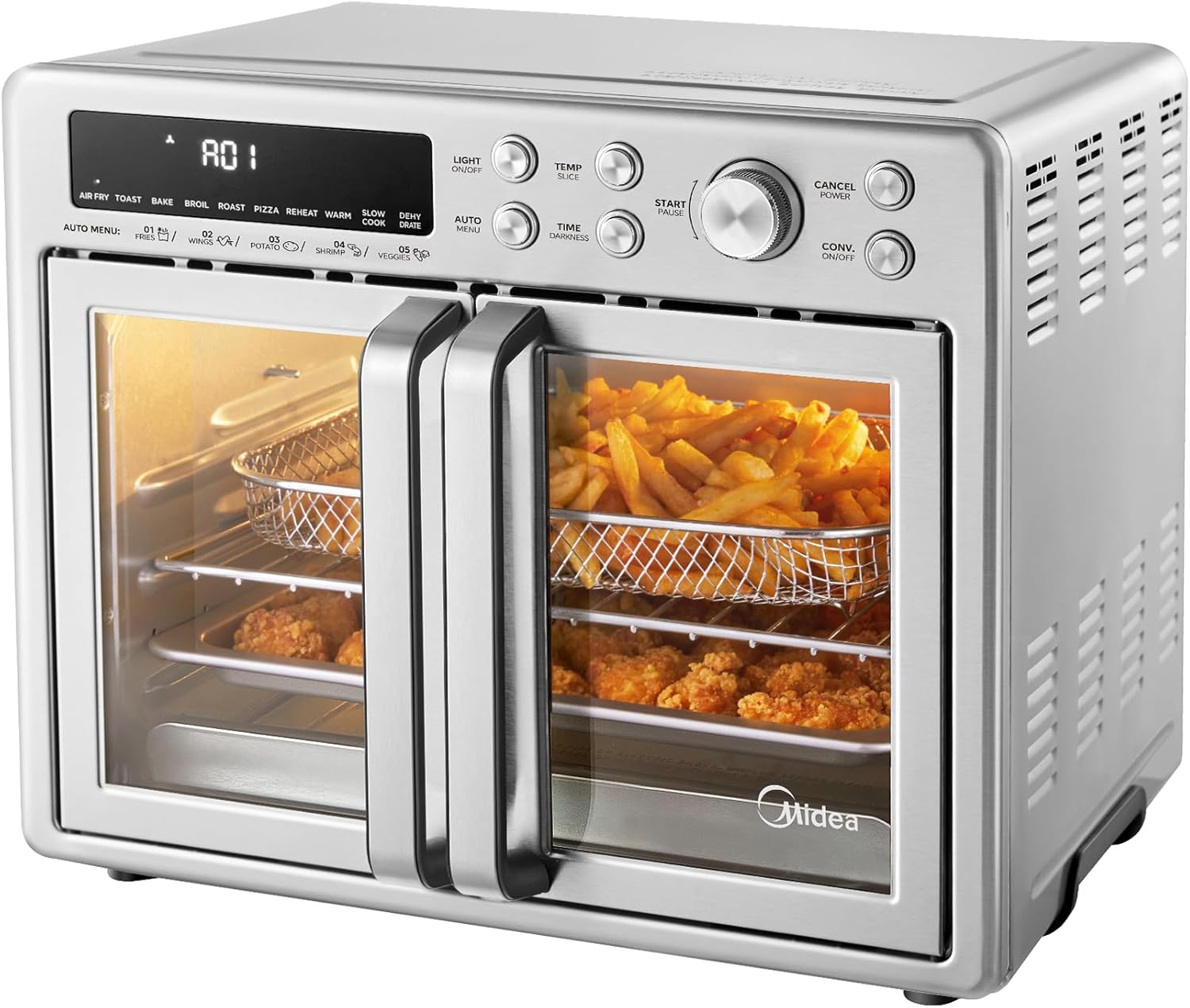
The verified listing behind this page — the Classic 26.4-quart French-door oven, whatever the title’s Slim label says
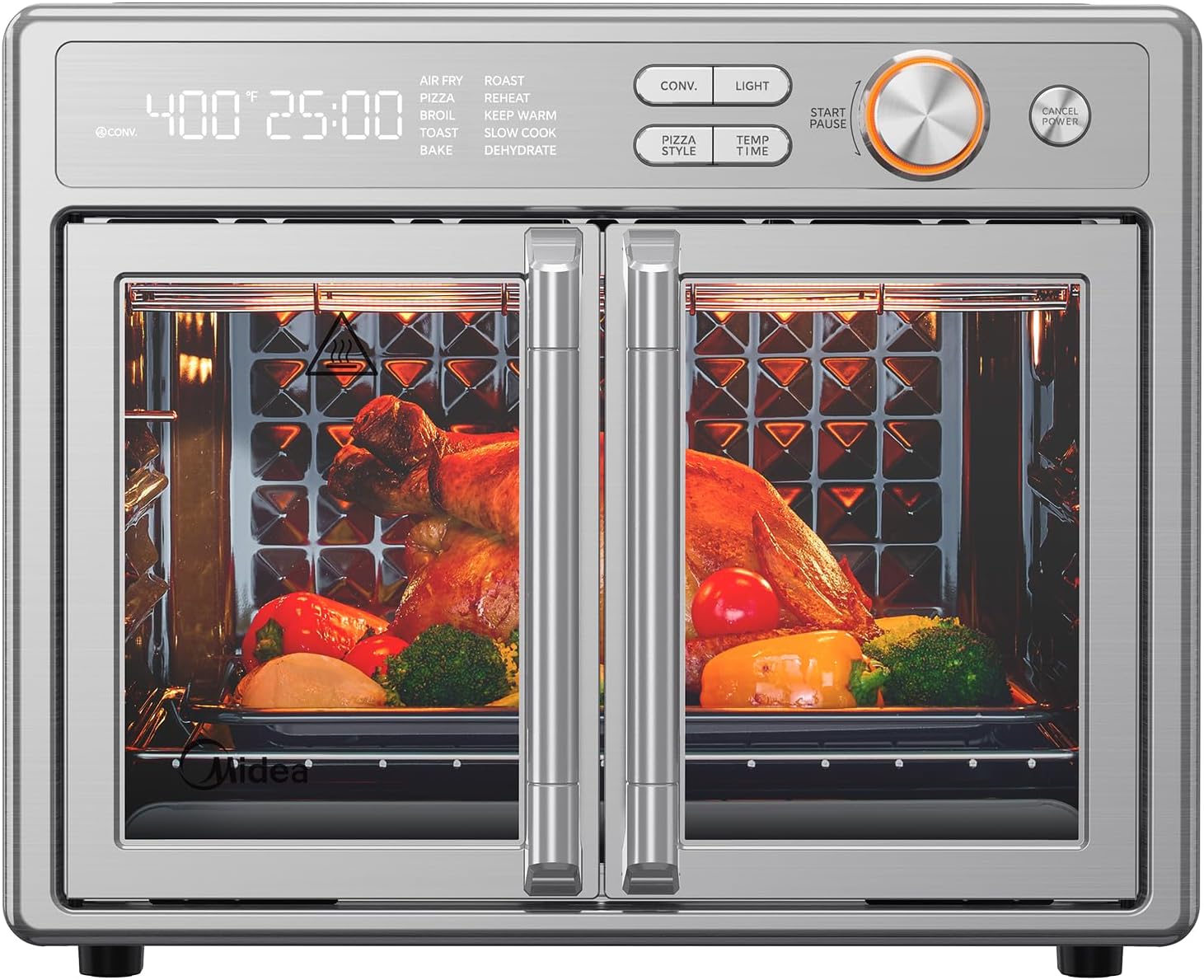
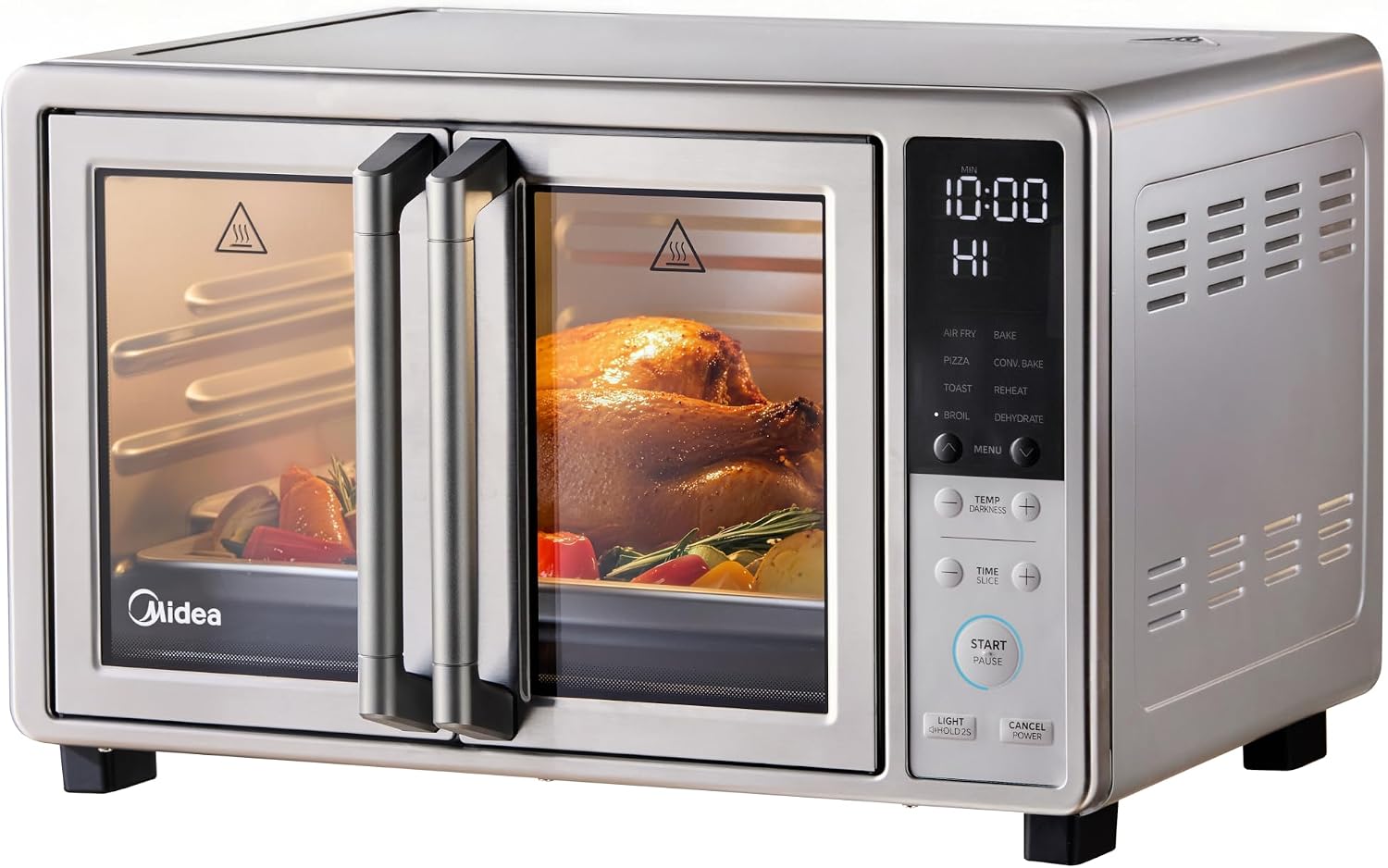
The step-up sibling — same French-door idea in the Pro trim, for cooks who live in a countertop oven daily
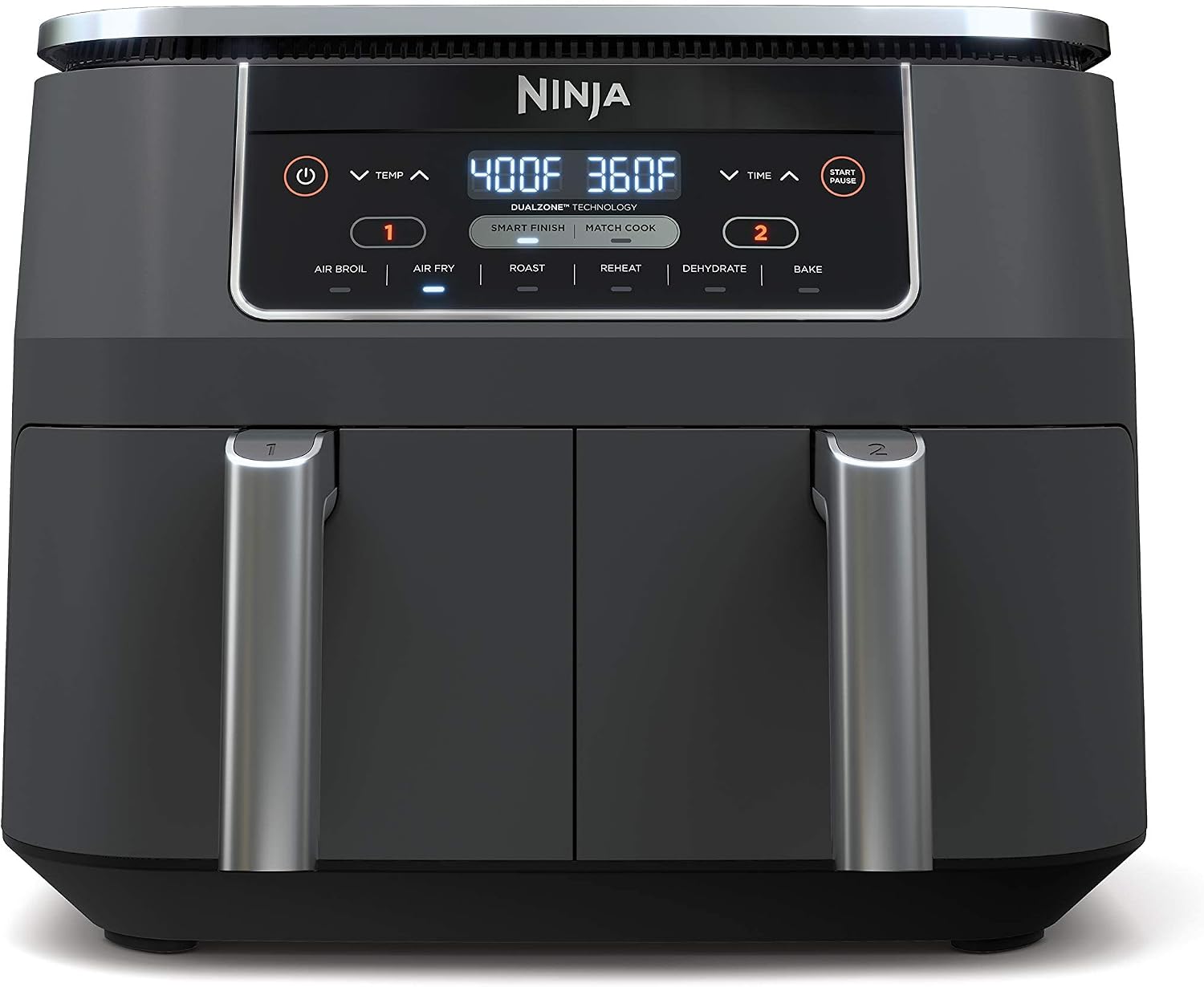
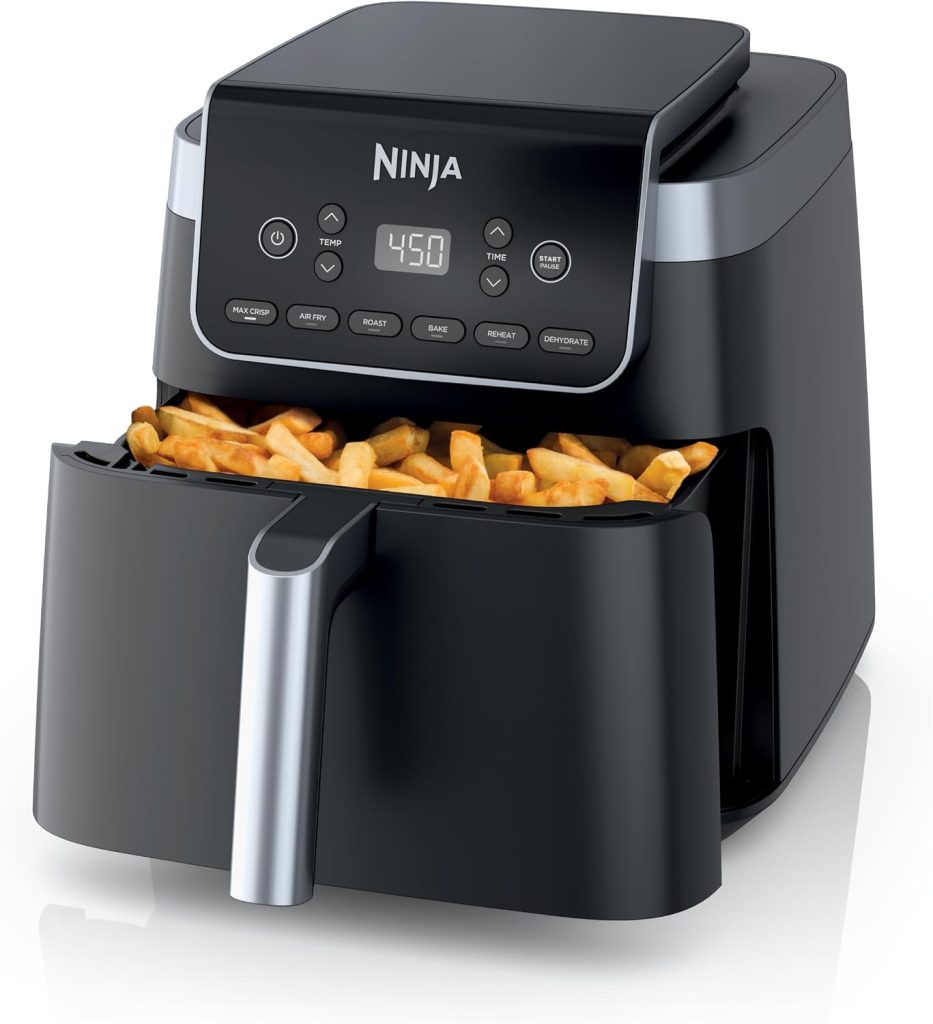
The other answer to the same weeknight problem — two independent baskets instead of one big cavity
Prices and availability change; the listing is the final word.
The Pro in the middle box is the same idea in the family’s upper trim, and the comparison that matters between the two is not the program count — it never is, in this category — but how much of your cooking week genuinely lives in a countertop oven. Toast-and-reheat households will not feel the difference between the siblings by Christmas. Households roasting vegetables four nights a week might, in the controls and the cavity’s manners, and they are also the households most likely to have already solved the clearance problem because the oven never leaves the counter. The third box is the fork in the road. The dual-basket machine gives up the whole cavity — no pizza, no whole chicken — and buys back the ability to cook two different things at two different settings and have them land at the same moment. Eight quarts there means two 4-quart baskets, and that split is the product, not a discount on size.
In the Gourmia dual-door oven walkthrough, a dual-door oven of another make gets its own walkthrough, and the pattern repeats there too: the doors delight, the depth decides. I keep coming back to the returns desk on this because the desk is where marketing language goes to be translated into household language, and the translation is nearly always about geometry. Cooking complaints exist — uneven browning near the center strip is the one I hear about this door style, and it is real, and it is manageable with a rotation halfway through — but geometry complaints are the ones that end with a carton on my counter, because you cannot rotate your way out of a tray that has nowhere to land.
One more habit from the desk, offered free. When a French-door oven does come back, the box tells the story before the customer does. The door-protecting foam is usually still perfect. The crumb tray has been washed — people who wash the crumb tray intended to keep the machine. What is missing, often, is the second rack or the air-fry basket, left in a dishwasher across town, because the machine’s last week in that kitchen was spent being trialed in pieces while its home counter was negotiated around it. I have no data table for this. I have a memory of cartons, and the cartons say these ovens are rarely rejected as cookers. They are rejected as furniture.
What I cannot tell you is how the Classic’s browning compares, tray for tray, against the Pro’s — I have not run the two side by side with the same wings at the same hour, and anyone who claims a verdict on that pairing without the side-by-side is decorating. What the listings and the returns together support is narrower: the cavity is honestly sized for the pizza-and-chicken class of jobs, the doors trade a horizontal hazard for a lateral one, and the size of your tray-landing zone will decide your satisfaction months before the heating element gets a vote.
Questions that come up
Is the oven on this page the Slim model or the Classic?
The verified listing is the Classic — the 26.4-quart French-door machine — and that is the product the price button in the first box points to. The title says Slim, and a slimmer sibling does exist in this family, but its listing is a different one with different dimensions, and I could not verify it as the product behind this page. Treat the title as a label that drifted and the listing as the contract. If your counter needs the narrower machine, buy it through its own listing and measure from its own dimension line, because the whole ownership question with this category is geometry, and the two siblings answer it differently.
How much counter clearance does a French-door oven really need?
More than the box footprint, in two directions. Sideways, the linked doors swing through arcs on both flanks, so the niche has to be clear at door height, not just at the base — a cabinet handle or a knife block parked in the arc will meet the door every single day. Forward, the working depth is the machine plus its rear breathing room plus the full slide of a loaded tray coming toward you, roughly eight extra inches that must be empty at serving time. The four-second test beats every measurement: stand where the oven will live, mime pulling a hot tray out with both hands, and see what your elbows and the tray’s front edge would hit. That mime has predicted more returns than any star rating.
What does 26.4 quarts actually fit?
Translate the volume into objects and it becomes honest. The brand’s own working list is a 12-inch pizza, six slices of toast in a single layer, or a whole chicken in the 4-to-5 pound range with room for air to move around it. Volume counts every corner of the cavity including space no food can use, so the object list is the spec to shop against. A household whose largest regular job is on that list will find the oven roomy. A household planning sheet-pan dinners for six in a single layer is shopping for a shape this cavity does not have, and no program on the panel will negotiate that.
Why would I pick the dual-basket machine instead?
Because your weeknight problem might be synchronization rather than size. The dual-basket design splits its 8 quarts into two independent 4-quart baskets, each with its own setting, so fries and wings — different foods, different timings — can be set up to finish together. What you surrender is the single big cavity: no 12-inch pizza, no whole chicken, nothing that needs one wide unbroken floor. Households that cook two components at once, most nights, tend to love the split and never miss the cavity. Households that roast whole things tend to feel the baskets as two small rooms in a house they bought for its hall. Neither answer is the upgrade. They are different kitchens.
Do French doors brown food evenly?
Mostly, with one known soft spot worth planning around. The center of the cavity, where the two doors meet and the meeting strip sits, is where owners of this door style most often report gentler browning — the seal interrupts the clean sweep of hot air that a single-door cavity gets. The working habit is unglamorous: rotate the tray or turn the food halfway through, the same advice every countertop oven eventually gives, because small cavities all have a geography and the middle-front is this design’s quiet zone. It is a habit, not a defect, and it is worth knowing before the first tray of wings rather than after.
Somewhere that earlier French-door oven is on a resale shelf now, doors still swinging sweetly for whoever measures their kitchen next. I think about the woman at the desk whenever a title promises me Slim and a listing hands me Classic. She had measured everything except the tray in her own hands. The oven was never the problem, and that is exactly what still bothers me about this category.
This site contains affiliate links. We may earn a commission on qualifying purchases.