This site contains affiliate links. We may earn a commission on qualifying purchases.
Why does nobody publish the one measurement that decides whether a stand mixer is pleasant to use? I fix these machines, and I can tell you the number I reach for first when a mixer lands on my bench — the gap between the beater and the bowl. A few millimeters too wide and the bottom of every batter stays unmixed, a pale stratum that the owner discovers with a spatula and a sense of betrayal. A hair too close and the beater kisses metal and sheds its coating into somebody’s birthday cake. The Cuisinart this page is named for — 5.5 quarts, 12 speeds, die-cast body — does not publish that gap, and neither does anyone else, and so the most important specification in the category is one you learn by baking or by reading people who measure things. I measure things. It is most of the job.
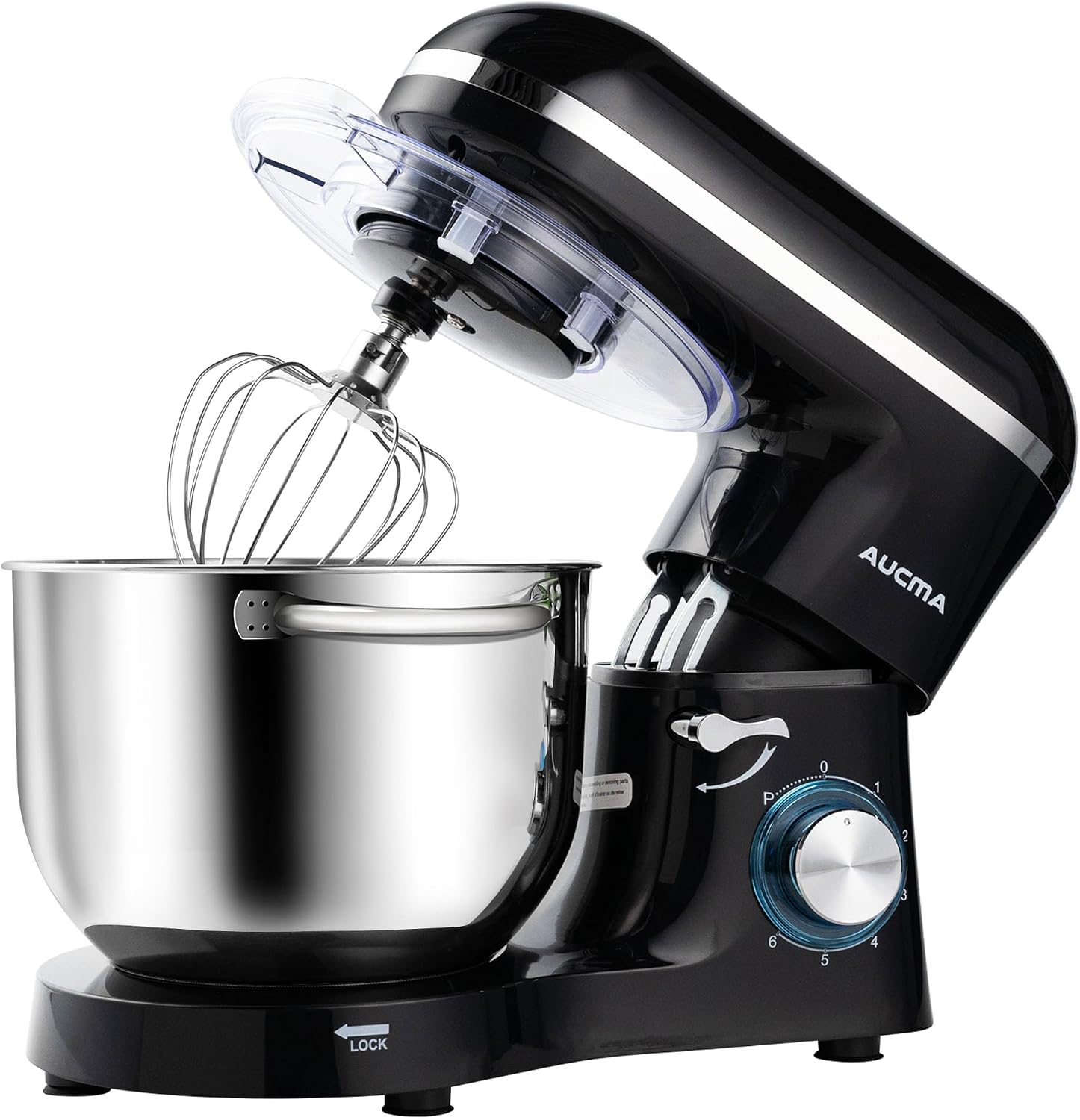
A disclosure before the bench talk, because this page believes in them. When I checked the big marketplaces for this update, the Cuisinart’s own listing would not verify cleanly end to end, so the product row below holds three mixers I could check — an Aucma, a big rose-gold machine, a Hamilton Beach — sitting in and around the Cuisinart’s class. The assessment of the Cuisinart itself stands on its published specifications and the model’s known service history, the same way I would talk about a machine on my bench that someone else owns. What I will not do is pretend a listing said things it did not. There is enough of that in this category already.
The 5.5-quart bowl first, because it is the Cuisinart’s real argument. The home standard settled at five quarts years ago, and the extra half-quart sounds like garnish until you cream butter and sugar and watch the mixture climb — headroom is where flour stays in the bowl instead of snowing onto your shirt, and half a quart of headroom is the difference between adding flour in three nervous additions and two calm ones. Against the boxes below, the math sharpens. The Aucma’s 6.5 quarts and the rose machine’s 7.4 are batch-baker sizes, honest capacity for double loaves and holiday volume. The Hamilton Beach’s 4 quarts is the confession that most home mixing is small. The Cuisinart sits in the seam between those confessions, sized for a household that bakes weekly and doubles recipes without asking permission.
Twelve speeds, and other honest fictions
Do you need twelve speeds? You need about four — a true slow that folds without throwing flour, a medium that creams, a fast that whips, and one in between that you will use for everything and call your speed. The other eight are not lies, exactly; they are the fine gradations a stepped control can offer when the motor and gearing underneath are doing the real work. What matters on my bench is not the count but the bottom of the range. A mixer whose lowest speed is already enthusiastic will powder your counter no matter how gently you add flour, and a mixer whose top speed fades under a stiff dough is telling you about its gearing, not its dial. The Cuisinart’s dial, to its credit, has a weighted, deliberate feel — detents you can count with a fingertip — and a machine’s controls are the part you touch every single time, long after the spec sheet is forgotten.
Wattage, while we are burning fictions. The numbers on these boxes — 660 on the Aucma, around 700 claimed by the rose machine — are not a strength ranking, and I wish the category would stop pretending otherwise. A stand mixer’s real muscle lives in its gearing and its motor’s torque at low speed, which no listing prints, and a modestly rated machine with honest gears will knead circles around a big-number machine with a sacrificial plastic gear inside. I know which one I would rather open in five years. Actually, that gear deserves its sentence — many tilt-heads are designed so a cheap gear wears out first and saves the motor, which is good engineering wearing a bad reputation, because the owner experiences it as a breakdown and I experience it as a twenty-minute part swap. Ask me which failure I prefer to fix. It is that one, every time.
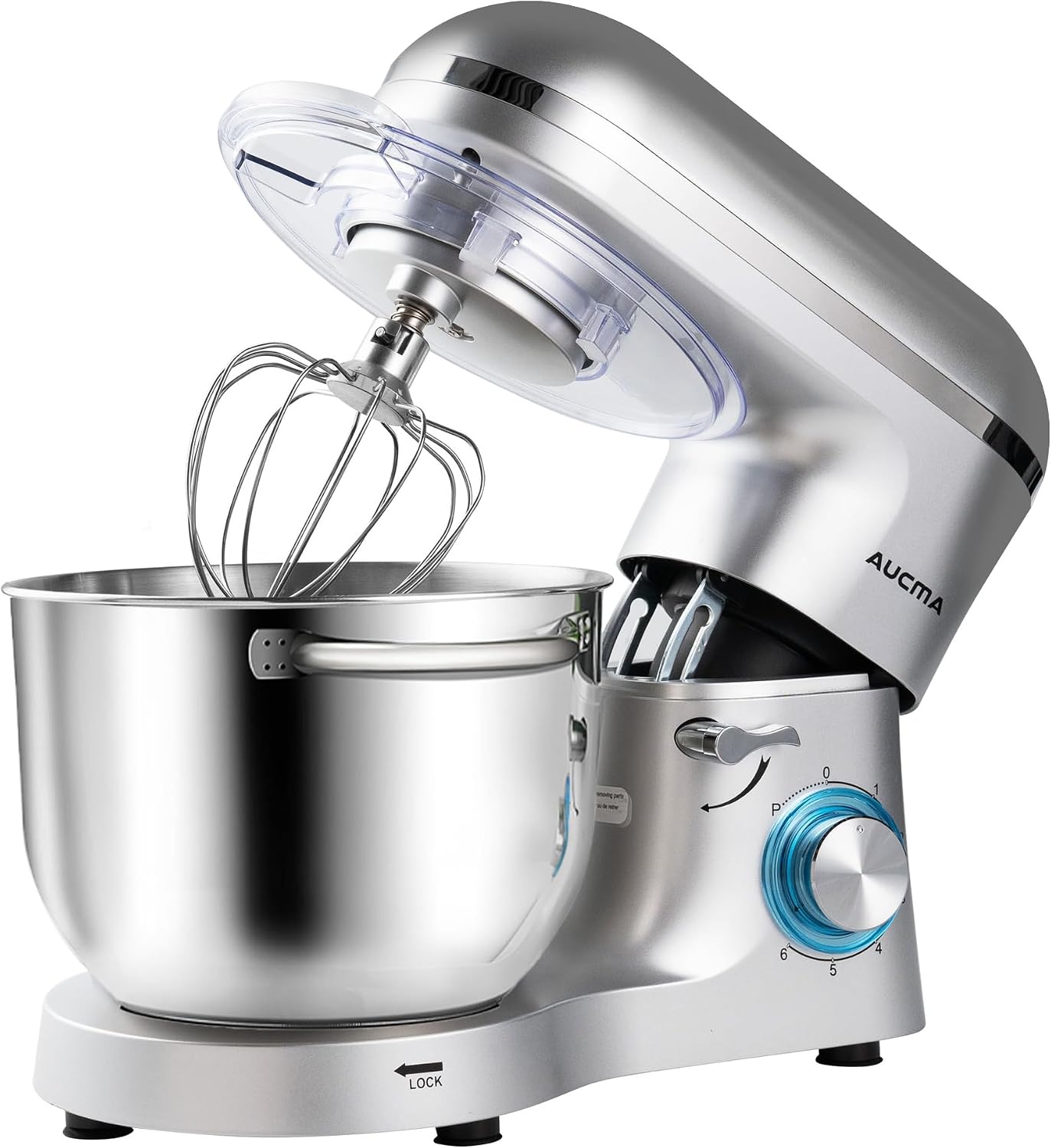
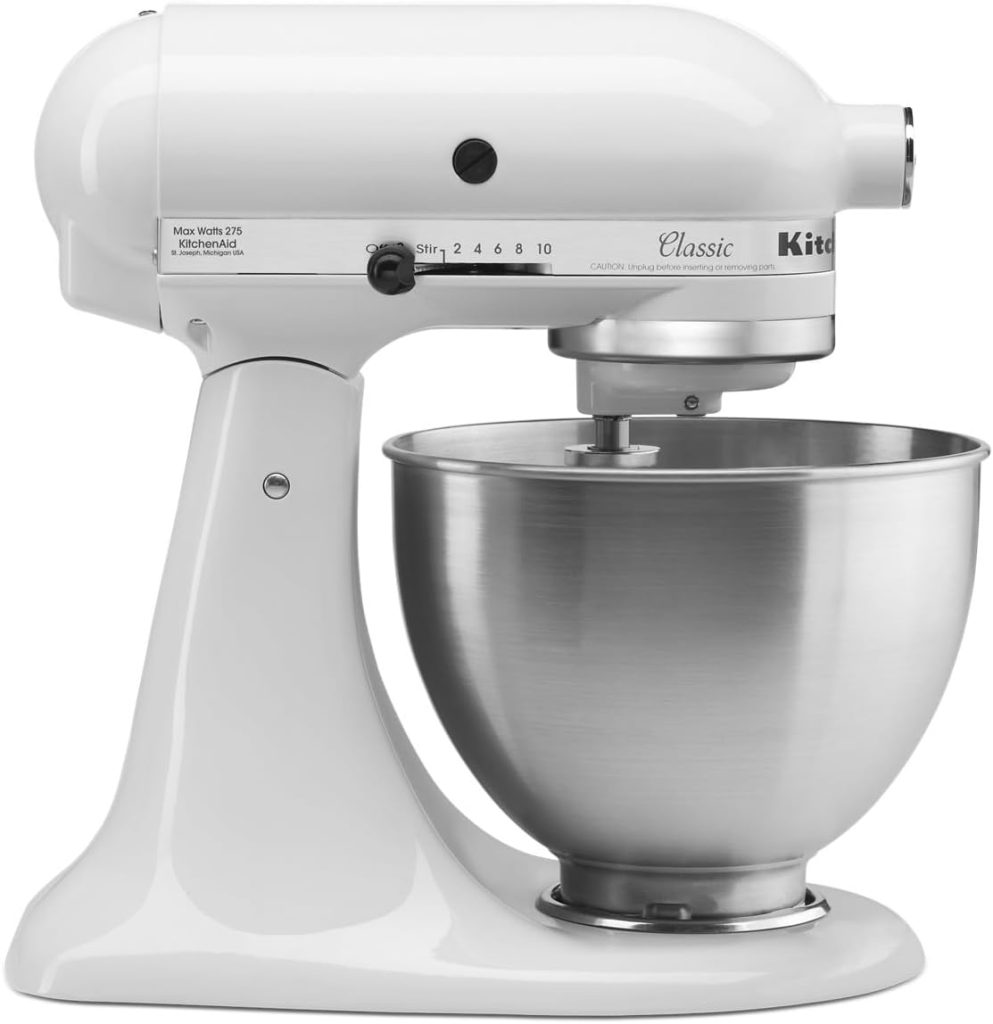
A bigger bowl and a stronger motor on paper — the value benchmark every 5.5-quart machine gets measured against
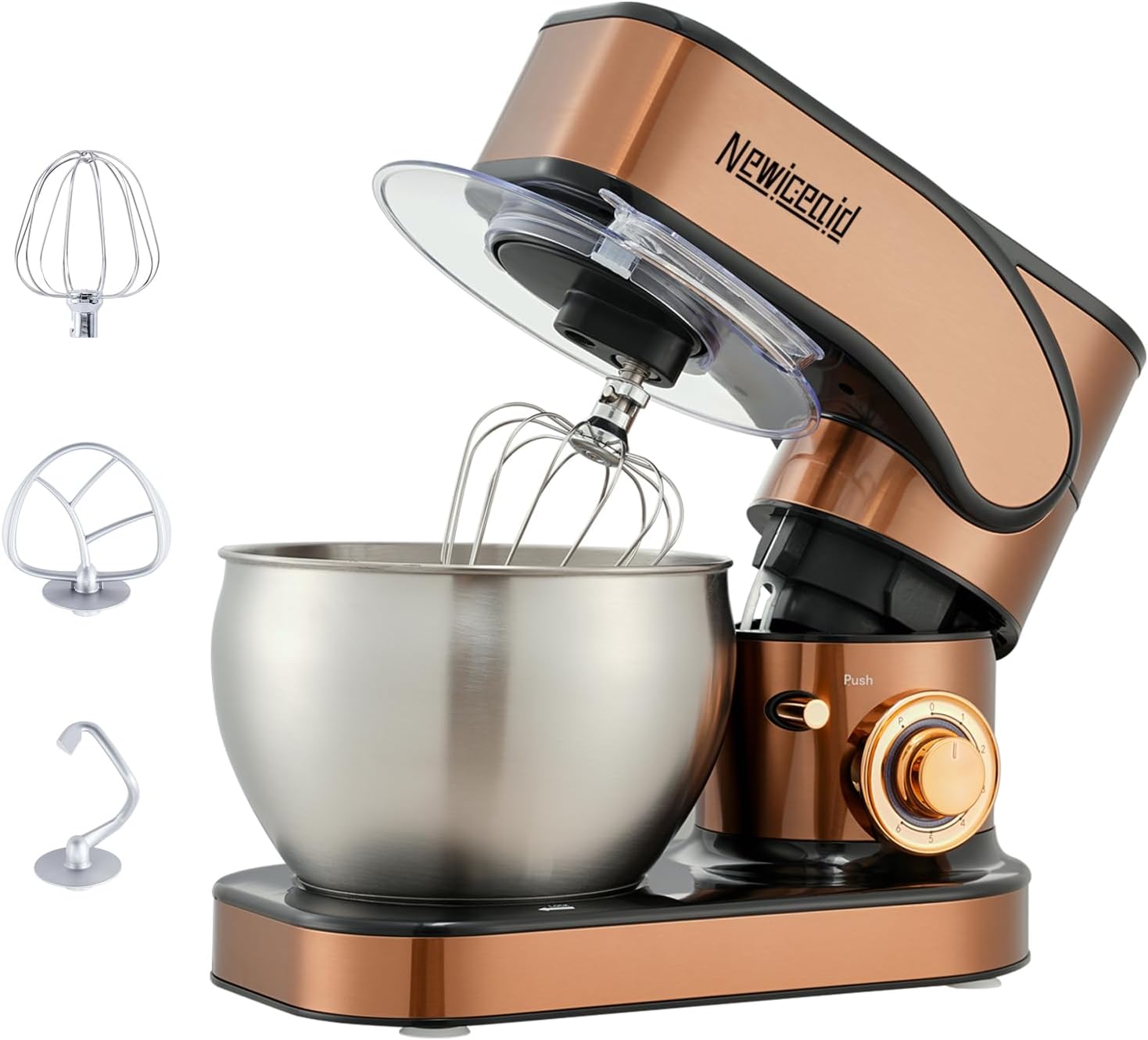
The capacity outlier — a 7.4-quart bowl for batch bakers, in a finish that starts conversations
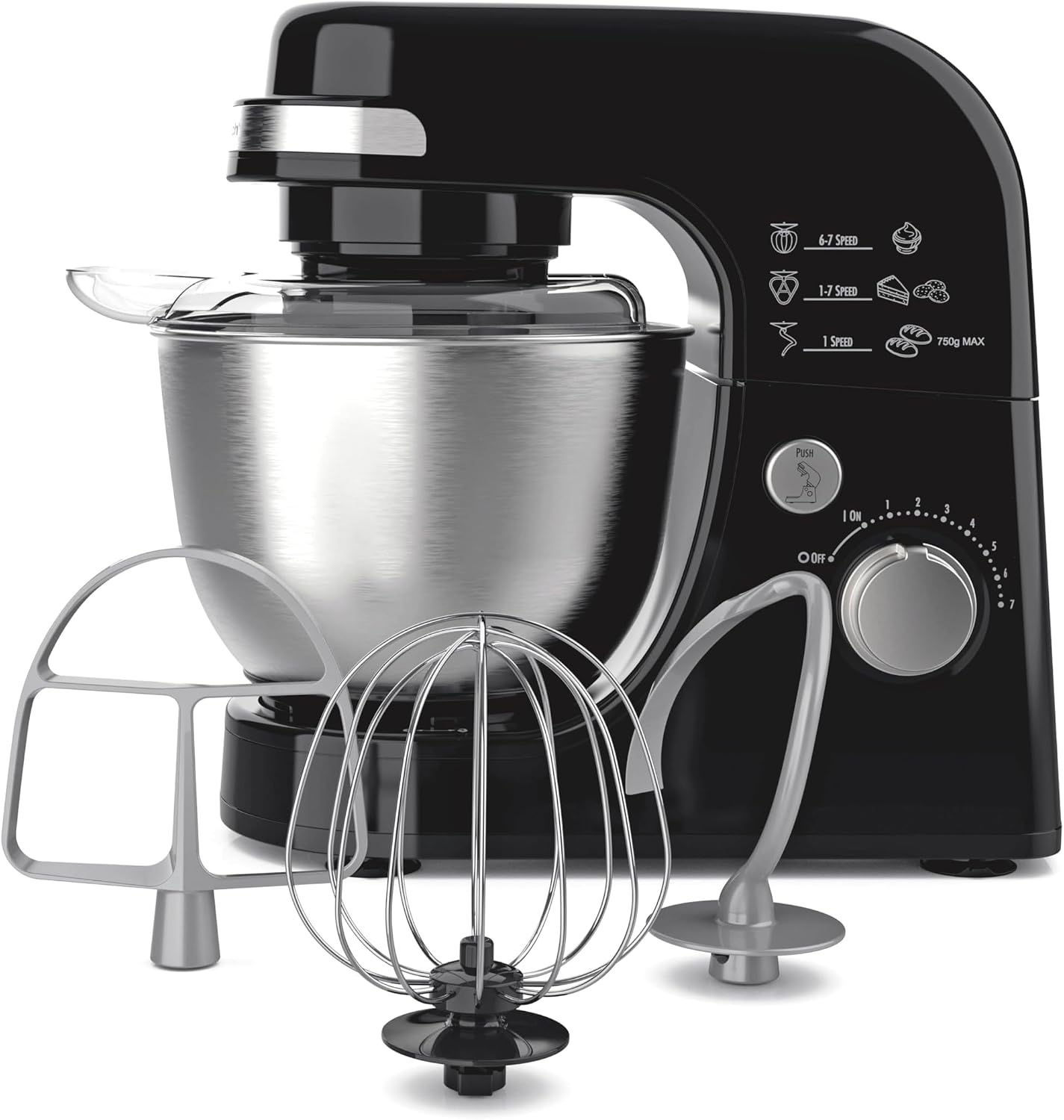
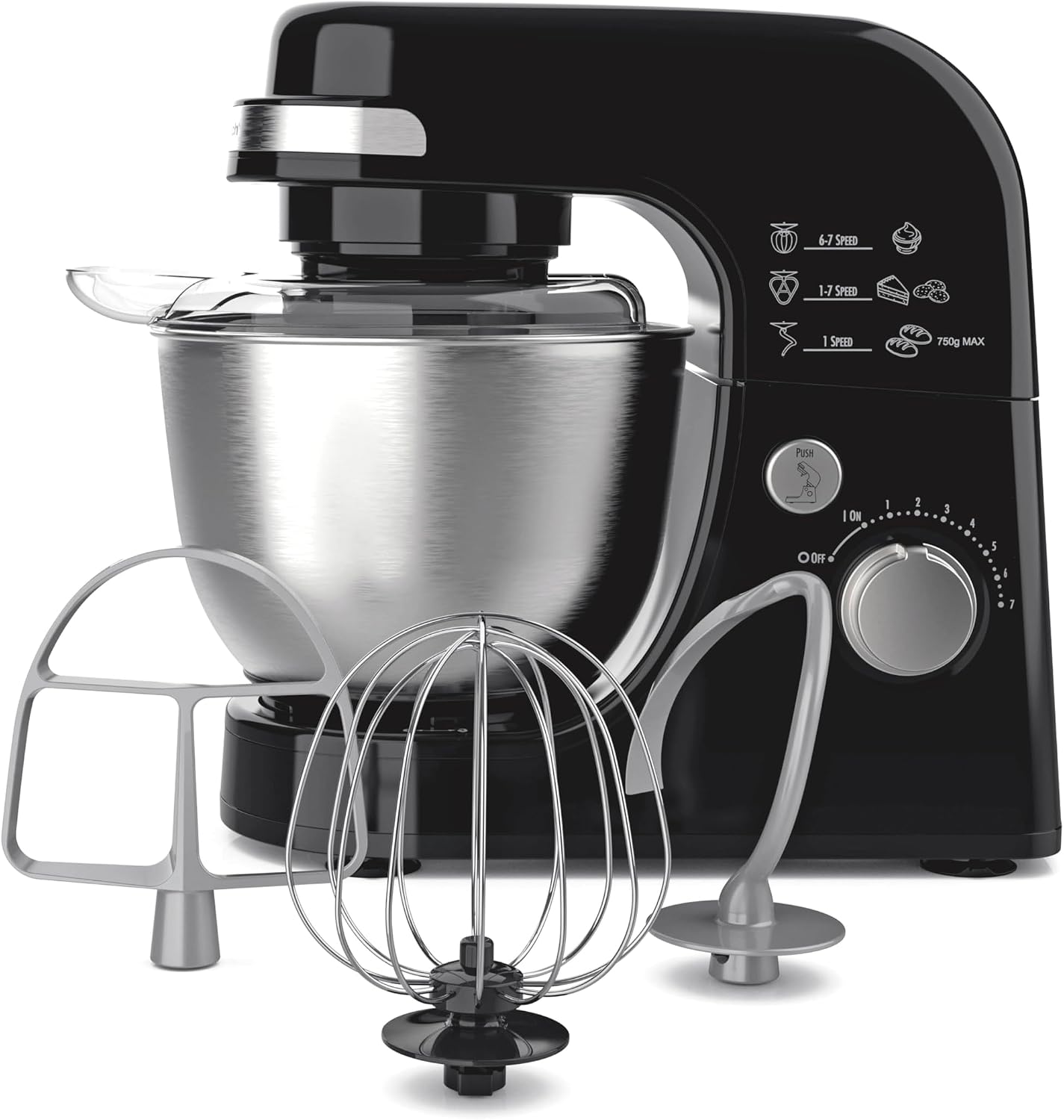
The smaller honest machine — 4 quarts, planetary action, and a price that admits what it is
Prices and availability change; the listing is the final word.
The known habits of the Cuisinart’s line, since a bench accumulates them. The bowl can be fussy about seating — it wants to be set and turned with conviction, and a bowl that is almost seated will announce itself by walking faintly under load, which owners report as vibration and I report as a five-second lesson. The hinge screw at the head pivot loosens over years and wants a check when the head starts to nod. The flat beater’s coating wears at its edges if it lives in a dishwasher; hand-washed, it lasts. None of this is scandal. It is the standard biography of a mid-priced tilt-head, and a machine whose failure modes are known and cheap is a machine I can recommend in a way I never can for a sealed mystery with a beautiful launch video.
I compared notes on the value end of this class in the Martha Stewart mixer assessment, and the pattern from that bench session holds here — in the middle price band, you are not buying power, you are buying adjustability and parts. The beater-to-bowl gap I opened with? On machines with an adjustment screw at the hinge, it is a thirty-second calibration with a dime resting on the flat beater as your gauge. On machines without one, the gap is whatever the factory left you, forever. Before you fall for any mixer in this class, Cuisinart included, find out whether that screw exists. It is the least glamorous question in the category and the one with the longest consequences.
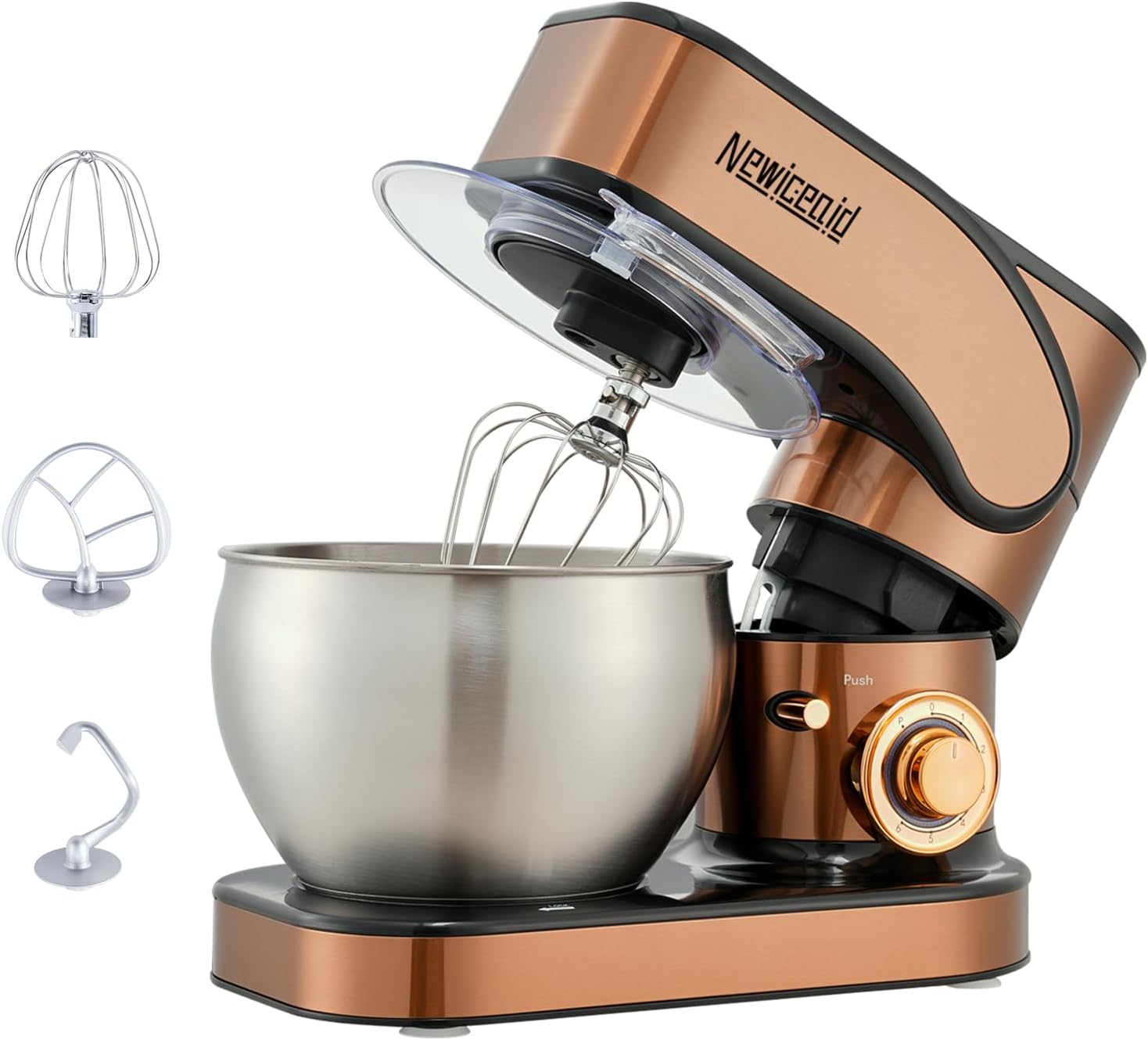
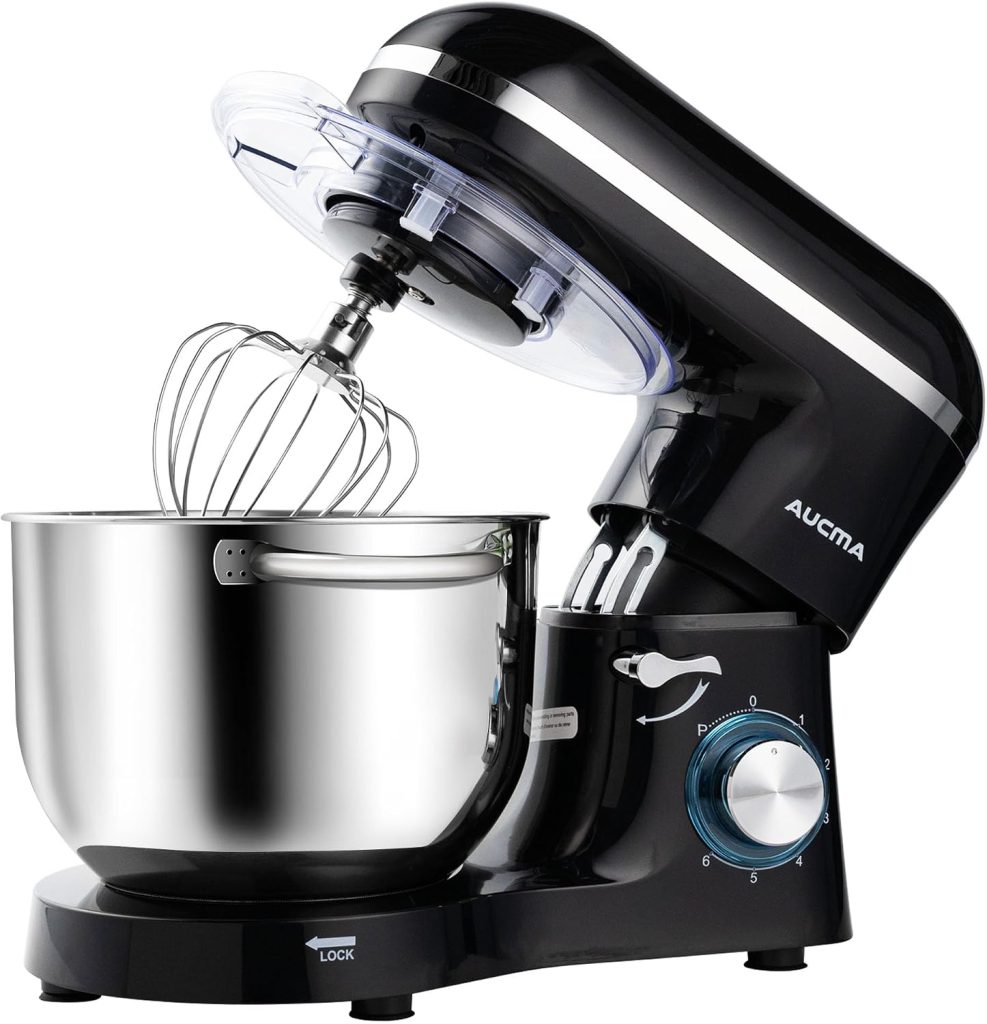
The Aucma deep-dive is worth your time if the Aucma in the first box tempts you, because that machine is the Cuisinart’s shadow rival — bigger bowl, bigger paper numbers, lower price, and a thinner service story. That trade is the whole middle of this market in one sentence. The established names sell you a future where parts exist; the challengers sell you a present where the bowl is larger. Both are real goods. Which one you are short of — capacity today or parts in year six — is a question about your kitchen that no review can answer for you, and I say that as someone who profits when the answer turns out wrong.
What would I check in the first week with any of these, Cuisinart first of all. A cup of flour and a slow start, watching whether the lowest speed can fold without a blizzard. A spatula dragged across the bowl’s bottom after a batter, hunting for the unmixed stratum. A stiff dough at the top of the maker’s stated comfort — for a 5.5-quart tilt-head, think in terms of a modest two-loaf batch, not a bakery run — while you watch the head for nodding and listen for the motor hunting, speeding and straining in waves. A healthy machine sounds bored. A struggling one sounds like it is arguing, and arguments in week one become repairs in year two.
The question I opened with is still open, and I have decided I like it that way. No maker in this class publishes the gap, the gear material, the low-speed torque — the three numbers a repair bench would spec a mixer by — because the category sells quarts and speeds and colors instead, and those are the numbers that fit in a title. The Cuisinart is a decent machine by the measures I can take. Whether it is the right decent machine depends on numbers nobody will print, which you now know how to go and measure with a dime, a cup of flour, and one honest batch of dough.
Questions that come up
How do I check the beater-to-bowl gap without special tools?
With a dime, which is the special tool — repair benches genuinely use one. Set the flat beater on the machine, rest a dime in the bottom of the empty bowl, and run the head down; on a well-adjusted tilt-head the beater should just move the dime as it passes without pinning it or shoving it hard. If the dime sits untouched, the gap is wide and the bottom of your batters will stay unmixed until a spatula rescues them. If the beater traps the coin, the gap is tight enough to wear coatings. Machines with a hinge adjustment screw let you correct this in seconds, a quarter turn at a time, testing between turns. Machines without one are telling you the factory’s setting is permanent, which is worth knowing before the return window closes, not after.
The mixer head nods and rocks when kneading. Is it dying?
It is almost certainly loosening, not dying, and the distinction will save you a service bill. Under dough load, a tilt-head argues with its own hinge — the pivot point takes the strain — and over months the hinge screw and head lock relax enough to give the head a visible nod. Check the lock first; a head that is not fully locked will rock on a healthy machine and frighten its owner for free. Then the hinge screw, snugged a fraction, testing as you go, because overtightening trades the nod for a bind. A nod that survives both checks, with play you can feel by hand at the pivot, is a worn pin — a real repair, but a small one. Motors announce death differently, with smell and heat and surrender, not rhythm.
Is a 5.5-quart bowl big enough for double batches of bread dough?
It depends on the dough’s ambition more than the bowl’s quart number, because capacity on a mixer is really about resistance. A soft sandwich dough at double batch — think around eight cups of flour — will work in a 5.5-quart bowl with the head nodding a little and the motor earning its keep. A stiff whole-grain or bagel dough at the same volume is a different animal; it climbs the hook, loads the hinge, and turns a weekly habit into a wear schedule. My rule from the bench is to size the batch to the machine’s comfort, not its container — one comfortable batch twice beats one heroic batch that shortens the mixer’s life — and if your baking life is stiff dough in volume, the honest answer is a bowl-lift design, whatever the brand.
Speeds on my mixer seem to hunt up and down under load. What is that?
A rhythmic surge — the motor speeding, straining, speeding — under a heavy load is the control system and the dough negotiating, and a little of it in a stiff batch is normal behavior for this class. What is not normal is hunting at light loads, or hunting that has recently appeared in a machine that used to run steady through the same recipes. That pattern on my bench points at worn control contacts or a governor that is losing its grip, and it tends to worsen. The test is a controlled one: same recipe, same speed, empty bowl first — steady empty and hunting loaded is load; hunting in both is the machine asking for attention while the fix is still cheap.
On the bench tonight there is a tilt-head with its hinge pin worn into a slight oval and an owner who will not discuss replacement, only repair, because the machine was a wedding gift and has opinions attached. I am going to turn a new pin for it on the lathe tomorrow, by hand, slightly oversize, the way you do when the factory number is not available and the marriage is. The Cuisinart’s pin is still round. Most of them are. The question this page started with — why the real numbers go unpublished — will still be unanswered when I wipe the bench down, and the mixers will keep selling by the quart and the speed count, and some of them, measured honestly, will turn out to be good ones.
This site contains affiliate links. We may earn a commission on qualifying purchases.