This site contains affiliate links. We may earn a commission on qualifying purchases.
Do French doors on an oven actually do anything, or are they theatre? I have been asking myself that question since this category decided that two small doors are classier than one big one, and the honest answer, after living around the Midea Flexify Pro’s 26.4-quart cavity and its graphene heating pitch, is that the doors do exactly two real things and one imaginary thing. Sorting them out is most of this review.
Real thing one — you do not have to reach over a hot drop-down door. A conventional countertop oven door folds down into your workspace and your forearms learn its temperature once. French doors swing sideways, out of the way, and the tray slides toward you over nothing. For anyone who has done the hot-door limbo with a cast iron pan of roast vegetables, that is not theatre. That is ergonomics, and it is the reason this layout keeps selling despite costing more to build.
Real thing two — less heat escapes. Open a wide single door and the cavity dumps its hot air in one breath; open a pair of narrower doors and you lose less of the oven’s mood while you turn a tray or rescue a pizza. Do the doors on the Flexify Pro open together from one handle, the way you would hope? Yes — pull one side and both swing, which matters more than it sounds, because the two-hands-required design on some rivals quietly defeats the whole purpose. One hand holds the tray. The other opens the oven. Any layout that forgets which hand is busy has not been cooked with by its designer.
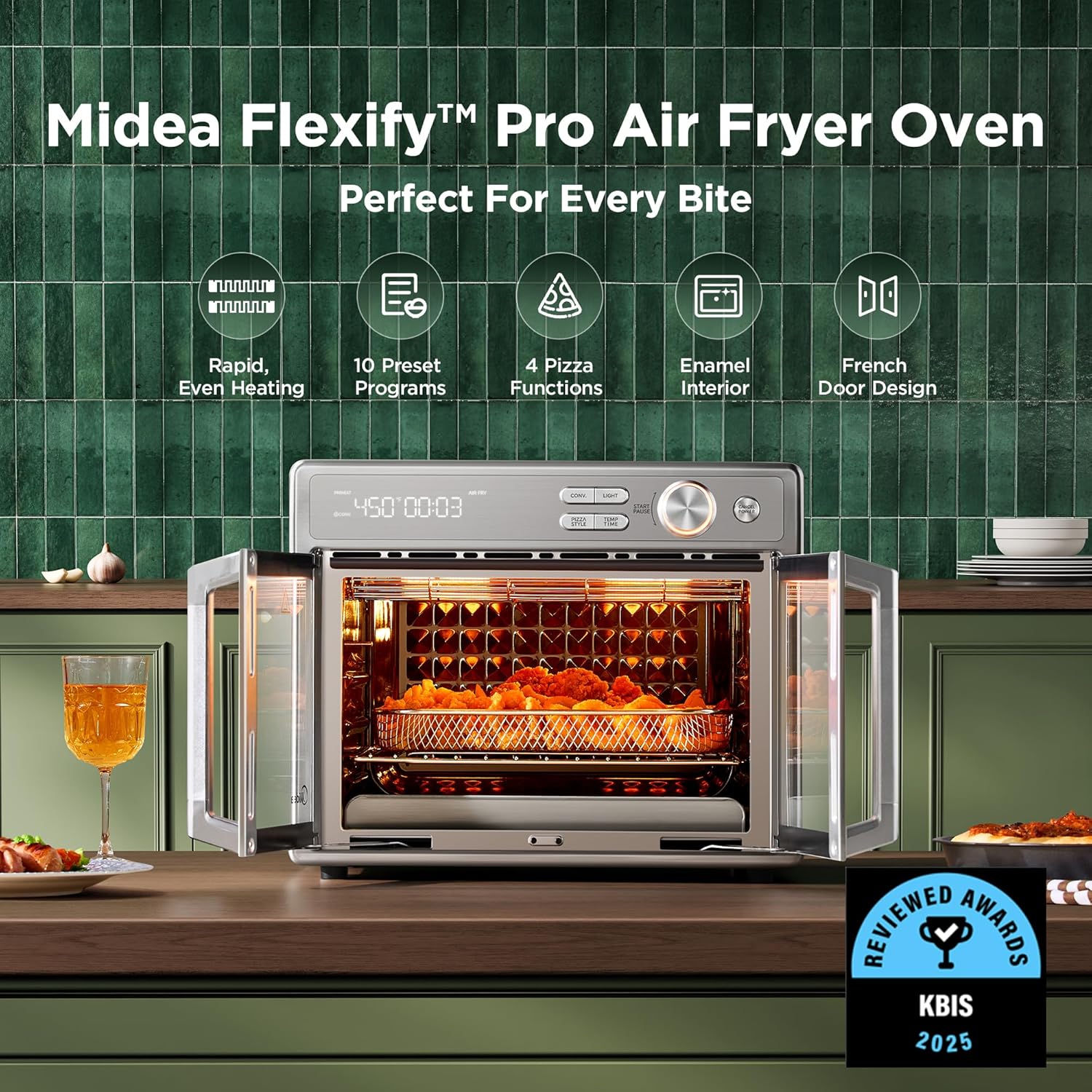
The imaginary thing is speed, or rather, the way speed gets marketed around the graphene element. The claim attached to this oven — heating dramatically faster than a conventional element, the listing says around 60 percent — needs translating. A graphene element does come up to temperature fast and it does not glow orange while it works, which feels odd the first week, like cooking inside a very confident hair dryer. Preheats shrink. That part is real. But a chicken does not roast 60 percent faster, because roasting is about heat moving through food, not through air, and food has not agreed to the new schedule. What the fast element buys you is a shorter wait and more responsive recovery when the doors open. Worth having. Not magic.
What 26.4 quarts means at dinner
Capacity numbers on ovens are measured the way luggage capacity is measured on cars — technically true, spiritually generous. The cavity here takes a 12-inch pizza without argument and a whole chicken in the four-to-five-pound class if the bird is not standing at attention, and that is the working definition of big for a countertop oven. Sheet-pan dinners for four fit on the tray with the understanding that air needs lanes between the food — crowd a tray in any air fryer oven and you get steaming, not frying, whatever the badge on the door says. I cook for three most nights and this size is the first countertop oven class where the main and the side genuinely share the box. Every smaller oven I have owned turned dinner into shifts.
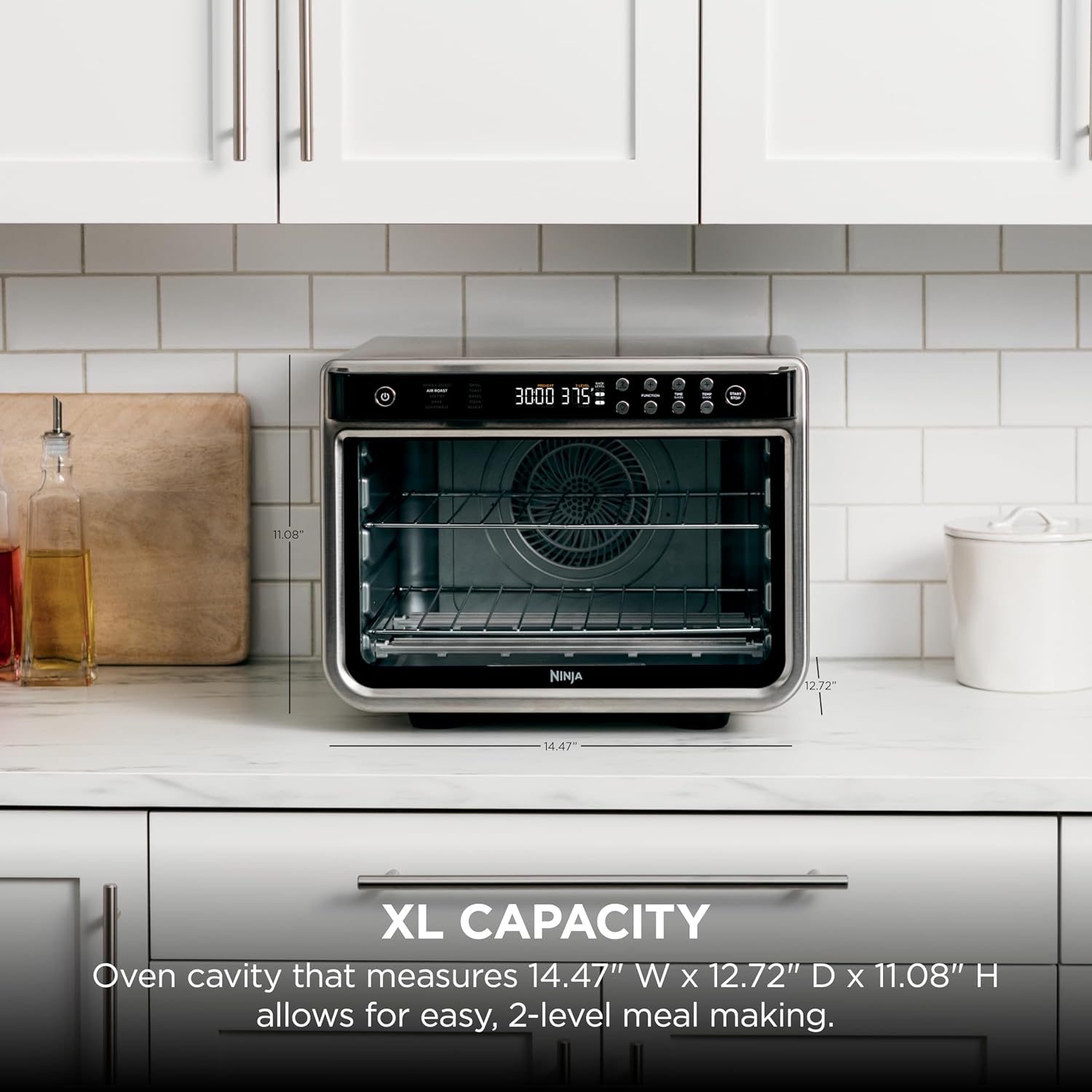
Is it too big for the counter, though? That is the question that decides returns in this category, and the answer is measured in depth, not width. An oven this size wants its full depth plus breathing room behind, plus the doors’ swing in front — and the swing is the part people forget, because French doors need clear counter in front of them in a way a drop-down door, for all its forearm crimes, does not. Measure from the wall to the counter edge and be honest about the coffee maker that also lives there. The Gourmia dual-door oven I looked at last season makes the same trade from the other direction — bigger cavity, two doors, same tape-measure reckoning — and the kitchens that regret these ovens are almost always the ones that measured the box and not the swing.
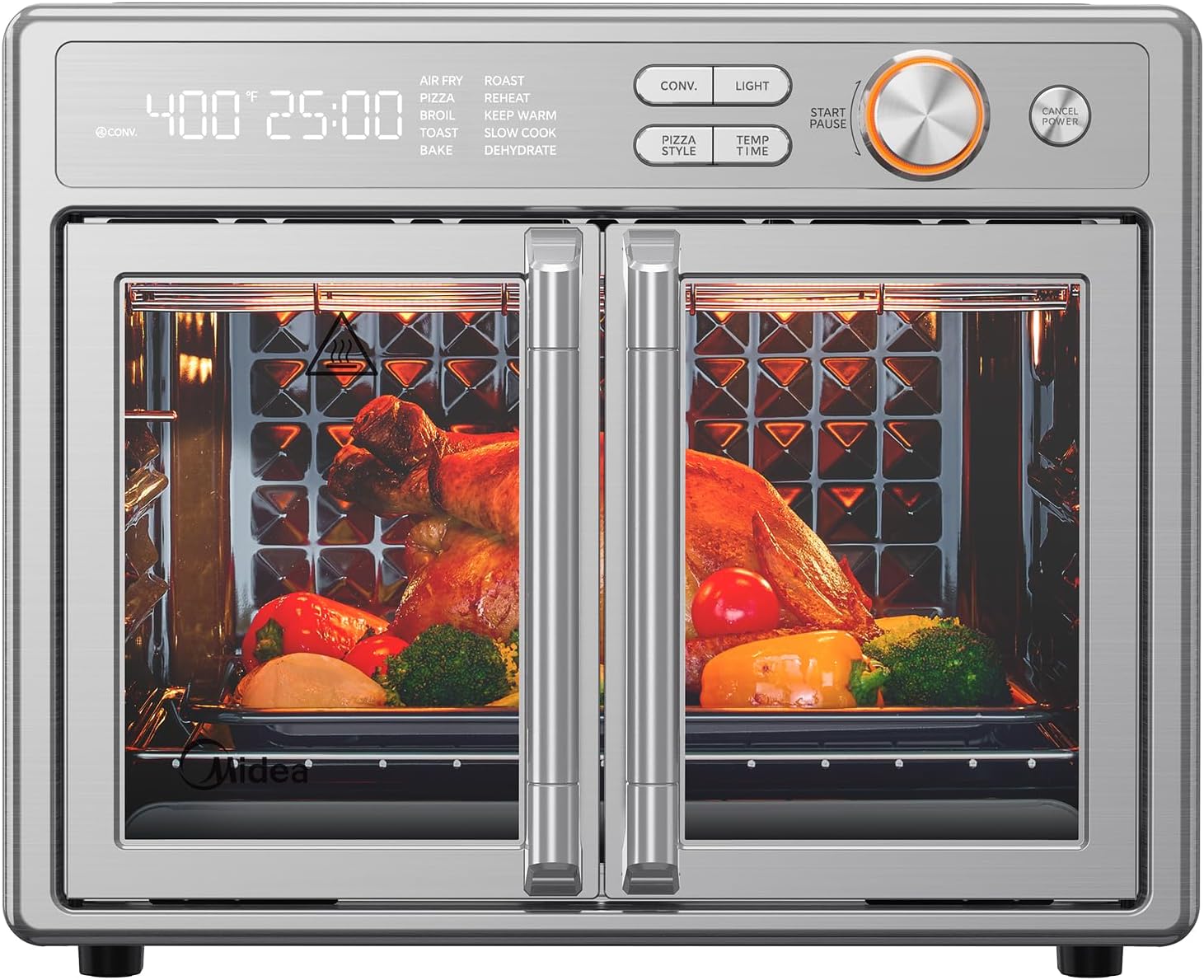
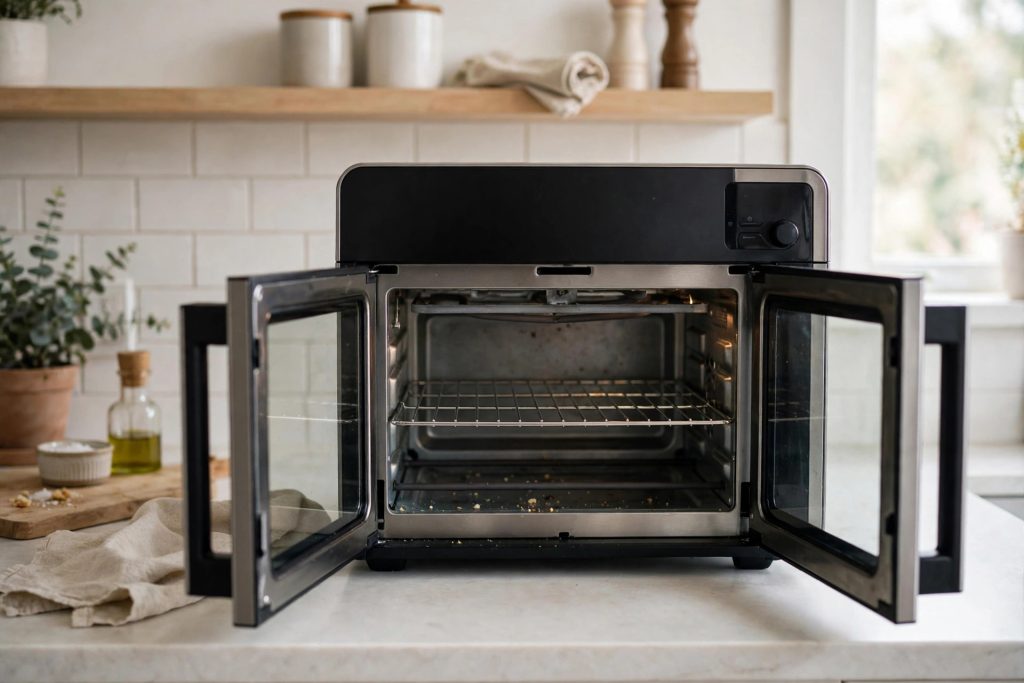
The subject — graphene heating, twin doors that open together, and a cavity that swallows a 12-inch pizza
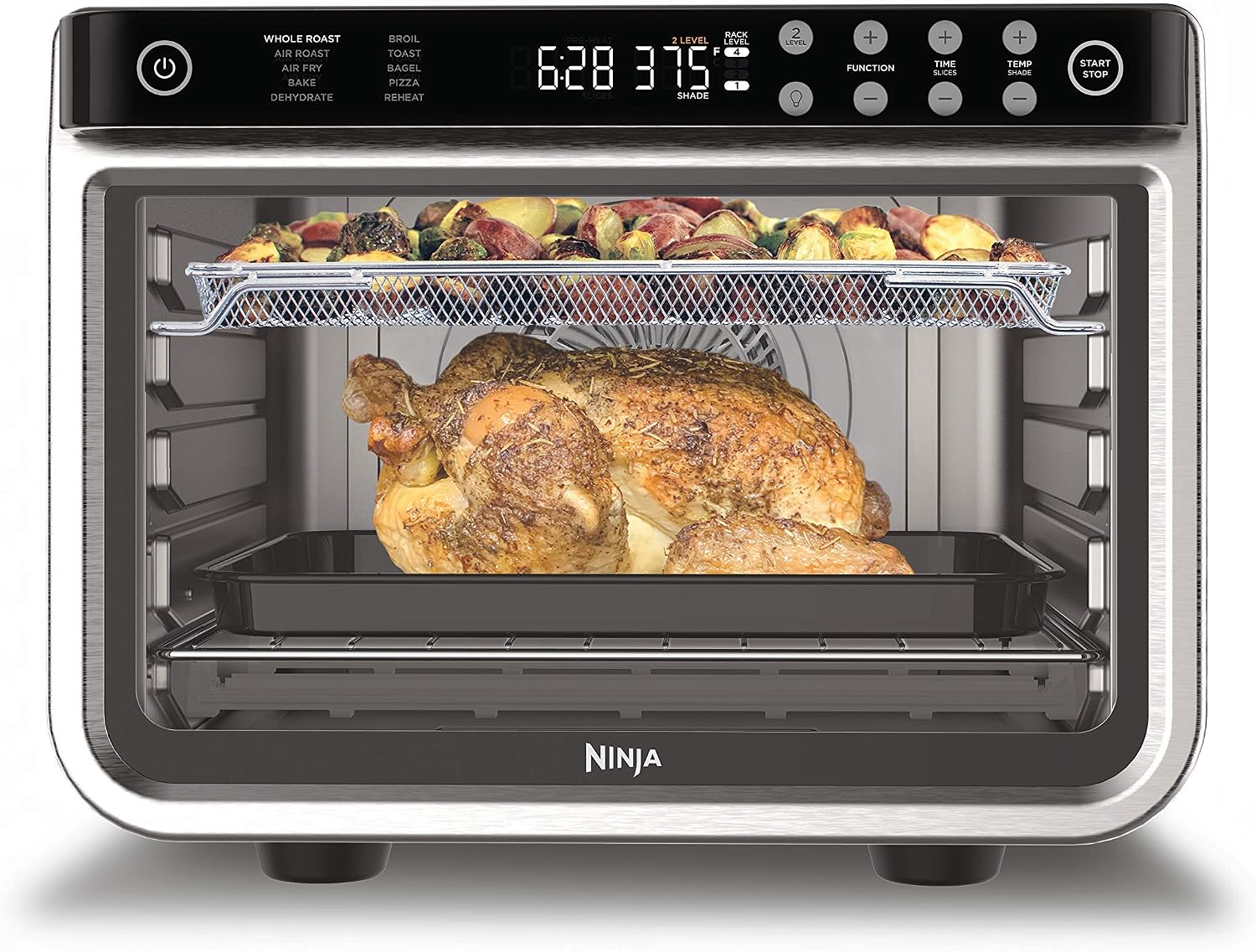
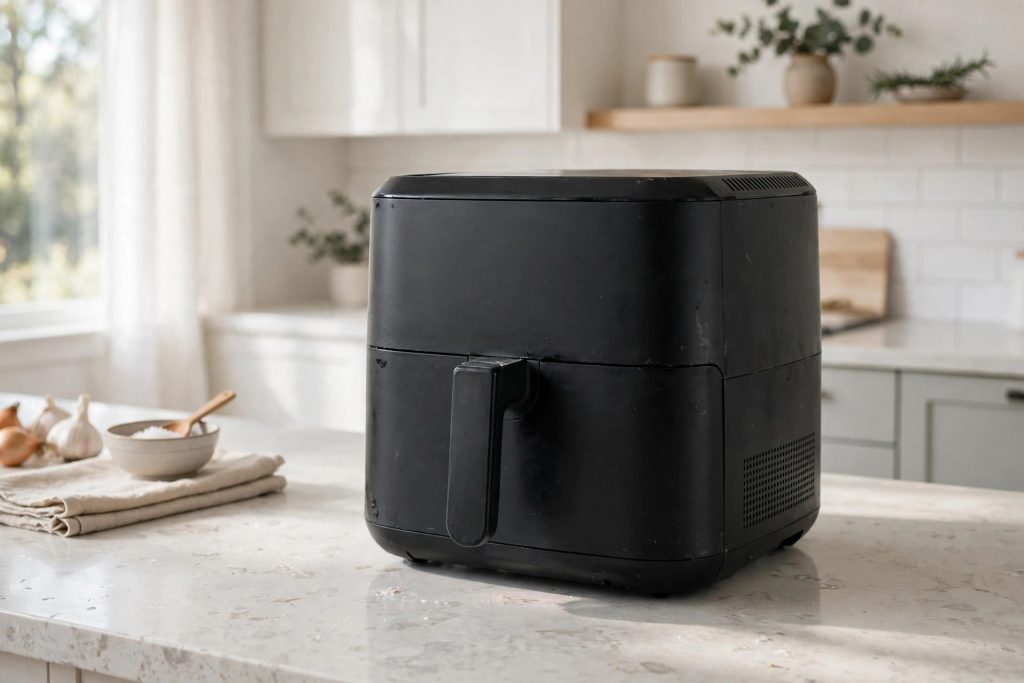
The single-door benchmark — one big door, one big tray, and a long track record in this class
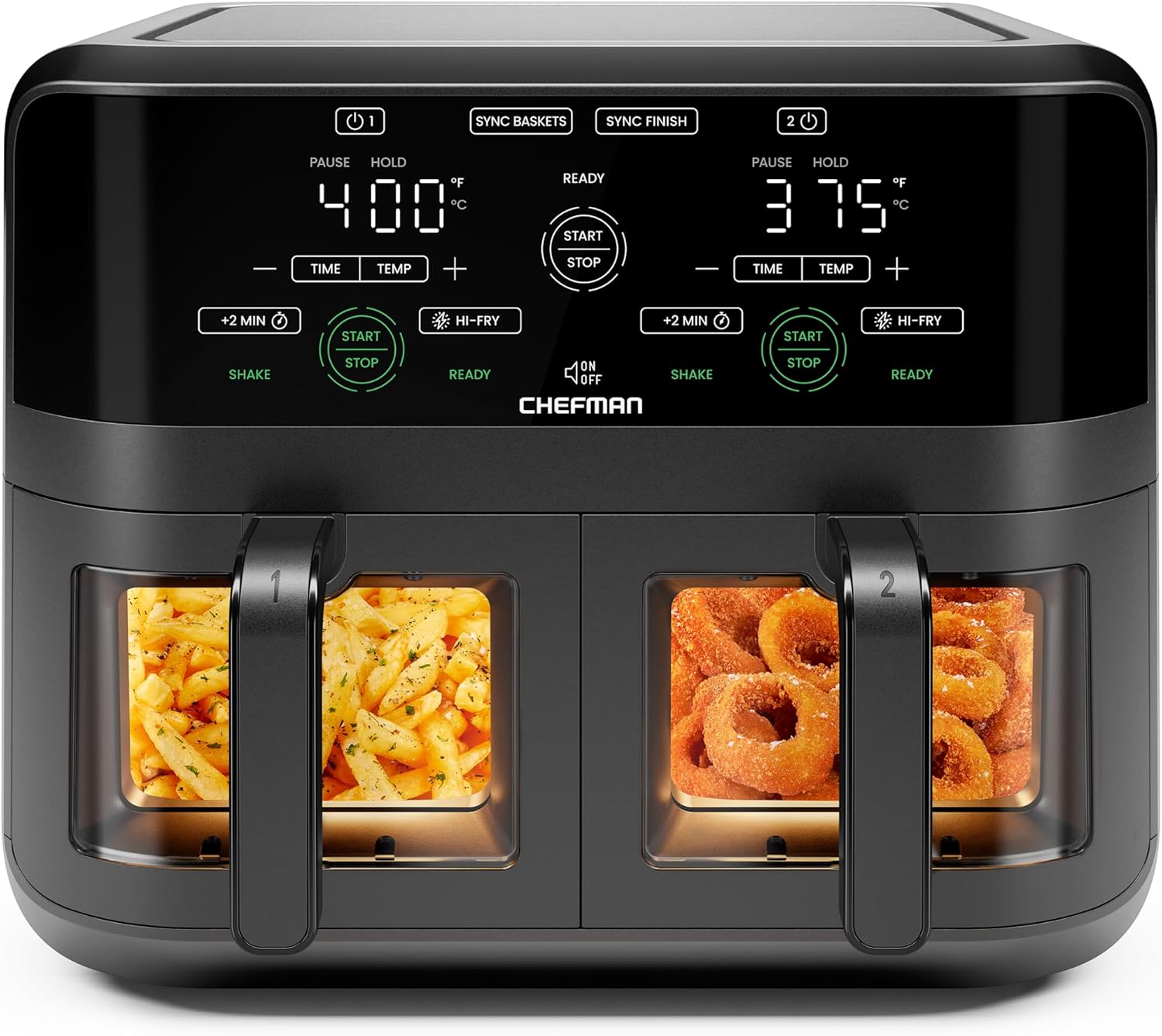
The split-basket alternative — two independent zones instead of one wide cavity, sync finish included
Prices and availability change; the listing is the final word.
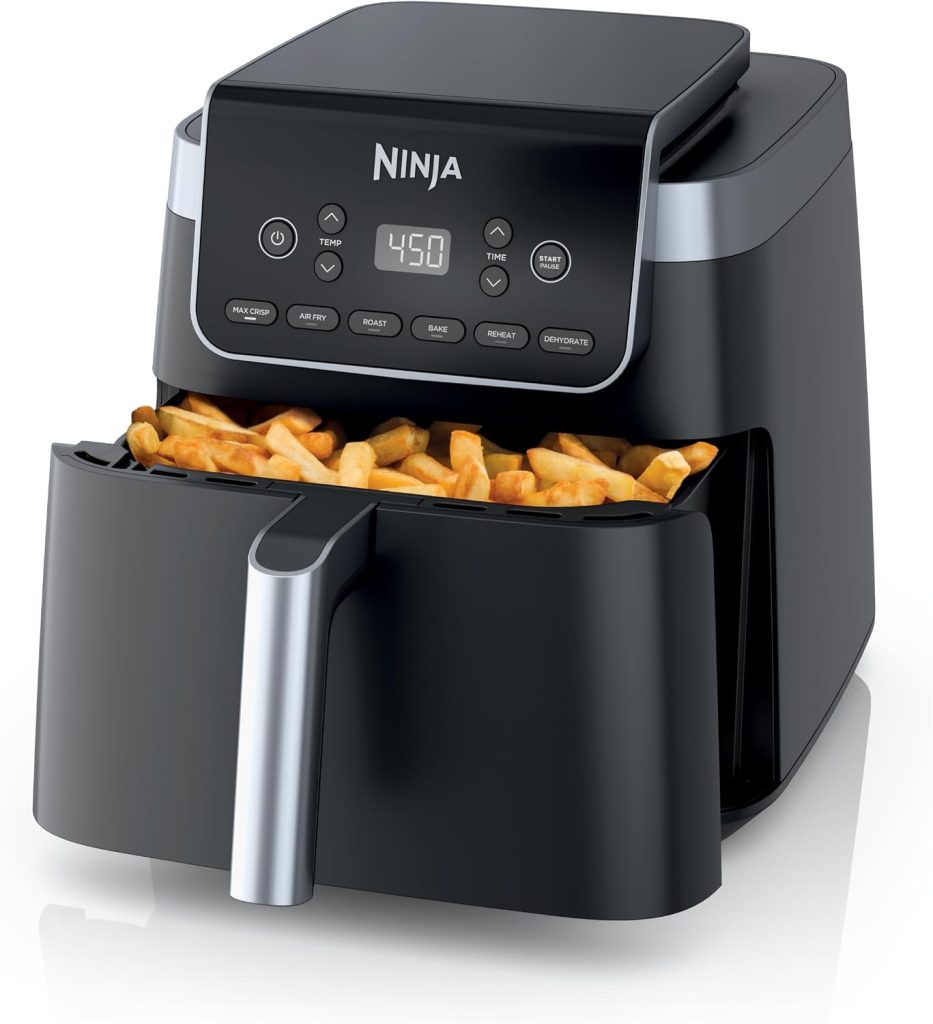
The middle box is the honest rival and I keep it there as a discipline. The Ninja DT201 does the same job through one big door, with a long record in this class and controls that a tired person can run without reading. If the French doors are the Flexify Pro’s argument, the Ninja is the counter-argument — fewer moving seals, a door you can rest a tray on for a second (carefully, it is hot, but you can), and no center seam. That center seam on French doors is the layout’s tax. Where the two doors meet there is a strip that collects grease film and needs a wipe, and if it builds up the doors can look slightly out of line even when they are sealing fine. A damp cloth while the oven is still warm. Thirty seconds. Skip it for a month and you will be scrubbing while questioning your choices.
The third box is a different answer to the same question — instead of one wide cavity, two baskets that run independently and can be set to finish together. For households whose dinners are really two separate small meals at two temperatures, that split is smarter than any oven. For sheet-pan people it is a non-starter, because no basket takes a pizza. I include it because big is not one shape, and half the returns in this category are shape mistakes, not quality complaints. The Chefman 4-quart basket review makes the same point at basket scale — sync the finish, split the menu — and the buyers who love that design really love it. They are just not the buyers who needed an oven.
Noise and light and the small hours of living with it, since reviews skip those. The fan is present — a working hum you can talk over, not a drone you plan around. The interior light is better than it needs to be and you will use it more than the viewing window, because windows fog and lights do not. The controls lean digital, which means a learning evening rather than a learning week, and the toast function — the secret exam every toaster oven either passes or becomes a liar about — browns evenly enough across the middle slices that I stopped rotating bread, which I have never been able to say about the budget end of this category.
Cleaning is where my remaining skepticism lives. The crumb tray slides and empties the way it should. The interior walls are the usual nonstick-ish surface that is easy while it is new and merely fine later, and the area around the top element collects the spatter that no tray catches. None of that is a scandal. It is the standard bargain of the category, and the doors’ seam adds one narrow chore to it. I would rather have the seam and the swing than the drop-down door and the burns I have collected from those over the years. Your forearm may vote differently.
So — theatre or tool? The doors are a tool, the speed claim is theatre wrapped around a genuinely fast element, and the size is the size, with everything that gives and everything it costs in counter. I still catch myself opening both doors with one pull just to watch the mechanism agree with itself, which is either a good sign about the engineering or a bad sign about my evenings. The oven underneath the gesture cooks like a serious appliance, and in this category that is the rarer thing.
Questions that come up
Do French doors leak more heat than a single oven door?
Less, in the moment that matters most — when you open them. A single wide door swings down and takes the cavity’s hot air with it in one pour, while a pair of French doors opens a narrower total gap and lets you reach in and out faster, so the oven recovers sooner after you close up. The place French doors can lose heat is the center seam over time, if grease film builds where the doors meet and keeps them from kissing shut cleanly. That is a cleaning issue wearing a design issue’s clothes. A warm wipe of the seam strip every week or so keeps the seal honest, and the rest is the layout doing what it promises.
Is the graphene heating just a marketing word, or does it change cooking?
It changes the wait, not the laws. A graphene element reaches working temperature quickly and cycles responsively, so preheats that used to eat ten minutes shrink noticeably, and the oven claws back its temperature fast after the doors open. What it does not do is cook the inside of a chicken faster, because that speed is set by the food itself. I have also noticed — and I did not expect this — that the lack of a glowing element makes doneness checks more visual and less intuitive at first; you cannot judge this oven’s heat by its color, because it does not change color. A week in, you stop looking for the glow. The food was never looking at it anyway.
Can this size oven actually replace a wall oven for a small household?
For a household of one to three that does not bake in volume, it gets closer than any countertop class before it — a whole chicken, a 12-inch pizza, a sheet pan of vegetables with air lanes, toast that browns honestly. The replacement fails at the edges of the calendar rather than the week. A holiday bird will not fit. Two trays at once will not fit. Batch baking for a bake sale turns into a relay. Plenty of small households quietly run their kitchens exactly this way and fire the big oven a dozen times a year, and for them the counter space trade is the real question, not capability. Measure the depth and the door swing before you decide the capability is the problem.
The two doors look slightly uneven. Should I send it back?
Look at the seam before you look at the doors. On French-door ovens the meeting strip collects a film of cooking grease that is nearly invisible and just thick enough to hold one door a fraction proud of the other, and it reads exactly like a bent hinge in a photograph. Wipe the seam and the door edges with a damp cloth while the oven is warm — not hot — and open and close them a few times. If the lines settle, it was dinner, not damage. If a door is genuinely sprung, with a gap you can see light through at one corner and a seal that rocks, that is a return with a clear conscience. Most of the uneven-door complaints I have seen resolve at the sink, not the service desk.
Tonight the oven has a tray of peppers going soft at the edges and the doors are doing their synchronized little bow every time I check, and my daughter has started calling it the wardrobe, because of the doors, because she is eleven and naming appliances is apparently a stage. The peppers do not care what the doors are called. They are blistering the way peppers are supposed to, in an oven whose best feature I can open with one hand while the other holds the tray — and I notice I have stopped asking whether that is theatre.
This site contains affiliate links. We may earn a commission on qualifying purchases.