This site contains affiliate links. We may earn a commission on qualifying purchases.
The question I cannot get a clean answer to, after weeks of circling this chair, is a simple one: how much of the B100 Pro is the chair, and how much is the footrest? Strip the pull-out rest away and you have the standard B100 — mesh back, adaptive lumbar pad, flip-up arms, a seat that does its work without theater. Add the rest and the deeper recline that comes with it, and the same chair turns into a piece of furniture that gets used after the workday ends, which is either a genuine second life or an expensive way to nap twenty minutes at a time. I bought mine with my own money, no review unit, and the honest report is that I still argue both sides depending on the week.
Start where the chair starts earning. The mesh back is the reason this whole line sells in warm rooms, because a tensioned mesh panel lets air move through it and a padded back does not, and by mid-afternoon in a room that catches the sun that difference is not subtle. The mesh on the Pro is the same family recipe as the base model: it supports by tension, which feels floatier than foam for the first week and then just feels normal, and it fails — when it eventually fails — by slowly relaxing rather than tearing. A soft panel lets your shoulders sink between the frame rails and the chair starts feeling narrower than it is. This chair’s panel still pushes back. I cannot judge a five-year version of that sentence, whatever the listing implies.
The lumbar pad is the second thing the chair gets right, with one reservation I will not soften. It is a curved pad on a flexible mount, and it moves as you move, following your back through the small shifts of a workday instead of sitting there like a speed bump at one fixed height. Press it with a hand and it yields, then springs back — that spring is the whole feature, and it is worth testing on any example you sit in, because a mount that just flops to wherever it was pushed is a headline feature that has quietly retired. My reservation is fit. The pad’s curve was drawn around a middle-of-the-chart spine, and if yours is not that spine, the pad will press in the wrong spot, politely, for eight hours. Give it a week before you conclude anything, in either direction.
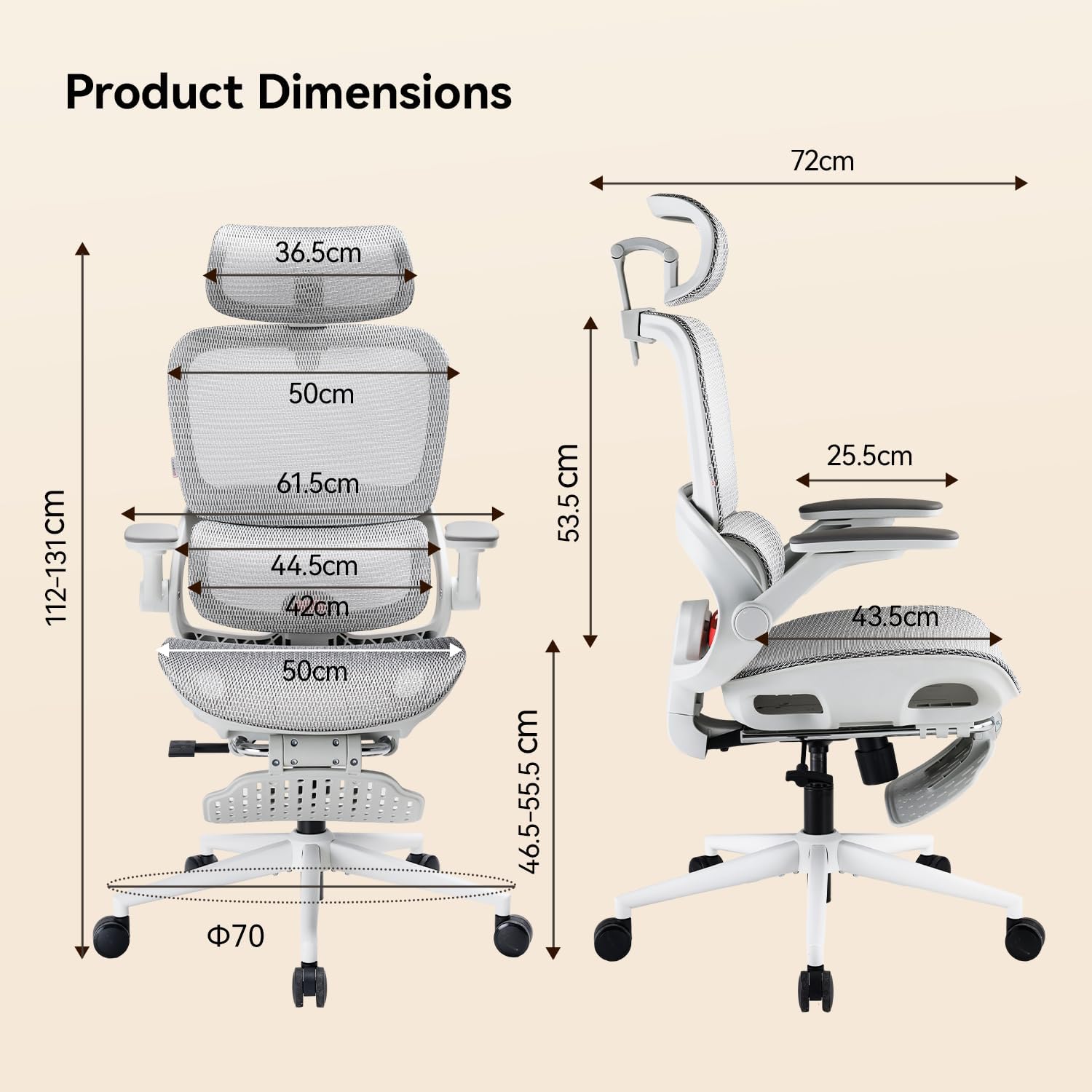
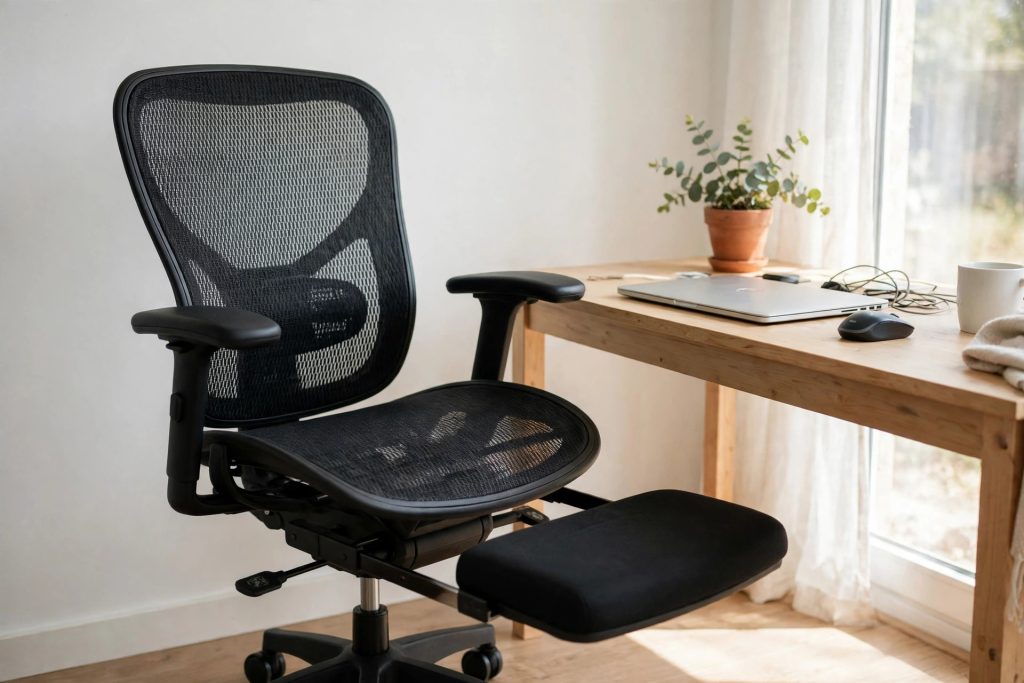
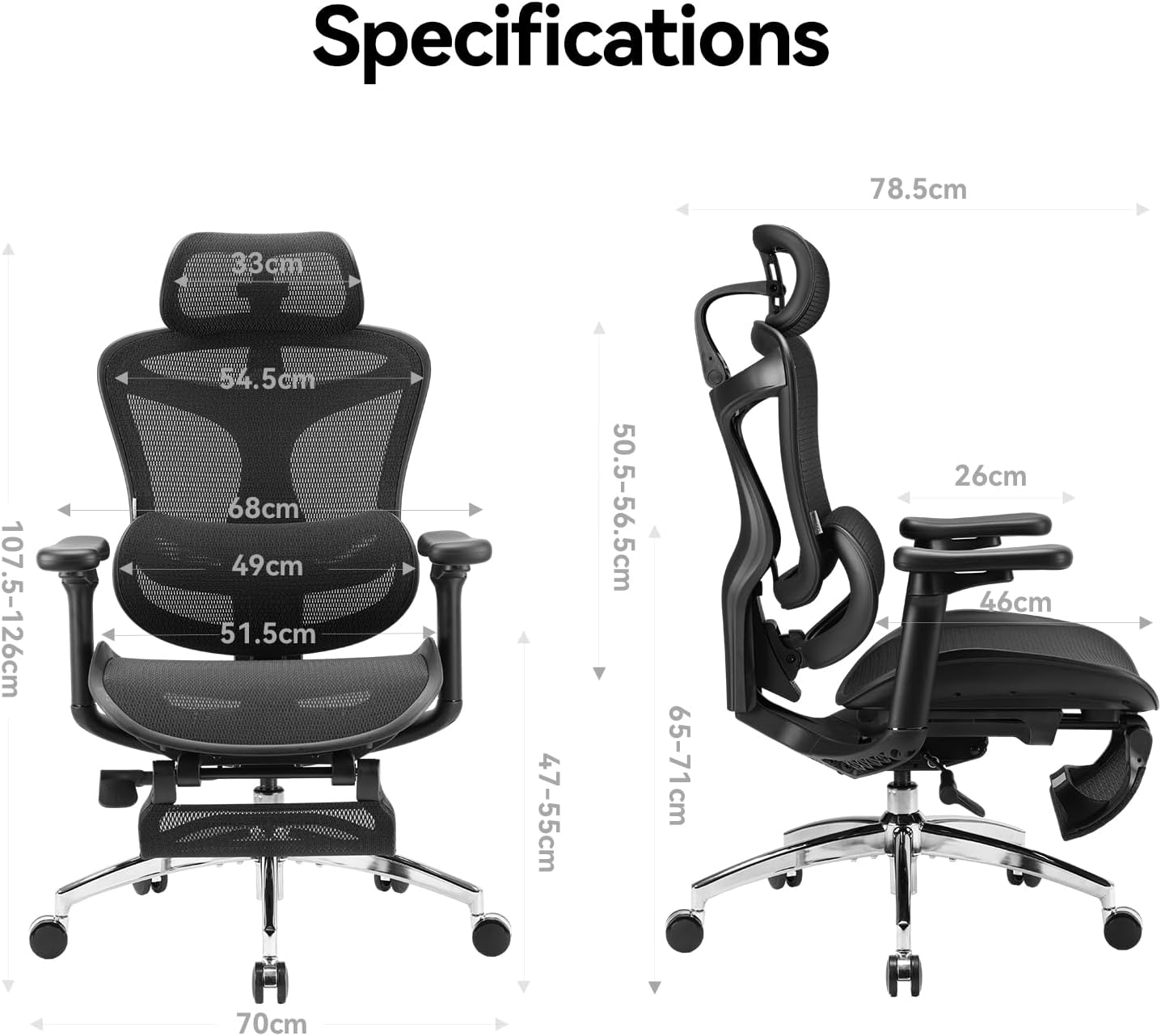
Now the footrest, since it is the reason this version exists. It slides out from under the seat on two rails, and paired with the recline it turns the chair into a legitimate reading-and-napping station. Here is the detail the product photos will never show you: extending the rest moves your weight forward, out over the front of the five-star base, and the front casters take a load they do not take when you sit normally. Sit upright and the base is planted. Recline with the rest out and your heels pressing down on it, and the chair’s balance point has genuinely moved — perch on the very edge of the extended rest, the way people do when they are half getting up, and a light chair can feel suddenly interested in tipping. It never went over on me. It did teach me to treat the rest as a place for calves, not a step. That distinction sounds fussy until the first time you feel the front wheels go light.
The flip-up arms answer a real problem, which is tucking the chair under a desk so a small room gets its floor back. They rotate up, the chair slides in, done. But here is the measurement nobody takes: the arms do not fold flat against the back, they swing through an arc, and the top of that arc needs clearance under your desktop while you are moving them. A desk with a low modesty panel, a keyboard tray, a drawer unit hanging underneath — any of these can sit exactly where the arm wants to travel, and then the feature works only if you pull the chair out first, which quietly eats the space saving you bought it for. Measure the swing, not just the folded height. My own desk clears it by about a finger’s width, and I only learned that by thumping an armrest into the tray on day two and sitting there feeling educated.
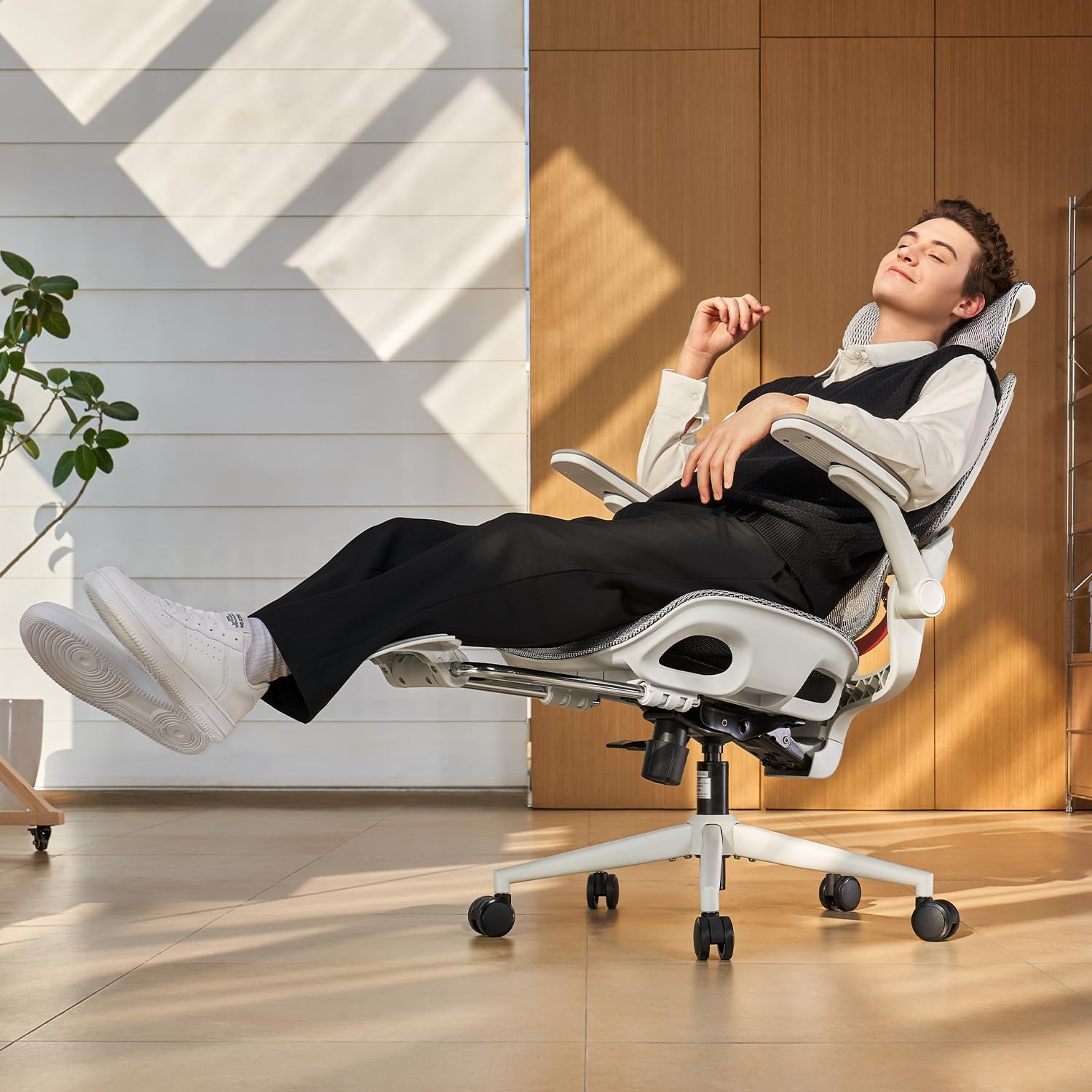
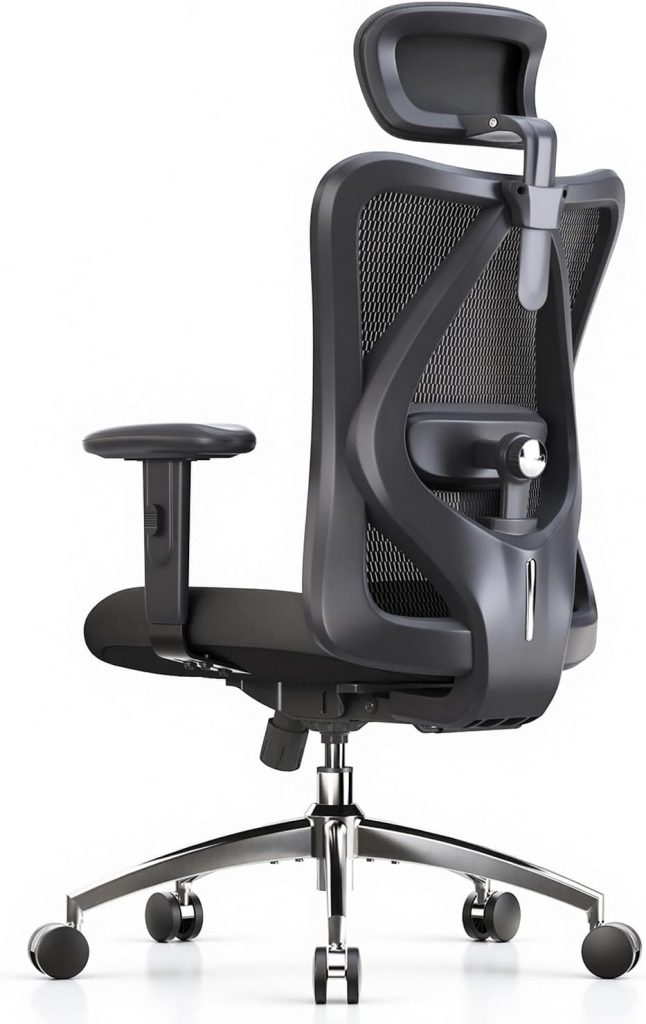
The subject — the Pro version of the B100, with a pull-out footrest, a wide headrest, and flip-up arms that rotate out of the way
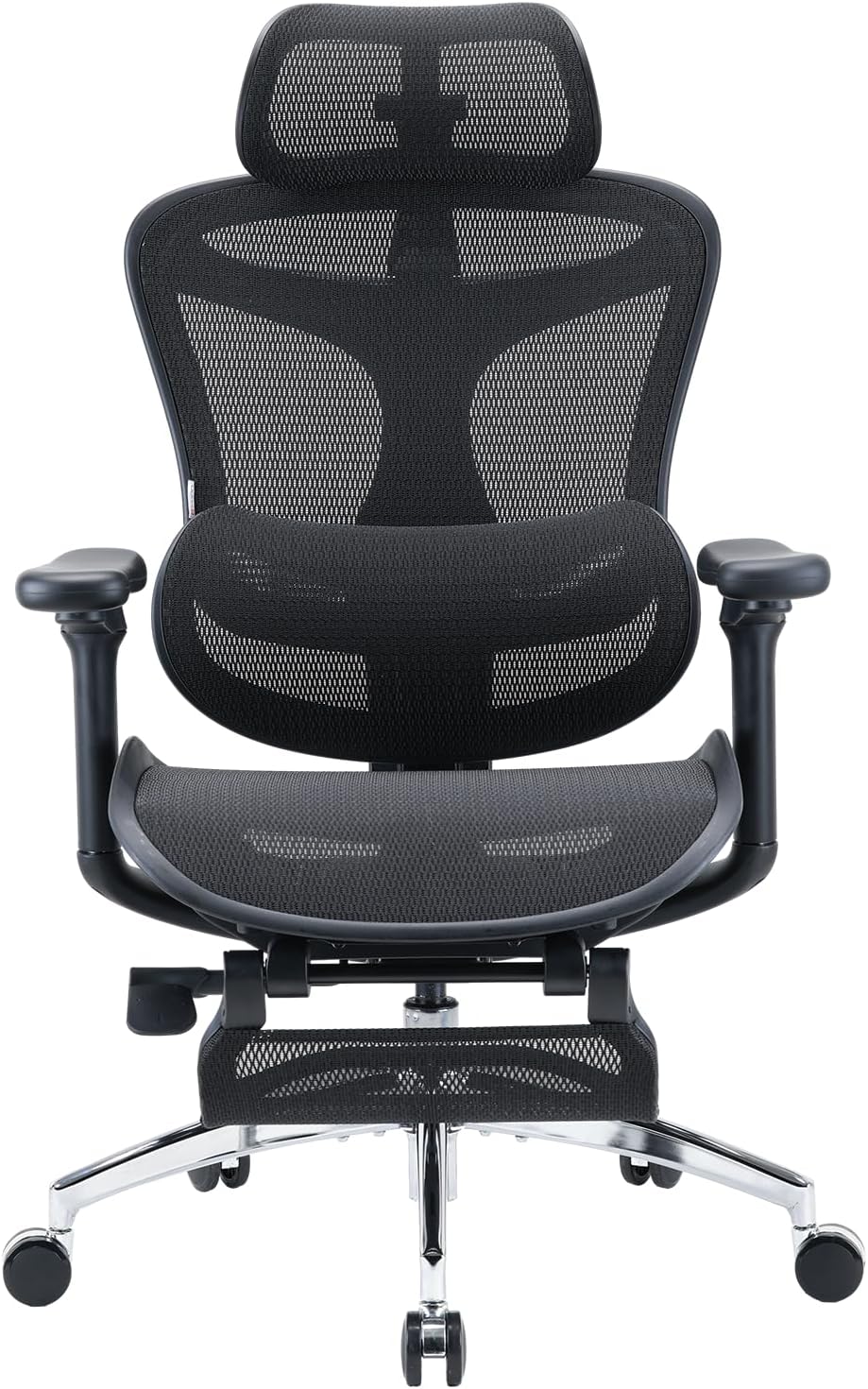
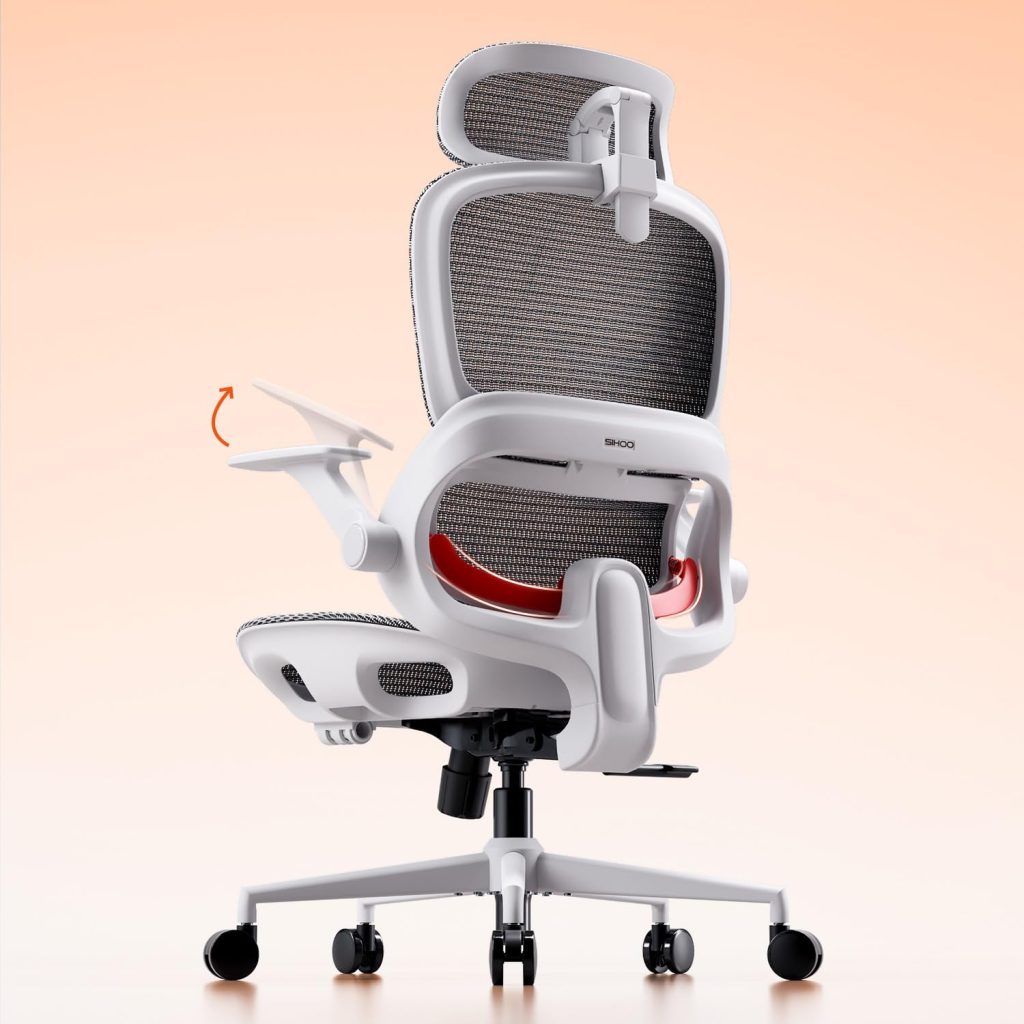
The step-up — softer 3D armrests and a dynamic lumbar system, for sitters who found the B100 line a touch plain
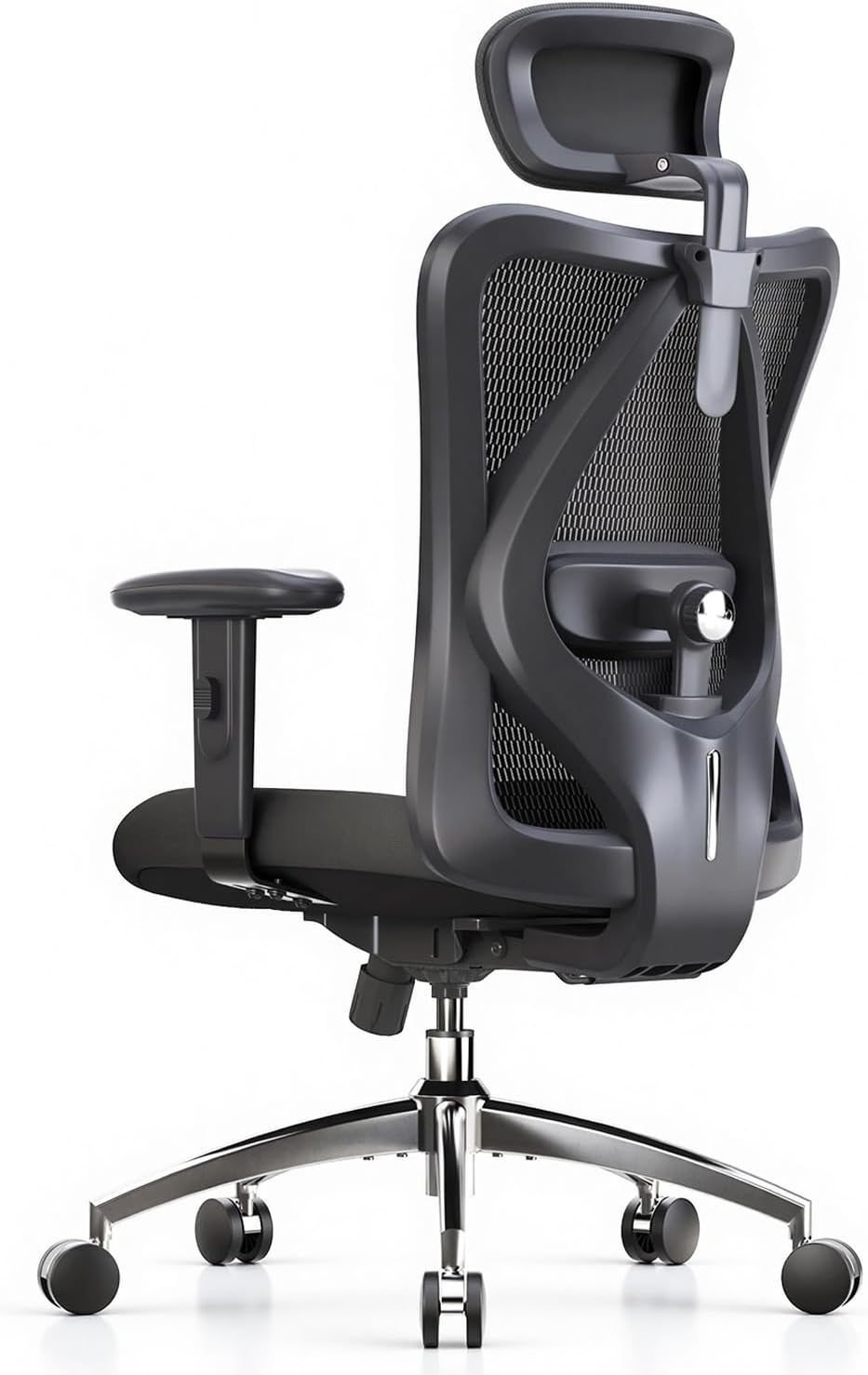
The older, simpler chair — mesh back, headrest, fewer moving systems to argue with, usually the cheapest way into this brand
Prices and availability change; the listing is the final word.
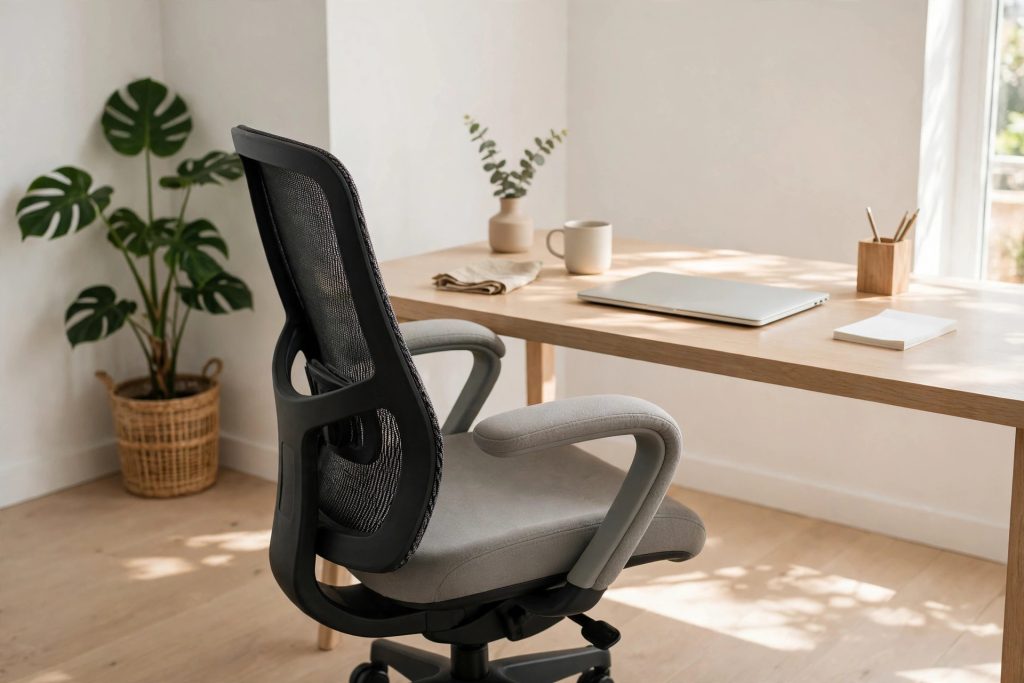
The third chair in the box, the M18, is the one I keep recommending to people who ask me a different question than the one they think they are asking. It is older, plainer, short on moving systems — a mesh back, a headrest, adjustments that were standard years ago. Fewer systems means fewer arguments: no rails to keep clean, no pad mount doing acrobatics, just a chair that asks to be sat in. The M18’s own review covers it on its own terms, and the contrast with the Pro is the whole lesson. Buyers choosing between them are usually not choosing features. They are choosing how much machinery they want between themselves and sitting down, and there is no wrong answer, only an unexamined one.
The Doro C300 in the middle box is the step-up for people who tried the B100 line and found the armrests wanting, and armrests are where chairs in this price band cut their corners. Pads go hard, pivots loosen, and a small wobble becomes a rattle under fast typing. The C300’s softer 3D arms are a real answer to that complaint. Whether that is worth the step in price depends on how much of your workday your elbows spend on the pads — most of the day for a mouse-heavy job, surprisingly little for a keyboard-centered one, and only your own shoulders at four in the afternoon can tell you which worker you are. I have not lived with the C300 long term, so I cannot judge how its arm pivots age. That gap stays visible rather than papered over.
Two smaller things, because chairs are decided by small things. The gas lift: a lift losing its seal does not drop you, it sinks you, a few millimeters across a minute of sitting still, and you catch it in your knees before your eyes. Sit still for a full minute in any chair you are judging, feet flat, and wait. The class rating is stamped on the cylinder itself, in print small enough to require kneeling — worth it, because the lift is cheap to replace and its failure makes the whole chair feel haunted. And the tilt tension knob drifts with use; the lean that felt right in spring turns theatrical by autumn, and most owners blame the chair instead of spending twenty seconds under it with the knob.
Assembly, briefly. Twenty minutes is the honest figure, on carpet if you can, since the base and its casters will try to tour the room while you work. One bracket fits backwards, accepts its bolts backwards, and only confesses when the back refuses to align — the fix costs four minutes and a little dignity. Build it, set the tilt tension for your weight before the first lean, and only then judge it. A chair judged on factory tension is a chair judged on somebody else’s body.
So, the unresolved question from the top, still unresolved. The base-model B100 review walks through the base B100 that this Pro grew out of, and reading it again I notice my own ambivalence has not moved: on desk days the footrest is dead weight riding under the seat, and on the evenings I recline with a book it is the best money in the chair. The rest of the machine — mesh that breathes, a lumbar pad that follows instead of pokes, arms that get out of the way — is a solid, mid-priced answer that asks only that you measure an arm swing and kneel once to read a cylinder. The footrest is still sitting under my seat as I write this, extended exactly as far as an evening that has not happened yet.
Questions that come up
The footrest looks great in photos — does it actually change how the chair balances?
It does, and it is the one thing I would tell a buyer to feel for in the first hour. Sitting upright, your weight sits over the middle of the base and the chair feels planted. Slide the rest out, recline, press your heels into it, and your weight moves forward over the front casters. The chair does not become unstable in normal use — I have napped in the thing — but perching on the edge of the extended rest while half standing up is a genuinely different load, and a light chair will let you know it. Treat the rest as a shelf for your calves, not a step. No listing photo will ever mention this, because it does not photograph.
How do I know if the gas lift is already going on a chair like this?
Sit in it, feet flat, and sit still for a full minute. A healthy lift holds you where you set it. A tired one sinks you so gradually you feel it first as a change in the angle of your knees, not as a drop. It is a strange test to perform in a store, but it is the only reliable one, because the sink is measured in millimeters per minute. The lift is a standard, replaceable part on this class of chair, so a sinking lift on an otherwise sound chair is a repair, not a death sentence. It is also information: a lift that goes early usually means a heavy sitter or a lot of bounce, and the mesh deserves a closer look for the same reason.
Will the flip-up arms really let it tuck under my desk?
Mostly, and the exception is worth a tape measure. Folded, the arms sit clear and the chair pushes in until the back meets the desk edge — that part works as advertised. The catch is the swing: the arms rotate up through an arc, and the top of that arc needs room under your desktop. Keyboard trays, drawer units and low modesty panels all live in that space on real desks. If anything hangs lower than the swing path, you will pull the chair out to a clear spot every time, and the space saving quietly stops happening. Thirty seconds with a tape measure, checking the underside of the desk rather than the chair, settles it before the box is open.
Mesh seat, mesh back, foam seat — I keep seeing different descriptions. What is actually under me here?
On this model the back is the mesh panel and the seat is a cushioned pad — descriptions blur the two because mesh photographs well. The distinction matters for aging: the back ages by relaxing, the seat by compression, packing down a little with every thousand sits. Press the cushion with a palm and note how fast it recovers. Quick recovery is young foam; a slow, thoughtful recovery on a new chair is a warning, because foam does not get springier with use. My own seat has given up a little height so far — the normal tax, not a defect. Budget for it the way you budget for a mattress softening.
The footrest is still out as I finish this, because taking a photo for a friend turned into sitting down, and sitting down turned into twenty minutes of reading with my calves up, and I still could not say if it is the chair’s best idea or priciest nap. Desk days vote one way. Evenings outvote them.
This site contains affiliate links. We may earn a commission on qualifying purchases.