This site contains affiliate links. We may earn a commission on qualifying purchases.
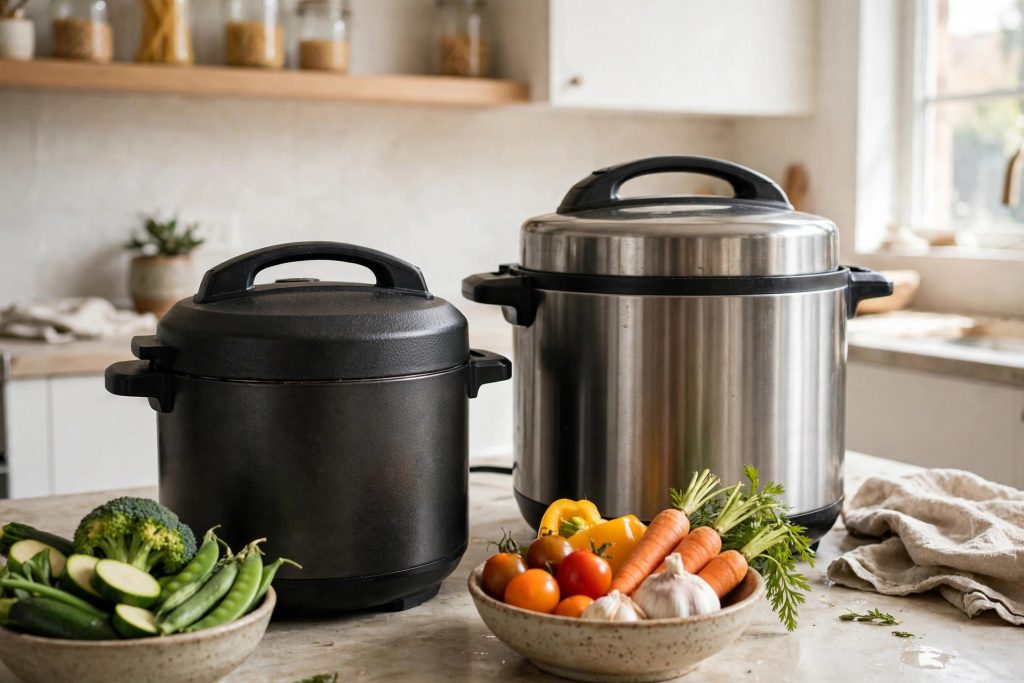
Dear everyone who has ever written to a support desk at 11 p.m. holding a lid that will not open: this page is my side of that conversation, the one I would send if the reply box allowed honesty. I have spent years reading complaint scripts for machines like these two — the COMFEE’ 12-in-1 and the Instant Pot Duo Plus 9-in-1 — and almost nobody is actually angry at a pressure cooker. They are angry at a number on a box that meant something else. Twelve. Nine. Six quarts. Let me translate the numbers the way the support desk wishes it could.
First, a correction that belongs at the top, because older versions of this comparison got it wrong: the COMFEE’ 12-in-1 in the box below is a 6-quart machine, per its current listing. This page previously described an 8-quart COMFEE’ option as if it were this model; it is not the listing sold here, and comparing it against a 6-quart Duo Plus muddies exactly the number that matters. Both machines here are 6-quart, both give roughly 4 usable quarts under the pressure fill line, and both feed two to four people without gymnastics. The Duo Plus listing linked below is likewise a current one — the older listing this page used to point at has been resolving only intermittently, including a not-found page yesterday, so the box uses the current listing, whose title includes a ceramic-coated inner pot, which matters for the pot conversation below.
Now the function counts, since those are the numbers on the box. Twelve against nine sounds like a result. From the support side of the fence it reads differently: the COMFEE’ calls arrive asking where a program went, or why two programs produce the same result, and the answer is that twelve programs share one heating element and one temperature sensor, and several of them are the same cooking wearing different names and default times. The Duo Plus calls arrive about something else entirely — the steam release. People are startled by it. The Plus line diffuses its steam release so it sighs rather than jets, which matters in a small kitchen with cabinets hanging over the counter, because a straight jet of steam into a cabinet bottom, weekly, for years, will swell the board. Callers describe it as the machine sounding broken. It is not broken. It is the feature. I have typed that sentence, in politer forms, more times than any other sentence in my life.
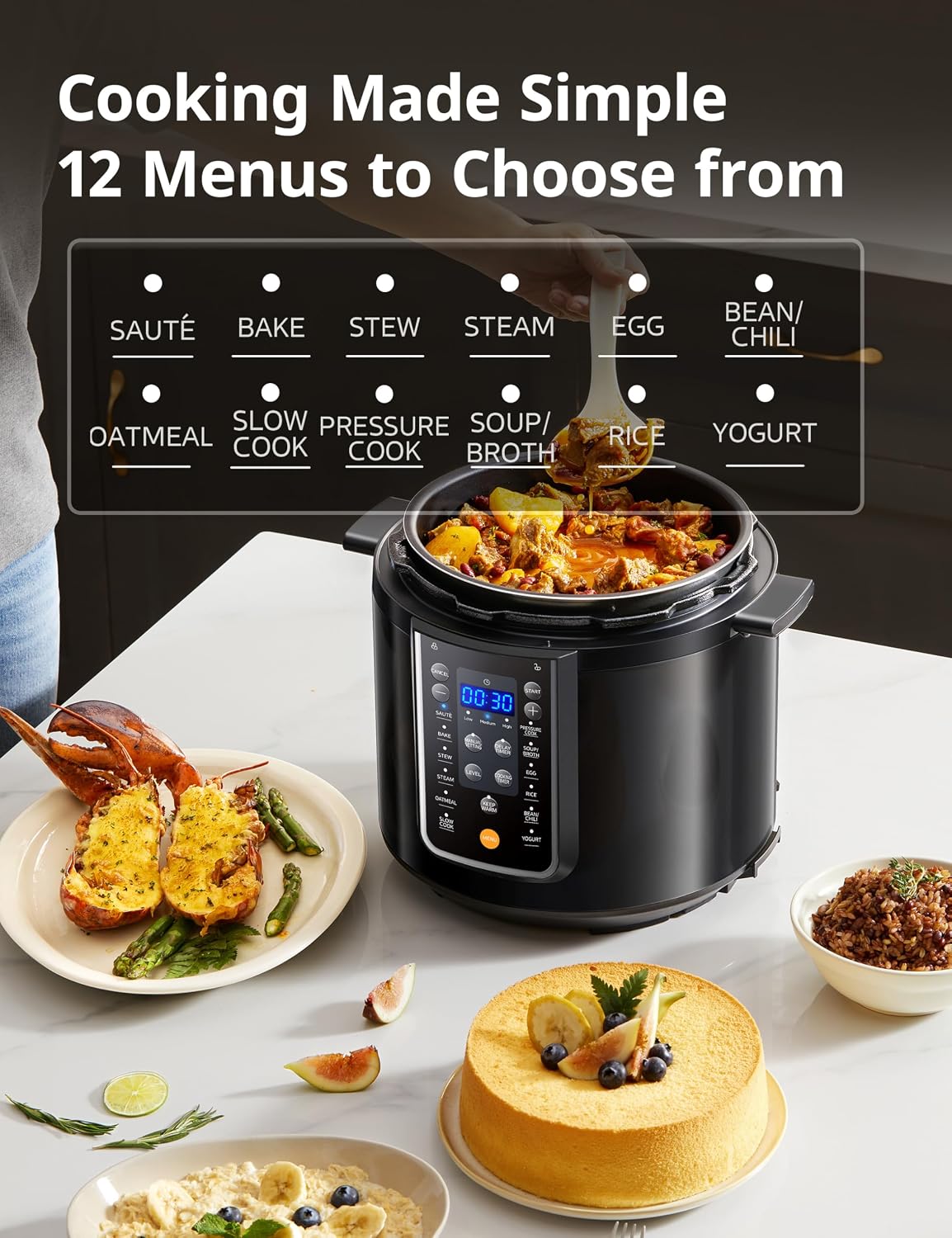
The inner pots are where these two machines genuinely part company, and it is the part of the comparison the function count drowns out. The COMFEE’ pot is nonstick, and nonstick in a pressure cooker lives a specific life: it is wonderful for the first stretch — rice releases, sauces rinse off — and then it ages by insult. A metal spoon here, a dishwasher’s hot cycle there, a steel scrubber in a hurry, and the coating starts its slow retreat from the rim and the base. The current Duo Plus listing ships a ceramic-coated pot, which sits between the old bare stainless and a true nonstick: easier than steel, tougher than the soft coatings, still happier with wood and silicone than with metal. The support-desk version of this paragraph is shorter. Most pot complaints, for both brands, are utensil complaints wearing a warranty costume. Cook with soft tools and either pot outlives the machine’s electronics. Cook with a metal ladle and you are buying a replacement pot inside two years, whichever logo is on the front.
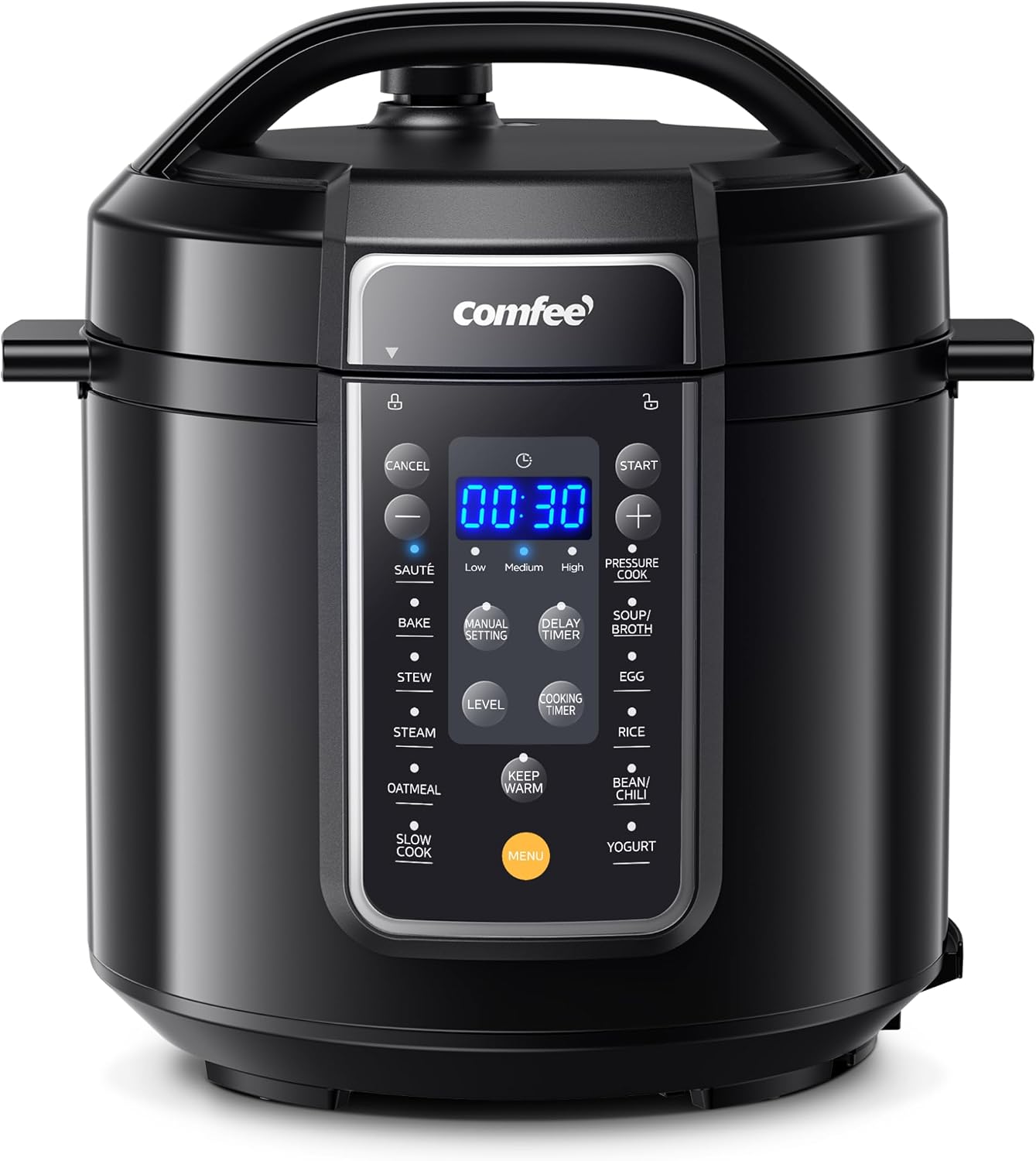
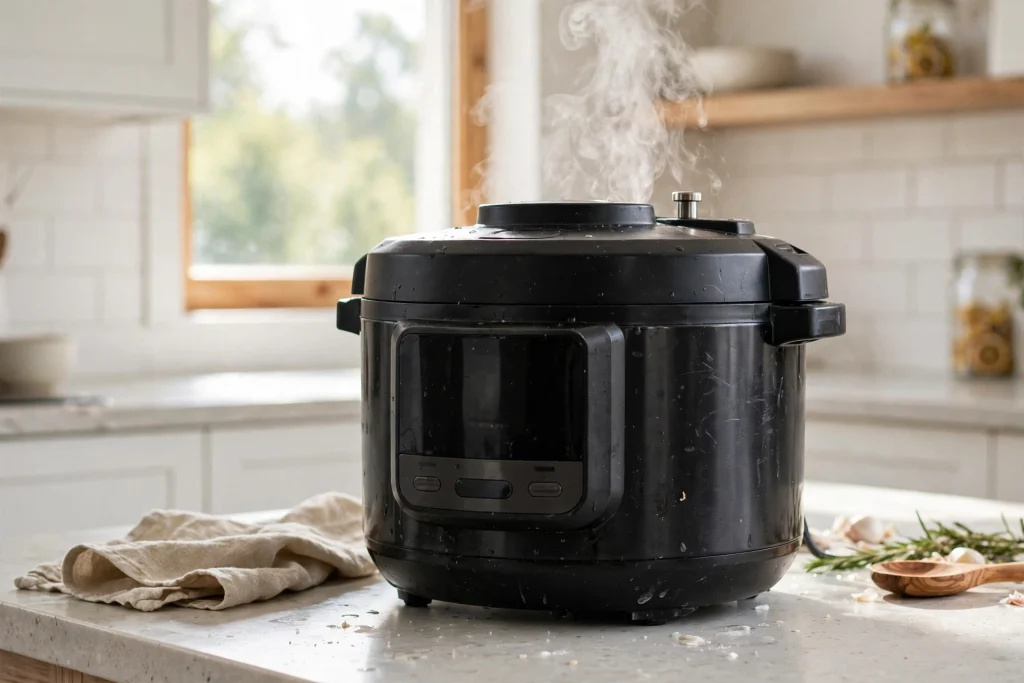
The challenger — twelve programs, a nonstick inner pot, and a price that usually sits well under the name-brand machine
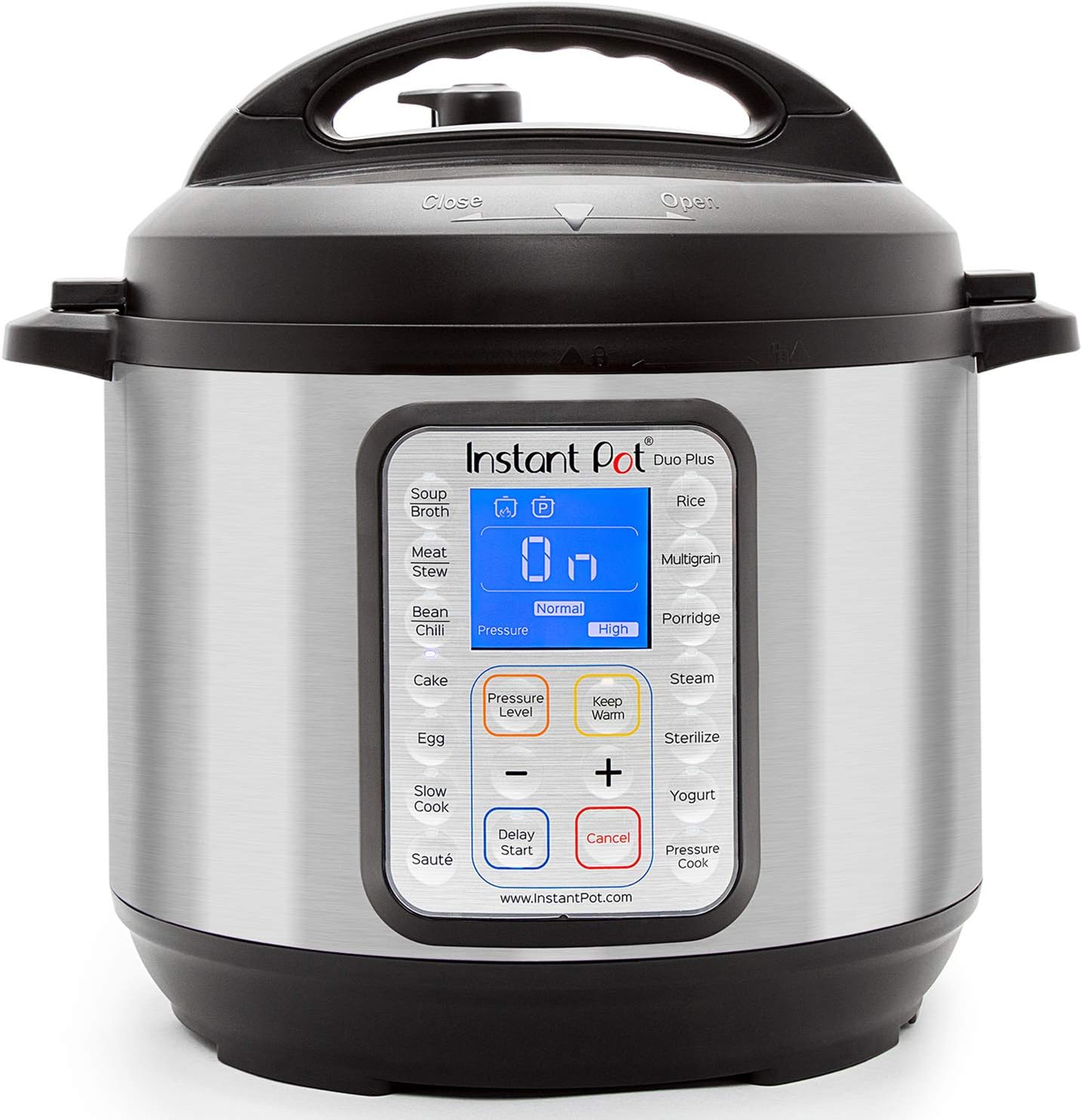
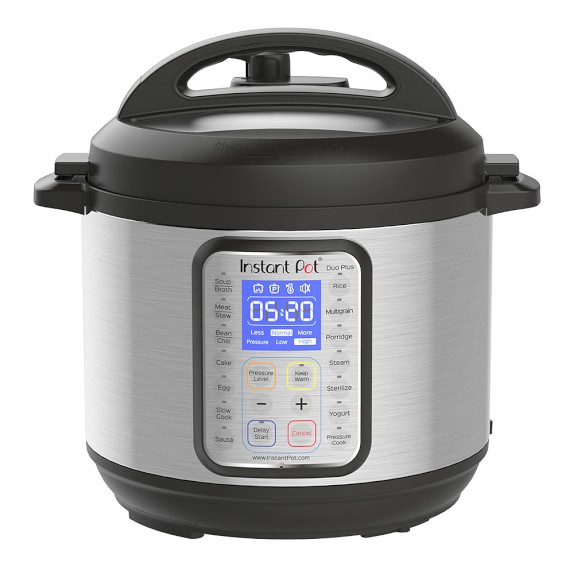
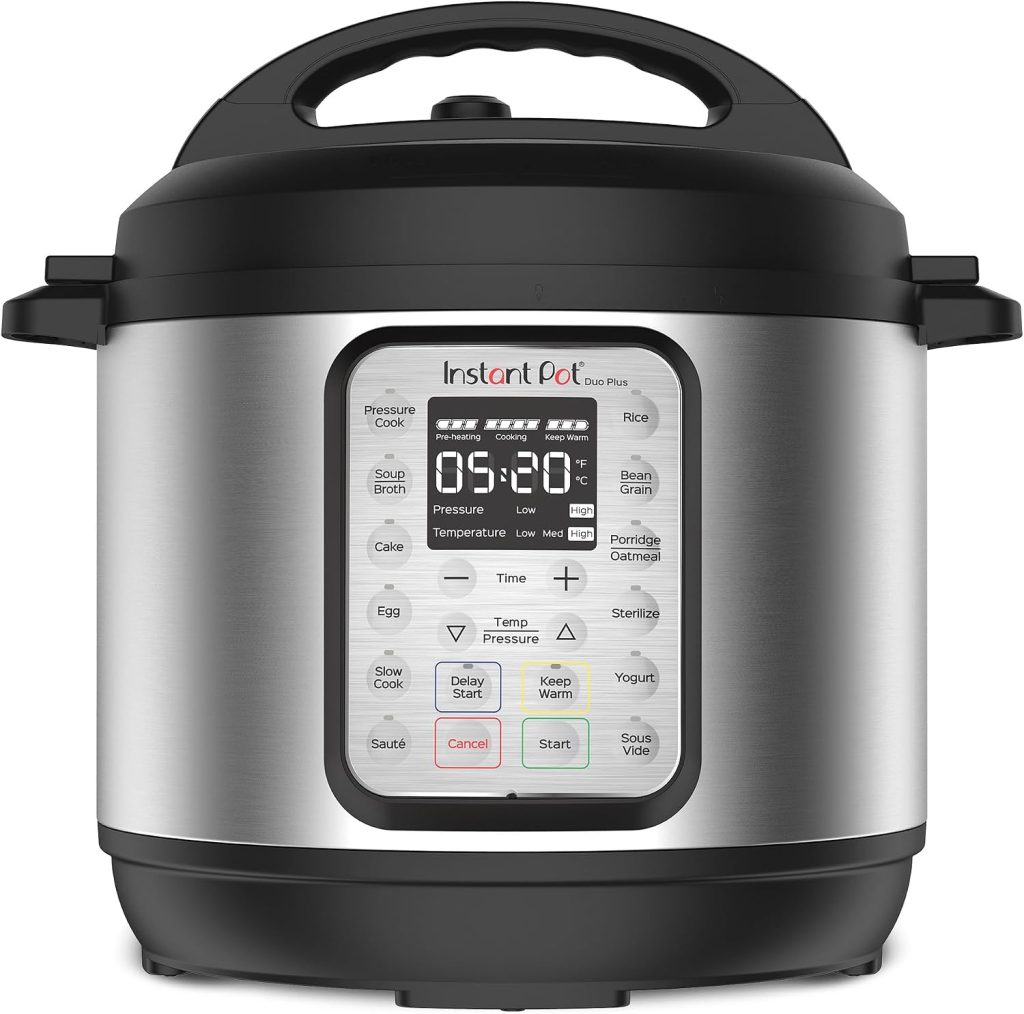
The current Duo Plus listing — nine programs, the diffused steam release, and the deepest parts shelf in the category
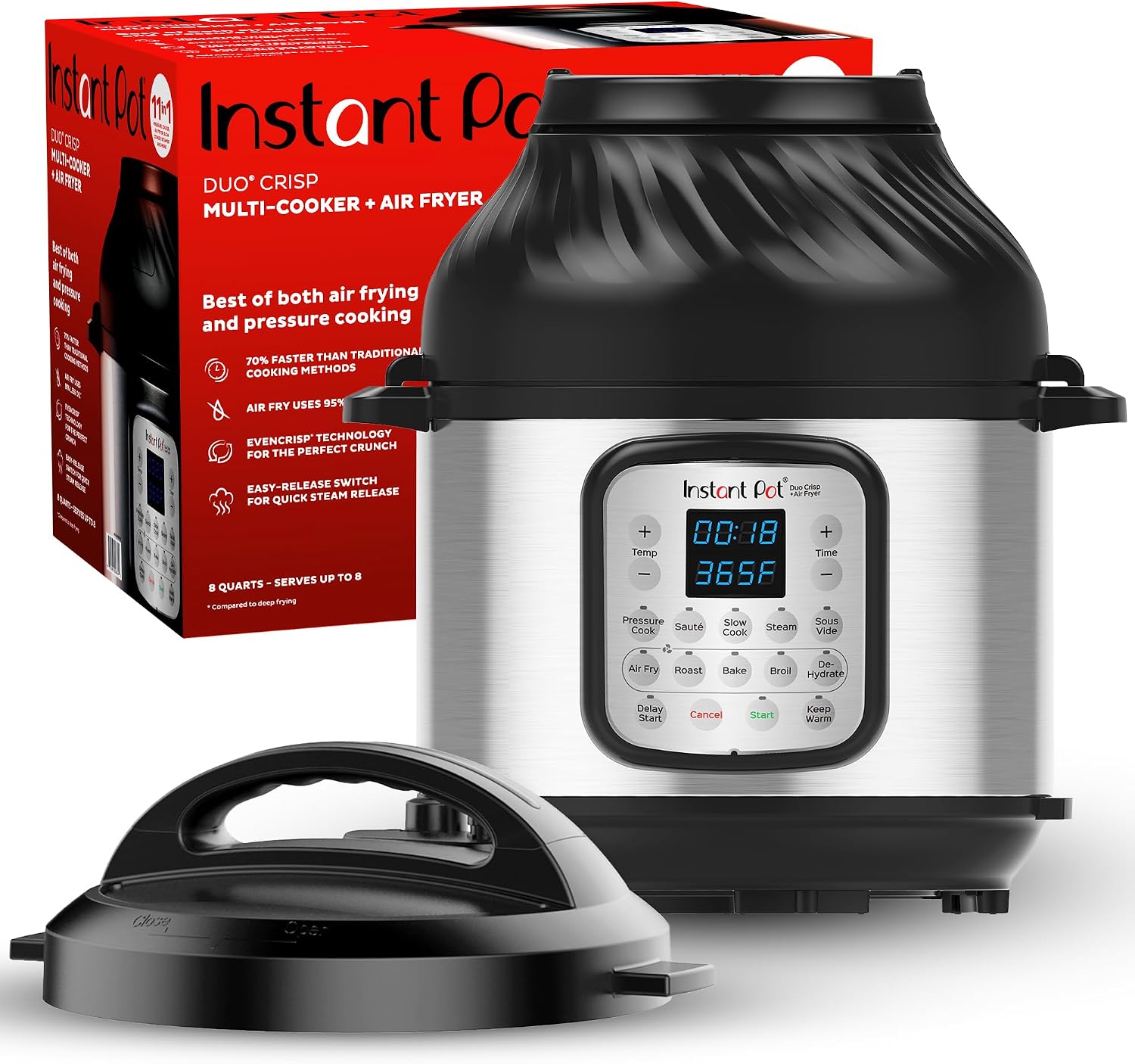
The two-lid answer — pressure cooking plus an air fryer lid, for kitchens that would otherwise buy a second appliance
Prices and availability change; the listing is the final word.
Sauté is the function that decides whether owners love these machines in month two, and it works the same unglamorous way in both: the pot bottom gets hot, you brown, and then — this is the step the support scripts beg people not to skip — you deglaze. Scrape the browned bits up with liquid before the lid goes on. The burn warning is the machine reading a hot, dry, fond-covered pot bottom and deciding something is scorching — usually right about the fond, wrong about the emergency. Deglaze properly and the warning mostly vanishes from your life. Tomato and thick sauces go in last, on top, without stirring, for the same reason: the sensor reads the bottom of the pot, and a thick layer sitting on it reads as a burn even when nothing is burning.
A word about keep-warm, because it generates a quiet class of calls that never make the review pages. Both machines will hold food warm for hours, and both manuals let you. What the scripts make us say carefully is that warm is not a storage setting. Rice held warm past a few hours dries at the edges and turns gluey in the middle; sauces keep reducing and arrive thicker and saltier than seasoned. The machine did exactly what holding warm does. Time the pot to finish near the meal and keep-warm goes back to being a convenience. The Duo Plus 6-quart review gives the Duo Plus a full review of its own if your household’s argument runs toward the name-brand side of this page.
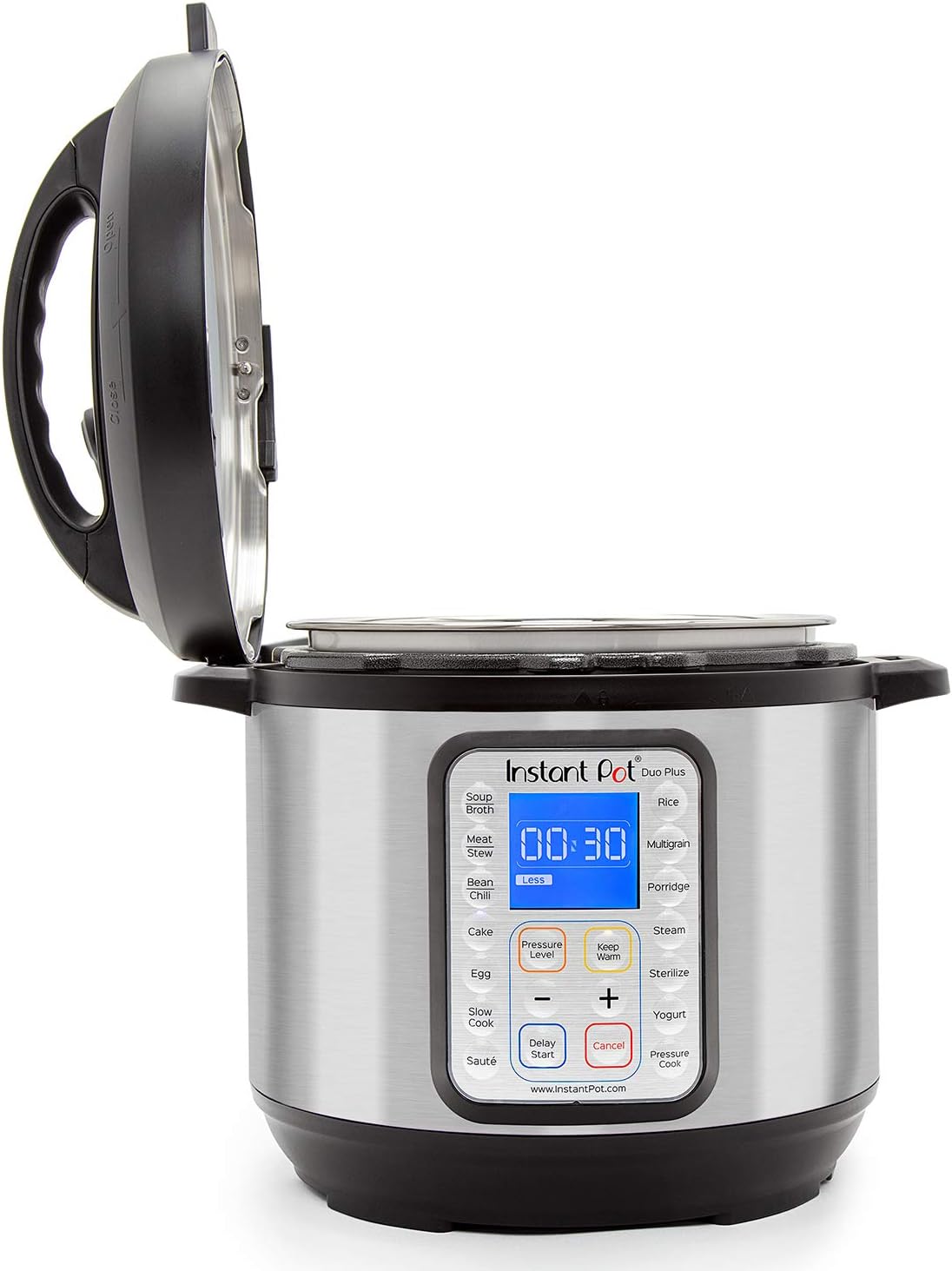
Parts. This is the paragraph I would put first if the reply box let me reorder by importance, because the support desk knows how multicookers actually die: not in flames, but by a small part. A gasket that has taken a set and smells of last month’s curry. A float valve cap, a tiny silicone piece, lost down a drain. An anti-block shield crusted shut with starch because nobody knew it came off. The Duo Plus lives in the biggest installed base in the category, and its gaskets, shields, and valves are everywhere and cheap — that ubiquity is a feature no spec sheet prints. The COMFEE’ side of the shelf is thinner. Measure your old gasket’s diameter before ordering any replacement that claims to fit, and keep the little valve cap in a cup by the sink during washing — the drain has taken more of them than any defect ever will. Whichever machine you buy, the one-minute lid routine — gasket rinsed, shield washed, float valve checked for free movement — prevents most of the calls I have ever answered.
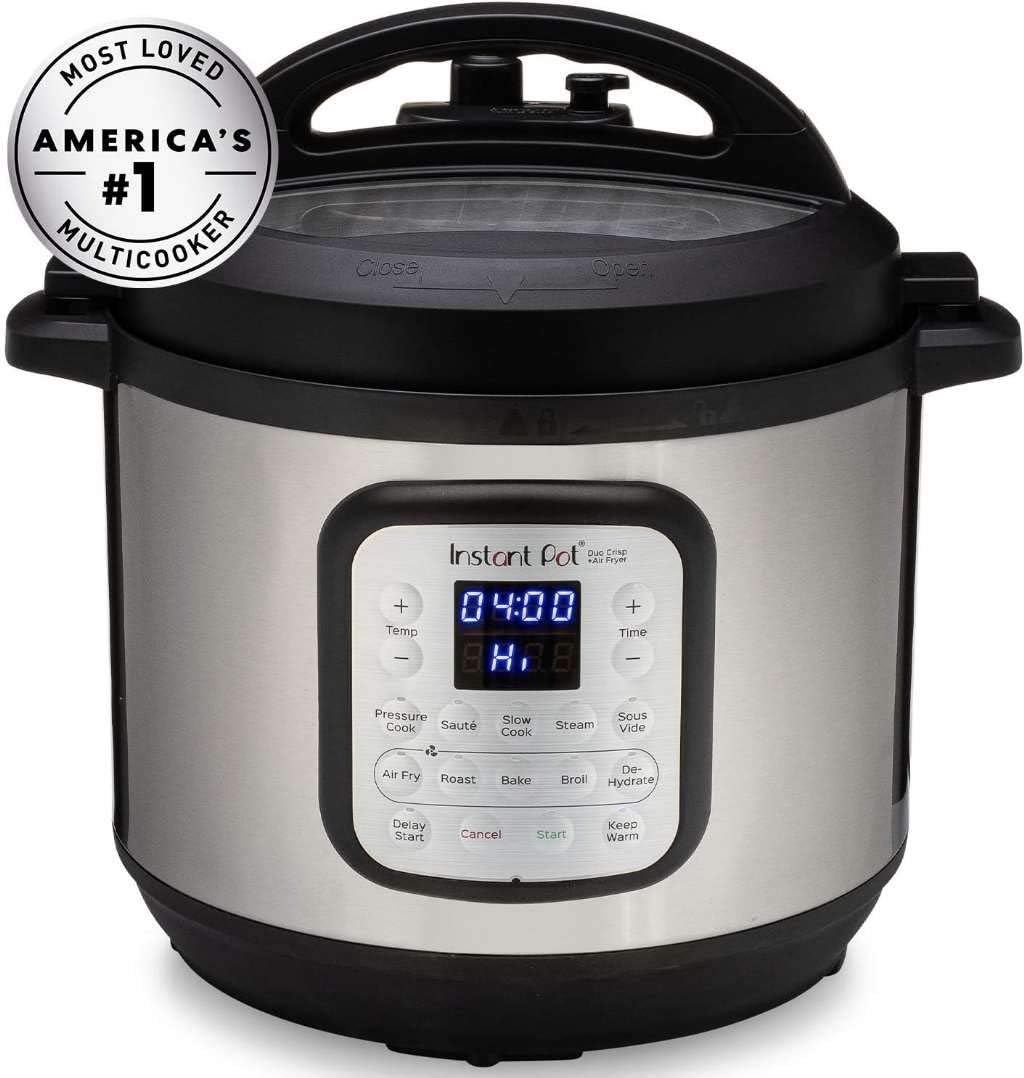
And the third box, briefly, because some letters are really asking about it. The Duo Crisp is the Duo family wearing a second lid: pressure cook in the morning, swap lids, crisp in the evening. The support calls it generates are storage calls. A second lid is a dinner-plate-sized object with no home in most kitchens, and it ends up living on top of the fridge. The 3-quart Carori comparison shrinks the same family logic down to a 3-quart pot if you want the other direction entirely — smaller pot, same family arguments about fill lines and gaskets. Buy the Crisp if counter space is scarce and cupboard space is not.
I will close the letter with the thing I am not allowed to type on the support desk. The COMFEE’ is a good machine wearing an inflated number, and the Duo Plus is a good machine wearing a reputation it did not entirely earn this year. Neither will disappoint a cook who measures the pot, deglazes the bottom, washes the little parts, and ignores the arithmetic on the box. Most of the misery I have read, across thousands of messages, came from the arithmetic. Yours, tiredly, from the other side of the reply box — where tonight’s test rice is on keep-warm, entering its second hour, drying at the edges exactly as described.
Questions that come up
My cooker keeps showing a burn warning when nothing is burning. Is it faulty?
Almost certainly not — this is the most common message in the multicooker inbox. The sensor reads the temperature at the bottom of the inner pot, and a layer of fond, thick sauce, or tomato sitting on that bottom reads as scorching long before anything has burned. The fix is a habit, not a repair: after sautéing, pour in liquid and scrape the bottom completely clean before the lid goes on, and put tomato and thick sauces in last, on top, without stirring them down. Thin liquid at the bottom, heavy things at the top. Owners who adopt that order mostly never see the warning again.
The steam release is much quieter than my old cooker. Did I get a weak unit?
No — on the Duo Plus line that quiet is the design working. The Plus uses a diffused release: the steam spreads as it exits instead of leaving in one hard jet, so the sound loses its edge. Owners upgrading from a louder model often read the hush as weakness, and it is the opposite of a fault. It is also kinder to a small kitchen, since a hard jet of steam aimed at a wall cabinet’s underside, week after week, will swell the board. If the release were silent and endless, or the pot never reached pressure, that would be a different conversation — that pattern points at the gasket or the float valve. Quiet-and-finishes is just the newer machine being polite.
Do I need the 12-in-1 if the 9-in-1 cooks the same food?
You need the pot, the lid, and the sauté function. The rest of the count is a library of presets sharing one heating element and one sensor, and the honest difference between 12 programs and 9 is how many default times are printed on the panel, not how many ways food can be cooked. Count the programs that match meals you already make, and let that smaller number decide. Nobody at the support desk has ever taken a call that began with a shortage of programs. The calls begin with pot size, lids, and gaskets. The count on the box has never once been the emergency.
How long can I honestly leave food on keep-warm?
Treat it as a bridge, not a destination — an hour or two holds dinner gracefully, and beyond that the food starts paying. Rice dries at the edges and goes gluey in the middle. Sauces keep losing water and come out thicker and saltier than the ones you seasoned. Stews forgive the most. Callers who write in about keep-warm are rarely wrong about what happened; the machine did what holding food warm slowly does, over hours, in a sealed pot. Time the cook to finish near the meal, and keep-warm goes back to being a small kindness instead of a slow rewrite of your recipe.
A little water runs down the back of my cooker. Is it leaking?
Usually it is the condensation collector, the small cup clipped at the back of the rim, full, cracked, or missing. Steam condenses around the lid, the rim channels that water back into the cup, and when the cup cannot take it, the water runs down the back of the machine and gets reported as a leak. Empty the cup after long cooks, check it for hairline cracks when you wash the lid, and replace it if it has gone missing. Actual seal leaks look different: steam escaping around the lid’s edge under pressure, hissing from the side. Water down the back is condensation. Steam around the rim is a gasket conversation. The two get confused in messages constantly, and they have almost nothing to do with each other.
The reply box is still open on my screen, incidentally — one more message tonight, from somebody whose rice dried out on keep-warm while they were stuck in traffic, and I am about to type the careful version of everything above, in four sentences, wishing the form allowed forty. The machines are fine. They were always fine. It is the numbers on the boxes that keep writing to me.
This site contains affiliate links. We may earn a commission on qualifying purchases.