The Duo came back to the returns desk with the instruction booklet still in its plastic, the cord still factory-twisted, and a note from the customer in careful handwriting that said, and I remember the wording because I kept the note, “too many buttons for a Tuesday.” I processed returns at a home goods retailer for the better part of a decade, and pressure cookers were my weather. The Instant Pot Duo and the Duo Plus, the 7-in-1 and the 9-in-1, came back for reasons that had almost nothing to do with cooking, and that is the comparison nobody writes, because the cooking comparison takes an afternoon and the returns comparison takes ten years of Tuesdays.
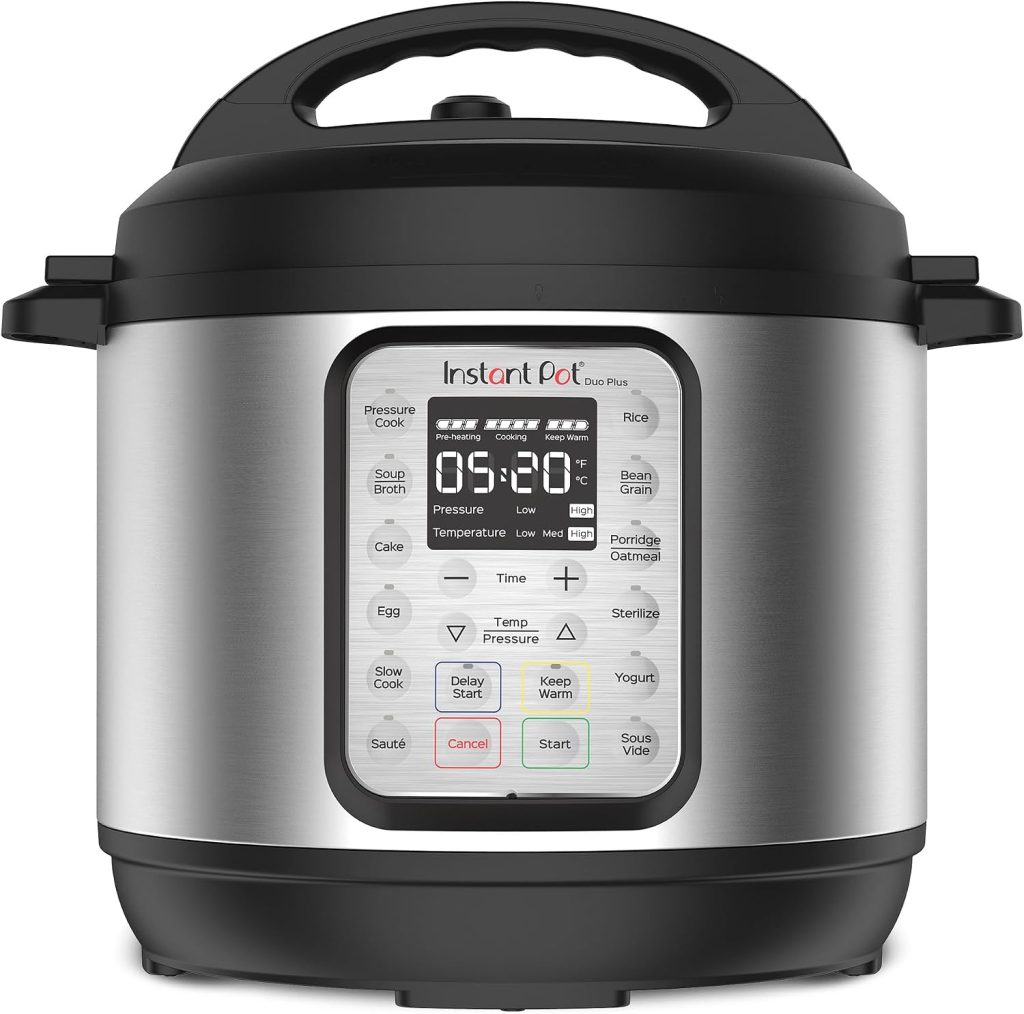
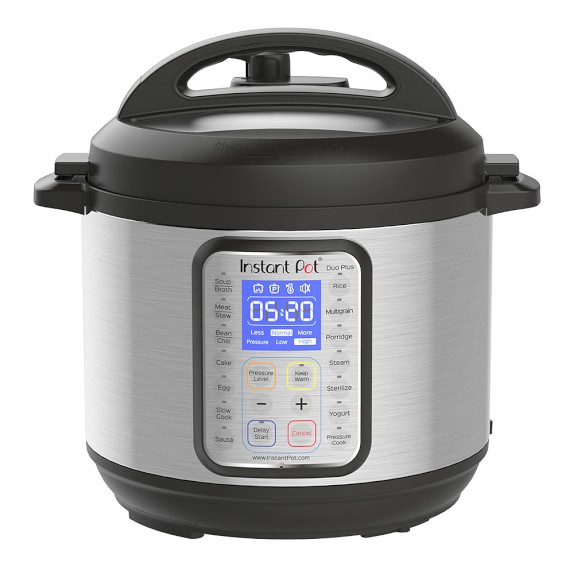
Here is what the extra two functions on the Duo Plus actually are, stripped of the banner. The Duo’s seven cover pressure cooking, slow cooking, rice, steam, saute, yogurt, and keeping warm. The Plus adds cake and sterilize and a sous vide mode, and upgrades the display and the lid in ways you can feel with your thumb. On the returns desk, the difference showed up as a sentence. Duo buyers who came back said the machine was not for them. Duo Plus buyers who came back said the machine was too much for them. Not for them, too much for them. Same counter, same coffee going cold beside me, two different regrets, and the second one costs more money to have.
The seal question again, because it follows every pressure cooker ever sold and both of these wear the same silicone seal that drinks odors and keeps them. On the desk I could tell what a returned unit had cooked last, blindfolded, by lifting the lid. Curry. Chili. Once, memorably, something with a great deal of garlic that cleared the back room. The Duo and the Duo Plus share that seal, share the fix, air and sunlight and a second seal in rotation, and share the fate of being judged for a smell that is, in the end, a five-dollar part doing chemistry. I swapped a lot of seals at that desk for people who thought they had a warranty claim. It is not a claim. It is a consumable with good PR.
What differed, genuinely, on my desk. The Duo Plus lid in the later versions vents steam more gently, and steam fear is the number one return reason in this entire category, ahead of size, ahead of price, ahead of everything. People are not returning a cooker. They are returning the moment the quick release roared at them beside the sink while the dog left the room. The plainer Duo vents like a small locomotive and always has, and a share of its returns were really that sound, wearing a trench coat, pretending to be buyer’s remorse. If you know the release will startle you, the Plus is not a luxury. It is the difference between a machine that stays and a machine that rides back to my desk in its original box, booklet still sealed.
Size returns, the other tide. Six quarts is the size both models sell in most, and it is the size that came back least, because six quarts is the size a family actually fills. The 8-quart came back for cupboard reasons, it would not fit, it would never have fit, the customer had measured the old slow cooker and assumed. The 3-quart came back for the opposite heartbreak, too small for the batch cooking in the photos. I cannot judge the mini as an owner, I never took one home, my counter at the desk was as close as I got. But its returns taught me that people buy the photograph of the meal, and the meal in the photograph is always, always a six-quart meal.
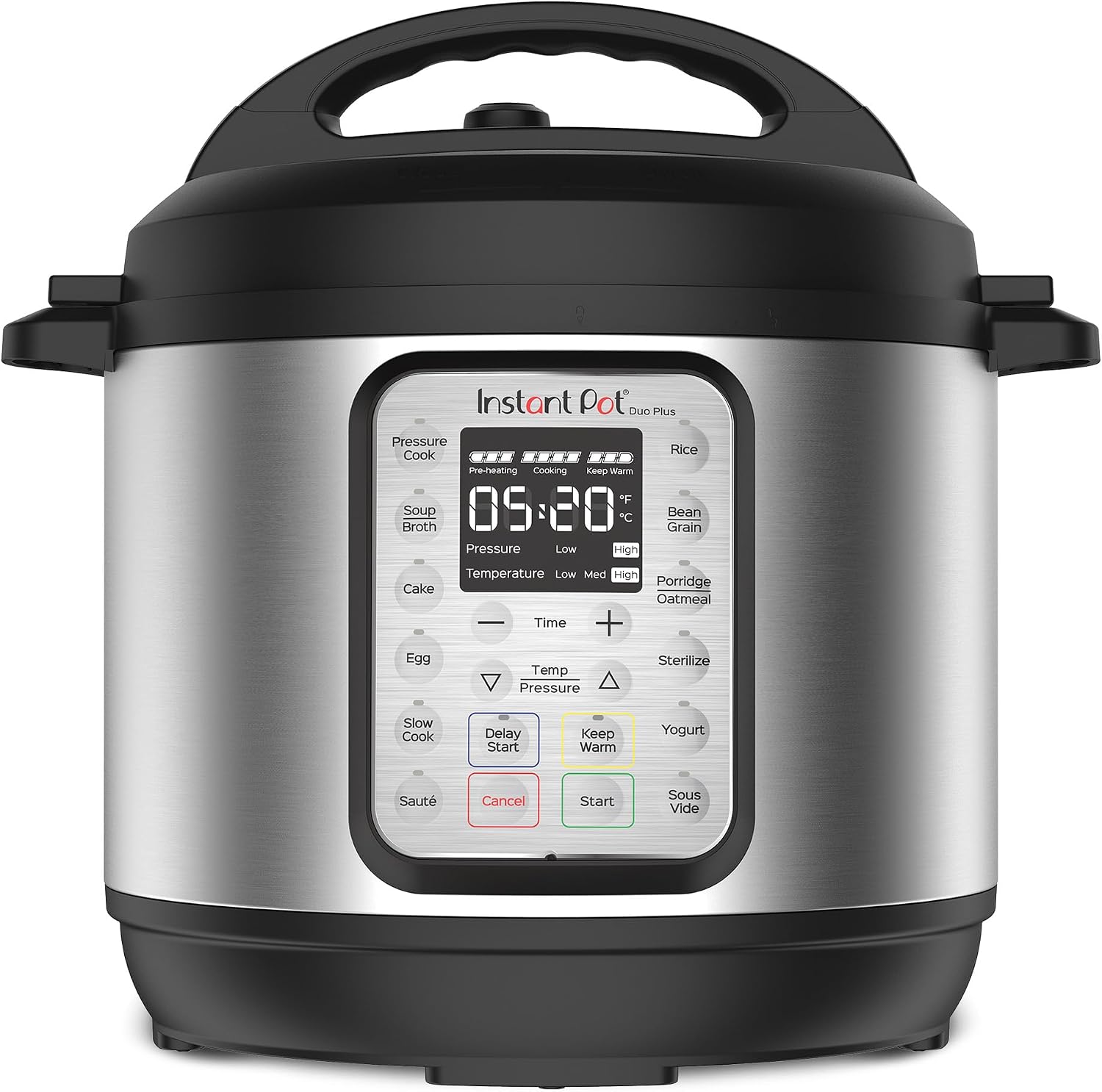
Nine functions, the gentler steam release, yogurt and sous vide on board
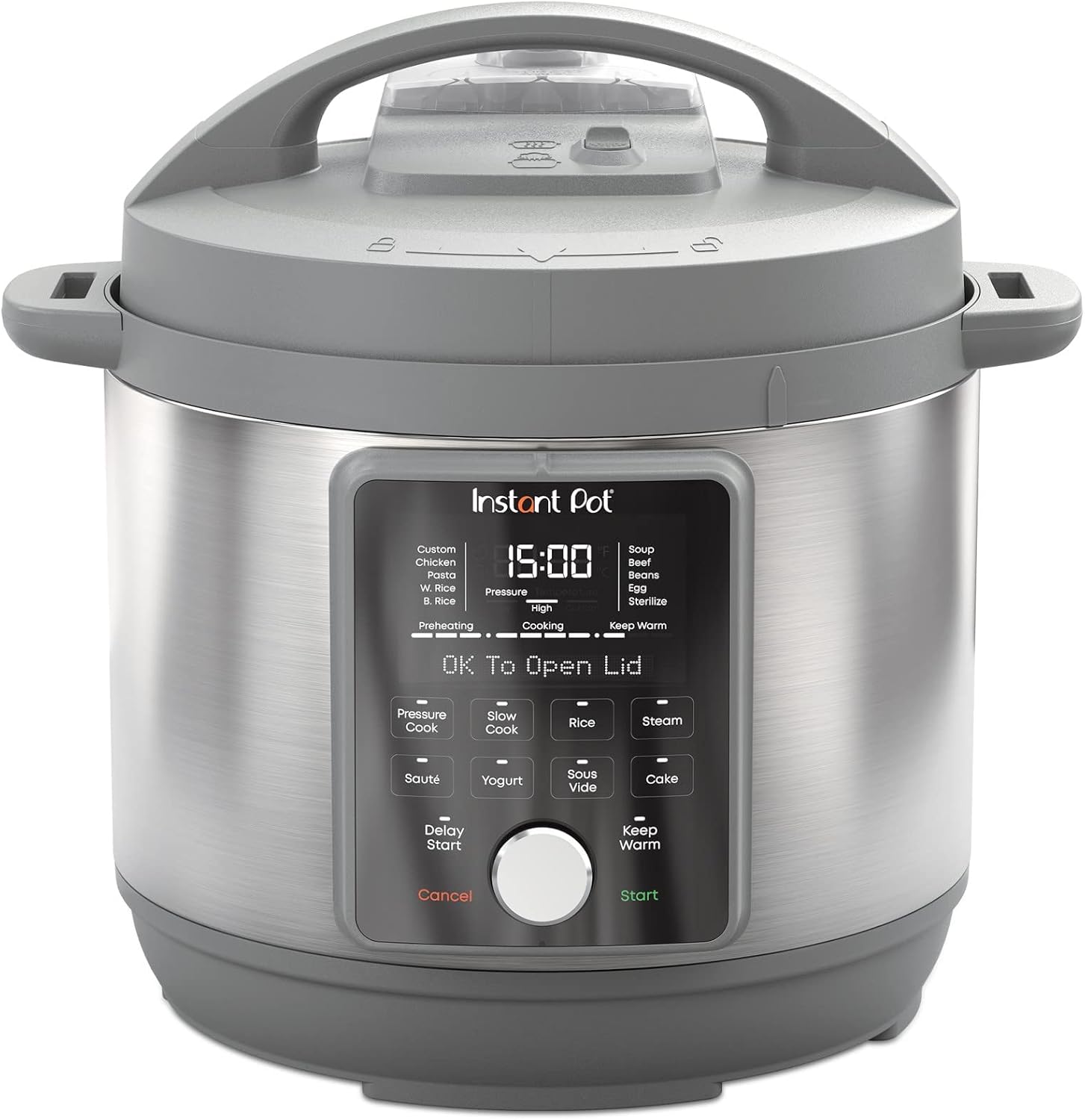
The quiet-lid version for small kitchens and sleeping babies
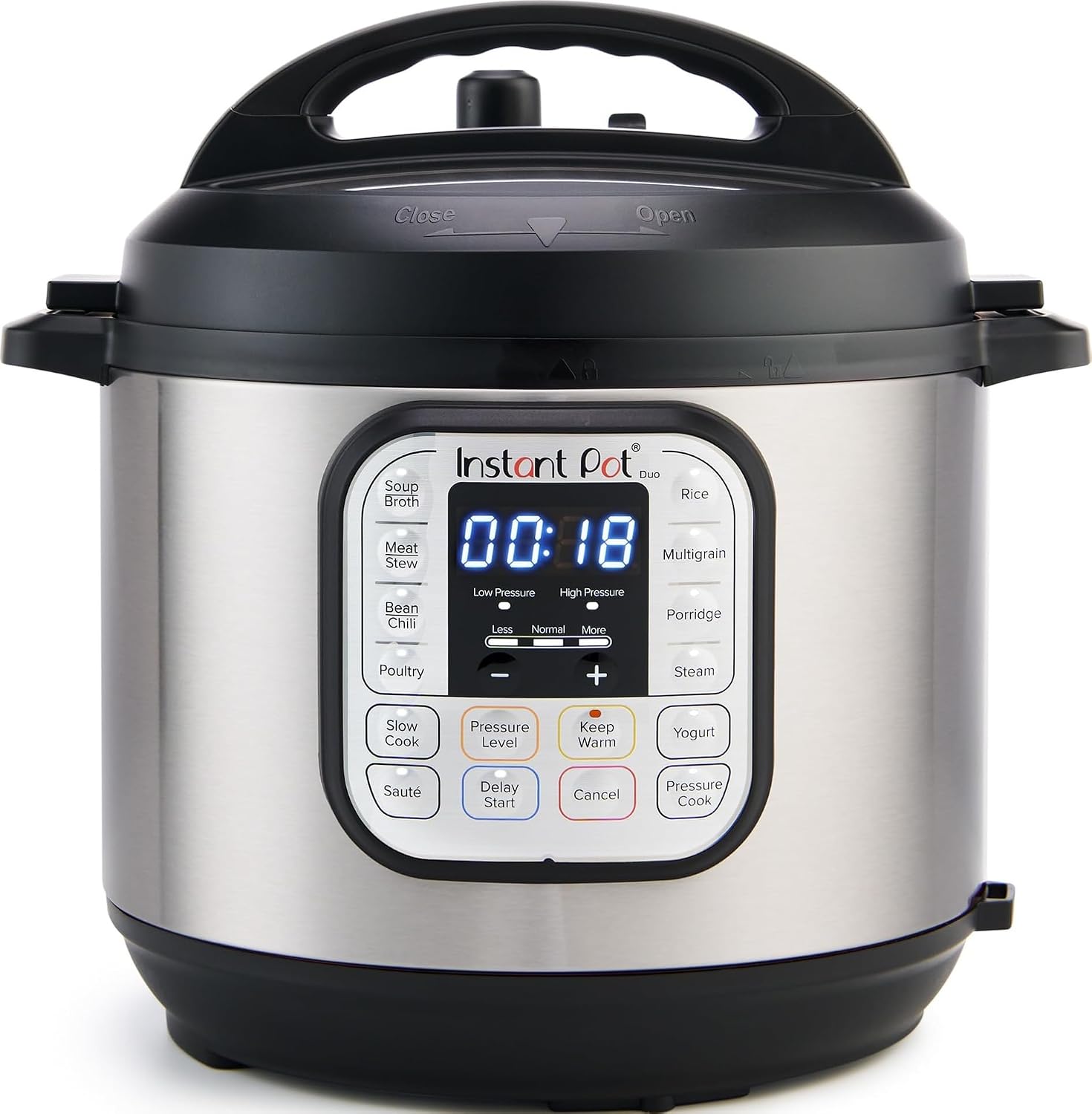
The plainer seven – same cooking heart, louder release, lower price
Prices and availability change often. The button shows the current listing.
The cooking, since a comparison owes you the cooking at some point. Beans from dry, black beans, no soak, the plain Duo and the Duo Plus side by side in my own kitchen after I left the desk job, because some habits outlive employment. Forty minutes at pressure, give or take the come-up time, and the results were the same pot of beans, tender in the same places, a few split skins in both. The heating element and the pot do the cooking and they are functionally the same heart in both machines. Everything you pay extra for lives on the surface, display, lid, buttons, modes, and the surface is where a person and a machine either get along for a decade or do not. I have come to think the surface is not a shallow thing to pay for. The surface is the part you touch every day.
Slow cooking is where both of them are merely fine, and I will die on this small hill. A pressure cooker slow-cooks with heat from the bottom only, in a thin steel pot, and it does the job the way a hotel hair dryer does the job, adequately, in a pinch, while you miss the heavy ceramic thing it replaced. Yogurt on the Duo Plus is the sleeper function, the one owners mention to me years later with genuine affection, because the temperature holds steady overnight and the jars come out set. Sterilize I have used exactly twice, both times for canning lids, and it worked, and twice in several years is the honest usage figure for half the buttons on either machine.
Actually, I want to take back the tidy sentence I wrote earlier, about the two regrets, because the desk taught me a third. Some returns were neither not-for-them nor too-much. Some were the burn notice, that message on the display when a sauce sits too thick on the pot floor, and the customer read it the way you would read a warning light in a car you had owned for one day. It is almost never a broken machine. It is a sensor being literal. But a person standing in a return line holding a heavy box does not want a lecture about sensors, and I stopped giving it by year three, and just processed the box and wished the cooker a better-matched home. Both of these models show that notice. Both of them mean it the same way. Neither of them is broken when they do.
For the side-by-side details, the Duo Plus 9-in-1 review is this article’s sibling and goes function by function, and the Duo Plus 8-quart review covers the bigger size if your cupboards are deeper than the ones I kept hearing about. The Duo Plus 6 Qt WhisperQuiet review is where the quiet-lid question gets its own space. Between those three and a tape measure, most of the Tuesday problems never happen.
One more desk detail, because it is the kind nobody believes until they have stood where I stood. Returns on both models spiked every January, not because the machines changed, but because December is full of gifts bought by people who love somebody with a small kitchen and a large imagination. A pressure cooker is a personal appliance wearing a gift’s clothing. If you are buying one of these for another human, buy the plainer Duo, include the receipt without being asked, and do not, under any circumstances, wrap it in paper that suggests you expect a dinner invitation out of it.
Frequently Asked Questions
Seven functions or nine. In a real week, what is the actual difference?
In a real week, for most kitchens, the difference is close to nothing, and I say that having processed the returns of both for years. You will pressure cook, you will saute in the pot before you do, you will make rice, and the machine will keep things warm while life runs late. The Plus earns its extra money in specific corners. Yogurt makers use the steadier temperature control. Anyone who has been startled by a steam release will feel the gentler lid every single use. Sous vide and sterilize are real functions that real households use a handful of times a year, and if your handful includes them, the math flips. Count your handful honestly. That is the whole decision, and it is a counting exercise, not a cooking one.
The steam release scared the life out of me. Is the Plus actually gentler, or is that marketing?
It is actually gentler, and I do not say that lightly, because steam fear was the tide my whole returns desk floated on. The newer Plus lids diffuse the release so it comes out as a strong hiss rather than a jet, and the control for it sits where your hand is not directly over the vent, which matters more than any decibel figure. It is still steam leaving a pressurized pot in a hurry. It will never be silent and anyone who wants silent should not own a pressure cooker. But the number of people who flinch matters, and in a small kitchen with a low ceiling and a dog, the gentler release is the difference between Tuesday cooking and a box riding back to a store. I watched that difference happen hundreds of times. It is the truest thing in this whole comparison.
My Duo showed a burn message with tomato sauce and now I do not trust it. Broken?
Almost certainly not broken, and I know how unhelpful that sounds when you are the one who read the message like a smoke alarm. The sensor at the bottom reads a hot spot where a thick or sugary layer is sitting on the pot floor without enough thin liquid around it, and it refuses to build pressure rather than scorch your dinner and call it fine. Tomatoes are the classic trigger. Layer them on top, do not stir them into the bottom, keep the thin liquid underneath, and the message stays away. I cannot see your pot or your sauce, so I will not swear to your case specifically, nobody should over a screen. But across a decade of returns, the burn message was a recipe report wearing a fault code’s uniform, nearly every single time.
Six quarts or eight? Everyone says six, everyone seems to buy eight at Christmas.
Six, for most kitchens, and the returns data of my life backs the boring answer. Six quarts batch-cooks for a family, fits a whole modest chicken, fits under ordinary cabinets with the lid parked upside down, and does not require a dedicated shelf and a step of commitment every time you want soup. Eight quarts earns its space if you cook for six or more people regularly, or you meal-prep in a serious, containers-in-rows way, and your cupboards are genuinely deep. Measure the cupboard. I processed too many January returns from people who measured the old appliance instead, and an Instant Pot is taller than the slow cooker it replaces, with a lid that wants storing. The tape measure is the cheapest accessory either model has, and it is sold separately, in every sense.
Two seals, rotating, one for savory and one for plain. Is that real advice or fussiness?
Real advice, earned the hard way by anyone who has tasted last week’s chili in this week’s rice pudding. The silicone takes on the smell of whatever cooked under pressure most recently, and while air and sunlight and a baking soda soak fade it a long way, they do not always fade it out of existence between a curry on Sunday and a yogurt on Monday. A second seal costs a few dollars, lives in a drawer, and ends the problem so completely that people forget it was ever a problem. Mark them somehow, a dot of nail polish on the savory one is what half my old customers did, because an unmarked rotation system collapses into two identical seals and a guessing game by the third week. Fussiness is a system you abandon. This one people keep, which tells you what it is.
I still have the note. Too many buttons for a Tuesday, in handwriting neater than anything I have produced in my life, and every time I press the one button I actually use on my own Duo Plus, which is pressure cook, the same button the Duo has, I think about the other eight sitting there in their factory shine. The machine and I understand each other. We just both know the understanding cost more than it had to, and neither of us is returning anything.
This site contains affiliate links. We may earn a commission on qualifying purchases.