This article contains affiliate links. If you buy through them, we may earn a commission at no extra cost to you.
The wings are turning gold behind glass and I am standing in my kitchen at 6:40 on a Tuesday watching them like television, which is the entire pitch of the NutriChef 5.8-quart and also, it turns out, its trap. A glass bowl air fryer sells you visibility. You can see the food. No opening the drawer, no heat escaping, no guesswork. For the first four days this is genuinely delightful, a tiny cooking show with a plot you control. By the second week the show has a production problem: the glass shows everything, including the grease film building on the inside, and you cannot unsee it the way you unsee the inside of a drawer fryer by simply closing the drawer. The window does not just show you the food. It shows you the machine.
Let me be fair before I become fun at its expense, because the cooking itself is respectable. 1500 watts, a 5.8-quart bowl that takes a family amount of wings or a small chicken’s worth of pieces, eight presets that mostly agree with reality, and results that came out crisp in the places crisp matters. The glass is not a gimmick in the cooking sense. Seeing the browning means I pulled things at the right moment more often than I do blind, especially fish, which goes from perfect to punished in about ninety seconds. If the machine did nothing else, the window would still have one honest argument: it removes the open-close-open cycle that drops the temperature in a drawer fryer every time you peek.
The bowl is heavier than the idea of it
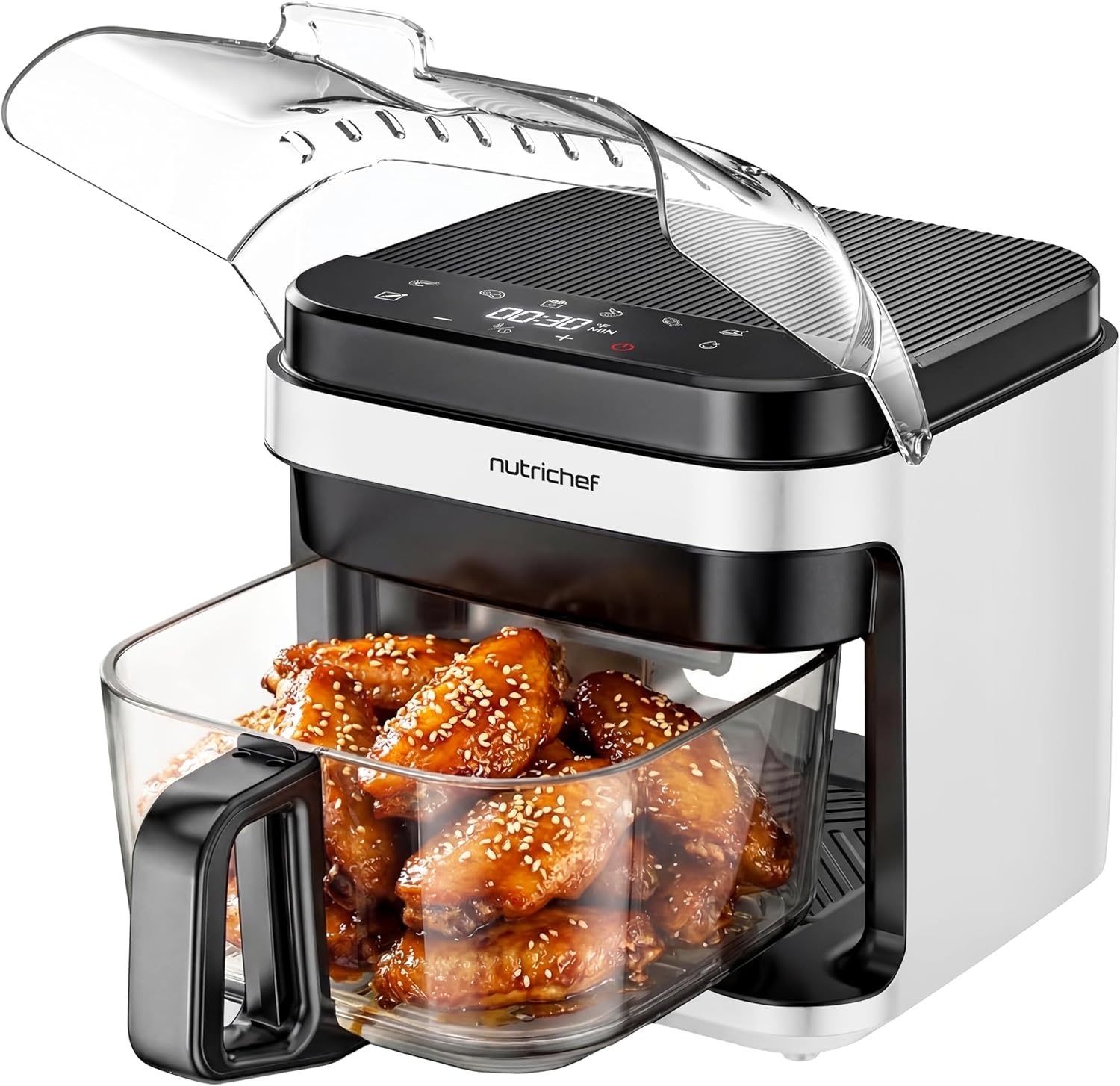
Glass weighs. A 5.8-quart glass bowl, hot, greasy on the outside rim, holding a load of wings, is a two-handed object with a handle that asks you to trust it. I am a person who cooks daily and has the wrist strength of the profession, and I still do the careful two-hand lift with this machine, the way you carry a full stockpot. Drawer fryers cheat here — the drawer slides, the basket tips, the food lands on the plate with a shake. The NutriChef asks you to pour from a hot glass vessel or fish pieces out with tongs, over the bowl, dripping. Neither is a flaw exactly. Both are a lifestyle. Older cooks, smaller cooks, anyone cooking with a kid orbiting at counter height: the weight and the pour are the review, everything else is specifications.
The accessories are dishwasher-safe, the listings say, and they are, in the narrow sense that the dishwasher will not destroy them. The glass bowl in a dishwasher is its own space negotiation — it takes the lower rack’s best real estate and comes out clean but spotted unless your water is kind. I hand-wash it now, mostly, which takes four minutes and a drying rack slot I had other plans for. None of this is the manufacturer’s fault. It is the physics of choosing glass, and the product pages are not lying, they are just silent in the specific places where the ownership experience lives.
White, black, or the Ninja in the corner
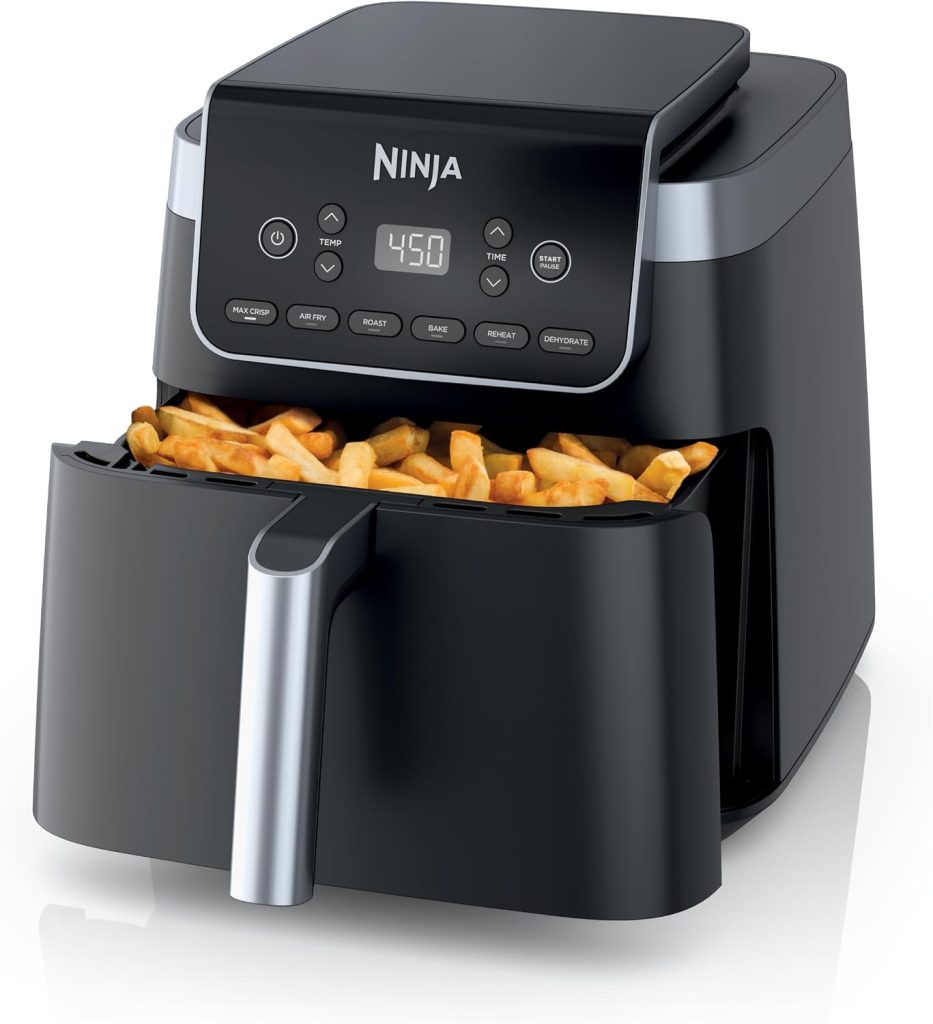
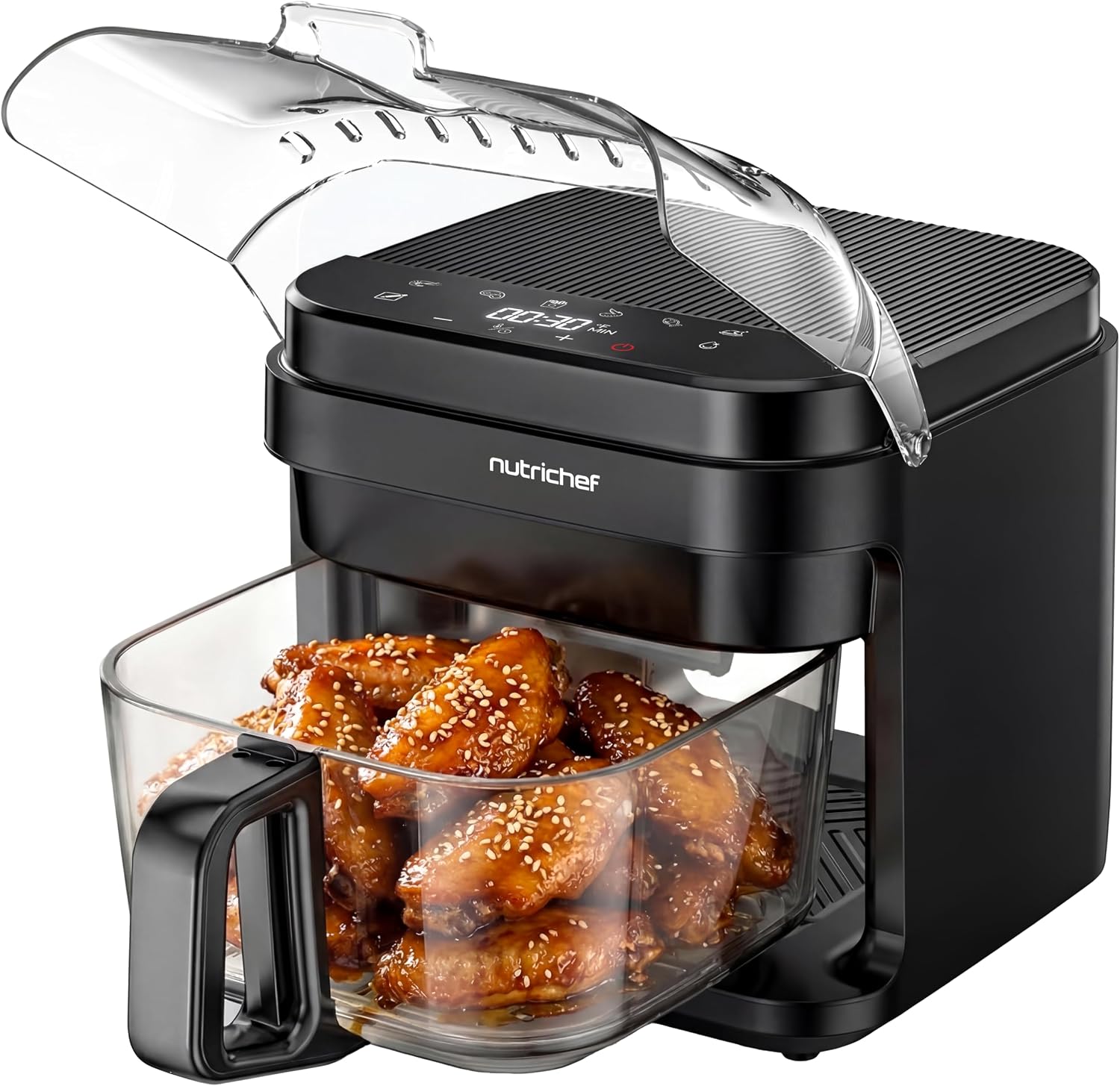
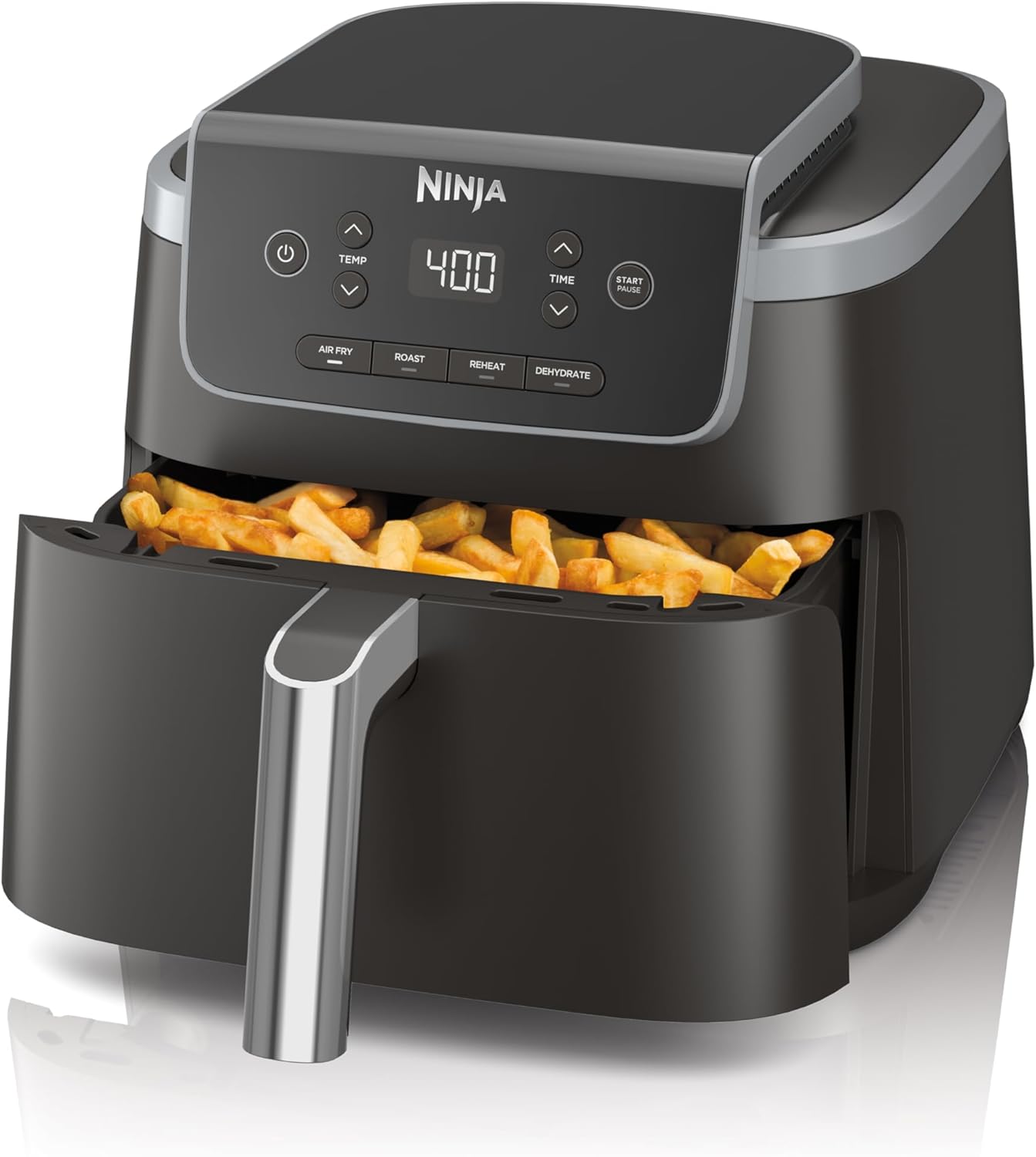
The white one matched my counters, which is why it is here, and it shows every splash of turmeric-seasoned anything within a metre of its orbit. The black version of the same machine hides fingerprints and most of the evidence, and if I were buying this design again I would buy it in black and lose the kitchen-magazine moment. Then there is the Ninja Air Fryer Pro in the comparison box, the establishment pick: no window, no show, a nonstick drawer with a track record, and results that match the NutriChef’s on wings while asking almost nothing of your wrists. The choice is genuinely not about cooking quality. It is about whether the watching is worth the washing, and that is a temperament question, not a spec question, which is why the reviews of this machine split so cleanly into converts and returners.
No, I have to take back one thing — I said the grease film on the glass was a trap, and that is only half of it. The film is also information. Drawer fryers get just as greasy; they just keep the evidence private until the day you deep-clean and discover archaeology. The glass makes you clean as you go, which is either hygiene or harassment depending on your religion about such things. Three weeks in, my bowl is cleaner than my drawer fryer ever was at three weeks, because I could not stand looking at it. The window polices you. Some people will love that. I have made my peace with being policed.
The drawer-fryer side of the family is covered in the Chefman TurboFry 5-quart review, the Cosori TurboBlaze 6-quart review and the Ninja 5-quart Air Fryer with Air Crisp review, and none of them make you watch.
Questions people actually ask
Is the glass bowl actually useful, or just a gimmick?
Useful, with a cost attached. Seeing browning happen means you stop at the right moment more often, especially on fish and anything breaded, and you stop opening a drawer to check, which dumps heat every time. The cost is that the grease film is visible too, so the machine effectively asks to be cleaned as you go. Owners who wipe the bowl while it is warm tend to become converts. Owners who let it build tend to return the machine around week three. Both reactions are to the same window.
Can the bowl and accessories really go in the dishwasher?
The accessories can, and the bowl can, in the sense that neither will be damaged. In practice the bowl occupies the lower rack’s best space and may come out spotted depending on your water, so many owners end up hand-washing it in about four minutes. The honest way to decide is to ask whether a daily four-minute wash changes your feelings about the machine. If the answer is yes, a drawer fryer is the better buy regardless of what either one does to a chicken wing.
White or black — does the colour actually matter?
For this design, more than for most appliances. The white unit shows every splash and fingerprint, and the cooking it does is splashy by nature. The black unit hides the evidence and ages more gracefully on a real counter. The machines are otherwise identical. It sounds like a trivial decision until week two, when you are wiping the white one down after wings for the fourth time. Buy the colour that matches your tolerance, not your counters. Your counters are not the ones doing the wiping.
5.8 quarts — is that enough for a family of four?
For most single-batch jobs, yes: a family load of wings, fries for four as a side, or cut-up chicken pieces all fit with room for air to move, which matters more than the raw volume. Where the size pinches is whole items and double-duty nights — a large whole chicken is a negotiation, and cooking two courses means two batches. Count your typical load, not your biggest party load, and leave a thumb’s width of air space in your mental picture. Air fryers punish a packed basket with steamed, pale results whatever the capacity says.
NutriChef with the window, or the Ninja drawer fryer for about the same job?
Decide on temperament, because the cooking is closer than the marketing of either suggests. The Ninja is the lower-effort ownership: lighter drawer, proven nonstick, no glass to wash or to watch. The NutriChef is the better spectator sport and the better teacher, because you see browning develop and learn your timings faster. If you enjoy cooking and cook often, the window earns its washing. If the air fryer is an appliance you want to disappear between uses, buy the drawer and do not look back.
It is Tuesday again in this story, because it is always Tuesday in a real kitchen, and there are wings in the glass and the film from last time is already starting its faint constellation on the inside of the bowl, and I am watching anyway. The show won. I wipe the glass while the machine is still warm, which takes less time than complaining about it did, and the wings come out right because I saw them arrive at right. Whether that trade — four minutes of washing for never guessing again — is a good one is not a question a review can settle. It settles itself, quietly, around week three, in one direction or the other.
This article contains affiliate links. If you buy through them, we may earn a commission at no extra cost to you.