
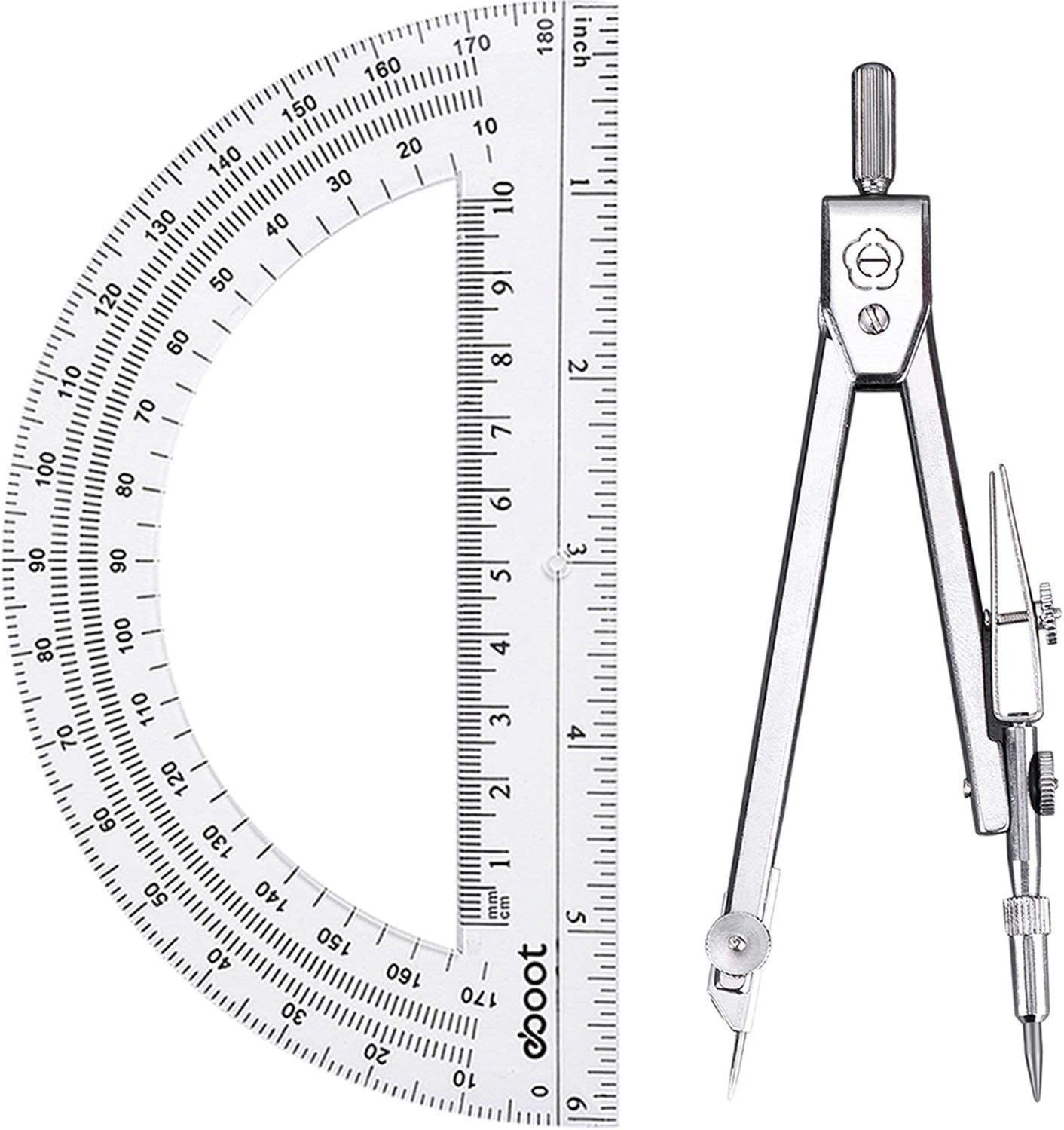
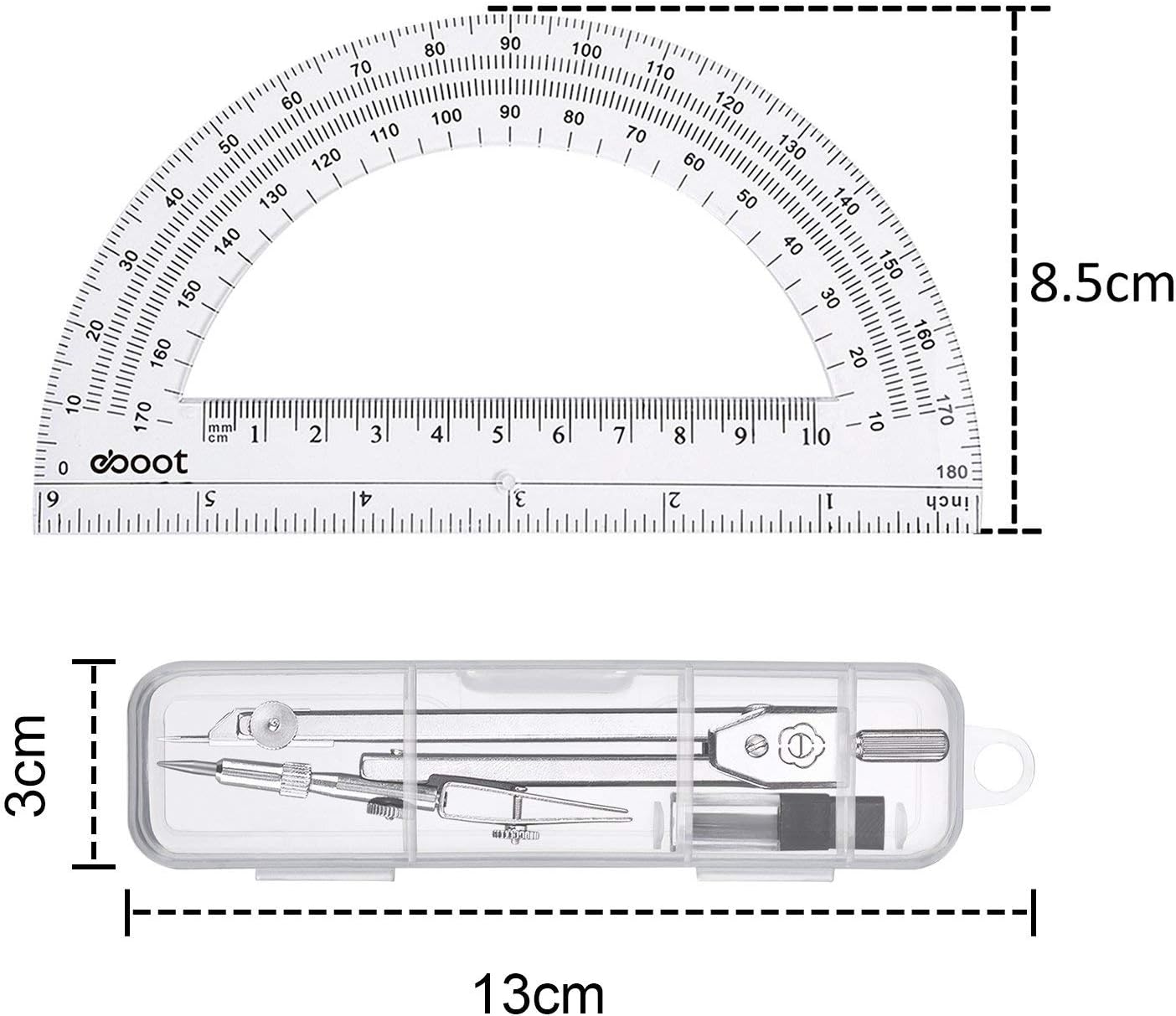
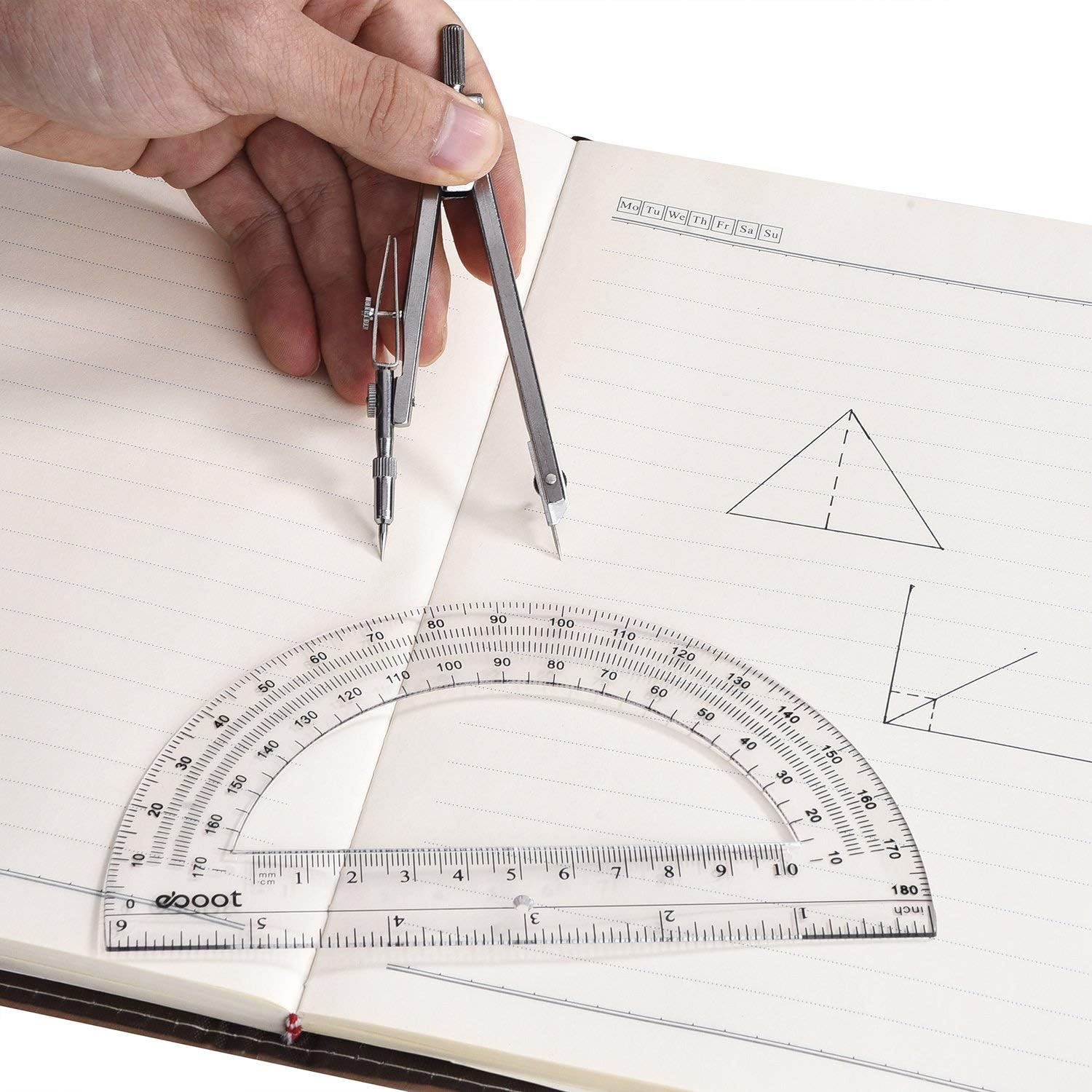
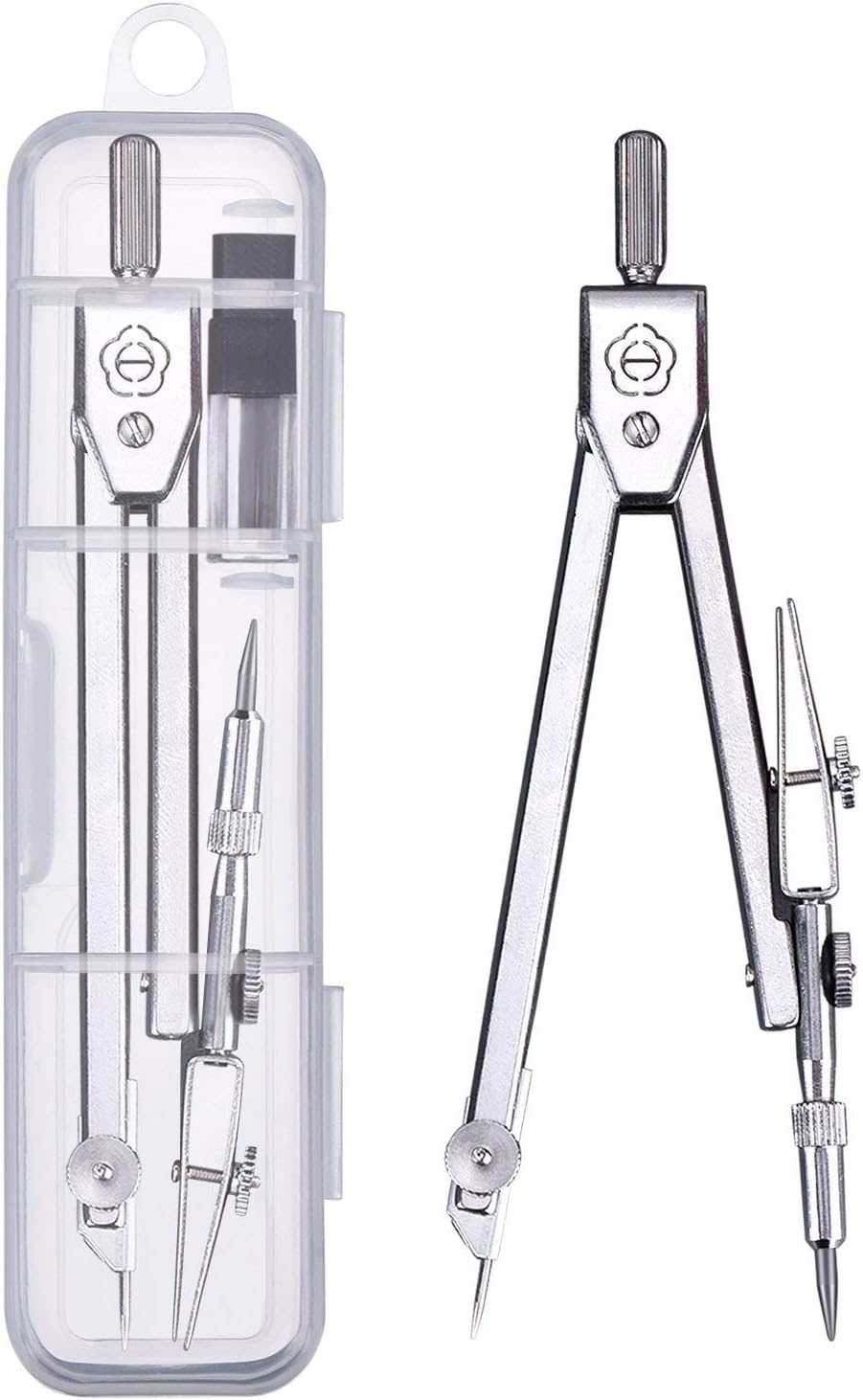
The Essential Guide to Drawing Compass and 6 Inch Protractor Student Geometry Math Sets
Navigating the world of geometry tools can feel a bit like… well, geometry itself: precise, sometimes complicated, but ultimately rewarding when you get it right. This guide cuts through the noise, helping you understand what truly matters when picking a drawing compass and 6 inch protractor student geometry math set. We’re talking about the gear that’ll get you through everything from basic algebra class to more intricate technical drawing projects. It’s about smart choices, not just grabbing the first thing you see.
Quick Answer Box
For most students and casual users, a durable mid-range geometry set with a sturdy metal compass and a clear, accurate 6-inch protractor is the sweet spot. Avoid the absolute cheapest plastic sets; they often frustrate more than they help. Invest a little more for accuracy and longevity, especially if consistent use is expected.
What to Look For (The Buying Criteria)
Choosing the right student geometry math set isn’t rocket science, but there are definitely some nuances. Skip the details and you might end up with tools that fight you every step of the way. And who needs that kind of aggravation during a pop quiz? Let’s dig into what truly makes a difference.
First up, Compass Quality and Material. This is often the make-or-break component of any decent drawing compass. You’ll mainly see plastic or metal options. Plastic compasses are, predictably, on the budget-friendly side. They’re lightweight, which can be good for small hands, but they often lack the rigidity needed for consistent accuracy. Ever tried to draw a perfect circle only to have the legs wobble? That’s a plastic compass for you. A metal compass, on the other hand, offers stability. It holds its position better, reducing frustrating slips and ensuring your circles are, well, actually circular. Look for solid joints and a smooth adjustment mechanism. Some even come with a pencil holder for standard pencils, offering versatility, while others use proprietary lead. The trade-off? Metal usually means a higher upfront cost.
Then there’s Protractor Accuracy and Clarity. Your geometry set will almost certainly include a 6-inch protractor. But not all protractors are created equal. The most crucial aspect here is the clarity of the plastic or acrylic material. If you can’t easily read the markings against your paper, what’s the point? Flimsy, cloudy plastic might save a few pennies, but it’s a nightmare for precise angle measurements. Look for a transparent, rigid material with sharply defined degree markings. Some protractors even have etched markings rather than printed ones, which tend to last longer without rubbing off. A sturdy build is key here too; a protractor that flexes too much can easily lead to inaccurate readings.
Don’t overlook the Overall Set Durability and Case. You might think this is minor, but trust me, it’s not. A fantastic compass and protractor are useless if they’re rattling around in a backpack, getting bent or broken. A good student geometry math set comes in a robust case, often a hard-shell plastic or metal tin. This isn’t just about storage; it’s about protecting your investment and keeping all those small pieces like lead refills and set square organized. The cheaper sets often come in flimsy, clear plastic cases that crack within days. Seriously, it’s a common complaint. A well-designed case extends the life of your tools, simple as that.
Included Accessories can sometimes swing the deal. Beyond the compass and protractor, many geometry sets bundle in other math tools like rulers, set squares (45-degree and 60/30-degree), and sometimes even a small eraser or sharpener. A divider, which looks like a compass but with two sharp points, is also a useful addition for measuring distances or transferring lengths without calculation. For students, having all these drawing instruments in one place is convenient. But here’s the catch: check the quality of these extras. Often, in budget sets, the ruler might be too flexible, or the set squares poorly molded. Better to have fewer, high-quality tools than a pile of shoddy ones.
Ease of Use / Ergonomics is another subtle but important factor. Think about who’s using this. Are tiny fingers grappling with a stiff compass joint? Is the protractor slipping around every time? For younger students, an easy-grip design and smoothly operating mechanisms are paramount. For older students tackling complex technical drawing, fine-tuning adjustments on the compass become crucial. Some compasses have a little wheel or screw for micro-adjustments, which is a blessing when you need exacting precision. It’s often the small details that differentiate a frustrating experience from a fluid one.
Finally, consider Accuracy and Precision as an umbrella concern. This isn’t just about individual components; it’s about the whole package. Can your compass hold a radius without widening or narrowing? Will your protractor consistently give you the same angle reading every time? For a serious student or anyone involved in drafting supplies for work or detailed hobbies, precision is non-negotiable. Cheaper materials and poor manufacturing tolerances mean guesswork, not geometry. This is where investing in a more robust, often metal-based, precision drawing kit really pays off. You’ll spend less time correcting errors and more time doing the actual work.
Look, you don’t need a professional architect’s kit just to draw circles for a middle school assignment. But you do need tools that won’t actively sabotage your efforts. That’s the balance we’re trying to strike.
How to Match the Product to Your Situation
Finding the right drawing compass and 6 inch protractor student geometry math set isn’t a one-size-fits-all situation. Different users, different needs, right? It’s like picking a car: a sports car is great, but not if you’re hauling kids and groceries. Let’s sketch out a few typical users.
For The Elementary/Middle Schooler, the primary concerns are durability and ease of handling. They’re probably still developing fine motor skills, and let’s be honest, school bags are often rough environments. You want something that can withstand a bit of a beating without snapping. A decent plastic protractor that’s clearly marked is perfectly fine here, but a compass that’s mostly metal in its moving parts, even if the body is plastic, would be a wise choice. It needs to be simple to adjust, maybe even with a pre-sharpened pencil already attached or an easy-to-use pencil holder. Overly complex adjustments will just lead to frustration. Think robust, readable, and relatively simple.
Next up, The High School/College Student. This group is typically dealing with more complex geometric constructions, trigonometry, and possibly early-stage engineering or architecture drawing. Precision becomes a much bigger deal. For these folks, a solid metal compass is practically a must-have. You’ll want one that holds its radius without drift and allows for fine adjustments. A clear, high-quality 6-inch protractor that won’t smudge or fade is also crucial. The inclusion of accurate set squares and a reliable ruler within a sturdy case makes life much easier. They need tools that will perform consistently, assignment after assignment, through multiple courses. This is where a slightly higher investment truly starts making sense.
Finally, we have The Hobbyist/Technical Drawer. Maybe you’re into scale models, intricate patterns, artistic sketching that demands precision, or even some light technical drawing at home. You’re not necessarily using these tools daily for school, but when you do, you need them to be spot-on. Here, a precision drawing kit with high-grade materials and exceptional durability is worth the consideration. Look for compasses with micro-adjustment wheels, perhaps even a divider for transferring measurements. Materials like brass or high-grade aluminum for the compass are common in this tier. The protractor should have exceptionally clear, durable markings. You’re looking for tools that feel substantial in the hand and offer unwavering accuracy for detailed work. This isn’t about passing a math test; it’s about crafting something precisely.
Key Takeaways
Choosing the right geometry set isn’t about luxury; it’s about fit.
- For Young Students: Focus on robustness and clear markings. Don’t overspend on features they won’t use.
- For Serious Students: Prioritize a sturdy metal compass and a highly accurate, legible 6-inch protractor. Precision counts.
- For Hobbyists/Professionals: Seek out premium materials and fine adjustment mechanisms. You’ll appreciate the unwavering accuracy.
- A protective case is never optional. Seriously.
Product Type Comparison
Let’s break down the common types of drawing compass and 6 inch protractor student geometry math sets you’ll encounter. Understanding these tiers helps you gauge where your money is best spent, and crucially, where it’s just wasted.
| Type/Tier | Best For | Price Tier | Key Feature | Watch-Out |
|---|---|---|---|---|
| Basic Plastic Set | Young kids, very light, occasional use | Budget-friendly | Lightweight, inexpensive, often colorful | Breaks easily, poor accuracy, frustrating to use |
| Standard Student Set | Most students, daily homework, general class | Mid-range | Durable metal compass, clearer protractor | Might lack advanced accessories or micro-adjustments |
| Precision Drafting Set | Advanced students, hobbyists, professionals | Premium | High-grade materials, fine adjustment, robust | Overkill for basic needs, higher learning curve |
The Basic Plastic Set is often the cheapest option you’ll find. It usually contains a wholly plastic compass, a flimsy plastic protractor, and perhaps a small ruler. These sets are often attractive due to their low cost, but that’s really their only upside. Expect wobbly circles and angles that are a bit… fuzzy. They’re fine for a first-grader needing to draw a single circle, but not for anything that demands real accuracy.
Moving up, the Standard Student Set is where most people find genuine value. These usually feature a substantial metal compass with a more reliable mechanism and a clear, rigid 6-inch protractor. You’ll often get decent quality set squares and a ruler too. This tier hits a sweet spot for durability and accuracy for the average middle school or high school student. It’s a workhorse, not a show pony, but it gets the job done reliably.
Then there’s the Precision Drafting Set. This is the Ferrari of geometry sets. We’re talking solid metal compasses, often brass or stainless steel, with gear-driven adjustments for incredibly fine control. The protractors are usually high-grade acrylic with laser-etched markings. These kits often include a divider, various lead types, and even extension bars for the compass. They’re built to last a lifetime and offer the highest level of accuracy. But for basic geometry assignments? It’s like bringing a battleship to a canoe race. Expensive, complex, and probably unnecessary.
Scenario-Specific Considerations
Your usage scenario dictates so much. Don’t just buy a geometry set because it looks good. Think about where and how you’ll actually use it.
For the Occasional Homework Assignment: Look, not every student needs the top-tier gear. If your child pulls out their math tools maybe once a week for a few circles and angles, then a solid standard student set will serve them well. The key is reliability, not necessarily hyper-precision. You want a compass that doesn’t slip every other minute, and a protractor you can actually read without squinting. Something that handles a trip in a backpack without falling apart. A basic educational math set will do. What you absolutely don’t want is a set so cheap it causes tears of frustration. That’s a fail.
For the Aspiring Architect/Engineer: Ah, now we’re talking. If you’re tackling serious technical drawing projects, whether for a college course or a personal passion, your requirements jump up significantly. A precision drawing kit is really what you should be eyeing. You need a metal compass that maintains its radius under pressure, possibly with a quick-release mechanism or a micro-adjustment screw. Accuracy here isn’t a luxury; it’s a necessity. Your lines need to meet exactly, your angles need to be spot-on. You’ll also likely benefit from a set that includes multiple set squares and a sturdy metal ruler. This isn’t just about drawing; it’s about design and precision execution. Don’t skimp here; you’ll regret it.
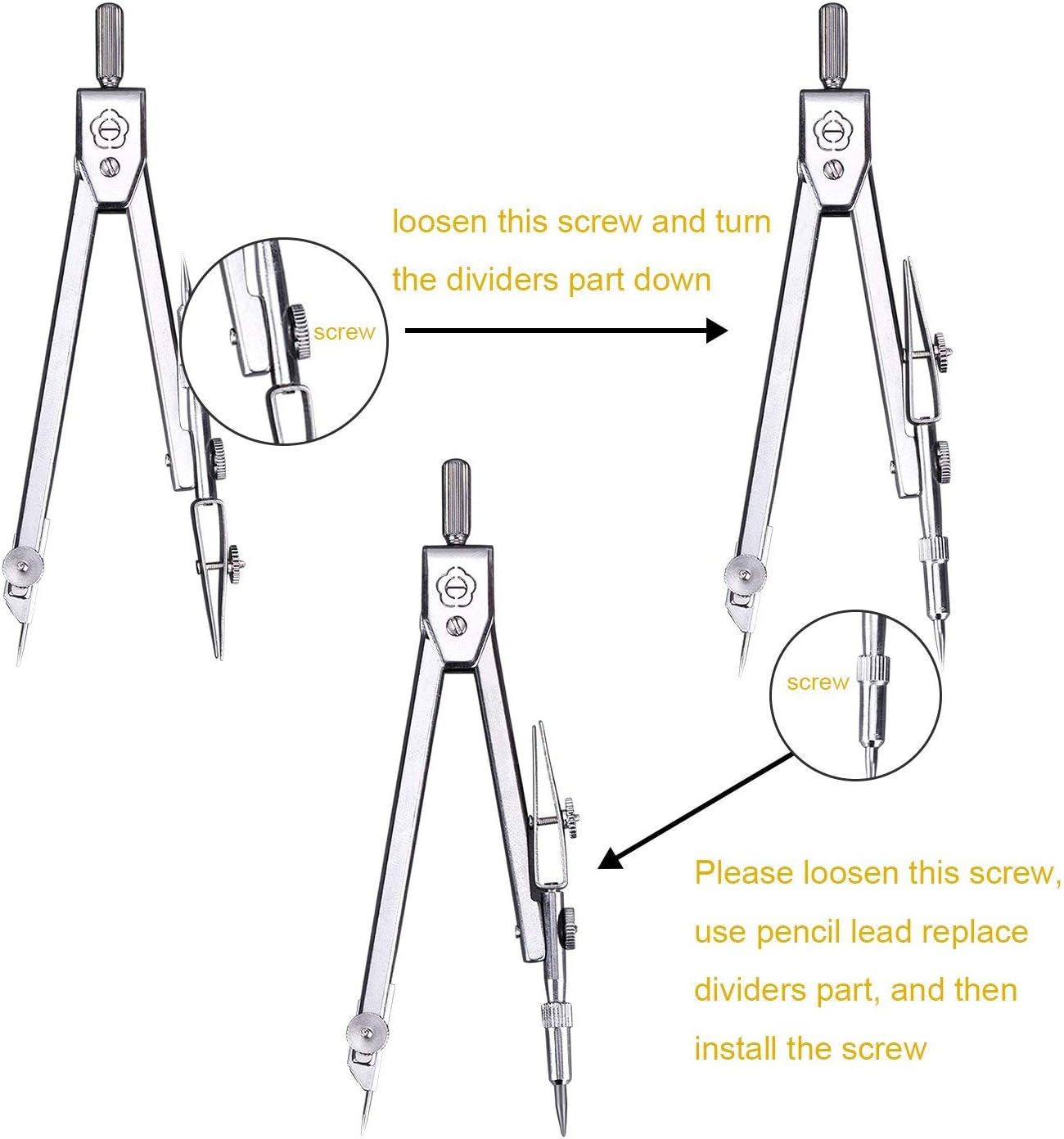
For the Homeschooling Parent: This is a unique situation. You might be teaching multiple children across different age groups, or one child who’ll be using the tools for several years. Versatility and durability are your watchwords. A mid-range geometry set for each child, or one really good one that can be shared, makes sense. The ability to swap out pencil leads in the compass is a bonus, allowing for different line weights. You also want a robust case, because let’s face it, things tend to get used more often and stored less formally in a home environment. Having a geometry set that can handle various tasks – from basic shapes for younger kids to more complex drawing instruments for older ones – will save you hassle and money in the long run. Look for good all-rounders.
Common Mistakes When Buying a Geometry Set
It’s easy to stumble when buying a drawing compass and 6 inch protractor student geometry math set. I’ve seen people make these missteps time and again. Don’t be one of them.
One of the biggest blunders? Buying solely on price. You know the drill: “It’s just for school, it doesn’t need to be fancy.” And then you end up with a compass that refuses to hold its radius, or a protractor whose markings disappear after a week. The frustration isn’t worth the few dollars saved. Really, it isn’t. Cheap math tools often translate directly into inaccurate results and a wasted purchase. Spend a little more, and save yourself a headache.
Another common oversight is ignoring the case. People focus so much on the tools inside that they forget how those tools get from point A to point B, or how they’re stored. A flimsy, brittle plastic case is a recipe for disaster. Tools get lost, bent, or broken. A sturdy, secure case, preferably one that latches tightly, is essential. It protects your investment and keeps everything organized. If the case looks like it’ll fall apart before the first homework assignment, walk away.
Assuming all protractors are equal is another trap. You might think, “It’s just a semicircle with numbers, right?” Wrong. The clarity of the material, the durability of the markings, and the rigidity of the plastic all play a huge role. A cloudy, flexible protractor with smudged numbers is next to useless for precise angular measurements. Look for crystal-clear acrylic and clearly etched or deeply printed markings. A good 6-inch protractor is indispensable.
Finally, not considering lead types for the compass. Some compasses come with a fixed lead, which can be fine. But many good ones have a pencil holder that lets you swap in different leads – varying hardnesses (HB, 2B, etc.) or even different colors. This versatility can be super useful for different drawing instruments applications, like lighter construction lines versus darker final lines in technical drawing. If you only have one type of lead and it’s too soft or too hard for your paper, you’re stuck. Think about what kind of lines you’ll need to draw.
Why/How/What Mini-Section
Why invest in a metal compass over plastic?
A metal compass, pure and simple, offers superior stability and precision. Plastic tends to flex and wobble, making it nearly impossible to draw consistent, accurate circles. Metal components, especially at the joints, hold their position firmly, meaning your radius won’t unexpectedly change mid-arc. This translates directly to less frustration and much better results in your geometry set tasks.
How do I keep my geometry set accurate?
Regular care is key. Keep your drawing compass clean, especially the tip, and check its joints for any looseness; tighten them if possible. Store your 6-inch protractor flat and away from anything that could scratch or bend it. Always keep all your math tools in their protective case when not in use. And when your compass lead gets dull, sharpen it or replace it! Dull leads equal thick, imprecise lines.
What’s the deal with different protractor angles (360 vs 180)?
Most student geometry math sets include a 180-degree protractor, which is a semicircle. This is perfect for the vast majority of angles encountered in school-level geometry. A 360-degree protractor is a full circle, allowing you to measure angles all the way around without repositioning. While useful for some advanced drafting supplies or specialized applications, it’s usually overkill and potentially more confusing for basic student use.
FAQ
Is a 6-inch protractor big enough for most geometry needs?
Absolutely. A 6-inch protractor is standard for school and most general drawing instruments tasks. It provides enough surface area for clear markings and is compact enough to fit easily in a geometry set or pencil case.
Can I replace the pencil in my compass?
Many compasses designed with a pencil holder allow you to swap in a standard pencil or different types of lead, yes. However, some cheaper models come with a fixed, non-replaceable lead or a specific cartridge system, so always check before you buy.
What’s the difference between a compass and a divider?
A compass is primarily used for drawing circles and arcs, typically holding a pencil or lead on one leg. A divider, while looking similar, has two sharp metal points and is used for measuring or transferring distances precisely, without drawing.
How do I clean my protractor effectively?
A soft cloth and mild soap and water are usually all you need for your plastic protractor. Avoid harsh chemical cleaners or abrasive materials, as they can scratch the surface or erode the printed markings, compromising its clarity and accuracy.
Are geometry sets reusable for years, or do they wear out quickly?
The lifespan really depends on the initial quality. A well-made metal compass and sturdy protractor in a good case can easily last many years, even through multiple students. Cheaper, all-plastic sets often break down within a single school year.
Do I really need set squares in my geometry kit?
For most geometry students, yes, set squares are incredibly useful. They provide fixed, accurate angles (typically 45-degree and 60/30-degree) which are indispensable for drawing parallel lines, perpendiculars, and various geometric constructions quickly and accurately.
What’s the best material for a compass for student use?
For the typical student, a metal compass is generally the best choice. It offers a solid balance of durability, stability, and precision over plastic, without the significantly higher cost or complexity of specialized drafting compasses.
Final Recommendation
So, which drawing compass and 6 inch protractor student geometry math set should you go for? It boils down to your primary use case. For most students navigating daily math classes and homework, a standard student set with a robust metal compass and clear plastic protractor is the unequivocal winner. It strikes the perfect balance of cost, durability, and the accuracy needed to avoid frustrating missteps. Don’t be tempted by the absolute cheapest; the slight upgrade in quality pays dividends in peace of mind and better results.
If you’re an older student diving deep into technical drawing, architecture, or a serious hobbyist, however, then absolutely consider stepping up to a precision drafting set. The added control, superior materials, and longevity of such a precision drawing kit will make your intricate work a joy rather than a chore. It’s a proper investment in your craft, and honestly, the difference in feel and performance is noticeable.
#Drawing #Compass #Inch #Protractor #Student #Geometry #Math #Set
Reviews
There are no reviews yet.