Beyond the Hype: Is the HOTEC Silicone Baking Mat Your Next Kitchen Workhorse?
Navigating the seemingly endless options for kitchen gadgets? You’re not alone. This guide cuts through the marketing fluff to deliver a no-nonsense look at the silicone baking mat category, specifically shining a spotlight on the HOTEC Silicone Baking Mat – 26×16 Thickened Pastry Dough Mat with Measurement Non-Stick For Dough Rolling, Bread, Oven Liner, Kitchen Counter, Fondant/Pie Crust. We’ll talk about what actually matters when you’re shelling out your hard-earned cash, what makes a mat truly useful, and whether this particular model is worth its salt for your specific kitchen adventures.
Quick Answer
The HOTEC 26×16 silicone baking mat offers substantial versatility and a generous size, making it a solid mid-range choice for home bakers and cooks. Its measurement markings and non-stick surface are genuinely helpful for a range of tasks, from delicate pastry work to heavy-duty dough rolling, often outperforming basic parchment.
What to Look For (The Buying Criteria)
Alright, so you’re thinking about adding a silicone baking mat to your kitchen arsenal. Good call. But don’t just grab the first one you see. There’s more to these seemingly simple sheets than meets the eye, and getting the right one can make a huge difference in your baking life. Or it could just sit in a drawer. Let’s figure out what you really need.
Material Quality & Durability:
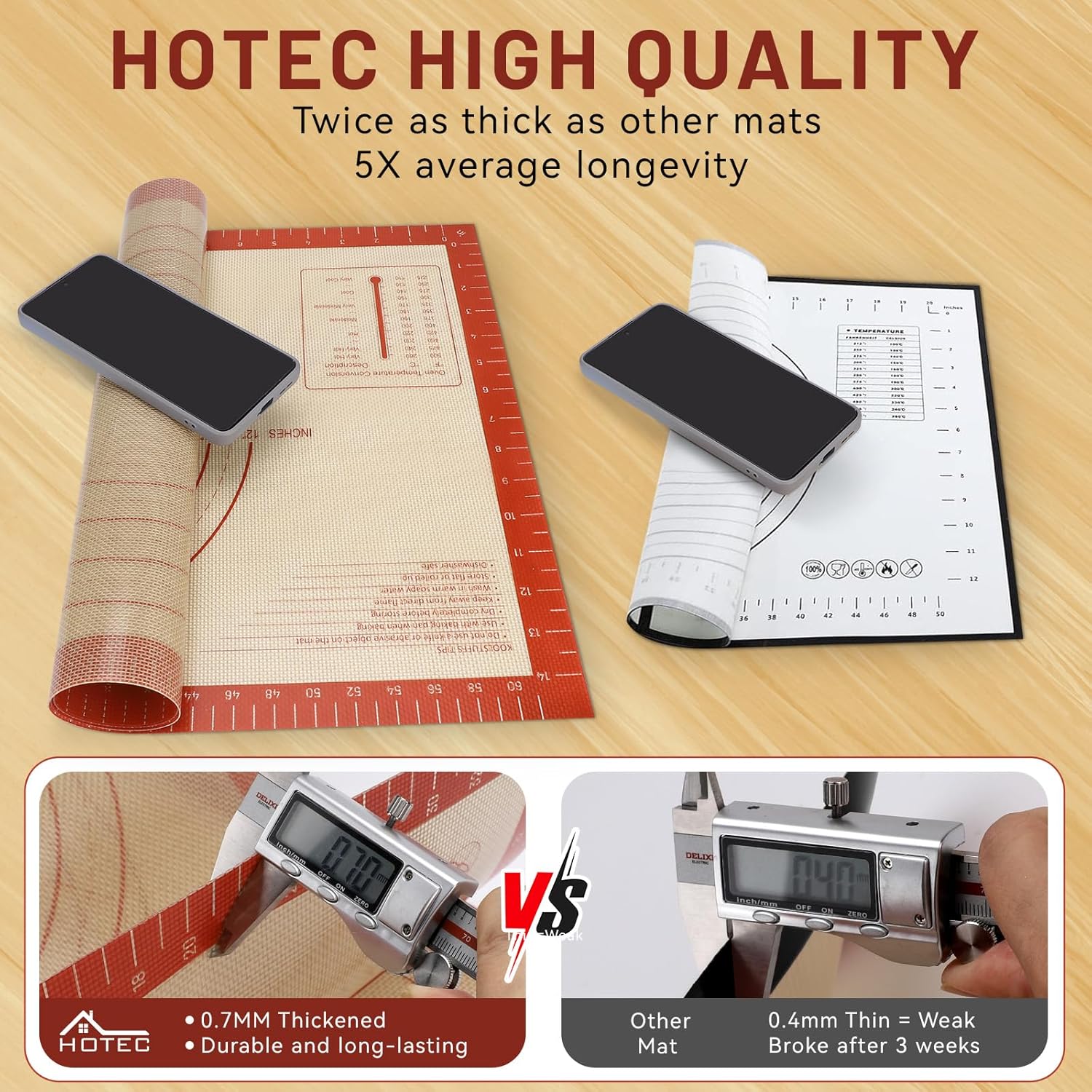
This is, hands down, the big one. Most silicone mats are silicone, obviously, but what’s inside can vary. The good ones often have a fiberglass mesh core. This isn’t just for show; it gives the mat stability, helps distribute heat evenly, and makes it incredibly durable. Without it? You’re looking at a flimsy, less effective sheet that might buckle in the oven or wear out fast. Cheaper mats might feel sticky or oily right out of the package, or develop weird textures over time. They’re also prone to tearing. You want a mat that feels substantial, flexible but not floppy. The HOTEC mat, with its “thickened” claim, is aiming for this sweet spot, suggesting a more robust construction than those super-thin, budget-bin options. But even the best can eventually succumb to wear and tear, especially if you’re not gentle. Nothing lasts forever.
Size & Fit:
Here’s where things get practical. Most home ovens are designed for half-sheet pans, roughly 18×13 inches. A mat sized for that—or a bit smaller—is generally your go-to. But wait, the HOTEC mat is 26×16 inches. That’s a big boy! Too big for a standard half-sheet pan, but potentially perfect for covering a larger countertop for dough work, or even for some bigger commercial-style ovens. Do you actually need that much surface area? Think about your typical baking projects. Are you rolling out a massive pie crust? Making huge batches of cookies? Or do you just want something for a couple of roasted vegetables? If your oven is standard home size, a mat this big won’t fit inside for baking, unless you’re using it purely as an oven liner on the rack itself, or trimming it (which, by the way, you should absolutely never do with fiberglass-reinforced mats unless you want fiberglass shards in your food).
Non-Stick Performance:
The whole point, right? A good silicone baking mat should release baked goods like magic, almost completely eliminating the need for grease or parchment paper. Think delicate cookies, sticky caramels, or roasted vegetables that usually weld themselves to your pan. But here’s the kicker: it’s non-stick, not no-stick. Some things, especially very high-sugar items, might still leave a little residue, or need a gentle nudge. And if you’re baking something super flat and thin, like lace cookies, sometimes they can be too non-stick, making them tricky to peel off without breaking. It’s a fine line.
Measurement Markings:
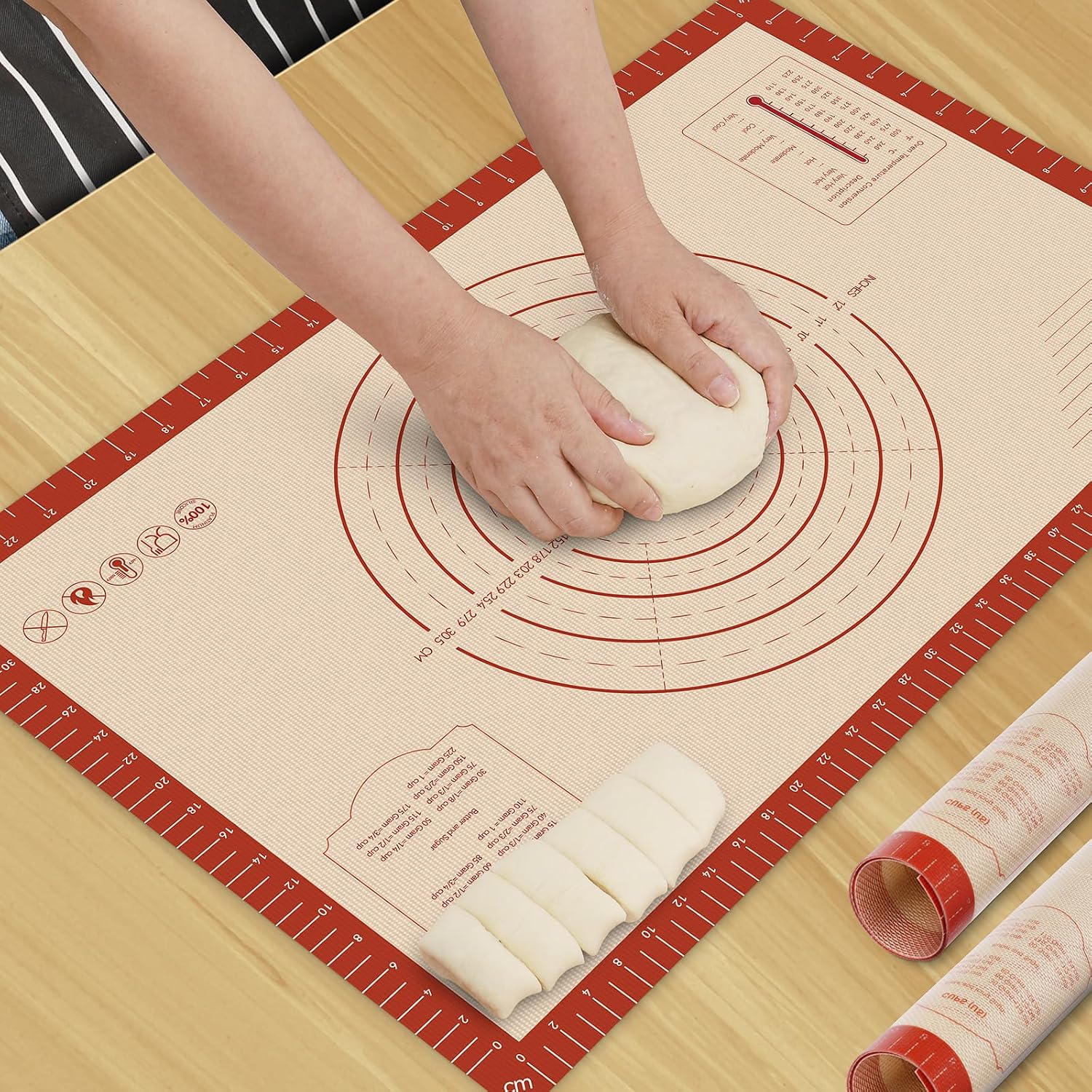
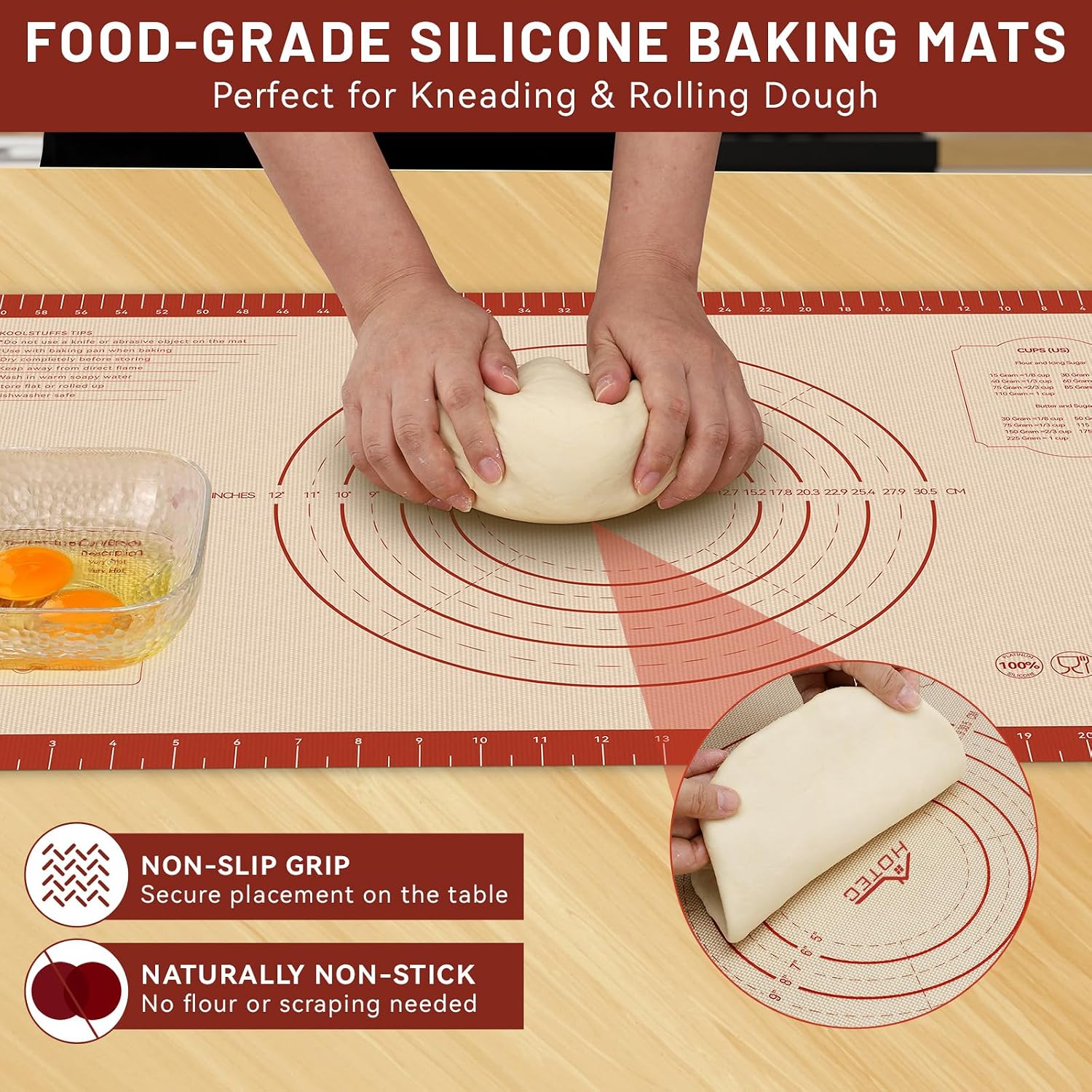
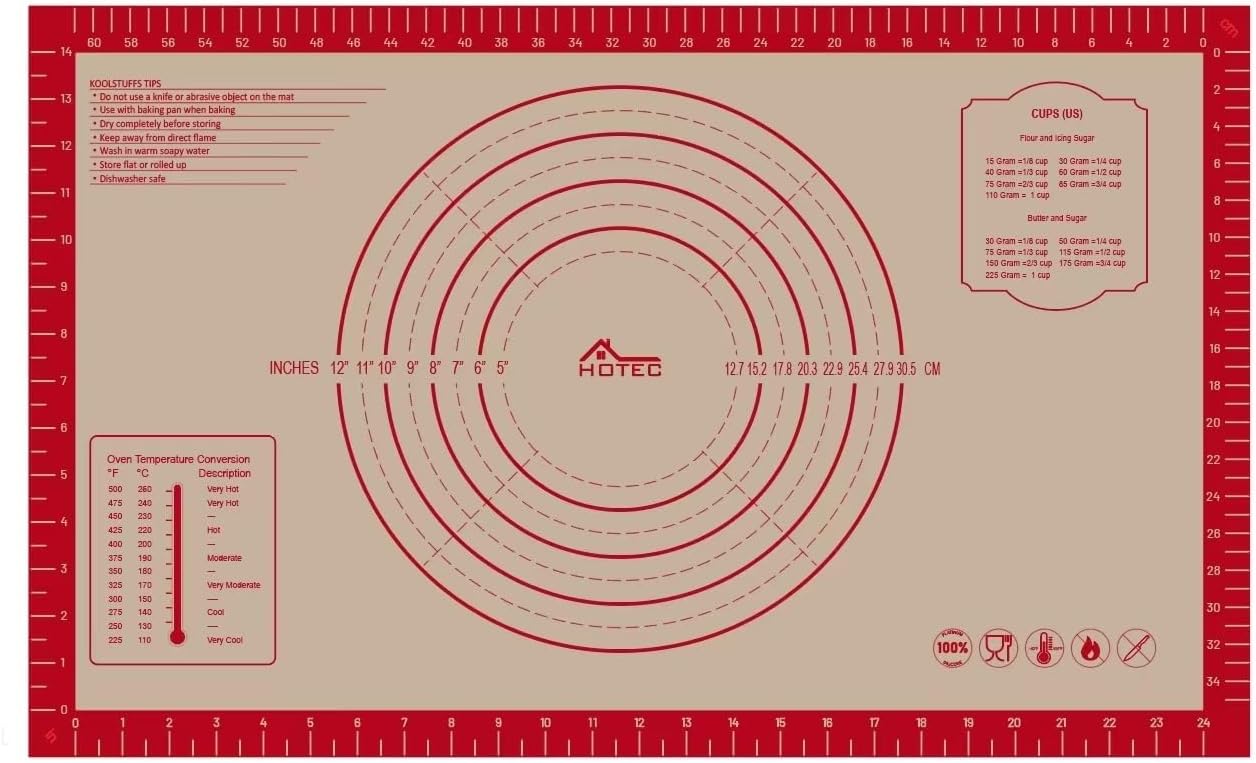
This is where the “pastry dough mat” part of the HOTEC product name really comes into play. Circular guides for pie crusts, rulers along the edge for portioning dough, even temperature conversions. These little visual cues are a godsend for precision baking. They can save you a ton of time and mess compared to fumbling with a ruler and flour-dusted countertop. However, the quality of these markings matters. Some cheaper mats have screen-printed guides that wash off or fade after a few uses. Look for markings that feel integrated, almost embossed. Otherwise, they’re just a fleeting fancy.
Heat Resistance & Safety:
You’re putting this thing in a hot oven, sometimes really hot. You want to be sure it can handle the heat without warping, melting, or leaching anything funky into your food. Most quality mats are rated for temperatures well beyond what a home oven can reach (think 400-500°F or more). If a mat doesn’t clearly state its temperature limits, be wary. Using it above its rating can shorten its life or, worse, release off-gases. Even within safe limits, consistent high heat can, over many years, slowly degrade the silicone, making it brittle. It’s not immortal.
Ease of Cleaning & Storage:
Honestly, who wants more kitchen cleanup? Silicone mats are generally a breeze to clean—a quick wipe with warm, soapy water, maybe a gentle scrub. They’re often top-rack dishwasher safe, though handwashing usually prolongs their life. The real issue? Storage. A 26×16 inch mat, like our HOTEC example, is big. It doesn’t fold flat easily without creasing the internal fiberglass (a no-no for longevity). You’ll likely need to roll it up, which then demands vertical space in a cupboard or drawer. Consider if you have that kind of real estate. If not, a smaller mat might be a smarter buy.
How to Match the Product to Your Situation
Your kitchen life isn’t just one thing, right? Different baking needs call for different tools. Let’s think about who you are in the kitchen and what kind of silicone baking mat actually makes sense.
The Casual Baker (The “I just want cookies, dammit” type):
You’re not doing fancy entremets every weekend. You want something simple, reliable, and easy for everyday tasks like baking a batch of chocolate chip cookies, roasting some veggies, or maybe warming up frozen goods. You don’t need a massive mat. A standard half-sheet size (around 16.5×11.5 inches) is your sweet spot. Non-stick performance is key for you, but you probably won’t obsess over precise measurement markings. The HOTEC 26×16 might be overkill. You’d likely find it unwieldy. What you’re really looking for is convenience and reliability.
The Serious Pastry Chef (The “Precision is paramount” type):
Okay, so you’re the one making elaborate macarons, laminated doughs, delicate tarts, or artisanal bread. Precision matters. A non-stick surface that performs consistently is crucial. You’ll definitely appreciate the measurement markings—the circles for uniform cookies, the rulers for cutting dough. The generous size of the HOTEC 26×16 mat could be a real boon here. Imagine rolling out a large sheet of puff pastry or a massive amount of brioche dough without needing to piece together parchment or constantly re-flour a counter. Its size, especially for intricate dough work, is a serious plus for this persona. You’re probably willing to invest a bit more for quality and specific features that truly enhance your craft.
The Countertop Protector (The “Mess-minimizer” type):
Maybe you’re not even baking that often. You just hate sticky messes on your kitchen counter. You knead dough, prepare messy ingredients, or simply want a clean, non-slip surface for everyday prep. For you, the size and durability of the mat are paramount. The HOTEC Silicone Baking Mat shines brightly here. Its 26×16 inch dimensions mean it can cover a huge swath of your counter, providing a hygienic, easy-to-clean workspace. The measurement markings become less about baking precision and more about general utility—a handy guide for cutting chicken or portioning something else. You’re prioritizing surface protection and easy cleanup above all else.
Silicone Baking Mat Showdown: Tiers and Trade-offs
Let’s break down the general landscape of these mats. Because there’s a definite hierarchy out there, and you usually get what you pay for.
| Type/Tier | Best For | Price Tier | Key Feature | Watch-Out |
|---|---|---|---|---|
| Budget Mat | Occasional light baking, cost-conscious | Budget-friendly | Basic non-stick, very low entry cost | Often flimsy, inconsistent heat distribution, markings fade quickly, shorter lifespan. |
| Mid-Range (e.g., HOTEC) | Versatile home baking, dough work, frequent use | Mid-range | Good durability, useful measurement markings, consistent non-stick | Can still be bulky for small kitchens, some grease retention over time. |
| Premium (e.g., Silpat) | Professional-grade results, heavy use, longevity | Premium | Exceptional non-stick, superior heat distribution, extreme durability | Significantly higher initial cost, might be overkill for casual users. |
| Specialty Mats | Specific tasks (e.g., macarons, pastries) | Mid-to-Premium | Specific patterns or textures for niche baking | Limited versatility for other uses, often a single-purpose item. |
Budget-friendly silicone mats are fine if you just need something for a once-a-year cookie bake or to protect a small area from a spill. But don’t expect them to last long, or provide truly even baking. Their non-stick can be hit or miss, too.
Moving up to mid-range options, where the HOTEC Silicone Baking Mat comfortably sits, you get a much better balance. You’re paying for a mat that feels substantial, often has that fiberglass core we talked about, and delivers on its non-stick promise consistently. The added value of features like measurement markings here is usually well-executed, making them genuinely useful tools for a broader range of tasks. You’ll likely find these to be far more reliable for regular use, but they still have their quirks, like potential difficulty in storing the larger sizes.
Premium mats are often the industry standard for professional kitchens. They’re built like tanks, offer virtually flawless non-stick release, and last for years, even with heavy daily use. But you’ll feel that price difference immediately. Are they worth it for a home baker? Maybe, if you’re seriously dedicated and bake almost every day. For many, a good mid-range mat hits the sweet spot without breaking the bank.
Specialty mats are a different beast. Think those rigid macaron mats with little circles for perfectly uniform shells, or textured mats for specific breads. They do one thing incredibly well, but they’re not your general-purpose workhorse. Consider these only after you have your main versatile mat sorted.
For the Daily Dough Roller
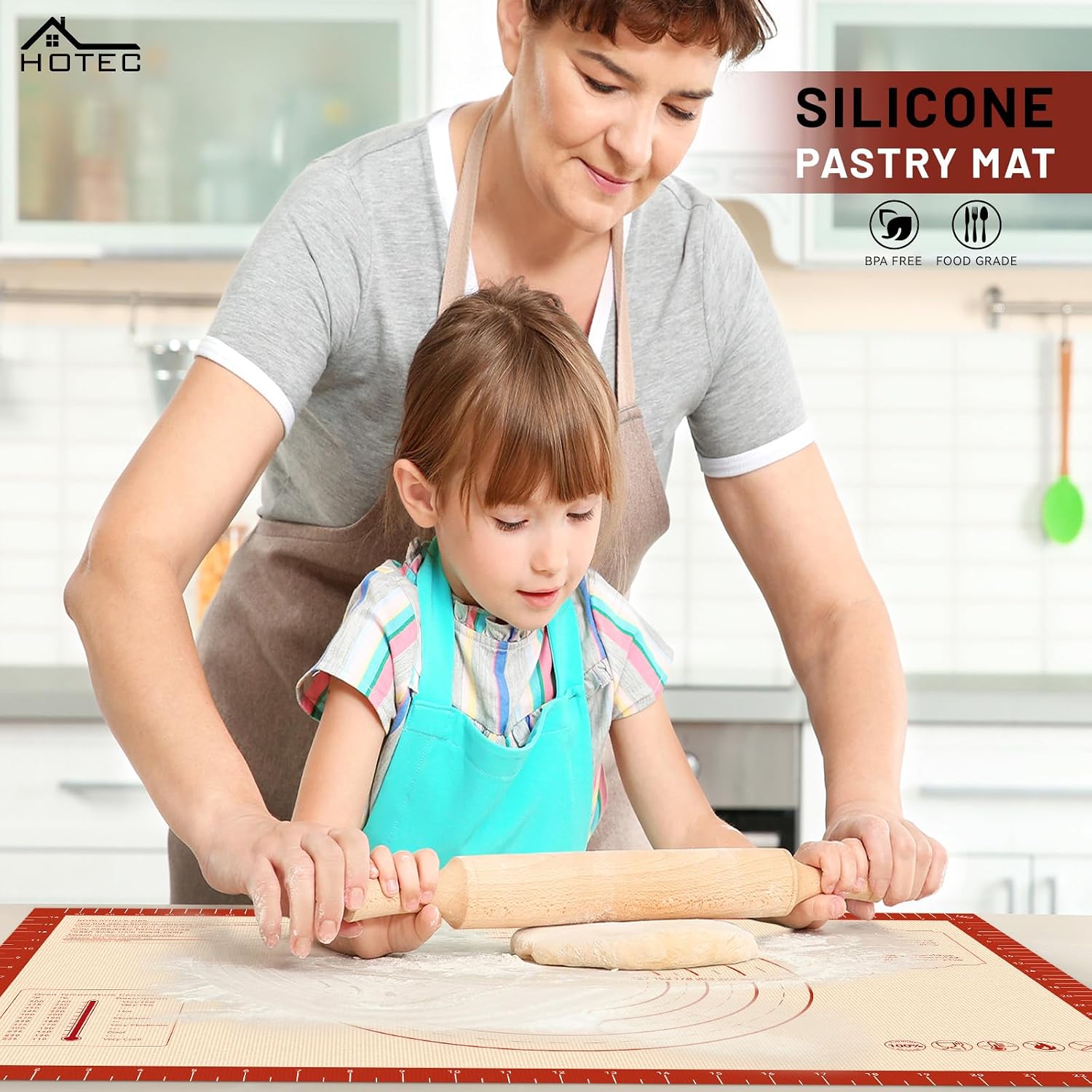
If you find yourself constantly flouring your kitchen counter to knead bread, roll out pizza dough, or work on delicate pie crusts, the sheer size of the HOTEC 26×16 Silicone Baking Mat is a revelation. This isn’t just a mat; it’s a dedicated workspace. No more chasing flour dust across your kitchen. The non-stick surface means less flour is actually needed, which can subtly change the texture of your doughs for the better. And those measurement markings? Pure genius for getting consistent shapes and sizes every time. Yes, it’s big, but for high-volume dough work, that’s exactly the point. It protects your surfaces, keeps cleanup contained, and offers a smooth, cool surface that dough loves.
When Oven Roasting is Your Jam
Forget scrubbing baked-on gunk from your sheet pans. A good silicone baking mat, when correctly sized, acts as an incredibly effective oven liner. For roasted vegetables, chicken pieces, or even sticky BBQ ribs, the non-stick properties mean food cooks evenly and releases effortlessly. Now, the HOTEC’s 26×16 size is primarily a pastry mat, and it’s oversized for most standard home sheet pans. You could use it laid directly on an oven rack for larger items, but you might find it hangs over, potentially catching fire if it touches the heating elements. For oven roasting inside a standard half-sheet pan, you’d need a smaller, dedicated mat. This HOTEC mat’s strength isn’t primarily as a pan insert for typical home ovens, but rather as a counter mat or for very large baking surfaces. That’s an important distinction.
Handling Delicate Pastries and Candies
Working with sticky caramels, delicate chocolates, or temperamental tuiles requires a surface that won’t grab or tear. This is another area where a quality silicone baking mat shines. Its smooth, non-porous surface provides the perfect release. You can spread molten sugar, let it cool, and then peel it right off without a fight. For precise work like piping out royal icing designs or creating intricate sugar decorations, the stable, non-slip base is indispensable. The generous dimensions of the HOTEC mat mean you have ample room to spread out, allowing you to work on multiple delicate items without crowding. Think about your last struggle with parchment paper curling up on you. This mat solves that.
Common Mistakes Buyers (and New Users) Make
Look, we’ve all been there. New tool, big expectations, then… oops. Avoid these common blunders to get the most out of your silicone baking mat.
- Using Sharp Utensils: Seems obvious, right? But in the heat of the moment, grabbing that metal spatula or pizza cutter can spell disaster. Silicone mats, even the sturdy ones, are easily damaged by sharp edges. A cut means a compromised surface, potential leaks, and a shorter lifespan for your mat. Always use silicone, plastic, or wooden tools. Always.
- Not Washing Properly (or letting odors linger): While they’re generally easy to clean, don’t just rinse and put away. Fats and oils can build up over time, leading to a greasy film that affects non-stick performance and can even cause lingering smells (especially from garlic or strong spices). Give it a good scrub with dish soap and warm water every time. A baking soda paste can help with stubborn odors.
- Over-greasing: It’s “non-stick” for a reason! You don’t need to butter or oil a silicone baking mat like you would a traditional pan. In fact, adding too much fat can sometimes have the opposite effect, creating a sticky residue that’s hard to clean. Trust the mat. For most items, nothing extra is needed.
- Buying the Wrong Size for Your Primary Use: This is a big one, especially with a mat like the HOTEC 26×16. If you primarily want an oven liner for your standard half-sheet pans, this mat is too big. You’ll end up frustrated, or cutting it (which, again, don’t do). Really assess where and how you intend to use it most often before you buy. If it’s for countertop work, great. For oven inserts? Double-check your pan dimensions.
Why/How/What
Why choose a silicone baking mat over parchment?
Parchment paper is a single-use item. It’s wasteful, and buying roll after roll adds up over time. A good silicone baking mat is a reusable, durable alternative that offers superior non-stick properties and often more even heat distribution. It’s an investment that pays for itself in convenience and reduced waste.
How do you properly care for a silicone baking mat?
Keep it clean! Wash it with warm, soapy water after every use, and occasionally give it a deeper clean with a baking soda paste to tackle any lingering odors or greasy residue. Dry it completely before storing, and roll it up rather than folding it to prevent creasing the internal fiberglass. Store it away from sharp objects.
What makes the HOTEC mat a noteworthy contender?
Its generous 26×16 size immediately sets it apart for those needing a large workspace, particularly for serious dough rolling or pastry work. The “thickened” design suggests enhanced durability and stability, which is often a mark of a mid-to-premium product. And the integrated measurement markings? A truly useful feature for precision.
FAQ
Do silicone baking mats really save you money?
Yes, over time, absolutely. While there’s an initial outlay, a durable silicone mat replaces countless rolls of parchment paper, saving you money in the long run and reducing kitchen waste.
Can I cut my silicone mat to fit?
Please don’t. Most quality mats, especially those for baking, contain a fiberglass mesh core. Cutting them exposes these fibers, which can then get into your food. It also compromises the integrity of the mat.
Are silicone mats safe at high temperatures?
Reputable silicone mats are generally safe for temperatures far exceeding typical home oven settings, usually up to 450-500°F (or higher). Always check the manufacturer’s stated temperature limits, but don’t worry about standard baking temps.
How do I get rid of lingering smells on my mat?
Strong odors from garlic or spices can sometimes cling. Try scrubbing the mat with a paste made from baking soda and water. Let it sit for a while before rinsing thoroughly. Some people swear by airing it out in direct sunlight.
What’s the ideal size for a general-purpose silicone mat?
For most home bakers, a mat designed to fit a standard half-sheet pan (around 16.5 x 11.5 inches) is the most versatile. It works for cookies, roasting, and can still provide a decent surface for smaller dough tasks.
Is the HOTEC 26×16 mat too big for most ovens?
Yes, for most standard home ovens and half-sheet baking pans, a 26×16 inch mat is indeed too large to fit inside. Its primary utility is for covering a large countertop for pastry and dough work, or for use in larger, commercial-style ovens.
Can you use a silicone mat for freezing?
Absolutely. Silicone is incredibly temperature resistant in both directions. You can use your mat to flash freeze cookies, fruit, or dough balls, and then easily peel them off once solid.
Final Recommendation
So, should the HOTEC Silicone Baking Mat – 26×16 Thickened Pastry Dough Mat find a home in your kitchen? If you’re a serious baker or someone who frequently rolls out large quantities of dough, works with fondant, or simply needs a big, reliable, non-slip surface for general kitchen prep, then yes, this mat is an excellent contender. Its generous dimensions and promise of durability make it ideal for the “Serious Pastry Chef” or the “Countertop Protector.” You’ll appreciate the scale and the integrated measurement markings.
However, if your primary need is a liner for standard half-sheet pans for everyday baking, or you have a very small kitchen with limited storage, this particular HOTEC mat’s size will likely be a hindrance, not a help. For those situations, a smaller, standard-sized silicone baking mat would be a more practical, less frustrating choice. But for big jobs, for serious dough work, or for keeping your counters spotless during messy tasks? This mat punches above its weight in the mid-range category. Check current availability through major retailers.
#HOTEC #Silicone #Baking #Mat #26×16 #Thickened #Pastry #Dough #Mat #Measurement #NonStick #Dough #Rolling #Bread #Oven #Liner #Kitchen #Counter #FondantPie #Crust