Brightech Litespan Floor Lamp Review: Is This Reading Lamp Worth It?
A floor lamp sounds like the simplest purchase in home décor. Stand it in the corner, plug it in, done. Then you start shopping and the category turns into a maze: torchiere, gooseneck, tripod, arc, uplight, downlight, 2700K versus 5000K. This guide cuts through that noise with one product at the center — the Brightech Litespan LED reading floor lamp — and honest answers about who it suits, who should skip it, and which of the other two proven floor lamps below might fit better.
Quick Answer
Related reading: Lighting layers matter — alongside this floor lamp, our pendant light sizing guide covers overhead options for the same room. A reading corner needs grounding too; see our rug sizing guide guide for proportion rules that apply here as well. If the lamp sits beside your media setup, our living room TV sizing guide completes the layout.
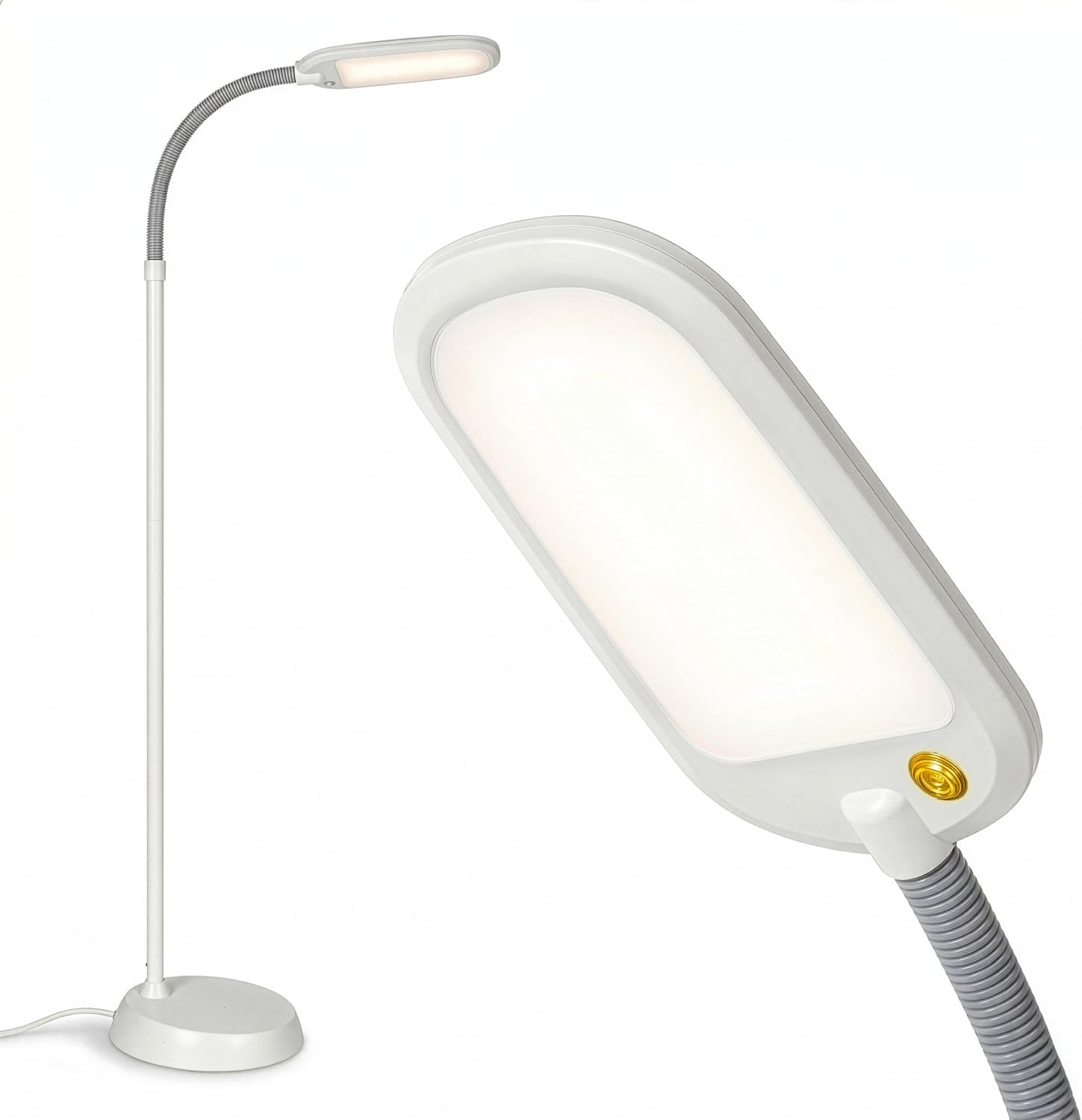
The Brightech Litespan is a task-first floor lamp: a bendable gooseneck you aim exactly where you read, knit, or work, with dimming and three white color temperatures. It won’t wash a whole living room in ambient glow the way a torchiere does. But if your actual problem is “I can’t see my book properly next to the couch,” this is the tier of floor lamp that solves it — and the Litespan’s adjustable head is the reason it keeps getting recommended.
Compare Top Floor Lamps
Three proven picks side by side — choose the one that fits your room.
Brightech Sky Dome Plus
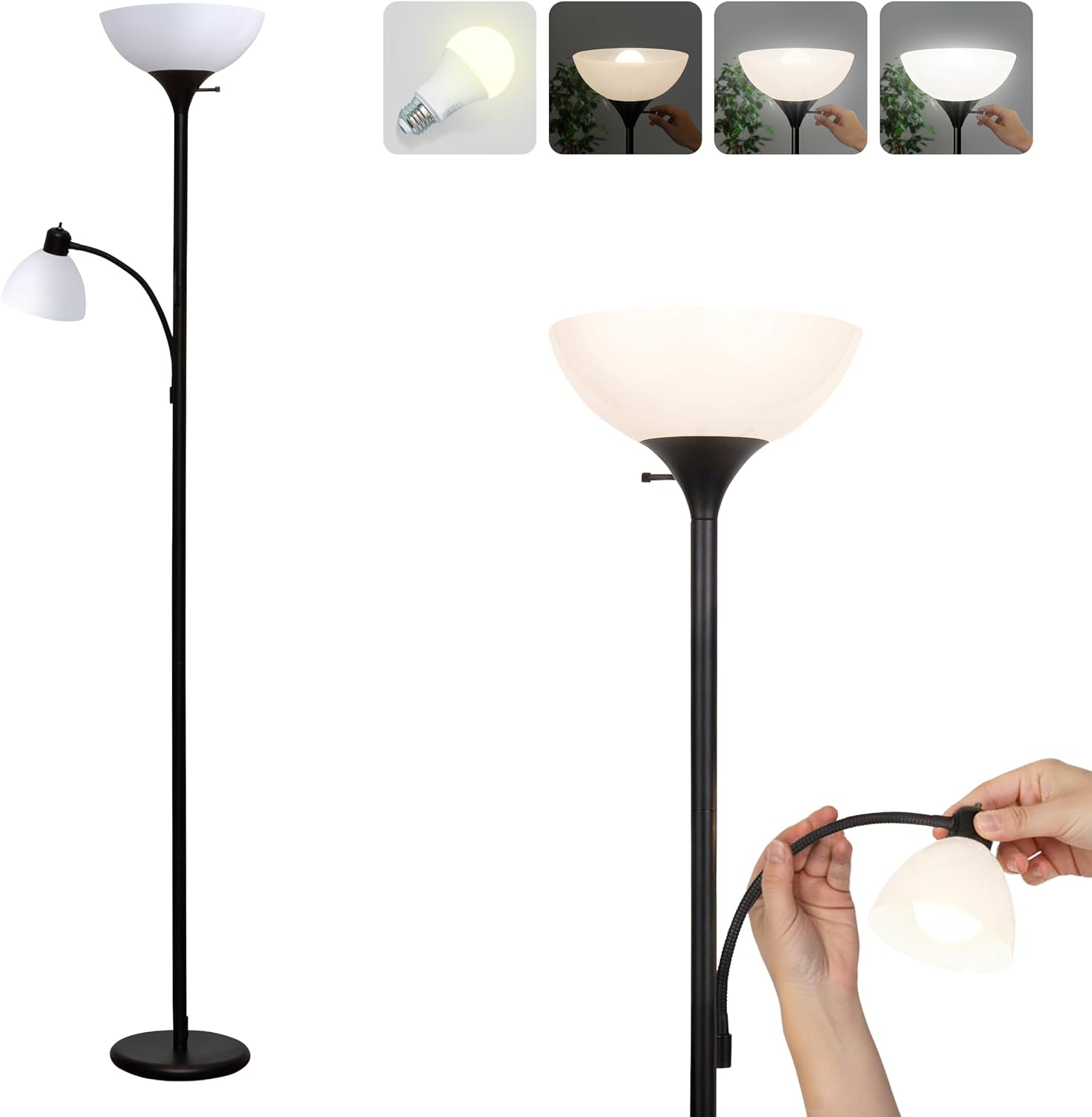
72″ torchiere · 3-way dimmer · fills a whole room
Prices and availability may vary — tap any product to check the current listing.
What to Look For When Buying a Floor Lamp
Most floor lamp regret comes from buying the wrong kind of light, not the wrong brand. Get the type right and half the decision makes itself.
Purpose first: task light or room light
This is the fork in the road. A task lamp — like the Litespan with its bendable gooseneck — throws focused light downward onto a page, a canvas, a sewing machine. A room lamp, like a torchiere, bounces light off the ceiling to raise the ambient level of the whole space. Different jobs. Honestly, most living rooms could use both, but your budget probably allows one for now.
Here’s the test: do you already have overhead lighting you’re happy with, and just need a reading spot? Buy task. Is your living room lit by a single sad ceiling fixture (or nothing at all, hello renters)? Buy a torchiere first, task light later. Buying a gooseneck reading lamp to light a whole dark room is like buying a flashlight to light a stadium. Wrong tool.
Brightness: enough headroom matters more than the top number
Manufacturers love shouting lumen figures, and the numbers do mean something — roughly speaking, the Litespan sits in the bright-task-light neighborhood (its listing claims around 2,000 lumens at full tilt), while the Sky Dome Plus torchiere claims around 2,400 lumens of warm uplight meant to carry a room. But the raw peak is only half the story.
What you’ll actually live with is the middle range: reading at 60–70% brightness most evenings. A lamp that only feels right at 100% is a lamp with no headroom — and running flat-out shortens LED life and leaves you nowhere to go on dark winter afternoons. A dimmable lamp with a generous ceiling gives you flexibility instead. That’s the real brightness spec, and nobody prints it on the box.
Color temperature: the mood knob nobody explains
Kelvin numbers sound technical, but the idea is dead simple: low Kelvin (warm, ~3000K) feels like candlelight and sunset; high Kelvin (cool daylight, ~5000K+) feels like an office or a hospital corridor. The Litespan lets you switch between cool, soft, and warm whites, which sounds like a gimmick until you’ve read a novel under warm light at 10pm and then needed crisp cool light for threading a needle.
Why it matters for real life: warm light in the evening messes with your sleep less, cool light keeps you alert for detail work. If you’ll use the lamp for one thing — say, only reading novels in bed — a fixed warm-white lamp is fine and usually cheaper. If it’ll pull double duty between crafts, makeup, and reading, adjustable color temperature earns its keep fast.
Dimming: the feature you’ll use daily
Ask anyone who owns a dimmable floor lamp what they’d give up last. It won’t be the color options or the fancy base. Dimming is the daily-use feature, because the right brightness at 7pm is wildly different from the right brightness at 11pm. Full blast for hobbies, a low warm glow for winding down.
One thing to check before buying: how it dims. The Litespan uses a touch control with press-and-hold dimming and remembers your last setting — no fumbling. The Sky Dome Plus ships with a 3-way bulb, which gives you three fixed steps rather than a smooth slide. Both work; the smooth dimmer is nicer for evening wind-down, the 3-way is simpler and there’s nothing to learn. Small detail, big daily difference.
Stability: the physics of tall, top-heavy objects
Every floor lamp is a lever waiting for a toddler, a dog tail, or your own shin at 2am. Weighted bases exist for a reason, and Brightech’s whole brand identity leans on them — the Litespan’s base is designed to keep a bending gooseneck from pulling the whole thing over. It’s still a 4-foot pole with weight at the top, though. Physics doesn’t care about branding.
Placement beats engineering here. Tuck the base behind a chair or side table so the pole has a neighbor to lean against, and keep the cord routed so nobody’s foot finds it. If you’ve got large dogs or very small children, a tripod design like the ELYONA — three legs spread wide — is inherently harder to knock over than any single-pole lamp, weighted base or not. Something to weigh honestly before you buy.
Style and footprint: it lives in your room, not on a spec sheet
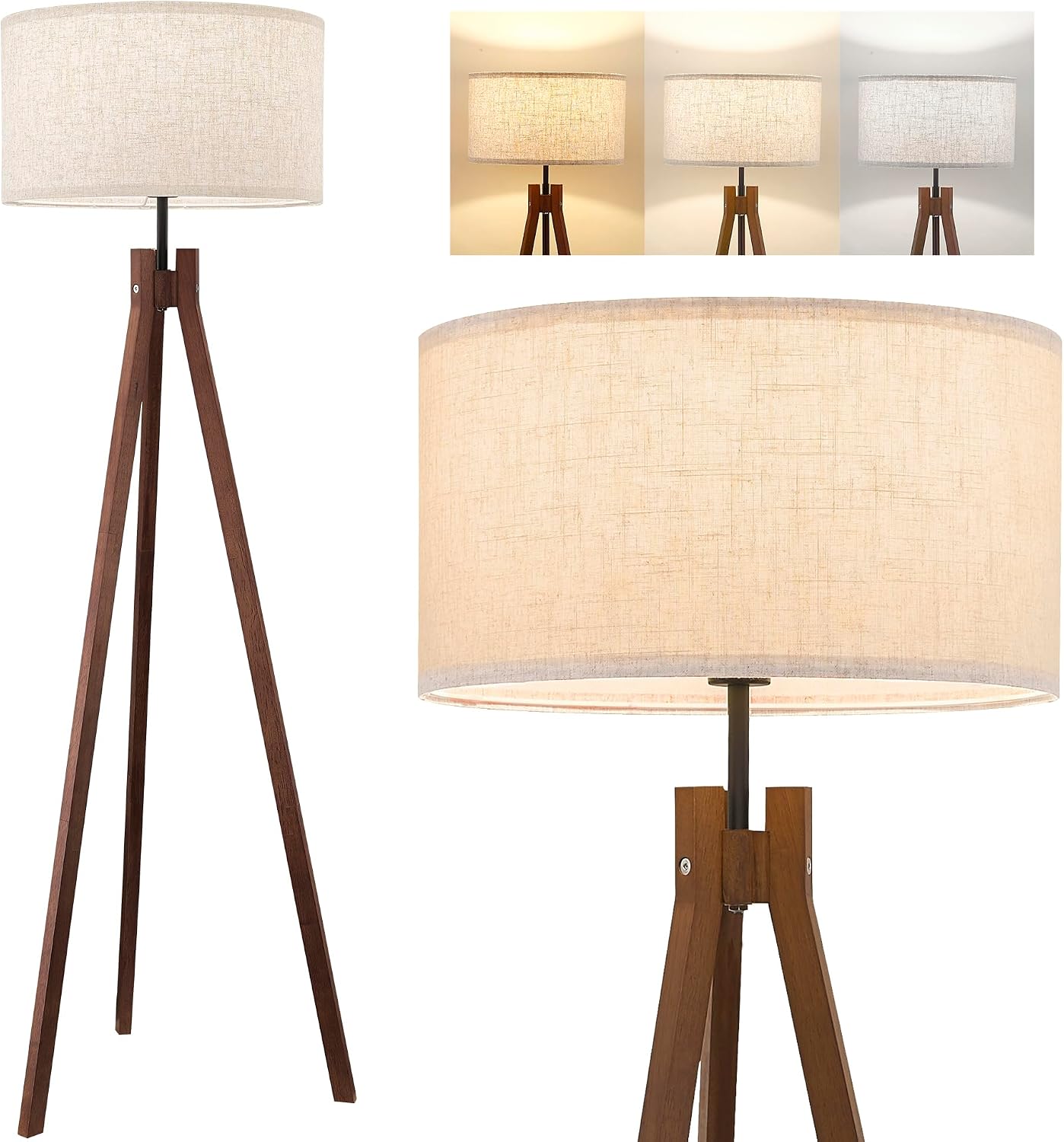
A floor lamp is furniture with a job. The Litespan is modern and utilitarian — slim white pole, functional head, reads as “task tool” rather than “décor piece.” It’ll disappear into a home office and look slightly clinical next to a velvet armchair in a curated living room. The ELYONA tripod is the opposite: wood legs and a linen shade that look good even switched off, but with less aimable light.
Footprint matters too. A torchiere slides into a 10-inch corner gap; a tripod needs a couple of square feet; a gooseneck needs clearance to bend without bonking the wall. Measure the actual spot — including how the head will move — before you order. I’ve seen people spend way too much on fixtures that technically fit the room but fight the furniture every day. Tape out the footprint on the floor if you have to. Thirty seconds, saves a return.
How to Match the Floor Lamp to Your Situation
Forget star counts. The right floor lamp is the one that matches the room you actually have. Which of these is yours?
The evening reader
Your armchair is perfect, your book is waiting, and the overhead light is either too dim or too far away to read by. You need light aimed at the page — not the ceiling, not the wall behind you. The Litespan is built for exactly this: bend the gooseneck over your shoulder, dial in a warm white, dim to taste. The adjustable head is the whole value proposition. A torchiere will leave you squinting; a pretty tripod will light the room nicely while your page stays murky.
The renter with no overhead light
The classic rental problem: a living room with zero ceiling fixtures, one outlet in the wrong place, and a landlord who’ll notice holes in the ceiling. You don’t need a reading beam — you need the room to feel lit. This is torchiere territory. The Sky Dome Plus’s tall uplight bounces off the ceiling and lifts the whole space; two of them in opposite corners can genuinely replace a missing overhead fixture. A gooseneck task lamp here would give you one bright circle and a lot of darkness. Buy the room light first, add the reading light when the budget allows.
The décor-first decorator
You’re styling a corner, and the lamp has to look right in daylight before it ever gets switched on. Warm wood, linen texture, mid-century lines — this is where the ELYONA tripod earns its spot. Its light is softer and less aimable than a gooseneck, and that’s a fair trade when the job is “make this corner feel finished.” Just be honest with yourself about the trade: if you later decide you need serious reading light, you’ll be buying a second lamp. Pretty and practical overlap less often than marketing suggests.
How the Floor Lamp Tiers Compare
Floor lamps cluster into a few clear types. Knowing where the Litespan sits — and what you’d gain or lose by switching types — is the fastest route to a confident pick.
| Type | Best For | Price Tier | Key Feature | Watch Out |
|---|---|---|---|---|
| Gooseneck task lamps (Litespan’s type) | Reading, crafts, desk work | Mid-range | Aimable head, adjustable color | Won’t light a whole room |
| Torchiere uplights (Sky Dome Plus) | Rooms with no overhead light | Mid-range | Ceiling-bounce ambient light | Poor for focused reading |
| Tripod / shaded lamps (ELYONA) | Styling corners, soft glow | Budget-friendly | Décor looks, stable stance | Less aimable, dimmer light |
| Arc floor lamps | Over-sofa statement lighting | Premium | Reaches over furniture | Heavy base, needs space |
Gooseneck task lamps are the precision instruments of the category — less total light than a torchiere, but every bit of it goes exactly where you point it, which is why readers keep coming back to them.
Torchieres do the opposite job beautifully: they don’t aim at anything, they raise the whole room’s light level, which makes them the renter’s best friend and the reader’s worst choice.
Tripod and shaded lamps trade raw output for atmosphere and looks; they’re the ones guests compliment, and the ones you’ll squint under if you try to read by them.
Arc lamps are the splurge — dramatic reach over a sectional, real presence — but the heavy marble-style base and the floor space they demand rule them out for small rooms entirely.
No Overhead Light? Read This First
If your room has no ceiling fixture, resist the urge to solve it with a single “bright” floor lamp and call it done. One light source creates harsh contrast: a bright pool in the corner, caves of shadow everywhere else. Your eyes work harder than they should, and the room feels smaller.
The fix is layering, and it doesn’t have to be expensive. A torchiere in one corner for ambient bounce, plus a shaded lamp or a second small light on the opposite side, gives you balanced light for less than one premium fixture. Think of it as two $60–ish purchases instead of one big one. (General tiers, not quotes — check current listings.) The room will feel bigger, your eyes will thank you, and you’ll actually use both lamps.
Small Rooms and Tight Corners
Small rooms punish the wrong lamp choice fast. A tripod’s three legs eat floor space a slim torchiere wouldn’t; an arc lamp in a studio apartment is just comedy. Measure twice, as the saying goes — and measure the swing, not just the base. A gooseneck head bent toward your chair needs clearance the product photo doesn’t show.
Here’s the counterintuitive bit: in a genuinely small room, the tallest, slimmest lamp often wins. A 6-foot torchiere draws the eye up and makes the ceiling feel higher, while a squat shaded lamp at knee height makes the room feel like a cave. Verticality is free square footage, visually speaking. Use it.
Common Mistakes Buyers Make
1. Buying a task lamp to light a room (or vice versa)
The number-one category error, and it’s an honest one — “floor lamp” sounds like one thing. But a gooseneck aimed at a book gives you a bright circle and dark walls; a torchiere gives you glowing walls and a murky page. Decide which problem you’re solving before you compare models, or you’ll compare the wrong specs beautifully.
2. Ignoring the bulb situation
Some floor lamps take standard screw-in bulbs you can replace forever; others have built-in LEDs that last years but can’t be swapped when they finally die. Neither is wrong, but know which you’re buying. A built-in LED with a multi-year rated life is fine. A built-in LED with no stated rating and no warranty? That’s a disposable lamp wearing a premium costume. The Litespan’s integrated LEDs are backed by the brand’s multi-year warranty — that’s the part that actually matters.
3. Choosing by the product photo’s room
Product photos show lamps in generous, sunlit rooms with 10-foot ceilings. Your room is not that room. The lamp will look bigger, the light pool smaller, and the cord will somehow be six inches short of the outlet. Judge the dimensions against your actual corner, not the fantasy loft. This is especially true for arc lamps and large drum shades.
4. Forgetting the switch
How you turn it on sounds trivial until the switch is at floor level behind the sofa and you’re crawling behind furniture every night. Foot switches, touch controls on the pole, pull chains — each has a personality. The Litespan’s touch control sits near the lamp head, easy to reach from a chair. The Sky Dome Plus uses a simple on/off at the pole. Small thing. You’ll interact with it twice a day, every day. It’s not small.
Why, How, What: Quick Answers
Why do some rooms still feel dark with a floor lamp on?
Because one light source, however bright, creates contrast instead of coverage. Your eyes adapt to the brightest spot and everything else reads as shadow. That’s why a single torchiere can leave a room feeling “lit but gloomy.” The fix isn’t a brighter lamp — it’s a second, smaller light source somewhere else in the room. Two modest lamps beat one heroic one almost every time. It’s the oldest trick in lighting design, and it works because it’s physics, not marketing.
How do you pick the right color temperature?
Match it to the hour and the activity. Cool white (daylight-ish) for detail work — crafts, makeup, anything where color accuracy matters. Warm white for evenings, when you’re winding down and don’t want your brain thinking it’s noon. If the lamp only gets used after dinner for reading, a fixed warm white is simpler and cheaper. If it’ll do crafts on Saturday afternoon and novels at night, adjustable color temperature — like the Litespan’s three whites — is worth paying for. When in doubt, warm white is the safer default; nobody ever complained a living room felt too cozy.
What’s the difference between a torchiere and a regular floor lamp?
A torchiere is a specific type: the light points up, bouncing off the ceiling to fill the room with diffuse, shadow-soft light. A “regular” floor lamp usually means a shaded lamp (light glows through or around a shade) or a task lamp (light aimed down at something). Torchieres are the best single-lamp solution for a room with no overhead light, and the worst choice for reading small print. The name comes from the French word for torch — fitting, since they’re basically elegant light fountains.
Questions People Ask Before Buying
These are the questions shoppers actually type into search and AI assistants when they’re close to buying a floor lamp. Straight answers, no fluff.
Is the Brightech Litespan worth it, or should I just buy a cheap floor lamp?
Worth it if you’ll actually use it for reading or detail work several times a week. The adjustable gooseneck and dimmable multi-color light are the features that separate it from budget lamps, and they’re exactly the features a daily reader touches constantly. If you just need some light in a corner and won’t aim it at anything, a cheaper shaded lamp will do the job fine and you’ll never miss the gooseneck. Match the lamp to the habit, not the hype.
Can one floor lamp really replace an overhead ceiling light?
Yes, with the right type and realistic expectations. A tall torchiere bouncing light off a white ceiling can genuinely carry a medium living room or bedroom — renters do this all the time, and it works. What it won’t do is replicate the even, shadow-free coverage of a proper ceiling fixture in a large or oddly shaped room. For one medium room, one good torchiere plus one small accent light is a proven combo. For a big open-plan space, you’ll want two torchieres or layered lighting.
Litespan vs. Sky Dome Plus — which Brightech floor lamp should I buy?
They solve different problems, so the answer is the room, not the brand. Buy the Litespan if your main complaint is “I can’t see what I’m reading/working on” — its bendable head puts light on the task. Buy the Sky Dome Plus if your main complaint is “this room feels dark” — its tall uplight raises the ambient level of the whole space. Many households end up owning both types eventually, one per room. If you can only buy one today, pick the complaint that bothers you more.
What height floor lamp should I buy for reading next to a couch?
Look for the light source to sit roughly at or slightly above your seated eye level — for most couches and armchairs, that means a lamp in the 55–65 inch range with the head able to angle down toward the page. Too short and the light glares up into your eyes; too tall and fixed and the light overshoots the page onto the wall behind you. This is exactly why adjustable goosenecks exist: they forgive imperfect height. A fixed-head lamp has to be the right height; an aimable one just has to be close.
Do LED floor lamps with built-in bulbs last, or am I buying a disposable lamp?
A well-made integrated LED lamp lasts many years of normal evening use — the LEDs themselves are typically rated for tens of thousands of hours, which translates to well over a decade at a few hours a day. The honest caveat is that when the LED eventually fails, you can’t screw in a replacement the way you can with a standard socket. So the warranty and the brand’s track record matter more than usual: a multi-year warranty from an established lighting brand is the real “bulb replacement” here. Cheap no-name integrated lamps with no warranty backing are the ones that become disposable.
Frequently Asked Questions
Will the Litespan work as my only light in a bedroom?
It depends on the bedroom’s size and what “work” means to you. For reading in bed and getting dressed, yes — it’s plenty bright aimed where you need it. For making the whole room feel evenly lit, no; a task lamp leaves the corners dark. Small bedrooms get away with it. Larger ones want a torchiere or a second light.
Is the gooseneck sturdy, or does it droop over time?
The gooseneck is the part that takes the most daily handling, so this is a fair question. The Litespan’s neck is designed to hold its position once bent — that’s its core feature, not an afterthought. Like any adjustable arm, it’ll feel slightly looser after years of daily repositioning than it did on day one. Gentle adjustments rather than yanking it around will keep it aiming true longer.
Can I use a floor lamp with a smart plug?
Usually yes, with one catch: the lamp has to default to “on” when power returns. Lamps with simple mechanical switches work perfectly with smart plugs. Lamps with touch controls or memory settings — like the Litespan’s press-and-hold dimmer — may power back on at the last setting, or may need a tap to wake up, depending on the design. Check the listing’s Q&A or manual for “power failure memory” behavior before assuming.
What’s better for a home office: a floor lamp or a desk lamp?
A desk lamp wins for pure task lighting — it’s closer to the work, so it needs less power to do the job. A floor lamp wins when the desk is already crowded or you want ambient light for video calls too. Plenty of home offices use both: the desk lamp for the keyboard, a floor lamp in the corner to kill the “interrogation room” vibe on camera. If you can only buy one, buy for the desk first.
Do I need an electrician to install a floor lamp?
No — that’s the whole point. Floor lamps plug into a standard outlet, no wiring, no electrician, no landlord permission. Assembly is usually a few pole sections screwed together and takes minutes. It’s the lowest-commitment lighting upgrade in existence, which is exactly why renters love them.
How do I stop a floor lamp from tipping over?
Three things, in order of impact: put it where traffic doesn’t flow (behind furniture, in a true corner), route the cord flat against the wall so feet never catch it, and prefer weighted-base or tripod designs if kids or pets are in the picture. No floor lamp is tip-proof — they’re tall and narrow by nature — but placement does more than any base design.
Final Recommendation
So: is the Brightech Litespan worth buying? If your problem is specific — you read, craft, sew, or do detail work next to a chair and the current light isn’t cutting it — yes, and the adjustable gooseneck is the reason. It puts bright, dimmable, color-adjustable light exactly on the task, which is something no torchiere and no pretty tripod can do. That specificity is its whole case.
But be honest about the room. If the room itself is dark, buy the Sky Dome Plus torchiere first and add task light later. If you’re styling a corner and the lamp has to look good at noon, the ELYONA tripod is the prettier pick. The Litespan is the worker of the three — less decorative, more useful. Buy the worker when you have work for it to do.
Decision Tree: Should You Buy It?
→ Main need is reading or detail work by a chair? Yes → the Litespan is the right type.
→ Room has no overhead light and feels dark overall? Yes → buy the torchiere (Sky Dome Plus) instead, add task light later.
→ Styling a corner and looks matter most? Yes → the ELYONA tripod photographs better.
→ Just need some light, rarely aimed at anything? A basic shaded lamp will do — save the money.
Key Takeaways
• Buy the type first, the model second: task gooseneck for reading, torchiere for dark rooms, tripod for décor.
• The Litespan’s case is its aimable head plus dimming and adjustable color temperature — daily-use features, not spec-sheet filler.
• One lamp rarely lights a room well; two modest lamps beat one heroic one, and placement matters more than lumens.