This article contains affiliate links. If you buy through them, we may earn a commission at no extra cost to you.
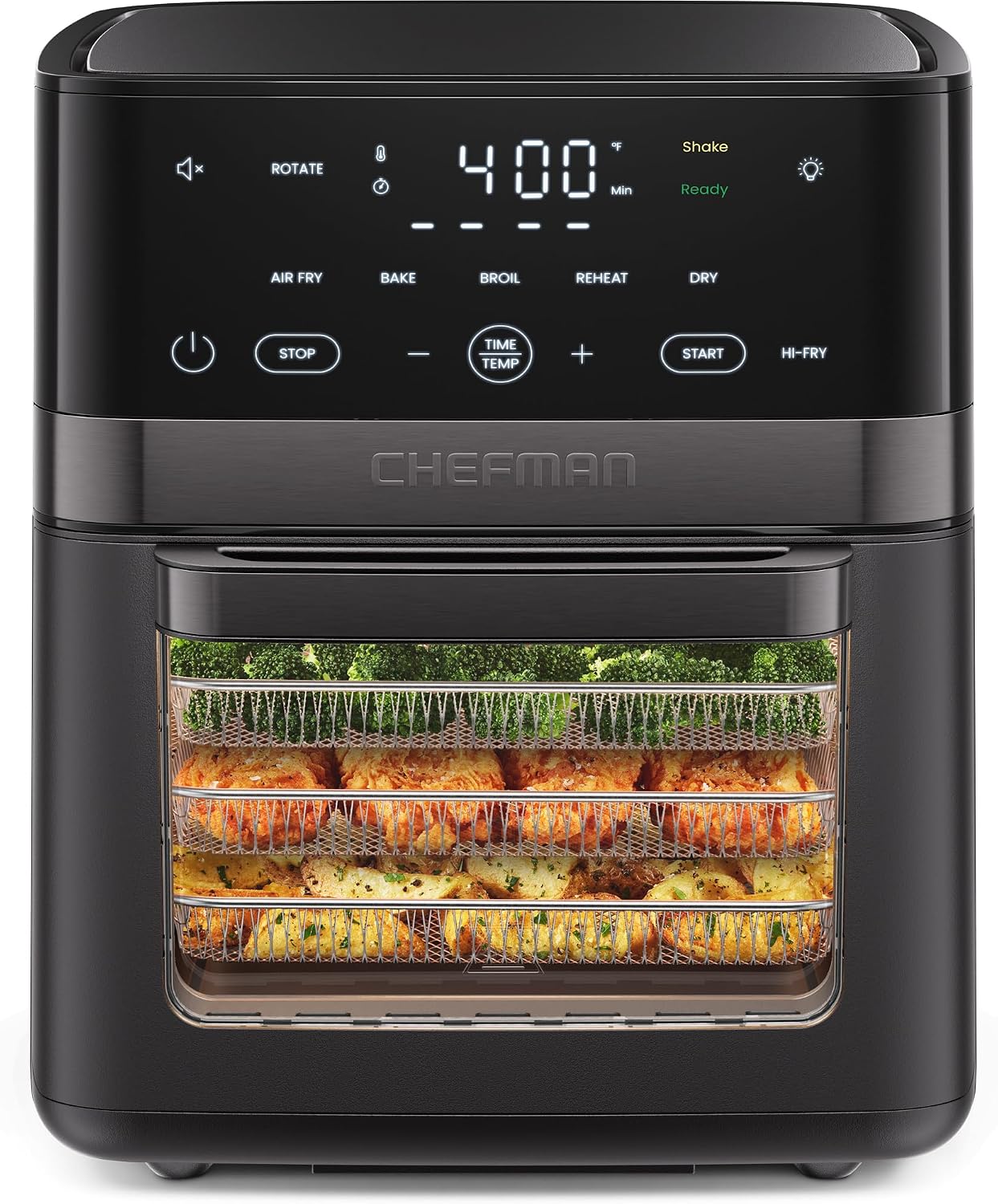
Fourteen quarts is a promise made to a crowd, and I have returned enough big appliances to know that crowds are the least frequent event in any kitchen. The Chefman XL is an oven-style air fryer — door, racks, rotisserie ambitions — wearing a number that describes its cavity the way luggage capacity describes a suitcase: truthfully, and in a shape you will never fully use. My test for machines like this is not the feast day photograph. It is the third ordinary Tuesday, when the crowd is two people and the machine has to justify heating a small room’s worth of air to cook a handful of wedges. Some big machines pass that test by being good ovens generally. Some become the appliance you walk past to reach the smaller one.
First, the honest strengths, because they are real. Two racks of food at once is the feature that survives contact with actual life: protein up top, vegetables below, one preheat, one timer argument. The rotisserie is theatre that occasionally produces an excellent chicken, and I will not pretend the theatre has no value — people cook more adventurously with a machine that makes dinner feel like an event for the first month. The question the return data asks is what remains in month four, and month four’s answer is racks and capacity discipline. If your household genuinely cooks in trays, this format is your format. If it cooks in handfuls, the box’s other two machines are waiting to make the counterargument with their feet: they get used.
The physics of big air
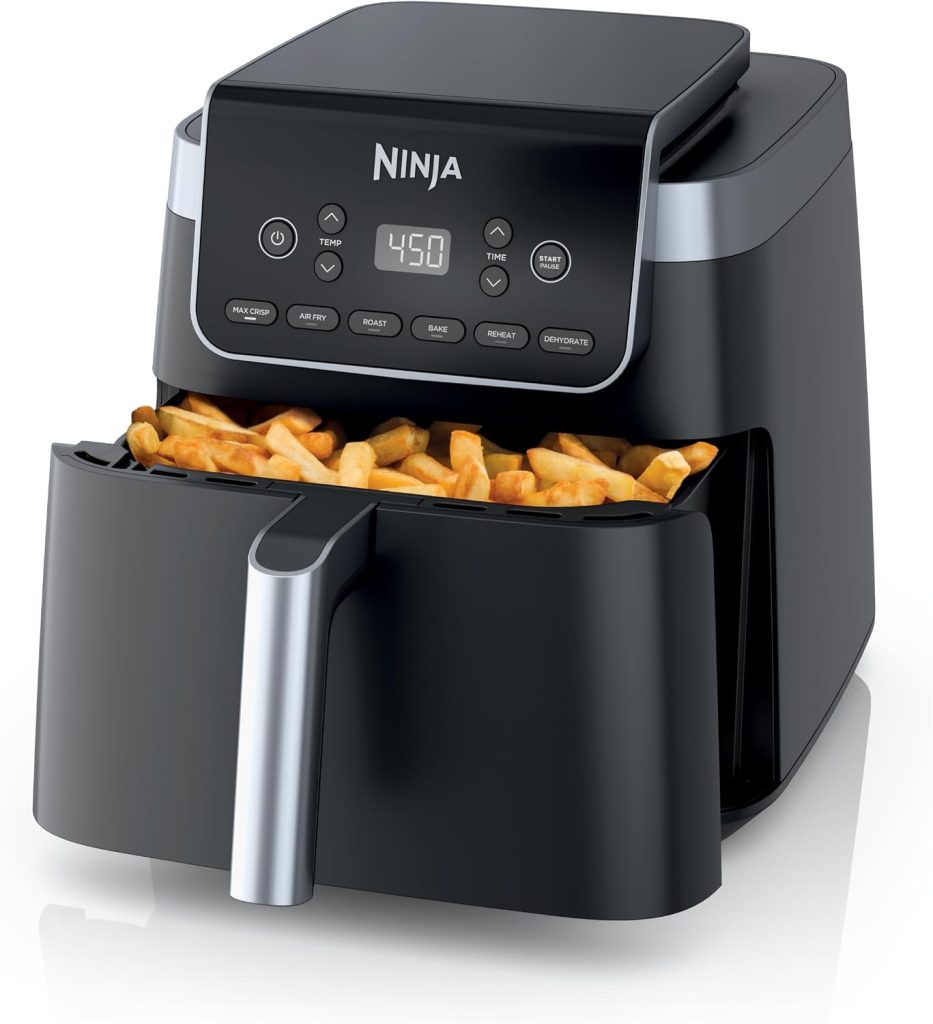
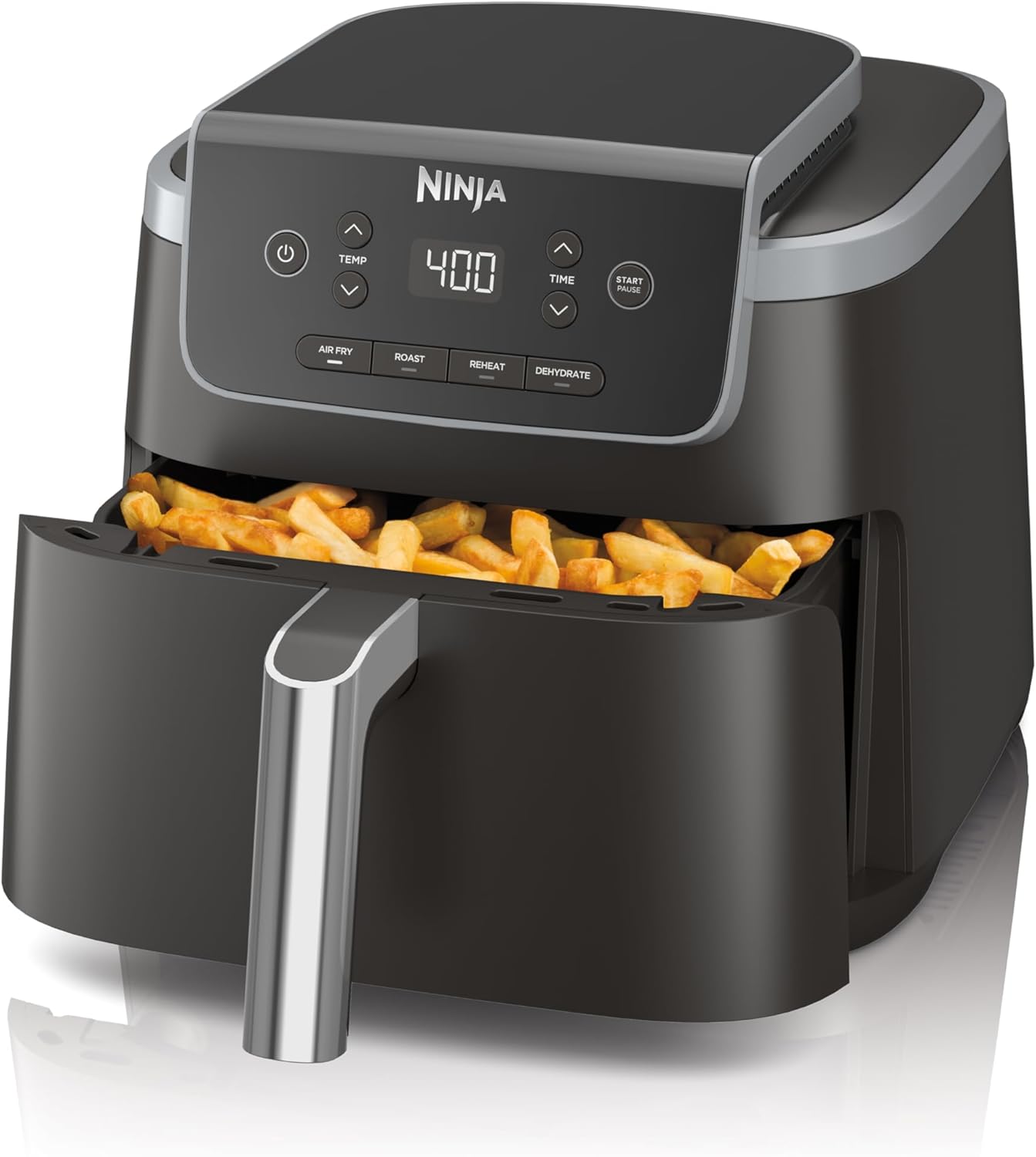
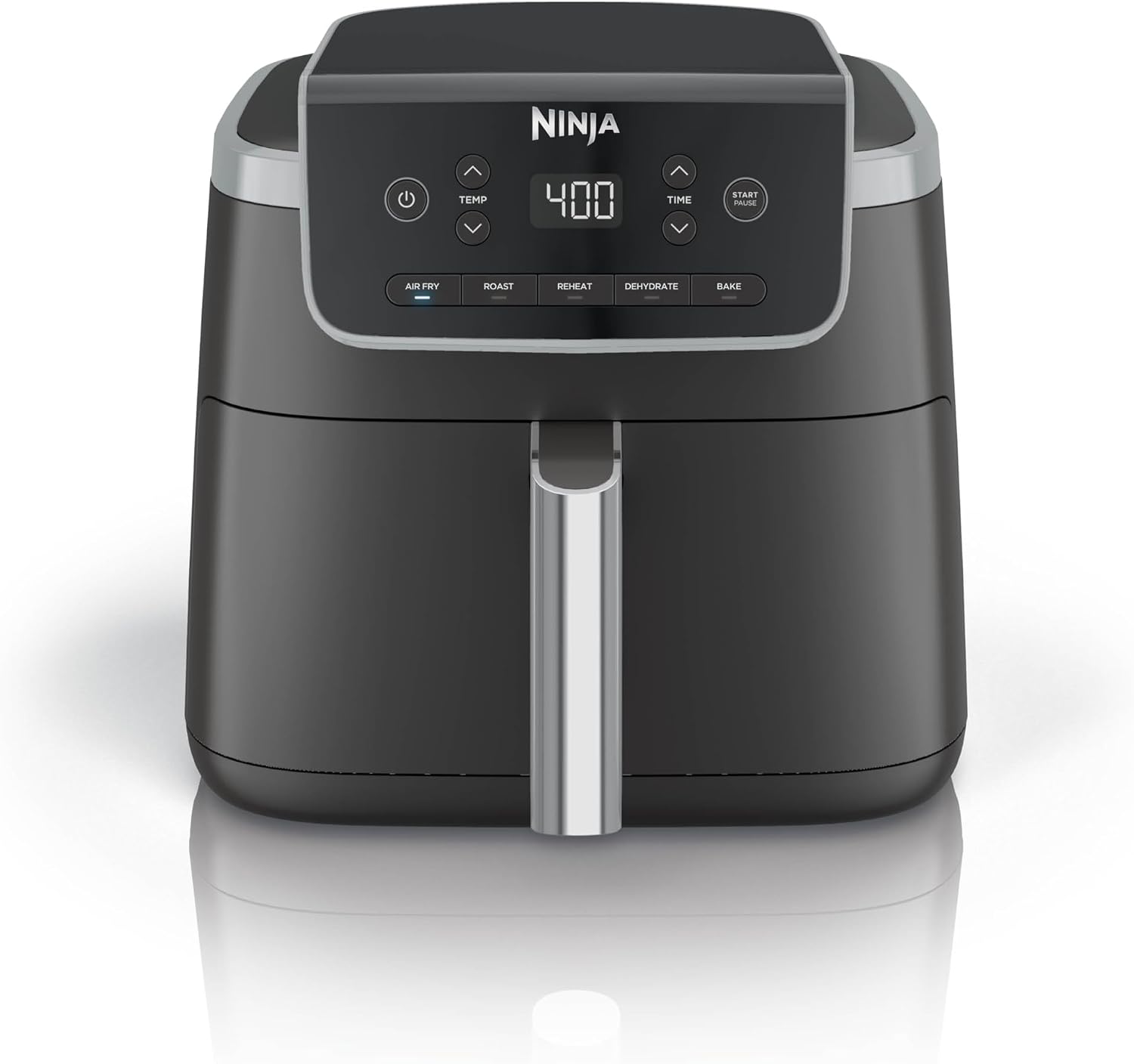
An oven-style fryer moves a lot of air through a lot of space, and the edges of that space cook differently from the centre in ways a basket machine hides from you. Back corners run pale. The top rack browns a step ahead of the bottom. None of this is a defect — it is convection being convection at a scale where you can see it — but it means the cook rotates trays, and the marketing word for that, in this category, is usually ‘versatility’. The Ninja baskets in the box take the opposite deal: a small, violent vortex in a drawer, even and fast and blind. You cannot watch, and you cannot fit a chicken, and for a large share of weeknight food neither fact matters even slightly.
Preheat economics, the unglamorous ledger. A 14-quart cavity takes its time and its electricity to come to temperature, and for small loads that overhead rides on every cook. The basket machines are at temperature while the big oven is still thinking. Households feel this not in the power bill, which is genuinely small either way, but in behaviour: the machine that is ready sooner gets chosen, and the chosen machine gets chosen again, and by June the other one is a very large, very clean monument to a January intention. I have been the January intender. The monument phase is real, and it is how these end up back in boxes with all accessories present and correct, listed as ‘barely used’, which is the saddest condition in the returns vocabulary.
Cleaning the theatre
Every oven-style fryer films its interior with a fine grease mist, and the bigger the cavity the more square inches of film you own. Doors add their inner glass to the account. Racks and the rotisserie spit add geometry that a cloth negotiates rather than wipes. None of it is hard, all of it is minutes, and the minutes are charged nightly. My own rule after two of these machines: if I would not clean it at 9 p.m. in the state I am actually in at 9 p.m. — tired, mildly resentful — then its cooking quality is a rumour I will rarely verify. The Chefman is about average for its format here, which means the format, not the brand, is the decision. Buy the format with your eyes open about the cloth.
And a word for the six functions, since the listing counts them proudly. Air fry, bake, roast, dehydrate and friends — households use two, maybe three, and dehydrate is the one that gets used exactly once, for apple slices, in a spirit of discovery, producing a result described at the table as ‘interesting’. The functions are not a lie. They are a census of everything the hardware can technically do, read aloud as if it were a promise about your life. Your life will select two. Choose the machine whose two are excellent — for this one, tray cooking and the rotisserie — and let the other four be a bonus that never has to justify itself.
Its smaller cousins argue from the other side of the counter: the NutriChef 4-quart glass-bowl air fryer and grill sells visibility instead of volume, and the Midea Flexify Pro French door oven splits the difference with doors — every format pays its tax somewhere.
Questions people actually ask
Is a 14-quart air fryer oven too big for a household of two?
For two people as the only air fryer, usually yes — not because it cannot cook small amounts, but because its preheat time and cleaning area are charged on every cook while its capacity is only used occasionally, and households quietly migrate to the faster tool. As the household’s tray-and-batch machine alongside something small, it earns its place. The honest test is your last month of cooking: count the cooks that needed two trays or a whole bird against the cooks that were a handful of something. The ratio picks the machine more reliably than any feature list.
Oven-style or basket — which actually cooks more evenly?
At their best, baskets, because the small cavity and strong airflow leave fewer places for pale corners to hide. Oven-style machines give you visibility and trays, and ask for a tray rotation in exchange; their back corners and lower rack run a step behind the top front. Neither is a failure — it is a trade between evenness and capacity. If your food is mostly frozen items, fries and wings in household amounts, the basket’s evenness wins quietly every night. If your food is sheet-pan dinners, the oven’s format wins and the rotation becomes a habit you stop noticing.
Does the rotisserie get used, or is it a gimmick?
In most households: heavily for a month, then on occasions when a whole bird and some ceremony coincide. That does not make it worthless — the birds it produces are genuinely good, and occasions are real cooking too. It makes it a poor reason to buy the machine by itself. Buy the oven for the two-rack weeknight pattern if that pattern is yours. Treat the rotisserie as a dividend. Machines bought for their dividend feature alone are the ones that come back with the spit still in its plastic, and I have unboxed enough of those returns to recognise the pattern on sight.
Mine stayed, in the end, because my household does cook in trays often enough — Sunday batches, two-rack dinners, the occasional bird with ceremony. It stayed with conditions: it lives where it can be cleaned without moving it, and the small basket machine did not leave; it moved six inches left and handles the handfuls. Two machines is not the tidy answer the magazines want. It is the answer the Tuesdays voted for, and the Tuesdays, unlike me in January, have never once been wrong about my kitchen.
This article contains affiliate links. If you buy through them, we may earn a commission at no extra cost to you.