This article contains affiliate links. If you buy through them, we may earn a commission at no extra cost to you.
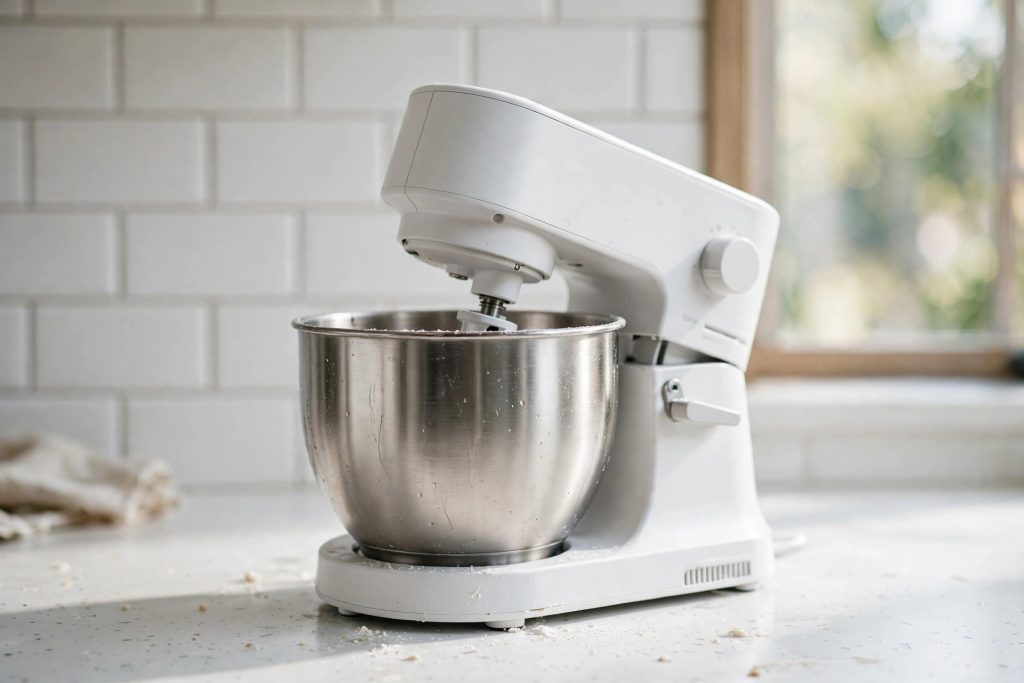
My kitchen has one stretch of counter that is truly mine, and it is the length of a stand mixer plus good intentions. Everything I buy gets measured against that stretch before it gets measured against anything else, which is why the house-brand 5.3-quart mixer interested me in the first place: full-size bowl, tilt head, a footprint that did not ask me to rehome the knife block. The listing photographs it from above, the way listings do, the angle where every mixer is compact. From the side — my angle, the standing-in-a-small-kitchen angle — the real question is head clearance under the cabinets when it tilts, and that number is nowhere in the description. It fits under mine. By about a finger’s width. I have thought about that finger’s width a lot.
The dough focus in this review’s title is earned, because dough is where cheap mixers confess. Whipping cream forgives everything; a mixer can be a toy and still whip cream. Bread dough at a proper hydration is a load that finds the weak points in order — the motor bogs, the head starts to walk on the counter, the planetary action either reaches the bowl’s edges or leaves a floury shoreline that you fold in by hand while the machine watches. This one handles a standard loaf batch without the walk, which already separates it from the true toys. A double batch is where I stopped being generous: the head strains audibly, the dough climbs, and you are supervising rather than delegating. Single-loaf households, that is a workable machine. Bakery ambitions, keep reading the comparison box.
Tilt-head versus the tall life
Tilt-head design is a kitchen-geometry decision disguised as a mechanism. The head swings back so the bowl comes out toward you, which is kind to short cooks and low cabinets, and the hinge becomes the machine’s long-term question: every tilt-head develops a personality at the hinge eventually, a small looseness you feel when the dough pushes back. Bowl-lift machines avoid the hinge and demand vertical space forever. In a small kitchen, I will take the hinge and the future personality. But it changes what ‘built to last’ can honestly mean at this price — the motor will likely outlive the head’s tightness, and reviews written in month one cannot tell you that. Mine included. Judge accordingly.
Attachments and the ecosystem trap belong in any honest account. The famous name in the box sells you a railway: pasta rollers, grinders, a whole aftermarket of steel that fits a standard hub and holds its value in a way that feels faintly absurd for kitchen gear. The house-brand machine’s hub takes its own attachments, fewer and cheaper, and if your mixing life is bowls only — dough, batter, the holiday meringue — the railway is a tax on a journey you never take. If you already dream in attachments, the arithmetic flips entirely. I dream in counter space. We are both right, about different machines.
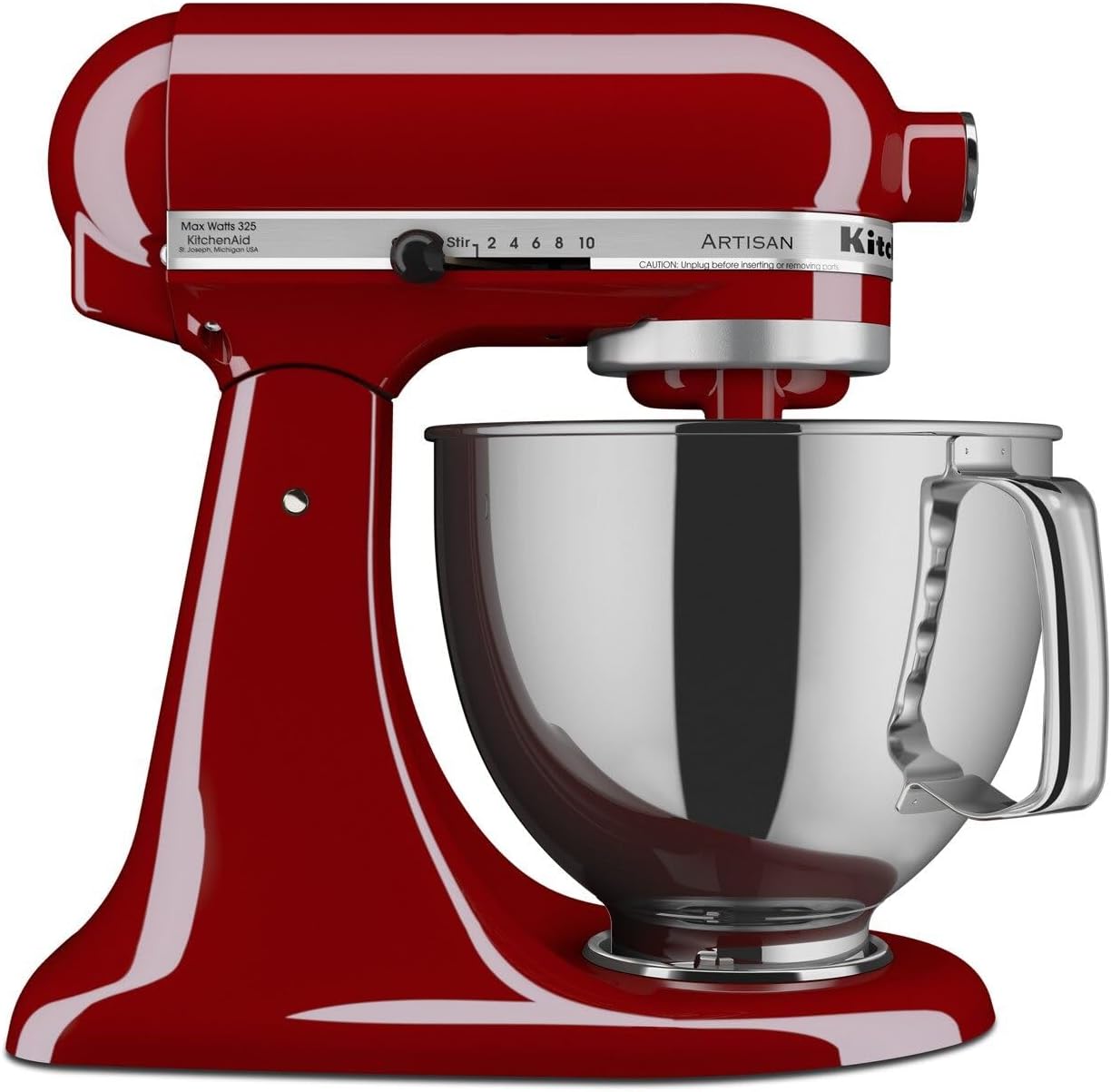
What the price difference actually buys
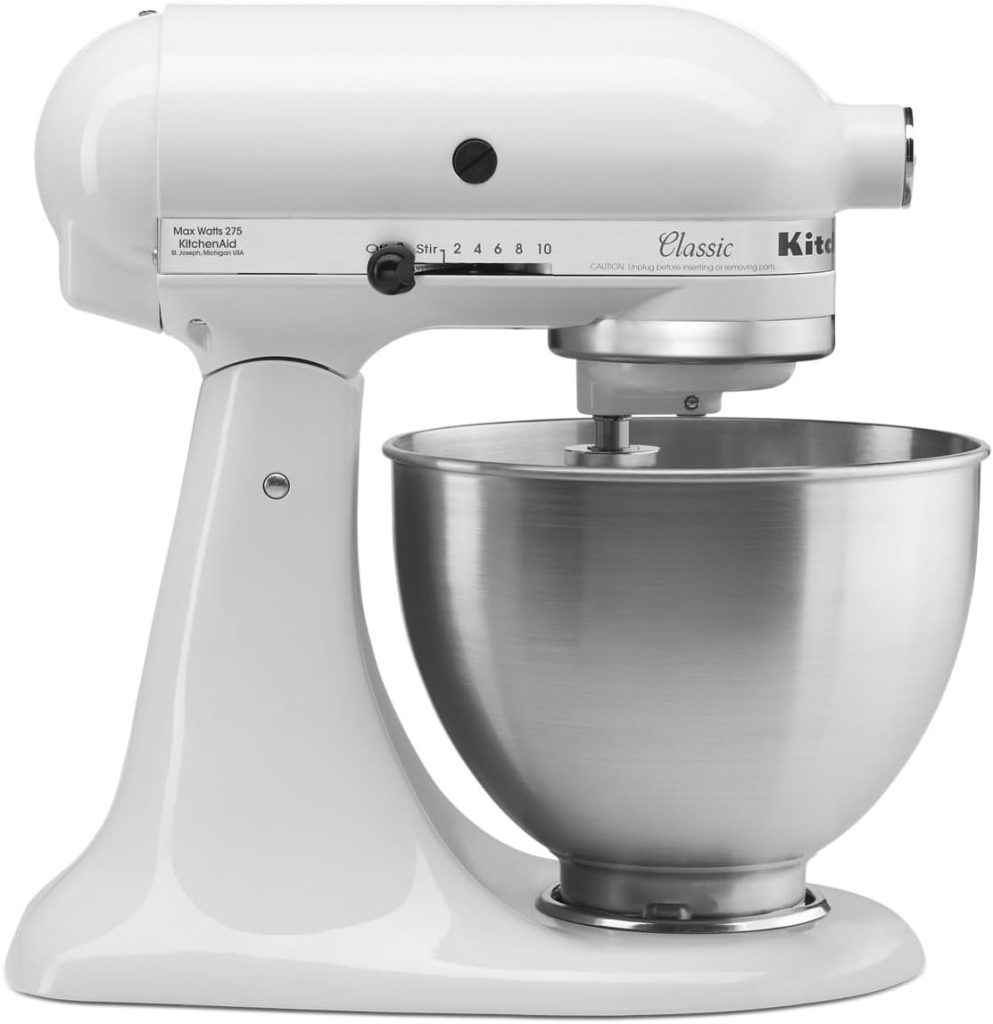
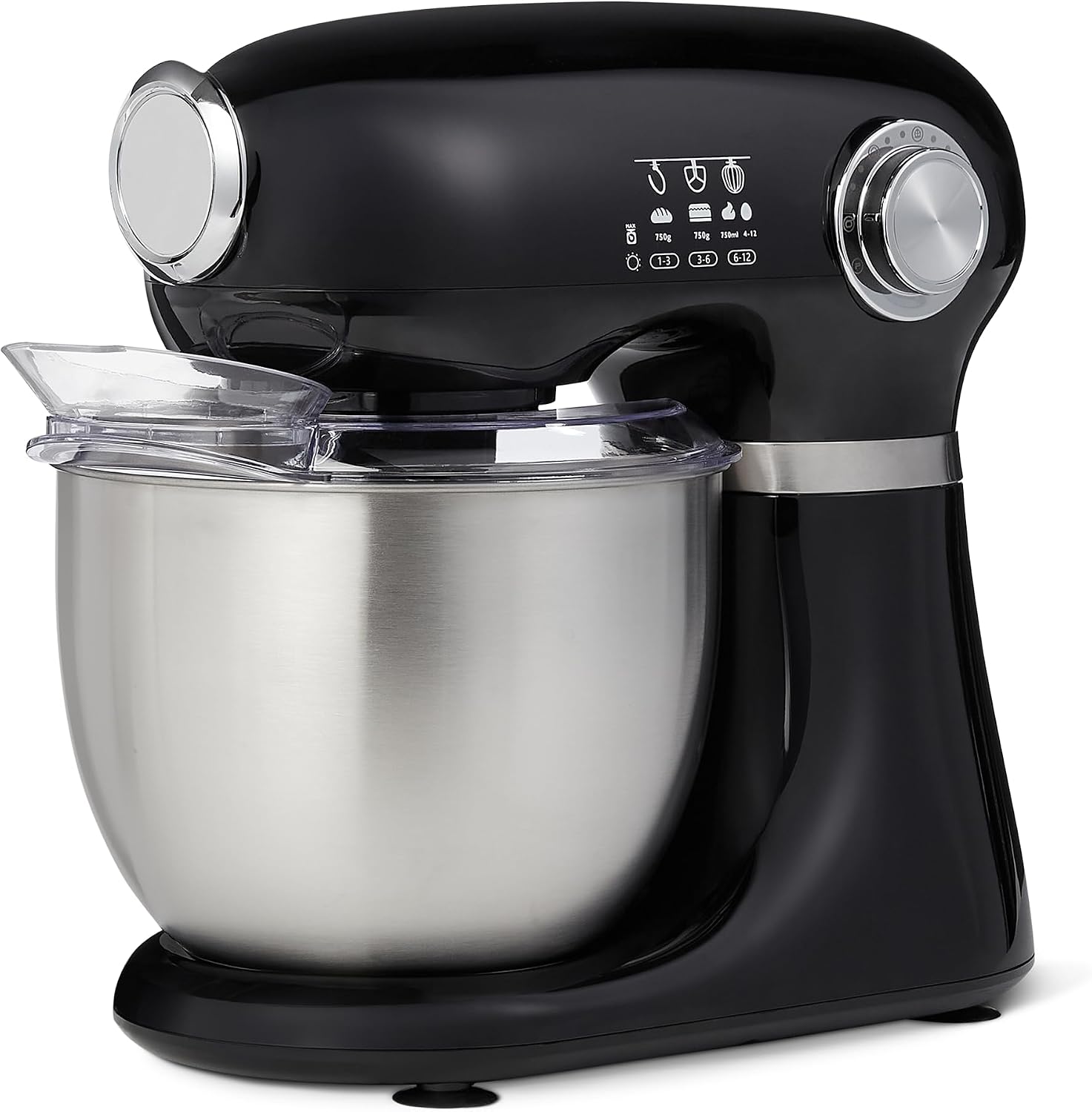
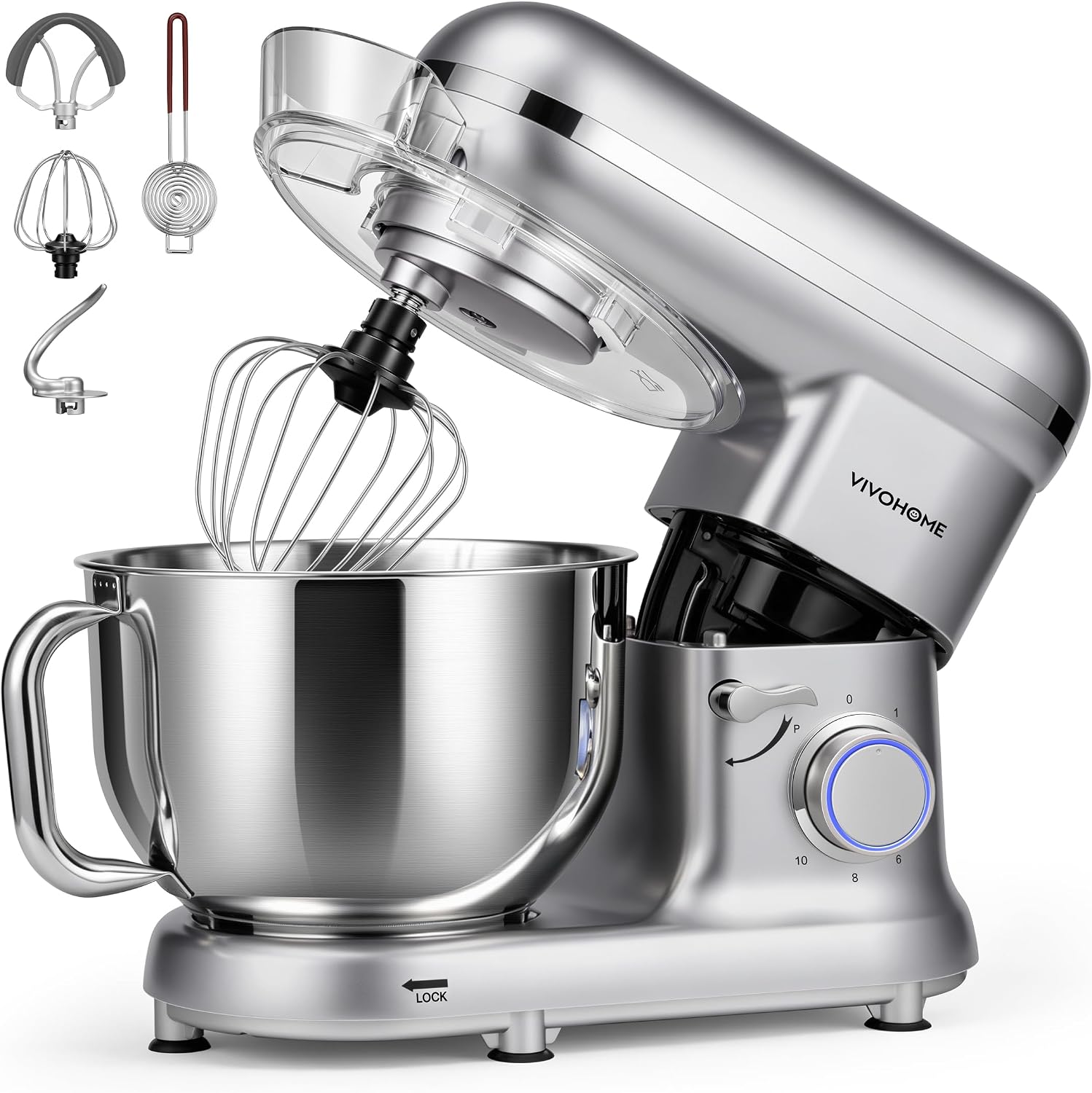
Between the house-brand machine and the Artisan in the box sits a few hundred dollars that buyers talk about as if it were one thing. It is four things: a heavier casting that walks less under load, a gearbox with a longer memory, an attachment railway, and a resale value that borders on the unreasonable — used Artisans sell for sums that make no sense until you realise the buyer is purchasing certainty. The VIVOHOME in the third slot splits the difference the other way, with a bigger bowl for less money and a lighter build that asks your hands to be the stability. None of these is the ‘smart’ choice in the abstract. They are three answers to the question of what you plan to ask the machine to do in year five.
Noise, because small kitchens amplify everything. All stand mixers are loud under dough load; the differences are in pitch, and pitch is what actually annoys. This one runs a higher, thinner note than the heavy casting in the box, the kind of sound that carries through a flat. Morning bakers with sleeping households, consider yourselves warned by someone who has apologised to a wall. It is not a flaw exactly. It is physics at a price point. But it belongs in the review, because the listing’s decibel figure, where it exists, was measured doing nothing in particular.
The neighbours in this category spell the same problem two ways: the KitchenAid Artisan 5-quart mixer in depth is the railway version, and the VIVOHOME 6-quart tilt-head mixer is the big-bowl budget version — counter first, dreams second.
Questions people actually ask
Can a 5.3-quart tilt-head mixer handle bread dough, honestly?
A standard single-loaf batch, yes — that is the load this class is built around, and this machine does it without walking across the counter. A double batch or a very stiff dough pushes it into strain territory: the head works, the motor note changes, and you end up supervising and scraping rather than delegating. If your baking life is one loaf at a time plus cakes and batters, the capacity is honest. If you regularly double recipes or bake for a crowd, the heavier machines in the comparison exist for exactly that reason, and the price gap is mostly gearbox and casting.
Will it fit under standard kitchen cabinets?
Measure your own before trusting anyone’s answer, including this one. Tilt-head mixers need the counter-to-cabinet height twice over: the standing height for storage, and the tilted height for actually removing the bowl without dragging the machine forward. This one clears a typical 18-inch cabinet gap standing, and tilting under the cabinets is close — in my kitchen, about a finger’s width to spare. Sliding it forward to tilt is the common workaround and it is fine, but it should be a choice you make with a tape measure in hand, not a surprise on delivery day.
House-brand or the KitchenAid Artisan — where does the money go?
Mostly into weight, gearbox life, the attachment hub ecosystem and resale value. The Artisan’s heavier casting stays planted under loads that make lighter machines wander, its hub accepts a deep catalogue of attachments that hold value for years, and used units sell for strikingly high prices because buyers trust the longevity. The house-brand machine spends its smaller budget on the core job — a full-size bowl, a workable dough performance — and skips the railway. If your mixing is bowls only, the saving is real money kept. If attachments are in your future, the premium stops looking like one.
Is the VIVOHOME 6QT a better deal with its bigger bowl?
For batch size per dollar, it is competitive; for stability per dollar, less so. The larger bowl suits households that actually mix at that volume, but the lighter build means your hands become part of the stability system under stiff dough, and bowl size was never the binding constraint for most home bakers — counter space and load handling are. Read it as the value play for big, soft batches: batters, whipped things, party quantities. For dense doughs at volume, the weight of the machine matters more than the width of the bowl, and that is where its saving was taken.
It sits in its stretch of counter with a finger of air above the tilted head, and it makes the week’s loaf without ceremony. Some Saturdays I look at it and think about the red machine and the railway and the resale, the whole other life. Then the dough comes together, the bowl scrapes down clean, and the thought dissolves into the practical truth of small kitchens: the best mixer is the one that is already out, already plugged in, already the right size for the counter it has to live on.
This article contains affiliate links. If you buy through them, we may earn a commission at no extra cost to you.