Shopping for bar stools sounds simple until you’re staring at two numbers — 24 inches and 30 inches — with no idea which one your kitchen actually needs. This guide fixes that. It’s built around one specific question: counter height or bar height, and which stools deserve a spot at your kitchen island?
We’ll cover how to measure your counter, when an adjustable stool beats a fixed one, and three proven picks for the three most common situations. No fluff, no filler — just the stuff that keeps you from ordering the wrong height twice.
Quick Answer
Measure your counter top from the floor. If it’s around 36 inches, you want 24-inch counter-height stools; if it’s around 42 inches, you want 30-inch bar-height stools. Not sure, or furnishing a rental? An adjustable swivel stool covers both — that’s why the Homall below is our pick. Fixed-height stools look better and wobble less, but only when the height is right.
Compare Top Bar Stools for Kitchen Islands
Three proven picks side by side — choose the one that fits your counter height.
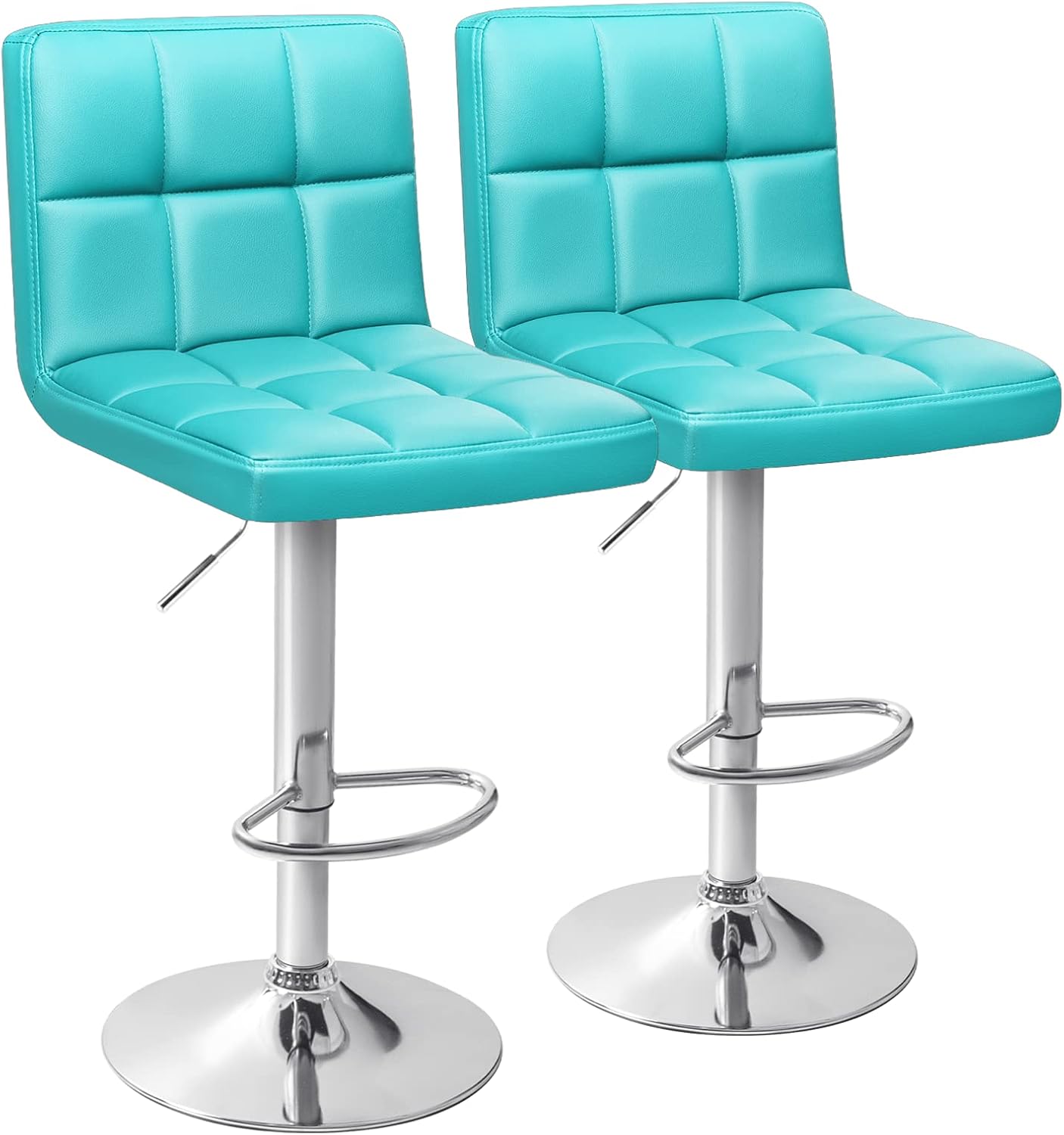
Homall Adjustable Swivel Bar Stools, Set of 2
Gas-lift height adjusts to fit both 36" counters and 42" bars — the no-regret choice when you’re not sure.
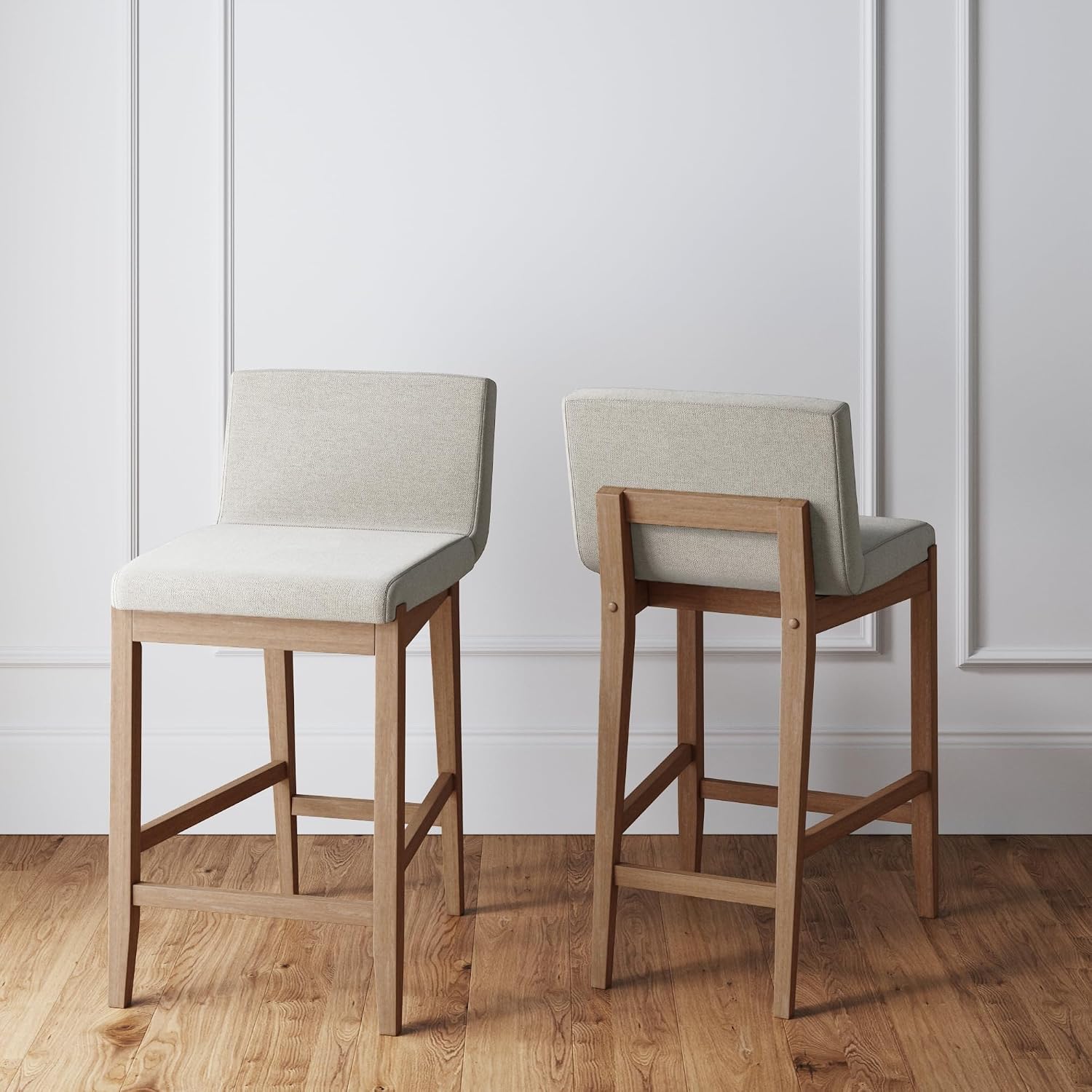
Nathan James Gracie Counter Stools, Set of 2
Fixed 24" counter height in solid rubberwood with flax upholstery — the design-forward pick for standard islands.
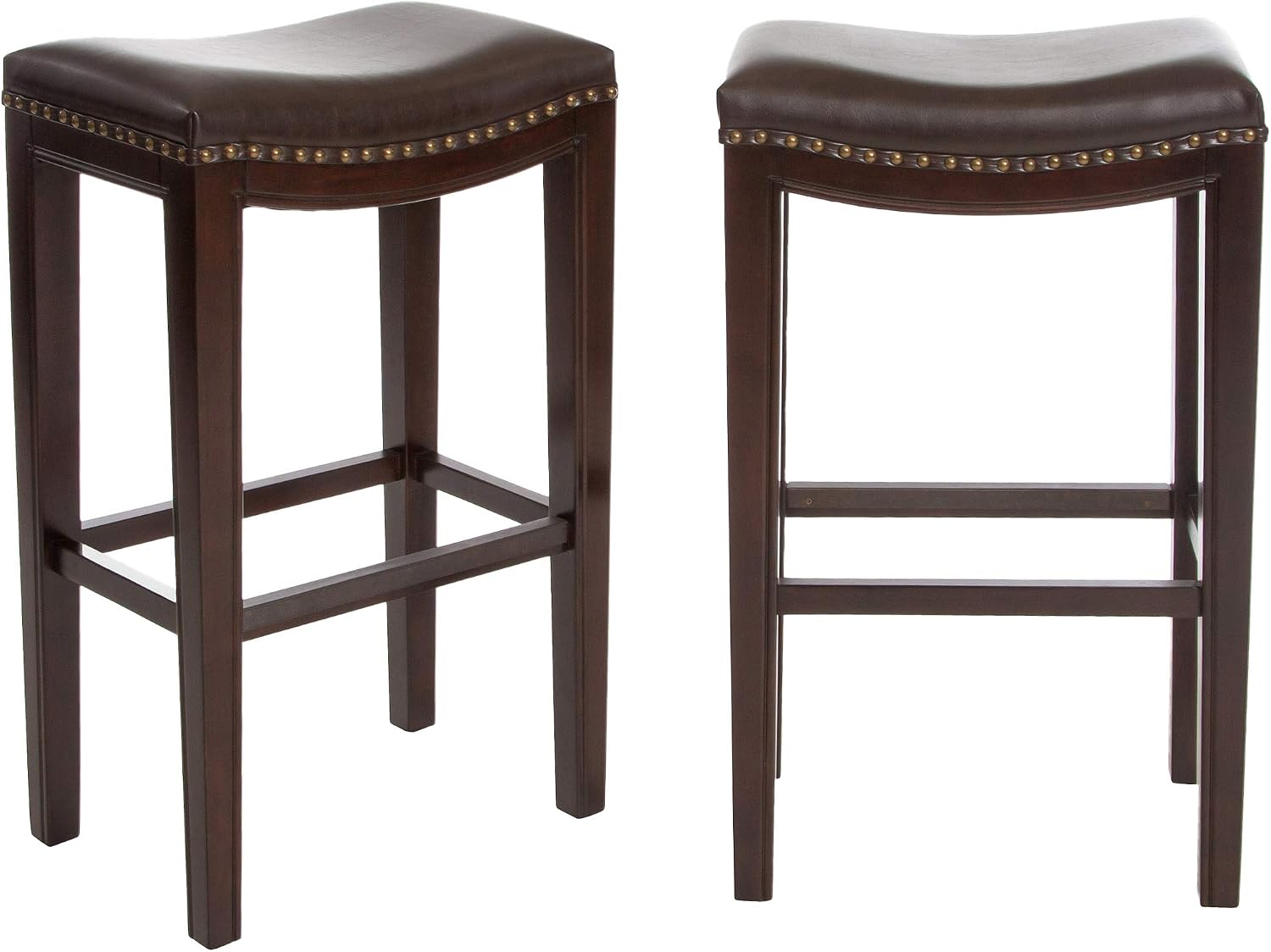
Christopher Knight Home Avondale Bar Stools, 30"H Set of 2
True 30" bar height, backless so it tucks fully under the counter — ideal for 42" counters and tight kitchens.
Prices and availability may vary — tap any product to check the current listing.
What to Look For When Buying Bar Stools
This is the part most people skip, and it’s exactly why so many stools get returned. Six things actually matter. Everything else is decoration.
1. Seat height vs. counter height — the 10-inch rule
Here’s the only math you need: leave roughly 10 inches between the seat and the underside of the counter. A standard kitchen counter sits at 36 inches, so the sweet spot is a 24- to 26-inch seat. A raised bar counter at 42 inches wants a 30-inch seat.
Why does this matter so much? Because six inches off in either direction ruins the experience. Too low and you’re eating with your chin near the plate, elbows flapping. Too high and your knees jam under the overhang. I’ve seen people blame an uncomfortable stool when the real culprit was three inches of wrong height. Measure first. Tape measure, floor to counter top, done in ten seconds.
2. Adjustable vs. fixed height
Adjustable stools — the gas-lift kind like our top pick — solve the measurement problem by making it irrelevant. Pump the lever, find your height, done. They’re the obvious call for renters, for households with both a 36-inch island and a 42-inch bar, and for anyone who genuinely doesn’t know their counter height.
The trade-off is real, though. A gas lift is a moving part, and moving parts develop play over time — a slight wobble at full extension, a slow sink after a year or two of heavy use. Fixed-height stools have none of that. A solid wood stool at exactly the right height feels like furniture; an adjustable one always feels a little like equipment. If you know your measurement and you’re not moving soon, fixed wins on feel.
3. Swivel or stationary
Swivel sounds like a gimmick until you live with it. At a kitchen island — where people slide in sideways, turn to talk, spin to grab something from the fridge — a 360-degree swivel gets used constantly. Kids especially love it, which is either a feature or a problem depending on your household.
Stationary stools are calmer. They stay put, they line up neatly, and there’s nothing to wear out. In a formal-ish dining setup or a narrow galley where every inch counts, stationary keeps things tidy. But be honest about how the stools get used: if it’s a social island, swivel earns its keep.
4. Seat comfort: material and padding
Quilted PU leather with thick foam — like the Homall — wipes clean in seconds, which is why it dominates family kitchens. Spilled cereal milk? Paper towel, gone. The downside: synthetic leather doesn’t breathe, so it can feel sticky in summer, and it shows wear faster than wood or fabric under daily heavy use.
Fabric upholstery, like the flax on the Gracie, feels warmer and looks more expensive from across the room. It also absorbs. One turmeric incident and you’ll understand the trade-off. Wood or backless seats skip the comfort question entirely — they’re perches, not lounge chairs — but they’ll outlast every upholstered option in the house.
5. Base stability and your floors
Pedestal bases (the round chrome disc) look sleek and let the stool tuck close, but they concentrate all the weight on one point — check for a rubber ring underneath, or your hardwood will tell you about it. Four-legged stools distribute weight better and feel rock-solid, at the cost of a bigger footprint.
Weight rating matters more than people think. A 280-pound rating covers most adults comfortably; the margin is what keeps the gas lift from sagging early. And whatever you buy, felt pads or a rubber base ring are non-negotiable on wood or tile. Scratches are forever.
6. Back or backless
A low back changes how long people stay seated. With back support, a stool works for a 45-minute dinner; without it, most people start shifting around after twenty minutes. That’s the whole story.
But backless stools vanish. They slide completely under the counter overhang, which in a small kitchen is worth more than lumbar support. The Avondale below is the classic example — when it’s tucked away, you’d barely know seating exists. So the question isn’t which is better. It’s: do your stools need to disappear?
Matching Bar Stools to Your Situation
Three shoppers, three right answers.
The unsure renovator
You just moved in, or the contractor’s numbers are a blur, and the island might be 36 inches or might be a hair over. Don’t gamble. An adjustable stool like the Homall removes the measurement from the equation entirely — set it once, and if you misjudged, pull the lever instead of repackaging a return. This is also the right call for furnished rentals where the next place will have a different counter.
The design-conscious host
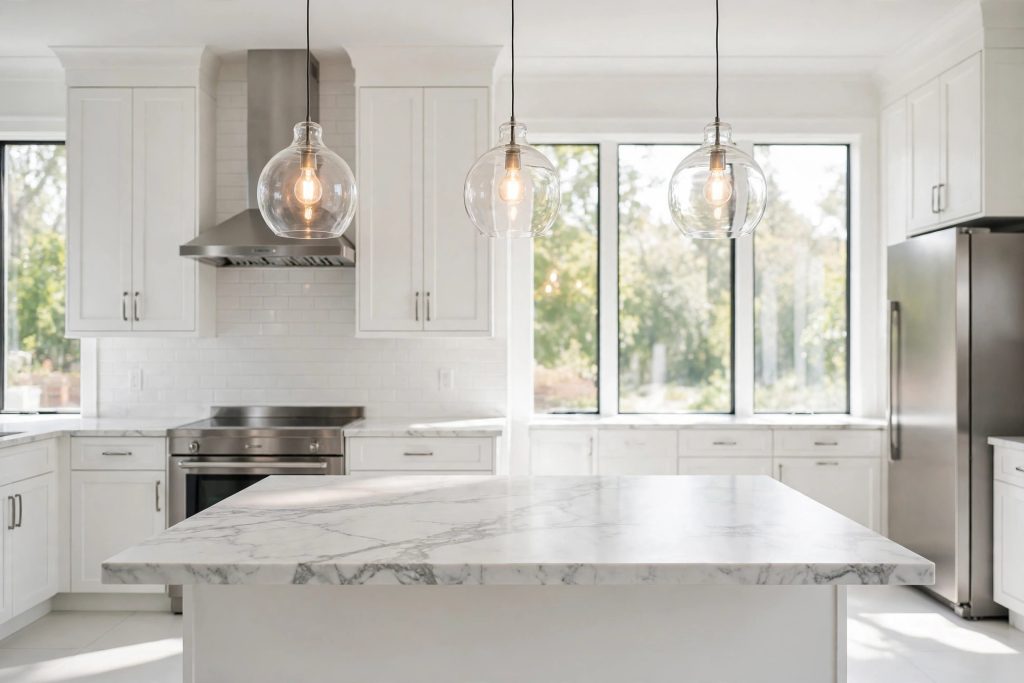
Your island faces the living room. Guests see these stools from the couch, in photos, every single day. You know your counter is a standard 36 inches because you measured twice. Here, a fixed wood stool like the Nathan James Gracie earns its price — the solid frame and flax upholstery read as intentional furniture, not seating equipment. Pair them with pendant lights sized for a kitchen island and the whole zone looks designed rather than assembled.
The small-kitchen pragmatist
Every square foot is negotiated territory. You need seating that exists at mealtimes and disappears otherwise. Backless and 30 inches tall for a raised counter — the Avondale tucks fully under the overhang, reclaiming the walkway. No backs to catch hips, no swivel to drift into the traffic lane. In a galley kitchen, invisibility is a feature.
Bar Stool Types Compared
| Type / Tier | Best For | Price Tier | Key Feature | Watch Out |
|---|---|---|---|---|
| Adjustable swivel (gas lift) | Unknown counter heights, renters, multi-use islands | Budget-friendly | Seat height adjusts to fit 36" counters and 42" bars | Gas lift can develop wobble or slow sink with heavy daily use |
| Fixed wood counter stool (24") | Standard 36" islands where looks matter | Mid-range | Solid frame with upholstered seat — reads as real furniture | Zero height flexibility; measure before ordering |
| Fixed backless bar stool (30") | 42" bar counters, tight kitchens | Budget-friendly to mid-range | Slides fully under the counter when not in use | No back support — fine for quick meals, tiring for long sits |
| Upholstered counter stool with back | Comfort-first daily seating at a standard island | Mid-range | Cushioned seat plus backrest for longer, relaxed sits | Fabric needs more upkeep; confirm stain resistance for kitchens |
Adjustable swivel stools are the universal donor of the category — they fit anywhere, which is exactly why they’re the default recommendation when someone won’t measure.
Fixed wood counter stools are the opposite bet: less versatile, but at the correct height they feel more solid and look more deliberate than any adjustable ever will.
Backless bar-height stools solve a space problem first and a seating problem second — brilliant in tight kitchens, a compromise everywhere else.
Upholstered stools with backs are for the island that functions as a second dining table — if people actually eat full meals there, comfort outranks tuck-away-ability.
Scenarios: Where Bar Stools Actually Live
When the island doubles as a home office
Laptop, coffee, three hours. This is where adjustability plus swivel quietly dominates — you dial the seat to desk-ish height, spin to reference the counter behind you, and the PU leather wipes clean when the coffee goes sideways. A fixed wood stool can do this too, but your back will file a complaint by Wednesday. Honestly, most people underestimate how much seat height matters for typing posture. Ten inches below the surface, same rule as eating.
Open-concept entertaining
The stools face the living room, which means they’re part of the decor whether you planned it or not. Mismatched heights or a wobbly gas lift reads instantly from ten feet away. Fixed stools in a finish that echoes your dining table size guide choices — wood tones that relate to each other — make the kitchen and dining zones feel like one decision instead of two accidents.
Small kitchens with real traffic
Two people cooking, one person trying to get to the fridge, a dog underfoot. Here the stool’s footprint matters more than its cushion. Backless wins. Swivel loses — a drifting stool in a narrow lane is a shin bruise waiting to happen. Measure your walkway with the stools tucked in; if it’s under 36 inches of clearance, go backless and stationary, no debate.
Common Mistakes Bar Stool Buyers Make
1. Ordering before measuring
The number-one return reason, by a mile. People guess “standard” and discover their island is 34 inches, or their “bar” is actually counter height with a raised lip. Ten seconds with a tape measure beats a week of return shipping. Measure floor to the top of the counter, subtract ten, buy that seat height.
2. Forgetting the knee overhang
Seat height is only half the geometry. Your knees need roughly 12 to 15 inches of clear overhang depth to sit comfortably — less than that and you’re perched sideways like it’s a waiting room. Thick waterfall islands and islands with chunky corbels eat into this fast. Check the underside, not just the top.
3. Ignoring what’s under the stool
Chrome pedestal on unsealed hardwood. Metal legs on tile with no pads. These are slow-motion disasters — the damage shows up months later as a perfect ring of scratches. Whatever stool you choose, confirm floor protection is built in or add felt pads on day one. Future you says thanks.
4. Buying lounge comfort for a perch job
Here’s a mistake I’ve watched people make repeatedly: they buy deep, plush, high-back stools for an island where everyone eats in twelve minutes and leaves. Oversized stools dominate small kitchens visually and physically — they don’t tuck, they snag, they crowd. Match the stool’s ambition to the actual sit time. Quick breakfasts? A perch is fine. Nightly homework sessions? Then yes, bring the cushion.
Why, How, What: Quick Answers
Why do bar stools wobble?
Usually it’s one of three things. Uneven legs on a four-legged stool — fixable with a felt pad on the short leg. Play in a gas lift at full extension — lower it half an inch and the wobble often vanishes, since the mechanism is tightest mid-range. Or the floor itself: tile grout lines and slightly crowned wood floors make any rigid stool rock. A pedestal base actually handles uneven floors better than four legs, which surprises people. If a stool wobbles on day one on a flat floor, that’s a defect, not a characteristic — exchange it.
How do I keep swivel stools from drifting around?
Swivel stools migrate. It’s physics — every spin nudges the base. The honest fix is partly habit: push them back under the overhang when you stand up, the way you’d push in a dining chair. A rug or mat under the island zone adds friction and cuts drift dramatically while also protecting the floor. Some people put a small rubber ring under the base. And if the drifting genuinely drives you mad, that’s useful information — you’re a stationary-stool person, and there’s no shame in it.
What does “counter height” actually mean?
It’s simpler than the furniture industry makes it sound. “Counter height” means a seat around 24 to 26 inches, designed for a standard 36-inch kitchen counter. “Bar height” means a seat around 30 inches, for a 42-inch raised bar. “Extra tall” or “spectator height” — 34-inch seats for 48-inch surfaces — exists but it’s rare in homes. When a listing just says “bar stools” without a number, check the seat height in the specs before assuming anything. The word “bar” in the title tells you almost nothing.
Questions People Ask Before Buying
What height bar stools do I need for a 36-inch kitchen island?
For a standard 36-inch kitchen island, buy 24-inch counter-height stools — that 10-to-12-inch gap between seat and counter top is what lets you sit comfortably without hunching or banging your knees. Measure from the floor to the top of your counter (not the cabinet box) to confirm it’s really 36 inches; older homes and thick stone tops can shift the number by an inch or two. If you’re between sizes or furnishing a rental, an adjustable stool removes the guesswork entirely.
Are adjustable bar stools worth it, or should I buy a fixed height?
Adjustable stools are worth it when your counter height is uncertain, you have both a 36-inch island and a 42-inch bar, or you rent — one stool genuinely covers every scenario. The honest trade-off: the gas-lift mechanism can develop slight wobble at full extension and may slowly sink after a year or more of heavy daily use. If you know your exact measurement and plan to stay put, a fixed-height stool feels more solid, looks more like furniture, and has nothing to wear out.
Can I use 30-inch bar stools at a standard kitchen counter?
No — 30-inch stools at a 36-inch counter leave only about 6 inches of legroom, which forces an uncomfortable knees-up posture and makes the seat feel precariously tall. The 10-inch rule exists for a reason: your thighs need clearance and your elbows need to rest naturally. Thirty-inch stools belong at 42-inch raised bars. If you already own 30-inch stools and a standard counter, the practical fixes are a taller surface (a bar-height table) or swapping the stools — cushions on top don’t fix the geometry.
Swivel vs. stationary bar stools — which is better for a kitchen island?
For a social kitchen island where people chat, turn, and slide in from the side, swivel wins — it gets used far more than buyers expect. Stationary stools are the better choice in narrow galleys where a drifting stool becomes a shin hazard, and in minimalist setups where you want seating to line up neatly. There’s also a household factor: kids treat swivel stools as amusement rides, which delights some parents and exhausts others. Know your household.
How many bar stools fit along a 6-foot kitchen island?
Allow about 24 inches of width per stool — so a 6-foot (72-inch) island comfortably seats three, with a little elbow room to spare. Squeezing in four is possible with slim backless stools, but it feels crowded and makes getting in and out awkward. Also check the overhang depth: each seated person wants 12 to 15 inches of knee space under the counter. If your island’s overhang is shallow, even three stools can feel tight regardless of the island’s length.
Final Recommendation
If you take one thing from this guide, take the tape measure. Ten seconds of measuring eliminates the single biggest cause of bar stool regret. After that, the decision is straightforward: uncertain height or a rental — go adjustable. Standard 36-inch island and you care how it looks from the couch — go fixed wood. Forty-two-inch bar or a kitchen where every inch matters — go backless.
There’s no universally “best” bar stool, only the right height for your counter. Get that right and even a budget pick feels correct; get it wrong and no amount of cushion saves it.
Decision Tree: Which Bar Stools Should You Buy?
Don’t know your exact counter height, or furnishing a rental? → Homall Adjustable Swivel Bar Stools — the gas lift covers 36" counters and 42" bars alike.
Standard 36" island, and the stools face your living room? → Nathan James Gracie Counter Stools — fixed 24" height, solid wood, looks intentional.
42" raised bar, or a small kitchen where stools must disappear? → Christopher Knight Home Avondale 30" Stools — backless, tucks fully away.
Key Takeaways
✅ Measure first: floor to counter top, subtract 10 inches — that’s your seat height. 36" counter → 24" stools; 42" bar → 30" stools.
✅ Adjustable = insurance: when the height is uncertain, a gas-lift stool like the Homall is the only pick that can’t be wrong.
✅ Fixed = feel: at the correct height, solid fixed stools wobble less and look more like furniture than any adjustable.
✅ Backless = space: in tight kitchens, stools that vanish under the counter beat stools that coddle your back.
Frequently Asked Questions
What’s the real difference between counter stools and bar stools?
Seat height — that’s genuinely it. Counter stools have seats around 24 to 26 inches for standard 36-inch counters; bar stools sit around 30 inches for 42-inch raised bars. The names describe the surface they pair with, not the design. A “bar stool” isn’t automatically taller-looking or fancier; check the seat-height number and ignore the vibes.
How do I measure my counter to pick the right stool height?
Put a tape measure on the floor and run it to the top of the counter surface — the stone or wood top, not the cabinet. Write down that number, subtract 10 inches, and shop for that seat height. So a 36-inch counter means a 26-inch-max seat (24 inches is the standard pick). Measure twice if there’s a thick countertop or a raised lip, since those add height people forget to count.
Are backless bar stools actually comfortable for long sits?
For about twenty to thirty minutes, yes — a well-shaped saddle seat is fine for breakfast or a quick drink. Beyond that, most people start missing back support and shifting around. Backless stools are a space decision, not a comfort decision. If your island hosts hour-long dinners or homework sessions, get backs. If it’s a perch between activities, backless is honestly fine.
Will bar stools scratch my hardwood floors?
They will if you let them. Metal pedestal bases concentrate weight on a small ring — look for a built-in rubber ring underneath, and add felt pads regardless. Four-legged wood stools are gentler but still deserve pads. The real floor-killer is grit trapped under the base, so a quick sweep under the island now and then matters as much as the pads themselves.
How much space should I leave between bar stools?
Plan on about 24 inches of counter width per stool, measured center to center — that gives elbows room without wasted space. For knee room underneath, you want 12 to 15 inches of clear overhang depth. In practice: a 6-foot island seats three comfortably. Cramming a fourth works with slim backless stools, but getting in and out turns into a choreographed shuffle.
Can I use these bar stools outdoors on a patio?
Not as a rule. The picks in this guide — PU leather, flax upholstery, indoor wood finishes — aren’t built for rain, UV, or humidity swings, and the gas-lift mechanism especially dislikes moisture. A covered patio for occasional use is one thing; permanent outdoor duty is another. If you need true outdoor stools, shop specifically for outdoor-rated materials like teak, aluminum, or all-weather wicker instead.