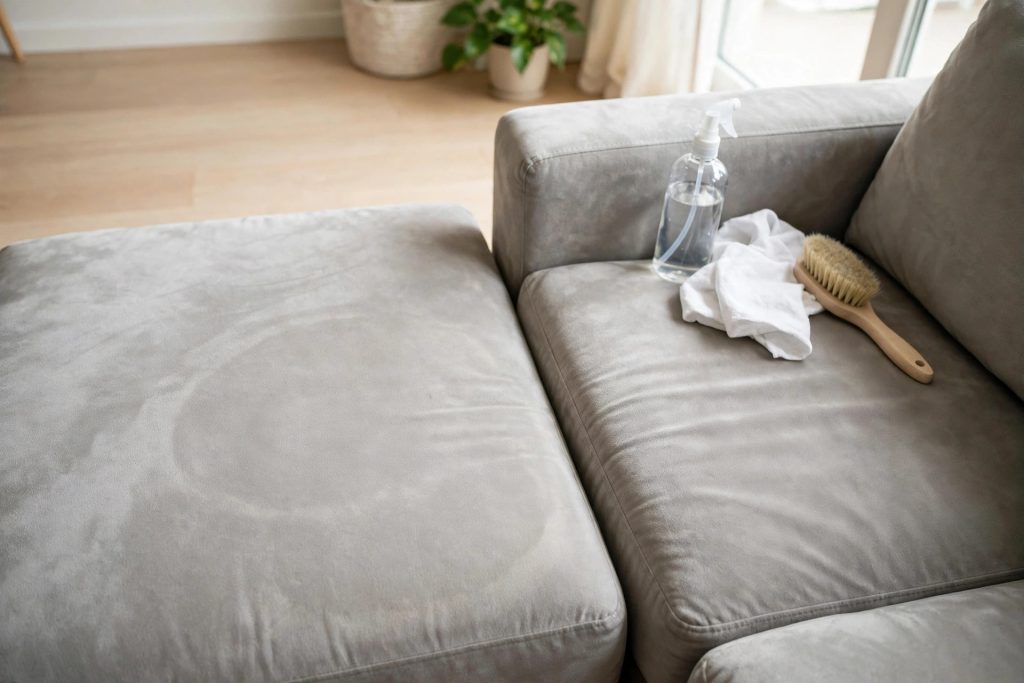
Microfiber gets sold as the indestructible family fabric. Spills bead up. Kids bounce on it. The salesperson wipes a sample with a wet thumb and smiles. The pitch holds for about a month. Then you wipe one coffee splash with a wet cloth and come back the next morning to a pale ring printed on the cushion. The fabric did not stain easily. It recorded everything instead, in outline.
That ring is the whole subject. Microfiber is split polyester, tiny hooked fibers packed tight enough to feel like suede, and that density is why liquid misbehaves on it. Water spreads sideways through the nap, picks up the dust and body oil living in the fibers, and drops that load at the edge of the wet patch as it dries. The border is not the spill. It is the spill’s dirt, relocated — plus tap-water minerals, which is why rings on gray and beige couches read almost white.
The short version: how to clean a microfiber couch comes down to one letter on the care tag, the least liquid you can get away with, and brushing the nap back up before the fabric finishes drying. Get the letter wrong and no scrubbing saves you. Get it right and most “damage” is displaced soil on the surface, waiting to be lifted off instead of pushed around.
The tag decides everything, and it is hiding from you
The care tag code — W, S, WS, or X — decides which liquid is allowed on the fabric, and guessing wrong is how most water rings happen. W: water-based cleaning, mild soap fine. S: solvent only — in a normal house, 70% isopropyl alcohol and no water at all. WS takes either. X means vacuum and brush, full stop. That couch belongs to a professional cleaner.
The tag usually lives under a seat cushion or along the frame rail underneath, printed small, sometimes half torn. On mine it sat under the middle cushion, face down. Tag gone entirely? Treat the couch as S. Alcohol on a W couch wastes an afternoon; water on an S couch leaves a ring you will look at for years. Choose the cheaper error.
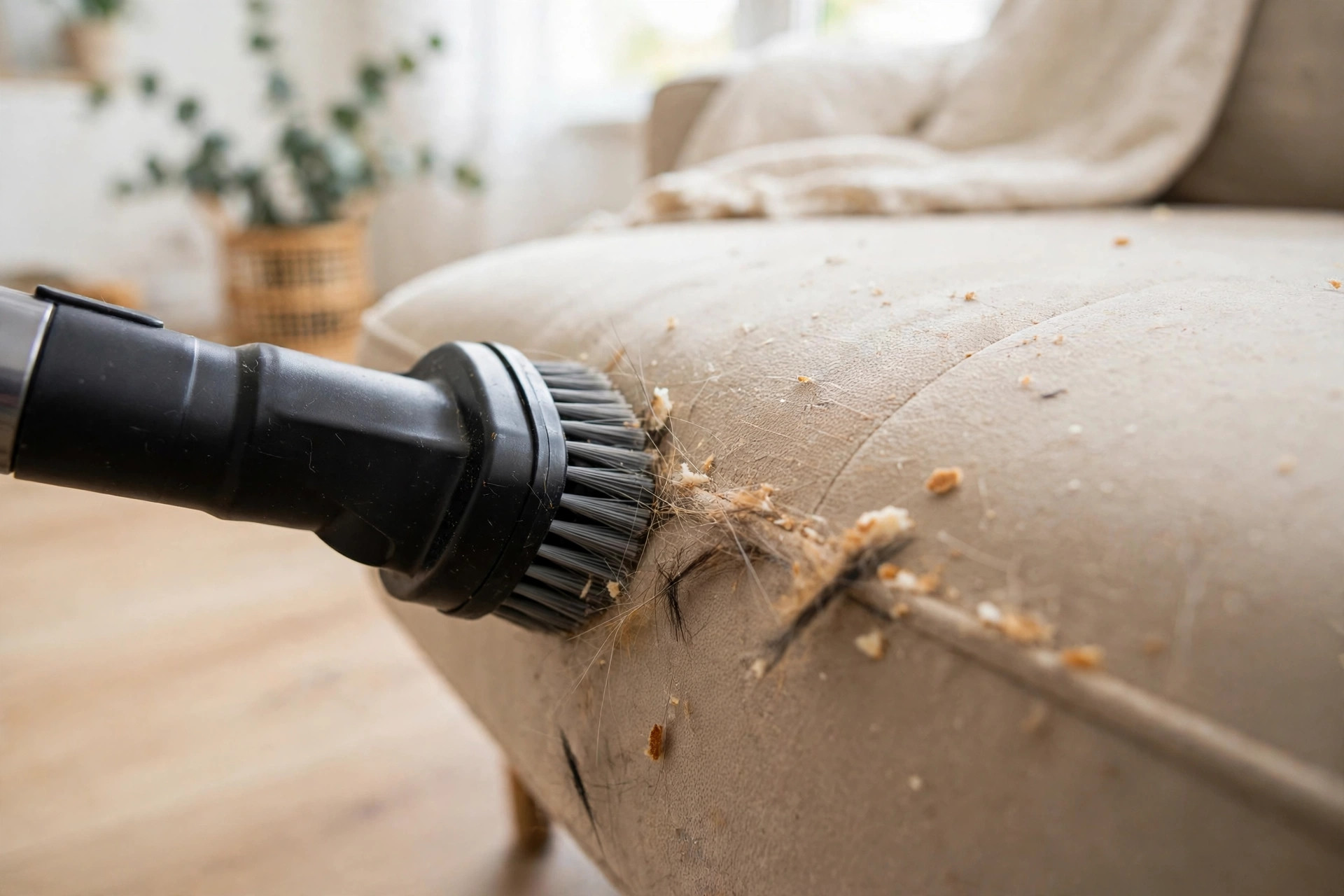
Dry work comes before any liquid, always. Vacuum the seams slowly — they hold crumbs, grit, and hair that turn into gray mud the second they get wet. Professional cleaning firms that publish care notes on this fabric put the same complaint on top: pet hair. It does not brush off microfiber the way it leaves leather. The split fibers grab it, and a slightly damp rubber glove dragged across the cushion pulls up more than ten minutes of lint rolling.
Is rubbing alcohol on a couch sane, or is that internet folklore?
For an S or WS tag, 70% isopropyl alcohol is the correct cleaner, not a hack — it lifts oil and evaporates before it can drag soil to a drying edge. Polyester microfiber is oil-loving at a chemical level; skin and hair oil bind to it and darken headrests and arm fronts long before any visible spill. Water barely touches that oil. Alcohol cuts it, and it flashes off in minutes, so loosened dirt has no time to migrate. Dry time is the whole difference between cleaning and ring-making.
The technique is mist, not soak. Fog the stain until damp, not wet, then work it with a white sponge or white cloth. White matters: you need to see soil transferring onto the cloth, and colored cloth can donate dye of its own. For an existing ring, mist the entire cushion panel, edge to edge, so the surface dries as one field. No wet-to-dry boundary inside it, no border deposit. I used to tell people a full cushion takes ten minutes this way. It does not. Budget twenty, most of it standing around while a fan works.
W-code couches get the other recipe, and proportions matter more than brands: one cup of distilled water with about a quarter teaspoon of clear dish soap — and you clean with the suds, not the liquid under them. Distilled, because tap-water minerals are half of what a ring is made of. Foam carries soap to the surface without flooding the foam below. Work from the outside of the stain inward, then wipe the whole panel with a cloth rinsed in plain distilled water. Residue left behind dries stiff and pulls in fresh soil fast — a patch that turns gray in three weeks is usually a rinsed-badly patch.
One diagnostic first, ten seconds: phone flat on the cushion, flashlight on, look across the surface at that low angle. Raking light shows everything — ring borders, oil shadows, nap direction, the pale traffic lane where everyone sits. Clean toward what the light shows, not what room lighting flatters. Then rub a hidden spot under the cushion with a white cloth dampened in your tag’s liquid, ten seconds, and check the cloth. Color on it means dye is moving. Stop, whatever the internet said.
When the spray bottle stops being enough
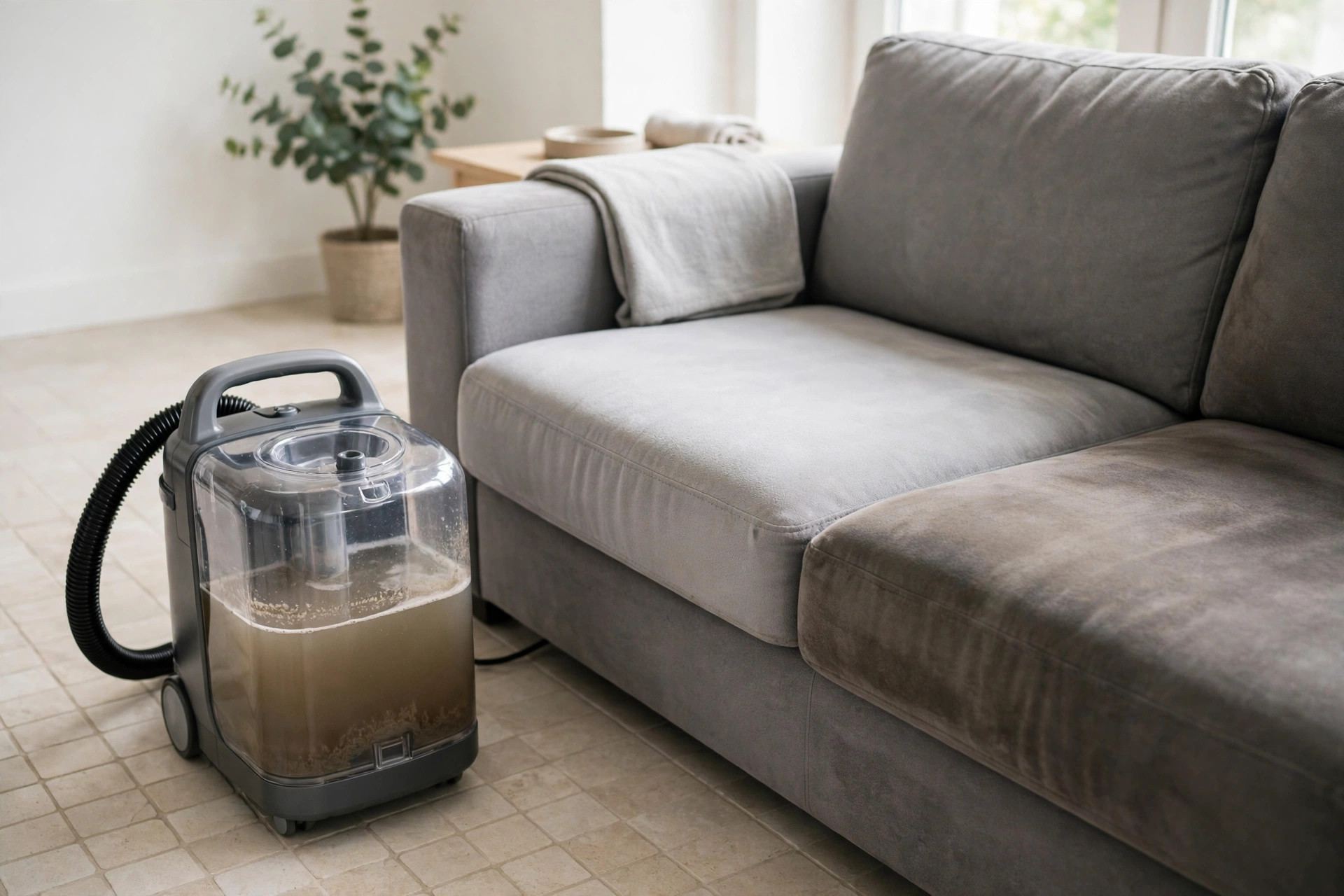
A portable extractor is worth using on W and WS couches when soil has gone past the surface — and it is forbidden on S and X tags, no exceptions for optimism. Spray-and-blot moves dirt sideways across the nap. Extraction pulls it down and out, which is why the dirty-water tank after one pass over a merely dull couch comes up the color of weak tea. That tank is the honest review of every quick-clean method before it.
Two habits decide whether the machine helps or harms. Keep the tool moving — a parked spray jet drives water deep into the foam, and wet foam under dense fabric dries slowly enough to smell by day three. Then a second pass, suction only, a fan pointed at the couch, hands off. The stain that reappears while drying — wicking, the pros call it — is soil in the foam riding moisture back up. Not a new stain. The foam is asking for one more dry pass. I have never run an extractor on an X-code couch and won’t start, so what a pro charges for one, I can’t judge. Ask whether they use low-moisture methods on microfiber specifically; the answer separates the careful ones from the hose-it-down crowd.
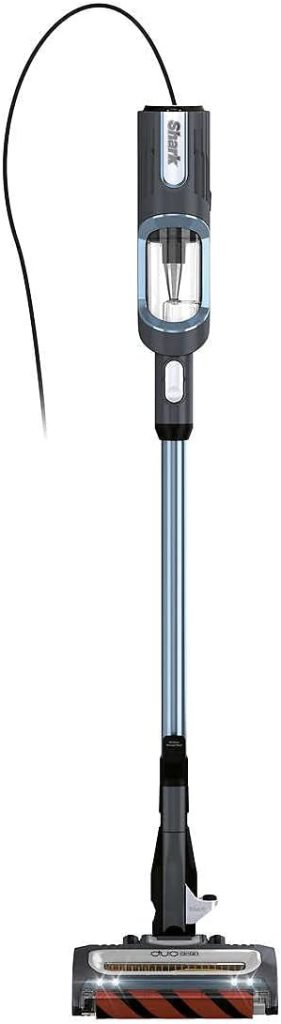
The three tools below cover the three situations this article keeps circling: whole-couch soil on a water-safe tag, one fresh spot on a water-safe tag, and the brush that every code except none is allowed to use.
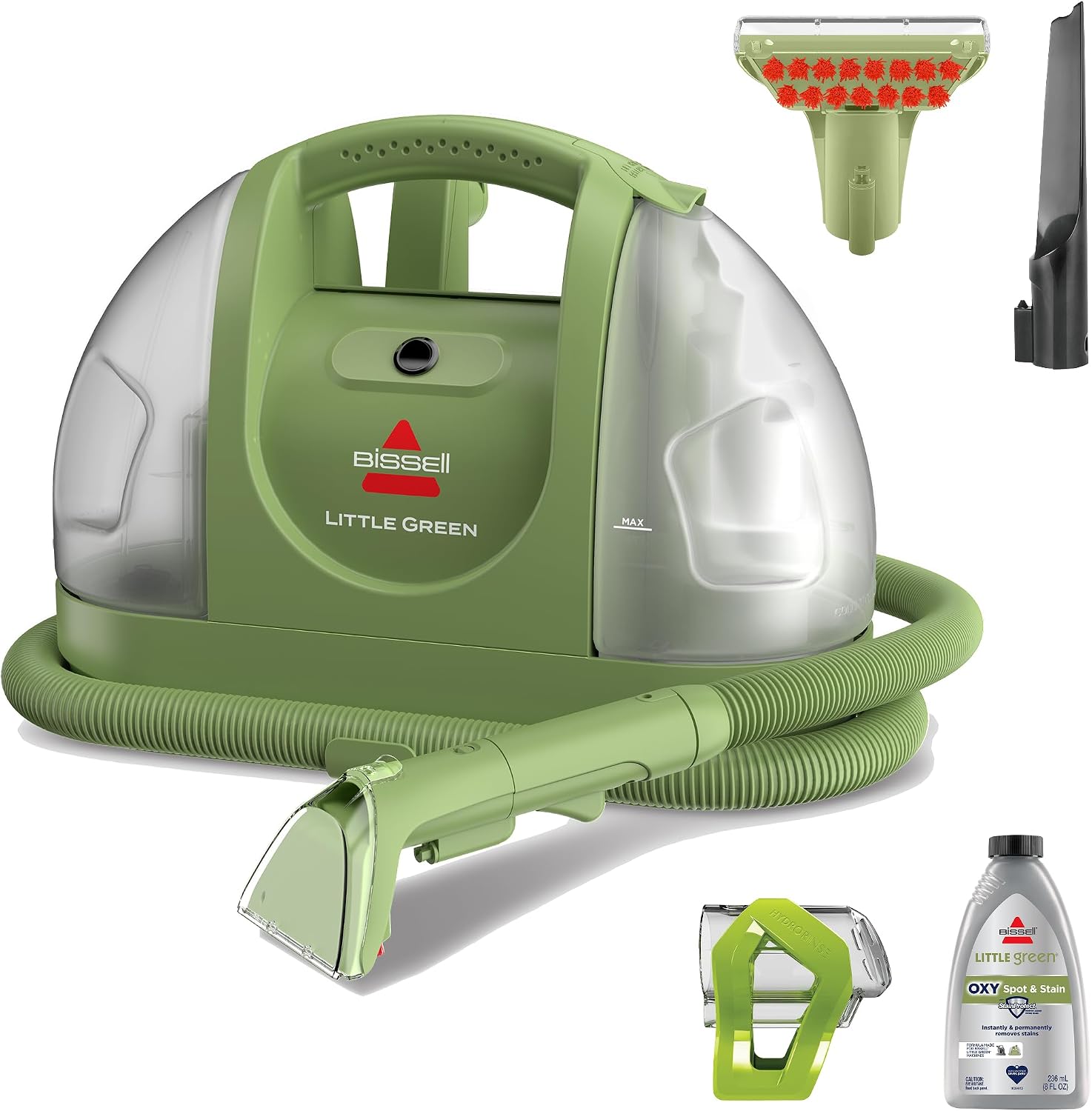
For W and WS tags only · sprays, scrubs and extracts in one pass, so soil leaves the couch instead of relocating · use distilled water in the tank and keep the tool moving
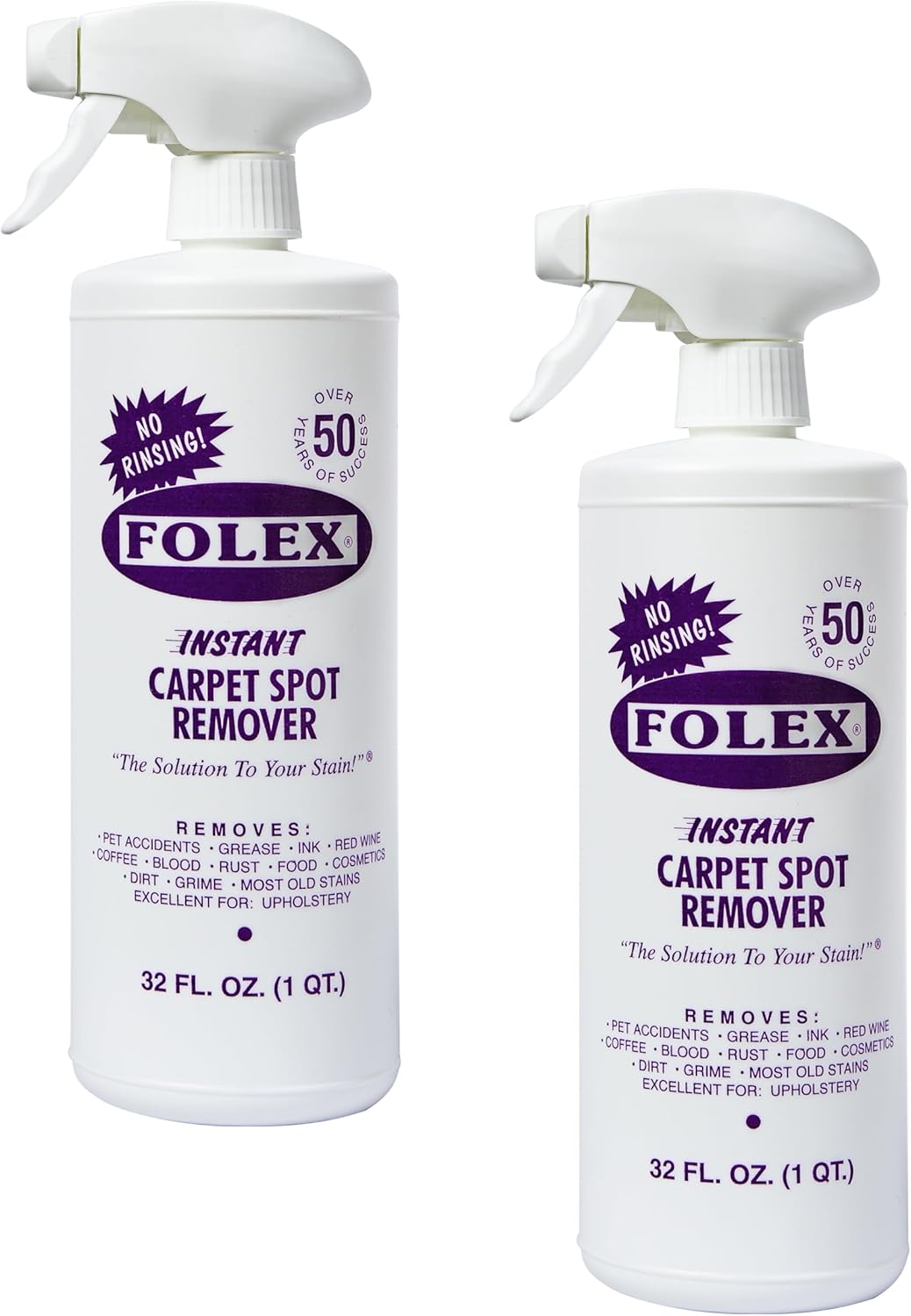
Water-based, so W tags only — its own label limits it to materials that can be safely dampened with water · no rinsing, blot with a white cloth · never on an S tag
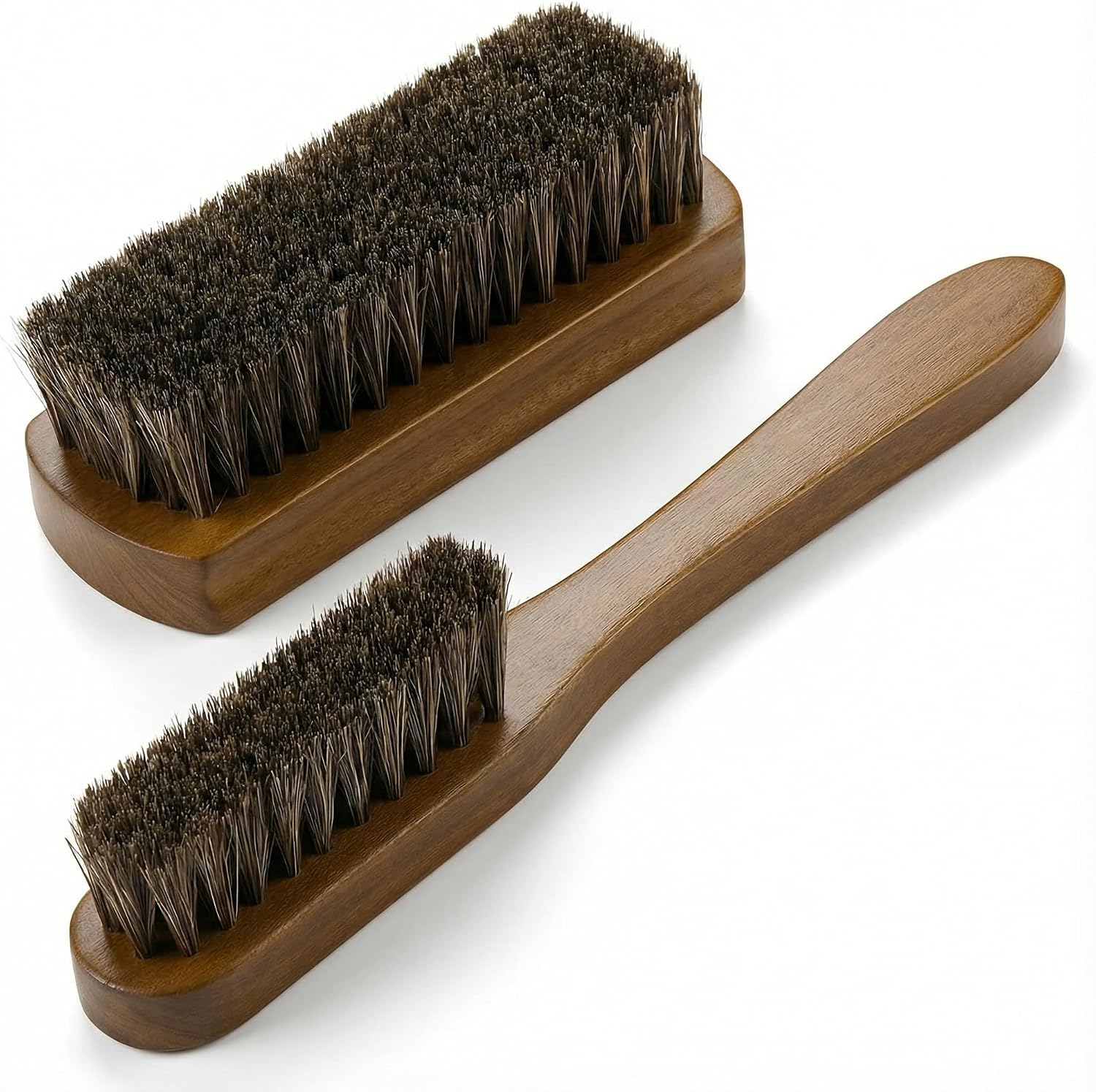
The finishing step every method depends on · soft bristles lift the dried nap back up without tearing split fibers · the small brush works seams, the large one does whole cushions
The six-month truth nobody puts in the listing photos
By month six, a microfiber couch shows its map: darkened headrest, shiny arm fronts, seat centers where the nap has been sat flat in one direction. None of that is a spill. It is oil transfer plus fiber fatigue, arriving on schedule whether the couch cost four hundred or fourteen hundred. Flattened fibers reflect light differently, which your eye reads as dirt even on a clean couch — half the “dingy” problem is optics. Brush the nap back up in small circles once the fabric is fully dry and the light scatter, and most of the color, comes back. Skip it and a genuinely clean cushion dries stiff, rough, darker than its neighbor. Matted fibers, not damage. Brush, then judge.
Removable covers change the math, with a catch. If you wash this textile or removable cover exactly twice in a standard home machine, you’ll quickly see if the manufacturer pre-shrunk the fabric — a cover that fights you at the corners on wash two will fight you forever. Cold water, zipped shut, air dry. It is also the quiet advantage a convertible sofa bed with removable covers holds over fixed upholstery, and nobody lists it on the spec sheet.
And when a heavy cushion comes out of airtight shipping plastic after three months, the crease retention tells you how cheap the inner core is — good foam sheds its creases in a day or two, cheap foam keeps fold lines for weeks, and the fabric above those lines wears shiny first. Same test on your current cushions: thumb pressed hard into the seat center, ten seconds. Slow foam will hold a body-shaped dip by year two, and no cleaning method brushes a dip out. While the couch is dragged out anyway, check the right rug size for your living room — the rug edge under those feet has been absorbing everything the vacuum missed.
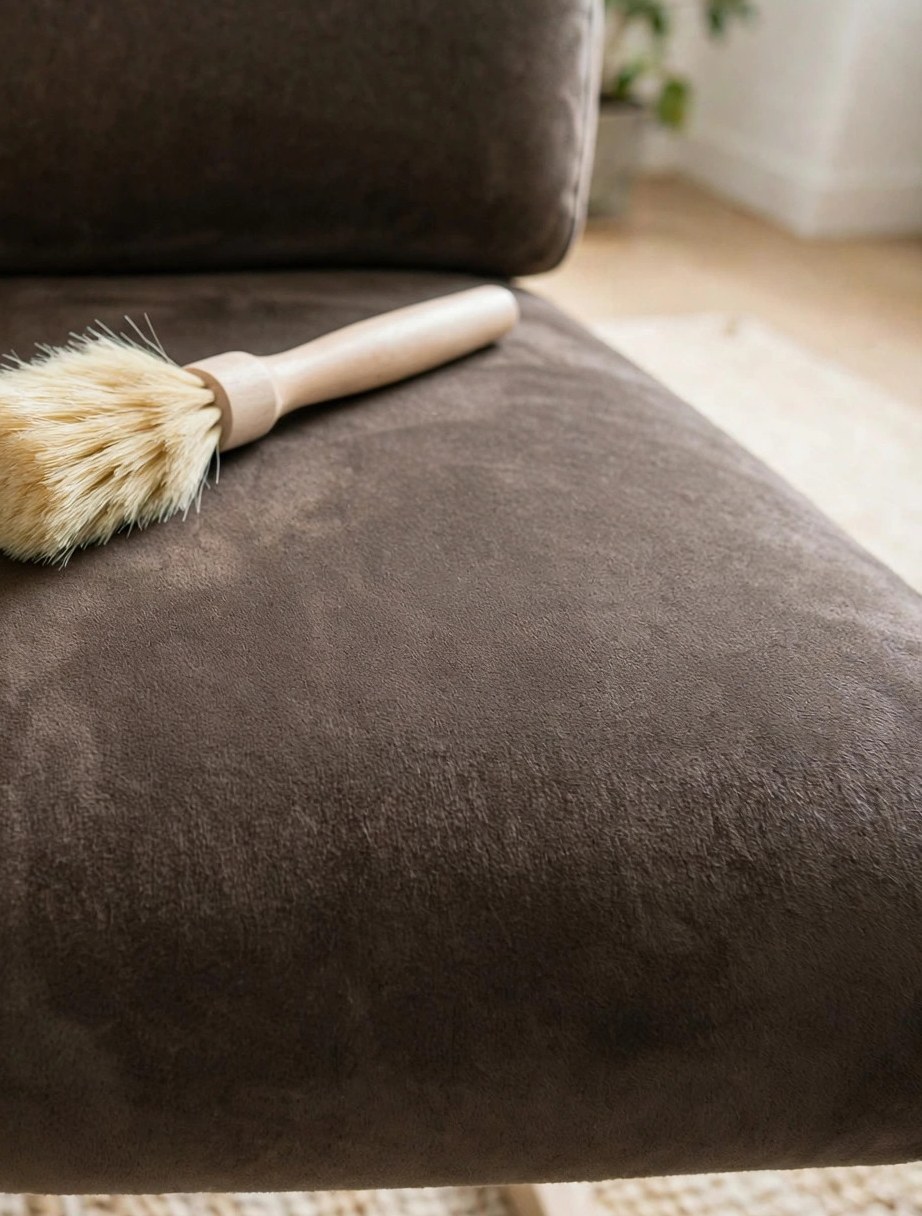
Honestly, the fabric rewards the boring routine and punishes the heroic one. Two minutes of brush and vacuum a week keeps oil and grit from settling in. One aggressive Saturday with a soaked cushion creates the ring, the stiffness, and the wicking stain in a single afternoon. Pale velvet owners learn the same nap physics from the other direction — the small velvet sofa crowd picks up light scatter and pile direction just as fast — except velvet never pretended to be indestructible.
Frequently asked questions
My tag is gone. Is there any way to clean this couch that is safe on every code?
Vacuuming and dry brushing are the only methods safe on every code, including X. Past that, treat the couch as S-coded and test the alcohol method on a hidden spot first — water is the liquid that does permanent-looking damage on the wrong fabric. Wait a full day after the test. Some rings only declare themselves after the second drying.
The water ring is already there and fully dry. Is the cushion ruined?
No — a dry water ring is displaced soil at a drying border, and it usually lifts when the whole panel is cleaned edge to edge. Mist the full cushion with the liquid your tag allows and let it dry as one surface, so no new border forms. Chasing just the outline redraws it somewhere else. Ask me how I know.
Can I steam clean a microfiber couch to finish faster?
Steam is a bad match for microfiber unless the tag says W and the manufacturer allows it. Heat plus heavy moisture drives soil deep and can set protein spills permanently. On S and X fabrics it combines the two things the tag exists to prevent. The fast method here is alcohol and a fan, not heat.
Why does the cushion feel stiff and rough the morning after cleaning?
The fibers dried matted together, and the fix is a dry soft-bristle brush, not more cleaner. Brush in small circles once the fabric is fully dry; the nap separates, softens, and lightens as it stands back up. Still rough after brushing? Leftover soap is the usual suspect on a W couch — wipe with a cloth dampened in plain distilled water, dry, brush again.
A pet accident soaked through to the foam. Does any spray actually fix that?
No spray fixes foam — surface cleaners stop at the fabric, and urine that reached the core needs extraction or the cushion needs opening up. An enzyme cleaner, given its full dwell time on a W or WS tag, handles the fabric side. The foam side is slower: repeated extraction passes, long fan time, sometimes the insert aired outdoors. Heat at any point makes the smell harder to remove, not easier.
This site contains affiliate links. We may earn a commission on qualifying purchases.
The middle cushion on mine is still a shade darker at the headrest than its neighbor, even after the full routine — fan, brush, all of it. Oil that sat in polyester for two years does not entirely clock out in one afternoon, apparently. The fan is still running. Tonight, before you buy anything, flip one cushion over and find your tag. That letter is the whole decision, and it is already in your house, face down, waiting.