This site contains affiliate links. We may earn a commission on qualifying purchases.
Start at the end, then. The KitchenAid Classic on my counter right now has flour in the seam of the tilt head, a flat beater with the enamel worn at one edge, and a bowl that has survived something like a decade of Sunday baking without asking for anything except to be washed. It was not supposed to be the forever mixer. It was supposed to be the starter one, the 4.5-quart tilt-head that every buying guide calls the entry point, bought on a Tuesday because a hand mixer had walked itself off the counter one time too many. The upgrade I kept researching never happened. That is the review, running backwards: the machine stayed, and everything I thought I knew about why it would not stay turned out to be the interesting part.
The doubt arrived first, chronologically, with a double batch of chocolate chip cookies. Four and a half quarts sounds generous on a box. It is less generous when dough starts climbing the beater and the bowl is carrying close to three and a half pounds of flour, which is about the honest ceiling for this size if you push it, and I push it. I learned to halve recipes the annoyed way, standing there watching dough try to escape. A 5-quart bowl would have swallowed that batch whole. That part of the criticism is real and I am not walking it back.
Then the motor doubt, which aged worse. The Classic runs ten speeds and the head will shudder on speed two under a stiff bread dough, two loaves’ worth at around 60 percent hydration, not smoking, not straining in a way that smells electrical, just visibly deciding whether it feels like cooperating. I read that shudder as weakness for years. It is better read as gearing. The machine is built to work slowly against resistance rather than spin fast and burn, and the dough comes out fine, and the mixer is still here, which is more evidence than my interpretation ever had.
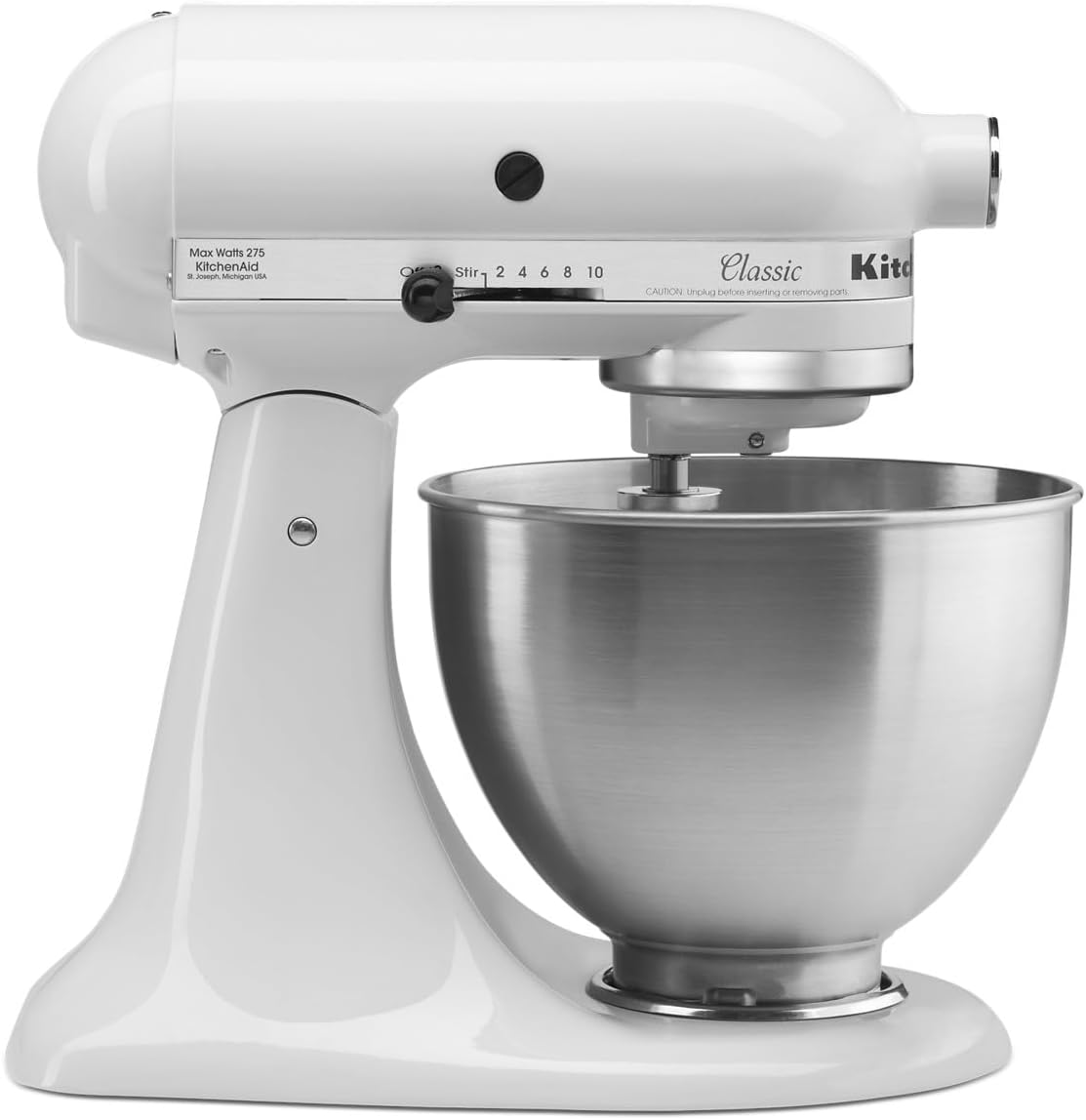
The tilt head is the feature I undervalued most at purchase and use most now. One lever, the head swings back, the bowl comes out without the shoulder negotiation that bowl-lift owners perform, and scraping the sides is a ten-second job instead of an excavation. Planetary mixing, the beater sweeping dozens of points around the bowl, whatever the exact count on the current spec sheet is, and I have seen two different numbers printed in two different years, so that figure I am not sure about. What I am sure about is the flour pockets stopped. Dry corners at the bottom of the bowl used to be a feature of everything I baked. They are not anymore.
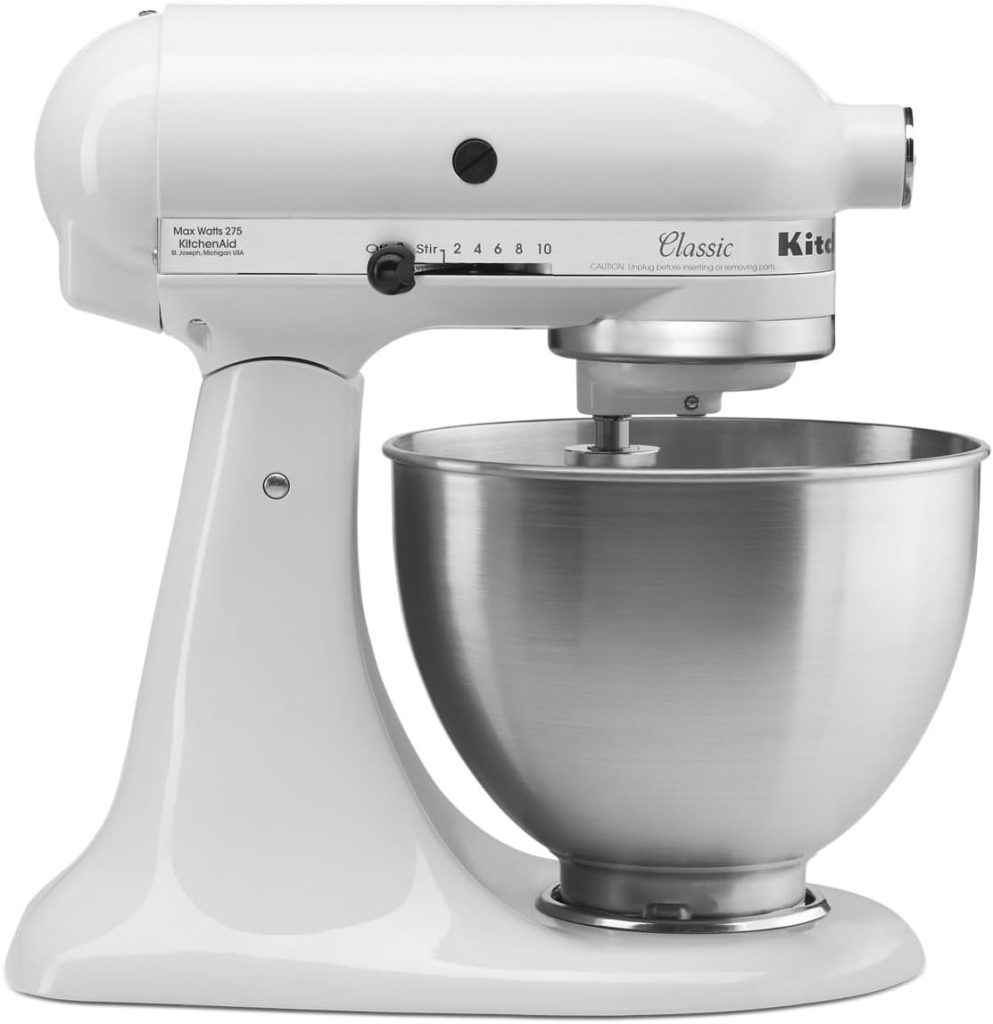
The subject itself – 4.5 quart tilt-head, ten speeds, the long-running Classic
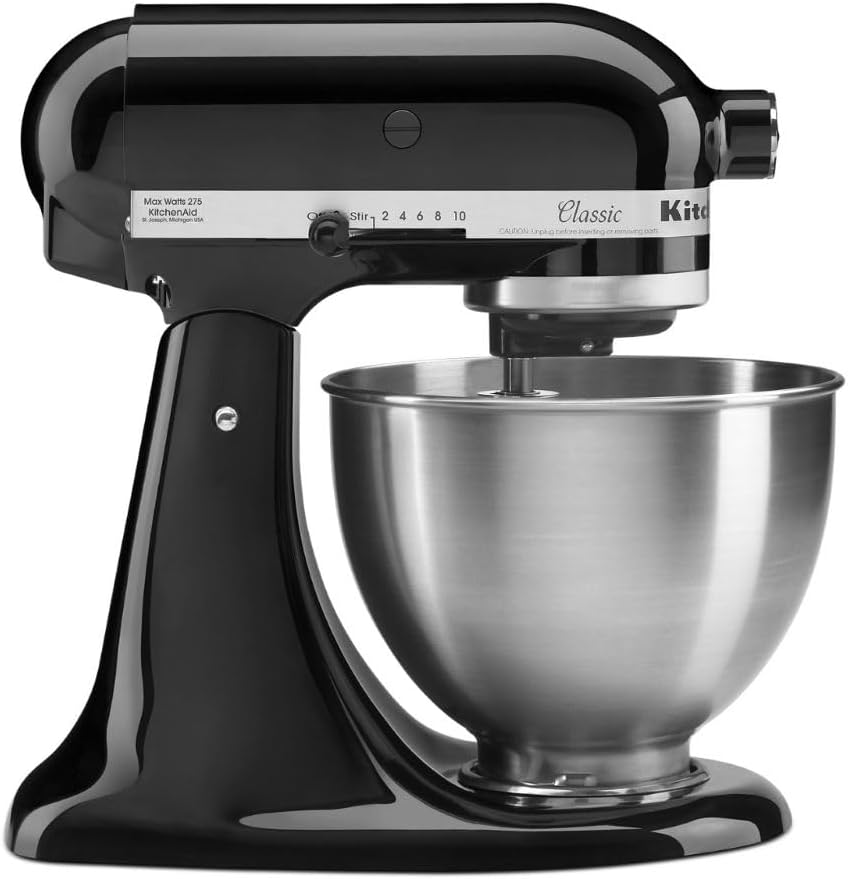
The same Classic in black – hides flour dust better, same bowl and head
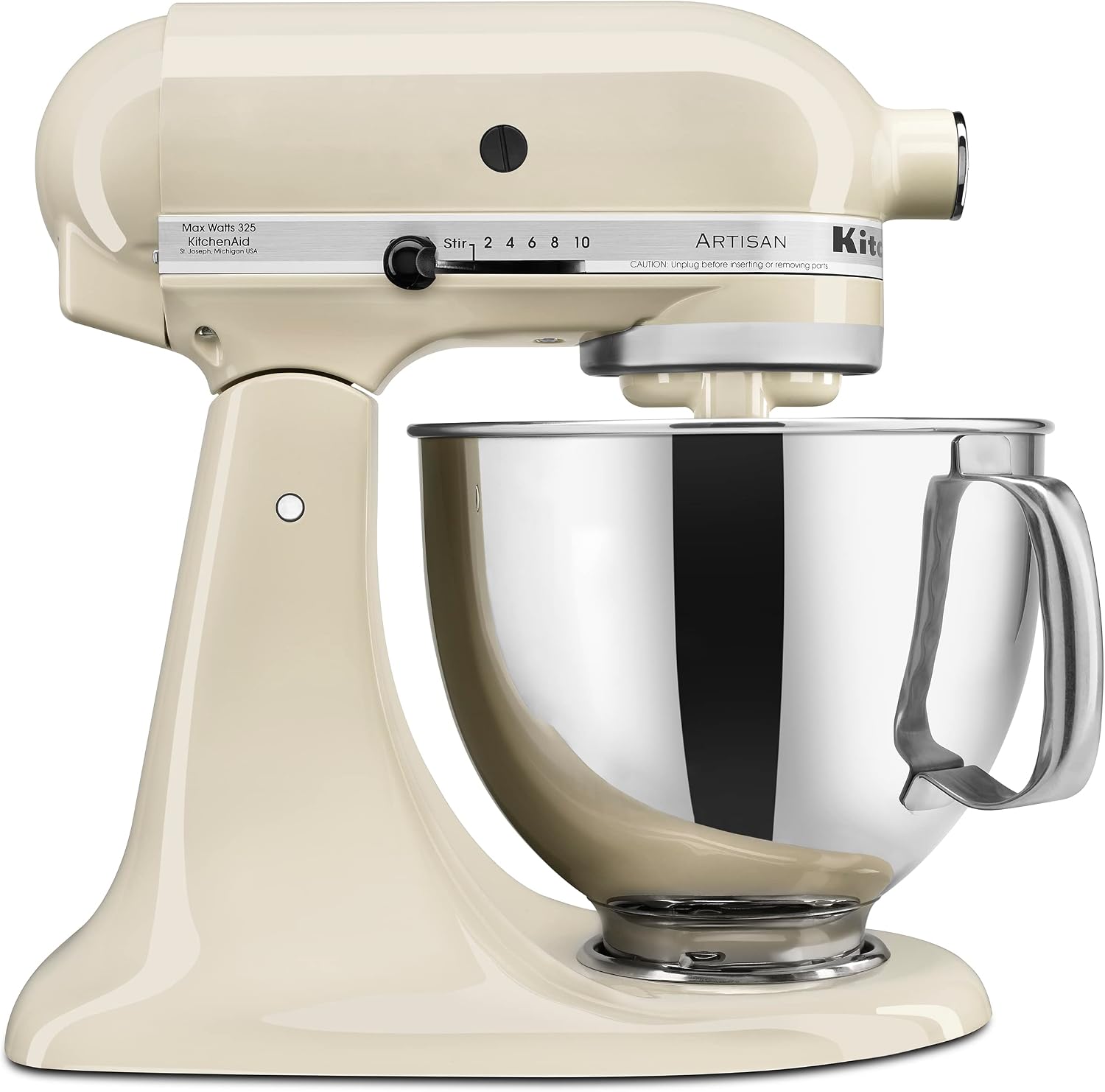
The step-up – bigger 5 quart bowl and a stronger motor for double batches
Prices and availability change often. The button shows the current listing.
The stir speed deserves its own confession. For the first year I creamed butter and sugar on speed four because it felt faster, and my cookies spread flat, and I blamed the mixer with real conviction. Actually, no. That is not right, and I knew it by the second summer. The butter was too warm. The speed was fine. A neighbor looked at my soft butter, laughed once, and ended a six-month grievance against an appliance that had done nothing wrong. I think about that whenever I read one-star reviews now, mine included in spirit.
What the buy-it-for-life crowd leaves out is which part actually gives up first, because it is not the motor and it is not the metal gears people invoke like a creed. It is a small sacrificial gear, designed to strip and die before an overload can hurt the motor, and replacing it is a cheap part and a messy afternoon rather than a new machine. Knowing that changes how the shudder reads. The machine has a fuse made of gear teeth. It would rather break a fifteen-dollar part than cook itself, which is a design philosophy I have come around to respecting.
Counter space is the argument nobody wins in the abstract. This footprint is not small, and in my old kitchen it evicted the toaster to a cabinet, which meant toast became a production. Readers with genuinely tight counters are the ones I point at the compact machines first: the compact 3.2-quart stand mixer review covers the small Kitchen in the Box unit, and the mini mixer follow-up gets into what that size gives up in dough capacity. Smaller is not lesser. It is a different set of compromises, mostly about batch size.
Attachments are where my knowledge honestly runs out at the edges. The power hub on the front takes the grinders and pasta tools and the rest of the catalog, and I own exactly one of them, a grinder that comes out twice a year and performs fine. The pasta rollers I have never used on this machine and cannot judge, and the ice cream bowl I have only seen in other people’s kitchens, where it seemed to work and take up freezer space in equal measure. A hub is a promise. How much of the promise any given household redeems is a question the spec sheet cannot answer for you.
The bowl, one more backward glance, because the bowl is the part I have treated worst and it has the fewest complaints. Stainless, handle-less on the Classic, which means it goes in the sink and gets used as a mixing bowl, a proofing bowl, a popcorn bowl, and once, memorably, a helmet in a photograph I did not approve. The rim has a rolled edge that has not cut anyone, the base locks with a twist that still feels machined rather than worn, and the one real flaw is that a handle-less bowl full of batter is a two-hand carry for smaller hands. Plan the pour accordingly. Everything else about it is the opposite of a flaw, it is a bowl that forgot to age.
Ten speeds, and here is the daily-cook truth of it: I live on stir, two, and four, and six for egg whites, and the rest of the dial is decoration I dust. Whipping cream goes from soft peaks to grainy in a blink on this motor’s enthusiasm, so the high end is a place I visit carefully with my hand hovering. Bread lives at two. Cookie dough lives at two and four. The dial having ten positions matters less than the low end being genuinely low, and stir on this machine is slow enough to fold without flinging, most days, when the bowl is not overfilled, which circles back to that first lesson about halving the recipe.
Frequently Asked Questions
I keep reading that 4.5 quarts is too small, but it is usually just me baking for two. Am I buying the wrong size?
For two-person baking, 4.5 quarts is not the small size, it is the right size wearing a warning label meant for somebody else. A single batch of cookies, a loaf of bread, a cake, mashed potatoes for a holiday side, all of that sits comfortably. The size only bites when you double recipes out of habit or bake for a crowd regularly, because the working ceiling is roughly three and a half pounds of flour and dough climbs past that. Buy the bowl for the batches you actually make, not the one batch a year you are imagining, and if that one batch matters, it can still be made in two runs.
The head shakes when I make bread dough and it honestly looks like the machine is struggling. Is it?
A shudder at speed two under a stiff dough looks dramatic and is mostly gearing doing its slow, stubborn work. What should actually concern you is different: a grinding noise that was not there before, a burning smell, or the head rocking enough to walk. Those point at the sacrificial gear wearing, which is a replaceable part doing the job it was designed for. Keep bread at speed two, keep the flour load near the stated ceiling, and let it be slow. Slow is the setting working, not failing.
Is the Artisan worth the extra money over the Classic, or is it the same machine with colors?
The honest difference is capacity and headroom, not a different species of mixer. The Artisan’s 5-quart bowl swallows the double cookie batch that climbs out of the Classic, and its motor strains less at the heavy end. Everything else, the tilt head, the hub, the daily feel of the thing, is close enough that owners argue about it. If your baking already fits the Classic’s bowl, the extra money buys colors and margin you will rarely touch. If you hit the flour ceiling monthly, the margin is the whole point and it is not a close call.
The upgrade research is still open in a browser tab I refuse to close, Artisan colors rotating like a screensaver, and below it the Classic sits with flour in its seam, unbothered, having outlasted three hand mixers, two kitchens, and every argument I made against it.
This site contains affiliate links. We may earn a commission on qualifying purchases.