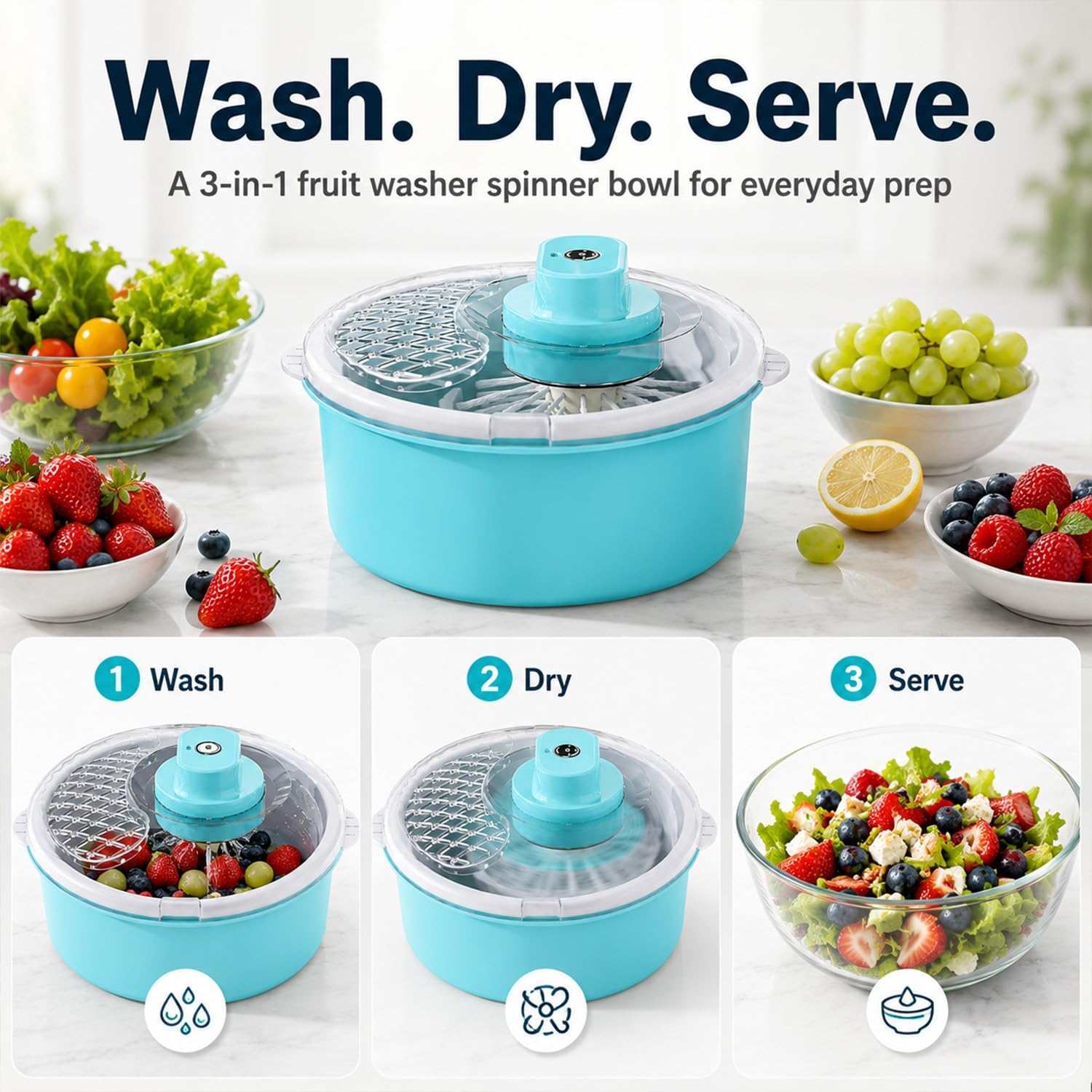


The Electric Salad Spinner: Is This Fancy Produce Washer Really Worth It?
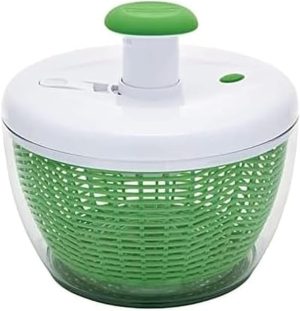
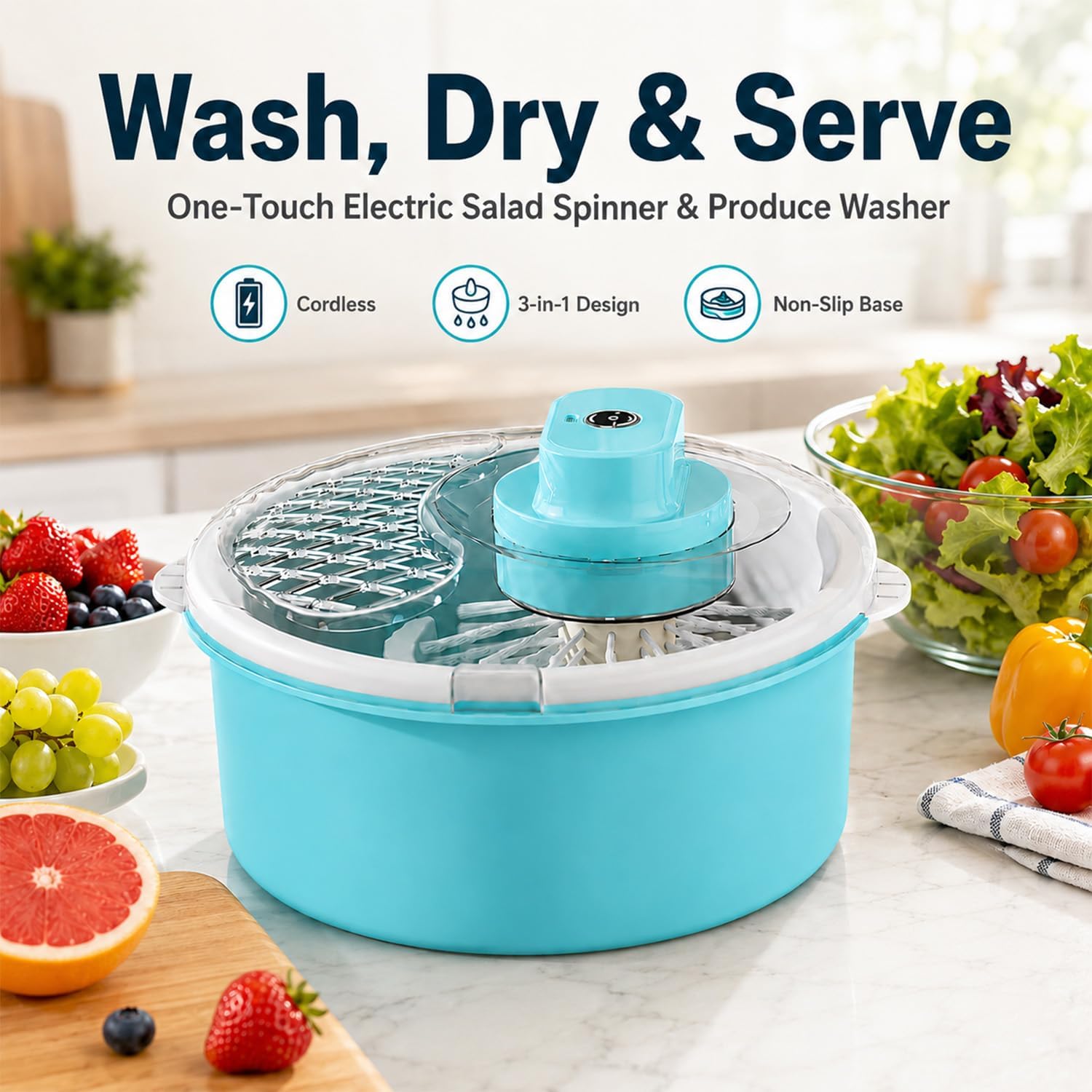
Look, if you’re reading this, you probably know the drill with salad spinners. You wash your greens, you plop ’em in the basket, you spin, and hopefully, you get mostly dry lettuce. But what about those new-fangled electric salad spinner and produce washer models? They promise one-touch cordless fruit cleaner spinner action, complete with a non-slip base and a dedicated fruit washer spinner bowl. We’re diving deep into whether these advanced gadgets truly earn their keep, or if you’re just paying for unnecessary bells and whistles.
Quick Answer
An electric salad spinner can be a godsend for anyone routinely prepping fresh produce, especially larger quantities, offering unparalleled convenience and efficiency. While often costing more than manual options, the ease of one-touch operation and thorough vegetable dryer capability can genuinely streamline meal prep, making it a solid investment for frequent users focused on healthy eating.
What to Look For (The Buying Criteria)
Choosing the right salad spinner isn’t rocket science, but there are definitely nuances that separate a genuinely helpful kitchen tool from one that just takes up counter space. And when you’re considering an electric salad spinner, those considerations take on a whole new dimension.
First up, Drying Effectiveness. This is, hands down, the core function. You want greens that are crisp, not soggy. That’s the whole point, right? A good spinner, electric or not, needs to remove a significant amount of water from your lettuce, herbs, or berries without bruising them. Some electric models boast higher RPMs (rotations per minute), theoretically getting things drier faster. But sometimes, too much speed can be counterproductive, flinging water out but also potentially damaging delicate items. There’s a sweet spot.
Then there’s the Capacity and Bowl Size. Are you spinning a single serving of arugula or a giant head of romaine for a family dinner? Traditional manual spinners come in various sizes, but many electric produce washer units tend to be on the larger side, often designed to handle substantial loads. A smaller household might find a large electric model cumbersome to store and operate for just a handful of greens. It’s a trade-off: more capacity often means a bigger footprint.
Let’s talk about Ease of Use and Operation. This is where an electric salad spinner aims to shine. The promise of one-touch cordless fruit cleaner spinner operation is alluring. No more pumping, no more pulling cords, just a button press. For folks with hand strength issues, or those just looking for maximum convenience, this is a clear win. But consider the charging situation – is it a proprietary charger? How long does the battery last? You don’t want to grab it for dinner prep only to find it dead. Some manual spinners, especially those with a sturdy lever mechanism, are still remarkably easy to use, and they never need charging.
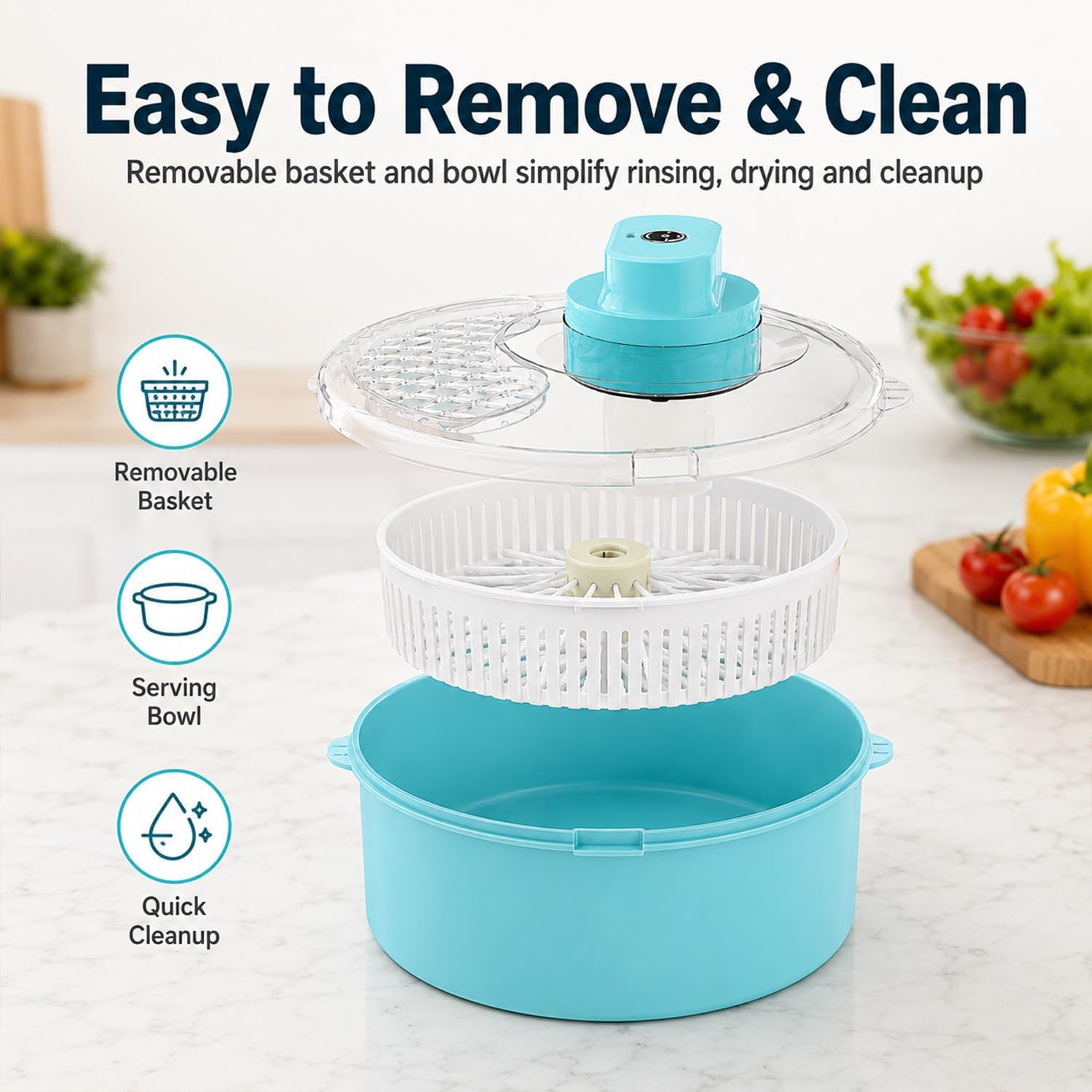
Next, Cleaning and Maintenance. This is often overlooked in the initial excitement. A salad spinner bowl, the inner basket, and the lid all need to be cleaned. Many electric models have a motor unit integrated into the lid. Can that lid go in the dishwasher? Or is it a hand-wash-only deal because of electronics? What about the drain port often featured in these more advanced vegetable dryer units? Does it clog easily? You want a design that disassembles simply and cleans up without a fuss. Otherwise, it just becomes another kitchen chore.
Durability and Build Quality really matter here. An electric appliance, especially one that spins, has more moving parts than a simple manual one. You’re investing in a motor, a battery, and potentially more complex plastic components. Is the plastic sturdy? Do the moving parts feel robust or flimsy? A cheap manual spinner might break, but it’s a lot less frustrating than a more expensive electric one failing prematurely. A non-slip base is a must for stability, electric or manual, preventing countertop dance-offs during operation.
Finally, think about Noise Level. Electric motors, even small ones, make noise. Some can be surprisingly loud, while others are relatively quiet. If your kitchen is open-plan or you’re sensitive to noise, it’s a legitimate consideration. A manual spinner, unless it’s poorly made and squeaks, is generally much quieter. You probably won’t wake the whole house with a manual one. An electric model? Maybe.
How to Match the Product to Your Situation
Finding the right salad spinner isn’t about picking the absolute “best” one; it’s about finding the best fit for you. Different kitchens, different lifestyles, different priorities. Let’s think about a few types of cooks out there.
The Everyday Salad Enthusiast (Think Meal Prepper Extraordinaire): You’re making salads, washing berries, drying herbs almost daily. Maybe you’re into healthy eating and a fully loaded greens bowl is your go-to lunch. For you, the sheer convenience of an electric salad spinner and produce washer is probably worth the investment. The one-touch cordless fruit cleaner spinner feature means less effort, especially if you’re processing larger batches of lettuce preparation. You’ll appreciate the speed, the consistent drying, and the overall kitchen efficiency it brings to your routine. A model with a large spinner bowl would be key here.
The Health-Conscious Family Cook (The Produce Powerhouse): You’ve got a busy family, and you’re buying produce in bulk to keep everyone eating their veggies. Washing and drying copious amounts of fresh produce for snacks, sides, and main dishes is a constant. A robust electric vegetable dryer with significant capacity could be a game-changer. The automated thoroughness of an electric unit means less manual labor, freeing you up for other meal prep tasks. Plus, knowing it doubles as a fruit cleaner gives extra peace of mind for food safety, especially with all those little hands reaching for snacks. You want something reliable, something that won’t give out halfway through the weekly wash.
The Compact Kitchen Dweller / Occasional User (The “Minimalist Muncher”): Your counter space is prime real estate. You only eat salad a couple of times a month, or maybe you only wash specific items like herbs. An electric salad spinner might be overkill. Honestly. For occasional use, a well-designed manual spinner, perhaps a compact one, will serve you just fine. It’s easier to store, doesn’t need charging, and is typically far less expensive. Don’t fall for the allure of “one-touch” if you’re only touching it once a month. Simplicity often wins in smaller spaces.
| Type/Tier | Best For | Price Tier | Key Feature | Watch-Out |
|---|---|---|---|---|
| Basic Manual Spinner | Occasional use, budget-conscious, small kitchens | Budget-friendly | Simple pull-cord or pump mechanism | Can be flimsy; drying effectiveness varies widely; often smaller capacity. |
| Mid-range Manual | Regular users, good value, reliable performance | Mid-range | Sturdy lever mechanism, often larger capacity | Still requires manual effort; may not fully dry very delicate items. |
| Premium Electric | Frequent, large-batch prep, convenience seekers | Premium | One-touch, cordless, thorough water removal | Higher initial cost; requires charging; can take up more space; more parts to clean. |
- Basic manual spinners are your entry point, often perfectly adequate for light duty, but you might find yourself wishing for a bit more robustness or a drier result.
- Mid-range manual options offer a significant step up in build quality and efficiency, providing a solid workhorse for most households without the premium price tag.
- The premium electric produce washer is all about maximum convenience and efficiency, ideal for those who value automation and consistently dry greens, but be prepared for the extra maintenance of a powered appliance.
Daily Meal Prep: Streamlining Your Routine
For anyone who’s serious about meal prep, every minute saved counts. This is where an electric salad spinner truly shines. Imagine you’re washing several different types of produce—a head of romaine, some spinach, a bunch of grapes—all at once. Instead of manually pumping or pulling for each batch, a single button press takes care of the drying. The one-touch cordless fruit cleaner spinner design means you can move through your produce quickly, cycling through items efficiently. It’s about maintaining flow in the kitchen, not getting bogged down with repetitive tasks. This efficiency, especially with lettuce preparation, helps keep your focus on chopping and seasoning, not on wrestling with a wet salad.
Entertaining Guests: Handling Larger Volumes with Ease
Got a crowd coming over? A big dinner party? Suddenly, that small manual spinner feels utterly inadequate. You’re trying to prep a massive salad, maybe a fruit platter too. A larger capacity electric salad spinner and produce washer becomes an invaluable assistant. It can handle substantial quantities of greens, berries, or even chopped veggies, all in one go, delivering consistently dry results. No one wants a watery dressing or diluted fruit flavors. The consistent, powerful spin of an electric model ensures everything is ready for presentation, making those entertaining moments just a bit smoother. And less stressful for you.
The Compact Kitchen: Weighing Size Against Convenience
Living in a smaller space means making tough choices about kitchen gadgets. An electric salad spinner is often bulkier than its manual counterparts, incorporating a motor and battery. While the convenience of one-touch operation is appealing, you have to ask yourself: where will this live? Does it justify the counter or cabinet real estate? For some, the streamlined process it offers still makes it a worthwhile, albeit space-hungry, addition. For others, a sleek, stackable manual salad spinner that tucks away easily might be the more practical choice, even if it demands a bit more elbow grease.
Common Mistakes
Even with something as seemingly straightforward as a salad spinner, folks tend to make a few common blunders.
One big mistake? Overfilling the basket. You think you’re being efficient by stuffing it to the brim with lettuce, but all you’re doing is preventing proper air circulation and effective water removal. The greens need space to tumble and shed their moisture. Give them room to breathe!
Another common misstep is neglecting to disassemble the spinner for a thorough cleaning. Bits of lettuce, stray seeds, and even dressing residue can get trapped in the lid’s crevices or under the basket, especially with the more complex designs of an electric produce washer. This isn’t just gross; it can lead to bacterial buildup. Give it a proper scrub regularly.
People often forget about or ignore the drain feature on some electric and even a few manual models. These little ports are there to let accumulated water out without having to remove the lid and pour. Use it! It makes the process cleaner and more efficient.
Finally, a lot of new users assume an electric salad spinner is a “magic bullet” for all produce. While it’s fantastic for leafy greens and many berries, it’s not always ideal for super delicate herbs or firm, dense vegetables. Know its limits. It’s a vegetable dryer, yes, but not a universal dehydrator.
Why/How/What
Why choose an electric salad spinner over a manual one?
Honestly, it boils down to convenience and consistency. If you’re someone who preps a lot of fresh produce, an electric model with its one-touch cordless operation saves effort and provides a more consistent spin cycle, often resulting in drier greens with less personal exertion. It’s particularly useful for those with wrist or hand issues who find manual pumping difficult.
How does an electric produce washer work so effectively?
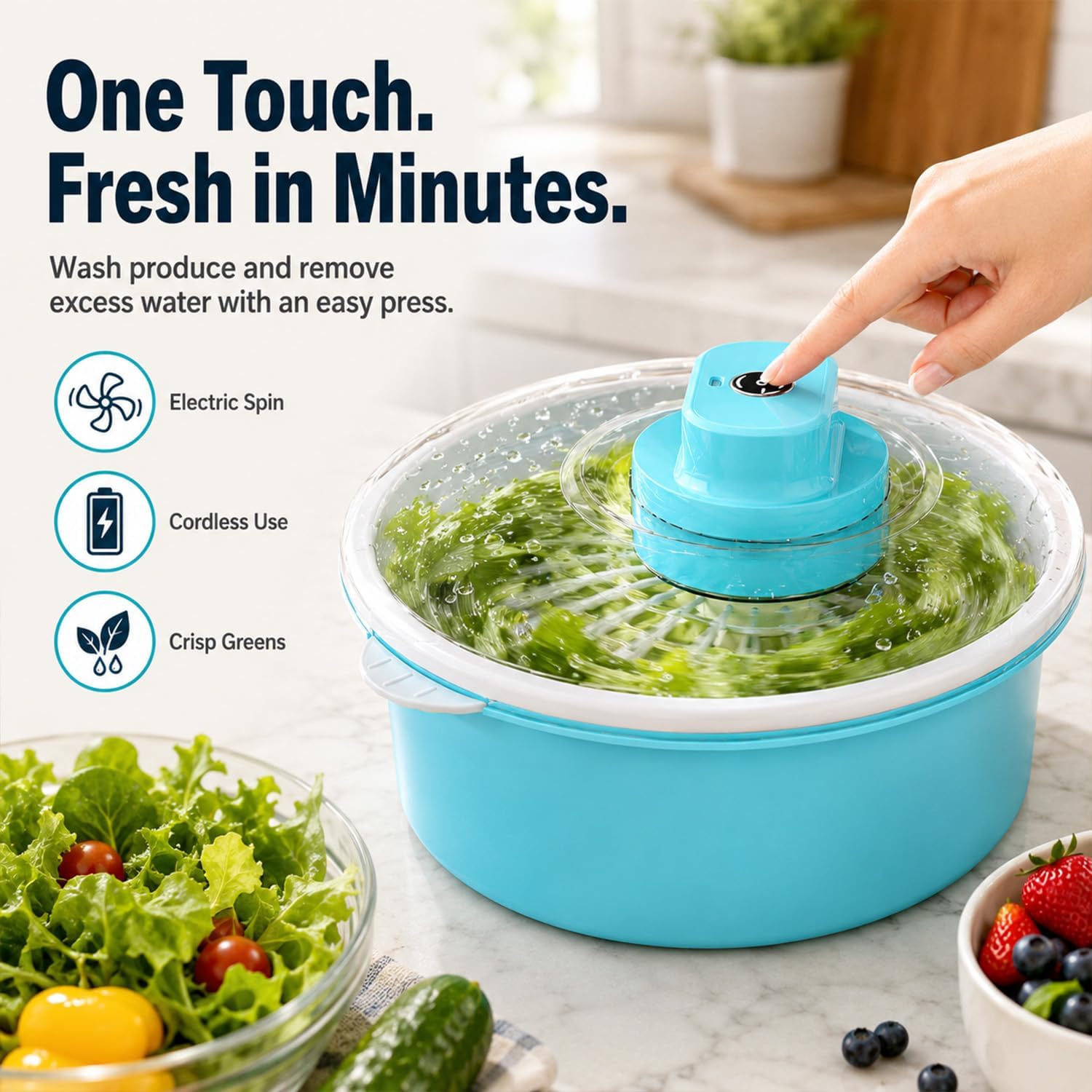
These units typically use a battery-powered motor to spin the inner basket at a high, consistent speed, leveraging centrifugal force to shed water from your produce. The enclosed design ensures water is contained within the spinner bowl. Many also include a dedicated rinse function or design that allows water to drain away without manual intervention, making it a comprehensive fruit cleaner.
What’s the deal with the “produce washer” part?
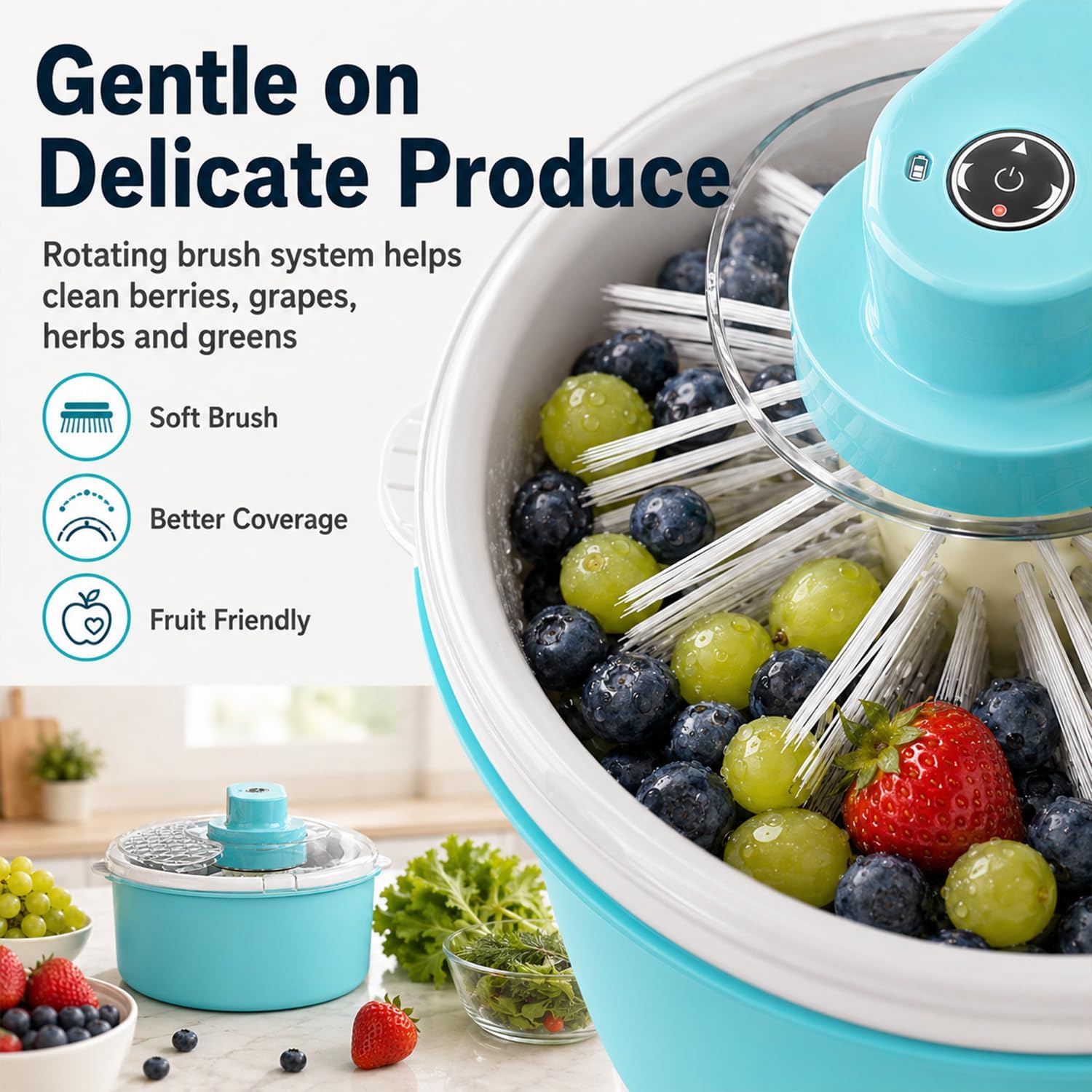
Many advanced electric salad spinner and produce washer models aren’t just about drying; they often integrate features that aid in the washing process itself. This might involve a more robust inner basket design for thorough rinsing under the tap, or simply the ability to fill the outer bowl with water, swirl, and then engage the spin cycle for efficient cleaning and drying in one go. It’s about tackling both aspects of preparing fresh produce.
FAQ
How long does an electric salad spinner take to dry lettuce?
Most electric models can dry a batch of lettuce in about 10-20 seconds. Some have longer cycles, or you might need a second brief spin for particularly wet greens.
Can an electric salad spinner also clean fruit effectively?
Yes, many models are designed as a fruit cleaner spinner, meaning the basket is gentle enough to wash and remove excess water from berries and other delicate fruits without bruising them. The spin cycle is quite effective for this.
Are electric salad spinners difficult to clean?
It depends on the design. Some have electronic components in the lid that require hand-washing, while the spinner bowl and basket are usually dishwasher-safe. Look for models that disassemble easily.
What’s the main benefit of a cordless electric salad spinner?
The biggest perk is flexibility. You’re not tied to an outlet, so you can prep your produce anywhere in the kitchen, or even on a patio if you like. No tangled cords is always a win in a busy kitchen.
Can I put warm water in the salad spinner for washing?
Generally, cold water is recommended for washing produce to help maintain crispness. While the plastic can likely handle warm water, it’s not ideal for the greens themselves.
Do I really need a non-slip base on my salad spinner?
Absolutely. Whether it’s a manual or electric salad spinner, a non-slip base is crucial for stability during operation. It prevents the unit from sliding around on your countertop as it spins, which can be messy and frustrating.
How durable are the batteries in electric produce washers?
Battery life varies by model and usage, but most integrated rechargeable batteries are designed to last for many cycles between charges. Like all rechargeable batteries, they’ll degrade over many years, but for daily use, they should hold up well.
Final Recommendation
So, is an electric salad spinner and produce washer worth the extra cash? For the everyday home cook who genuinely values convenience, prioritizes healthy eating, and finds themselves regularly processing large quantities of produce, absolutely. The one-touch cordless fruit cleaner spinner truly makes quick work of what can be a tedious chore, saving time and effort, especially for those involved in serious meal prep. You’re investing in kitchen efficiency and consistently dry, crisp greens.
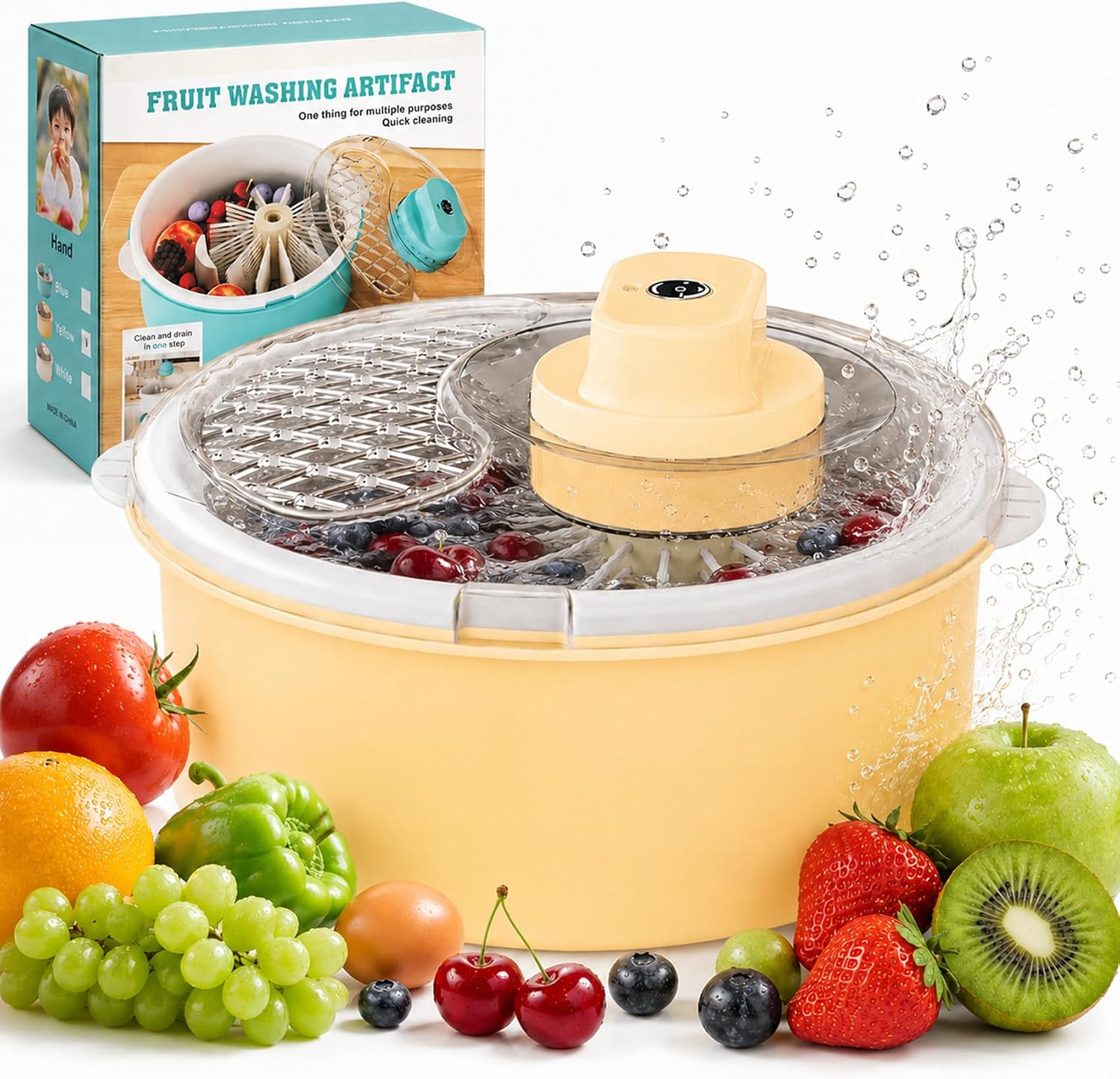
However, if your salad consumption is more sporadic, or you’ve got a super tight kitchen, a sturdy manual spinner still holds its own. It’s a reliable, no-frills tool that requires no charging and is often more compact. But for sheer ease of use and consistent results, especially when dealing with the sheer volume of a big family’s worth of lettuce preparation and other produce, the premium electric models – like that yellow, electric marvel we’ve been talking about – are a clear winner for those who can swing the investment.
#Electric #Salad #Spinner #Produce #Washer #OneTouch #Cordless #Fruit #Cleaner #Spinner #NonSlip #Base #Fruit #Washer #Spinner #Bowl #Lettuce #Cleaner #Vegetable #Dryer #YellowElectric