Getting the Most Out of Your Silicone Baking Mat: A Deep Dive into Oven Liners
Nobody likes scrubbing a burnt-on mess from the bottom of their oven. It’s a chore we’d all rather avoid, isn’t it? This guide cuts through the marketing fluff to show you how a good silicone baking mat, specifically those designed as oven liners like the HOTEC Oven Liners for Bottom of Oven, can be a real game-changer for kitchen cleanup and appliance longevity. We’re talking about practical advice for savvy home cooks and busy families who want reliable solutions without the fuss.
Quick Answer
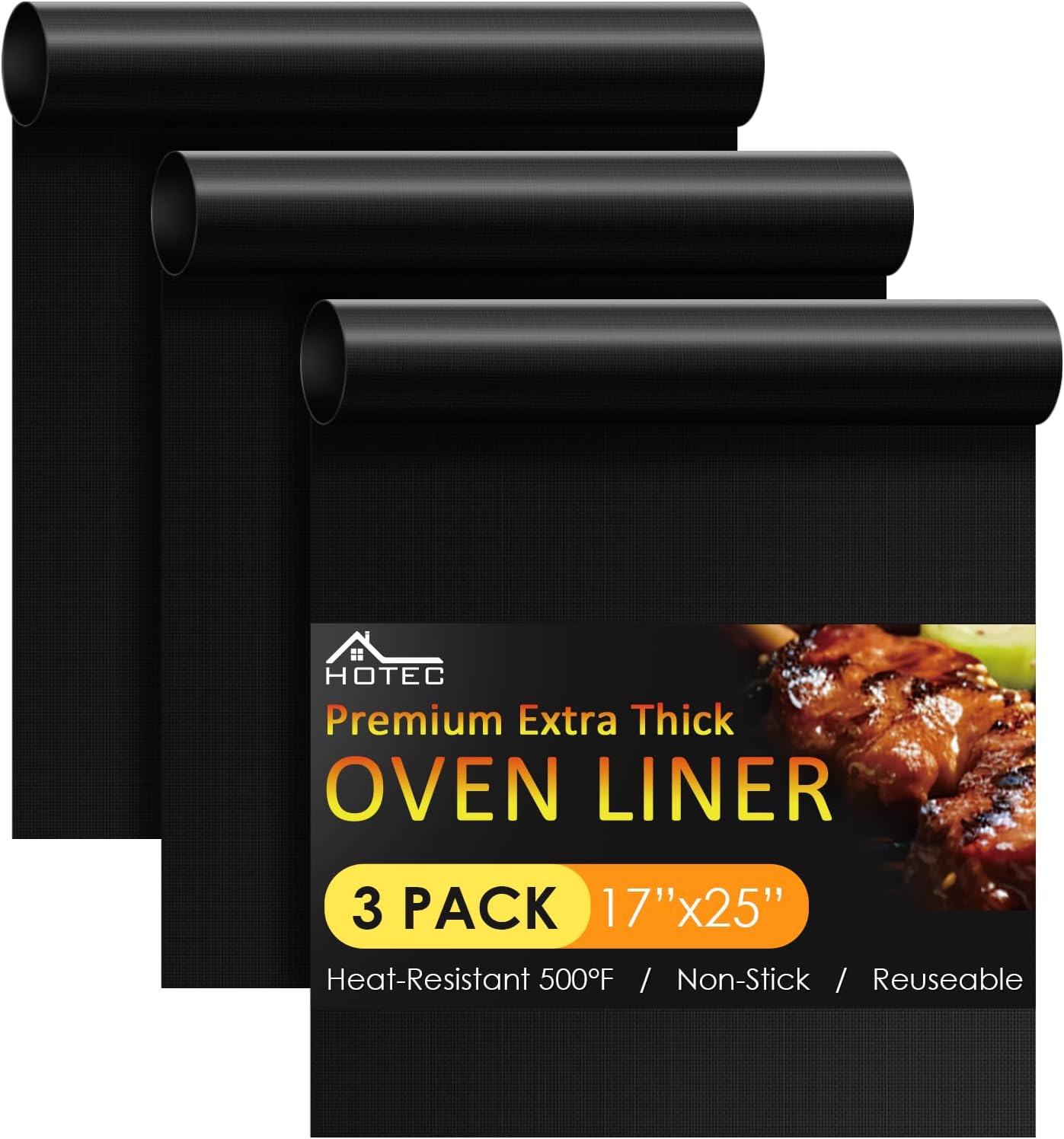
For dependable oven protection and simpler cleanup, a heavy-duty silicone oven liner like the HOTEC Oven Liners for Bottom of Oven, 3-Pack 17″x25″ Large Oven Mats Heavy Duty Non-Stick, BPA & PFOA Free, Protector for Electric, Gas, Toaster Ovens & Grills Heat Resistant 500°F offers a solid, non-stick barrier against drips and spills. They’re a smart investment for anyone tired of elbow grease and scorched oven floors, proving particularly useful for high-temperature cooking.
What to Look For (The Buying Criteria)
Choosing the right silicone baking mat, especially when you’re using it as an oven liner, isn’t just about grabbing the first thing you see. Oh no. There are some nuances that make all the difference between a flimsy disappointment and a robust kitchen workhorse. You want something that actually holds up, right?
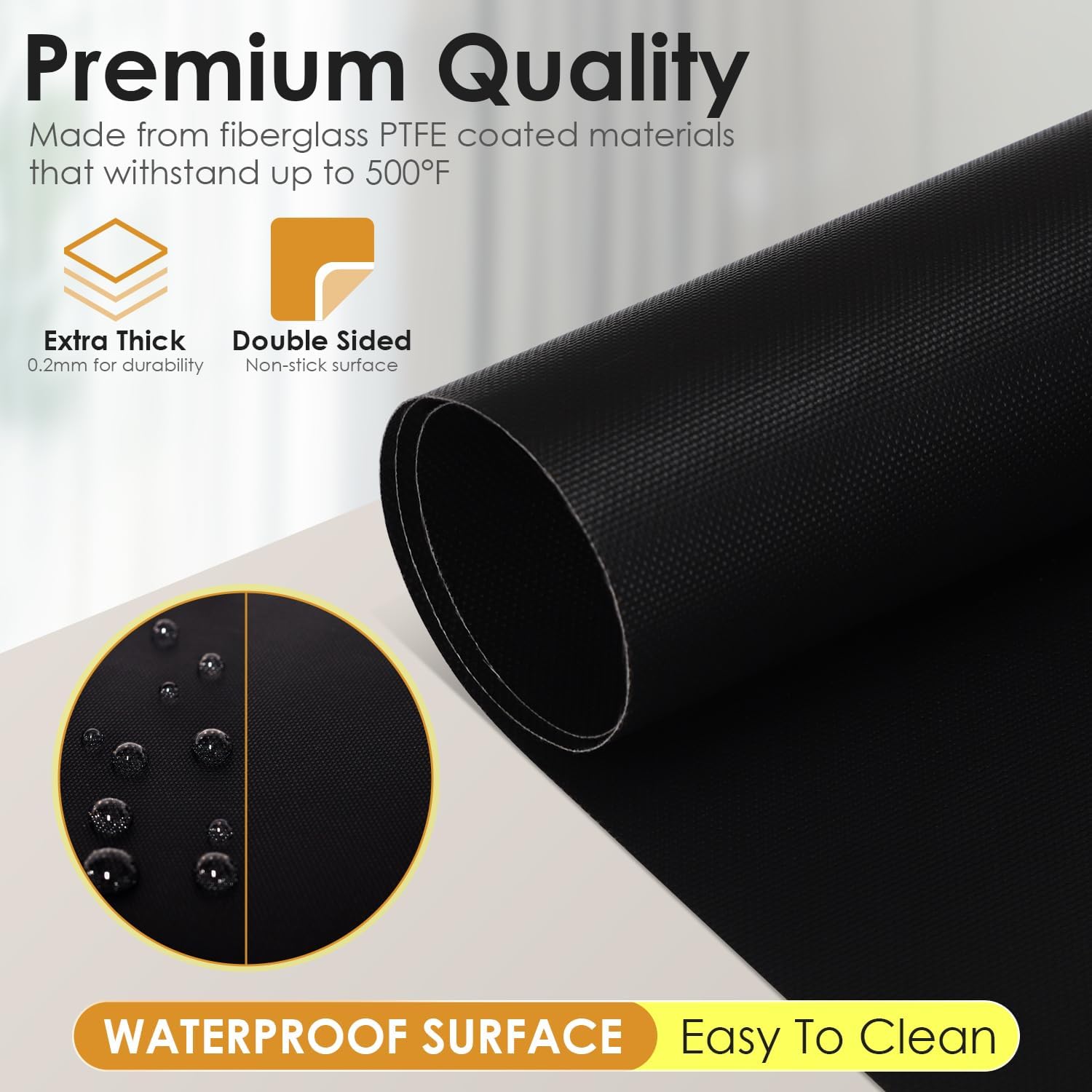
First up, Material Quality and Thickness. This is huge. Many budget-friendly options can feel thin, almost flimsy, which means they might warp under high heat or degrade faster than you’d like. A thicker, more robust silicone material signifies better durability and heat distribution. Think about the heavy-duty non-stick aspect of the HOTEC oven liners; that usually points to a higher quality silicone composition. Flimsy mats just aren’t going to cut it when you’re dealing with a bubbling casserole or a roasting chicken. They might even fold in on themselves, sending your lovely drip right past the protector.
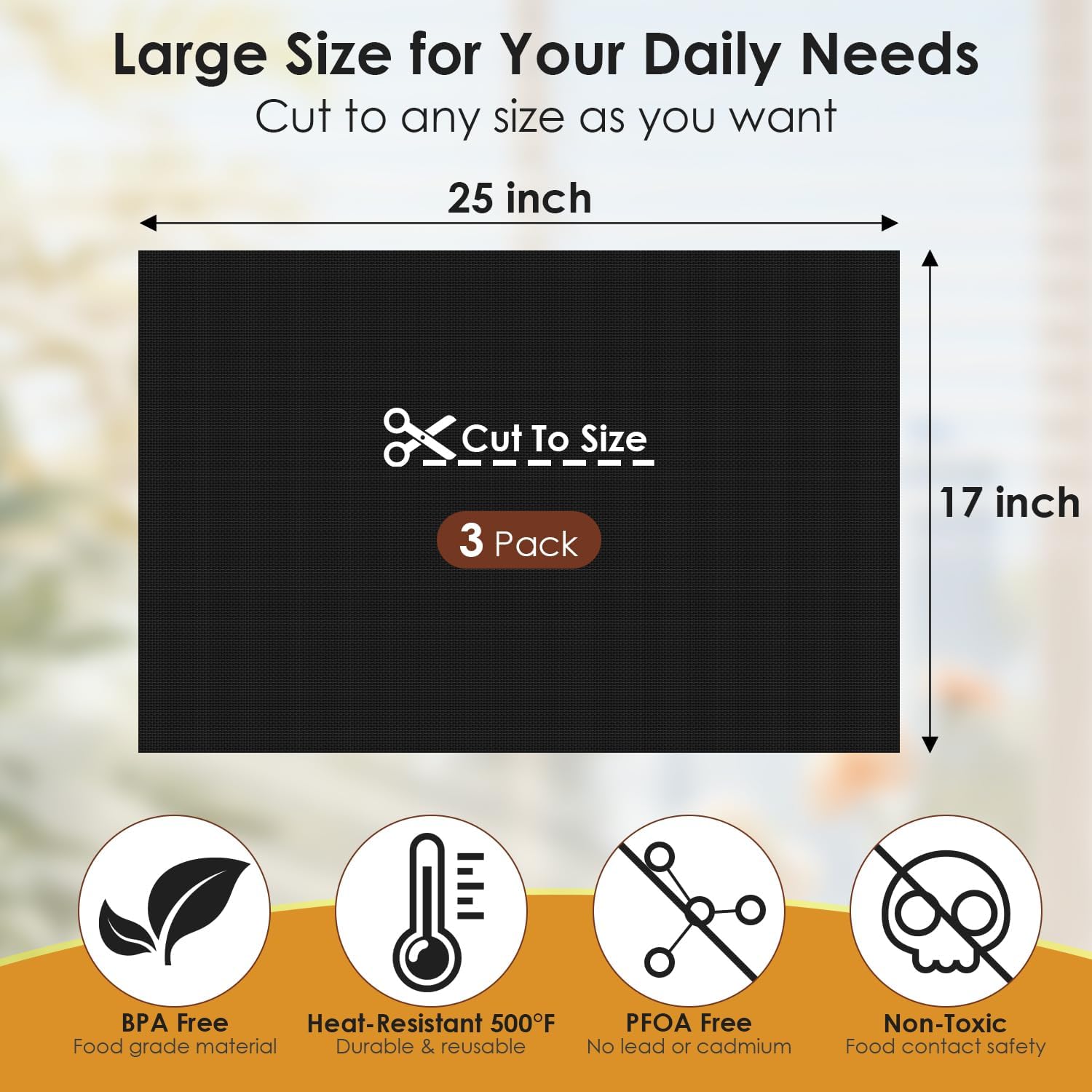
Next, consider Size and Fit. This one’s a no-brainer, but people still mess it up. Your oven isn’t one-size-fits-all, so why would your liner be? You need to measure the bottom of your oven carefully. The HOTEC liners, for instance, come in a generous 17″x25″ size, which is quite large and can be trimmed to fit smaller spaces like toaster ovens or even some grill grates. Too small, and you’ll have gaps where spills can sneak through. Too large, and it might buckle, obstructing airflow or even touching the oven walls where it shouldn’t. And remember, the mat needs to lay flat. Always.
Heat Resistance is non-negotiable. If your oven goes up to, say, 450°F, your liner needs to handle that comfortably, ideally with a decent buffer. The HOTEC liners boast heat resistance up to 500°F, which covers pretty much any home baking or roasting task you’re likely to throw at it. A mat with inadequate heat resistance isn’t just ineffective; it could potentially melt or release fumes. That’s a situation nobody wants in their kitchen, trust me. Make sure whatever you pick is rated for higher temps than your typical cooking max.
Then there’s the Non-Stick Performance. Honestly, what’s the point of an oven liner if it doesn’t prevent food from sticking? The promise of “heavy duty non-stick” on products like the HOTEC liners is a critical feature. It means that burnt cheese or spilled sauce should wipe right off with minimal effort. This isn’t just about saving time; it’s about prolonging the life of the liner itself. Repeated scrubbing can degrade the surface, even on quality silicone. A truly effective non-stick surface minimizes the friction, so you aren’t fighting it every time.
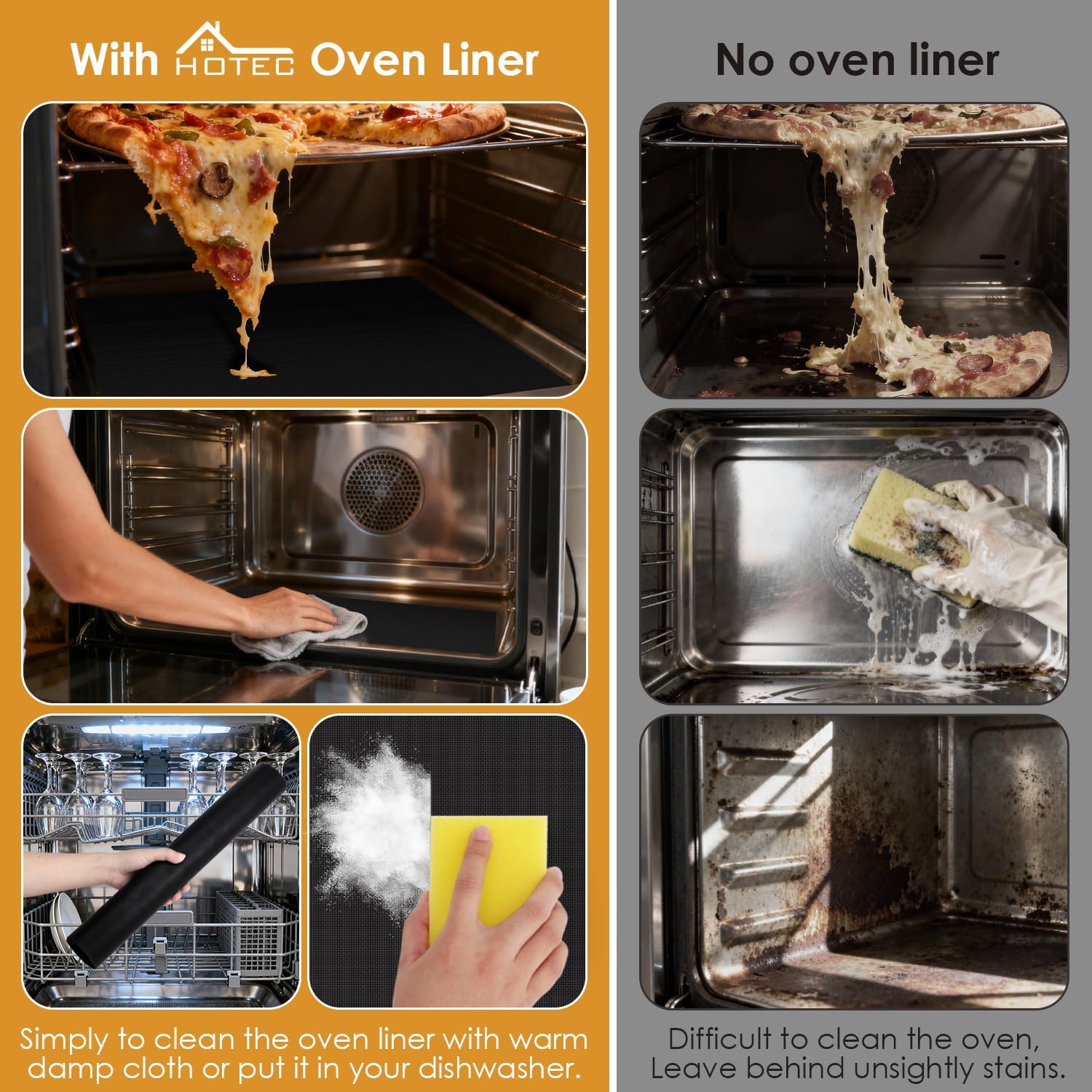
Ease of Cleaning follows closely. A truly non-stick surface helps here, but consider the mat’s flexibility. Can you easily fold it to dump crumbs into the trash? Is it dishwasher-safe, or is a quick hand wash sufficient? Most silicone baking mats and oven liners, including the HOTEC variety, are designed for straightforward cleaning. You generally just wipe them down with a damp cloth or rinse them in the sink. A sticky, greasy liner that’s a nightmare to clean? That defeats the whole purpose of buying one in the first place. You want the cleanup to be less of a schlep than cleaning the actual oven.
Finally, and this one’s really important for your peace of mind, check for Safety Certifications. We’re talking about products that are in direct contact with high heat and potentially your food. Labels like BPA & PFOA Free aren’t just buzzwords; they indicate that the material doesn’t contain certain chemicals that some people prefer to avoid, especially when cooking at high temperatures. The HOTEC liners explicitly state they meet these criteria, which is a big plus. It means you can use them with confidence, knowing you’re not introducing anything undesirable into your cooking environment. Don’t skimp on this one; your health matters.
How to Match the Product to Your Situation
Finding the right silicone baking mat or oven liner boils down to understanding your own kitchen habits. One size definitely doesn’t fit all here.
The Avid Baker & Roaster: If you’re constantly baking cookies, roasting vegetables, or braising meats, you know how quickly an oven floor can get messy. You need something robust, something that can stand up to frequent, high-heat use. For you, the heavy-duty non-stick properties and high heat resistance of the HOTEC Oven Liners for Bottom of Oven are paramount. A single flimsy liner won’t cut it; you’ll appreciate a multi-pack, especially if you have multiple ovens or want spares. These folks often appreciate a good, reliable oven protector that prevents those annoying drips from turning into cemented-on char.
The Busy Weeknight Cook (and Cleanup Avoider): You’re less about gourmet creations and more about getting dinner on the table without a massive cleanup afterward. Frozen pizzas, sheet pan dinners, quick casseroles—these are your jam. The primary goal is hassle-free maintenance. A silicone oven liner like the HOTEC makes life significantly easier. You just want to pull it out, wipe it down, and be done with it. The fact that it’s BPA & PFOA Free means you don’t have to fret about what’s leeching into your quick-prep meals. A set of three? That’s smart. If one gets particularly grubby, you’ve got backups while the other is being cleaned.
The Occasional Entertainer or Small Appliance User: Maybe you don’t use your main oven daily, but when you do, it’s for a special occasion or a big batch. Or perhaps you rely heavily on a toaster oven for quick snacks and smaller meals. For this group, durability is still key, but versatility is a bonus. The ability to trim larger liners, like the 17″x25″ HOTEC mats, to fit a toaster oven is incredibly handy. You might not need all three liners in your main oven, but having one for the big oven, one for the toaster oven, and a spare means you’re covered for whatever sporadic culinary adventure comes next. It’s about being prepared, really.
Comparison of Oven Liner Options
Let’s break down the different approaches to oven protection. It’s not just about one type of silicone baking mat; there’s a spectrum.
| Type/Tier | Best For | Price Tier | Key Feature | Watch-Out |
|---|---|---|---|---|
| Standard Foil Liners | Quick, disposable protection | Budget-Friendly | Zero cleanup, just toss | Can shift, tear easily, not always truly non-stick, can affect oven heat distribution |
| Basic Silicone Oven Liners | General drip protection, light use | Budget-Friendly | Reusable, easy wipe-down | May be thin, lower heat resistance, non-stick can degrade quickly |
| Heavy-Duty Silicone Oven Liners (e.g., HOTEC) | Frequent baking/roasting, substantial spill protection | Mid-Range | High heat resistance, superior durability, true non-stick surface | Might need trimming for exact fit, initial investment higher than foil |
| Custom-Cut Oven Liner Sheets | Precise fit for specific oven models | Premium | Perfect edge-to-edge coverage | Less versatile across different appliances, often highest initial cost |
Standard Foil Liners are the ultimate quick fix. You put them down, they catch the mess, and then you crumple them up and toss ’em. Easy peasy. The downside? They can tear, still allow some drips to seep underneath, and can sometimes even affect how evenly your oven heats up because of their reflective nature. Plus, it’s a lot of waste, if you’re trying to be mindful of that.
Basic Silicone Oven Liners are a step up in reusability. They offer a simple, non-stick surface that usually handles moderate temperatures. Problem is, they can be a bit thin, sometimes feeling more like a glorified silicone baking mat than a true oven protector. Over time, that initial non-stick quality might fade if the material isn’t particularly robust. They’re fine for the occasional spill, but not for heavy-duty protection.
Heavy-Duty Silicone Oven Liners, like the HOTEC Oven Liners for Bottom of Oven, are where you find real value for consistent use. They’re thicker, can withstand higher heat (up to 500°F is a solid benchmark), and maintain their non-stick properties much longer. The BPA & PFOA Free aspect gives you confidence in their safety. They need that initial trimming for a perfect fit, but once they’re in, they just work. It’s an upfront commitment that pays dividends in saved scrubbing time.
Custom-Cut Oven Liner Sheets are for the perfectionists among us. These often come as larger rolls or sheets designed to be precisely cut to your oven’s dimensions, sometimes even fitting around heating elements (though you should always check product-specific instructions for placement). While they offer an unparalleled fit, they can be pricier and less adaptable if you ever upgrade or use them in another oven.
Practical Scenarios for Silicone Oven Liners
These multi-use silicone tools aren’t just for the bottom of your oven. They’ve got a wider utility, especially a robust set like the HOTEC liners.
For the Messiest Dishes: Casseroles, Roasts, and Pies
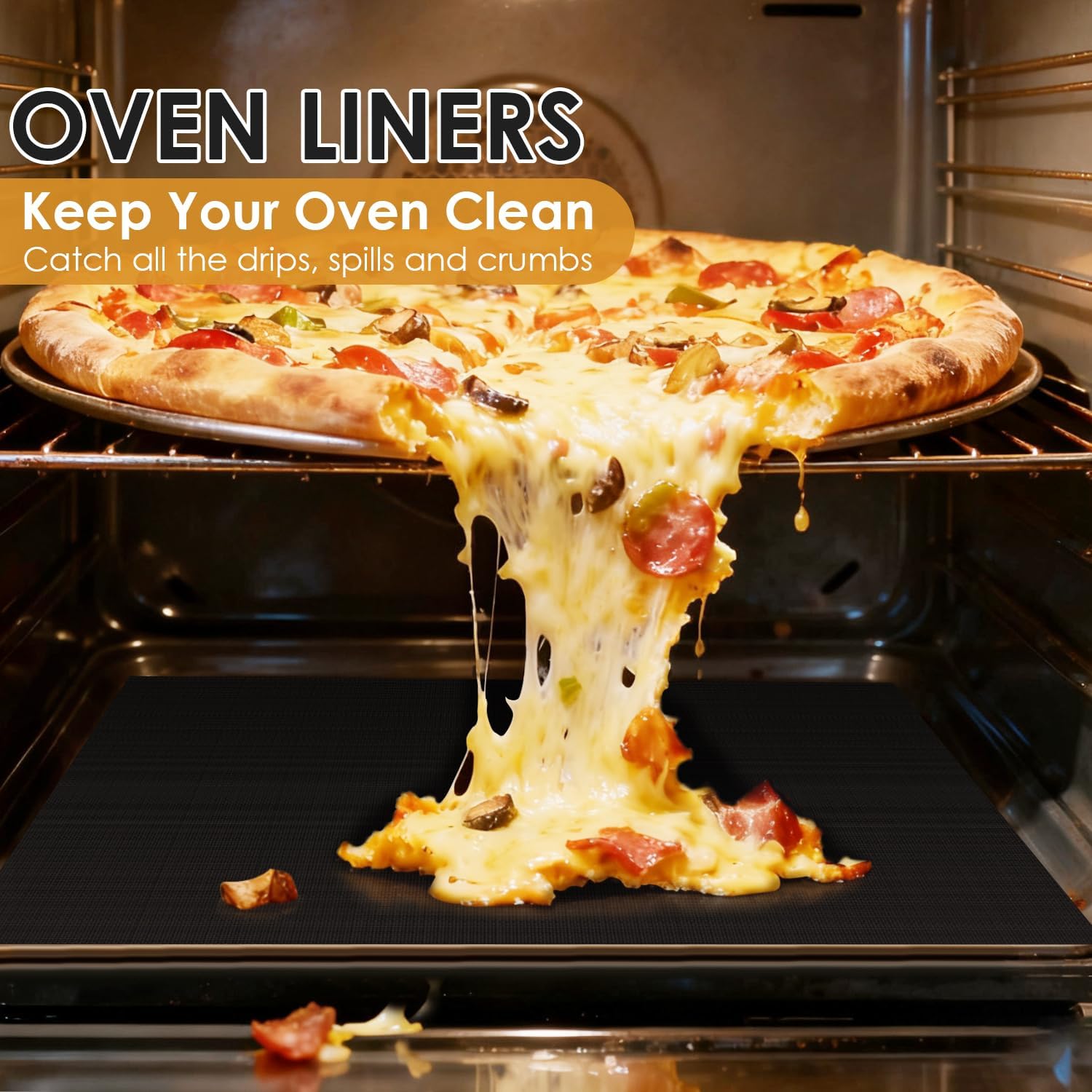
You know the drill. A bubbling lasagna, a roasting chicken with all its delicious juices, or a fruit pie that decides to overflow its crust. These are the moments when a quality oven liner shines brightest. Placing a HOTEC Oven Liner for Bottom of Oven down before you start cooking means those inevitable drips and splatters land on an easy-to-clean surface, not your oven’s pristine (or once-pristine) floor. It’s truly about preventing the worst kind of baked-on grime. Think about how much happier you’ll be when that cheese spill just peels right off.
For Everyday Baking and Light Spills
Even seemingly clean tasks can leave a residue. Cookie crumbs, minor splatters from baking sheets, or a bit of oil from roasted veggies can accumulate over time. Using one of these heavy-duty non-stick mats daily prevents that slow build-up. It’s like a protective shield for your oven floor, keeping it perpetually cleaner with minimal effort. You’re not waiting for a disaster; you’re proactively maintaining. And that’s smart.
For Smaller Appliances: Toaster Ovens and Grills
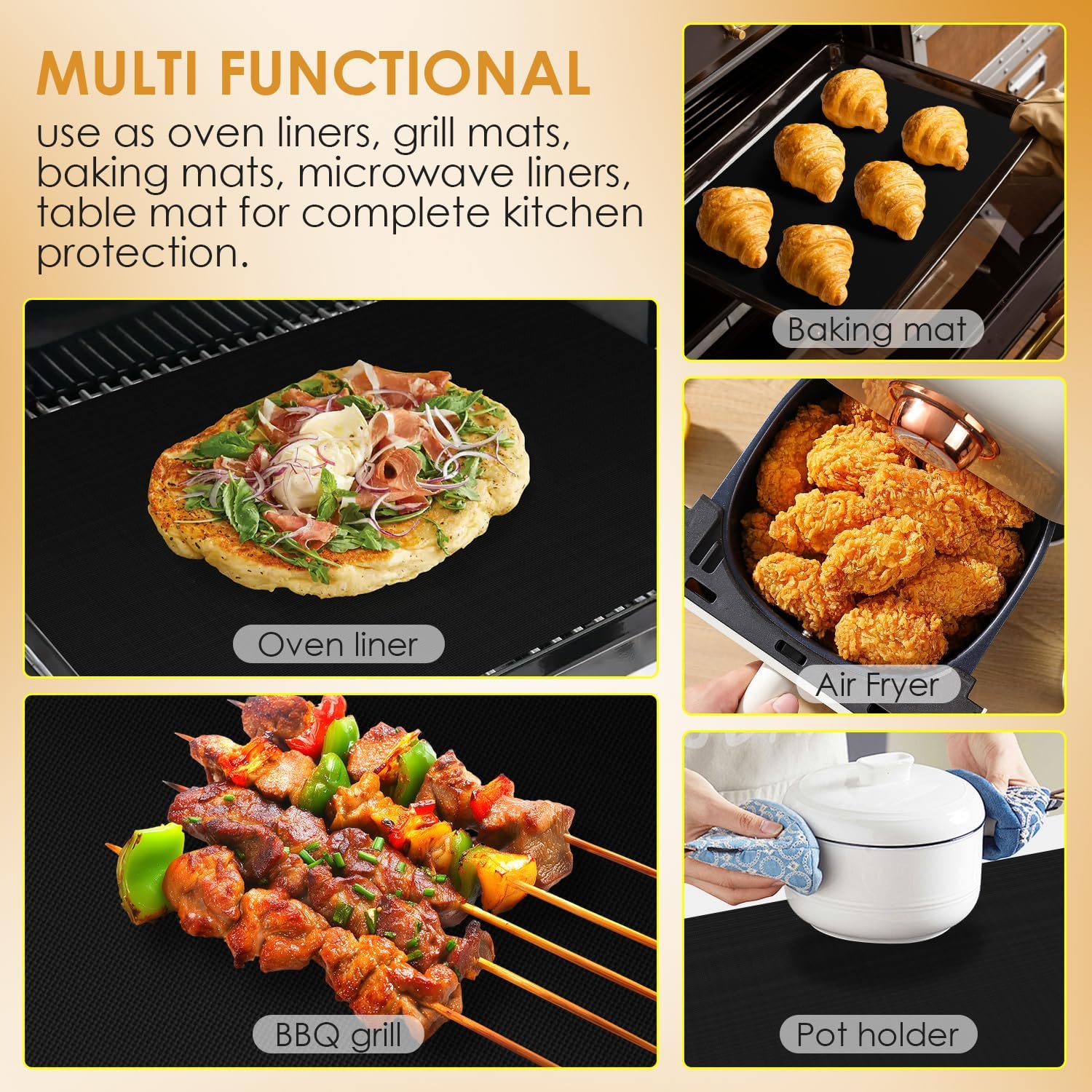
Don’t relegate these versatile mats just to your main oven. A good silicone mat, especially if it’s trimmable like the 17″x25″ HOTEC variety, works wonders in smaller appliances. Toaster ovens are notorious for catching crumbs and drips right on their tiny, hard-to-reach bottoms. A custom-cut piece of this BPA & PFOA Free material can keep your toaster oven clean and extend its life. Some folks even cut smaller sections to use as grill mats for delicate items on the BBQ, though always check heat ratings and direct flame exposure warnings for that specific use.
Common Mistakes to Avoid
Even with something as seemingly straightforward as a silicone baking mat or oven liner, people often stumble into a few traps. Learn from their missteps, okay?
-
Not Measuring Your Oven First: This is perhaps the most frequent blunder. You assume a “standard” size will fit, but ovens vary. An ill-fitting liner will either leave gaps for spills or buckle awkwardly, hindering air circulation. The large 17″x25″ size of the HOTEC liners is meant to be trimmed, so you must measure your oven’s interior floor before cutting. Otherwise, you’re just guessing, and guesswork rarely works out in the kitchen.
-
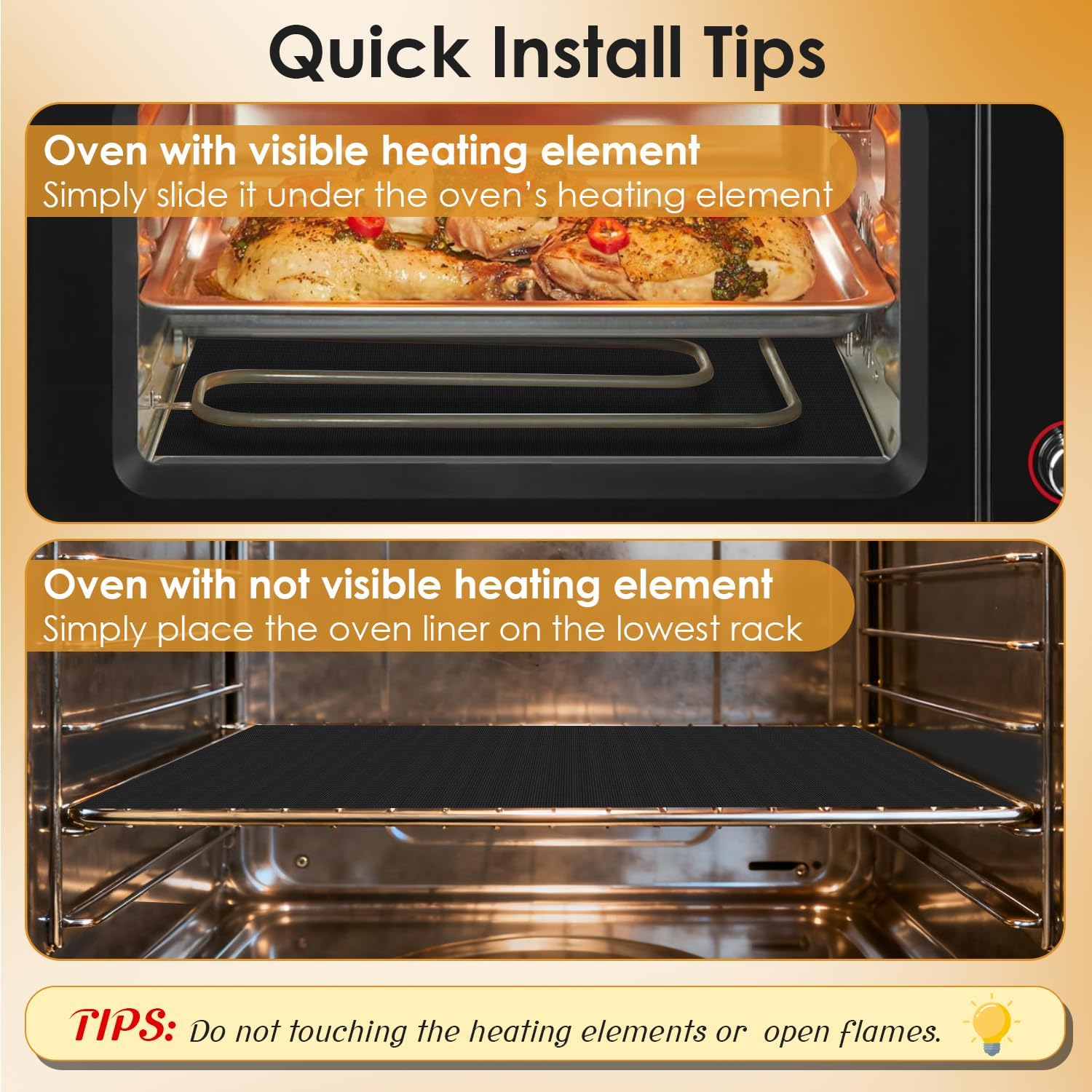
Placing the Liner Directly on Heating Elements: This is a big no-no. Silicone oven liners are designed to sit on the bottom rack or floor of the oven, below the heating element. Putting it directly on the heating coil or element, especially in electric ovens, can damage the liner, melt it, or even cause a fire. It’s also not supposed to be placed on broiler elements. Always position it correctly; that’s why it’s called an Oven Liner for Bottom of Oven. Read the instructions, folks!
-
Using Sharp Utensils on the Liner: Yes, these mats are durable and non-stick, but they aren’t impervious to sharp objects. Knives, metal spatulas with sharp edges, or even abrasive scrub brushes can scratch, cut, or puncture the silicone surface. Once compromised, the non-stick properties degrade, and the mat becomes less effective. Use wooden, silicone, or plastic utensils to protect your investment. Treat it nicely, and it’ll last.
-
Ignoring Cleaning Instructions (or Not Cleaning at All): Just because it catches spills doesn’t mean it cleans itself. A buildup of burnt-on grease will eventually affect its performance and can even cause smoking in your oven. While the non-stick aspect of something like the HOTEC liners makes cleanup easy, you still need to do it regularly. A quick wipe-down after each use, or a more thorough wash when needed, will keep your liner in top shape and your oven smelling fresh. Don’t let that grime just sit there for weeks.
Why/How/What Mini-Section
Why use silicone oven liners?
You use silicone oven liners to protect your oven floor from drips, spills, and burnt-on food, saving you from tedious scrubbing. They act as a reusable, non-stick barrier, making cleanup incredibly simple compared to scraping hardened messes. It’s all about extending the life of your appliance and making your kitchen routine a lot less frustrating.
How do you clean a silicone oven liner?
Cleaning a silicone oven liner is usually very straightforward. For minor spills, a simple wipe with a damp cloth or sponge often does the trick. For tougher, baked-on messes, you can hand wash it in warm soapy water. Many are also safe for the dishwasher, though checking the specific product’s care instructions, like those for the HOTEC heavy-duty liners, is always a good idea.
What are BPA and PFOA?
BPA (Bisphenol A) and PFOA (Perfluorooctanoic acid) are chemicals sometimes found in plastics and non-stick coatings. Concerns exist about their potential health effects, especially when exposed to heat. When a product like the HOTEC Oven Liners states it’s BPA & PFOA Free, it means these particular chemicals were not used in its manufacturing process, offering consumers peace of mind.
FAQ
Can I cut my HOTEC oven liner to size?
Absolutely. The 17″x25″ size of these heavy-duty oven liners is designed to be trimmable. Just measure your oven floor precisely, then use a sharp pair of scissors to cut the silicone to the exact dimensions you need.
Are silicone oven liners safe at high temperatures?
Yes, quality silicone oven liners are designed for high heat. The HOTEC liners, for instance, are heat resistant up to 500°F (260°C), which covers the vast majority of home cooking temperatures. Always verify the specific product’s temperature rating.
How often should I clean my oven liner?
Ideally, you should wipe down your oven liner after any significant spill or when you notice residue accumulating. For lighter use, a weekly or bi-weekly cleaning helps maintain its non-stick properties and keeps your oven fresh.
Do these liners work in gas ovens?
Many silicone oven liners, including the HOTEC ones, are suitable for gas ovens. However, it’s critical to place them on the bottom rack or oven floor, ensuring they do not block any vent openings or come into direct contact with the gas flame or heating element.
What’s the difference between an oven liner and a baking mat?
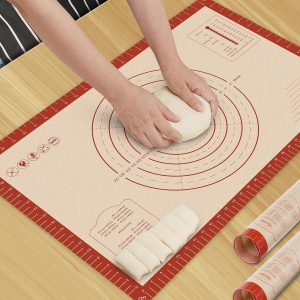
While both are often made from silicone, an oven liner is typically thicker, larger, and designed specifically to protect the bottom of your oven from drips. A silicone baking mat is usually thinner and meant to sit on a baking sheet, providing a non-stick surface for cookies, pastries, or roasting smaller items.
Will a silicone oven liner make my oven smell?
New silicone products can sometimes emit a faint odor during their initial few uses, especially when exposed to high heat. This is usually harmless and dissipates quickly. Quality liners like the BPA & PFOA Free HOTEC variety are formulated to minimize any such issues.
Can I use a liner in a self-cleaning oven?
No, absolutely not. Remove all silicone oven liners, including the HOTEC ones, before engaging your oven’s self-cleaning cycle. The extreme temperatures reached during self-cleaning can damage the liner and potentially create harmful fumes or even a fire hazard.
Final Recommendation
Look, if you’re tired of battling baked-on messes and want to preserve your oven’s interior without resorting to harsh chemicals or endless scrubbing, a heavy-duty silicone oven liner is a really smart move. For consistent protection that can handle serious heat and serious spills, a product like the HOTEC Oven Liners for Bottom of Oven, 3-Pack 17″x25″ Large Oven Mats Heavy Duty Non-Stick, BPA & PFOA Free, Protector for Electric, Gas, Toaster Ovens & Grills Heat Resistant 500°F offers fantastic value. Their robust construction, high heat resistance, and commitment to being BPA & PFOA Free provide genuine peace of mind.
These liners are particularly well-suited for anyone who bakes or roasts frequently and values quick cleanup. The multi-pack offers versatility, whether for a main oven, a toaster oven, or just having spares on hand. It’s a pragmatic investment that actually delivers on its promise, saving you time and elbow grease for years to come.
#HOTEC #Oven #Liners #Bottom #Oven #3Pack #17×25 #Large #Oven #Mats #Heavy #Duty #NonStick #BPA #PFOA #Free #Protector #Electric #Gas #Toaster #Ovens #Grills #Heat #Resistant #500F