Is a Titanium Cutting Board Worth the Investment for Your Kitchen?
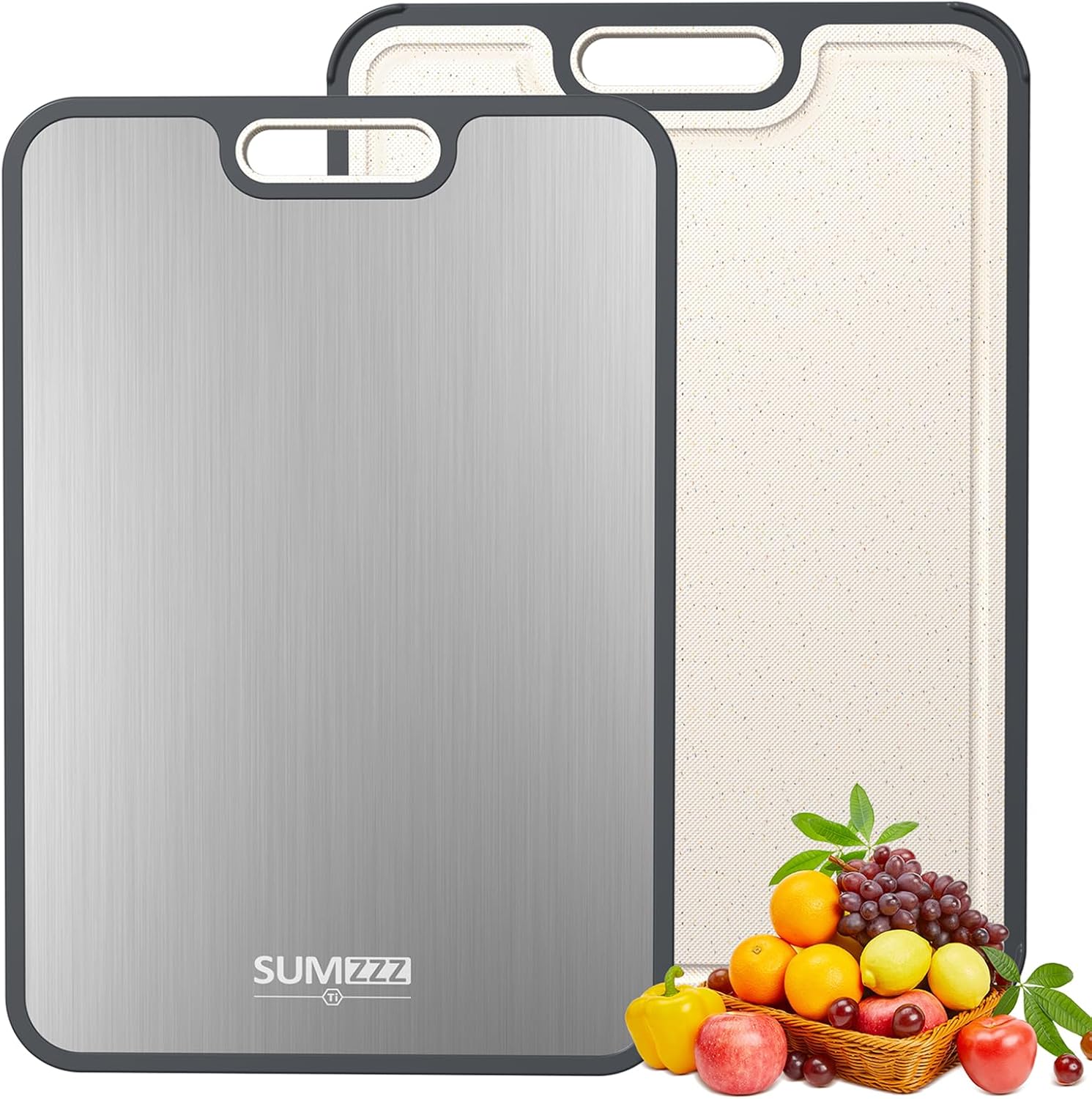
Choosing the right cutting board feels deceptively simple until you start really looking. This guide cuts through the noise, digging into what makes a premium option, like the Titanium Cutting Board for Kitchen, Cutting Board Double Sided Food Grade, Pure Titanium/PP, Easy to Clean Large Size 16”×11”, stand out. We’re here to help you figure out if this high-tech kitchen tool is truly a smart buy for your specific needs, or just an expensive indulgence.
Quick Answer
For serious home cooks prioritizing hygiene and extreme durability, a titanium cutting board, especially a double-sided food grade pure titanium/PP hybrid, offers unparalleled cleanliness and longevity. While it certainly sits in the premium price tier, its resistance to bacteria, warping, and scorching can justify the cost over years of use, particularly if you handle a lot of raw proteins.
What to Look For in a Cutting Board (Especially Titanium Models)
Alright, so you’re thinking about a cutting board. Not just any old plank, though. You’re eyeing something a bit more… space-age. A titanium cutting board is definitely a conversation starter, but what should you actually consider before taking the plunge? It’s more than just shiny metal.
Material Composition: Titanium, PP, and the Hybrid Edge
Most of these cutting-edge boards aren’t pure titanium all the way through; they’re often a hybrid, combining pure titanium on one side with a food-grade polypropylene (PP) surface on the other. Why this combo? Well, titanium itself is incredibly strong, remarkably hygienic, and non-reactive. You won’t get odd tastes or chemical leaching. It’s dense, doesn’t scratch easily, and, crucially, is non-porous. This means no hiding spots for bacteria, making cleanup a breeze. Just think about raw chicken—it’s a godsend.
The flip side, however, is that titanium is hard. Really hard. That hardness, while a boon for board longevity, isn’t always the kindest to your delicate knife edge. Some folks worry it dulls blades faster than softer materials. That’s where the PP side comes in. Polypropylene is a softer plastic, much more forgiving on knives. It’s why you see so many traditional plastic boards. So, with a double-sided board, you get the best of both worlds: titanium for raw meats and fish where hygiene is paramount, and PP for vegetables, herbs, and general chopping where preserving your knife’s keen edge is the priority. The trade-off is clear: unmatched sanitation versus preserving your precious blade’s sharpness. And honestly, for a lot of people, that compromise is a smart one.
Size and Weight: Is Bigger Always Better?
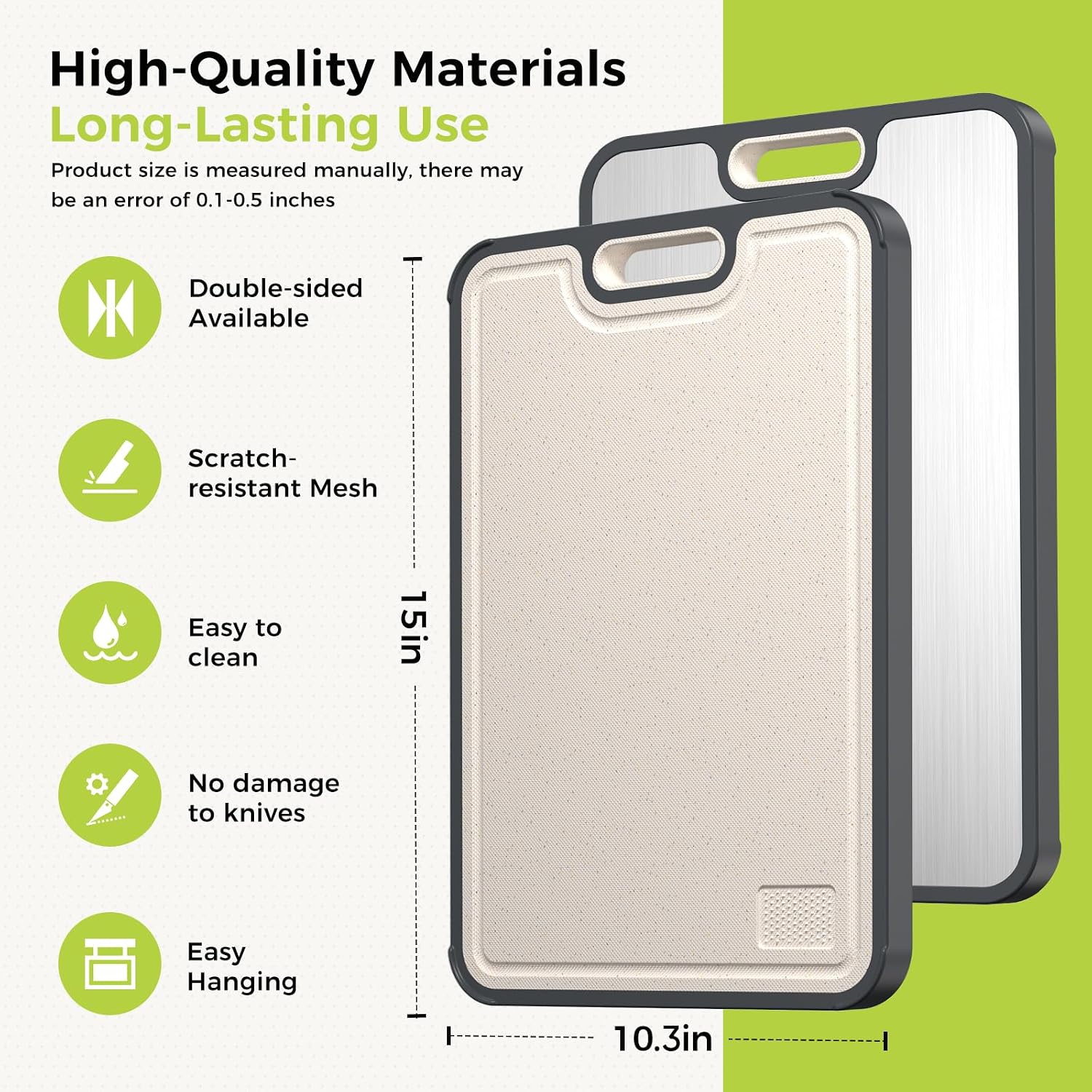
We’re looking at a large size 16”×11” here. That’s a decent workspace, plenty big for slicing a roast or prepping a pile of veggies without ingredients tumbling off. Good. A larger surface area definitely improves workflow in the kitchen. But consider the weight. Titanium is a dense metal. While the PP side might shave off a bit, a board of this size, even partially titanium, is going to be heavier than your average plastic or bamboo board. That extra heft lends stability; the board isn’t going to slide around on your counter mid-chop, which is a huge safety plus. On the other hand, a heavy board can be a bit of a beast to move from counter to sink for washing, or to lift into a drying rack. Is it a minor inconvenience for better stability, or a daily chore you’ll come to dread? Something to ponder, eh?
Surface Texture and Knife Friendliness: The Real Debate
Okay, this is where a lot of the discussion around titanium boards truly heats up. As mentioned, titanium is tough. It’s part of its appeal – it resists deep gouges that can harbor bacteria. But that toughness means it offers little “give” when your knife blade impacts it. Some manufacturers try to mitigate this with micro-textures or specialized finishes on the titanium side, aiming to create a slightly less abrasive surface. Still, physics is physics. A very hard surface will generally stress a knife edge more than a softer one.
The PP side, by contrast, is known for its knife friendliness. It will score over time, that’s just the nature of plastic, but those scores are less damaging to your blade’s fine edge. So, if you’re a professional chef with a collection of exquisitely sharpened Japanese knives, the titanium side might make you wince a little. For everyday home cooks, especially those with good but not ultra-delicate knives, the hygienic benefits of titanium can outweigh the slight increase in knife maintenance. It’s a genuine compromise, and you’ve got to decide where your priorities lie. Are you willing to sharpen a bit more often for peace of mind about sanitation?
Hygiene and Cleaning: Where Titanium Shines (Literally)
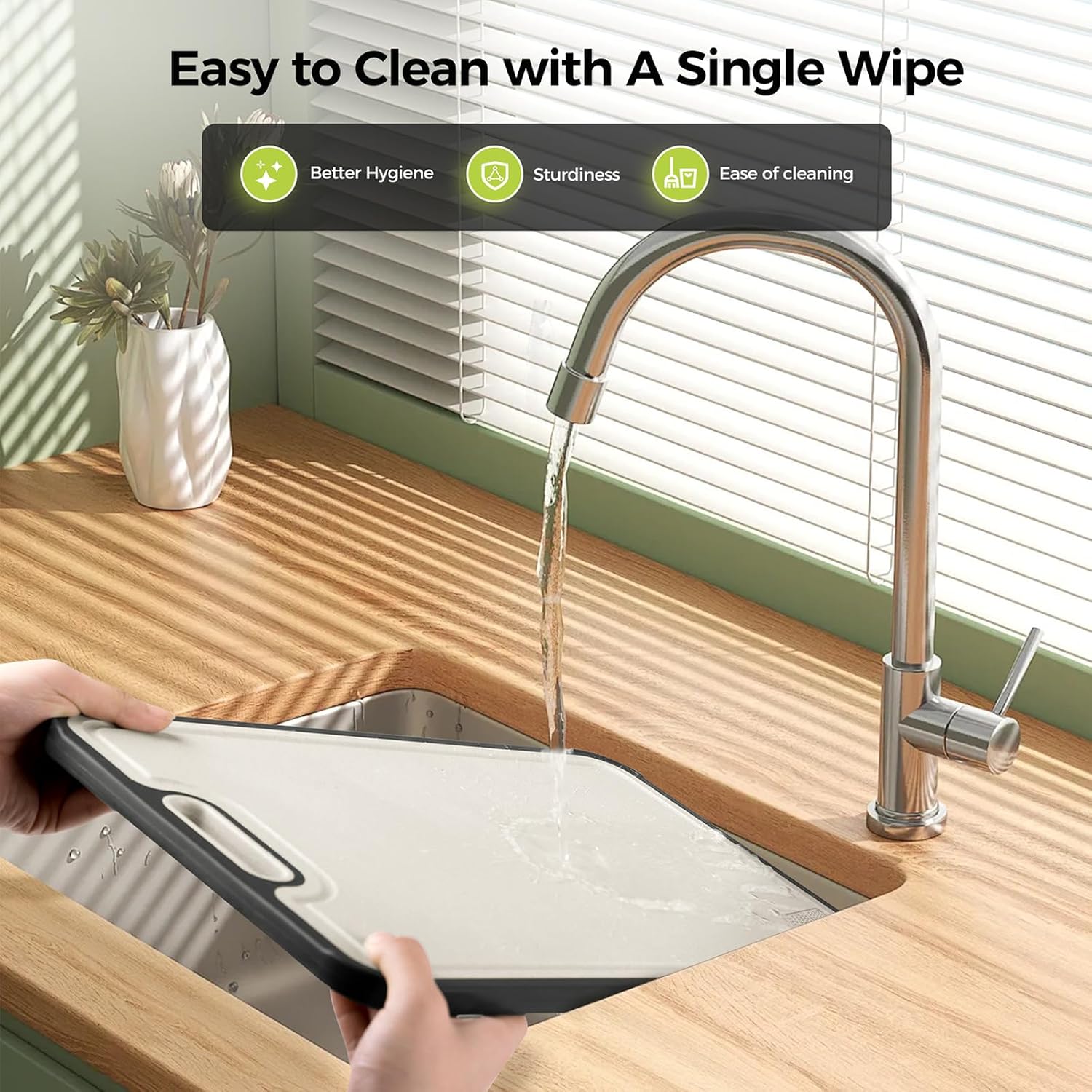
This is the big selling point, the one that truly justifies the premium tag for many. The pure titanium surface is non-porous. Period. Unlike wood, which can absorb liquids and bacteria, or traditional plastic, which develops grooves that trap nasties, titanium provides nowhere for germs to hide. It’s incredibly easy to clean. Soap, water, and maybe a quick scrub, and you’re done. Many are dishwasher safe, too, which is just glorious for busy kitchens. This dramatically reduces the risk of cross-contamination, especially when you’re dealing with raw meats, poultry, or seafood. You don’t have to fret about pathogens lingering after a good wash.
However, even titanium isn’t totally immune to cosmetic changes. Some vibrant foods might leave a temporary trace, though these typically wash off. And while it resists staining better than PP, it’s not entirely impervious to certain highly pigmented ingredients. The ease of cleaning is undeniable, but it’s not magic; you still need to actually clean it. That said, the long-term hygiene advantage over plastic or wood is profound.
Durability and Longevity: An Investment That Lasts
Let’s be frank: traditional plastic boards warp. They crack. They get deeply scored and eventually look absolutely grim, forcing you to replace them. Wood boards, while lovely, require careful oiling and attention to avoid cracking or warping from moisture. Titanium? That stuff is built to last. It won’t warp, crack, or melt under normal kitchen conditions. It resists scorching from hot pans placed momentarily on it – not that you should make a habit of it, but accidents happen.
This kind of durability means you’re buying a board that could realistically last a decade or more, potentially making the initial cost less intimidating when viewed as an amortized expense. The trade-off is obvious: a higher upfront investment compared to buying several cheaper plastic boards over the same period. But think about the waste reduction, too. Less plastic ending up in landfills is a win.
Edge Design and Stability: Little Details, Big Impact
A cutting board needs to stay put. This particular model, given its size and likely weight, probably has decent inherent stability. But look for additional design features. Does it have rubberized feet or non-slip edges? That’s crucial for safety. Juice grooves are another common feature, designed to catch liquids from carving meats or slicing juicy fruits, preventing messes on your countertop. While incredibly useful, these grooves can sometimes be a minor annoyance to clean, especially if food gets stuck in them. A simpler, flat design is often easier to wipe down, but then you’re dealing with potential spills. It’s a small detail, but a functional one. Will you be carving often, or mostly chopping dry ingredients?
Matching Your Kitchen Needs: Who Needs a Titanium Cutting Board?
Not every kitchen gadget is for every cook. This premium cutting surface certainly isn’t. But for a few distinct types of home chefs, it’s practically tailor-made.
The Hygiene-Obsessed Home Cook
You know who you are. You sanitize your sponges. You meticulously separate raw and cooked ingredients. The mere thought of unseen bacteria lurking in knife grooves sends shivers down your spine. For you, the titanium cutting board is a revelation. Its non-porous surface and ease of deep cleaning mean you can confidently prepare raw poultry, seafood, or any food requiring absolute cleanliness without fretting about cross-contamination. This isn’t just about being finicky; it’s about real food safety. Your peace of mind? Priceless.
The Gadget Enthusiast/Early Adopter
You love tech. Your kitchen sports the latest induction cooktop, the fanciest stand mixer, and you’re always checking out new materials or innovative designs. The concept of pure titanium as a kitchen tool excites you. You appreciate cutting-edge materials and are willing to invest in tools that represent advancements in design and functionality. For you, this isn’t just a cutting board; it’s a statement piece, a blend of science and culinary art. You see the value in its long-term performance and unique properties, not just as a utilitarian object but as a sophisticated part of your hygienic kitchen tool arsenal.
The Practical, Long-Term Value Seeker
Perhaps you’re not swimming in disposable income, but you understand the concept of buying once, buying well. You’ve been through too many cheap plastic boards that warped or became disgusting. You’re tired of oiling your wooden boards constantly. You want something that will simply work for years without needing replacement or fussy maintenance. If you consider the cost over a decade of use, the titanium board might actually represent a better value than repeatedly purchasing and discarding cheaper alternatives. It’s about minimizing hassle and maximizing lifespan. This perspective often makes the upfront investment seem far more reasonable.
Cutting Board Materials: A Closer Look
When you’re trying to figure out if titanium is your jam, it helps to see how it stacks up against the old guard. Each material has its champions and its detractors.
| Type/Tier | Best For | Price Tier | Key Feature | Watch-Out |
|---|---|---|---|---|
| Titanium/PP Hybrid | Versatile everyday cooking, raw meat/fish | Premium | Dual-surface advantage, unmatched hygiene | Pricey, can be heavy, titanium side can be hard on knife edges |
| HDPE/Plastic | Budget-conscious, general chopping, knife care | Budget-friendly | Soft on blades, lightweight, often dishwasher safe | Scratches deeply, stains easily, harbors bacteria in scores, warps over time |
| Wood (Maple, Teak) | Aesthetic appeal, natural knife feel, display | Mid-range to Premium | Self-healing properties, beautiful grain | High maintenance (oiling), prone to warping/cracking, not dishwasher safe |
| Glass/Stone | Presentation, countertop protection | Budget to Mid-range | Extremely hygienic, non-absorbent, looks modern | Very hard on knives, loud, slippery, can shatter |
The titanium/PP hybrid stands out for its blend of extreme hygiene and decent knife care, offering a solution to common cutting board frustrations, though at a cost. Traditional high-density polyethylene (HDPE) boards are cheap and cheerful, easy on knives, but often become a bacterial haven after some wear and tear. Wooden boards, like those from maple or teak, feel lovely under a knife and are beautiful, but they demand more attention than most people are willing to give. And then there’s glass or stone; honestly, these are glorified trivets, brutal on knives and prone to catastrophic failure if dropped. If you’re serious about cooking and your knives, stay away from those.
Beyond the Basics: Scenario-Specific Considerations
It’s not just about what a board is; it’s about what you do with it. Your cooking habits should really drive this decision.
For the Serious Food Prep Fanatic
If your kitchen sees daily action – meal prep for the week, elaborate dinners, lots of chopping, dicing, and slicing – then your cutting board needs to be a workhorse. It needs to stand up to constant abuse without complaint. A titanium board, especially the pure titanium side, shrugs off heavy use. It won’t develop deep grooves overnight, it won’t warp from constant washing. This kind of durability means your board remains a consistent, reliable surface, day in and day out. You’re not worrying about replacing it every year; you’re just chopping. And that consistency matters when you’re in a rhythm.
Managing Raw Meats and Seafood
This is the killer application for a high-hygiene board. Handling raw chicken, fish, or beef demands extreme caution to prevent illness-causing bacteria from spreading. Having a dedicated, easily sterilized surface is just smart. The titanium side of a double-sided food grade board is a game-changer here. After preparing raw proteins, you can thoroughly wash and even sanitize it (some even handle boiling water or quick blasts of heat without issue, though always check manufacturer guidelines). This drastically reduces the risk of cross-contamination to your salads or cooked items. It’s one less thing to worry about when you’re juggling multiple dishes.
Small Kitchens and Storage Challenges
Even with its larger dimensions, a rigid titanium board might actually be easier to store in a compact kitchen than, say, a flimsy plastic one that warps or a bulky wooden butcher block. Its slim profile means it can often be tucked into tight spaces, stood on its edge without bending, or slid into a narrow cabinet slot. The weight, as discussed, is a factor when moving it, but its stability and non-flexibility can be an advantage when you’re trying to wedge it somewhere. Just two words: Space. Saver. Well, maybe two and a dash.
Common Mistakes When Buying (and Using) a Cutting Board
I’ve seen people spend way too much on features they never use, or skimp on something truly critical. Let’s not make those same blunders when it comes to your kitchen cutting board.
One of the biggest blunders? Ignoring the “knife-friendliness” trade-off. People get lured by the promise of an indestructible board, pick up something like glass or even some of the harder synthetic composites, and then wonder why their expensive chef’s knives suddenly feel dull after just a few uses. Every material has a specific hardness, and if your board is harder than your knife’s edge, guess what gives first? Hint: it’s your knife. The titanium side of these hybrid boards definitely leans into that harder category, which is why the PP side is such a smart addition.
Another common mistake is underestimating hygiene needs. Many home cooks use one board for everything. Raw chicken, then garlic, then bread. Without proper cleaning and different boards (or at least different sides), you’re just asking for trouble. It’s not enough to “rinse it quickly.” Understanding the non-porous nature of titanium versus the score-prone plastic or absorbent wood changes how you approach food safety. Don’t be that person who spreads salmonella by accident.
Then there’s buying purely on aesthetics. Sure, that marble slab looks gorgeous on your counter. Until you actually try to chop something on it. It’s like using a brick as a pillow. A board needs to be functional first. If it looks pretty and works well, that’s the sweet spot. But many beautiful materials are simply terrible for knife edges.
Finally, not considering size and weight for your actual kitchen. A massive, beautiful butcher block might seem like the ultimate status symbol, but if you have a tiny sink and limited counter space, you’ll curse it every time you have to awkwardly wash it or find a spot to store it. That large size 16”×11” is roomy, but if you’re struggling to maneuver it, the benefits quickly disappear.
Why, How, What: Unpacking Titanium Cutting Boards
Why choose a titanium cutting board?
You opt for a titanium cutting board primarily for its unparalleled hygiene, incredible durability, and premium feel. It’s about investing in a food-grade surface that resists bacterial growth, won’t warp or crack, and stands up to heavy daily use for years on end, offering a long-term, low-maintenance solution for serious cooks.
How do hybrid titanium boards work?
Hybrid titanium boards, typically with pure titanium on one side and polypropylene (PP) on the other, leverage the strengths of both materials. The titanium surface provides an ultra-hygienic, non-porous area ideal for raw proteins, while the softer PP side is gentler on your knife edges for general chopping, giving you optimal performance for different tasks.
What makes titanium “food-grade”?
Food-grade titanium is an inert metal, meaning it won’t react with food acids or leach harmful chemicals, which is crucial for safety. It’s also non-toxic and incredibly resistant to corrosion and bacteria, providing a clean, safe, and stable surface for all your food preparation.
FAQ
Is titanium safe for food?
Absolutely. Pure titanium is considered one of the safest materials for food contact due to its inert nature. It won’t react with food, leach chemicals, or affect taste, making it highly suitable for a food grade cutting surface.
Will a titanium cutting board dull my knives?
The pure titanium side is quite hard and can potentially dull very delicate knife edges faster than softer materials like wood or soft plastic. This is why many models are double-sided, offering a softer PP (polypropylene) side specifically designed to be more knife friendly.
How do I clean a titanium cutting board?
Cleaning is super easy. The non-porous titanium surface means you can simply wash it with soap and hot water. Many are also dishwasher safe, providing deep sanitization and making them exceptionally easy to clean.
Can I use a titanium cutting board for all types of food?
Yes, you can. The dual-sided design (titanium for raw proteins, PP for general prep) ensures versatility. It handles everything from raw meats and fish to vegetables, fruits, and bread with ease, minimizing cross-contamination.
Are titanium boards heavy?
Compared to typical plastic or thin wood boards, yes, titanium cutting boards tend to be noticeably heavier. This extra weight, however, contributes to its stability on the counter, preventing slips and slides during vigorous chopping.
Do titanium cutting boards scratch easily?
The titanium side is highly scratch-resistant, far more so than plastic or wood. While not entirely impervious to any mark, it resists deep gouges and scoring exceptionally well, maintaining its pristine surface longer.
How long do titanium cutting boards last?
A high-quality titanium cutting board is built for the long haul. With proper care, it can easily last a decade or more, far outstripping the lifespan of traditional plastic or even some wooden boards thanks to titanium’s inherent durability and resistance to warping.
Final Recommendation
So, is a Titanium Cutting Board for Kitchen, Cutting Board Double Sided Food Grade, Pure Titanium/PP, Easy to Clean Large Size 16”×11” worth it? For the cook who prioritizes absolute hygiene and wants a professional-grade board that will stand the test of time, this hybrid model is a compelling choice. The upfront investment is higher, no denying that, but the peace of mind knowing you have a supremely durable and easy to clean surface, especially for raw meats, truly offsets the cost over the long run.
If you’re the type who values longevity, minimizes kitchen fuss, and takes food safety seriously, then yes, this premium cutting surface absolutely justifies its place in your kitchen. It’s not just another kitchen gadget; it’s an upgrade to your entire food preparation process.
#Titanium #Cutting #Board #Kitchen #Cutting #Board #Double #Sided #Food #Grade #Pure #TitaniumPP #Easy #Clean #Large #Size
![Titanium Cutting Board Double Sided Food Grade, Pure Titanium/PP for Kitchen, Cutting Board Easy to Clean[15.5”*10.5”+12”*8.5”]](https://www.decorwild.com/wp-content/uploads/2026/08/Review-TitaniumPP-Kitchen-Cutting-Boards-Double-Sided-Food-Grade-Easy-300x219.jpg)