
Unpacking the Texas Instruments TI-30XIIS Scientific Calculator – Teacher Kit (10 Pack): Is it the Right Classroom Investment?
Navigating the sea of educational tools for your classroom can feel like a full-time job. For anyone considering the Texas Instruments TI-30XIIS Scientific Calculator – Teacher Kit (10 pack), this guide aims to cut through the noise and give you a clear perspective. We’ll look at whether investing in a bulk set of these reliable scientific calculators genuinely makes sense for your teaching environment, weighing its merits against other options on the market.
Quick Answer
The Texas Instruments TI-30XIIS Teacher Kit offers a dependable, budget-friendly solution for classrooms needing a solid scientific calculator. It’s particularly well-suited for middle school through early high school math and science, providing essential functions without the complexity or cost of graphing models. If your curriculum largely centers on algebra, geometry, and basic statistics, this kit represents a robust, practical choice.
What to Look For (The Buying Criteria)
When you’re equipping a classroom, you’re not just buying a single gadget; you’re making a strategic investment that impacts dozens of students. Choosing a bulk calculator kit, like the one featuring the TI-30XIIS, demands a closer look at several key factors beyond just the sticker price.
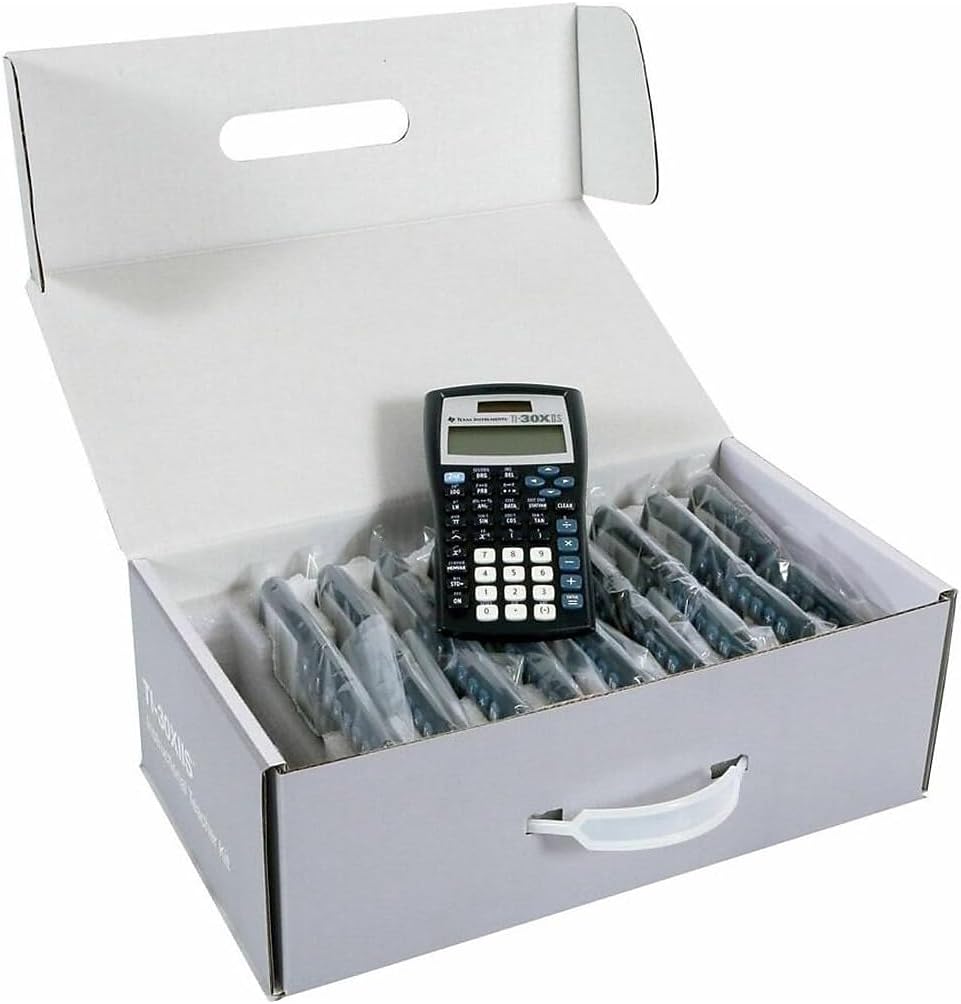
First off, kit size and scalability matter tremendously. The TI-30XIIS Teacher Kit, with its ten units, is designed for a specific classroom scenario – maybe a smaller department, or perhaps as supplementary calculators for specific projects. But what if you have 30 students across three classes? Will you need three of these kits? Planning for growth, or for unexpected breakages, becomes crucial here. Sometimes, a larger kit from a manufacturer might offer a slightly better per-unit value, though the upfront cost is higher. Also, consider the storage solution; many teacher kits come with a sturdy case, which is a blessing in a busy classroom, keeping those calculators organized and accounted for.
Then, we have functionality – scientific versus graphing. This is probably the biggest fork in the road. The TI-30XIIS is a classic scientific calculator. It handles fractions, exponents, logarithms, trigonometry, and basic statistical calculations with ease. It’s a workhorse for algebra, geometry, and introductory science courses. But it doesn’t do graphs. For advanced calculus, pre-calculus, or certain physics applications, where visualizing functions is paramount, a graphing calculator like the TI-84 Plus CE is often required. Is your curriculum pushing beyond the capabilities of a strong scientific model? That’s the real question. You don’t want to overspend on features students won’t use, but you absolutely don’t want to underserve them either.
Durability and classroom wear can’t be overstated. Kids are, well, kids. Calculators get dropped, jostled in backpacks, sometimes even thrown (accidentally, we hope!). A robust build is non-negotiable for classroom sets. The TI-30XIIS has a reputation for being sturdy, with a solid plastic casing and responsive buttons. Its design has been around for ages, proving itself in countless school environments. But even the toughest calculator can succumb to abuse. Consider if the kit includes any form of protective sleeves or if you’ll need to source them separately. A good, hard-wearing case for the entire kit is also a huge plus, ensuring the calculators survive transit between classrooms or departments.
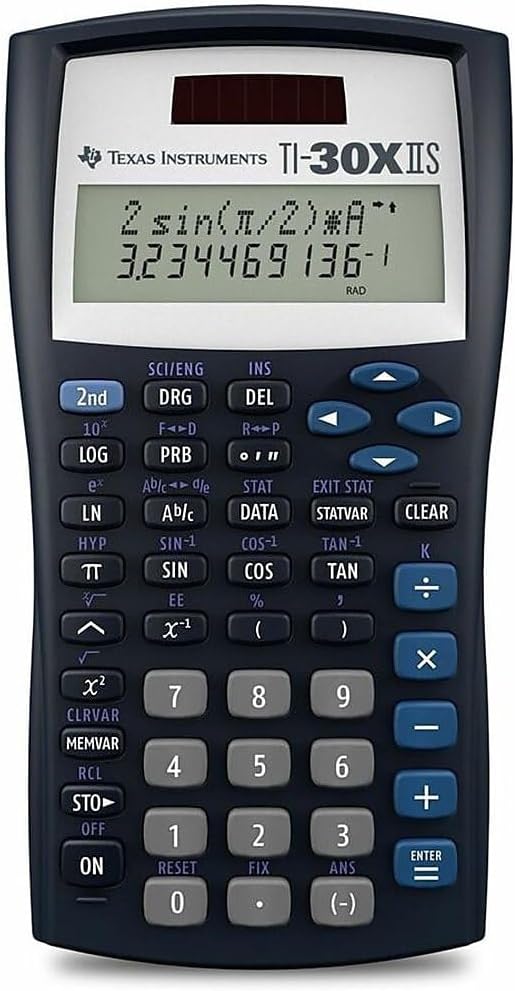
Next up, think about ease of use and the learning curve. Most students, even those new to scientific calculators, find the TI-30XIIS intuitive. Its two-line display shows the input expression and the result simultaneously, which really helps in understanding calculation order and debugging errors. Button placement is logical, and common functions are clearly labeled. You don’t want students spending more time figuring out the calculator than solving the actual math problem, right? This ease of entry is a significant advantage, especially if you’re introducing scientific calculators for the first time in a grade level. More advanced calculators, particularly graphing ones, can have a steeper learning curve, eating into valuable teaching time.
Let’s not forget power source and longevity. The TI-30XIIS typically features a dual power source: solar and battery. This is a brilliant feature for schools. Why? Because the solar cell can significantly extend battery life, meaning fewer interruptions for dead batteries in the middle of a test. It also means less hassle for you, the teacher, trying to scrounge up a bunch of replacement batteries. That dual-power setup is one of those small, unsung heroes of the classroom, really. Plus, the batteries it does use are generally easy to find.
Finally, consider teacher features and support. A teacher kit isn’t just a multipack; it often comes with extras. Think a comprehensive teacher’s guide, sometimes even a poster for the classroom, or a clear storage box. Some kits even include a desktop unit for the teacher that mirrors student models. These seemingly small additions can make a huge difference in classroom management and instructional efficiency. What’s more, a brand with a strong educational support network can be invaluable for resources and troubleshooting. A limitation, though, is that even with all these considerations, you still might run into a student who just struggles with any calculator, no matter how simple.
How to Match the Product to Your Situation
Finding the right tool for the job means understanding your job, your students, and your curriculum. The TI-30XIIS Teacher Kit isn’t a one-size-fits-all solution, but it nails it for several common classroom scenarios.
Consider Persona 1: The Middle School Math Teacher. You’re teaching pre-algebra, algebra I, and introductory geometry. Your students are just getting comfortable with fractions, decimals, basic exponents, and maybe a little Pythagorean theorem. For you, the TI-30XIIS is often a bulls-eye. It provides all the necessary functionality without overwhelming young learners with complex menus or graphing capabilities they won’t use. Students can easily input expressions, see intermediate steps on the two-line display, and focus on the math concepts rather than wrestling with an overly complicated device. Its sturdy build holds up to daily classroom use. This kit allows every student to have a consistent tool, which really helps when you’re demonstrating a concept.
Next, we have Persona 2: The High School Science Instructor (Biology/Chemistry). These subjects often demand more robust calculations, dealing with scientific notation, logarithms (pH calculations, anyone?), and perhaps some basic statistical analysis. The TI-30XIIS usually handles these tasks quite capably. It’s certainly a step up from a basic four-function calculator, offering the precision and functions needed for lab work and problem sets. However, if your chemistry class delves heavily into complex equilibrium equations or requires extensive data plotting, or if your physics class demands vector analysis and graphing of motion, you might find its capabilities a bit stretched. It’s a strong choice for core science, but perhaps not for every specialized advanced placement course.
Finally, meet Persona 3: The Budget-Conscious Department Head. You’re tasked with equipping multiple classrooms, balancing quality with cost, and making sure the entire school meets standardized testing requirements. A bulk purchase of the TI-30XIIS kit often represents significant value. The per-unit cost in a teacher kit is generally lower than buying individually. What’s more, its widespread acceptance on many standardized tests means you won’t have to worry about students needing different calculators for exams. You get a reliable, durable, and functional tool that satisfies the needs of many courses, without breaking the bank. The trade-off here? You might sacrifice some specialized functionality that a few individual teachers might crave for niche lessons, forcing them to find separate solutions for those specific needs.
Calculator Kit Comparison: Matching Tools to Teaching Needs
Navigating the landscape of classroom calculators means understanding the tiers. Not all kits are created equal, and knowing where the Texas Instruments TI-30XIIS Scientific Calculator – Teacher Kit (10 pack) sits helps clarify its suitability.
| Type/Tier | Best For | Price Tier | Key Feature | Watch-Out |
|---|---|---|---|---|
| Basic Scientific Kit | Middle/early high school; core math & science | Budget-friendly | User-friendly 2-line display, dual power, durable | Lacks graphing capabilities, limited advanced statistics. |
| Advanced Scientific Kit | High school algebra II, pre-calc; advanced science | Mid-range | More functions (e.g., matrices, complex numbers) | Can be overkill for younger students, still no graphing. |
| Entry-Level Graphing Kit | Algebra II to AP Calculus; data analysis | Premium | Visualizes functions, solves complex equations | Significantly higher cost, steeper learning curve, often restricted on tests. |
| Generic Scientific Kit | Extremely budget-constrained elementary/middle school | Very Budget | Lowest cost per unit, basic scientific functions | Variable quality, inconsistent features, less brand support. |
Basic Scientific Kit (like the TI-30XIIS Teacher Kit): This category, exemplified by the TI-30XIIS, is ideal for classrooms focusing on fundamental mathematical operations, algebraic expressions, basic trigonometry, and introductory statistics. Its robust build and clear interface make it a classroom staple. But, don’t expect it to draw a quadratic curve for you.
Advanced Scientific Kit (e.g., TI-36X Pro Kit): Moving up a notch, these kits offer a richer function set, sometimes including vectors, matrices, or numerical solvers. They’re excellent for students pushing into higher-level pre-calculus or specialized science courses where a graphing calculator isn’t permitted but more power than a basic scientific model is needed. However, that extra power comes with a slightly higher price tag and functions that might go unused by many students.
Entry-Level Graphing Kit (e.g., TI-84 Plus CE Kit): If your curriculum absolutely demands visualization, function analysis, or advanced data plotting, then a graphing kit is the way to go. These are powerful computational tools, often used from Algebra II through college-level math. Be aware, though, that they represent a substantial financial commitment and often have restrictions in standardized testing environments that might surprise you.
Generic Scientific Kit: These kits often come from lesser-known brands, promising similar functionality at a fraction of the cost. For the most basic math tasks, they might suffice. The main concern, however, revolves around inconsistent quality, potential lack of repair options, and a user interface that might not be as intuitive or standardized, which can cause headaches in a diverse classroom setting.
Scenario-Specific Considerations for Your Classroom
Choosing calculators for a classroom isn’t just about what they can do, but where and how they’ll be used. The Texas Instruments TI-30XIIS Scientific Calculator – Teacher Kit (10 pack) particularly shines, or might show its limits, in a few distinct scenarios.
First, let’s talk about standardized testing environments. This is a big one. Many state and national exams, including the SAT and ACT (for certain sections), permit scientific calculators but explicitly forbid or restrict graphing calculators. The TI-30XIIS typically falls within the “approved” list for these types of exams, offering students a consistent, familiar tool they can use throughout the year and on test day. This can seriously reduce test-day anxiety, knowing they won’t be caught off guard by a different calculator. But check the specific testing body’s rules for that particular year, because things change. Always verify.
What about remote learning and hybrid classrooms? The shift to digital learning made us rethink physical tools. While a physical calculator kit feels traditional, it ensures every student has an equal, tangible tool, even if they’re learning remotely. Not every student has reliable internet for online calculator apps, or a device that runs them well. The TI-30XIIS kit ensures equity in access to a fundamental calculation tool. Its simplicity also means fewer technical glitches compared to software, which, let’s be honest, can be a blessing when you’re troubleshooting tech issues over video call. The drawback? You might have to coordinate distribution and collection, which can be a logistical headache.
Consider, too, multi-grade level use. Many schools, especially smaller ones, need their resources to stretch. Can a single kit of TI-30XIIS calculators serve 7th graders learning decimals and 10th graders grappling with advanced trigonometry? For a good chunk of that range, absolutely. It covers middle school math, algebra I, geometry, and much of the foundational science curriculum. It provides continuity. However, once students move into pre-calculus or advanced physics, the limitations start to show. The TI-30XIIS is a fantastic generalist, but it won’t replace a specialized tool for specific, higher-level needs. It’s about finding that sweet spot of broad utility.
Common Mistakes When Buying Classroom Calculators
Buying a classroom set of calculators, like the Texas Instruments TI-30XIIS Scientific Calculator – Teacher Kit (10 pack), seems straightforward, but savvy educators often see common missteps. Avoid these pitfalls to make a truly informed decision.
One frequent mistake is buying too advanced (or not advanced enough) for the curriculum. Folks often assume “more features, better product.” Not always the case. Investing in a pricey graphing calculator kit when your curriculum only requires basic algebra and geometry is just wasted budget. Those extra functions create unnecessary complexity for students, complicating learning rather than simplifying it. On the flip side, trying to make a basic four-function calculator stretch for high school chemistry will only lead to frustration and inaccurate results. Assess your actual curriculum needs for the next few years. That’s step one.
Another common oversight? Ignoring durability for cost savings. It’s tempting to grab the cheapest bulk calculators you can find. But remember, these are going to be handled by dozens of different students, often not with the most delicate touch. Flimsy construction, sticky buttons, or screens that scratch easily will cost you more in replacements and headaches down the line than if you’d invested in a known durable model like the TI-30XIIS from the start. A few dollars saved initially can quickly evaporate when you’re replacing half the kit within a year.
Many buyers also overlook replacement costs or battery types. It might seem minor, but if your chosen calculator uses obscure or expensive batteries, those costs add up over time. If a specific model requires specialist tools or procedures for battery replacement, you’re looking at more downtime and frustration. Calculators like the TI-30XIIS, with their common battery types and solar assist, significantly reduce this particular logistical burden. A dead calculator, even if it’s just a battery issue, means a student is out of commission. That’s a real classroom problem.
Finally, a significant blunder is not checking testing board requirements. Seriously. Imagine equipping an entire class with a specific calculator, only to find out it’s prohibited on a major standardized exam. What a nightmare! Always, always consult the most current guidelines for relevant tests (SAT, ACT, AP exams, state assessments) before making a bulk purchase. The TI-30XIIS generally has broad approval, but those rules can shift year to year, or by test version. Ignorance here really isn’t bliss; it’s a scheduling disaster.
Why, How, What: Quick Hits on Classroom Calculators
Why consider a teacher kit over individual purchases?
Teacher kits like the Texas Instruments TI-30XIIS (10 pack) simplify logistics and often provide better value. You get a uniform set of tools, which makes teaching demonstrations much easier since every student’s calculator behaves identically. Plus, they usually come with robust storage solutions, helping you manage inventory and keep track of assets across multiple classes, reducing the chance of individual units wandering off.
How does the TI-30XIIS compare to other entry-level scientific calculators?
The TI-30XIIS stands out for its user-friendly interface, clear two-line display, and consistent performance. While other brands like Casio offer strong contenders (think the Casio FX-300ES Plus), the TI-30XIIS is often lauded for its intuitive button layout and a long track record of reliability in educational settings. It handles common mathematical functions with precision and ease, making it a favorite for broad classroom adoption.
What are the core functions students really use on this model?
Students primarily rely on the TI-30XIIS for fractions, exponents, square roots, basic trigonometry (sine, cosine, tangent), logarithms, and simple statistical calculations like mean and standard deviation. Its ability to handle order of operations correctly and display multiple lines of input and output makes it incredibly helpful for algebra and geometry problems, where visual confirmation of input is key.
FAQ
Is the TI-30XIIS allowed on standardized tests?
Generally, yes. The Texas Instruments TI-30XIIS scientific calculator is widely permitted on most standardized tests, including the SAT, ACT, and many state assessments. Always consult the specific test’s official website for the most current rules and approved calculator lists before exam day.
What’s the difference between scientific and graphing calculators?
Scientific calculators, like the TI-30XIIS, perform complex arithmetic operations, trigonometry, logarithms, and basic statistics. Graphing calculators, conversely, can also plot functions, solve equations graphically, and handle more advanced data analysis. They’re more powerful but often have a steeper learning curve and a higher price tag.
How long do the batteries last in a TI-30XIIS?
Thanks to its dual power source (solar and battery), the TI-30XIIS boasts an impressive battery life. The solar cell continuously recharges the battery in well-lit conditions, meaning you’ll rarely need to replace the standard coin-cell battery, sometimes going years without a change.
Can this kit be used for college-level math?
For introductory college courses like college algebra or pre-calculus, the TI-30XIIS can be quite sufficient. However, for higher-level courses such as calculus, linear algebra, or advanced statistics, a graphing calculator or a more advanced scientific model will likely be necessary.
Are replacement units easy to find?
Yes, individual Texas Instruments TI-30XIIS calculators are widely available through major retailers. This makes replacing a lost or broken unit from your teacher kit straightforward, without needing to purchase an entire new kit.
What accessories typically come with a teacher kit?
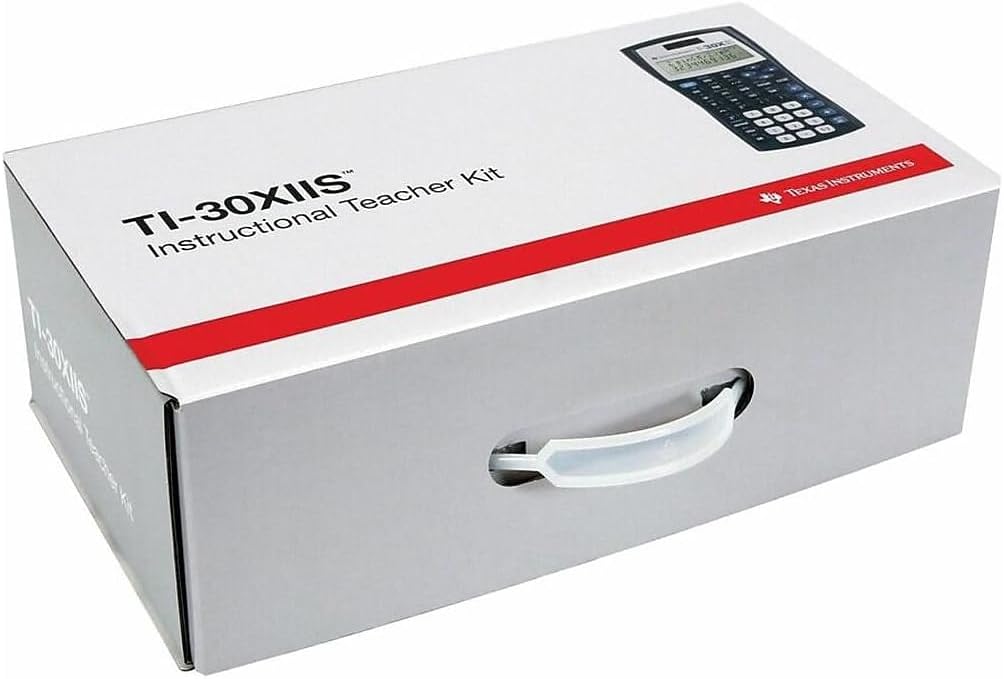
A teacher kit usually includes ten TI-30XIIS calculators, a sturdy storage case to keep them organized, and a comprehensive teacher’s guide. Some kits might also feature a classroom poster or a desktop unit for the teacher.
Is it worth spending more on a TI-36X Pro kit instead?
If your high school curriculum includes more advanced topics like complex numbers, vector calculations, or solving polynomial equations, the TI-36X Pro offers more specialized functions. For middle school or core high school, the TI-30XIIS provides ample functionality at a more budget-friendly price point, and it’s arguably easier for most students to jump into.
Final Recommendation
For educators leading middle school math, foundational high school algebra, geometry, and most general science courses, the Texas Instruments TI-30XIIS Scientific Calculator – Teacher Kit (10 pack) truly hits a sweet spot. Its combination of robust durability, student-friendly design, and broad acceptance on standardized tests makes it an incredibly practical and value-driven investment for the classroom. You’ll equip your students with a reliable, consistent tool that supports learning without overwhelming them with unnecessary complexity or saddling your department with excessive costs.
However, if your curriculum consistently pushes into the graphing realm of pre-calculus, advanced calculus, or data-intensive physics, you’ll eventually need to consider a separate investment in graphing calculator kits. But for that wide middle ground, for the core curriculum where solid scientific computation is key, the TI-30XIIS kit proves its worth again and again.
#Texas #Instruments #TI30XIIS #Scientific #Calculator #Teacher #Kit #pack





Reviews
There are no reviews yet.