Quick answer: For most standard living rooms, an 8×10-foot rug is the right size. It fits under the front legs of a typical three-seat sofa plus one or two armchairs, anchors the whole seating area, and leaves a balanced border of bare floor around the edges. If your room is smaller than about 10×12 feet, drop to a 5×8. If it’s a large or open-plan space, step up to a 9×12.
Related: See our What Size Dining Table Do I Need? A Complete Buying Guide for a detailed comparison.
Related: See our How to Decorate a Living Room for Halloween? for a detailed comparison.
Related: See our What Size TV Should I Get for My Living Room? for a detailed comparison.
Why Rug Size Matters More Than the Pattern
The short version: a plain rug in the right size makes a room look pulled together; a beautiful rug in the wrong size makes the whole room look off.
A rug does two jobs: it defines the seating zone — telling the eye where the conversation area starts and ends — and it sets the visual scale of everything on it. Designers consistently call a too-small rug the most common decorating mistake, because a tiny “postage stamp” rug under a large sofa makes the furniture look like it’s floating in an empty room. Get the size right first, and the pattern and color become the easy part.
The Three Layout Rules Designers Actually Use
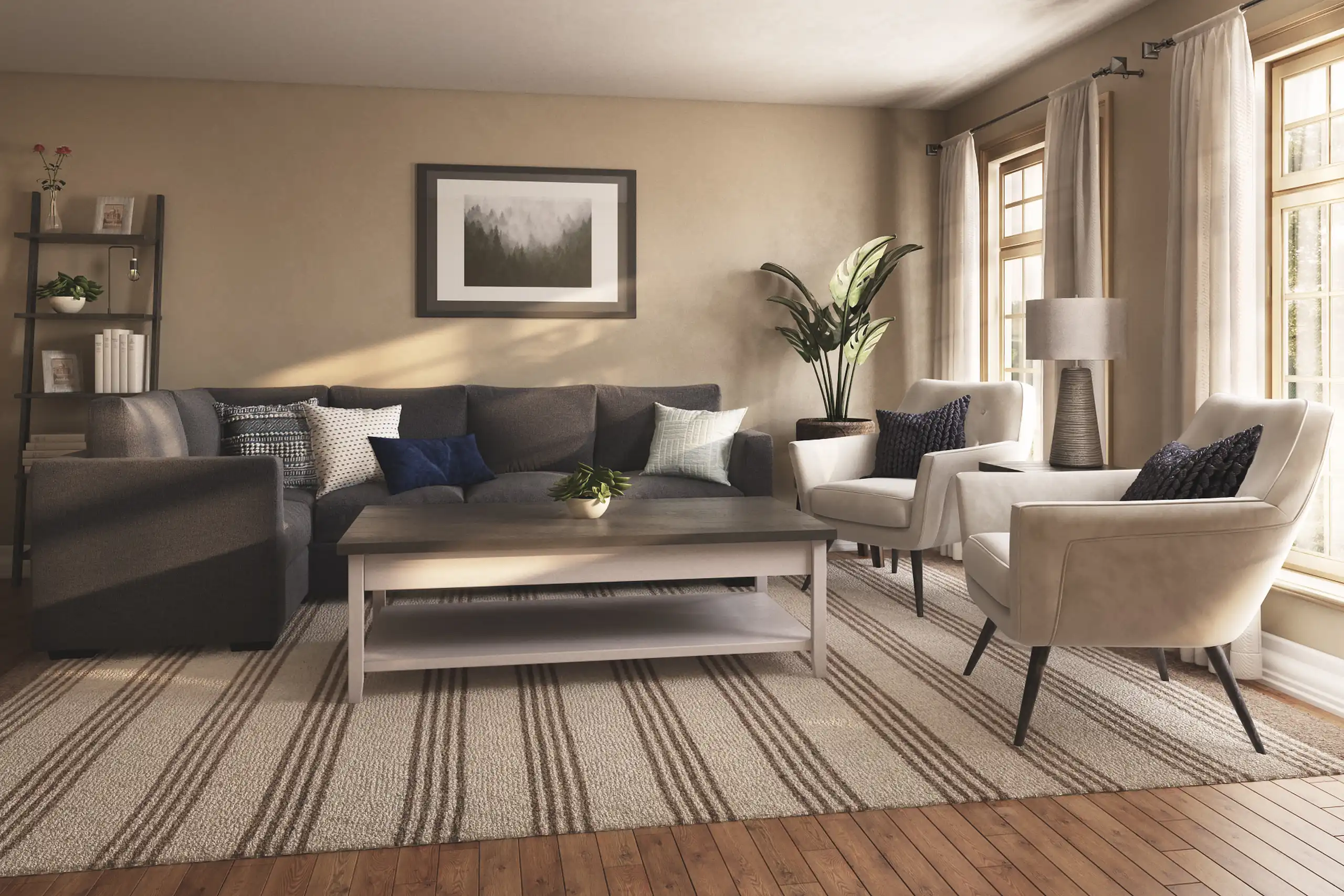
The short version: put at least the front legs of every major furniture piece on the rug — this one rule works in almost every living room.
- All legs on: every seat sits fully on the rug. The most unified, formal look, but it needs the largest rug — usually 9×12 or bigger.
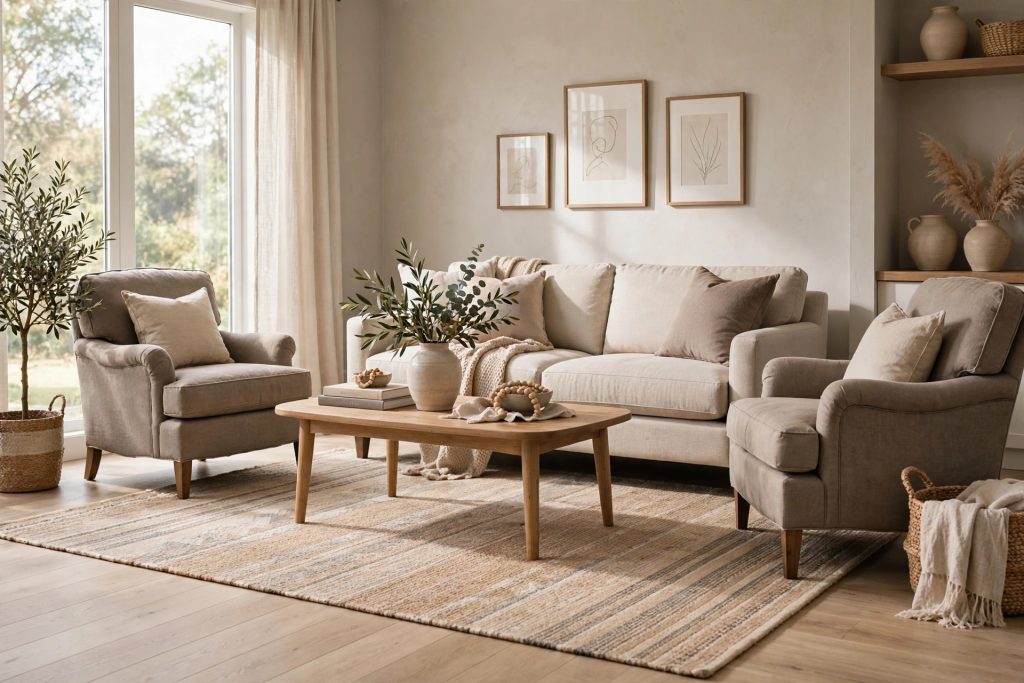
- Front legs on: the front legs of the sofa and chairs rest on the rug, back legs on the bare floor. The most popular and forgiving layout.
- Coffee table only: the rug sits centered under the coffee table with all seating off it. Works only in tight spaces — otherwise the furniture looks disconnected.
When in doubt, choose front legs on. It suits nearly every room shape and forgives small measuring errors.
What Size Rug Fits Your Living Room?
The short version: match the rug to your room’s dimensions, not to your furniture alone — measure the seating zone, then choose the next standard size up.
| Your living room | Best rug size | Typical setup it fits |
|---|---|---|
| Small / apartment, up to about 10×12 ft | 5×8 ft | Loveseat or small sofa + coffee table |
| Standard, about 12×15 to 14×18 ft | 8×10 ft | Three-seat sofa + 1–2 chairs (the most common size) |
| Large / open-plan, 16×20 ft and up | 9×12 ft | Sectional or sofa + two chairs + side tables |
| Great room with a big sectional | 10×14 ft | Oversized sectional + full seating group |
The 8×10 is the best-selling living room rug size for a reason: it fits the average living room and the average three-seat sofa. If you’re between sizes, size up rather than down — a slightly generous rug looks intentional, while a slightly small one looks like a mistake.
How to Measure for a Rug: The Tape Method
The short version: outline the rug shape with painter’s tape on the floor and live with it for a day before you buy — it’s the only measuring method that never lies.
- Measure the seating zone, not the whole room. Arrange your sofa and chairs, then measure the width and depth of that group.
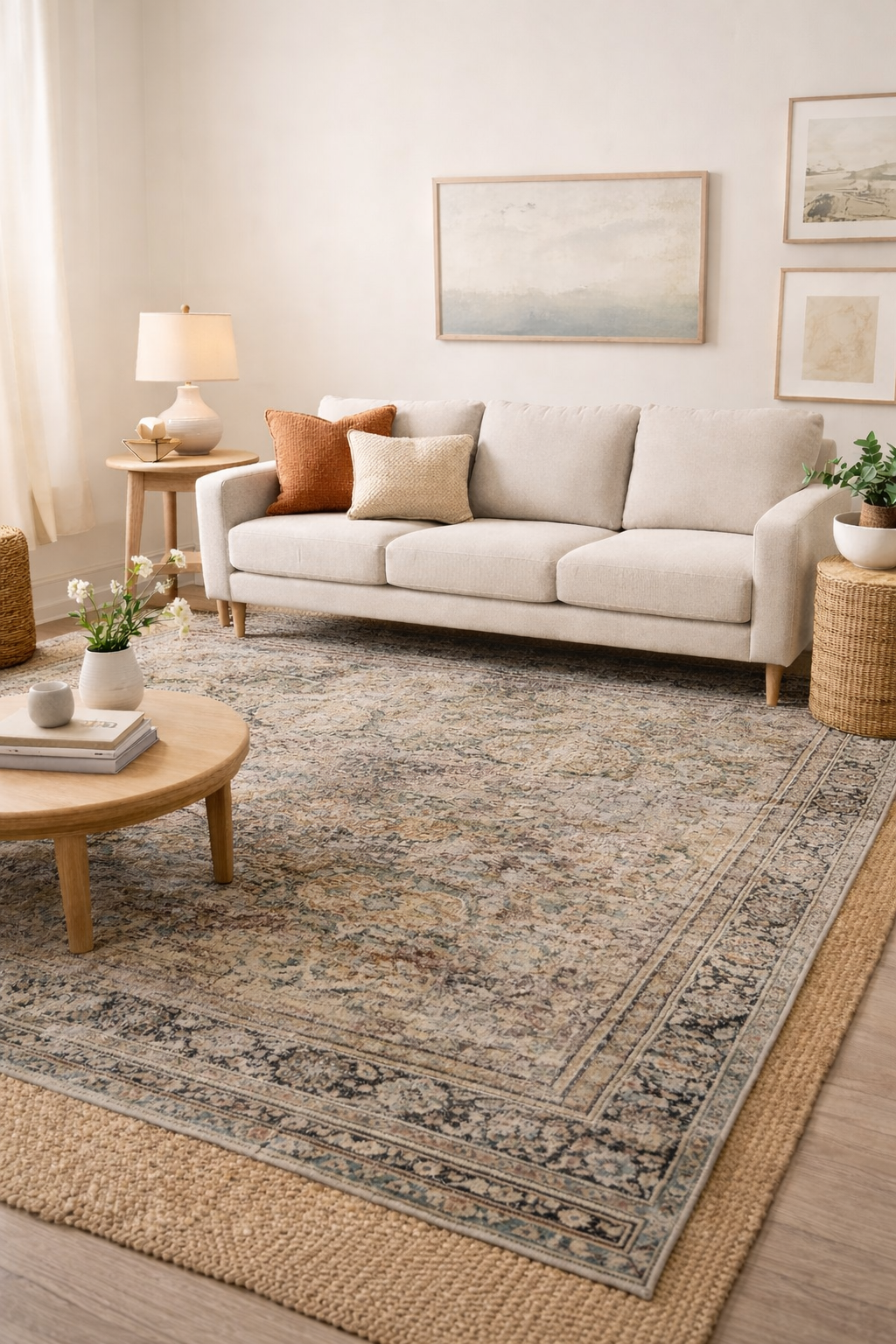
- Leave a border of bare floor: roughly 8–24 inches between the rug’s edge and the walls — about 18 inches is a comfortable middle ground.
- Make the rug at least as wide as the sofa — ideally a few inches wider on each side.
- Tape the outline with painter’s tape. Walk around it, sit on the sofa, and check that chair legs land where you expect.
- Check door clearance — make sure any door swinging over the rug won’t jam on the pile plus pad.
How Far Should the Rug Extend Past the Coffee Table and Sofa?
The short version: the rug should extend at least 6 inches beyond each side of your coffee table and be at least as wide as your sofa.
Leave a minimum of 6 inches of visible rug beyond each edge of the coffee table — this frames the table instead of crowding the rug’s edge. Keep 14–18 inches between the coffee table and the sofa front for comfortable legroom. And when the rug is narrower than the sofa, the seating area looks cramped no matter how nice the rug is.
Rectangle vs. Round Rugs: Which Shape?
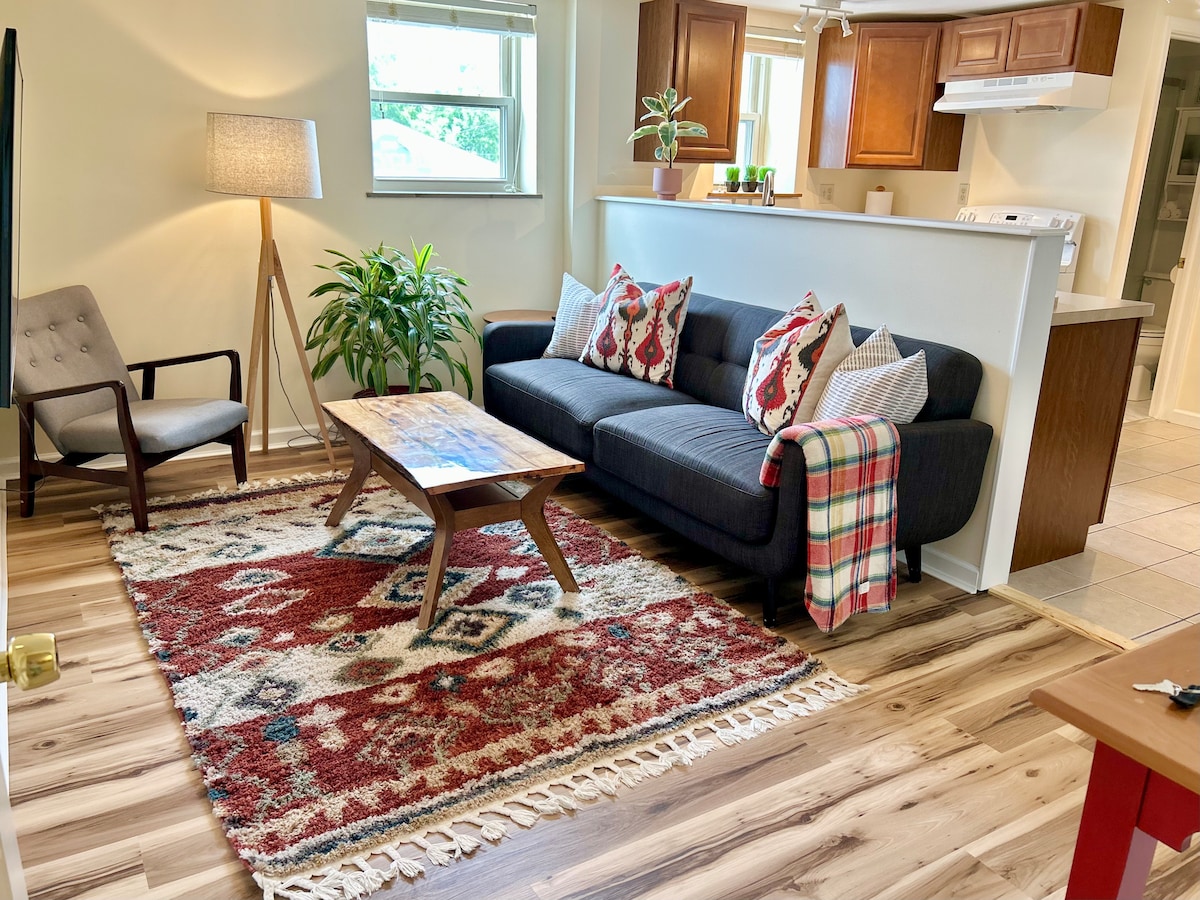
The short version: a rectangular rug is the safe default for most living rooms — choose round only for a square room or under a round coffee table.
Rectangular rugs follow the natural lines of sofas, walls, and coffee tables, which is why they dominate living rooms. A round rug can soften a very square room, and a 6-foot round works under a round coffee table with two small chairs — but round rugs leave awkward empty corners in rectangular rooms and rarely anchor a standard sofa well.
What Rug Material Should You Choose?
The short version: for busy households with kids or pets, choose a low-pile synthetic or washable rug; choose wool if you want the longest-lasting, most comfortable option and your budget allows it.
| Material | Feel & look | Durability & cleaning | Price |
|---|---|---|---|
| Wool | Soft, rich texture; natural stain resistance | Very durable; professional cleaning recommended | $$$ |
| Cotton flatweave | Casual, lightweight | Easy to clean; some are machine-washable; wears faster | $ |
| Jute / sisal | Natural, textured | Tough but rough underfoot; stains easily | $$ |
| Polypropylene | Mimics wool at a glance | Stain-resistant, kid- and pet-friendly | $–$$ |
| Viscose | Silky sheen, looks luxurious | Delicate; hard to clean; low-traffic rooms only | $$ |
Two widely available options worth knowing: washable rug systems (such as Ruggable’s two-piece washable rugs, whose top layer goes in the washing machine — practical for living rooms near the dining area) and budget low-pile rugs (brands like nuLOOM sell affordable polypropylene rugs in standard 8×10 and 9×12 sizes). You can check washable rug options or browse budget-friendly 8×10 rugs to compare styles before deciding.
Whatever you pick, add a rug pad underneath: a thin 1/8- to 1/4-inch pad stops slipping, adds cushioning, and protects both the rug and your floor.
5 Rug-Size Mistakes to Avoid
The short version: almost every rug regret comes down to buying too small — when you’re unsure, size up.
- Buying too small — the number-one mistake; a rug that only fits under the coffee table shrinks the room visually.
- Letting the rug touch the walls — keep that 8–24 inch border of bare floor.
- Forgetting door clearance — thick pile plus a pad can jam a swinging door.
- Skipping the rug pad — without one, rugs creep, bunch, and wear out faster.
- Sizing to the coffee table instead of the seating area — measure the zone, not the table.
Frequently Asked Questions
What size rug goes under an L-shaped sectional?
A 9×12-foot rug suits most sectionals. At minimum, make sure the front legs of every section rest on the rug, and let the rug extend past the chaise rather than cutting it off mid-section.
Can a living room rug be too big?
Yes — if less than about 8 inches of bare floor shows between the rug and the walls, it’s too big. The painter’s-tape test catches this before you buy.
Should a living room rug go under the sofa?
At least the front legs should be on the rug — that’s the standard layout. Putting the whole sofa on the rug also works but needs a larger size.
What size rug is best for a small apartment living room?
A 5×8-foot rug fits most apartment living rooms with a loveseat or small sofa. In a studio, the rug also helps visually separate the living zone from the sleeping zone.
How much bare floor should show around a rug?
Aim for 8–24 inches between the rug edge and the walls, with about 18 inches as a comfortable default in average rooms.
Do I really need a rug pad?
Yes. A pad prevents slipping and bunching, adds softness, extends the rug’s life, and protects hard floors. Choose a low-profile 1/8- to 1/4-inch pad so doors still clear it.
The Bottom Line
Choosing the right rug size comes down to three steps: arrange your seating, tape the outline on the floor, and pick the standard size that covers it — 5×8 for small rooms, 8×10 for standard rooms, 9×12 for large or open-plan spaces. Get the size right with the front-legs-on layout, add a rug pad, and the pattern you love will take care of the rest.
Top picks: 8×10 rugs for a living room
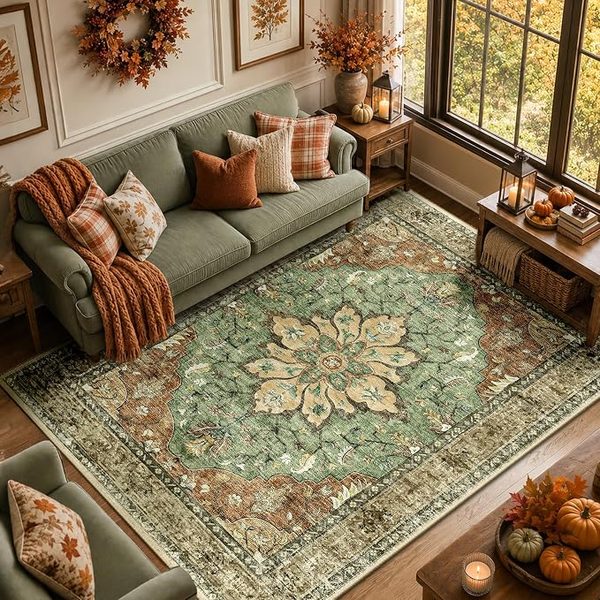
RELEANY Washable Area Rug, 8’×10′
Machine-washable 8×10 with a non-slip, pet-friendly backing — the practical pick if your living room sees kids, pets, or dining spills.
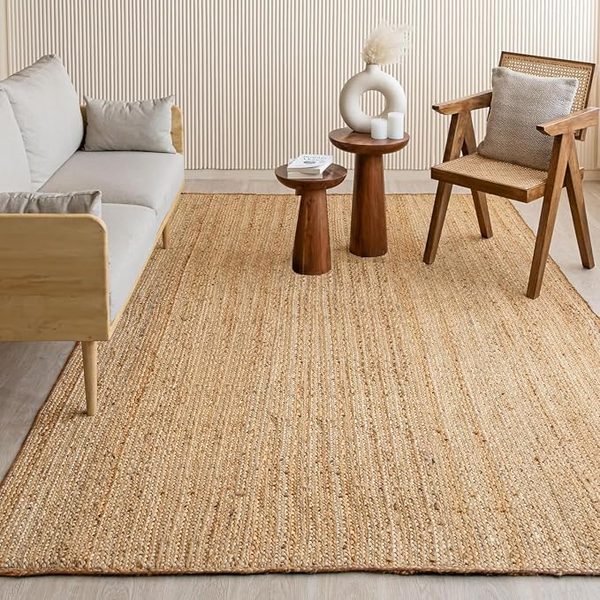
HOMEMONDE Handwoven Jute Area Rug, 8’×10′
Natural braided jute, reversible and handwoven — adds the warm texture contrast a neutral sofa layout needs.
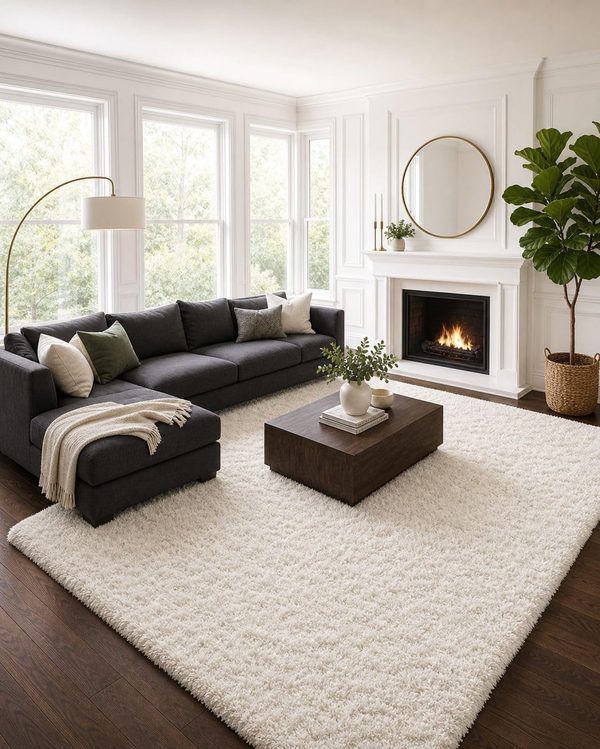
Ophanie Fluffy Shag Area Rug, 8’×10′
Soft high-pile shag with non-slip backing — makes the “front legs on the rug” layout feel instantly cozy.
Common Questions About Living Room Rug Sizes
What size rug do I need for my living room?
For most standard living rooms, an 8×10-foot rug is the right answer — it slides under the front legs of a typical three-seat sofa plus one or two armchairs, anchors the seating area, and leaves a balanced border of bare floor. It is the designer default for good reason.
Drop to 5×8 for rooms smaller than about 10×12 feet, and step up to 9×12 for large or open-plan spaces. When torn between sizes, the larger one is right more often than the smaller.
Should a living room rug go under the sofa?
Yes — at minimum the front legs of the sofa should sit on the rug, which visually anchors the furniture to the seating zone instead of letting it float. All legs on the rug is the most luxurious look; front-legs-only is the practical standard.
A rug that stops short of the sofa reads as a postage stamp and makes the room look disjointed. If your rug cannot reach the sofa's front legs, it is too small for the arrangement.
Can a living room rug be too big?
Yes, though it is a rarer mistake — a rug that runs wall to wall with no visible floor border makes the room feel like wall-to-wall carpet and loses the defining effect. Leave 12 to 18 inches of bare floor between the rug edge and the walls.
In open-plan spaces, err bigger rather than smaller to define the zone, but still keep that floor border. The rug should frame the seating area, not swallow the room.
What size rug goes under an L-shaped sectional?
An 8×10 works for most sectionals, positioned so the rug extends beyond the chaise and the main seating run — the rug should ground the entire L, not just part of it. For large sectionals in big rooms, 9×12 is the safer choice.
Center the rug on the sectional's main seating axis rather than the room's center. The coffee table sits fully on the rug, and walkways around the sectional stay on bare floor for easy traffic flow.
What are the biggest rug-size mistakes to avoid?
The number one mistake is buying too small — designers call the tiny floating rug the most common decorating error because it shrinks the whole room visually. Second is ignoring the front-legs rule and letting the sofa sit entirely off the rug.
Third is forgetting to measure with painter's tape first: tape the rug dimensions on the floor and live with the outline for a day before ordering. Five minutes of taping prevents the most expensive mistake in the room.