This site contains affiliate links. We may earn a commission on qualifying purchases.
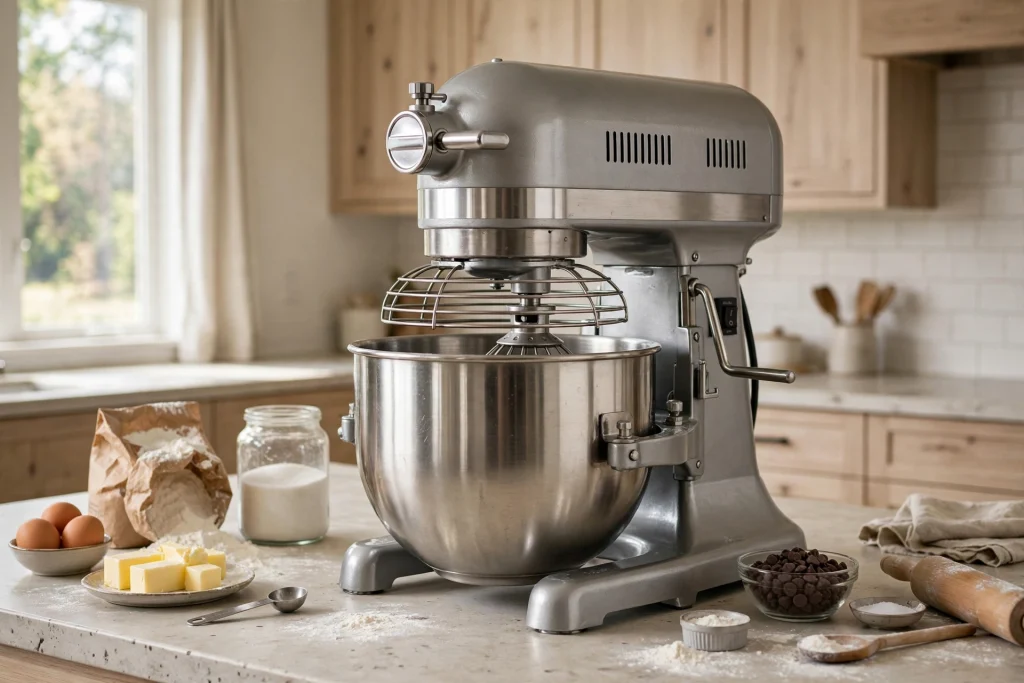
Ten quarts. That is the number that starts this story, and it is a number that misbehaves the moment you translate it into food. A 10-quart bowl sounds like it eats a whole bakery shift, and in flour terms it means something closer to eight or nine cups of flour in a dough before the load starts climbing the hook and arguing with the rim. I cook daily, I have buried more small appliances than I can list from memory, and the lesson that took me longest is that bowl quarts are a volume claim, not a workload claim. The workload lives in the motor and the gearbox, and neither of those is printed as large as the quart number on the box.
The 60-minute timer is the second number, and it needs the same translation. Sixty minutes of continuous running matters for exactly two jobs in a home kitchen, a long slow stir on something like a nougat or a divinity, and the occasional churn-style attachment work. Everything else a stand mixer does finishes inside ten minutes or ruins itself trying. Bread dough wants five to eight. Cookie dough wants three. Whipped cream wants two and punishes a third. A timer that runs an hour is not a cooking feature so much as a confession that the machine expects to be left alone, and a machine that expects to be left alone had better have the thermal headroom to survive it, which is a claim I cannot judge from a listing and neither can you. That is the honest gap in this whole category.
Now the disclosure this review owes you up front, because the old version of this page never made it. When I went looking for the exact 10-quart, 60-minute-timer listing this article was named after, I could not confirm it among the listings I can open and check today. Big-bowl mixers absolutely exist, but the verifiable ones cluster lower, six and a half quarts, seven and change. So the box further down swaps in three machines I could actually verify, an Aucma 6.5-quart, a 7.4-quart stainless unit in rose gold, and a 4-quart Hamilton Beach, and the rest of this piece is about the buying math that applies to all of them, the headline machine included. If a seller cannot show you a live listing, the quart number is just typography.
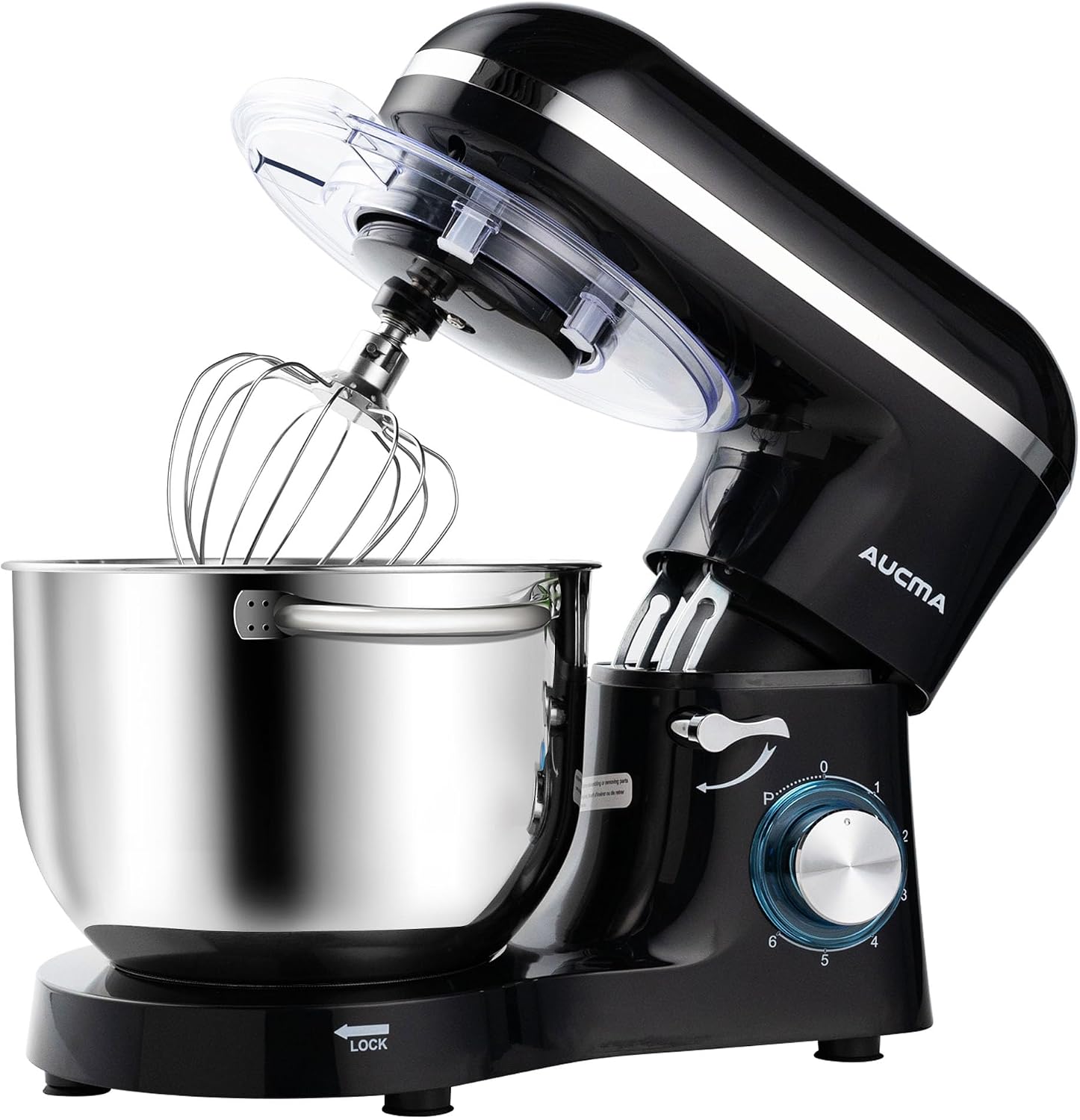
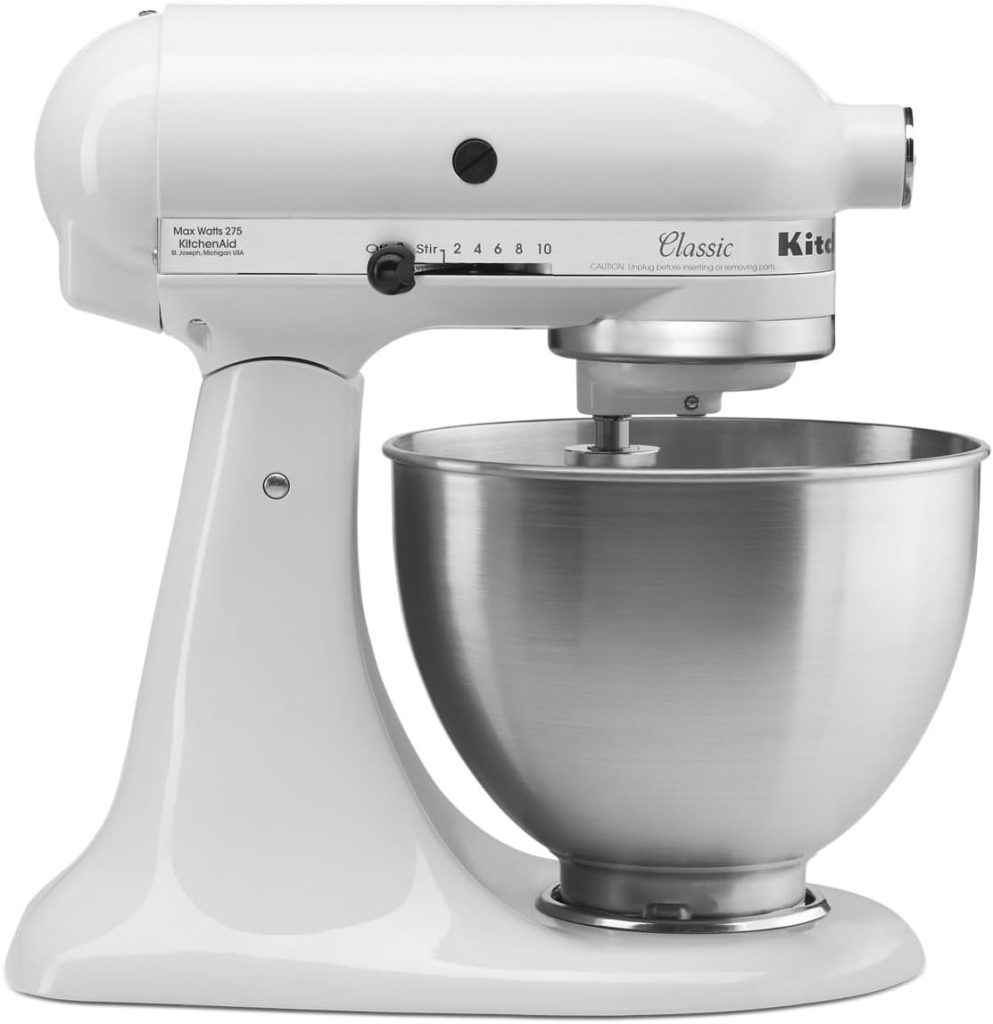
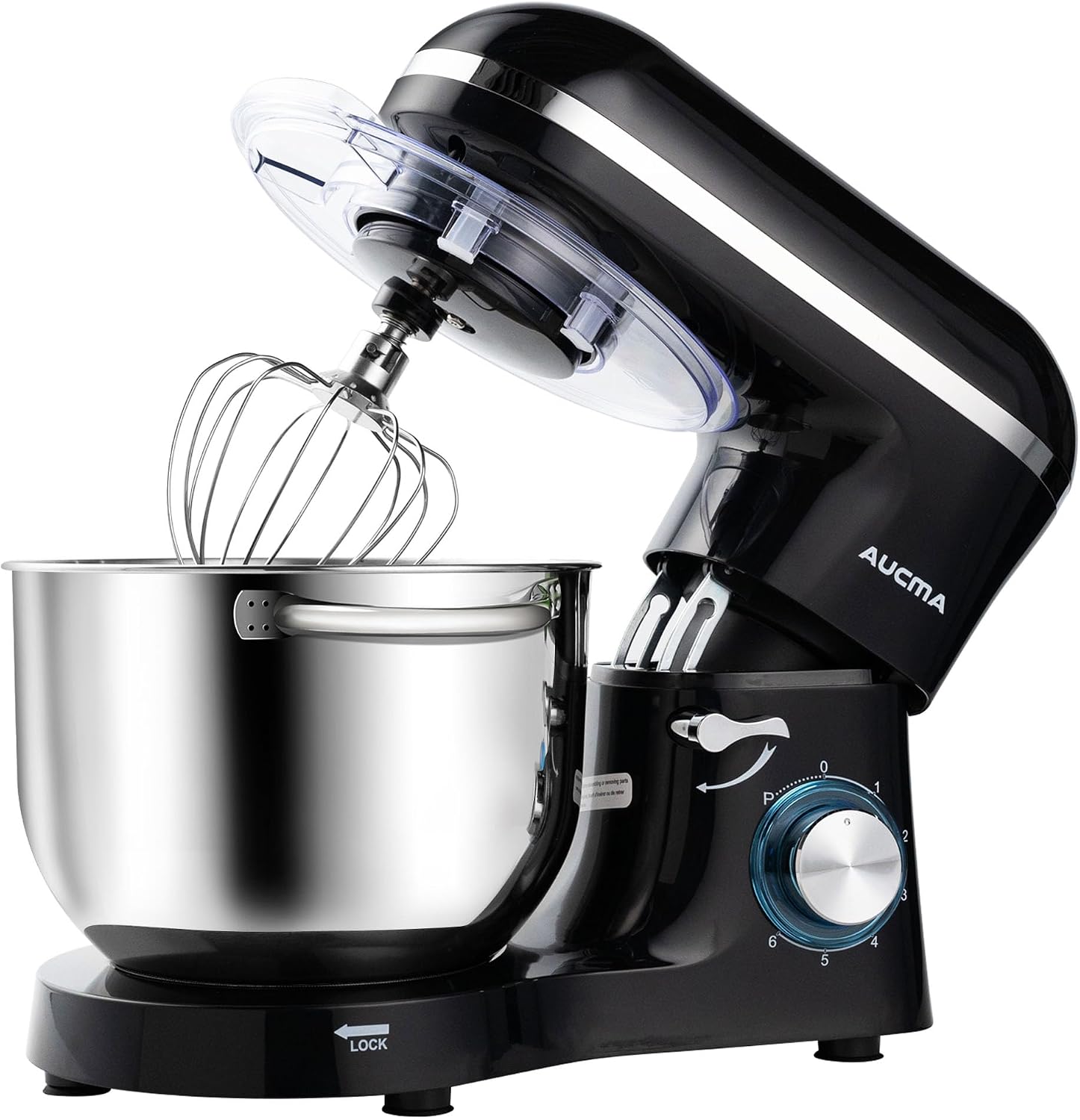
The Aucma is the one I know best of the three, 660 watts, six speeds, tilt head, the standard trio of hook, beater and whisk in the box. Six and a half quarts in that bowl means a double batch of sandwich dough without the load straining at the rim, roughly four pounds of flour at the outside edge and happier at three. The tilt head needs clearance, head up, bowl out, and in my kitchen that measurement, not the counter footprint, is the one that decides where the machine lives. The site’s KitchenAid Classic review makes the same point from the smaller end, a 4.5-quart that lives on the counter because it fits under the cabinets with the head raised. Size is a housing decision before it is a cooking decision. Always was.
The 7.4-quart rose gold unit is the closest thing in the box to the headline promise, the biggest bowl of the three, six speeds, a stainless bowl that shrugs off the dishwasher. I have not run this exact machine, so I cannot judge its gearbox or its noise, and any review that pretends otherwise from a spec sheet is selling you something. What I can judge is the shape of the bet. A no-name big bowl at a friendly price is a bet that the gear train is metal where it counts. Sometimes it is. Sometimes the sacrificial gear is plastic by design, cheap to swap, and the bet pays out fine for years. The failure mode to fear is not the gear. It is the parts drawer being empty when you need the gear.
And the Hamilton Beach, four quarts, seven speeds, the smallest seat in the row, earns its place by being the mixer that actually fits the way most people bake. One batch of cookies. One loaf. A bowl that washes in the sink without a strategy session. The Kitchen in the box mini review on this site covers the even smaller end of that logic, and between that page and this one sits the whole argument of the category. Most home baking is small. The big bowl is for the four weekends a year when it is not, and you pay for those weekends in counter space every single day.
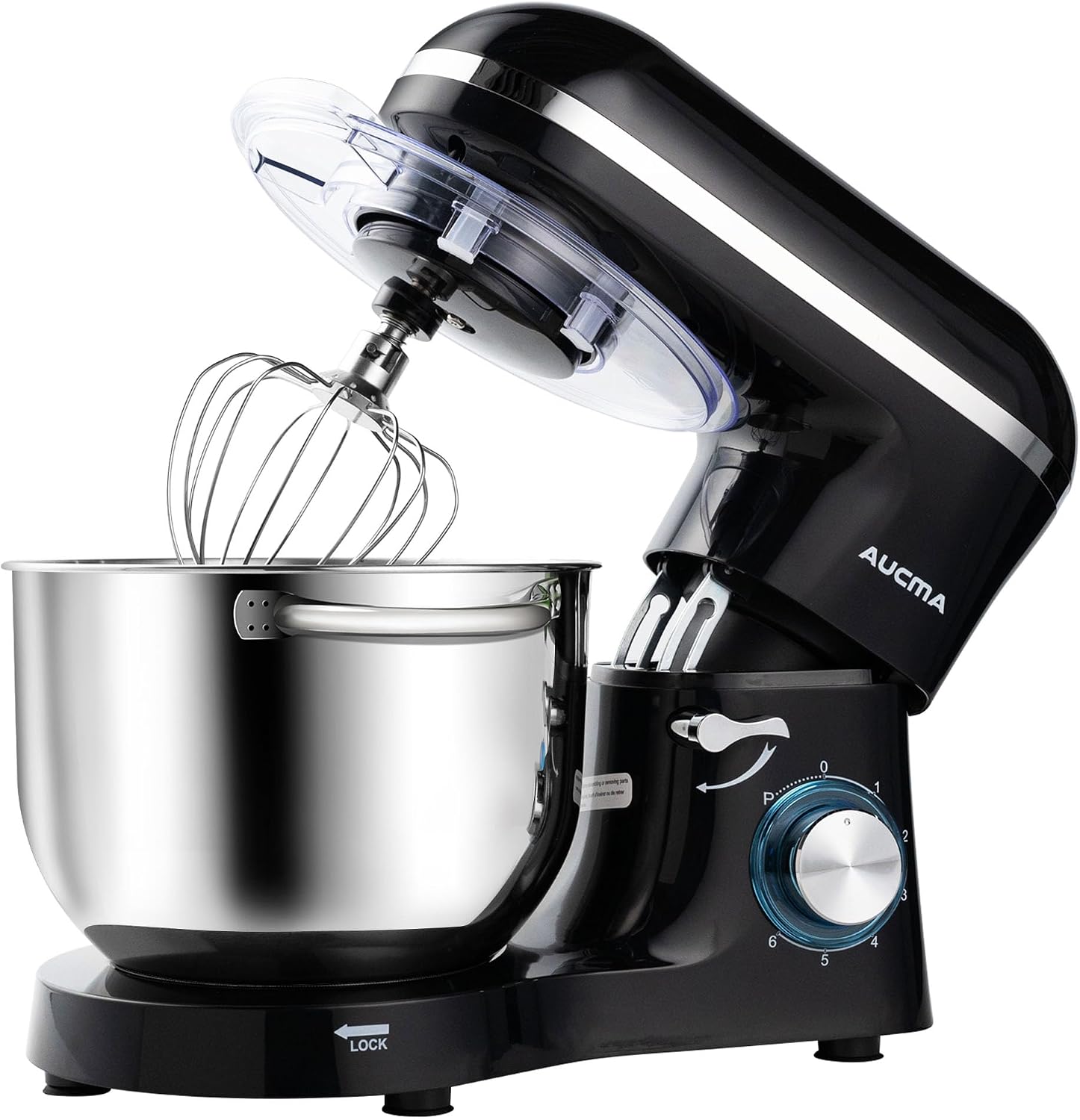
The known quantity – 660 watts, six speeds, double-batch dough without straining at the rim
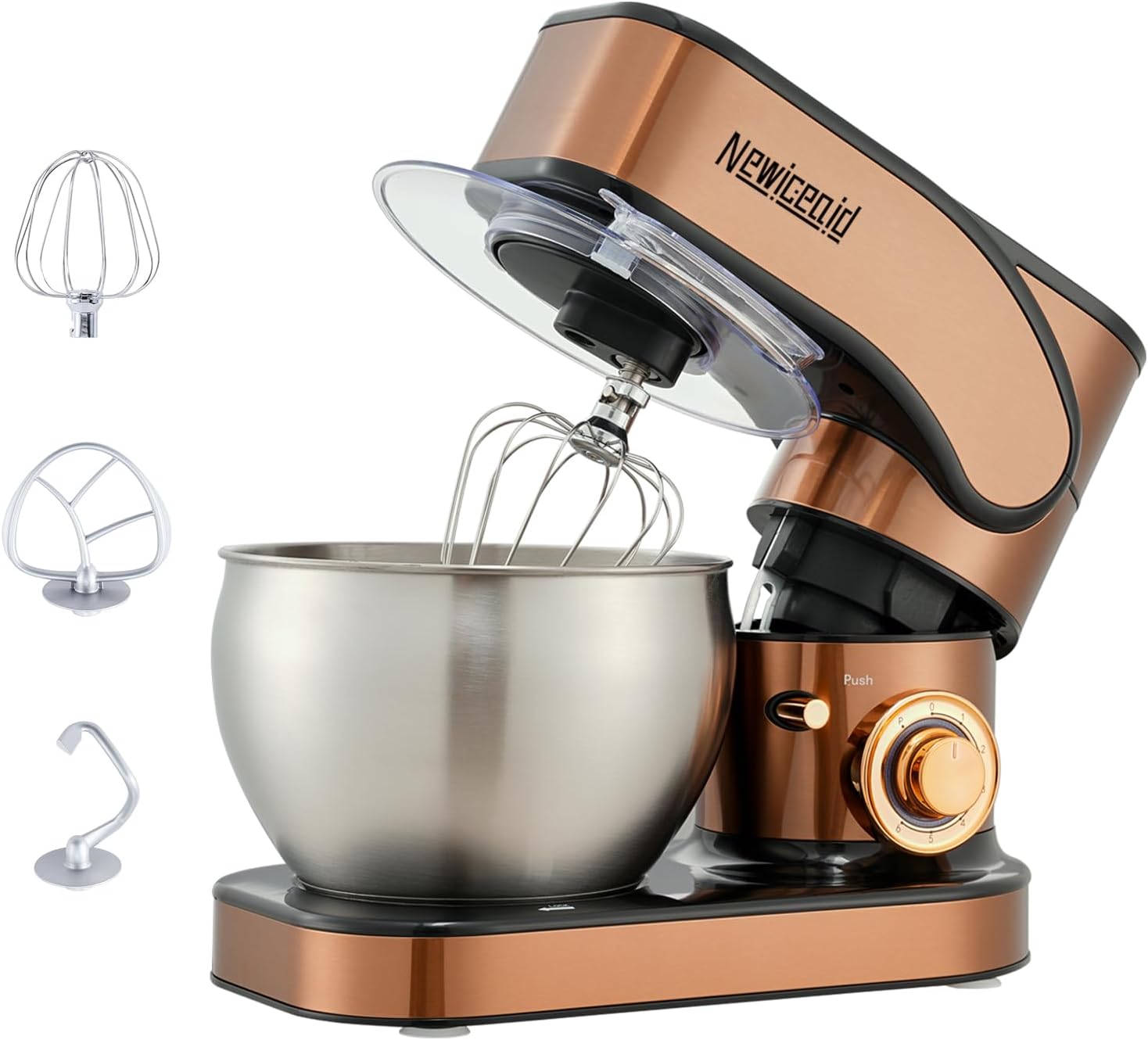
The biggest verifiable bowl of the three – six speeds, stainless bowl, unbranded gearbox bet
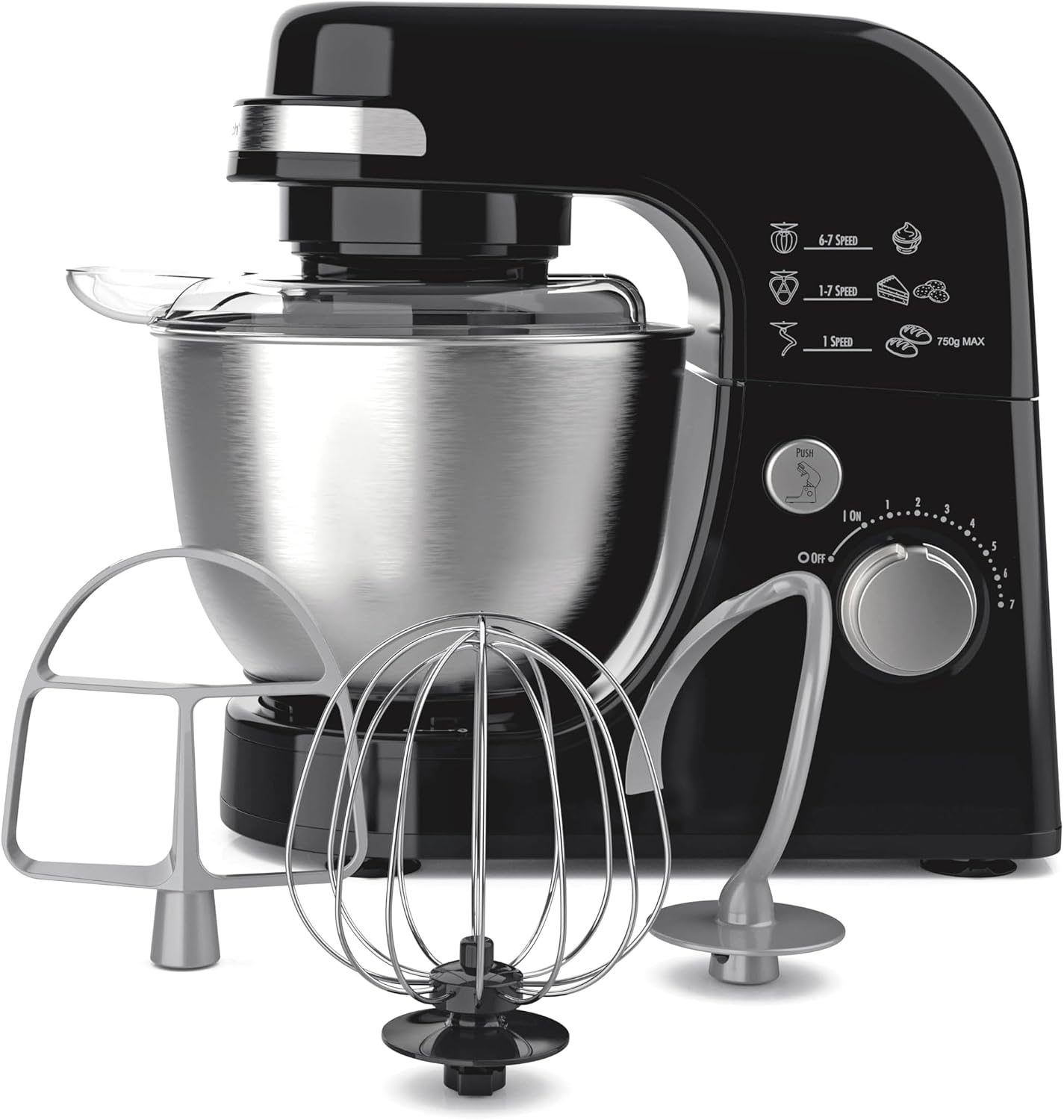
The honest everyday size – one loaf, one batch of cookies, washes in a normal sink
Prices and availability change often. The button shows the current listing.
Flour math, since nobody prints it and everybody needs it. A mixer bowl working happily with dough tops out well below its brim number, because dough climbs and because the motor’s worst moment is the first minute, cold ingredients, full load. My working rule across the machines I have owned is a pound of flour per quart of bowl, minus a pound for safety, which puts the 6.5-quart Aucma around five pounds on paper and four in a kitchen that wants the machine to live. I said three earlier. Actually, no, let me redo that, because consistency matters more than pride here. Three pounds is the comfort load, four is the ceiling, and the gap between those two numbers is where gearboxes go to die slowly. Cookies are kinder. Cake batter is kindest. Dough is the audit every mixer eventually fails or passes.
Speed counts lie in the other direction. Six speeds, seven speeds, ten, twelve, the dial is a staircase and most kitchens live on three steps, stir for flour, medium for batter, high for cream. What separates machines is not the count, it is the low end. A stir speed that is genuinely slow keeps flour in the bowl instead of on your shirt, and a low end that starts at medium-fast is why so many big mixers wear the splash guard like a permanent hat. When you read a listing, ignore the top speed entirely. Nobody has ever returned a mixer because the whisk was not fast enough. The returns are all at the bottom of the dial, wearing flour.
The timer question deserves its answer too, since it headlined the original listing. A long timer is genuinely useful for the two jobs I named and for one more I forgot, meringue-adjacent foams that want patience, and beyond that it is a spec that photographs well. What matters more, and never gets a headline, is whether the machine can run its low speed for twenty minutes without the housing going warm against your palm. Heat is the honest spec. Heat is the one they do not print. If you buy any big-bowl machine, the first long run is a test you should actually perform in the return window, hand on the housing, nose awake, because the window is when the information is free.
Storage is the last tax and the one that compounds. A big tilt-head with the bowl on is a tall object, taller than the gap under most upper cabinets once the head is up, so it either lives out permanently or it lives in a cupboard and gets skipped on busy nights. The machines in my kitchen that get used are the ones already standing there. The ones in cupboards are inventory. A 10-quart anything is a permanent-counter commitment dressed as a purchase, and it should be made with the tape measure out, open height, plug reach, the whole dull checklist, before the quart number gets its vote.
Somebody will ask about noise, so, briefly. Big mixers under dough load make a working noise that is part motor, part gear, part bowl resonance, and the rose gold unit’s noise I simply do not know. The Aucma at dough speed is loud enough to end a podcast in the same room and not loud enough to end a conversation in the next one. That is the whole scale I trust. Manufacturers print decibels the way they print quarts, generously, in a lab, with nobody’s dinner riding on the result.
Frequently Asked Questions
A 10-quart bowl means I can mix 10 quarts of dough at once, right?
No, and this is the most expensive misunderstanding in the category. The quart number is the bowl filled to the brim with water, a state dough should never meet. Working dough capacity runs closer to a pound of flour per quart of bowl, minus a safety margin, because dough climbs the hook and the motor’s hardest minute is the first one. A true 10-quart bowl is a four-to-five-pound flour machine on its best day, and the 6.5-quart in the box above is a three-pound comfort load. Buy by flour pounds. The quarts are weather, the pounds are climate.
Is a 60-minute timer actually useful, or is it box decoration?
Mostly decoration, with two honest exceptions. A long slow stir for candy work, nougat and divinity and their sticky relatives, and any attachment job that runs at a crawl. Everything else a home mixer does is done in ten minutes or overdone. What the timer quietly tells you is that the maker expects unattended running, and unattended running is a heat question, not a clock question. If you use the timer twice a year it was worth having. If the machine overheats at minute twenty of a low stir, the timer was a promise the housing could not keep, and that is worth knowing inside the return window.
My big mixer throws flour everywhere on the first speed. Is it defective?
Probably not defective, just geared optimistically. A lot of big-bowl machines have a lowest speed that is not low, and dry flour plus a fast first step equals a counter dusting, every time, in every kitchen. The fix people actually use is dull. Start with the wet ingredients in first, or hand-stir the flour in for ten seconds before power, or use the splash guard for the first minute only. If flour still erupts at the lowest setting with the guard on and half loads, that is a gearing complaint worth a return. But the first flour cloud, in a new machine, is the category talking, not your unit failing.
The tape measure is still on top of my fridge from the last mixer I measured for, and the big bowl I talked myself out of is still out there wearing its ten quarts proudly, and some nights, doubling dough by hand at ten, I miss a machine I never actually owned.
This site contains affiliate links. We may earn a commission on qualifying purchases.