Choosing Your Perfect Stand Mixer: A Deep Dive into the Hamilton Beach Classic, 4 Quarts, 6, and Its Alternatives
Selecting the right stand mixer can feel like a complex recipe, especially when you’re navigating the options for the first time or seeking a reliable budget alternative. This guide is for new bakers, gift-givers, and value-conscious cooks trying to decide if an appliance like the Hamilton Beach Classic Stand and Hand Mixer, 4 Quarts, 6, meets their needs or if a premium electric stand mixer is truly worth the investment. With 15 years of helping home bakers outfit their kitchens, I’ll walk you through the essential considerations to ensure your choice stirs up success, not regret.
Quick Answer
For occasional bakers, those with limited counter space, or anyone seeking a versatile, budget-friendly entry into the world of hands-free mixing, the Hamilton Beach Classic Stand and Hand Mixer, 4 Quarts, 6, offers a compelling solution. Its dual functionality as both a stand mixer and a detachable hand mixer provides flexibility without a premium price tag. However, frequent bakers or those tackling heavy doughs consistently might find its motor and build less robust than dedicated professional stand mixer models, making a higher-tier kitchen stand mixer a more durable long-term investment.
What to Look For in a Stand Mixer
Deciding on a stand mixer isn’t just about picking a color. You’ll need to consider several core features that directly impact performance, durability, and your overall baking experience. When evaluating any stand mixer, including the Hamilton Beach Classic Stand and Hand Mixer, 4 Quarts, 6, keep these criteria in mind.
Capacity in Quarts: Matching Your Mixing Needs
Mixer capacity is measured in quarts, dictating how much dough or batter it can handle at once. A stand mixer 5 quart is often considered the versatile standard for most home bakers, comfortably tackling double batches of cookies or a couple of loaves of bread. Smaller households or those who bake occasionally might find a 3- to 4-quart machine, like the Hamilton Beach Classic’s 4-quart bowl, perfectly sufficient for single batches of cupcakes, smaller cakes, or quick breads.
However, if you plan to regularly bake for large families, entertain often, or produce multiple loaves of artisan bread, a 6-quart or larger professional stand mixer might be a better fit. Pushing a mixer beyond its recommended capacity strains the motor and gears, shortening its lifespan. Assess your typical batch sizes honestly; overbuying capacity means a larger footprint and higher cost, while underbuying leads to frustration and potential burnout.
Motor Wattage and Torque: Beyond the Numbers
The motor is the heart of any electric stand mixer, and wattage is often the first number people notice. While a higher wattage can indicate more power, it’s not the full story. Many entry-level mixers boast high wattage but may lack the robust gearing and direct drive systems found in premium models. Think of it this way: a high-horsepower car needs a strong transmission to get that power to the wheels effectively.
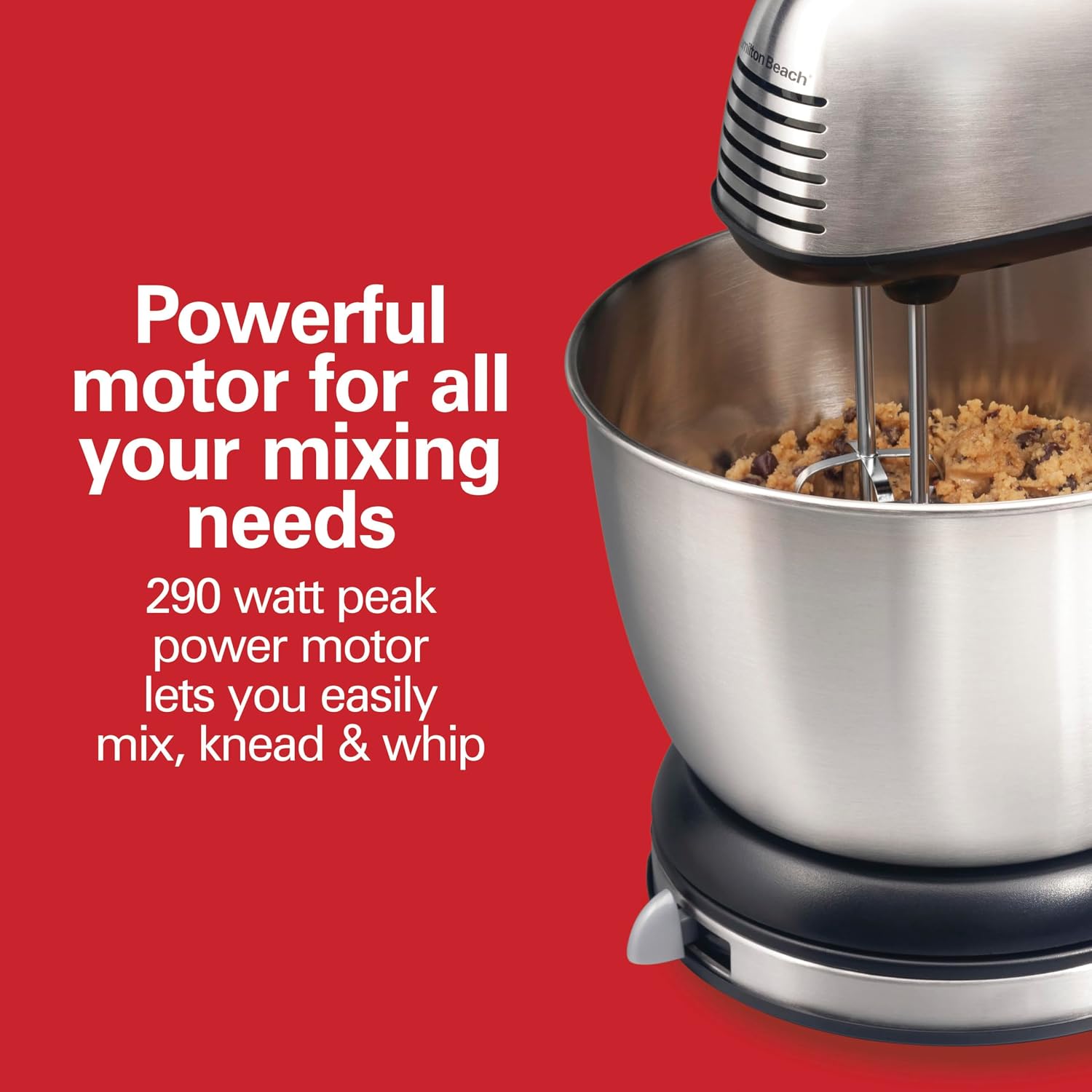
Torque is what truly matters for tough tasks like kneading bread dough or mixing stiff cookie batter. High torque means the mixer can maintain consistent speed under heavy loads without bogging down. Some manufacturers use AC motors with higher wattage for peak power, while others opt for DC motors with lower wattage but potentially higher sustained torque, especially when paired with efficient all-metal gearing. The Hamilton Beach Classic, 4 Quarts, 6, like many budget-friendly options, typically uses a lighter motor and gearing designed for lighter batters and occasional use. Don’t fall into the trap of buying based on wattage alone; consider the overall build and intended use.
Tilt-Head vs. Bowl-Lift Mechanism: Ergonomics and Strength
Two primary designs dominate the stand mixer market: tilt head stand mixer and bowl-lift.
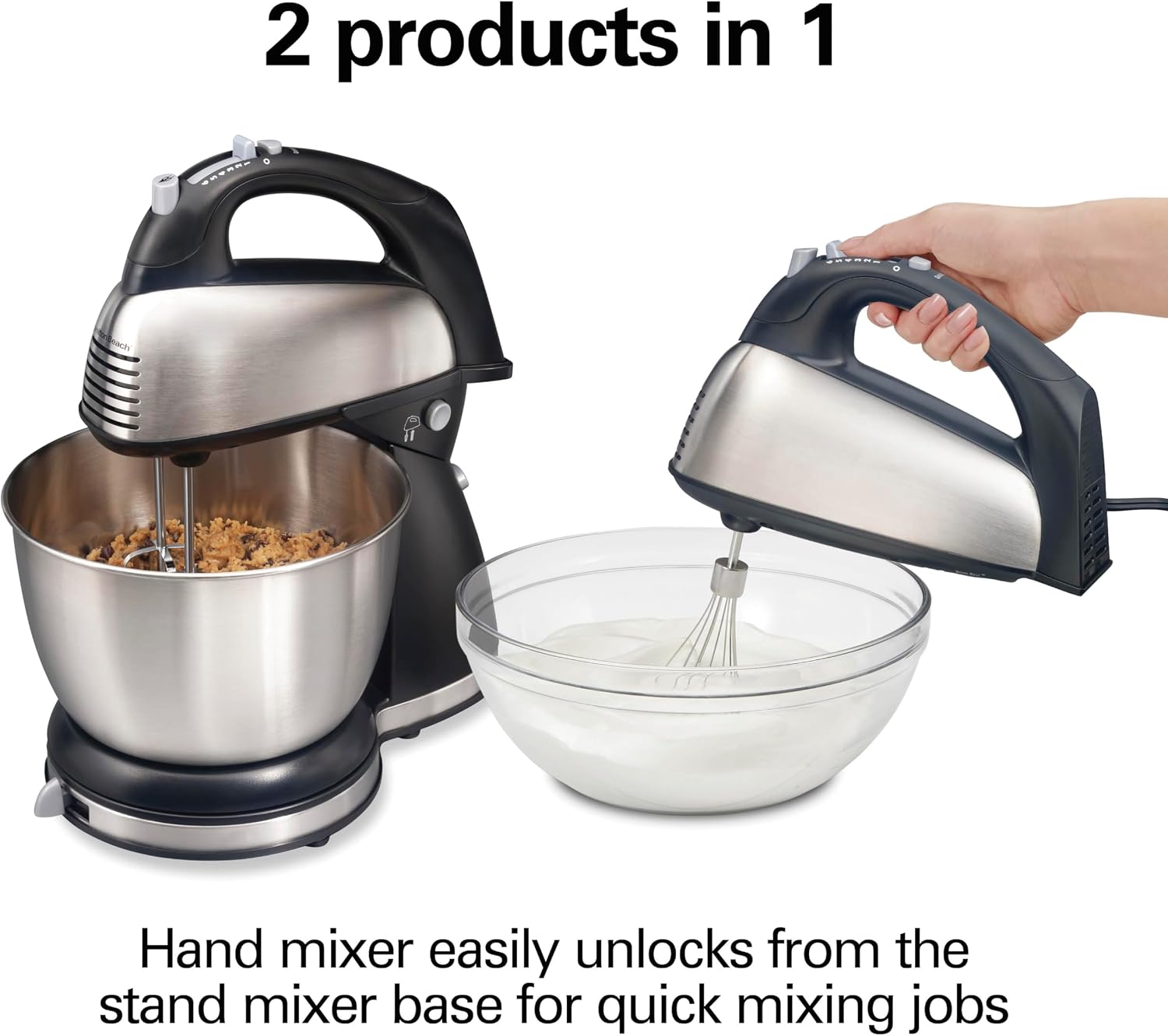
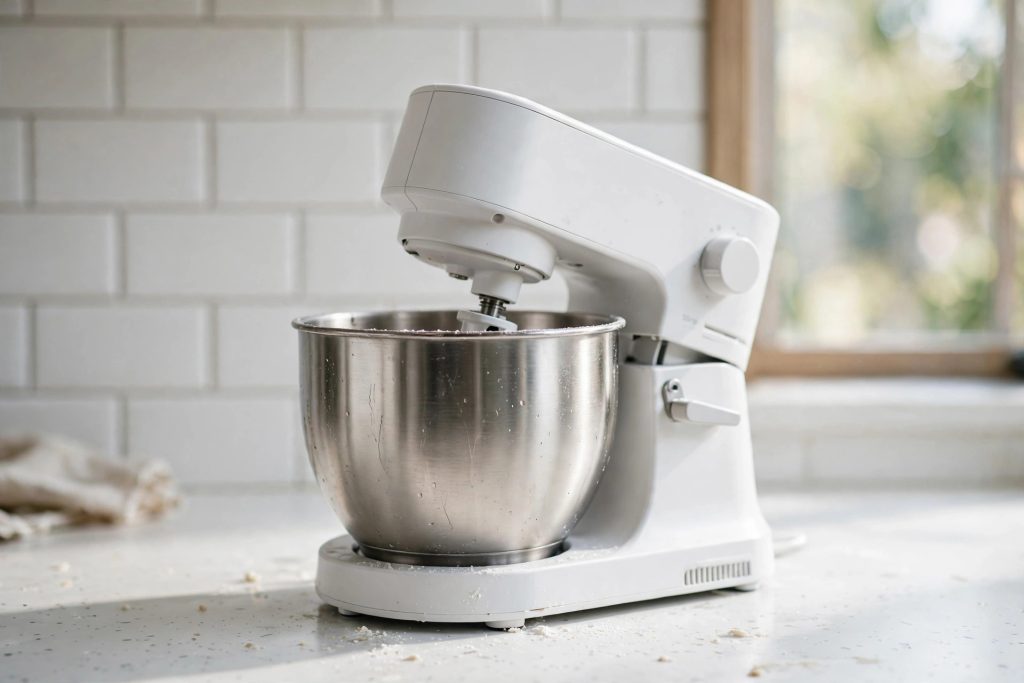
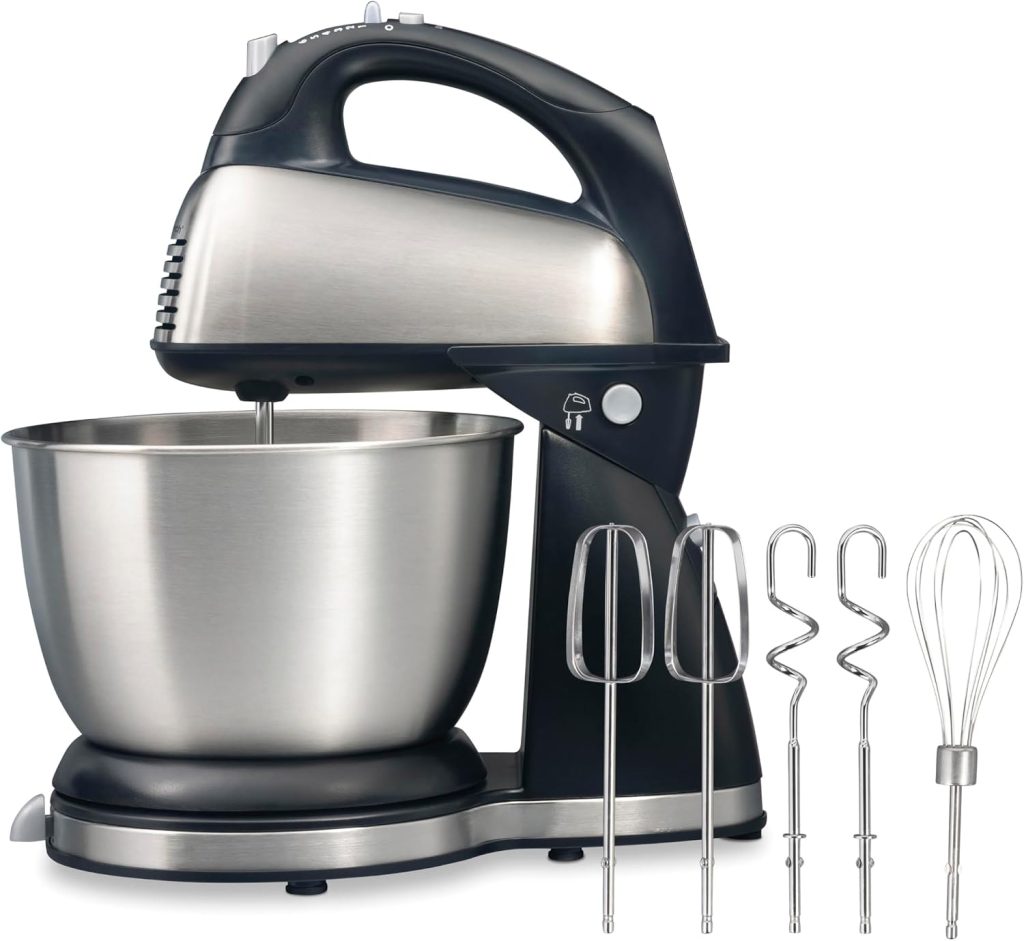
- Tilt-Head Stand Mixers: These allow the mixer head to tilt back, providing easy access to the bowl and attachments. They are generally more compact vertically, fitting better under overhead cabinets. The Hamilton Beach Classic Stand and Hand Mixer, 4 Quarts, 6 falls into this category, also offering the added convenience of detaching the head for hand mixing. This design is excellent for everyday use, adding ingredients, and scraping down the sides of the bowl. The trade-off? Their hinge mechanism can be less stable for extremely heavy, dense doughs over the long term compared to bowl-lift models.
- Bowl-Lift Stand Mixers: With this design, the bowl attaches to arms on the mixer base, and a lever raises it into position against the stationary mixer head. This robust mechanism is favored for its stability, making it the preferred choice for a professional stand mixer meant to handle large quantities of thick dough. However, bowl-lift models are taller, often requiring more vertical clearance on your counter or in storage. Adding ingredients can be trickier, sometimes necessitating a pouring shield to prevent splatter.
Attachment Hub Compatibility: Expanding Your Kitchen’s Capabilities
One of the significant advantages of a dedicated kitchen stand mixer is its versatility, largely thanks to its attachment hub. Premium brands, especially those known for their extensive range of accessories, often feature a universal attachment hub that accepts dozens of specialized tools – from pasta makers and meat grinders to spiralizers and ice cream makers.
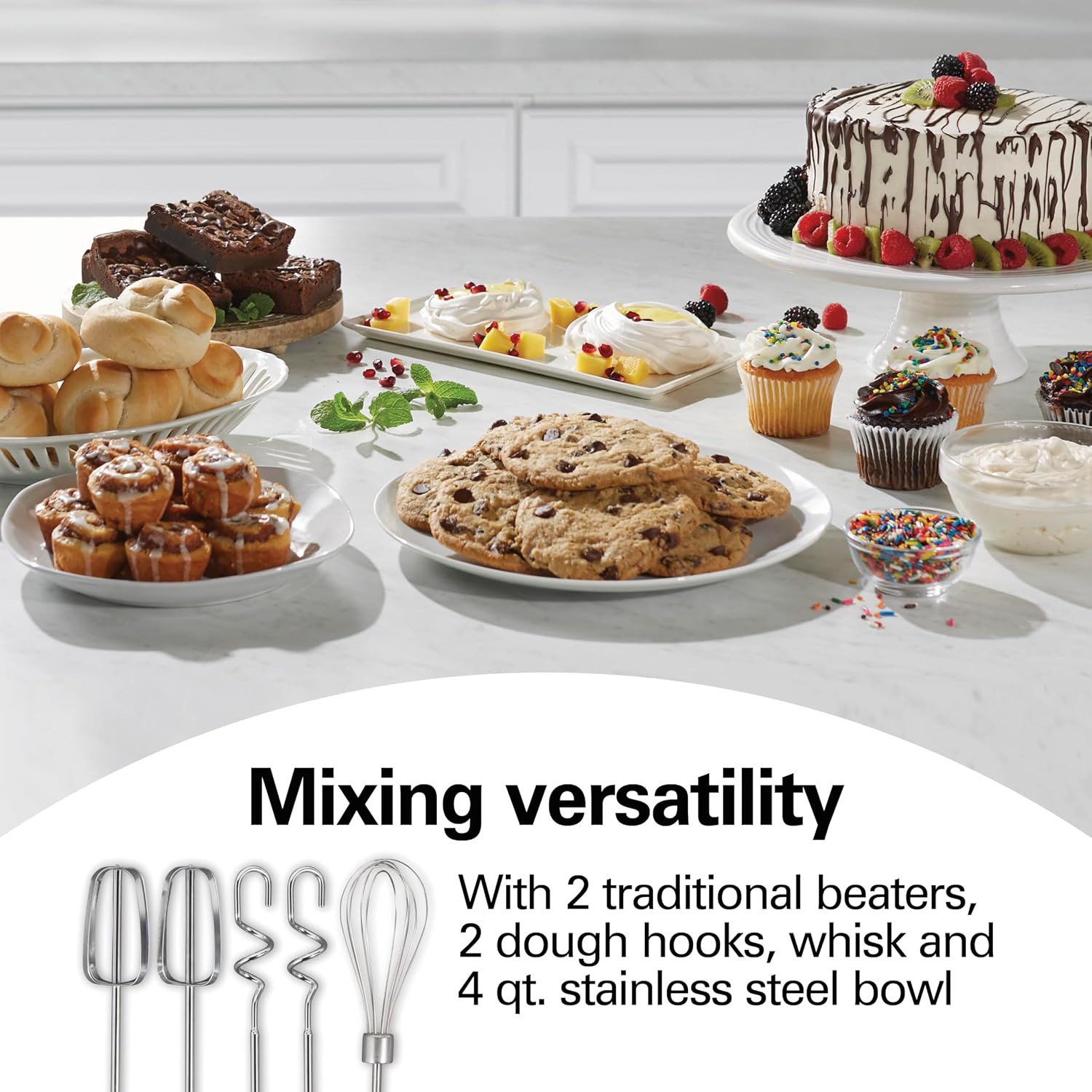
More budget-friendly options, like the Hamilton Beach Classic, 4 Quarts, 6, usually come with a standard set of beaters, a whisk, and dough hooks. They typically don’t offer the same range of proprietary hub attachments. If you dream of making homemade pasta or grinding your own sausage, check if your chosen mixer offers an attachment hub that can accommodate such specialized tools. Otherwise, you might find yourself needing to purchase separate, single-purpose appliances later.
Build Materials: Durability and Aesthetics
The materials used in a stand mixer affect both its lifespan and its aesthetic appeal.
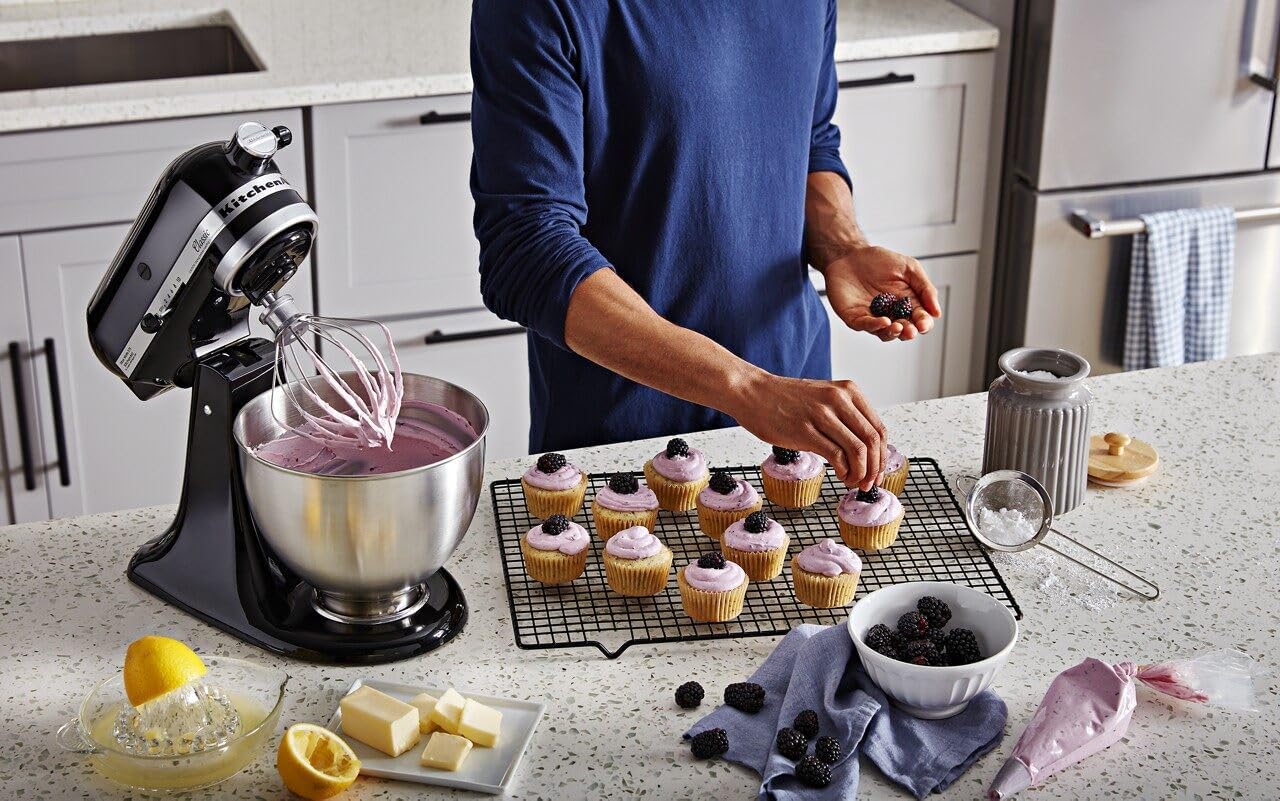
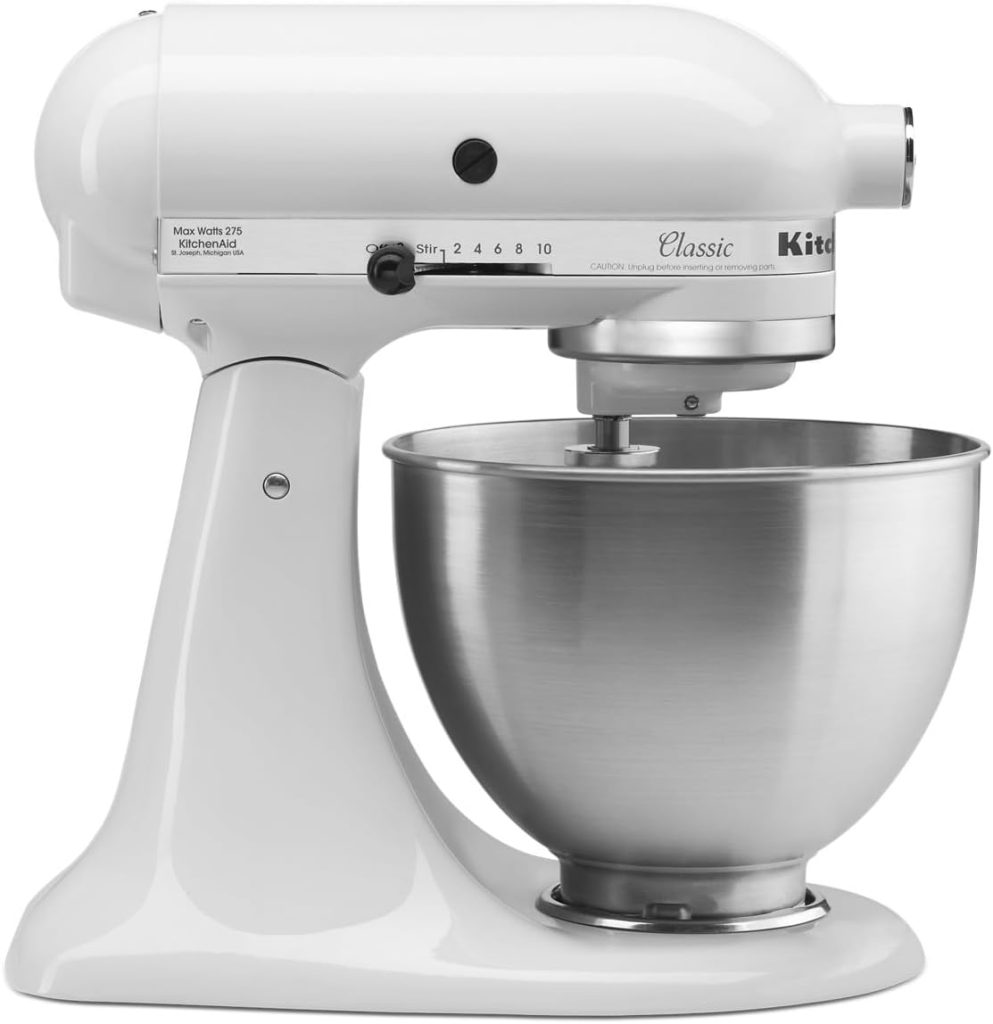
- Plastic vs. Metal Housing: Many entry-level and mid-range mixers, including some models from Hamilton Beach and Cosori, feature a durable plastic housing. This keeps the appliance lighter and more affordable. Premium mixers, such as the KitchenAid Artisan 5 quart series, almost exclusively use die-cast metal construction. Metal housing provides superior durability, reduces vibration, and adds significant weight, preventing the mixer from “walking” across the counter during heavy use.
- Gear Materials: Inside, metal gears are far more durable than plastic gears, especially when handling stiff doughs. While manufacturers don’t always advertise gear materials, a higher price point often correlates with more robust internal components. A stand mixer built with metal gears is simply built to last longer.
Counter Footprint and Storage: Real Estate Matters
A stand mixer is a countertop appliance that commands space. The Hamilton Beach Classic, 4 Quarts, 6, with its 4-quart capacity and tilt-head design, is relatively compact. This makes it an attractive option for smaller kitchens or those with limited storage.
Before you buy, measure your available counter space, especially the clearance under your cabinets. Consider where you’ll store it if it won’t live on the counter permanently. Heavier, larger machines, like a professional stand mixer, are often too heavy and cumbersome to move frequently, meaning they’ll likely become a permanent fixture. Don’t overlook the simple reality of physical space; it’s a common oversight.
How to Match a Mixer to Your Situation
Your ideal stand mixer isn’t just about features; it’s about how those features align with your lifestyle and baking habits. A weekly bread baker needs something different from someone making birthday cakes twice a year.
Baking Frequency: Occasional vs. Dedicated Bakers
- Occasional Bakers (a few times a year): If you bake for holidays, special occasions, or just dabble, an appliance like the Hamilton Beach Classic Stand and Hand Mixer, 4 Quarts, 6, is likely all you need. It handles light batters, cookie doughs, and whipped cream without overspending on features you won’t fully utilize. Its dual functionality means you don’t need a separate hand mixer.
- Regular Bakers (monthly to weekly): For those who enjoy baking regularly but aren’t producing artisan loaves daily, a robust mid-range kitchen stand mixer from brands like Cuisinart or a standard KitchenAid Artisan series is a solid choice. These offer better durability and motor performance than budget models, often with a 5-quart capacity that’s versatile for most recipes. You’ll appreciate the stronger motor for cookie doughs and the occasional bread.
- Dedicated Bakers (weekly to daily): If your kitchen is a true bakery, churning out multiple loaves of bread, large batches of pastries, or specialized confections, you’ll want a heavy-duty, bowl-lift professional stand mixer. Models from KitchenAid (Pro Line) or Bosch are built to withstand constant use and handle very stiff doughs without breaking a sweat. This is where the investment truly pays off.
Budget-Conscious Bakers: Value vs. Premium
The debate over “is KitchenAid mixer overpriced?” or “is KitchenAid stand mixer worth it?” is perpetual. Here’s how to frame it:
- Entry-Level Budget (e.g., Hamilton Beach, Cosori): These mixers offer an accessible entry point. The Hamilton Beach Classic, 4 Quarts, 6, for instance, provides basic stand mixer functionality and the added benefit of a detachable hand mixer. It’s an excellent budget alternative to KitchenAid mixer for light tasks and occasional use. Expect more plastic components, less motor torque for heavy dough, and fewer attachment options. They don’t typically last as long as premium models but offer significant value for the price.
- Mid-Range (e.g., Cuisinart, entry-level KitchenAid): These strike a balance between price and performance. You get more durable construction, better motors, and often the standard attachment hub for future expansion. This tier is a good fit for regular home bakers who want reliability without the top-tier price.
- Premium (e.g., KitchenAid Artisan/Professional, Bosch): These are long-term investments. They feature robust all-metal construction, powerful high-torque motors, and often come with extended warranties. While the upfront cost is higher, their durability and versatility often mean they’ll be a kitchen workhorse for decades. The perception of whether a KitchenAid stand mixer worth it depends heavily on your baking frequency and commitment. For someone baking weekly and seeking a 10+ year appliance, the value proposition is strong due to build quality, motor durability, and strong resale value. For occasional bakers, a budget alternative may suit better.
Kitchen Size and Storage: A Practical Consideration
Space is a premium in many kitchens. A compact tilt head stand mixer like the Hamilton Beach Classic, 4 Quarts, 6, is a practical choice for smaller counters or limited cabinet space. Its lighter weight also makes it easier to pull out and put away. Larger, heavier bowl-lift machines are more cumbersome to move, and they’ll likely require a dedicated spot. If you’re buying a stand mixer gift for baker with a tiny galley kitchen, a compact model might be more appreciated than a powerhouse that consumes all their counter space.
Mixer Tiers and Types
Here’s a quick comparison of common stand mixer types you’ll encounter, including where the Hamilton Beach Classic Stand and Hand Mixer, 4 Quarts, 6 fits.
| Type | Best For | Price Tier | Key Feature | Watch-Out |
|---|---|---|---|---|
| Budget 2-in-1 | Occasional bakers, light batters, small spaces | Entry-level budget | Detachable hand mixer, compact | Limited power for heavy doughs, plastic gears |
| Standard Tilt-Head | Regular home bakers, cookies, cakes, light bread | Mid-range | Good versatility, easy access | Can struggle with large, dense doughs over time |
| Heavy-Duty Bowl-Lift | Frequent bread bakers, large batches | Premium | Robust stability, powerful motor | Tall footprint, higher price, less access to bowl |
- Budget 2-in-1 (e.g., Hamilton Beach Classic Stand and Hand Mixer, 4 Quarts, 6): These models shine for their versatility and affordability. You get two appliances in one, saving money and storage space. However, their motors and overall build are generally not designed for the rigors of heavy dough or daily use.
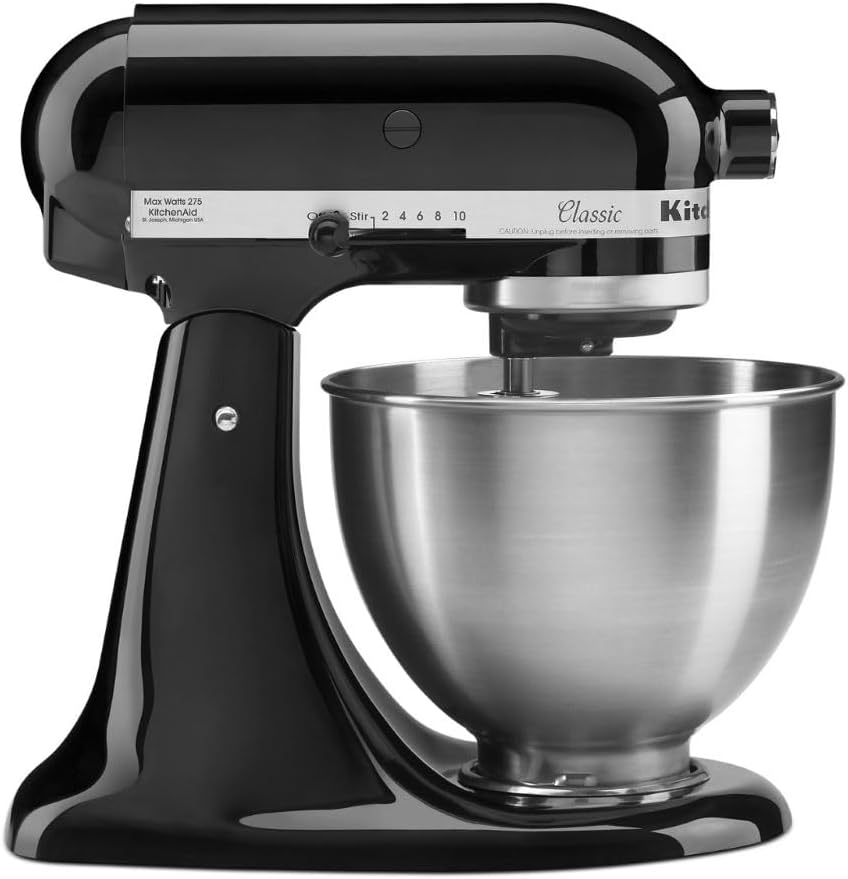
- Standard Tilt-Head (e.g., KitchenAid Artisan 5 quart, Cuisinart): This tier offers a significant step up in power and durability from budget models, making them a kitchen staple for many. They handle a wider range of recipes comfortably, but extreme loads might still be a challenge. The KitchenAid Artisan 5 quart is a classic example of this type.
- Heavy-Duty Bowl-Lift (e.g., KitchenAid Pro Line, Bosch Universal Plus): These are the workhorses built for serious bakers. Their design prioritizes stability and raw power, making them ideal for large batches of stiff dough. They come with a higher price tag and demand more counter space but promise decades of reliable service.
Decision Tree: Finding Your Mixer Match
Stuck between options? Use this simple guide to narrow down your choices for a stand mixer for baking.
- Do you bake less than 4 times a month, mostly light batters and cookies?
- YES: Consider a Budget 2-in-1. The Hamilton Beach Classic Stand and Hand Mixer, 4 Quarts, 6, is an excellent choice for its value and dual functionality. It’s a smart stand mixer for beginner bakers.
- NO: Move to the next question.
- Do you bake 4-8 times a month, including various cookies, cakes, and occasional lighter bread doughs?
- YES: A Standard Tilt-Head mixer is your sweet spot. A stand mixer 5 quart model like the KitchenAid Artisan 5 quart offers the balance of power, features, and durability you need.
- NO: Move to the next question.
- Do you bake more than 8 times a month, frequently making multiple loaves of heavy bread, large batches, or specialty doughs?
- YES: Invest in a Heavy-Duty Bowl-Lift. You’ll appreciate the robust motor and stability for these demanding tasks, ensuring longevity and consistent performance. This is where a professional stand mixer truly shines.
Common Mistakes Buyers Make
Even with careful research, it’s easy to make missteps when choosing a stand mixer. As a consultant, I’ve seen these errors repeatedly.
- Buying Solely Based on Wattage: As discussed, wattage is only one piece of the puzzle. A 500W budget mixer might perform worse on heavy dough than a 325W premium mixer with superior gearing and a more efficient motor. Always look at the overall construction and what real-world users say about its performance on thick batters, not just the number on the box.
- Underestimating Counter or Storage Space: A stand mixer can be a bulky appliance. Many people purchase a large, powerful machine only to find it doesn’t fit under their cabinets or is too heavy to constantly move from a pantry. Always measure your available space, both on the counter and in storage, before committing.
- Overbuying Capacity for Occasional Baking: A large 6-quart mixer can be overkill for someone who only bakes a few times a year. Running very small batches in an oversized bowl often leads to ingredients getting stuck on the bottom or sides, requiring frequent scraping. A smaller 4-quart mixer like the Hamilton Beach Classic Stand and Hand Mixer, 4 Quarts, 6, can be more efficient and practical for single recipes.
- Ignoring Attachment Hub Compatibility: If you have aspirations for specialized tasks like making pasta or grinding meat, ensure your chosen mixer has a compatible attachment hub before you buy accessories. Not all mixers offer the same versatility, and some budget models lack an attachment hub altogether, limiting future expansion.
Why/How/What
Why should I invest in a stand mixer, even a basic one?
Investing in a stand mixer frees your hands from tedious mixing and kneading, allowing you to multitask in the kitchen. Even a basic model like the Hamilton Beach Classic, 4 Quarts, 6, significantly reduces effort for tasks like creaming butter and sugar, whipping egg whites, or mixing cake batters consistently. This convenience not only saves time but also often results in better baked goods due to more thorough and even mixing.
How does the Hamilton Beach Classic compare on dough?
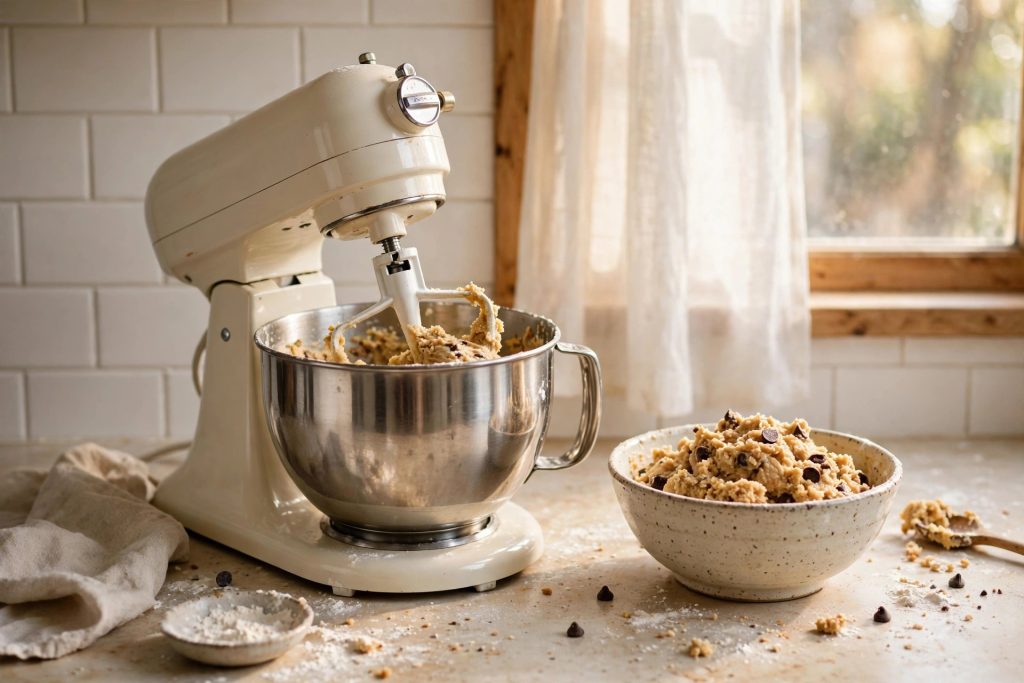
The Hamilton Beach Classic Stand and Hand Mixer, 4 Quarts, 6, with its 4-quart capacity and multi-speed settings, can handle lighter doughs for things like pizza crust or softer dinner rolls reasonably well. However, it’s not designed for continuous kneading of dense, stiff bread doughs. For those tasks, you’d likely experience strain on the motor and less effective kneading compared to a dedicated professional stand mixer with a more powerful, high-torque motor and robust gearing.
What attachments are essential for a beginner?
For a beginner with a stand mixer for baking, the three core attachments are the flat beater, wire whisk, and dough hooks. The flat beater is your workhorse for cookie dough, cake batters, and general mixing. The wire whisk is perfect for whipping cream, meringue, and light, airy mixtures. Dough hooks are indispensable for kneading yeast doughs. The Hamilton Beach Classic typically includes these foundational attachments, providing everything a novice baker needs to start.
FAQ
Is the KitchenAid stand mixer worth it, or is it overpriced?
Whether a KitchenAid stand mixer worth it really depends on your baking habits and priorities. Advocates point to their legendary durability, powerful motors, all-metal construction, extensive attachment ecosystem, and strong resale value, arguing these justify the premium price. Critics might say that for occasional bakers, the cost is too high for unused features, and a reliable budget alternative to KitchenAid mixer serves just as well. For those who bake frequently and want an appliance that lasts decades, the consensus leans towards “worth it.”
What’s the real difference between a tilt head stand mixer and a bowl-lift design?
A tilt head stand mixer (like the Hamilton Beach Classic Stand and Hand Mixer, 4 Quarts, 6) offers easier access to the bowl and beaters by tilting the motor head back, making it convenient for adding ingredients or scraping. A bowl-lift design keeps the head stationary and raises the bowl into position; this mechanism is generally more stable and powerful for handling very heavy or large batches of dough, but it requires more vertical clearance.
How much wattage does a stand mixer truly need?
A stand mixer’s wattage isn’t the sole indicator of power; torque and gear quality are equally important. For light batters and occasional use, 250-300 watts can be sufficient. For regular home baking of varied doughs, 325-500 watts with efficient gearing is a good range. Professional stand mixer models for heavy bread often start around 500 watts but pair it with robust, all-metal gears for sustained torque. Don’t be swayed by high wattage alone without considering the machine’s overall construction.
Can a 4-quart stand mixer handle bread dough?
A 4-quart stand mixer, such as the Hamilton Beach Classic, 4 Quarts, 6, can handle single batches of lighter bread doughs, like white sandwich bread or pizza dough. However, for larger quantities, denser whole wheat doughs, or consistent, heavy-duty kneading, it may struggle. The motor could overheat, or the machine might “walk” on the counter. For serious bread bakers, a larger capacity (5+ quarts) and a more powerful motor are advisable.
What are the main advantages of a Hamilton Beach stand mixer vs KitchenAid?
The primary advantages of a Hamilton Beach stand mixer vs KitchenAid are affordability and versatility. Models like the Hamilton Beach Classic Stand and Hand Mixer, 4 Quarts, 6, are significantly less expensive, making them an accessible entry point. Many also offer 2-in-1 functionality, serving as both a stand mixer and a detachable hand mixer, which is great for small spaces and occasional use. KitchenAid, conversely, offers superior build quality, motor durability, attachment ecosystem, and a wider range of capacities and power.
What should I consider for stand mixer color options?
When choosing best stand mixer color options, consider your kitchen’s existing decor and your personal style. Many brands, particularly KitchenAid with its vast palette for the KitchenAid Artisan 5 quart series, offer mixers in dozens of shades, from classic white and black to vibrant reds and blues, or even specialty finishes. A mixer can be a functional appliance or a stylish statement piece. If you’re buying a stand mixer gift for baker, think about their kitchen’s aesthetic.
Are there good budget alternatives to KitchenAid mixer for beginner bakers?
Absolutely. For stand mixer for beginner bakers or those on a tighter budget, brands like Hamilton Beach, Cuisinart (entry-level), and Cosori offer excellent alternatives. The Hamilton Beach Classic Stand and Hand Mixer, 4 Quarts, 6, in particular, stands out for its affordability and dual-purpose design. These mixers provide sufficient power for most beginner baking tasks without the significant investment of a premium brand, making them a smart starting point.
Final Recommendation
For the occasional baker, apartment dweller, or anyone cautiously dipping their toes into the world of hands-free mixing, the Hamilton Beach Classic Stand and Hand Mixer, 4 Quarts, 6, represents a truly practical and budget-friendly choice. Its 4-quart capacity handles everyday recipes, and the ability to detach it for hand mixing adds remarkable flexibility. It’s an ideal stand mixer for beginner bakers or as a thoughtful stand mixer gift for baker who values versatility and affordability.
However, if your baking passion leads you to weekly bread baking, large batches, or a desire for a truly enduring kitchen appliance that can tackle anything, then investing in a more robust kitchen stand mixer like a KitchenAid Artisan 5 quart or a heavy-duty bowl-lift model is recommended. These machines offer the durability, power, and attachment expandability to become a cornerstone of your kitchen for decades to come, proving their worth over countless batches.
#Hamilton #Beach #Classic #Stand #Hand #Mixer #Quarts