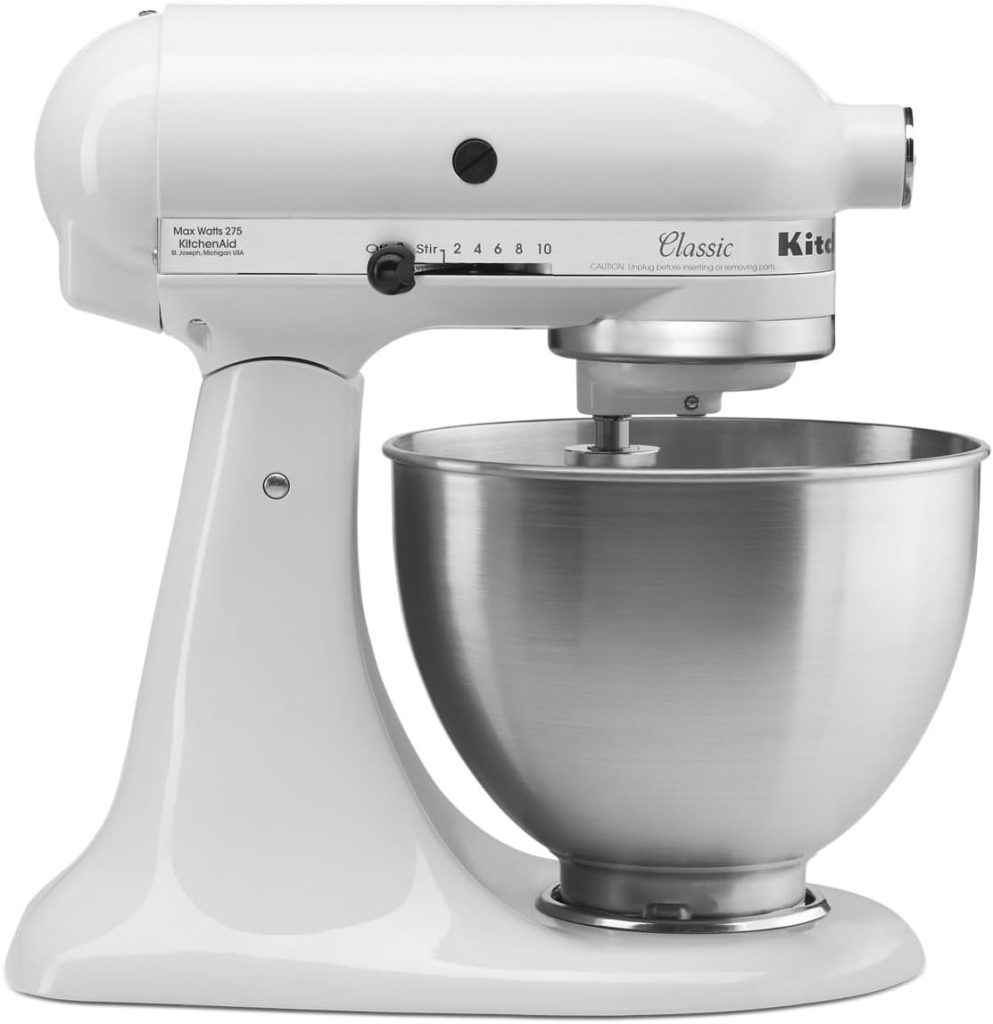
I returned a stand mixer because of the bowl shape. Not the motor, not the price, the shape. It was a tilt-head with a narrow, deep bowl, and every time I made bread dough, the dough climbed the hook, reached the top of the bowl, and wrapped itself around the mixer’s neck like it was trying to escape. I’d stop the machine, peel the dough off, push it down, restart. Three times per batch. The mixer worked. The geometry didn’t. I packed it up, printed the label, and bought the Bosch Universal Plus, because the Bosch has the weird bowl — the wide, shallow one with the center column — and weird was exactly what I needed.
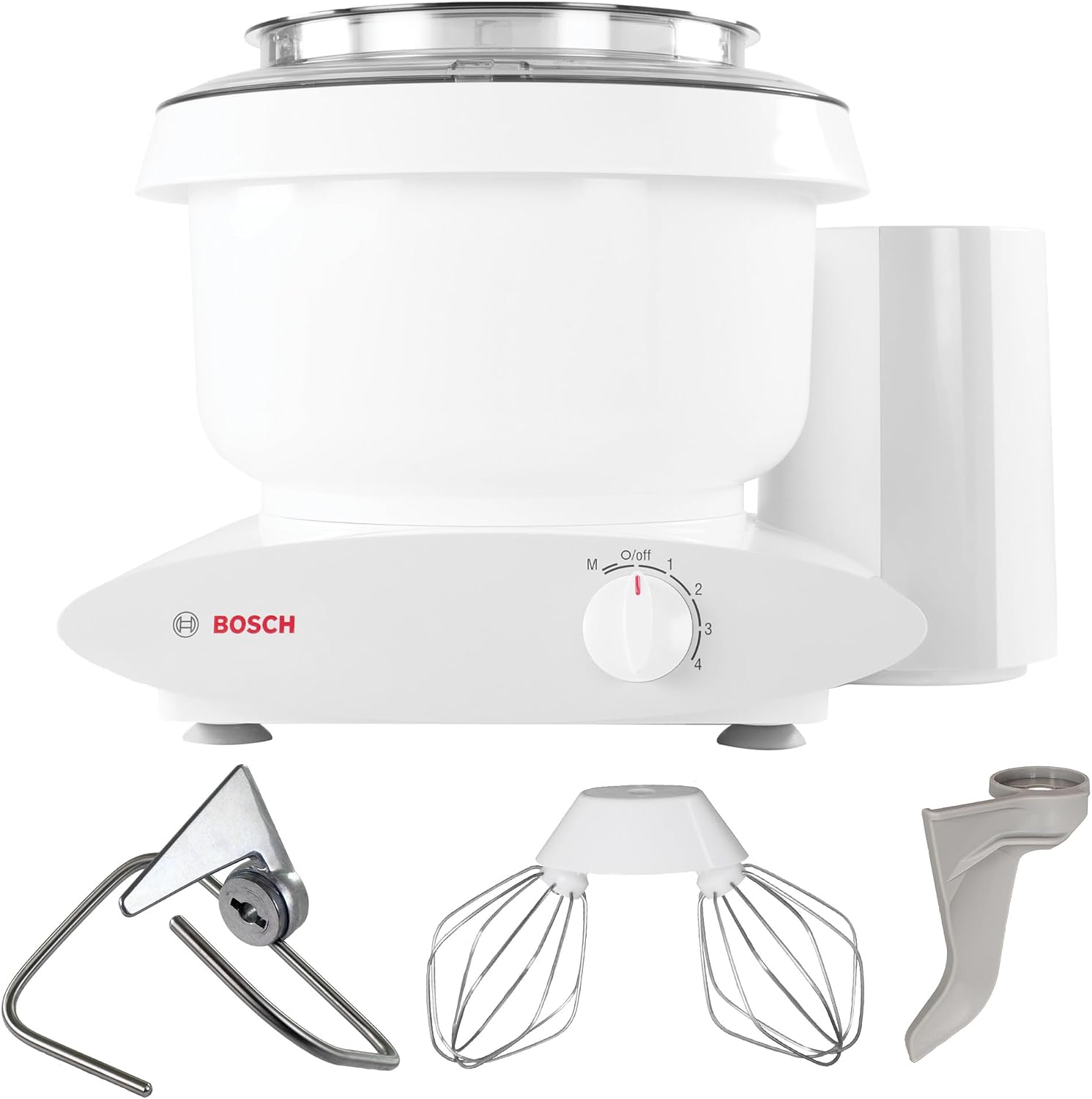
The Universal Plus looks like nothing else. The bowl is wide and low, with a central drive shaft rising from the bottom, and the dough hook wraps around that column instead of hanging from above. This inverts the entire physics of mixing: instead of the hook reaching down into the dough, the dough sits around the mechanism. Nothing climbs. Nothing wraps. The dough stays in the bowl, where dough belongs, and the mixer does its work without the intervention dance. The first time I made bread dough in it, I stood there waiting for the climb. It never came. I didn’t know what to do with my hands.
Just bread.
6.5 quarts, 500 watts, belt-driven. The belt drive is the thing the enthusiasts talk about, and they’re right to: instead of gears grinding, a belt transfers the motor’s power, which means less noise, less heat, and a drive system that slips instead of stripping if you overload it. Slipping instead of stripping — that’s the design philosophy in a phrase. A gear mixer fights the overload and breaks. The Bosch yields and survives. I’ve never triggered the slip, because I don’t push it past its limits, but knowing the failure mode is “slip” rather than “strip” changes how you feel about loading it up. It’s the difference between a machine that trusts you and a machine that doesn’t.
The 500 watts here is honest in a way the VEVOR’s 500 watts isn’t, and I want to explain why, because wattage without context is the trap I keep falling into. The Bosch’s 500 watts drives a belt system with high torque at low speed — the motor is designed for sustained load, not peak numbers. It handles a kilo of bread dough without the housing getting hot, without the sound changing, without drama. Same wattage number as the VEVOR, completely different behavior, because the number was never the thing. The drivetrain was the thing. I’ve now been burned by wattage often enough that I read it the way I read “all natural” on food packaging: technically true, practically meaningless, look at the ingredients instead.
Actually, that’s not fair — the learning curve isn’t a flaw, it’s the price of the weird bowl. The weird bowl is the whole point.
What I didn’t expect: the learning curve. The Universal Plus doesn’t work like a normal mixer, and your normal-mixer habits will fight you for the first month. The bowl loads differently — ingredients go around the column, not under a hook. The splash guard (it comes with one, a plastic ring that sits on the bowl) feels fiddly until you learn the twist. The speed dial has a momentary pulse position that I kept overshooting. Nothing is broken. Everything is just… different. Different enough that the first three batches felt like I was using someone else’s kitchen. By batch five, it was mine. But if you’re the kind of person who wants a mixer to work the way mixers have always worked, this isn’t that. This is the other way.
The attachments deserve a mention because Bosch’s attachment system is the quiet standout of the category. The base unit drives a range of attachments — grain mill, meat grinder, pasta makers — that mount on the same center-column drive, and they’re actually good, not the decorative afterthoughts most brands ship. I own the grain mill. I mill flour for bread weekly. The mill is loud — genuinely, earplug-adjacent loud — but it produces real flour, fine and even, and the bread it makes tastes like the reason I got into this. The attachment ecosystem is the argument for the Bosch over a cheaper mixer: you’re not buying a mixer, you’re buying into a system. Systems cost more. Systems last longer.
No climb.
Category complaint time: the stand mixer market is split into two religions — the tilt-head faithful and the bowl-lift converts — and the Bosch is the heretic that both sides ignore. It doesn’t tilt, it doesn’t lift, it just… mixes, differently. The review ecosystem doesn’t know what to do with it, so it gets fewer reviews, less coverage, and a permanent underdog status despite being, by most objective measures, the best dough mixer for home use. The algorithm rewards the familiar. The familiar gets the reviews. The reviews drive the sales. The sales confirm the familiar. It’s a loop, and the Bosch sits outside it, quietly making better bread than the bestsellers.
Completely off-topic: I bought a sourdough starter from a famous bakery last year — dehydrated flakes, very official, came with a certificate — and killed it in three weeks. Neglected it. Forgot feedings. The starter, which had survived since 1847 or whatever the certificate claimed, died in my kitchen in 21 days. I felt like I’d failed history. I started a new one from scratch — flour, water, patience — and it’s thriving. The lesson isn’t about sourdough. The lesson is that provenance doesn’t survive neglect, and humble beginnings with consistent care beat famous origins with inconsistency. The Bosch is the scratch starter of mixers: unglamorous, consistent, alive.
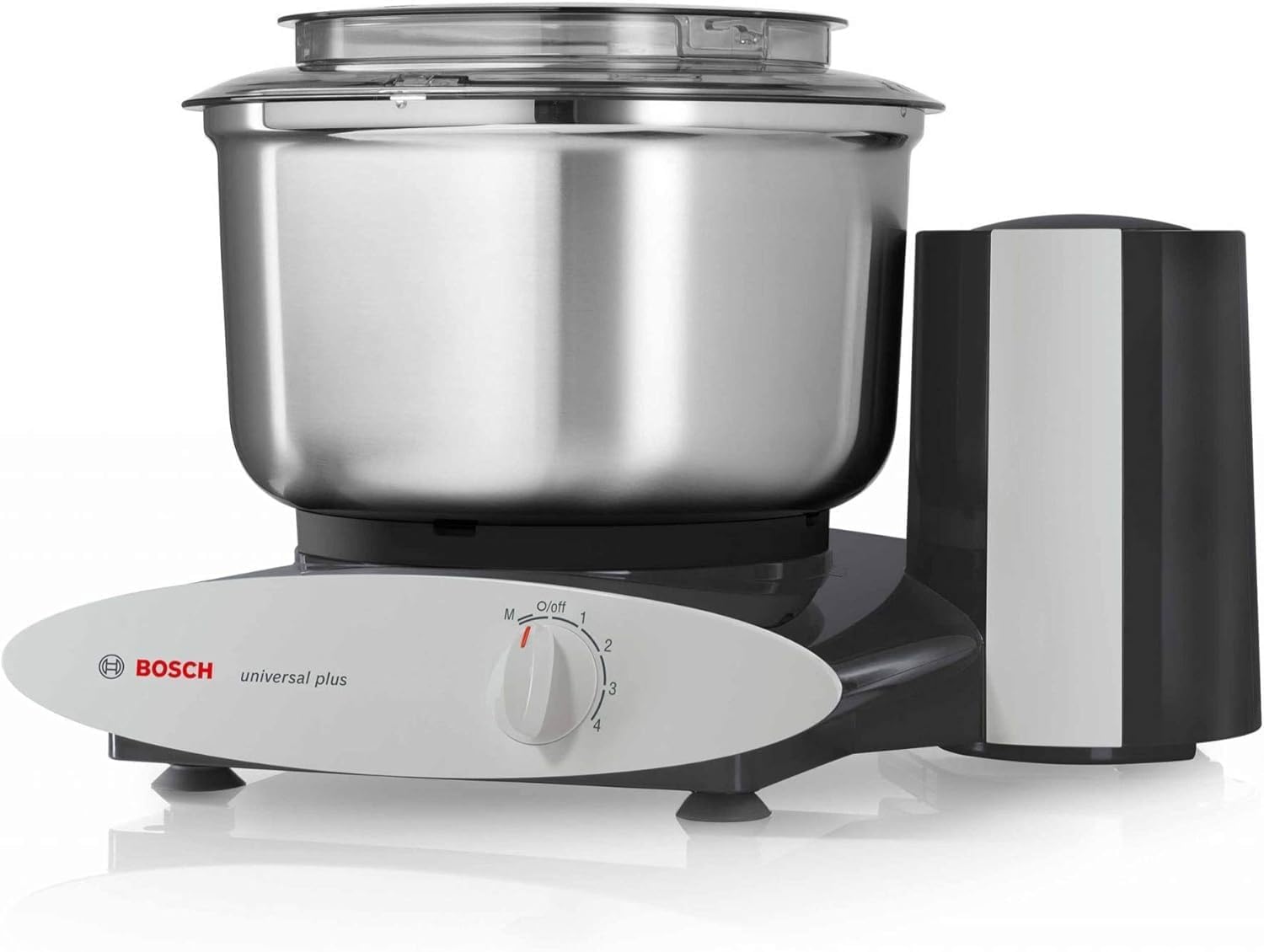
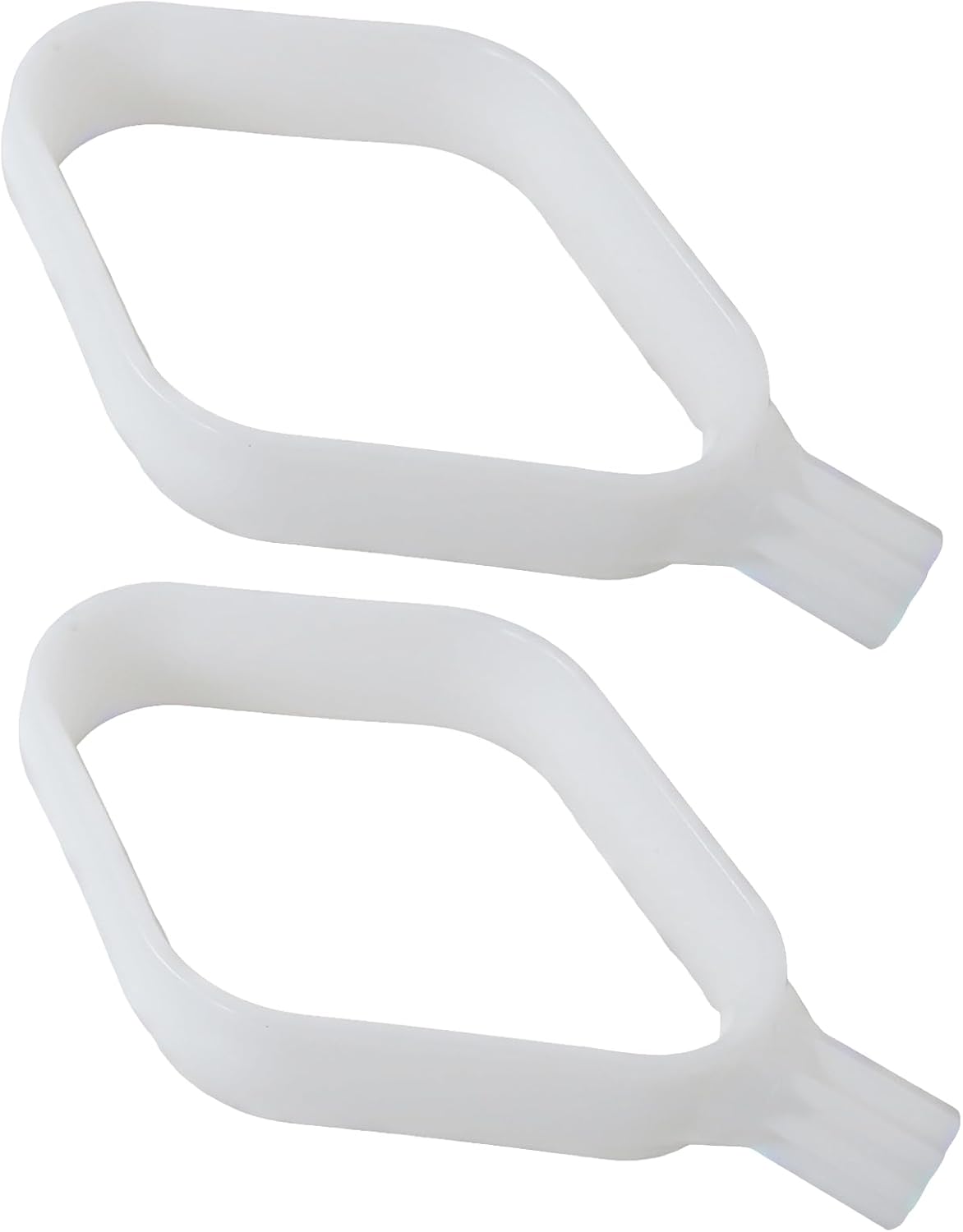
Two years in. The belt hasn’t slipped, the bowl hasn’t stained, the center column hasn’t wobbled. I’ve made — I don’t know, a hundred loaves? More? The mixer is the most-used appliance I own, and the least-discussed, because it just works. No drama. No climbing dough. No intervention dance. If you’re a bread person, this is the one. If you’re a cookie person, the KitchenAid Artisan is the more familiar pick, and the 7-quart bowl-lift is the choice if your batches are huge and your counter is strong.
I haven’t used the newer Bosch models — the ones with the digital controls — so I can’t judge whether the electronics improve on the dial. The dial works. The dial will work in twenty years. There’s something to be said for a control that can’t need a firmware update.
Made bread yesterday. Kilo of flour, the scratch starter, the grain mill for half of it. The dough stayed in the bowl. My hands stayed clean. The mixer hummed. Two years, and I still notice the absence of the climb — the thing that isn’t happening, the problem I no longer have. You don’t appreciate a solved problem. You just make bread.