
Choosing Your Next Professional Stand Mixer: A Guide to the KitchenAid 7 Quart Bowl-Lift and Beyond
Deciding on the right stand mixer for your kitchen is a significant investment, especially when considering a powerful, high-capacity machine. This comprehensive guide, crafted from my 15 years helping bakers equip their kitchens, will walk you through the nuances of selecting a stand mixer, focusing particularly on the capabilities and considerations of models like the KitchenAid 7 Quart Bowl-Lift Stand Mixer with Accessories. We’ll explore what makes these professional-grade appliances excel and how they compare to other options available in 2026. This guide evaluates the KitchenAid 7-Qt bowl-lift stand mixer and its accessories for serious home bakers.
Quick Answer Box
For serious home bakers or those regularly preparing large batches, the KitchenAid 7 Quart Bowl-Lift Stand Mixer represents a robust investment. Its powerful motor, stable bowl-lift mechanism, and generous capacity excel at handling dense doughs and large quantities, positioning it as a durable workhorse for frequent, demanding use. While a premium choice, its reliability and versatility often justify the cost for dedicated bakers.
KitchenAid 7-Qt: Investment Guide
When you’re ready to bring a new stand mixer into your home, moving beyond basic models means paying attention to several critical factors. Don’t let marketing hype sway you; understanding the core mechanics and build quality is paramount.
Capacity (in Quarts)
The capacity of a kitchen stand mixer, measured in quarts, directly dictates the volume of ingredients it can handle. A 7-quart capacity, like that found in the KitchenAid 7 Quart Bowl-Lift Stand Mixer, is substantial. This size is ideal for bakers who regularly prepare double batches of cookies, knead multiple loaves of bread dough, or whip large quantities of meringues for celebration cakes. For context, a typical stand mixer 5 quart (like the popular KitchenAid Artisan 5 quart series) usually manages about 9 dozen cookies or 4 loaves of bread. A 7-quart model easily surpasses this, tackling 14 dozen cookies or up to 8 loaves of dense rye bread without strain.
However, a larger capacity also means a larger footprint and potentially less efficient mixing of very small batches. Whipping a single egg white might prove challenging without scraping the bowl frequently. Always assess your typical batch size before committing to such a generous capacity.
Motor Wattage and Torque: Beyond the Numbers Game
Many buyers focus solely on KitchenAid mixer wattage comparison charts, believing higher watts always mean more power. That’s a common misconception. While wattage indicates how much electricity the motor consumes, torque represents the actual rotational force delivered to the mixing attachment. A motor with lower wattage but superior gearing can often outperform a higher-wattage motor with flimsy gears, especially when tackling heavy, sticky doughs.
A professional stand mixer prioritizes efficient power transfer, often utilizing direct-drive motors or robust gearing systems designed for consistent torque. This means the motor maintains speed and power even when laboring through stiff cookie dough or dense sourdough. Don’t be fooled by inflated wattage claims on budget alternatives; investigate how that power is delivered.
Tilt-Head vs. Bowl-Lift Mechanism
The choice between a stand mixer tilt head vs bowl lift mechanism is a fundamental one, impacting usability, stability, and typical use cases.
-
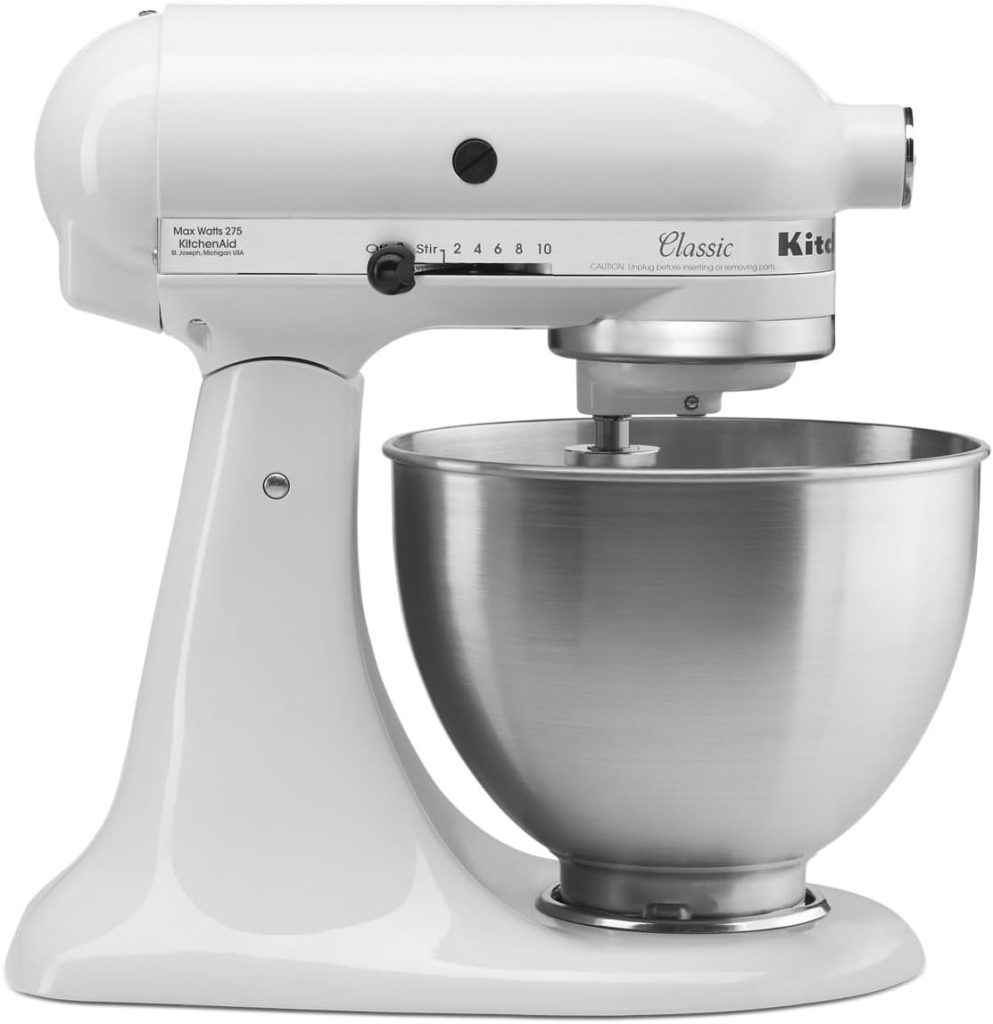
Tilt-Head Stand Mixers: These are often smaller, more aesthetically varied (consider the best stand mixer color options in the Artisan series), and allow the head to tilt back for easy access to the bowl and attachments. They’re typically found on 3.5 to 6-quart models, like the KitchenAid Artisan 5 quart. While convenient for adding ingredients or scraping the bowl, the tilting head can introduce a slight instability when kneading very stiff doughs, particularly with larger batches.
-
Bowl-Lift Stand Mixers: Exemplified by the KitchenAid 7 Quart Bowl-Lift Stand Mixer, these machines feature a stationary head. The bowl attaches to arms on either side and is then cranked up into position using a lever. This design offers unparalleled stability and strength, making it the mechanism of choice for professional stand mixer applications and handling large, heavy doughs. The trade-off? They often have a taller profile, requiring more vertical clearance under cabinets, and bowl access can be slightly less immediate than with a tilt-head model. You might need to detach the bowl to scrape thoroughly.
Attachment Hub Compatibility
One of the most compelling reasons to invest in a premium electric stand mixer, especially a KitchenAid, is the universal attachment hub. This front-mounted power hub allows you to transform your stand mixer for baking into a versatile kitchen appliance. From pasta makers and meat grinders to spiralizers and grain mills, the array of stand mixer with attachments is vast. Before purchasing, consider which accessories you might want in the future. Confirming compatibility ensures you’re buying into a system, not just a single-purpose machine. While many brands offer accessories, the KitchenAid ecosystem is arguably the most expansive and widely supported.
Build Materials and Durability
A stand mixer built to last often features an all-metal construction, inside and out. Cheaper alternatives might use plastic housings or internal nylon gears to cut costs. While these can work for occasional use, they tend to wear out faster, especially under the stress of heavy doughs. A robust, die-cast metal body provides stability, dampens vibrations, and signifies a machine designed for longevity. For a professional stand mixer like the KitchenAid 7-quart, you expect this level of craftsmanship, contributing to its potential decade-plus lifespan.
Counter Footprint and Storage
A powerful, high-capacity machine is rarely compact. The KitchenAid 7 Quart Bowl-Lift Stand Mixer has a considerable footprint and a taller stature due to its mechanism. Measure your available counter space, especially the clearance under overhead cabinets, before purchasing. Don’t forget to factor in storage for the bowl and any accessories. A large kitchen stand mixer that’s cumbersome to retrieve or store might end up gathering dust, negating its utility.
Matching a Stand Mixer to Your Baking Lifestyle
Choosing your stand mixer isn’t just about specs; it’s about aligning the machine with your baking habits and aspirations.
-
The Occasional Baker (A few times a year): If you only bake for holidays or special events, you likely don’t need the power and capacity of a 7-quart bowl-lift model. A reliable budget alternative to KitchenAid mixer or a compact 4.5-quart tilt-head might be a smarter choice, offering convenience without overspending on unused features. These can still handle basic cookie doughs and cake batters with ease.

-
The Regular Home Baker (Weekly or bi-weekly): For those who enjoy baking as a regular hobby, churning out cookies, cakes, and occasional breads, a stand mixer 5 quart tilt-head model (like a KitchenAid Artisan 5 quart) hits a sweet spot. It provides ample power for most tasks, a good balance of features, and a wide range of colors. You’ll appreciate the durability without needing the ultimate heavy-duty capacity.
-
The Dedicated Bread Baker / Large-Batch Enthusiast (Multiple times a week): This is where a professional stand mixer like the KitchenAid 7 Quart Bowl-Lift Stand Mixer truly shines. If you’re regularly kneading artisan breads, making large batches for potlucks, or running a small home-based baking business, its raw power, stability, and generous capacity will be invaluable. You’ll minimize motor strain and ensure consistent results every time. This machine is built for endurance.
-
The Aspiring Culinary Creative (Experimenting with attachments): If you envision making homemade pasta, grinding your own meat, or milling grains, then the robust attachment ecosystem, especially strong in KitchenAid’s premium lines, is a key consideration. A powerful motor ensures these attachments operate efficiently.
Stand Mixer Tiers: Comparing Value and Performance
Navigating the market reveals a spectrum of stand mixer options, each designed for different users and budgets. Understanding these tiers helps you make an informed decision.
| Type | Best For | Price Tier | Key Feature | Watch-Out |
|---|---|---|---|---|
| Entry-Level Mixers | Occasional bakers, light batters, basic tasks | Budget-conscious | Simplicity, compact design | Less durable, struggles with heavy dough |
| Mid-Range Workhorses | Regular home bakers, varied recipes, medium batches | Mid-tier | Balance of power, capacity, and versatility | Can strain with very large or dense recipes |
| Premium/Professional | Dedicated bakers, large batches, heavy doughs | Investment-grade | Robust build, high torque, large capacity | Significant counter footprint, higher upfront cost |
| Specialized Alternatives | Unique baking needs, specific dough types | Varies widely | Distinct design, focused performance | Limited attachment ecosystem, niche appeal |
-
Entry-Level Mixers: Brands like Hamilton Beach stand mixer vs KitchenAid offer significant price differences, with Hamilton Beach often leading in the entry-level space. These machines are stand mixer for beginner bakers, excellent for occasional use, simple cakes, and light batters. Their motors typically have lower torque, and construction often involves more plastic components, meaning they might struggle or overheat with dense bread doughs.
-
Mid-Range Workhorses: This category includes models like the KitchenAid Artisan 5 quart tilt-head series and many Cuisinart models. They offer a substantial step up in durability and power compared to entry-level options. These mixers are versatile, capable of handling weekly baking projects, from cookie dough to most standard bread recipes. They represent a solid investment for the average active home baker.
-
Premium/Professional Mixers: This tier is exemplified by the KitchenAid 7 Quart Bowl-Lift Stand Mixer. These are built to last and to perform under demanding conditions. With powerful motors, all-metal gearing, and the stable bowl-lift design, they excel at volume and heavy-duty tasks. They are a significant upfront investment but offer superior longevity and performance for frequent, serious bakers.
-
Specialized Alternatives: Brands like Bosch offer mixers with different planetary action and bowl designs (often wider and shorter), which some bakers find superior for large bread batches. Cosori also offers increasingly popular options. These can be professional stand mixer alternatives, but they often have their own unique attachment systems, which might not be as universally compatible as KitchenAid’s.
Is the KitchenAid Stand Mixer Worth It? Navigating the Price Debate
The question, “is KitchenAid stand mixer worth it?” or “is KitchenAid mixer overpriced?” is one I’ve heard countless times from clients. There’s a genuine debate, with strong arguments on both sides.
On one hand, the premium pricing of a KitchenAid 7 Quart Bowl-Lift Stand Mixer is backed by its reputation for durability, robust all-metal construction, and decades of proven performance. Many owners report their machines lasting 10, 20, or even 30 years with proper care. The extensive ecosystem of stand mixer with attachments adds immense versatility, effectively replacing many single-purpose appliances. Furthermore, their resale value tends to be strong. For someone who bakes weekly, kneads bread often, or operates a small cottage food business, the long-term reliability and consistent performance often justify the initial investment. It truly becomes a foundational kitchen appliance.
However, critics argue that the price premium can be steep, especially when budget alternative to KitchenAid mixer options are readily available from brands like Cuisinart, Hamilton Beach, or Cosori. These alternatives, while perhaps not matching KitchenAid’s legendary longevity or the breadth of its attachment hub, can perform basic and even intermediate baking tasks admirably for a lower cost. For the occasional baker or someone testing the waters of baking, a less expensive machine might be a more sensible entry point. Some also point to specific models from other brands that, on paper, boast higher wattage for less money, raising questions about KitchenAid’s comparative value.
Ultimately, the verdict depends on your individual baking frequency and dedication. If you bake regularly and view your stand mixer as a long-term kitchen partner, demanding consistent performance for heavy-duty tasks, the KitchenAid 7 Quart Bowl-Lift Stand Mixer offers compelling value through its durability, power, and versatility. For those who bake less often or are just starting out, exploring quality mid-range or budget-friendly options can still lead to satisfying results without the significant upfront expenditure. Consider it an investment in your culinary passion.
Common Stand Mixer Mistakes to Avoid
Buying a stand mixer can be exciting, but some common pitfalls can lead to buyer’s remorse.
- Buying Based on Wattage Alone: As discussed, high wattage numbers don’t always equate to usable power. Focus on motor type (DC motors often provide better torque at lower watts) and gearing quality. A professional stand mixer prioritizes efficient power delivery.
- Underestimating Counter and Storage Space: A KitchenAid 7 Quart Bowl-Lift Stand Mixer is a substantial piece of equipment. Measure your cabinet clearance and counter depth. A mixer too large to live on the counter might become an inconvenient burden.
- Overbuying Capacity for Occasional Bakers: If you only bake small batches or a few times a year, a 7-quart capacity might be overkill. It can be less efficient for small tasks and costs more upfront. A stand mixer for beginner bakers typically needs far less capacity.
- Ignoring Attachment Hub Compatibility: If you plan on expanding your mixer’s functionality, ensure the model you choose has a compatible attachment hub and a robust range of accessories. Not all brands offer the same versatility.
- Choosing Style Over Substance (or vice-versa): While best stand mixer color options are appealing, prioritize motor strength, capacity, and mechanism over aesthetics if you’re a serious baker. Conversely, don’t sacrifice a more convenient tilt-head design for a bowl-lift if you truly only bake light batters.
Why Consider a 7-Quart Bowl-Lift Stand Mixer?
You should consider a 7-quart bowl-lift electric stand mixer if you frequently bake large quantities, particularly heavy doughs like sourdough or stiff cookie batches. Its robust construction and stable mechanism are designed to handle demanding tasks without overheating or rocking. This size is a workhorse, allowing you to scale up recipes efficiently and confidently, minimizing the need for multiple batches. It truly shines for dedicated home bakers or those running small-scale operations.

How to Choose Between Tilt-Head and Bowl-Lift?
The choice between stand mixer tilt head vs bowl lift hinges on your primary use. Opt for a tilt-head if counter height is an issue, you prefer easier access for scraping and adding ingredients, and primarily bake cakes, cookies, or lighter doughs in moderate quantities. Choose a bowl-lift design if stability, power for dense doughs, and high capacity are your top priorities, and you have ample vertical clearance. Bowl-lifts are built for heavy-duty, consistent performance under load.
What Makes a Stand Mixer “Professional-Grade”?
A “professional-grade” stand mixer is characterized by its all-metal construction (including internal gears), a powerful motor designed for high torque rather than just high wattage, a stable mechanism (often bowl-lift), and a generous capacity. These machines are engineered for longevity and consistent performance under frequent, heavy-duty use, making them a significant investment. They are built to withstand the rigors of demanding baking tasks over many years.
Keep reading: KitchenAid Artisan 5-Qt Tilt-Head Stand Mixer: Tested & Reviewed · Review: Hamilton Beach Classic 4-Quart, 6-Speed Stand & Hand Mixer
FAQ
What are the main advantages of a KitchenAid 7 Quart Bowl-Lift Stand Mixer?
The KitchenAid 7 Quart Bowl-Lift Stand Mixer offers superior stability for heavy doughs, a powerful motor with high torque for consistent mixing, and a generous capacity perfect for large batches. Its durable, all-metal construction ensures longevity, making it a reliable choice for demanding baking tasks over many years. It’s truly built for performance.
Can a stand mixer for beginner bakers handle heavy doughs?
Many stand mixer for beginner bakers models, typically smaller and more budget-friendly, often struggle with heavy doughs like bread. Their motors may lack the necessary torque, or their internal gears might be plastic, leading to overheating or premature wear. For occasional, lighter tasks, they are fine, but dedicated bread bakers will need something more robust.
Is the KitchenAid Artisan 5 quart comparable to a 7-quart bowl-lift model?
While the KitchenAid Artisan 5 quart is a capable and very popular stand mixer 5 quart model, it’s generally not comparable to a 7-quart bowl-lift in terms of raw power, stability, and capacity for heavy-duty tasks. The Artisan is a tilt-head, making it convenient for everyday baking, but the 7-quart bowl-lift is specifically engineered for professional-grade power and large-batch handling.
What kind of stand mixer with attachments should I prioritize?
When considering a stand mixer with attachments, prioritize a machine that offers a universal power hub if you anticipate using various accessories like pasta makers, meat grinders, or spiralizers. KitchenAid’s attachment ecosystem is incredibly vast. Ensure the mixer’s motor is powerful enough to drive these attachments efficiently, as some require significant torque.
How does a KitchenAid mixer wattage comparison really help in decision-making?
A KitchenAid mixer wattage comparison can be misleading if not understood correctly. While it indicates energy consumption, it doesn’t directly measure the motor’s working power or torque. Focus instead on the type of motor (AC vs. DC), gearing, and the mixer’s ability to maintain speed under load. Higher-end KitchenAids often use efficient DC motors that deliver superior torque despite seemingly lower wattage numbers.
Are there viable budget alternative to KitchenAid mixer options for frequent bakers?
Yes, there are viable budget alternative to KitchenAid mixer options. Brands like Cuisinart, Cosori, and some Hamilton Beach models offer decent performance for frequent, though not necessarily heavy-duty, baking. While they may not match the longevity or extensive attachment ecosystem of a premium KitchenAid, they can provide good value and satisfactory results for many active home bakers.
What’s the typical lifespan of a professional stand mixer?
A professional stand mixer, especially one with all-metal construction and robust gearing, can easily have a typical lifespan of 10 to 20 years, or even more with proper care and maintenance. This extended durability is a key differentiator from budget models and contributes significantly to the overall value proposition of higher-tier machines.
Final Recommendation
For the avid home baker who tackles large batches, bakes bread regularly, or plans to fully leverage a versatile attachment ecosystem, investing in a powerful machine like the KitchenAid 7 Quart Bowl-Lift Stand Mixer with Accessories is a sound decision. Its superior stability, robust motor, and generous capacity are unparalleled for demanding tasks, ensuring longevity and consistent performance that truly justifies its premium standing. This isn’t just a purchase; it’s an investment in years of reliable culinary creation.
However, if your baking is more occasional, focuses on smaller batches, or leans towards lighter batters, a quality stand mixer 5 quart tilt-head model, such as the KitchenAid Artisan 5 quart, or a well-regarded mid-tier budget alternative to KitchenAid mixer, will serve you wonderfully. Assess your true baking needs honestly, and you’ll find the perfect kitchen partner to suit your culinary journey.
#KitchenAid #Quart #BowlLift #Stand #Mixer #Accessories
Common Questions About KitchenAid 7-Quart Bowl-Lift Stand Mixers
Who actually needs a 7-quart stand mixer?
You need 7 quarts if you regularly bake in serious volume — triple batches of cookies, large quantities of bread dough, big holiday baking marathons, or small-batch commercial-style production at home. For standard one-recipe baking, it's overkill that just takes up more space and costs more to own.
For standard one-recipe baking, it's overkill that just takes up more space.
The honest test: if your current mixer constantly runs at its limit, you need the step up.
Bowl-lift vs tilt-head: which KitchenAid design should I choose?
Choose bowl-lift when your batches are big and heavy — the lifting arms hold the bowl rock-steady under load and the design handles stiff doughs with less strain — and choose tilt-head when convenience matters more, since the flip-back head makes bowl access and beater changes effortless.
Bowl-lift is the workhorse; tilt-head is the daily driver.
Heavy bakers go bowl-lift; everyone else usually prefers tilt-head.
Is the KitchenAid 7-quart worth the high price?
It's worth it if you'll use the capacity and power regularly — for high-volume home bakers, the cost per year over a decade-plus lifespan makes it reasonable, and nothing smaller does the same work. It's not worth it as an aspirational purchase that mostly makes single batches, so buy for the baking you do weekly.
It's not worth it as an aspirational purchase that mostly makes single batches.
Buy it for the baking you do weekly, not the baking you imagine doing someday.
Can the 7-quart handle big batches of stiff bread dough?
Yes, that's exactly what it's built for — the bowl-lift design, stronger motor, and all-metal gearing handle large quantities of stiff, low-hydration dough that would strain smaller mixers. Even pro-grade machines have limits, though, so stay within the rated flour capacity and it will power through years of heavy dough work.
Even pro-grade machines have limits.
Stay within the capacity rating and it will power through years of heavy dough work.
Do all KitchenAid attachments fit the 7-quart bowl-lift models?
Yes, the attachment hub is standardized across the KitchenAid stand mixer lineup, so pasta rollers, grain mills, meat grinders, and every other hub attachment fit the 7-quart just as they fit the Classic and Artisan. That's the ecosystem advantage: attachments are a long-term investment that moves up with you to any model.
That's the ecosystem advantage: attachments are a long-term investment, not a per-model purchase.
Anything you've bought for a smaller KitchenAid moves up with you.