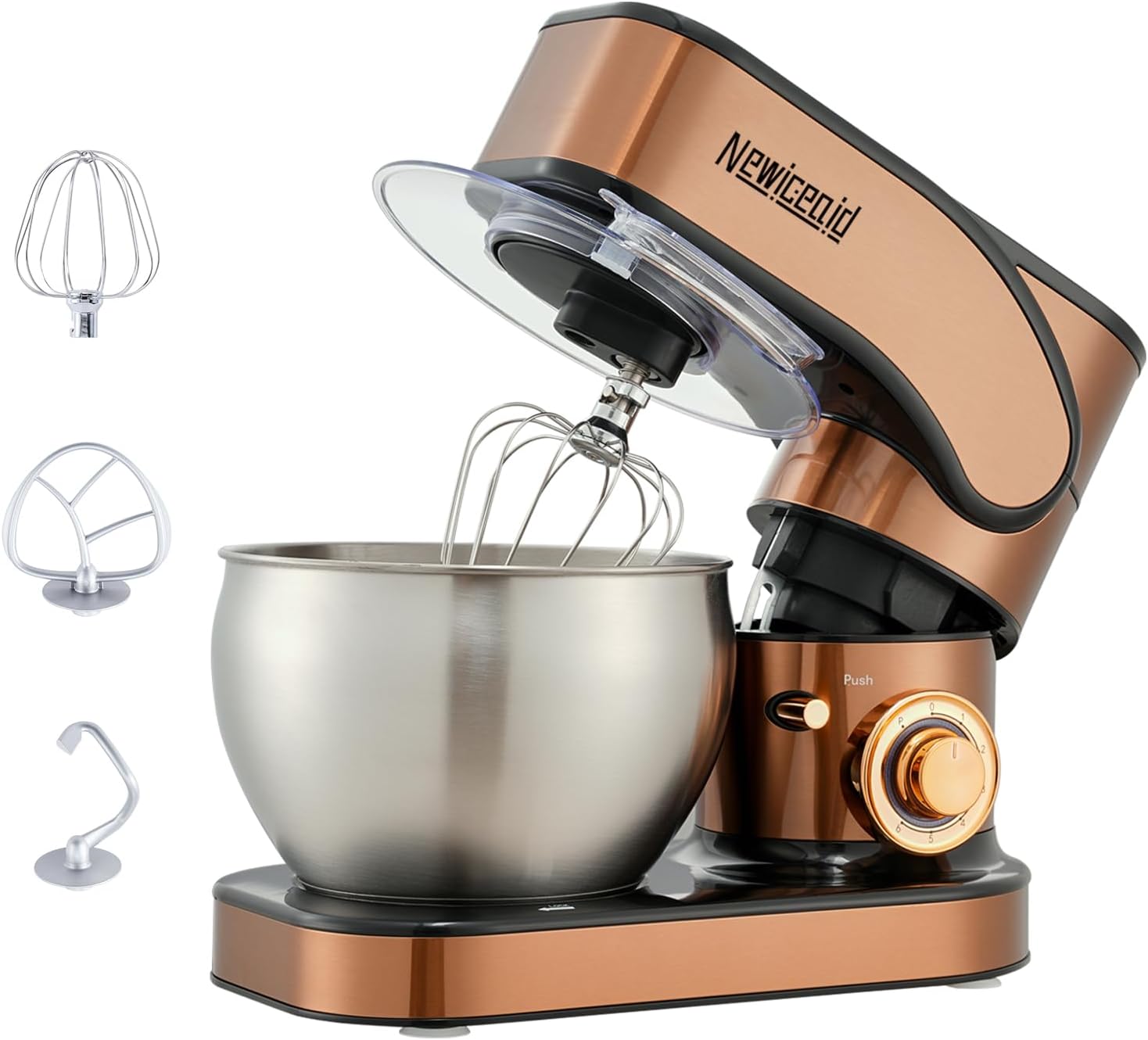
The listing’s main photo showed the mixer with two bowls stacked inside each other, and the headline said “dual bowls.” I read that as: it comes with two bowls. Which it does. But the photo made it look like some kind of nesting innovation, like the bowls were designed to stack, like this was a feature. They’re just… two bowls. One 4.2-quart, one 5.3-quart. They stack because bowls stack. The marketing department photographed physics and called it a feature, and I need you to know this because it’s the perfect introduction to the Camic buying experience: everything is slightly oversold, and the product underneath is slightly better than the oversell suggests.
I’d never heard of Camic before buying this. That’s the first thing. There’s no brand story, no heritage, no “since 1919.” It’s a name on a box from the great appliance churn, and I bought it because a video — not the linen-apron kind, a regular person in a regular kitchen — showed it handling bread dough without drama, and the price was low enough that the risk felt manageable. This is how most budget appliance purchases actually happen now: not brand loyalty, not spec comparison, but a stranger’s video and a price that makes the gamble cheap. The entire mid-tier appliance market runs on this dynamic, and the brands know it, which is why every listing is optimized for the screenshot, not the spec sheet.
Gamble holding.
The two bowls, used in practice: the 5.3-quart is the daily driver, the 4.2 is the backup for when the big one’s in the dishwasher or when I’m doing a small batch. Having two bowls is genuinely useful in a way I didn’t expect — it’s not about capacity, it’s about workflow. Batter in one, dough in the other, no washing between. The bowls are stainless, with handles, and they seat with the twist-lock. Both of them. The lock works the same on both, which sounds obvious until you’ve owned a product where the accessory doesn’t quite fit like the original. These fit. Someone measured twice.
Performance: it’s a budget mixer, and it behaves like one, with one surprise. The surprise is the low-speed torque — it’s better than the price suggests. Five hundred grams of bread dough at 65% hydration, speed 2, and the motor doesn’t complain. It hums. Steady. I’ve pushed it to 750 grams and it handled that too, though the head developed a slight rhythmic bounce at that load — not alarming, just the machine telling you it’s working. The not-surprise is the noise: it’s loud. Not broken loud, just cheap-motor loud, the kind of loud where you can’t hear the podcast you’re pretending to listen to while you bake. Speeds 1-3 are tolerable. Above that, it’s a blender with ambitions.
Actually, that’s not right — the reviews aren’t useless, they’re just answering a different question than the one I’m asking. “Worth it?” versus “good?” — different questions.
The tilt-head lock is the weak point, and I’m going to be specific because vague complaints don’t help anyone. The lock engages with a pin, and the pin has — I measured this with a feeler gauge, because I’m that person — about a millimeter of play. A millimeter. It’s nothing and it’s everything: nothing, because it doesn’t affect mixing; everything, because you feel it every time you lower the head, a tiny wobble that says “budget.” After four months it hasn’t gotten worse. I’ve stopped noticing. But the first week, I noticed every time, and I thought about returning it every time, and I’m telling you this because the first-week feeling is real and it’s also wrong — it’s the feeling of adjusting from expectation to reality, not the feeling of a defective product.
Ask me in two years.
Here’s the thing about the no-name mixer category that I keep coming back to: the reviews are useless, and they’re useless in a specific way. Every Camic, Aucma, Sunvivi, and alphabet-soup brand has the same review distribution — 4.2 to 4.4 stars, a few thousand ratings, the same phrases. “Great for the price.” “Not a KitchenAid but.” “Does the job.” These reviews aren’t describing the product. They’re describing the price. Nobody writes “great for the price” about a product they love without qualification — they write it about a product that’s adequate at a price that forgives inadequacy. The star rating isn’t a quality score. It’s a value score. Once you understand that, you can read these listings properly: 4.3 stars at this price means “works, with caveats.” The caveats are always the same caveats. Noise. Wobble. Longevity unknown. The Sunvivi 4-in-1 plays the same game with a different badge — same review shape, same value-score math.
Longevity unknown — let me sit with that, because it’s the real gamble. Four months in, mine works fine. Will it work in two years? I don’t know. Nobody knows. The brand has no track record, the motor has no service history, and the warranty is a PDF. This is the actual price of the low price: not the noise, not the wobble, but the uncertainty. You’re buying a two-year appliance at a two-year price, and if it lasts five, you’ve won. I bought it knowing this. I’d rather know it than discover it.
Completely off-topic: I bought a no-name coffee grinder the same month, same gamble, same price tier, and it died in six weeks — the burr seized, the motor whined, done. I replaced it with a brand-name one that cost three times as much and has worked for two years. The grinder taught me the lesson the mixer is currently testing: sometimes the gamble pays, sometimes it doesn’t, and there’s no way to know in advance. You just pick your gambles. The mixer was a gamble I took with open eyes. The grinder was a gamble I took with cheap eyes. There’s a difference. I think.
I haven’t used the dual-bowl models from the bigger brands, so I can’t judge whether the premium versions are any better built.
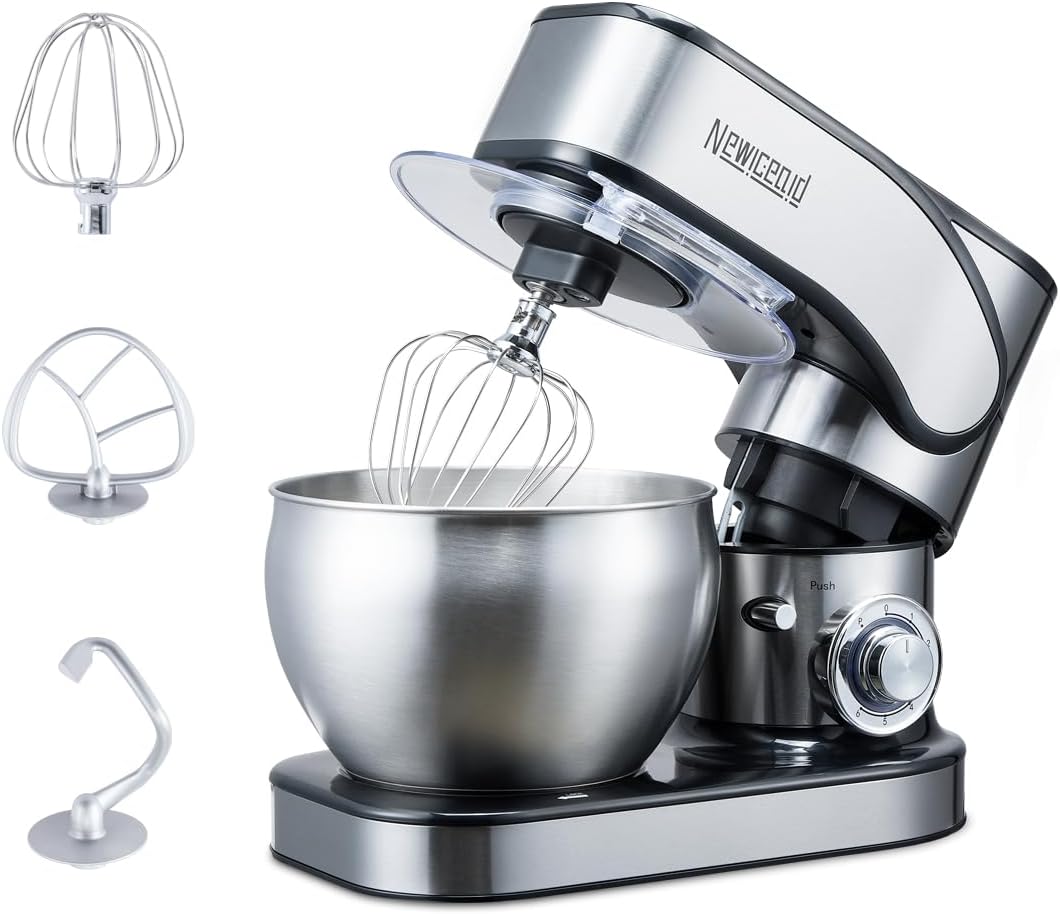
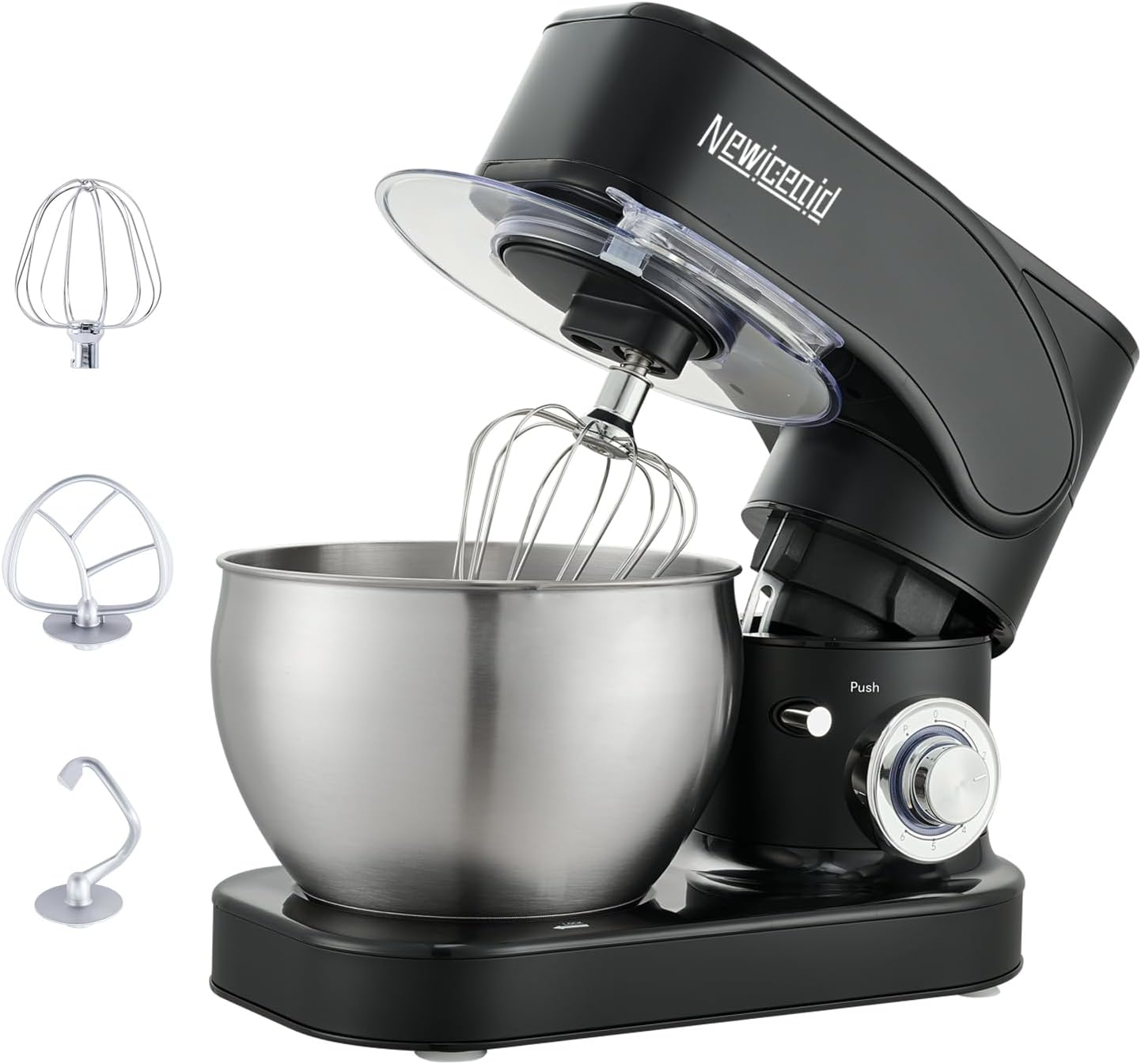
Would I recommend it? With the caveats above, and only to the right buyer: someone who bakes weekly, who wants two-bowl workflow, who understands they’re buying a value score, not a quality score. If you want the safe pick in this price band, the Aucma 660W is the known quantity with more reviews behind it. If you want out of the gamble entirely, that’s a different budget and a different article.
Four months. The head still wobbles a millimeter. The motor still hums steady at speed 2. The two bowls still stack in the cabinet, which is still just physics, still photographed like a feature. I use the 5.3-quart every week. The 4.2 comes out when I’m feeling ambitious. The gamble is holding.
Ask me again in two years. That’s the honest review timeline for this category, and nobody writes it, because nobody remembers to. I’ll try to remember. The mixer will either still be here or it won’t, and either way, that’ll be the review.