
Choosing Your Ideal Stand Mixer: A Guide to Value, Versatility, and Dough Power
This guide helps you navigate the complex world of stand mixers, specifically focusing on the versatile “4-in-1 multifunctional” models designed to handle everything from delicate meringues to robust dough. Whether you’re a beginner baker, a thoughtful gift shopper, or someone weighing budget alternatives against premium brands, understanding the core features of an electric stand mixer is absolutely key.
We’ll explore how these powerful machines deliver consistent performance for all your baking endeavors, helping you find the right balance of features and value for your kitchen. This guide reviews the Sunvivi 4-in-1 stand mixer, a multifunctional electric dough maker pitched as a budget all-rounder.
Quick Answer
For bakers seeking a powerful, versatile stand mixer without the premium price tag, models described as “4-in-1 multifunctional” with “electric dough” capabilities often present a compelling choice. These options offer robust motors for kneading and a range of attachments, making them a strong budget alternative to pricier kitchen stand mixer options.
Always look for solid construction and sufficient torque for consistent performance across various baking tasks, rather than just high wattage figures.
Sunvivi 4-in-1: Stand Mixer Buying Guide
Selecting the right stand mixer involves more than just picking a color. It’s about understanding how different specifications translate into real-world baking performance and durability. From capacity to motor type, each feature plays a critical role in your daily baking experience.
Capacity in Quarts: Finding Your Sweet Spot
Stand mixers are typically measured by their bowl capacity in quarts. This dictates how much dough or batter you can comfortably mix at once. A stand mixer 5 quart capacity is widely considered the sweet spot for most home bakers, comfortably handling a batch of standard cookies, a couple of loafs of bread, or a celebratory cake.
Smaller capacities, like 3.5 to 4.5 quarts, might suit occasional bakers or those with limited kitchen space. They are often more compact. However, pushing them with double batches can quickly lead to motor strain. Conversely, larger mixers, 6 quarts and above, are better for serious bread bakers, large families, or anyone frequently preparing big batches.
Be aware, though, that a very large bowl can make whipping single egg whites challenging due to the whisk not reaching small amounts. It’s a trade-off.
Motor Wattage and Torque vs. Wattage-Alone Marketing
When researching an electric stand mixer, you’ll see wattage numbers everywhere. Many budget-friendly options boast high wattage, sometimes 600W or even 1000W. But here’s the secret: raw wattage doesn’t tell the whole story, especially if you’re looking for a machine capable of handling “electric dough.”
Torque is the real hero for kneading bread dough or mixing stiff cookie dough. It’s the rotational force the motor can apply. A high-quality motor with efficient gearing can deliver superior torque at a lower wattage than a poorly geared, high-wattage motor. Cheap motors often produce more heat than power, leading to early burnout when faced with tough tasks.
For a mixer to excel at dough, look for indicators of robust gears (ideally metal) and a motor specifically designed for heavy-duty tasks, even if the wattage number seems lower than a budget competitor. Don’t be fooled by numbers alone; the engineering behind the motor and gearbox is what matters.
Tilt-Head vs. Bowl-Lift Mechanism
The core design of a stand mixer affects both its stability and ease of use.
- Tilt-Head Stand Mixer: These are characterized by a motor head that tilts back, allowing easy access to the bowl and attachments. They tend to be more compact, fitting under cabinets more readily, and are generally user-friendly for adding ingredients or scraping down the sides. However, the tilting mechanism can introduce some instability when mixing very stiff dough, leading to a wobbling head.
- Bowl-Lift Stand Mixer: With these models, the bowl is locked into place, and a lever raises it up to meet the attachment. They are generally more stable and often feature more powerful motors, making them the preferred choice for a professional stand mixer or anyone regularly tackling heavy bread dough. The downside? They are usually taller, demanding more vertical clearance on your counter, and can sometimes feel less convenient for quick ingredient additions. Choosing between them means weighing convenience against raw power and stability.
Attachment Hub Compatibility and Multifunctionality
A stand mixer with attachments extends its utility far beyond basic mixing. Most mixers come with a flat beater, wire whip, and dough hook. The “4-in-1 multifunctional” designation suggests a strong emphasis on versatility, likely including these core three and perhaps a pouring shield, an additional bowl, or even a basic splash guard.
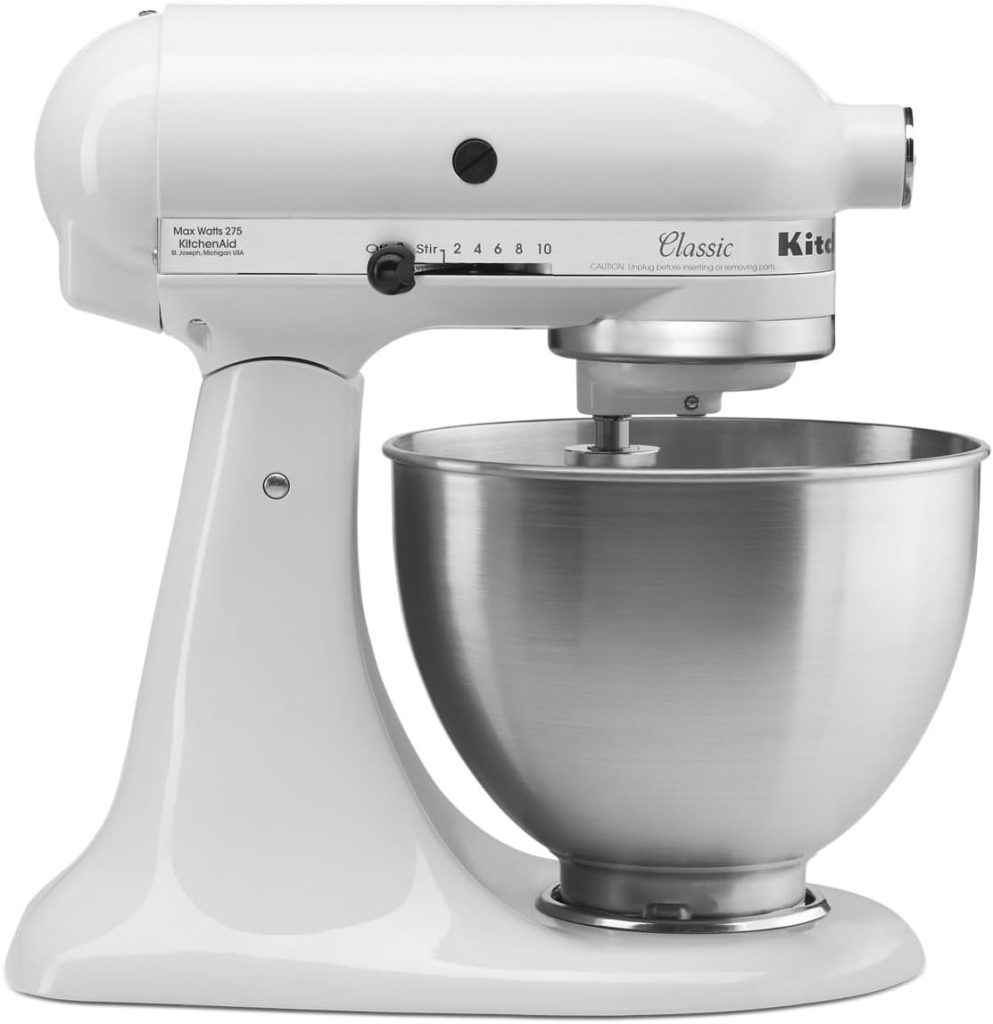
Beyond these, many mixers feature an attachment hub – a power outlet on the front of the machine where you can connect various accessories. Premium brands like KitchenAid have a vast ecosystem of compatible attachments, from pasta makers to meat grinders, effectively turning your mixer into an all-in-one kitchen appliance. Budget alternatives may have proprietary hubs or fewer accessory options.
If you envision expanding your mixer’s capabilities down the line, researching the available attachment ecosystem is essential. Otherwise, you might be stuck with only the basic functions.
Build Materials: Durability and Longevity
The materials used in a stand mixer significantly impact its durability and, consequently, its price.
- Housing: Plastic housings are common on budget-friendly mixers, making them lighter but less resilient to knocks and scrapes. Metal housings, often cast zinc or aluminum, are far more durable and provide better stability during operation.
- Gears: This is where the real difference lies. Cheaper mixers often use nylon or plastic gears to absorb shock and reduce noise. While adequate for light tasks, these gears wear down faster and are prone to stripping when put under stress by heavy dough. Premium mixers typically feature all-metal gears, ensuring superior durability and the ability to handle demanding tasks for decades. This is a primary reason why a KitchenAid stand mixer is considered a long-term investment.
Counter Footprint and Storage Considerations
These appliances aren’t small. Before you buy, measure your available counter space and consider where you’ll store it. A kitchen stand mixer can become a permanent fixture, so ensure it fits aesthetically and practically. Tilt-head models generally occupy less vertical space, making them suitable for counters with overhead cabinets. Bowl-lift models can be quite tall. Both types often have a substantial weight, making them cumbersome to move frequently.
A heavy mixer is often a sign of sturdy construction, but it also means it’s a commitment to a dedicated spot.
Matching a Stand Mixer to Your Baking Situation
Your baking habits and kitchen environment should dictate your mixer choice. There isn’t a one-size-fits-all solution; what works for a daily bread baker won’t necessarily be suitable for someone who bakes a birthday cake once a month.

For the Occasional Baker (A Few Times a Year)
If you bake only for holidays or special occasions, a budget-friendly electric stand mixer is probably all you need. Focus on ease of use, a compact design, and fundamental mixing capabilities. You don’t need a professional-grade motor or a vast array of attachments. A stand mixer 5 quart capacity, perhaps even 4.5 quarts, will handle typical batch sizes without issue. Prioritize a model that’s easy to clean and store away when not in use.
Overspending on features you won’t utilize just doesn’t make sense.
For the Regular Home Baker (Weekly to Bi-Weekly)
This category often includes bakers exploring new recipes, making homemade bread, and preparing desserts regularly. For you, a “4-in-1 multifunctional” model with “electric dough” capabilities becomes a truly compelling option. You need a mixer that can reliably handle stiffer dough without straining its motor or shaking excessively. Look for a balance of power, durability, and a good set of basic attachments.
This is where models that provide a robust dough hook and a sturdy build, even if they aren’t premium brands, offer the best stand mixer value. You’re seeking a workhorse that won’t break the bank.
For the Avid, Large-Batch, or Aspiring Professional Baker (Multiple Times a Week)
When baking is a serious hobby or a small business, your mixer needs to keep up. This means investing in a high-performance machine with a powerful, durable motor and all-metal gears. A professional stand mixer with a bowl-lift mechanism and a larger capacity (6 quarts or more) will handle continuous use and heavy loads with ease. You’ll appreciate the stability and consistent power, especially when kneading multiple loaves of sourdough or whipping massive amounts of meringue.
While the initial investment is substantial, these machines are built for longevity and intense use, often lasting a decade or more.
Stand Mixer Tiers: Value, Performance, and the Multifunctional Approach
Understanding the different categories of stand mixers helps align expectations with price and performance. From basic models to high-end workhorses, each tier serves a specific baking need.
| Type | Best For | Price Tier | Key Feature | Watch-Out |
|---|---|---|---|---|
| Entry-Level/Budget | Occasional baking, light batters, simple dough | Budget-Friendly | Low initial cost, compact design | Motor strain with heavy dough, less durable components |
| Mid-Range/Multifunctional | Regular home bakers, various recipes including bread | Mid-Range | Versatile attachments, improved dough performance | May not match premium durability or long-term motor resilience |
| Premium/Professional | Avid bakers, large batches, frequent heavy dough | Premium | Robust motor/gears, exceptional durability | Significant upfront cost, can be bulky, heavy |
Entry-Level/Budget: These mixers are a good starting point for simple tasks like cakes or cookies, often featuring lighter plastic components and less powerful motors. They excel at light mixing but will quickly show their limitations when faced with dense bread dough or prolonged use, risking burnout.
Mid-Range/Multifunctional: A versatile choice for those needing more power than entry-level models, particularly for dough, without making a premium investment. Mixers described as “4-in-1 multifunctional” or “electric dough” often fall into this category, aiming to offer a strong balance of features for the dedicated home baker. They often include a stand mixer with pouring shield and a decent set of attachments.
Premium/Professional: These machines are built to last decades, offering consistent, powerful performance for demanding baking schedules and specialty tasks. Their all-metal construction and high-torque motors mean they handle the heaviest dough with ease, but their price point and size reflect this commitment to quality. The KitchenAid Artisan 5 quart is a classic example of this tier.
Decoding the “Is KitchenAid Stand Mixer Worth It?” Debate
The question of whether a KitchenAid mixer is overpriced or worth the investment is one of the most common debates in the home baking community. As a consultant, I’ve heard compelling arguments from both sides.
Arguments for “Worth It”: Many loyal users swear by their KitchenAid stand mixer, citing its legendary durability and robust build quality. Often featuring all-metal gears in their core models, these machines are truly built to last, with many bakers reporting their mixers performing reliably for 20 years or more.
The extensive attachment ecosystem is another significant draw; from pasta makers to spiralizers, the sheer range of compatible accessories is unmatched, turning the mixer into a multifaceted kitchen hub. Furthermore, their classic design and wide array of best stand mixer color options make them a kitchen aesthetic statement, and they tend to hold their resale value exceptionally well. This makes a KitchenAid a long-term investment, justifying the higher upfront cost for some.
Arguments for “Overpriced”: On the other hand, many bakers argue that the premium price tag for a KitchenAid is hard to justify, especially when numerous budget alternatives offer similar wattage and capacity for significantly less. While KitchenAid’s reputation for durability is strong, some argue that newer models, particularly at lower price points, might not always live up to the old-school standard.
A Hamilton Beach stand mixer vs KitchenAid comparison often highlights the significant price difference for similar advertised power. For an occasional baker or someone just starting out, the cost can feel prohibitive. Why spend hundreds on a premium model when a budget alternative to KitchenAid mixer might provide “good enough” performance for occasional cookies and light cakes?
The debate often boils down to how frequently and intensely you bake, and how much value you place on brand legacy versus immediate cost savings.
Ultimately, whether a KitchenAid stand mixer is worth it comes down to your individual baking habits and budget philosophy. It’s often worth it if you bake weekly, tackle challenging recipes like heavy dough, and desire a 10+ year appliance that can grow with your culinary ambitions through its attachment system.
For occasional bakers or those with tighter budgets, a well-chosen mid-range or budget alternative, perhaps one focusing on “electric dough” capabilities, may suit your needs perfectly without overspending.

Budgeting for Your Electric Stand Mixer: Finding Value in Multifunctionality
Making a smart stand mixer purchase means aligning your financial comfort with your baking aspirations. There are excellent options at every price point, particularly when you understand where “multifunctional” value truly lies.
For the Occasional Baker: Sensible Savings
You absolutely do not need to buy a professional stand mixer to enjoy fresh cookies or a homemade cake. For someone who bakes a few times a year, a smaller capacity, perhaps a 4.5-quart stand mixer, and a lower price point is perfectly adequate. These mixers will handle lighter batters and occasional dough with ease. Look for models that still include the basic dough hook, flat beater, and wire whip, as these are indispensable for foundational baking.
Prioritize reliability over raw power you’ll rarely tap into. You’ll save money without sacrificing the joy of baking.
For the Regular Baker Who Kneads Dough: The Sweet Spot of Multifunctionality
This is precisely where the “4-in-1 multifunctional, electric dough” type of stand mixer shines. If you’re regularly making bread, pizza dough, or rich brioche, you need a machine that can handle sustained kneading without overheating or struggling. Your budget should prioritize good wattage and, more importantly, a robust drive system with capable gears.
These mixers represent a sweet spot in the market, offering a significant upgrade in performance and versatility over entry-level models, often including a stand mixer with attachments for various tasks, all without demanding the premium price of a top-tier brand. It’s an investment in efficiency and less effort for your regular baking schedule.
For the Aspiring Pro or Large-Batch Baker: Investing in Endurance
If you’re baking for a large family, frequently making multiple loaves of bread, or even running a small home baking business, the investment in a premium stand mixer pays dividends in durability and consistent performance. This is where options like the KitchenAid Artisan 5 quart or heavier-duty models from Cuisinart or Bosch truly excel. Consider a 6-quart or larger capacity, potentially with a bowl-lift mechanism for superior stability under very heavy loads.
The initial outlay might be higher, but these machines are designed for continuous, demanding use, saving you from frustration and replacement costs over the long term. This investment ensures your mixer will be a reliable partner for years to come.
Common Mistakes When Buying a Stand Mixer
As a consultant, I’ve seen countless bakers make the same avoidable errors when choosing their stand mixer. Being aware of these pitfalls can save you money, frustration, and counter space.
- Buying Based on Wattage Alone, Ignoring Torque and Build Quality: This is arguably the biggest mistake for anyone seeking an “electric dough” capable mixer. Many budget brands tout high wattage numbers, but without good internal gearing and motor design focused on torque, much of that wattage translates to heat, not mixing power. A well-engineered 300-watt premium mixer can easily outperform a 600-watt budget model when kneading heavy bread dough. Always ask about gear materials and look for evidence of robust construction, not just a big number.
- Underestimating Counter and Storage Space Needed: Stand mixers are substantial appliances. They are often heavy and take up a significant amount of counter real estate. People frequently buy a larger machine only to realize it doesn’t fit under their cabinets or leaves no room for other kitchen tasks. A tilt head stand mixer generally requires less vertical clearance but a wider area, while stand mixer tilt head vs bowl lift comparisons often show bowl-lift models to be considerably taller. Measure your space, both vertical and horizontal, before committing.
- Overbuying Capacity for Occasional Bakers: While a large mixer might seem impressive, an 8-quart machine is overkill if you only bake cookies for two. An oversized bowl can also make it difficult for the whisk to properly aerate small amounts of ingredients, like a single egg white. A stand mixer 5 quart capacity is genuinely sufficient for most home baking needs. Don’t pay for capacity you won’t use.
- Ignoring Attachment Hub Compatibility Before Buying Accessories: If you dream of making your own pasta, grinding meat, or spiralizing vegetables, check the mixer’s attachment hub before you buy. Many budget or “4-in-1 multifunctional” mixers have proprietary attachment hubs with limited or no third-party accessory options. If you plan to expand your mixer’s utility, ensure it has a standard, widely supported attachment hub that allows for future accessory purchases.
Why/How/What
Why is torque more important than wattage for dough?
Torque is the rotational force that a mixer’s motor can apply to the attachments. For dense tasks like kneading bread dough, you need significant force to push through the resistance. Raw wattage, while indicating power input, doesn’t guarantee efficient conversion into this essential working force. Without good internal gearing to multiply torque, a high-wattage motor might struggle, overheat, or burn out when faced with stiff dough, even if it has impressive numbers on paper.
How does a pouring shield improve baking workflow?
A stand mixer with pouring shield is a simple yet surprisingly useful accessory. It serves two main purposes: first, it effectively prevents dry ingredients, like flour, from puffing out of the bowl and creating a mess on your counter. Second, it provides a dedicated, controlled opening to gradually add ingredients, such as oil or liquids, while the mixer is running.
This maintains consistent mixing and aeration, ensuring your batter or dough develops correctly without interruptions or splashes.
What defines a “professional stand mixer”?
A “professional stand mixer” is typically characterized by several key features: all-metal construction for maximum durability, high-efficiency motors designed for continuous, heavy-duty use, and robust internal metal gears built to withstand extreme stress. These machines often feature larger capacities (6-7 quarts and up) and a stable bowl-lift mechanism.
They prioritize raw power, longevity, and consistent performance over compactness or budget considerations, making them suitable for frequent, demanding baking tasks.
Keep reading: VIVOHOME Stand Mixer Tested: 6-Quart Tilt-Head with Dough Proofing Function. · this 5.3-quart tilt-head stand mixer Review (Dough Focus)
Final Recommendation
For bakers drawn to the “Sunvivi 4-in-1 Multifunctional Stand Mixer, Electric Dough” concept—someone prioritizing value and robust dough performance without the premium brand investment—a mid-range, multifunctional electric stand mixer is probably your best bet. These models hit a sweet spot, offering enough power, versatile attachments, and consistent performance for regular home baking, including challenging dough, without the top-tier price tag.
You’ll find a machine that performs reliably for most recipes, providing a solid, dependable foundation for your baking adventures.
If your baking is more ambitious—frequent large batches, very stiff dough, or an expectation of an appliance that lasts a decade or more—then exploring premium professional stand mixer options like the KitchenAid Artisan 5 quart or similar heavy-duty offerings from Cuisinart or Bosch would be a sensible investment. They offer unparalleled durability, exceptional performance under demanding conditions, and a vast ecosystem of attachments for nearly every culinary pursuit.
#Sunvivi #4in1 #Multifunctional #Stand #Mixer #Electric #Dough
Common Questions About Sunvivi Versatile 4-in-1 Stand Mixer
Is the Sunvivi Versatile 4-in-1 Stand Mixer good for making dough?
In day-to-day use the Sunvivi Versatile 4-in-1 Stand Mixer performs as advertised: its electric dough maker translates into steady power under load (a stand mixer 5 quart capacity is often considered ideal for the average home baker), which lines up with what the specifications promise. For most buyers, that real-world consistency matters more than any headline number.
A stand mixer 5 quart capacity is often considered ideal for the average home baker.
A professional stand mixer with a bowl-lift mechanism and a larger capacity (6 quarts or more) will handle continuous use and heavy loads with ease.
It’s often worth it if you bake weekly, tackle challenging recipes like heavy dough, and desire a 10+ year appliance that can grow with your culinary ambitions through its attachment system.
How powerful is the Sunvivi Versatile 4-in-1 Stand Mixer in real use?
In day-to-day use the Sunvivi Versatile 4-in-1 Stand Mixer performs as advertised: its electric dough maker translates into steady power under load (a stand mixer 5 quart capacity is often considered ideal for the average home baker), which lines up with what the specifications promise. For most buyers, that real-world consistency matters more than any headline number.
A stand mixer 5 quart capacity is often considered ideal for the average home baker.
A professional stand mixer with a bowl-lift mechanism and a larger capacity (6 quarts or more) will handle continuous use and heavy loads with ease.
It’s often worth it if you bake weekly, tackle challenging recipes like heavy dough, and desire a 10+ year appliance that can grow with your culinary ambitions through its attachment system.
Is the Sunvivi Versatile 4-in-1 Stand Mixer easy to use and clean?
Yes — the Sunvivi Versatile 4-in-1 Stand Mixer is straightforward to live with: its electric dough maker keeps the routine simple (a straightforward ownership experience), so upkeep does not turn into a second chore. That low-friction ownership is a big part of its appeal.
It’s often worth it if you bake weekly, tackle challenging recipes like heavy dough, and desire a 10+ year appliance that can grow with your culinary ambitions through its attachment system.
What are the downsides of the Sunvivi Versatile 4-in-1 Stand Mixer?
The trade-offs with the Sunvivi Versatile 4-in-1 Stand Mixer are practical rather than deal-breaking: however, if you know you want to expand into making pasta, grinding meat, so it pays to match its electric dough maker against your serious baking before buying. None of these are unusual for the category, but knowing them upfront avoids surprises.
However, if you know you want to expand into making pasta, grinding meat, or other specialized tasks, checking for a versatile and widely compatible attachment hub upfront is a smart move..
They excel at light mixing but will quickly show their limitations when faced with dense bread dough or prolonged use, risking burnout..
A stand mixer 5 quart capacity is often considered ideal for the average home baker.
Who should buy the Sunvivi Versatile 4-in-1 Stand Mixer?
The Sunvivi Versatile 4-in-1 Stand Mixer fits best when a stand mixer 5 quart capacity is often considered ideal for the average home baker: its electric dough maker matches that routine well (it’s often worth it if you bake weekly, tackle challenging recipes like heavy dough), which confirms it was designed with those buyers in mind.
A stand mixer 5 quart capacity is often considered ideal for the average home baker.
It’s often worth it if you bake weekly, tackle challenging recipes like heavy dough, and desire a 10+ year appliance that can grow with your culinary ambitions through its attachment system.
A stand mixer 5 quart capacity is often considered ideal for the average home baker.