This site contains affiliate links. We may earn a commission on qualifying purchases.
Flour on the stand. Flour on the power head. Flour, somehow, on the cat. That is where this mixer review actually starts — not with the box or the first impression, but about four months in, on a Tuesday, when the detachable head that sold me the machine was sitting in a bowl of its own dust while the stand underneath did all the work alone, the way it had done for weeks. The Hamilton Beach Classic is a 4-quart, 6-speed stand mixer whose head lifts off to become a hand mixer, and the honest summary of that arrangement is simple: the stand is the appliance. The hand mixer is a feature the stand carries around, like a spare tire you are always delighted exists and almost never use.
The numbers first, because one of them is routinely misunderstood and it changes how the machine should be bought. The motor is rated at 290 watts peak. Peak is doing real work in that sentence. It describes the surge the motor can reach, not the effort it can sustain, and sustained effort is what dough asks for. Through cake batter, cookie dough, whipped cream, mashed potatoes — the ordinary traffic of a home kitchen — the machine never sounds strained, and the beaters keep their rhythm. Through a stiff single loaf of bread dough, the pitch climbs and the head works, audibly, the way a small car works on a long hill. It gets there. A doubled batch of something dense is where I stop recommending the attempt, not because the mixer refuses, but because a motor run at its ceiling every week lives a shorter life, and this one’s price only makes sense if it lives a long one.
Six speeds, plus the QuickBurst button, which is worth explaining because it is not a seventh speed. It is a momentary override — hold it and the mixer jumps to full effort regardless of the dial, release it and you are back where you were. For working a lump of cold butter into behaving, or finishing whipped cream with a last short blast, it is the control I actually touch most after the dial itself. Small thing. Used constantly. The low end of the dial matters more, though: the slowest speed is slow enough to fold flour without launching it, most days, provided the flour went in a spoonful at a time like a person who has cleaned a kitchen before. Dump it all at once and no mixer at this price saves you. Ask the cat.
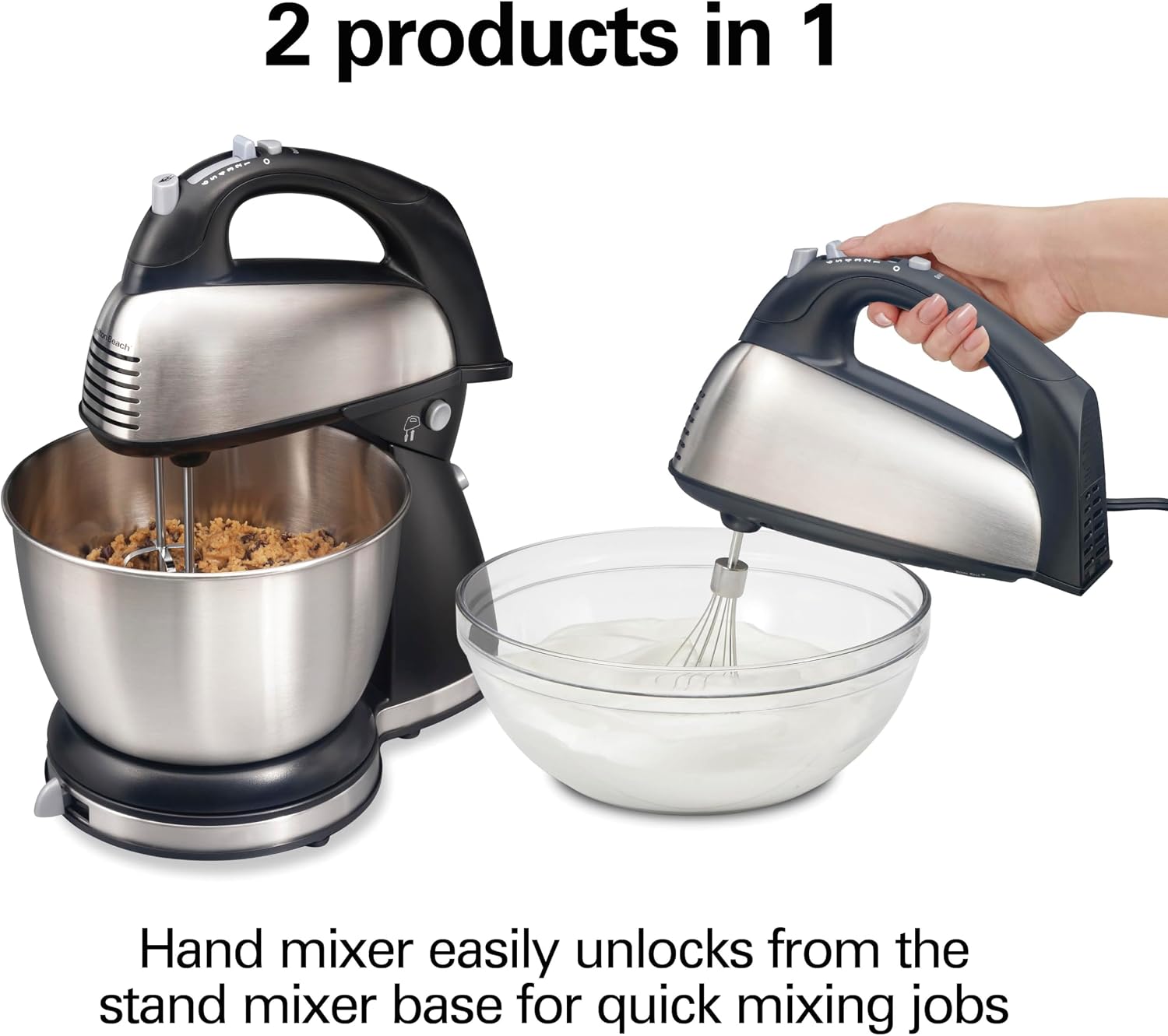
Now the mechanism that defines the machine, for better and for the one specific worse. The beaters on this mixer do not travel around the bowl. Planetary action — the beater orbiting while it spins — belongs to the pricier benchmark in the third box, and its absence here is compensated by a lever, the Shift and Stir, which slides the bowl sideways under the beaters so the mixing path sweeps across the bowl instead of drilling one circle forever. It works better than it sounds and worse than it photographs. You become part of the mixing action, nudging the lever every so often, and flour still parks in the far edge of the bowl on dry-heavy recipes until you stop and scrape once. One scrape. That is the real tax this design charges — not money, a scrape — and bakers who scrape anyway, out of habit, will never notice paying it.
The head comes off, and mostly stays on
Hand mode, then, since it is half the pitch. Detached, the power head is a hand mixer with a stand mixer’s motor in it, and your wrist learns the difference inside three minutes of mashed potatoes. Dedicated hand mixers are built light because they only ever get held. This head was built to sit, and it carries that build into your hand, so hand mode is best in short bursts — eggs, a quick batter, whipped cream in a deep bowl — and genuinely tiring across a long job. The Bowl Rest ledge, which lets the head sit on the rim of the bowl without tipping or dripping across the counter, is the detail that redeems the mode for me. Whoever designed that ledge had clearly stood in a kitchen with batter on their hands and nowhere clean to put anything down. Anyway. The head lives on the stand in my kitchen now, and the mode gets used at the holidays, for exactly the short jobs it suits.
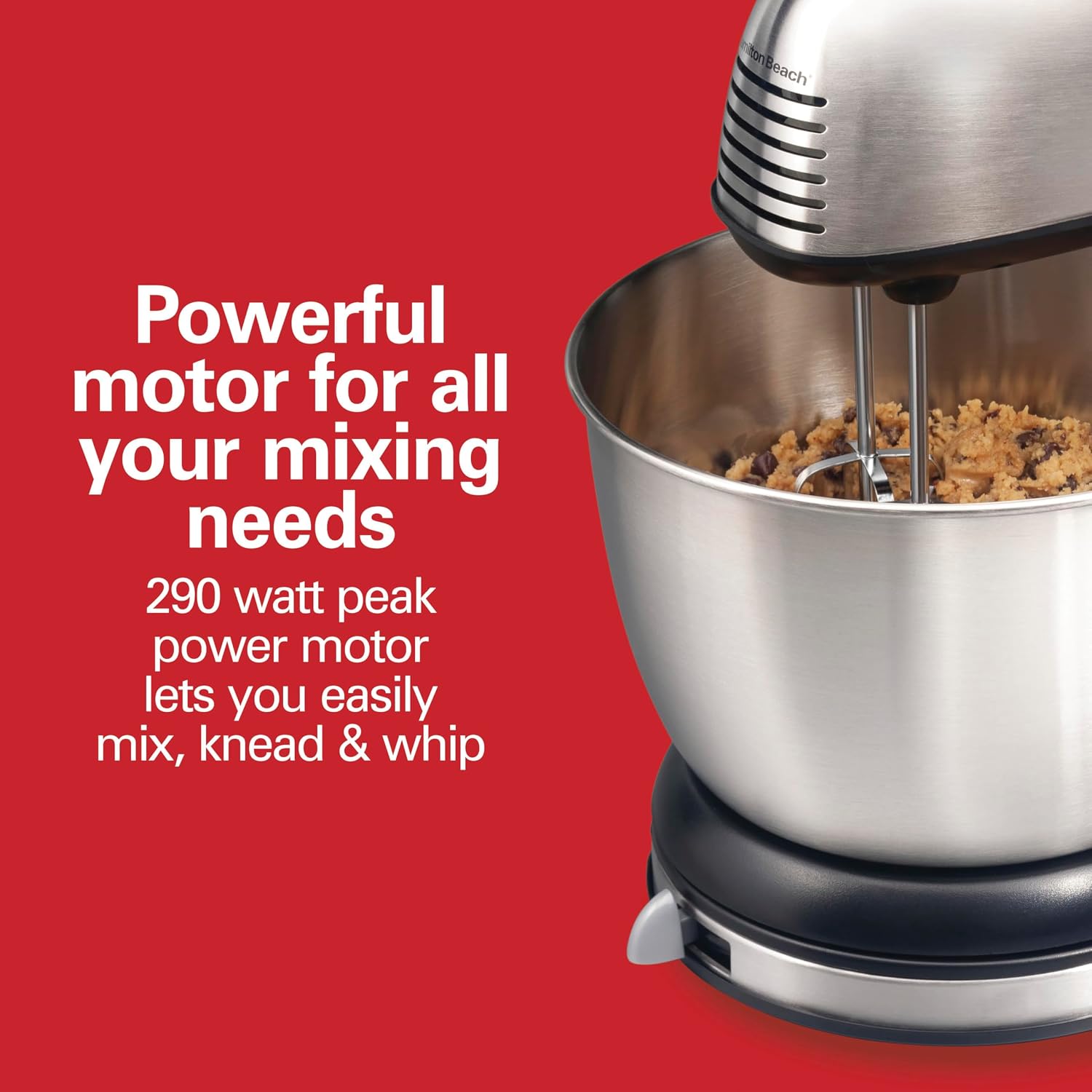
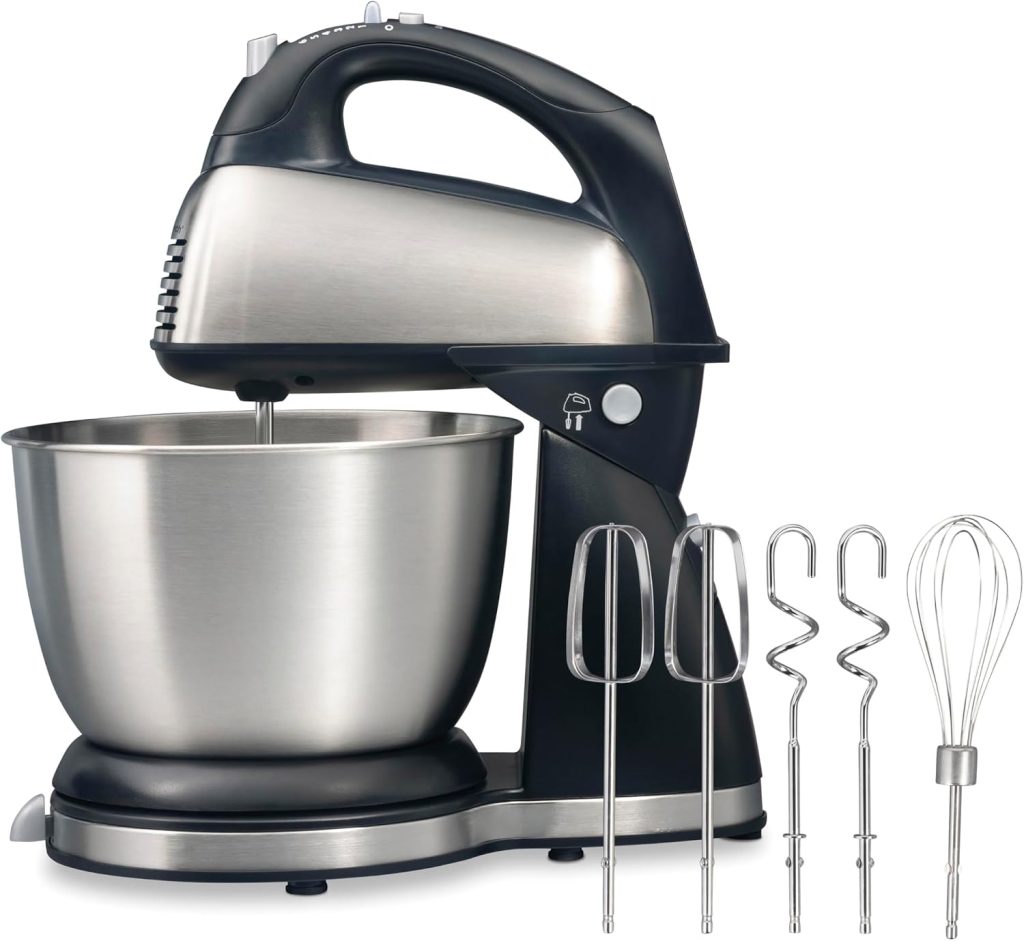
The subject — a stand mixer whose power head lifts off to work as a hand mixer, 290 watts at peak, with a 4-quart stainless bowl
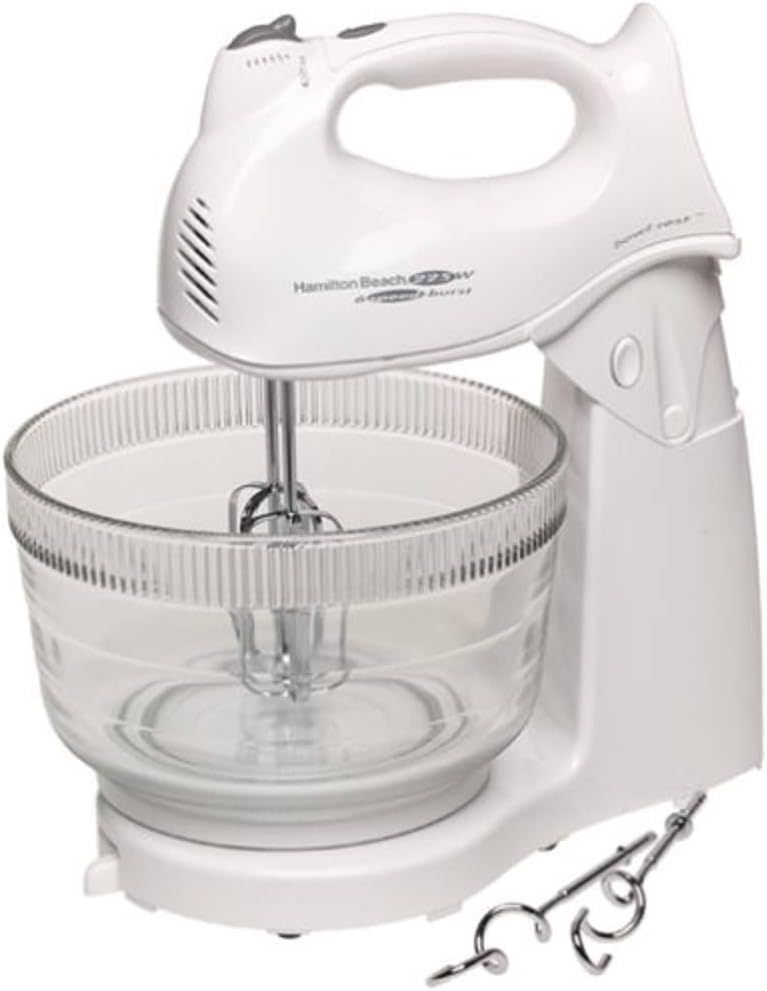
The simpler sibling — a lighter stand with a glass bowl and the same detachable-head idea, for smaller and softer jobs
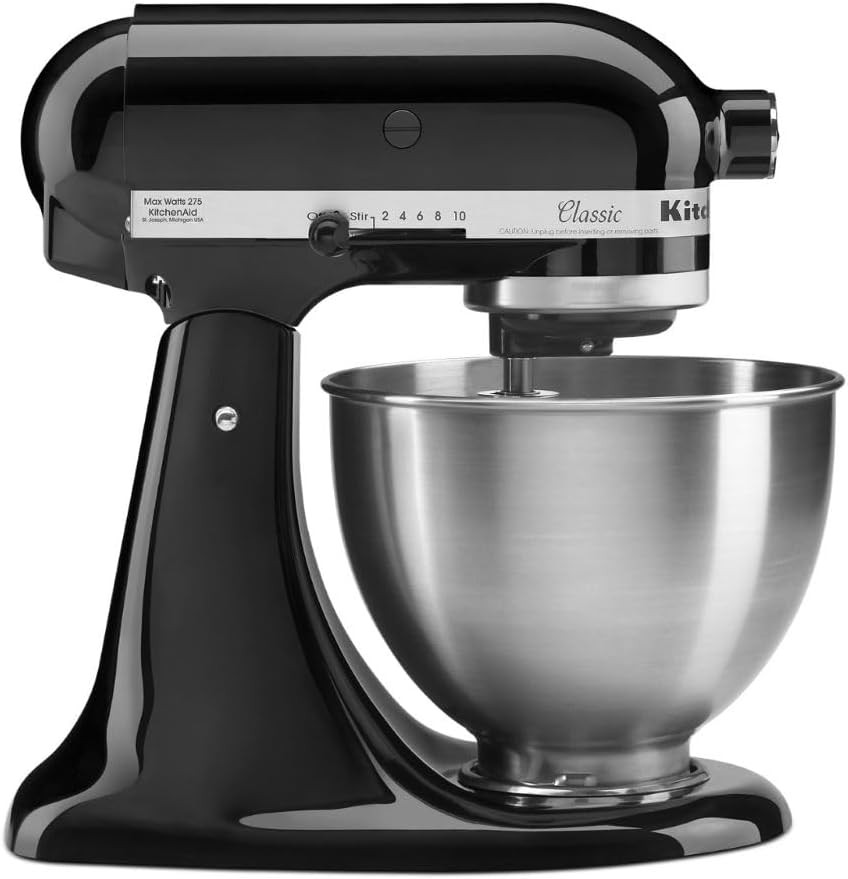
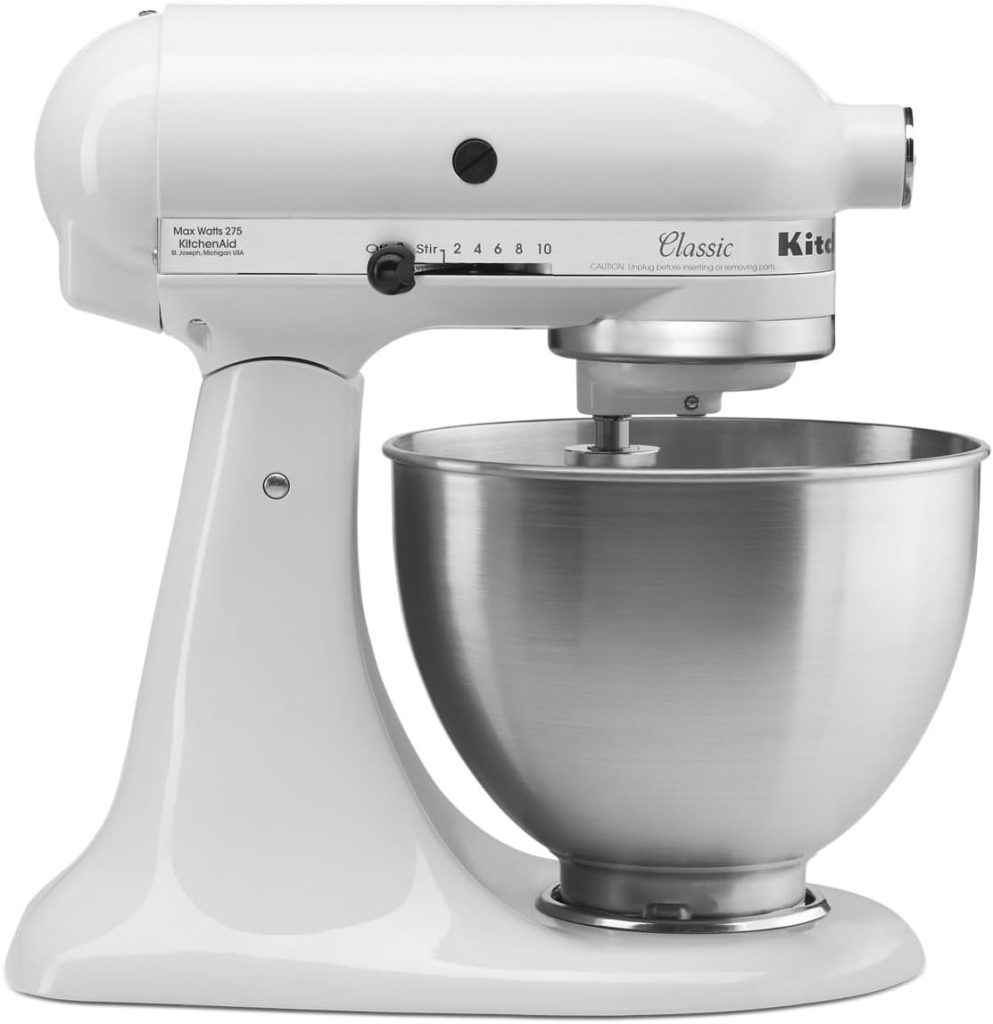
The category benchmark in its plainest form — planetary mixing and metal build, at several times the price of the other two boxes
Prices and availability change; the listing is the final word.
The Power Deluxe in the second box is the same idea in a lighter, cheaper build, with a glass bowl that some bakers prefer because you can see the bottom of the mix — and seeing the bottom is not a small thing on mixers without planetary action, since the unmixed stripe always hides down there. Its motor is the smaller of the two and its natural work is batters, frostings, whipped things, the soft end of the repertoire. I have not owned the Power Deluxe myself, so I cannot judge its year-three behavior, only its specification sheet and its long shelf history, which is respectable. As a first mixer for a small kitchen that bakes monthly, it is a defensible buy. As a weekly bread machine it is not, and neither, honestly, is the Classic — the Classic just gets closer before the hill gets steep.
A scene, because this category runs on scenes. Last December, gingerbread, the stiff kind that fights back, in the Classic, while a relative’s benchmark mixer sat three feet away doing the royal icing because it was already out. Two mixers, one counter, no rivalry — and that is the thing nobody says about budget stand mixers: they are not failed versions of the expensive ones, they are a different allocation. The Classic took the gingerbread in one batch, complained at a pitch only I seemed to hear, and produced dough that rolled, cut, and baked exactly as it should. The expensive machine would have complained less. The cookies would have tasted the same. I have run that comparison in my head for a year, across a lot of batches, and the gap keeps landing in the same place: noise, effort, longevity, pride of ownership. Not results. Results keep tying.
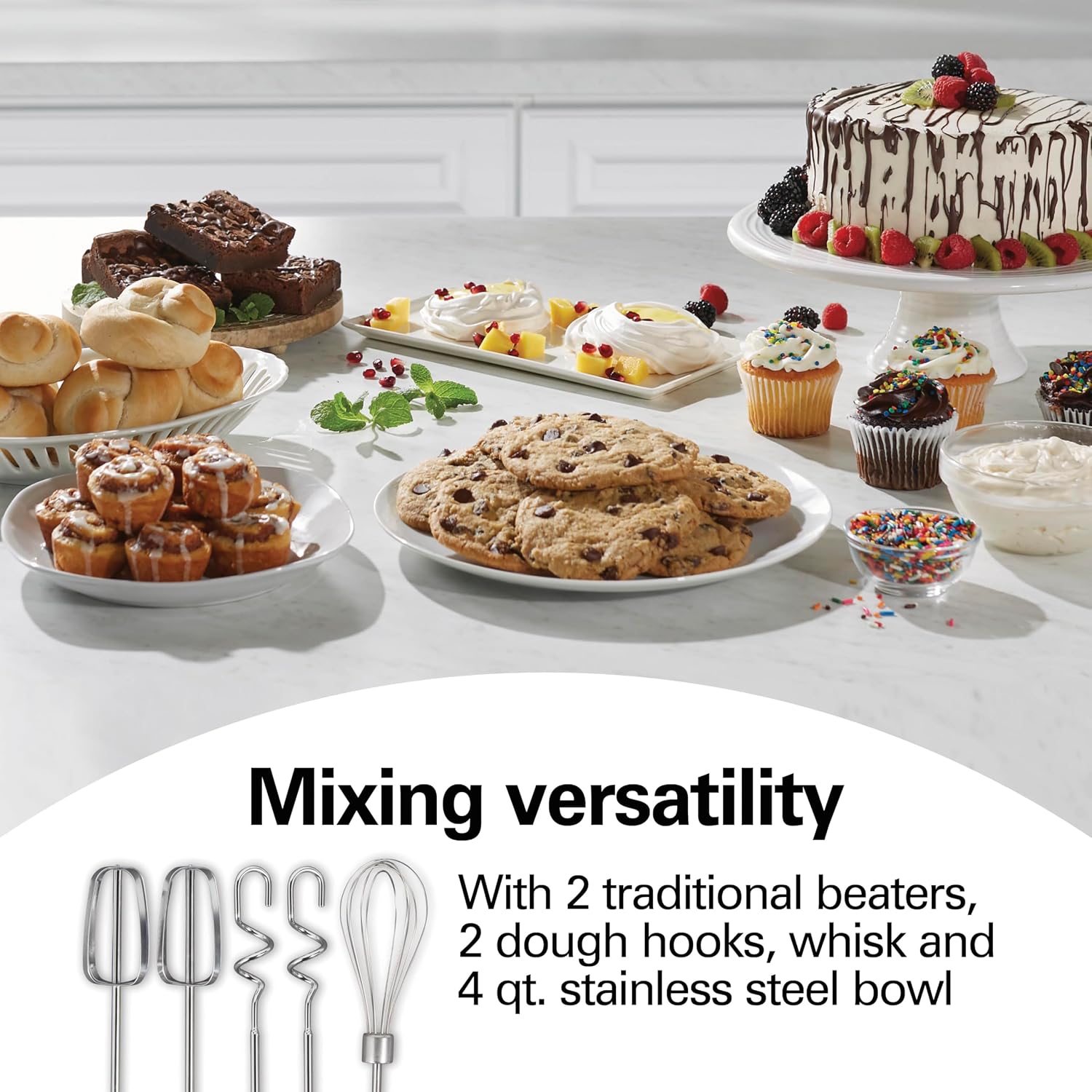
Attachments and the small print. The Classic comes with traditional beaters, a whisk, and dough hooks, and the beaters and whisk cover perhaps ninety percent of what a home baker actually does — I am guessing at the percentage, but the dough hooks are the only attachment that spends real time in my drawer, and even they come out monthly. Everything washes without drama. The stainless bowl is 4 quarts, which in working terms means a single batch of most things and a firm no to doubling anything that rises, because dough that climbs meets beaters that were not expecting company. Four quarts is a household-of-four size. Bigger households doing bigger batches should be reading about the third box, or about patience, one of the two.
And the benchmark, briefly, because it sits in the third box and deserves its sentence. The 4.5-quart tilt-head in the third box mixes planetarily, is built like it expects to be inherited, and costs several times what the Classic costs — The Aucma tilt-head review covers another budget attempt at that same tilt-head shape, and the Bosch Universal Plus review shows what the money buys at the serious end, a different bowl geometry entirely. The Classic is not chasing either of them, really. It is chasing the hand-mixer-only kitchen, the bake-once-a-month kitchen, the first-apartment kitchen, and against those it wins on a simple ground: it mixes, properly, at a price that does not require a meeting.
Questions that come up
Can this mixer actually handle bread dough, or is that asking too much?
A single loaf, yes, with the dough hooks and a little patience — the motor will climb in pitch as the dough stiffens, and that sound is information, not damage, provided it settles once the dough comes together. What I would not do is double a dense dough or run stiff batches back to back weekly, because the 290-watt figure is a peak rating and sustained ceiling work is what shortens a small motor’s life. Softer doughs — pizza, enriched, anything with real hydration — are well inside its comfort. The dividing line is roughly whether the dough fights the hook or rides it. Riders, any time. Fighters, single batches, occasionally, with the bowl scraped and the flour added in stages like you mean it.
If the head detaches, why does everyone end up leaving it on the stand?
Because the conversion costs a minute and a clean surface, and most mixing jobs do not repay either. On the stand, the machine is ready the moment the bowl is on — no assembly of self required. Off the stand, you are holding a motor unit that was designed to be sat upon a base, and your wrist files its report within minutes on anything heavy. The mode earns its keep on short, deep-bowl jobs where a stand cannot go: whipping in a saucepan-shaped bowl, eggs in a measuring jug, holiday overflow when the stand is busy. Owners do not abandon hand mode because it fails. They abandon it because stand mode quietly covers the week, and the detachable head becomes insurance — rarely claimed, genuinely comforting, priced into a machine that would be worth buying without it.
What is the Shift and Stir lever actually doing?
It is solving, by hand, the problem that pricier mixers solve with gears. The beaters on this machine spin in one fixed circle, so without help they would mix one circle and leave the center and the far edge underworked. The lever slides the bowl sideways beneath the beaters, shifting that circle’s path across the bowl’s width, so a few nudges during a mix sweep the beaters through most of the bowl. The key word is nudges — it is a manual system, and it asks you to be present rather than wandering off, which some bakers hate and some quietly like. Combined with one scrape of the bowl wall on dry recipes, it gets batters genuinely uniform. It will not match a planetary mixer’s indifference to your attention. That indifference is a large part of what the extra money buys.
The Classic is on the counter now, head on, bowl off, beaters in the drawer with the dough hooks they outwork ten to one, and there is still a faint line of flour on the stand from December that I keep meaning to wipe and keep not wiping. The cat has forgiven the machine. I use it most weeks for something small, and every time the head stays put I think about the pitch that sold it to me — two mixers in one — and how the truth turned out narrower and better. One mixer. Doing its job.
This site contains affiliate links. We may earn a commission on qualifying purchases.