This site contains affiliate links. We may earn a commission on qualifying purchases.
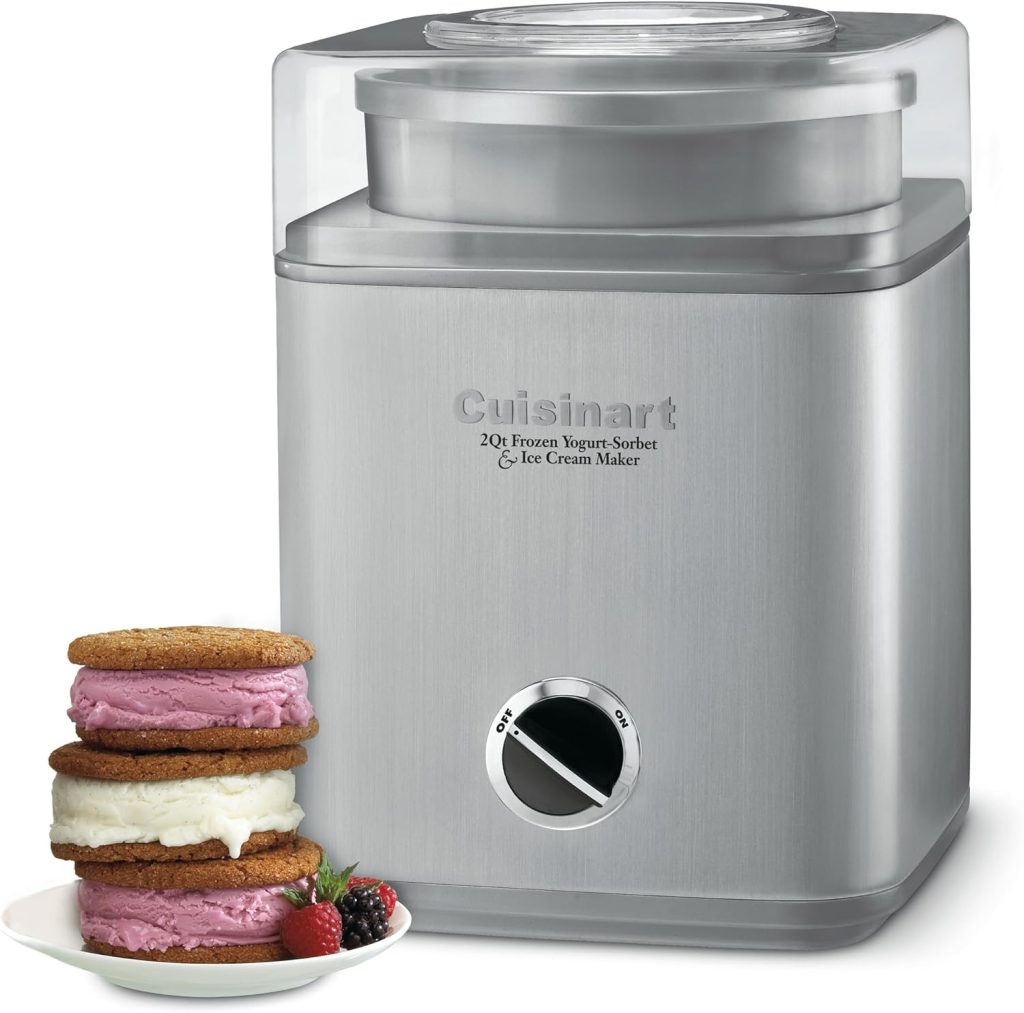
Ask a support inbox what actually goes wrong with freezer-bowl ice cream makers and the answer is almost boring. The dessert did not set. That message arrives in the first warm week of the year, then again after every holiday weekend, and in a large share of cases the machine in the message is fine — the bowl simply was not frozen hard enough, or the base went in warm, or the bowl was loaded past the point where churning and expansion have room to happen. The Cuisinart ICE-30BCP1, the 2-quart machine in the first box, sits right in the middle of that pattern. It is a simple device: a double-insulated bowl you freeze ahead of time, a paddle, a fully automatic motor, a lid with a wide spout for mix-ins. The listing promises frozen desserts in under 30 minutes, and that number is honest, provided the hours of freezing happened before it.
Start with the bowl, because the bowl is the product and the rest is housing. Two quarts is the bowl’s volume, and the bowl has to be frozen solid before a batch starts — the maker’s guidance puts that at roughly 16 to 24 hours in a freezer running at 0 degrees, with the colder back of the freezer doing the work faster than the door end ever will. There is a check that support scripts lean on because it needs no tools at all. Shake the bowl. Liquid moving inside, not ready. Silence, or close to it, ready. A bowl pulled after an overnight freeze in a warm, overstuffed freezer is the most common setup behind the did-not-set complaint, ahead of motor trouble, ahead of everything.
Then the base, where the second act of the same complaint lives. A base that goes in warm spends the bowl’s stored cold on cooling itself instead of freezing, and the churn runs out of cold before it runs out of time. The fix costs nothing: chill the base properly, overnight when the recipe allows it, and keep the fill below the top of the bowl, because the mixture expands as it freezes and a brim-full bowl has nowhere for that expansion to go except over the paddle and out under the lid. Two quarts of bowl, in practice, plans out to about a quart and a half of finished dessert once expansion and air have had their say. Actually, let me correct the way that usually gets quoted — it is not that the machine under-delivers. The rating describes the container, the same way a saucepan’s rating does, and nobody expects a saucepan to be filled to the rim either. Plan the recipe at a quart and a half and the machine keeps its promises. Plan it at two and the lid tells on you.
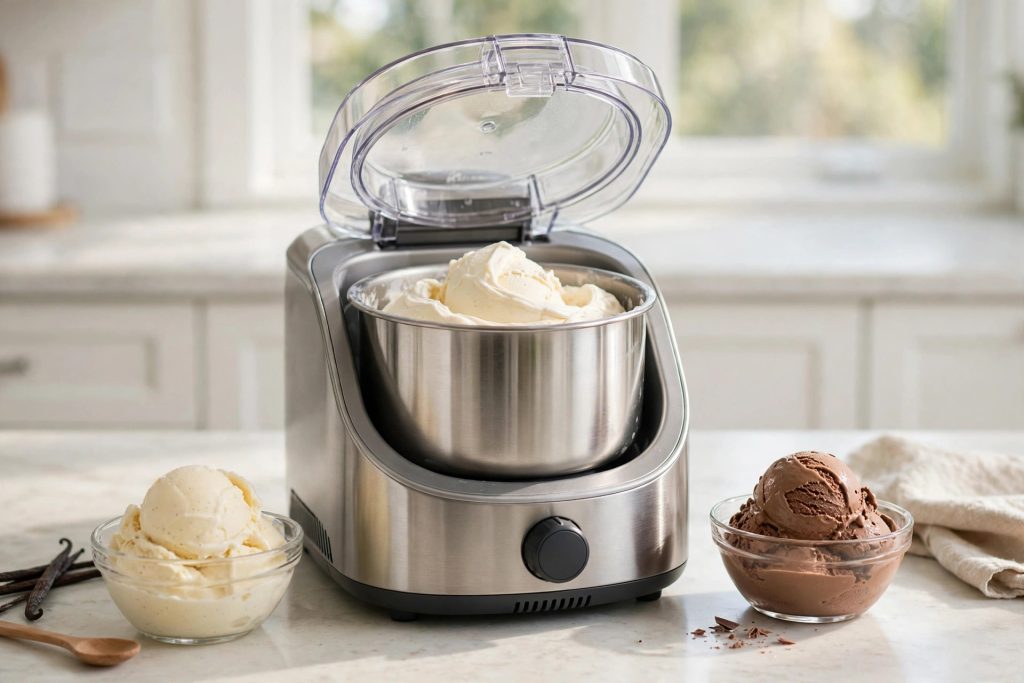
What does the half hour of churning produce, texture-wise, when the setup is right? Soft dessert at the moment the paddle stops, the consistency of soft serve that has started to think about being ice cream. Recipes then go into a sealed container in the freezer for a few hours to firm up to a hard scoop, and that second stage is the part the under-30-minutes headline quietly leaves outside the frame. The manuals say it plainly. Buyers hear the headline and not the footnote. Custard-style bases, the cooked egg-yolk ones, come out smooth and dense from this machine. Fruit sorbets run a little icier than they do from a compressor machine, because a frozen bowl is a fixed budget of cold and a watery base spends it fast. That is a physics statement, not a defect report. I have not run the big wooden bucket in the third box myself, so I cannot judge its texture against this one from experience, only from what its owners write in about.
The freezer shelf is the real price
Here is the cost that never appears in a specification table. A 2-quart freezer bowl that must be frozen before every batch, in a household that makes dessert on impulse, does not visit the freezer for 16 to 24 hours at a time. It lives there. Permanently. It takes roughly the footprint of a large mixing bowl, wants the cold back corner rather than the door, and everything else in that freezer — the peas, the stock, the emergency pizza — arranges itself around a bowl that cannot be moved to the counter to make room, because moving it spends the cold you froze it for. Support work teaches you to ask about the freezer before asking about the machine, because a household with a small, shallow freezer over a fridge may not be able to give this bowl a flat, level, fully cold home at all. The machine on the counter is modest. Its tenant in the freezer is not.
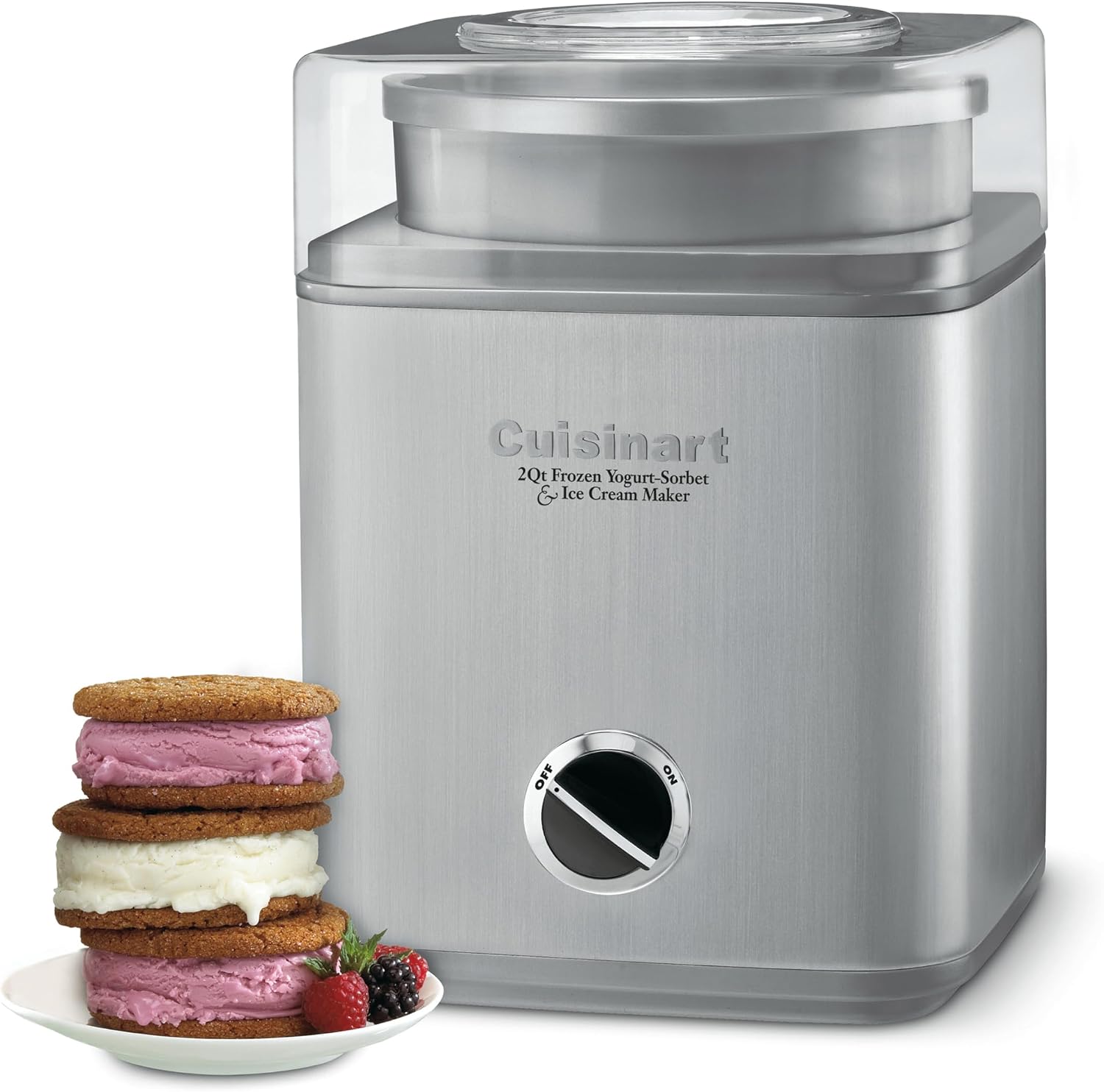
The subject — double-insulated freezer bowl that holds up to 2 quarts, fully automatic motor, frozen desserts in under 30 minutes once the bowl is frozen
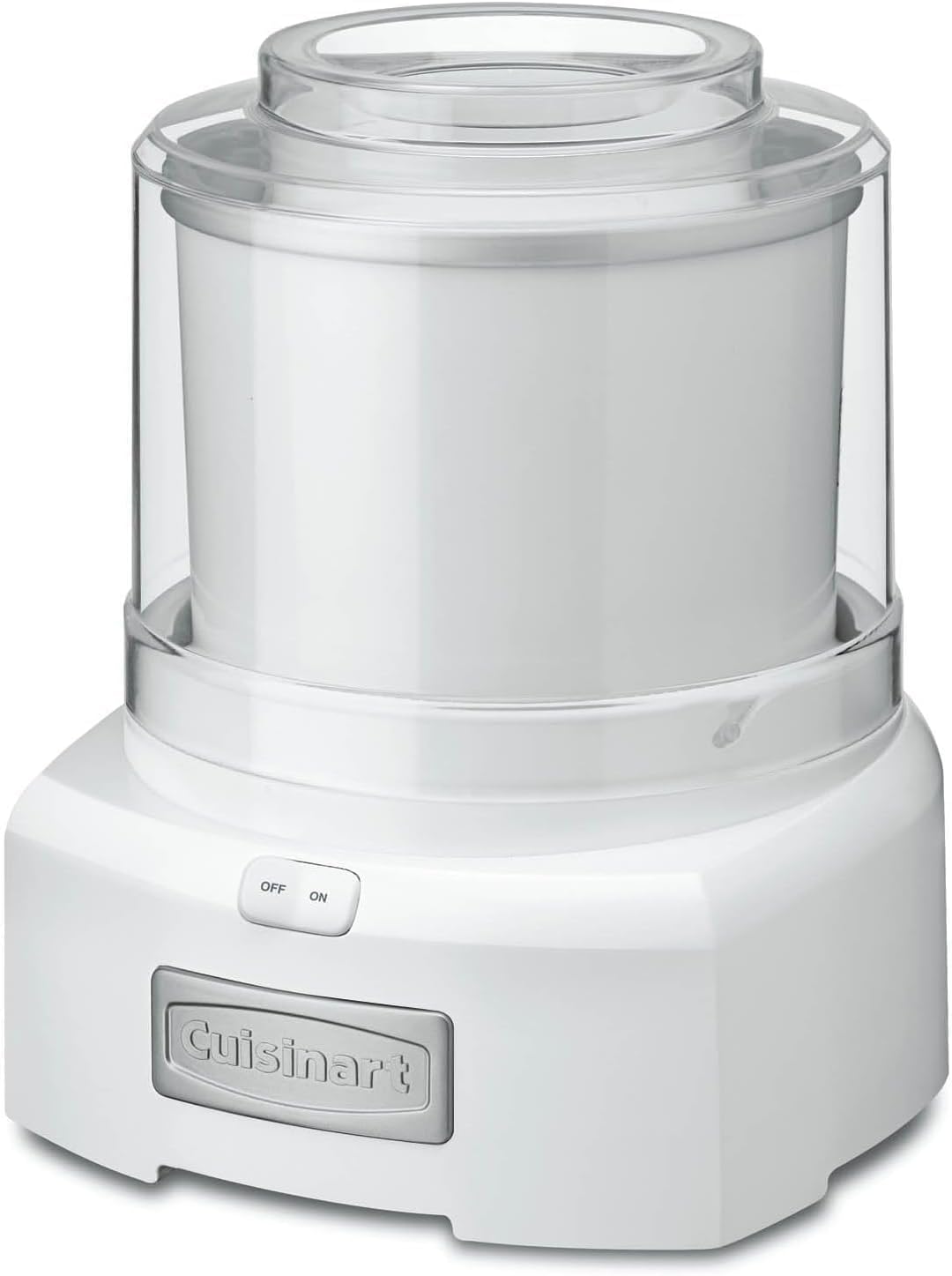
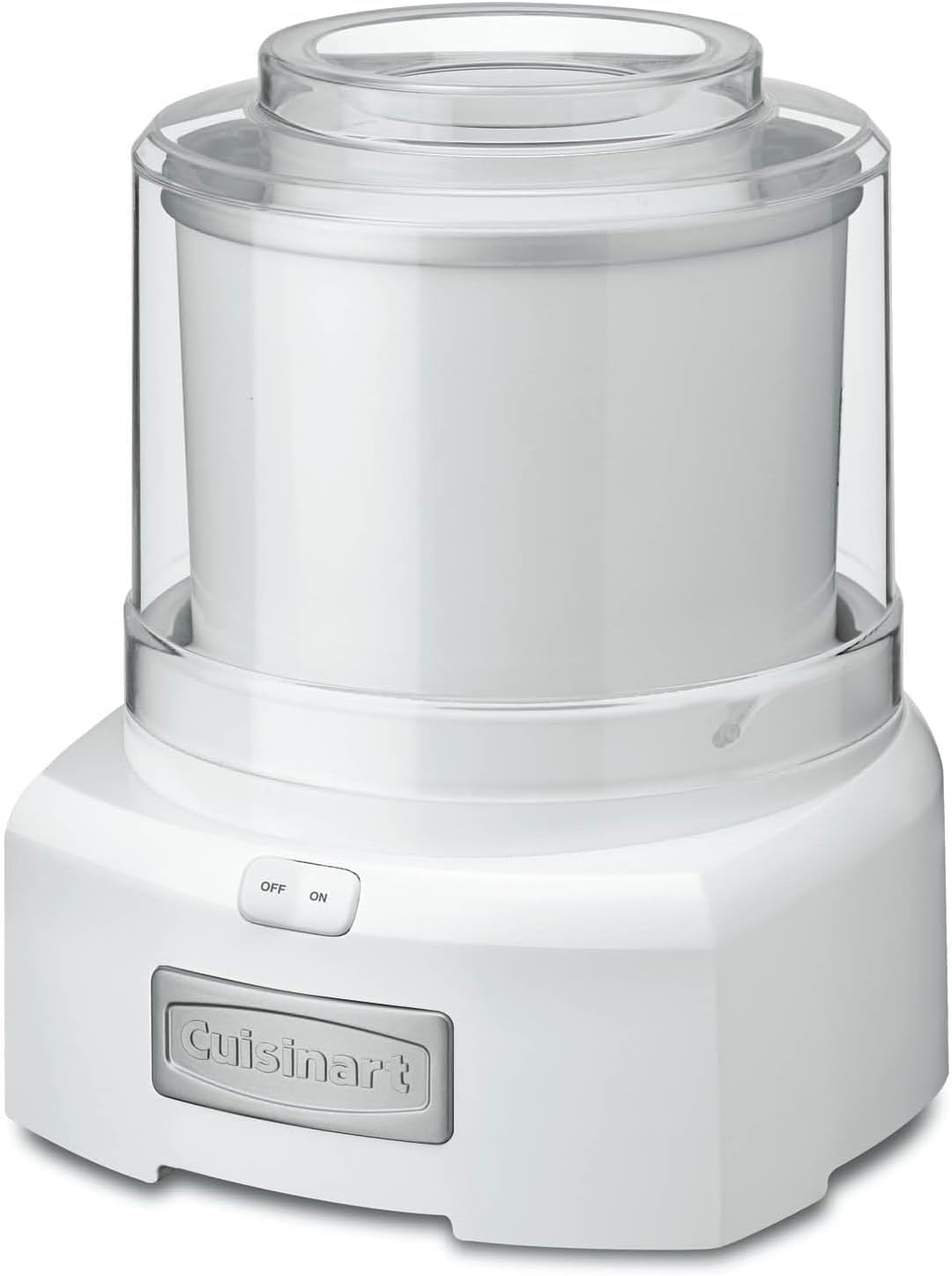
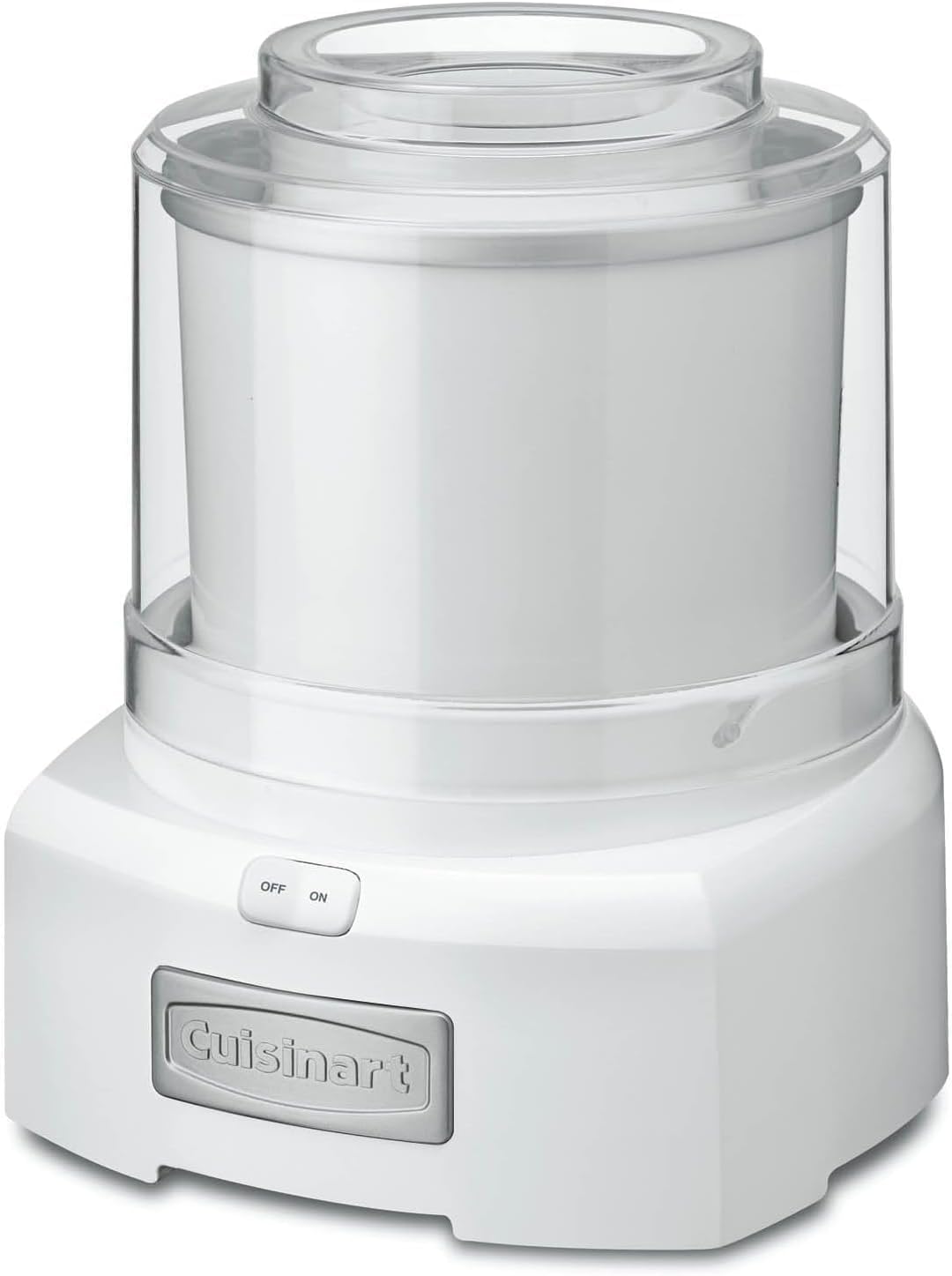
The smaller sibling — up to 1.5 quarts in 20 minutes or less, with a bowl that asks noticeably less of a crowded freezer
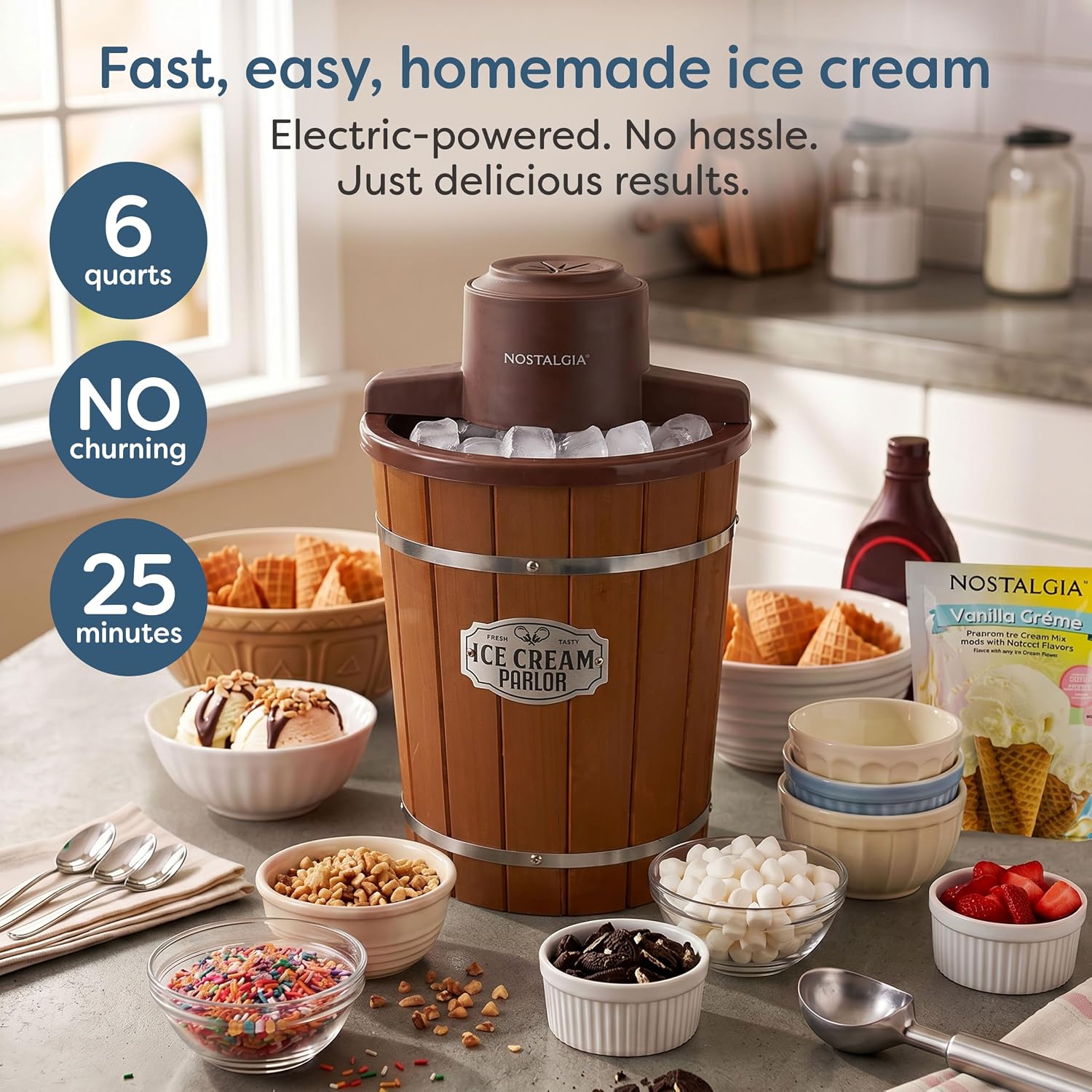
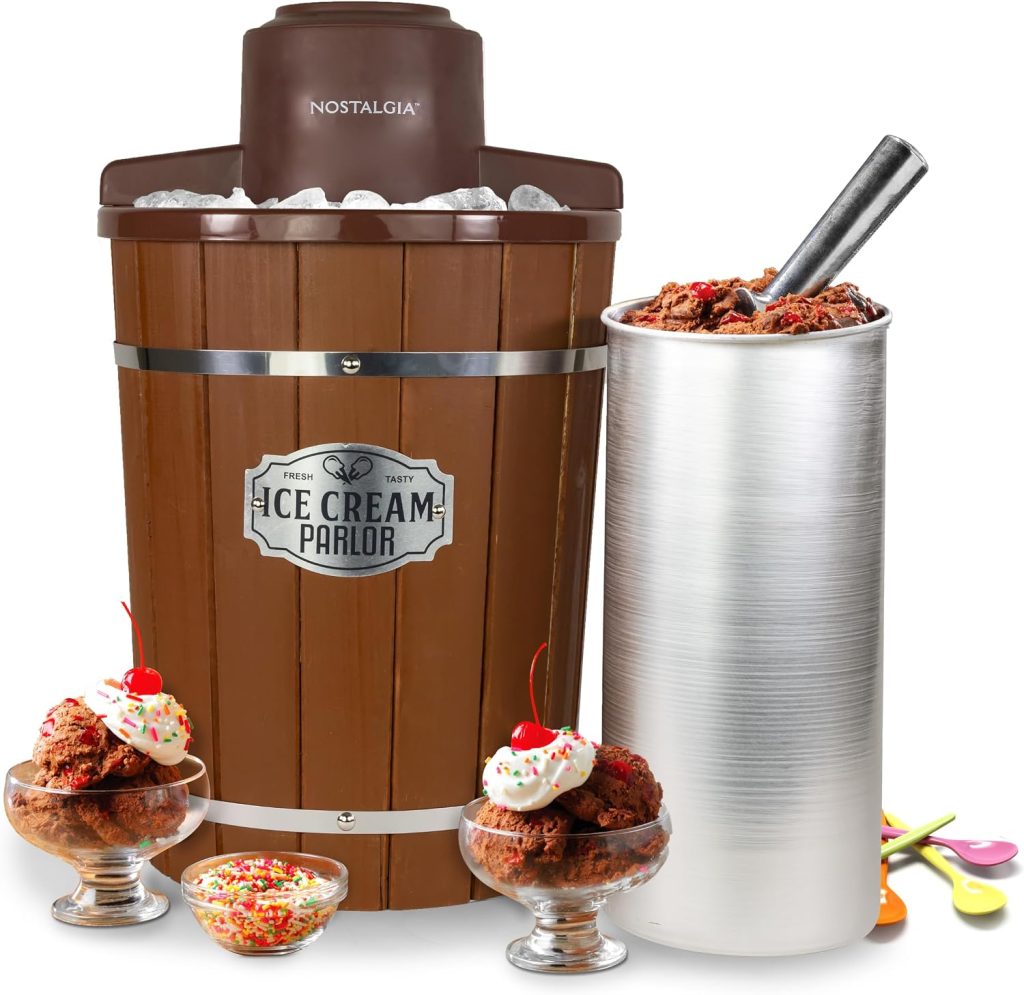
The salt-and-ice end of the category — 6-quart aluminum canister in a wooden bucket, no bowl to pre-freeze, and a cleanup routine to match
Prices and availability change; the listing is the final word.
Against that, the smaller machine in the second box deserves a fairer hearing than it usually gets. The ICE-21 makes up to 1.5 quarts in 20 minutes or less, from a bowl that is meaningfully easier to house, and for a two-person household the arithmetic can run in its favor: smaller batches, made more often, eaten fresh. The 2-quart ICE-30 earns its size when a family dessert means four to six servings at one sitting, or when a recipe is written for a full batch and halving it throws the custard ratios off. The compressor-model walkthrough covers the opposite escape route, a machine with its own built-in freezing and no bowl to house at all, and its price is the honest measure of what the freezer-bowl compromise saves you. You pay in shelf space here, or in money there.
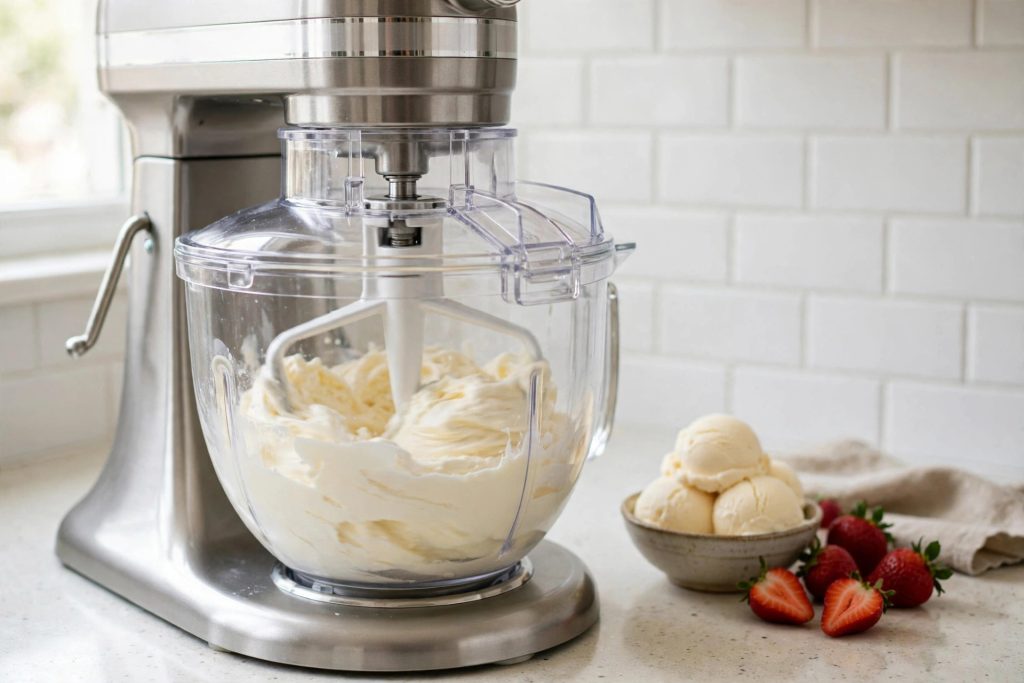
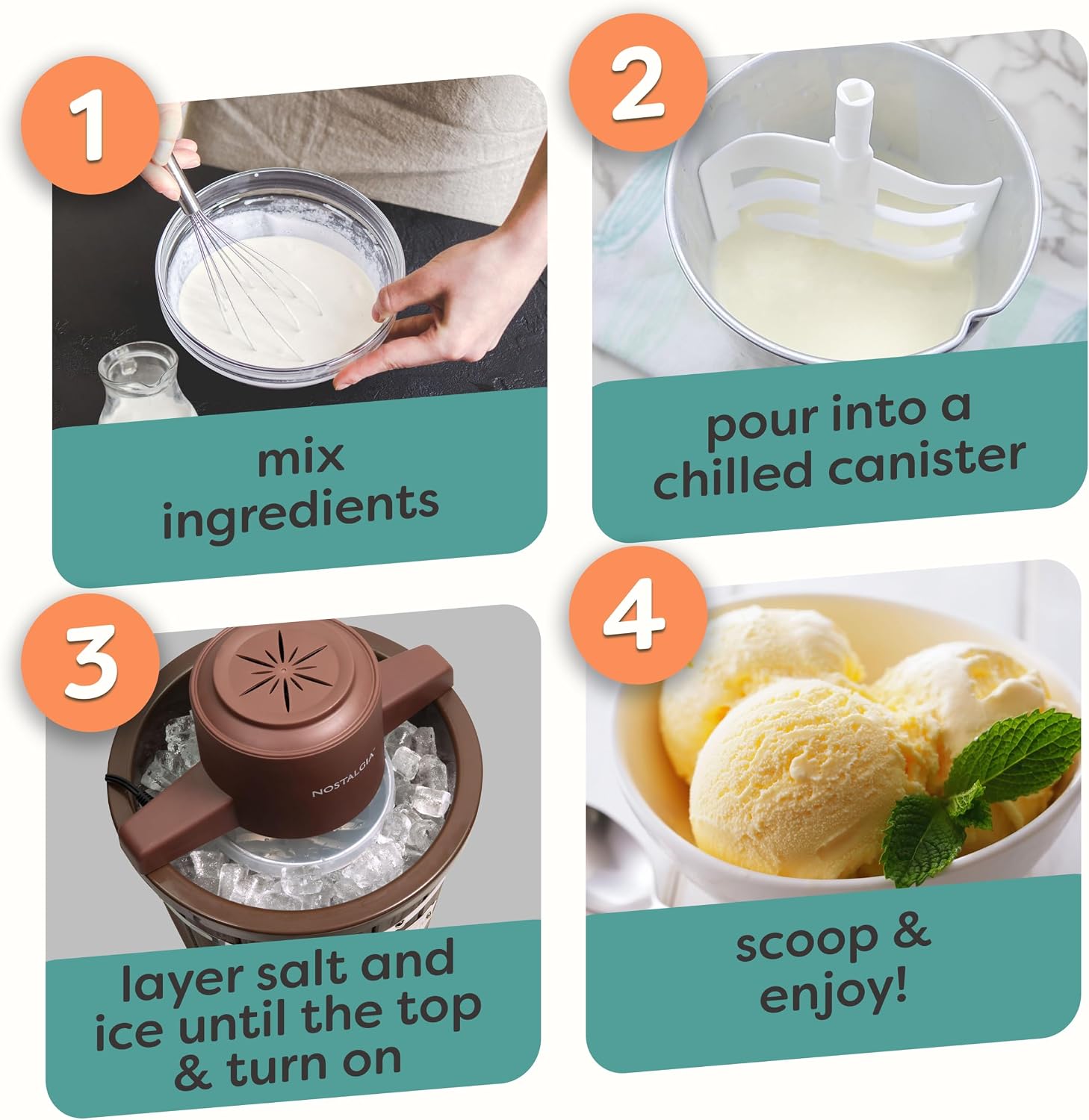
The salt-and-ice route in the third box is that older third door, sort of, with its own toll. The Nostalgia bucket holds 6 quarts in an aluminum canister, wants no freezer shelf at all, and asks instead for ice, salt, a place for meltwater to go, and a cleanup owners describe with feeling. The Nostalgia 6-quart review walks through that machine in full, and the mixer-attachment review covers the mixer-attachment version of the freezer bowl, which splits the difference by borrowing a stand mixer’s motor and asking for the same frozen real estate. Reading across the three, no design in this category removes the cold problem. Each one just chooses where the cold is stored — a gel bowl in your freezer, a compressor in a heavier and pricier box, or a bucket of salted ice on the day itself.
A few ownership details that rarely make it into reviews and fill a steady share of the inbox. The freezer bowl is hand-wash territory — the insulation and gel inside it are not built for a dishwasher’s heat — though the wash itself is short work. Dry the bowl fully before it goes back into the freezer, because water left in it freezes where it sits and the paddle then starts its next batch scraping against that ice. The cord on the ICE-30 retracts into the base, a small thing owners mention with disproportionate fondness. And the warranty is a limited three-year one; a bowl that stops freezing solid after a shake test, in a freezer verified cold, is the rare complaint that really is the product, and it is exactly the claim that warranty exists for.
Noise, briefly, because somebody always asks. A churn motor and a paddle moving through thickening custard make a steady mechanical sound for the length of the batch, present in the room, easy to leave behind. Households running it during a film in the next room will hear the paddle’s rhythm change as the batch thickens — a genuinely useful doneness signal no timer gives you, the motor working audibly harder against a base that has nearly set. When the sound strains early, that usually means the bowl was overloaded rather than that anything has broken. Volume again. It keeps being volume.
Questions that come up
My batch came out like sweet soup even though the bowl sat in the freezer overnight. What went wrong?
Overnight is a duration, not a temperature, and the bowl cares about the second one. A freezer running warm, or a bowl parked in the door or on top of warm leftovers, can sit for twelve hours and still hold liquid gel — give the bowl the shake test before a batch, and if anything moves inside, it needs more time in the coldest, flattest spot you have, closer to a full day than to a night. The base matters the same way: a warm base spends the bowl’s cold on cooling down, and the churn runs dry before the dessert sets. Chill the base until it is properly cold all the way through, keep the fill below the top of the bowl so expansion has somewhere to go, and most soup stories end there. If a bowl still will not freeze silent after a full day in a freezer that keeps other food hard, that is the uncommon case that is actually the bowl, and it is a warranty conversation rather than a technique one.
Is 2 quarts really 2 quarts of ice cream, or is that the bowl talking?
It is the bowl talking, and once you know that, the number stops feeling like a trick. The bowl holds up to 2 quarts, the mixture expands as it freezes and takes in air as it churns, and the batch that comes out lands closer to a quart and a half of finished dessert. That serves four to six people a reasonable scoop each — a family dessert, not a party. Feeding a crowd means making the dessert a day or two ahead and storing it, since a second batch needs the bowl back in the freezer for many hours first. Buyers who plan around a quart and a half per batch almost never write in angry about capacity. Buyers who planned around the number on the box sometimes do, though every maker in the category rates bowls the same way.
Can the bowl just live in the freezer all the time, and is that bad for it?
Living in the freezer is what most of these bowls end up doing, and it is not bad for the bowl — the gel pack is built to be frozen, thawed, and frozen again, and constant residence in the cold does it no harm worth worrying about. The cost is not to the bowl. It is to everything else in that freezer, which now shares its shelf with a large, round, non-negotiable object that cannot be set aside on the counter for an afternoon without spending its cold. Households with a chest freezer barely notice. Households with one shallow freezer over the fridge notice every week, usually while trying to fit something flat into a space that is now round. The bowl also wants to freeze level, so a level home at the back is worth arranging once, properly, instead of balancing it on bags of vegetables and hoping. Hope is not a freezing strategy, though a surprising number of freezers run on it.
Somewhere tonight there is a bowl sitting in the back of a freezer, silent when shaken, doing its one job of being cold and ready, while the shelf around it stays slightly rearranged and nobody in the house remembers deciding that arrangement was permanent. The machine itself will take half an hour when it is asked. It is the asking that has to be planned a day ahead, every time, for as long as the bowl lives there — and that ongoing act of remembering is the thing being bought, far more than the paddle or the motor.
This site contains affiliate links. We may earn a commission on qualifying purchases.