The first time I saw “1500W” printed on a stand mixer box, I did what most people do. I assumed bigger number, bigger muscle. That assumption cost me a return label and three weeks of waiting for a replacement.
Wattage is the single most oversold number in the mixer aisle. A 1500W motor sounds like it could knead cement. But wattage is just how much electricity the thing drinks, not how much of that turns into actual twisting force at the beater. Torque is the number that matters, and nobody prints torque on the box. Funny how that works.
I learned this the embarrassing way with a budget 600W machine years ago that bogged down on a double batch of bagel dough and started smelling like a hot hair dryer. The gears inside were plastic. Plastic. On a machine whose entire job is pushing around stiff dough. It stripped within the first year. That is the detail the spec sheet never mentions: what the gears are made of.
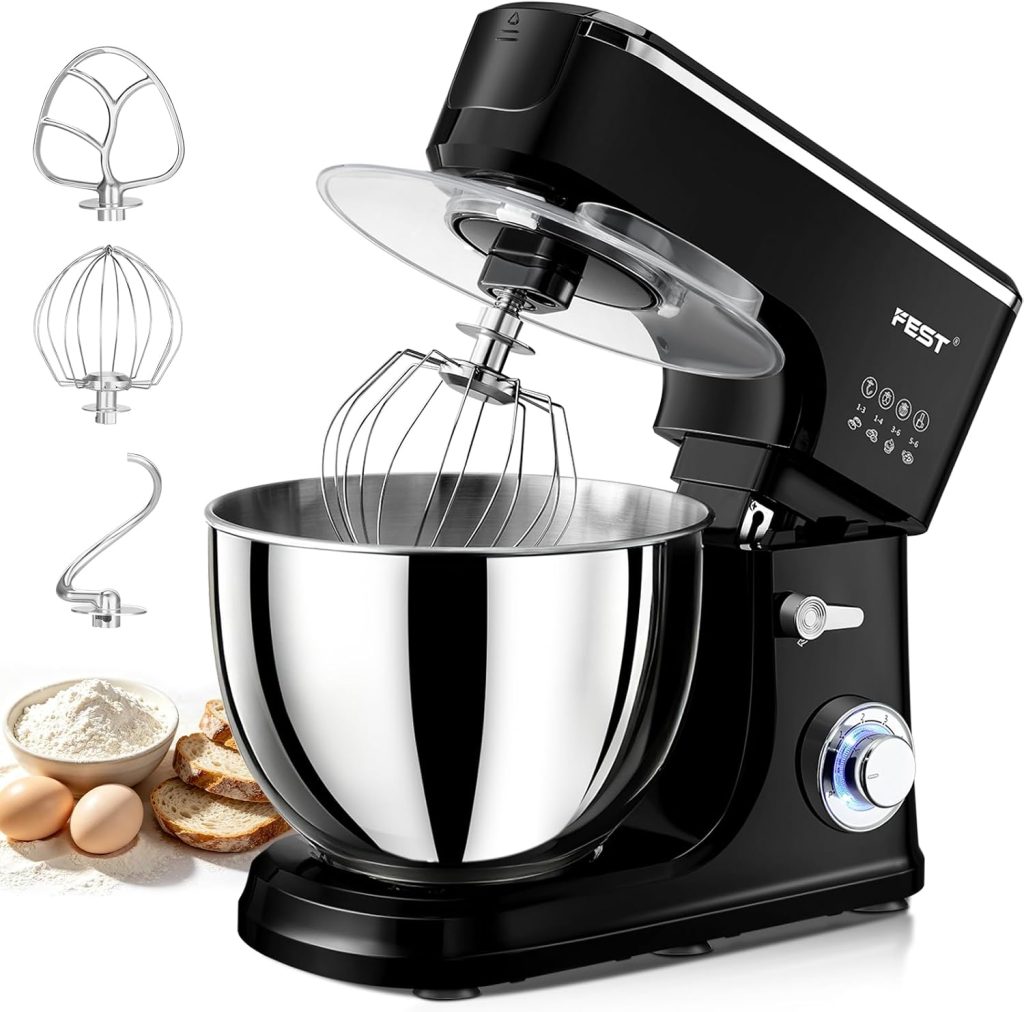
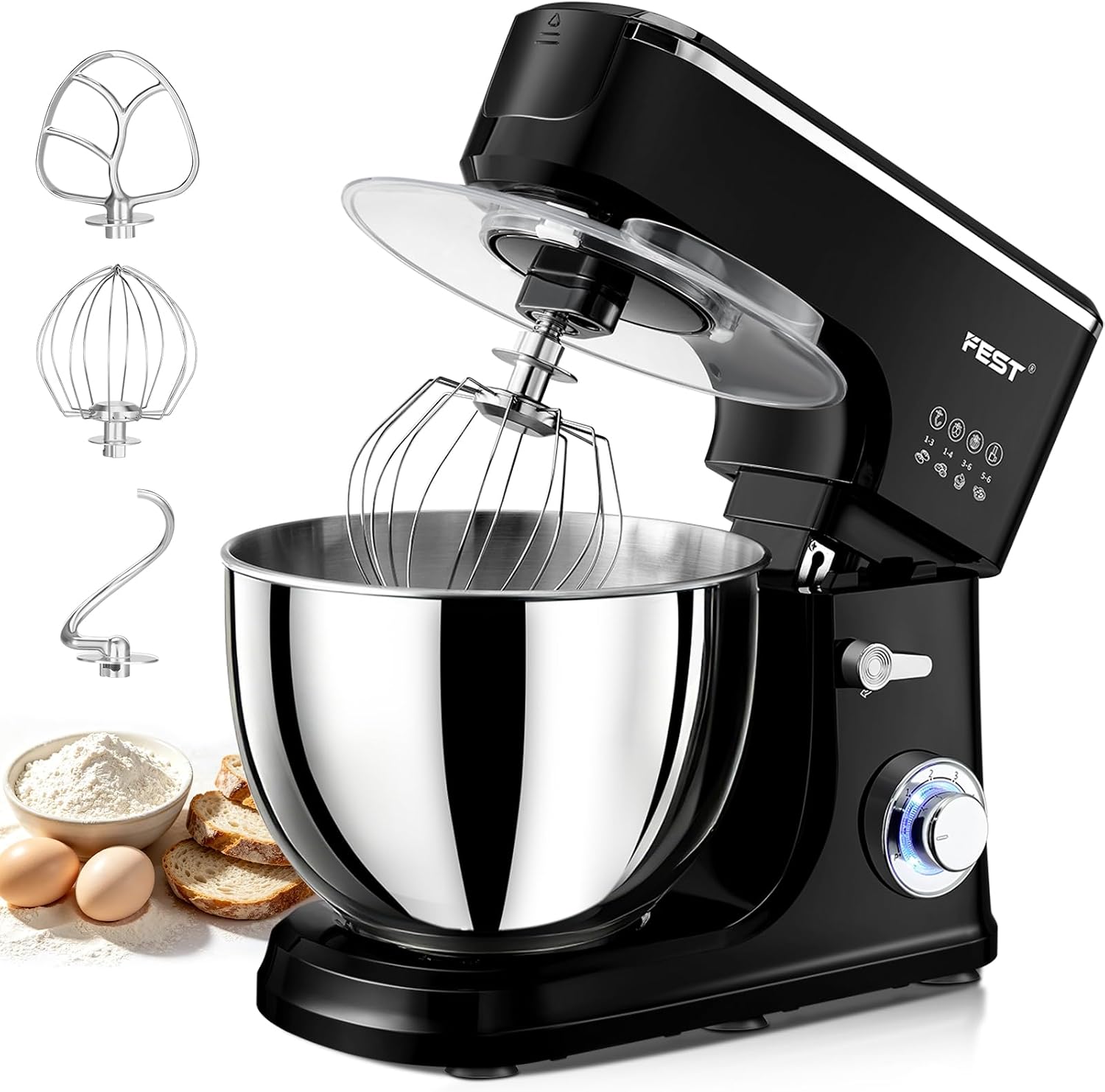
So when I started looking at the FEST 8.45QT, the 1500W figure barely registered. What I actually wanted to know was the stuff around it.
Is an 8.45-quart bowl actually useful, or just impressive on paper?
Here is the honest math. A standard 5-quart mixer handles about 9 dozen cookies or 4 loaves of bread. The FEST’s 8.45-quart bowl is built for roughly double batches of almost anything, something like 8 to 9 loaves or around 13 dozen cookies in one go.
That sounds great until you picture the machine itself. An 8.45-quart bowl does not sit on a dainty base. This is a big footprint appliance. It will not slide under standard cabinets easily, and if your kitchen is the kind where the toaster already lives on top of the microwave, measure first. I have strong feelings about this because I once bought a 6.5-quart unit without measuring and it lived on my dining table for two months. My dining table. Where we eat.
For one or two people who bake on weekends, this much bowl is overkill. You will be scraping a tiny amount of batter around a canyon of stainless steel, and small batches actually mix worse in oversized bowls. The beater cannot reach everything. But if you bake for a crowd, do holiday cookie marathons, or make bread in serious quantity, the capacity stops being a flex and starts being the whole point.
What about the whole wattage versus torque thing?
Right. Let us talk about the part manufacturers hope you skip.
A well-built 300W mixer with metal gears and a direct-drive motor can out-knead a sloppy 600W machine with plastic gears and a belt drive. I have watched this happen. The cheap high-wattage unit screams, shakes, and overheats. The lower-wattage workhorse just keeps turning. The difference is gearing efficiency, and it is the least advertised spec in the industry.
The FEST advertises 1500W. That is a lot of electrical appetite. Whether it translates into real kneading power depends on what is between the motor and the dough hook, and that is the part I cannot verify from a listing. This is where I get annoyed at the entire category: they will print the wattage in 40-point font and hide the gear material in a PDF manual you have to dig for.
What I can say is the physics. A bowl this large full of stiff dough is a serious load. If the drivetrain is not up to it, you will know within the first month, because that is when the burning smell shows up. Actually, no. That is not right. What I meant was, you will know within the first few heavy batches. The smell is the symptom. The stripped gear is the disease.
Six speeds is plenty, by the way. Anyone selling you 12 speeds for home baking is selling you numbers. You need stir, slow, medium, fast, and whip. The sixth is a bonus. Fine.
This site contains affiliate links. We may earn a commission on qualifying purchases.
Tilt-head or bowl-lift: does it matter at this size?
Yes. More than the speed count, more than the color options.
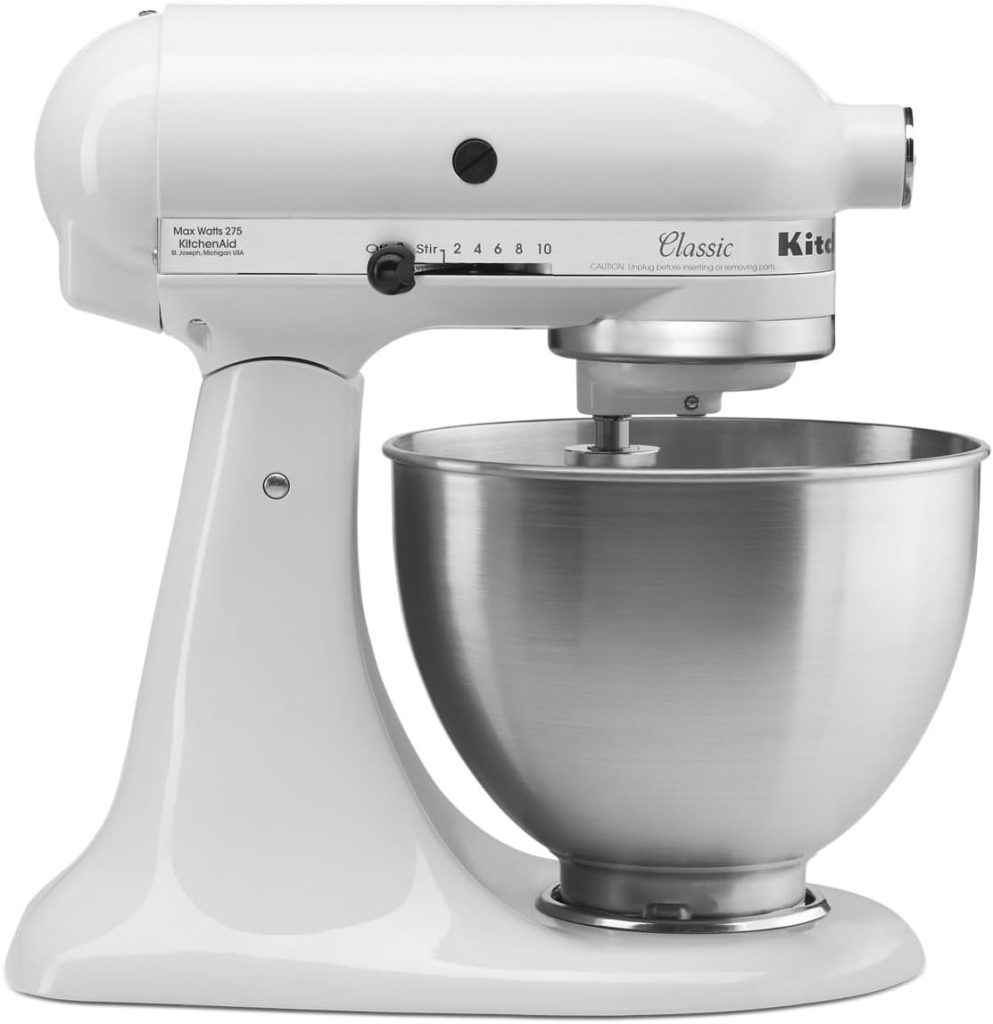
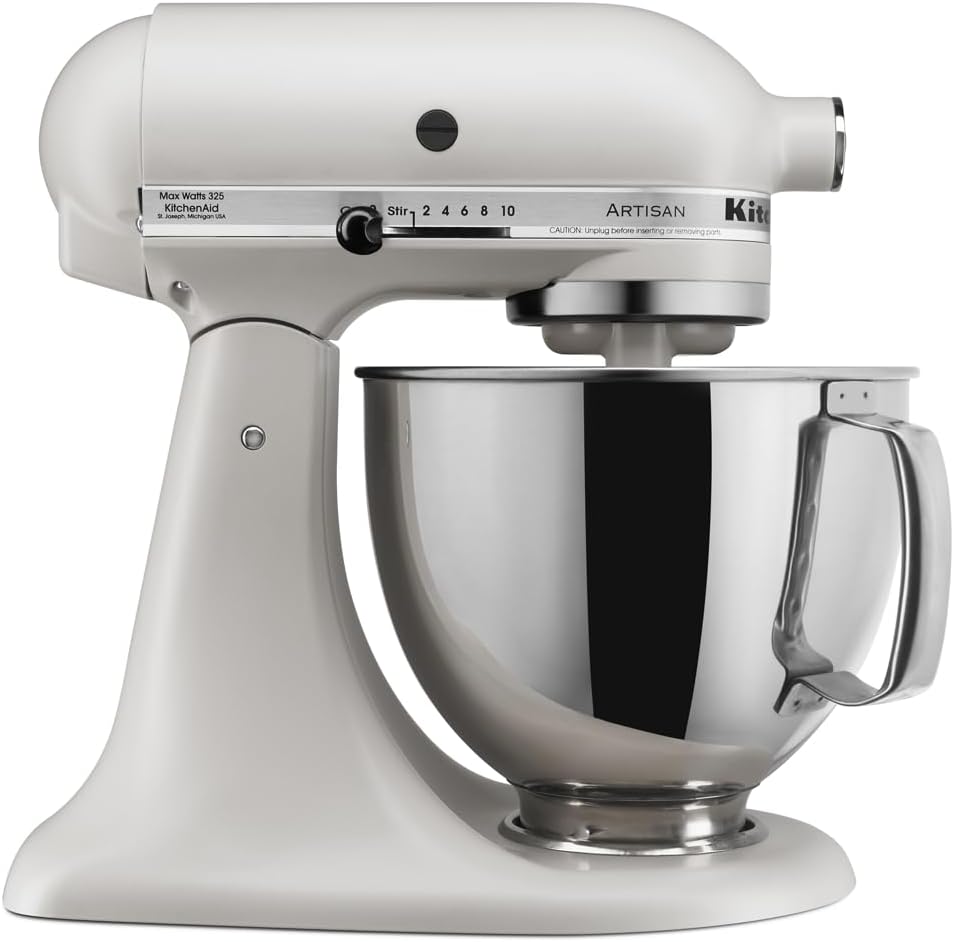
Tilt-head mixers are the friendly ones. Head tips back, you swap the bowl, everything is reachable. They fit under cabinets. The KitchenAid Artisan 5-Qt is the classic of the species. The catch is physics again: a tilting head is a hinge, and a hinge under heavy load can wobble. With stiff dough in a big bowl, some tilt-heads develop a little dance move. Not dangerous. Just undignified.
Bowl-lift designs lock the bowl onto arms and crank it up into the beater. More stable, better for heavy dough, standard on the big professional units. The trade is height. They are tall, they need clearance, and scraping down the sides mid-mix is more awkward because you have to lower the whole bowl.
For an 8.45-quart machine, bowl-lift is the mechanism the size wants. Whether this particular FEST uses it is worth confirming before you buy, because a giant tilt-head doing the wobble with ten pounds of bread dough in it is a sight you do not need in your life.
The attachment question nobody asks until it is too late
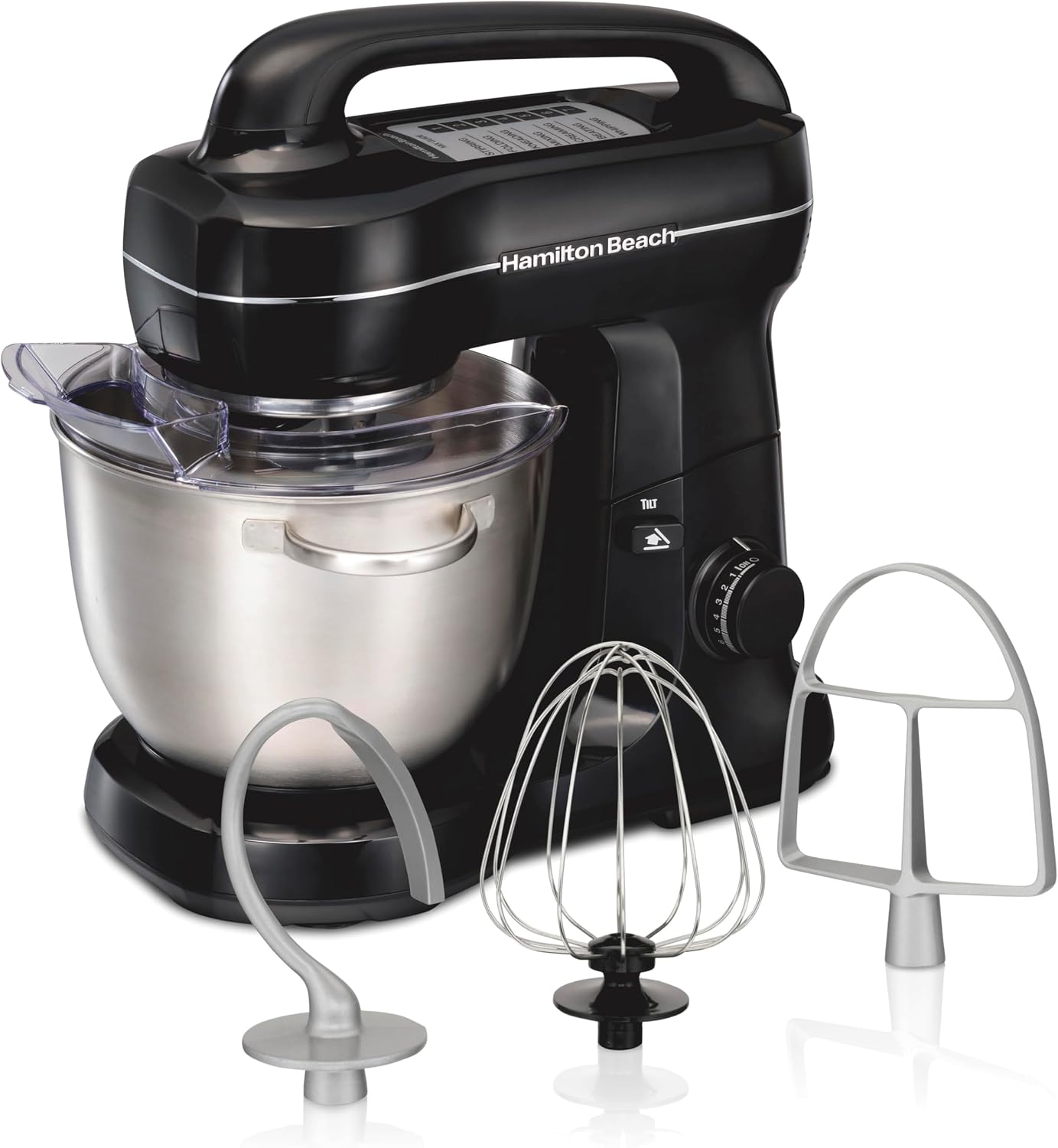
Every stand mixer ships with the same holy trinity: flat beater, wire whisk, dough hook. The materials differ. Metal attachments survive the dishwasher and the years. Coated or plastic ones chip, and then you are picking flakes out of frosting.
The bigger question is the hub. KitchenAid built an empire partly because its front attachment hub fits dozens of accessories, pasta rollers, meat grinders, the works, across most models. Buy into that system and your mixer grows with you. Most budget brands either have no hub or a proprietary one with three accessories that get discontinued in two years. I have a drawer with a perfectly good off-brand grinder attachment that fits nothing I own anymore. It is a small museum of optimism.
A pouring shield sounds like a throwaway accessory until you add flour to a running mixer without one. Then it becomes the most valuable piece of plastic in your kitchen. If the FEST includes one, good. If not, factor it into the real price.
So who is this actually for?
Not the casual baker. I keep coming back to that. If you make a cake twice a year, an 8.45-quart mixer is a monument to ambition sitting on your counter, and you would be happier with something like the Electactic 5.3-Quart or even a smaller Hamilton Beach 7-speed that does not dominate the room.
But if you are the person who does the holiday baking for the extended family, who makes bread every week, who has ever thought “I wish I could do this whole recipe in one bowl instead of two” — the capacity argument is real. Two batches in one bowl is not just convenience. It is consistency. Same hydration, same mix time, no batch-to-batch drift.
The price is the other half of the pitch. A big-name mixer in this capacity class costs multiples more. The FEST is betting that most of that premium is brand and attachment ecosystem, not raw mixing ability. That bet is sometimes right. Sometimes the premium is the metal gears.
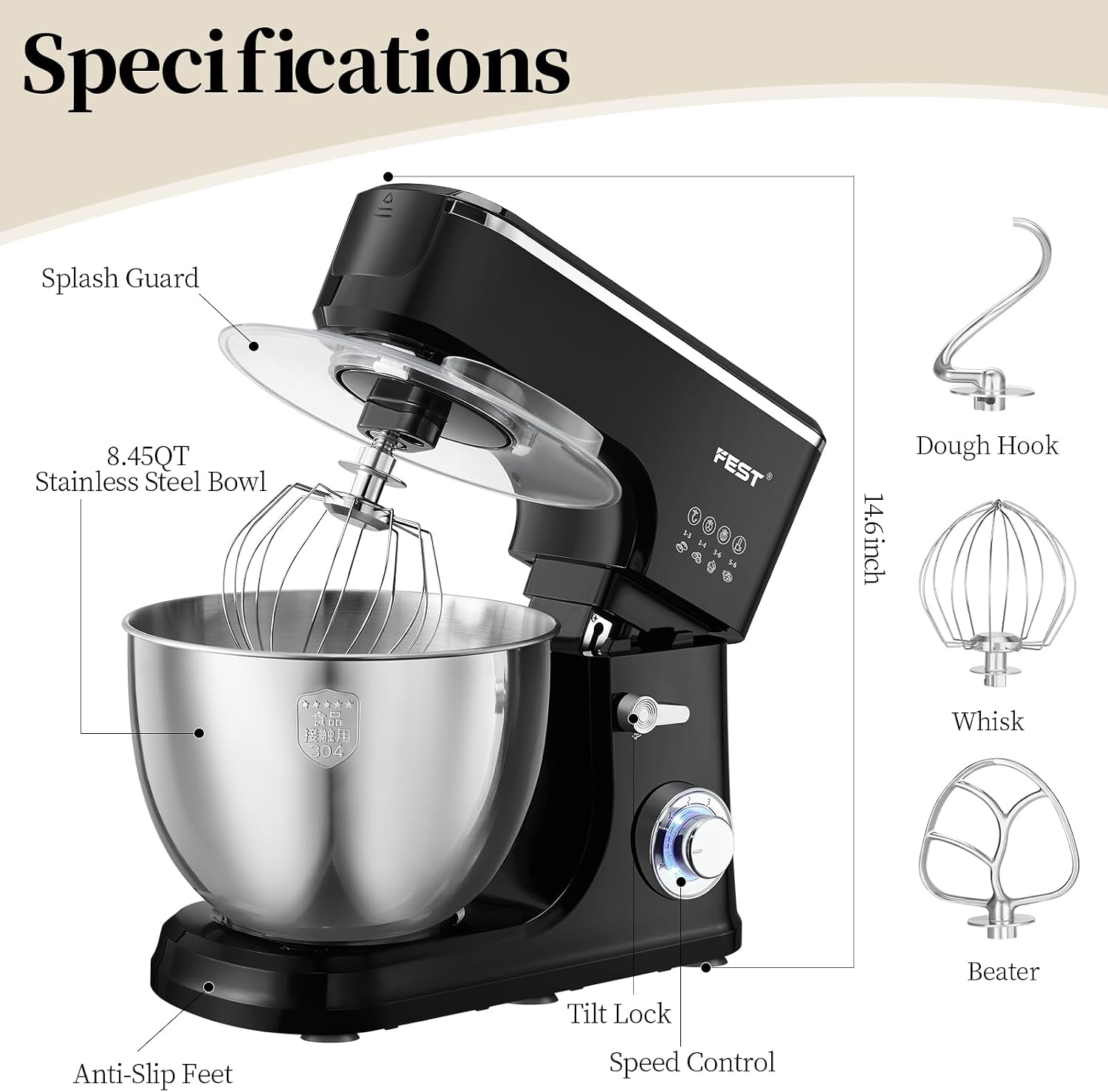
Here is the part I cannot resolve from the outside, and I will not pretend otherwise. How this machine holds up in year three, whether the motor stays quiet, whether the gears are metal all the way down, that is the kind of thing you only learn by owning one or by reading a hundred long-term reviews and squinting. The specs say 1500W and 8.45 quarts. The specs do not say “still going strong after 400 loaves.”
I have returned enough appliances to know the pattern. The ones that die young almost always die the same way: great on paper, plastic where it counts, and a return window that closed two weeks before the smell started. If you buy big and budget, buy from somewhere with a generous return policy and put it through a heavy dough in week one. Do not wait. The dough will tell you everything the spec sheet would not.