This site contains affiliate links. We may earn a commission on qualifying purchases.
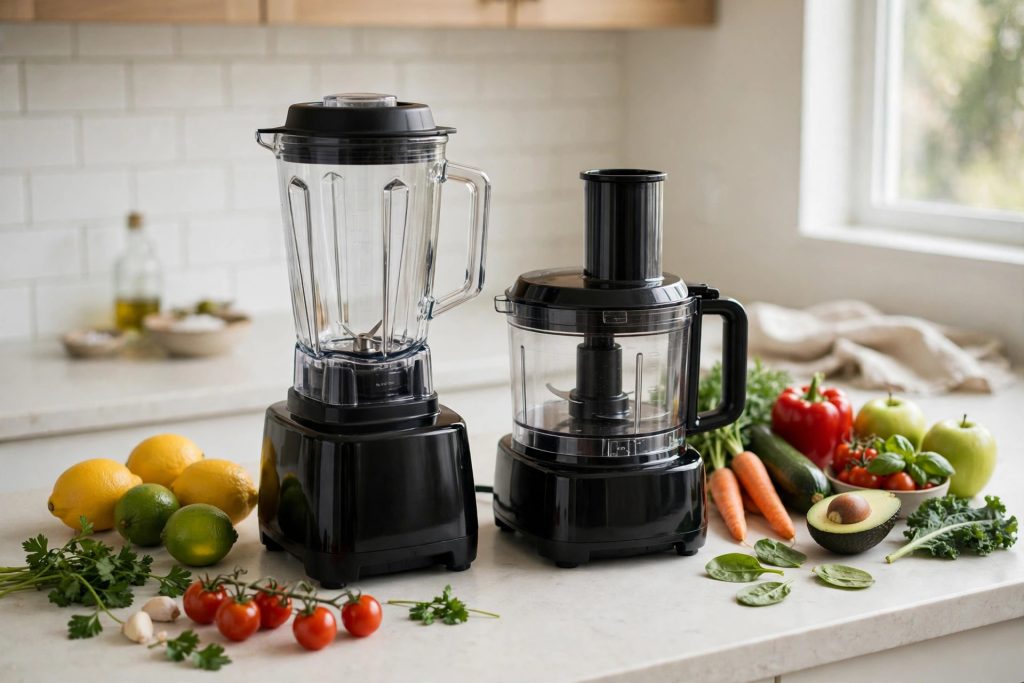
It accumulates. That is the thing nobody tells you about a kitchen system: it does not arrive in your life all at once, the way it arrives in its box. The BL770 shows up as a 1500-watt motor base with a 72-ounce pitcher, an 8-cup food processor bowl, and single-serve cups, and on day one it is a blender — a loud, serious, frozen-strawberry-destroying blender. The system part reveals itself slowly, over weeks, as each vessel finds its job or fails to, and the honest review of this machine is not a verdict. It is a census, taken over time, of which pieces ended up living on the counter and which ones migrated to the back of a cupboard to think about what they did.
The pitcher earns its place first, and fast. Frozen fruit, ice, liquid, a handful of greens in a weak moment — the stacked blade assembly is the reason it works, blades running up a central column at several heights instead of sitting only at the bottom where a traditional blender blade waits for the mixture to come to it. Frozen ingredients do not need to be coaxed down into the vortex; the column meets them where they are. Forty-five seconds, give or take, and a smoothie is a smoothie all the way through, no chunks hiding at the bottom like an apology. The 1500 watts get the credit on the box, and the wattage is real, but I have used weaker machines with this blade arrangement that embarrassed stronger machines with a bottom blade and a prayer. Power is a third of the story. The tower is the rest of it. The noise, though — the noise is all wattage. There is no quiet version of this class of machine, and the household learns to blend before the baby naps or after, and that negotiation is part of the purchase whether the listing mentions it or not.
The single-serve cups accumulate second, and they accumulate into a habit, which is the most valuable thing any appliance can do. A smoothie for one, made in the cup, blended on the cup’s own blade assembly, lid swapped, out the door — the full pitcher stays clean in its stand, and that matters more than it sounds. Washing a 72-ounce pitcher to make 16 ounces of smoothie is how blender routines die in week three; I have buried two routines that way myself. The cups keep the habit alive by keeping the washing small. One caution, learned the grubby way: the gasket in the cup’s blade lid is where old smoothie goes to hide, and it needs to come out and be rinsed on a rhythm, or one morning the fresh smoothie tastes faintly of the ghosts of smoothies past. A thin knife lifts it. Thirty seconds. The ghosts leave.
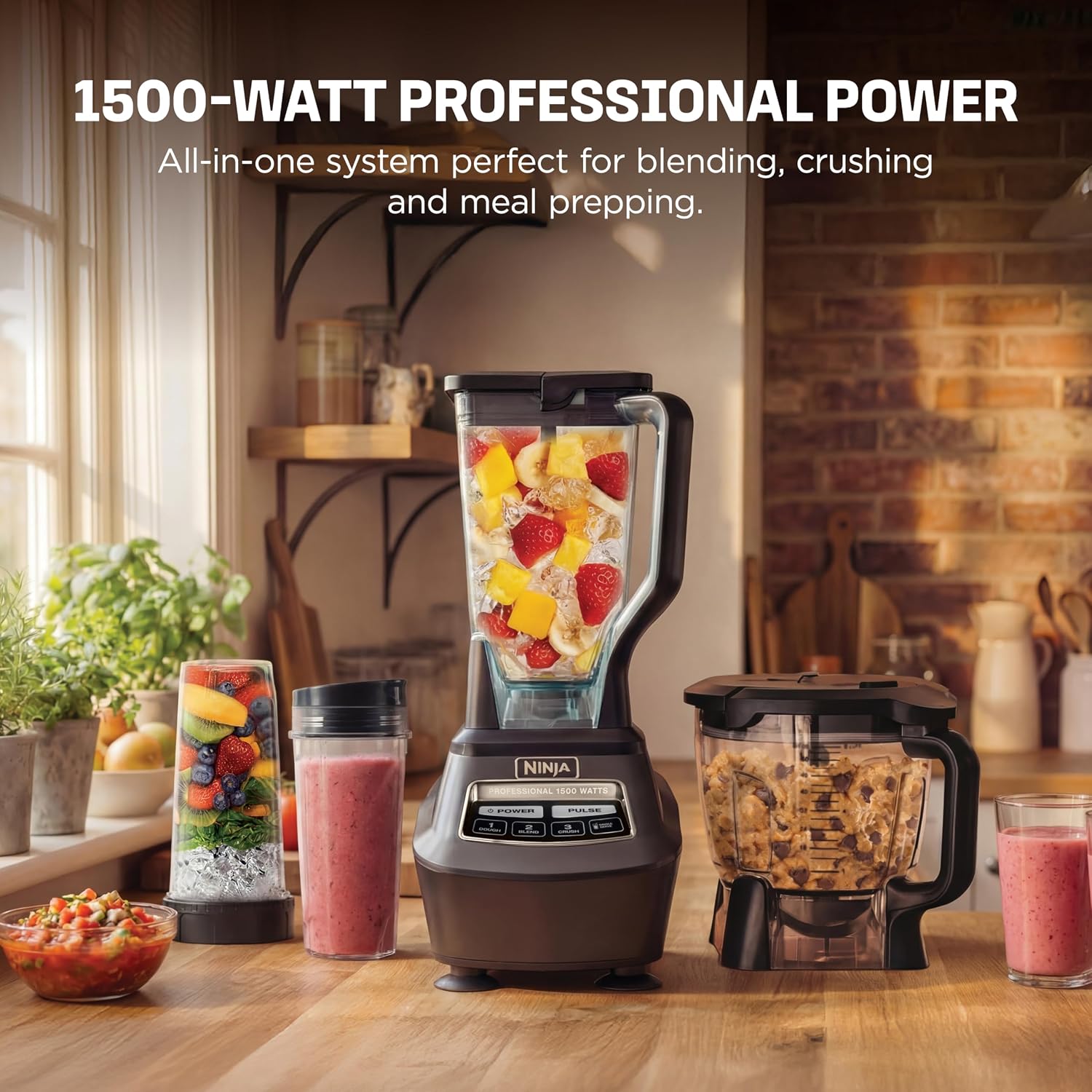
The processor bowl accumulates slowest, and this is where the census gets honest. Eight cups of capacity, a chopping blade, a dough blade — on paper it retires your other prep tools. In my kitchen it does real work roughly twice a month: a big salsa, a cauliflower’s worth of rice, dough for a flatbread night. The other twenty-eight days, the small jobs — an onion, a handful of herbs, a cup of nuts — go faster with a knife or a small manual chopper, because washing an 8-cup bowl, its lid, its feed chute, and its blade to dice one onion is a tax no cook pays twice. This is not a failure of the bowl. It is a failure of the idea that capacity is the same as usefulness. The bowl is excellent at the jobs that are actually its size. Most home processing is not its size. The Vitamix 5200 review takes on the expensive single-purpose answer to the blending half of this machine, if you want to see what the money buys when a blender refuses to be anything else.
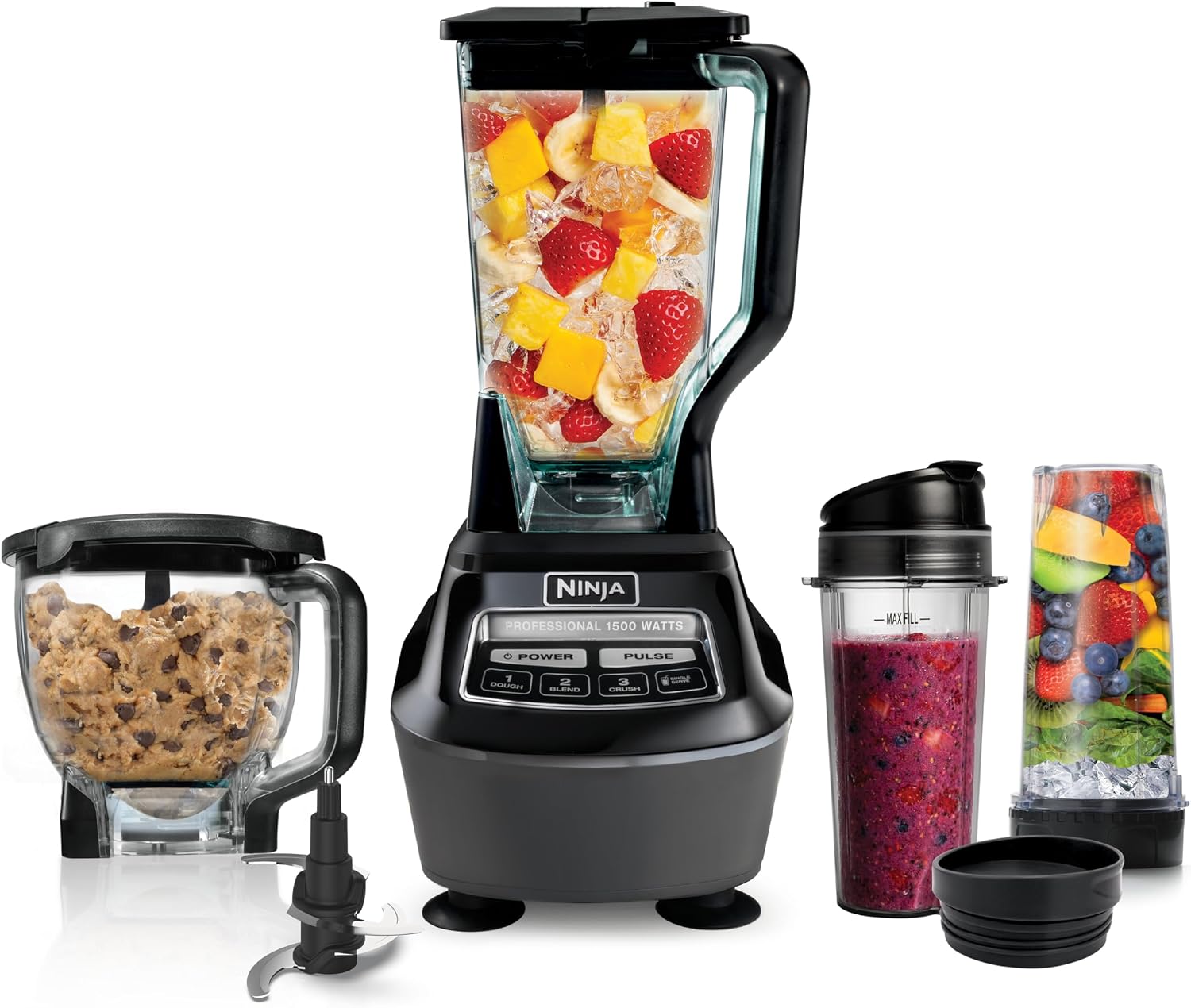
The subject — a 1500-watt base that runs a full pitcher, an 8-cup processor bowl, and single-serve cups off the same motor
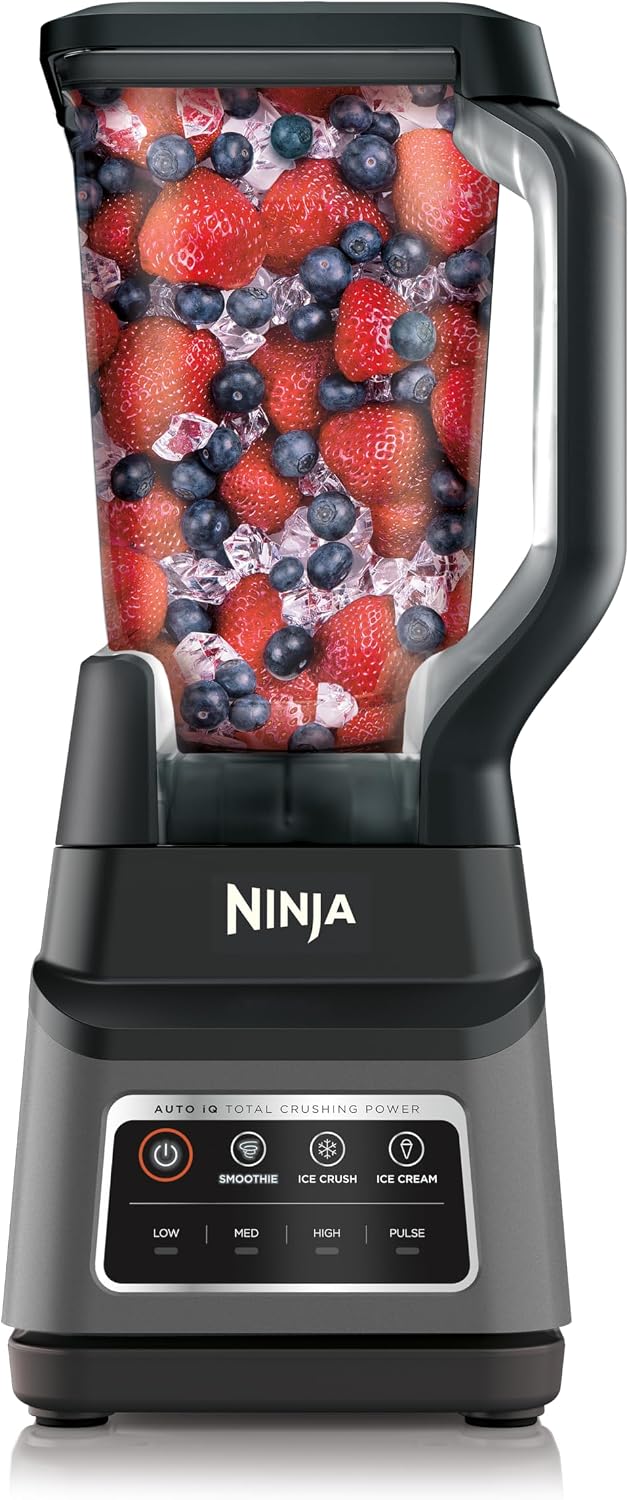
The sibling that only blends — 1400 watts, the same pitcher size, and programs that run the blend cycle so your thumb does not have to
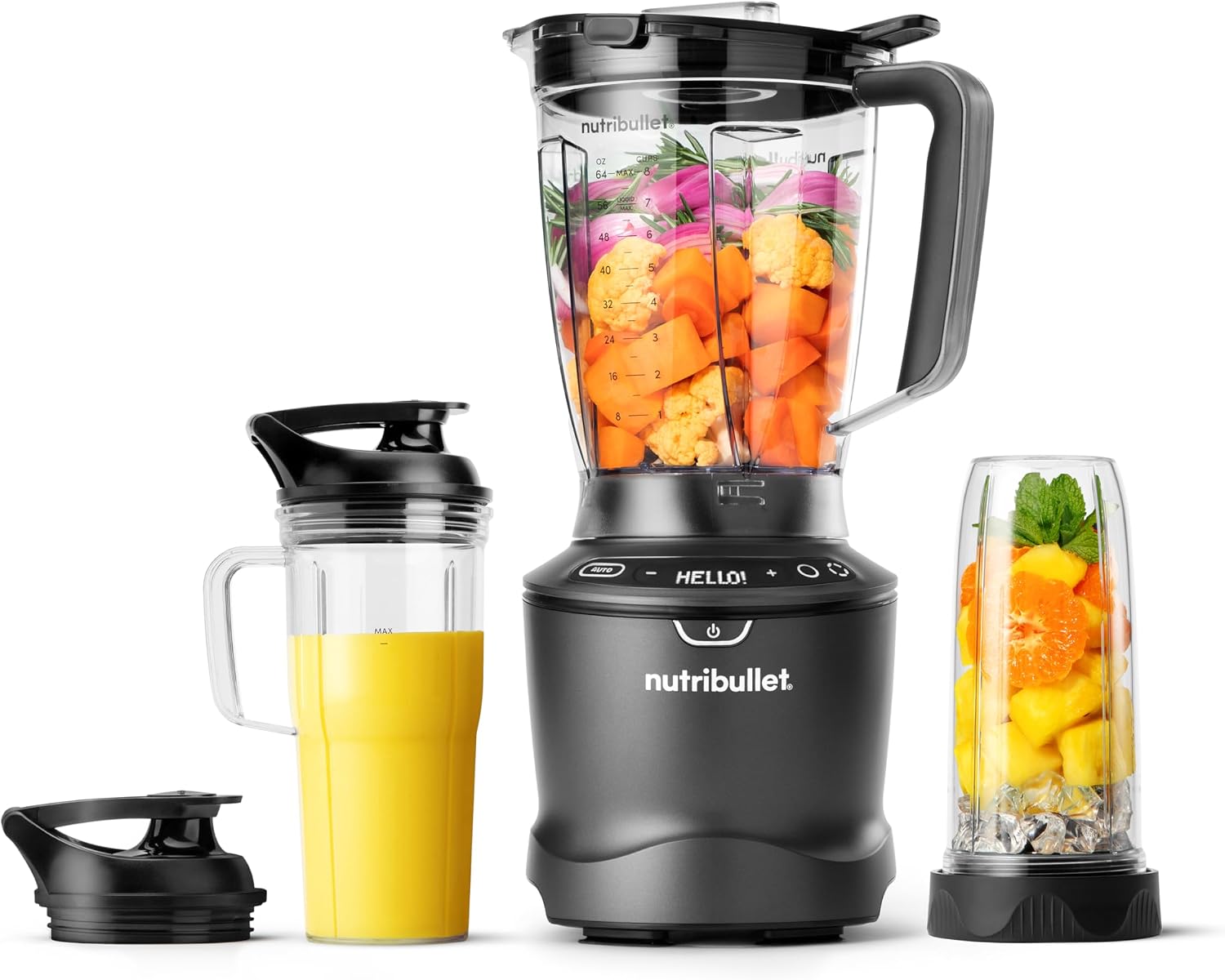
The other tribe’s answer — a combo that senses the vessel and adjusts, for people who want the machine to make the small decisions
Prices and availability change; the listing is the final word.
By month three the census looks like this in my kitchen: cups in daily service, pitcher in weekly service and first off the bench for parties and soup season, processor bowl in honorable reserve, motor base permanent. And here is the slow-accumulating truth under the whole system idea — you are not buying three appliances. You are buying one motor, used at three frequencies, and the value of the system is exactly the value of the frequencies you actually run. A household that processes big batches weekly gets a bargain. A household that blends daily and processes never has bought a blender with an expensive passenger, and the honest move for that household is the second box: the BN701, 1400 watts, Auto-iQ programs that run the cycle in pulses so you are not standing there feathering a button, pitcher only, no passengers. the BN701’s own review is that machine’s own page, programs and all. The 100 watts between the two bases will not change a single smoothie. The missing bowl might change how you feel about the cupboard.
Safety, briefly, because accumulation applies to scars too. The stacked blade column that makes this machine great is sharp at every level, and it comes out of the pitcher as one tall, edged unit. The classic injury in this category is not dramatic — it is a hand reaching into a soaking pitcher in cloudy water and finding the column by touch. Wash the column immediately, with a brush, out of the pitcher, where you can see all of it. Never leave it soaking in a sink someone else will reach into. I say this with the calm of a person who has not been cut and intends to keep the streak, having watched the alternative happen to a housemate with a different machine and the same architecture. The machine’s power is honest. Its edges are honest too. Treat the second honesty with the same respect as the first.
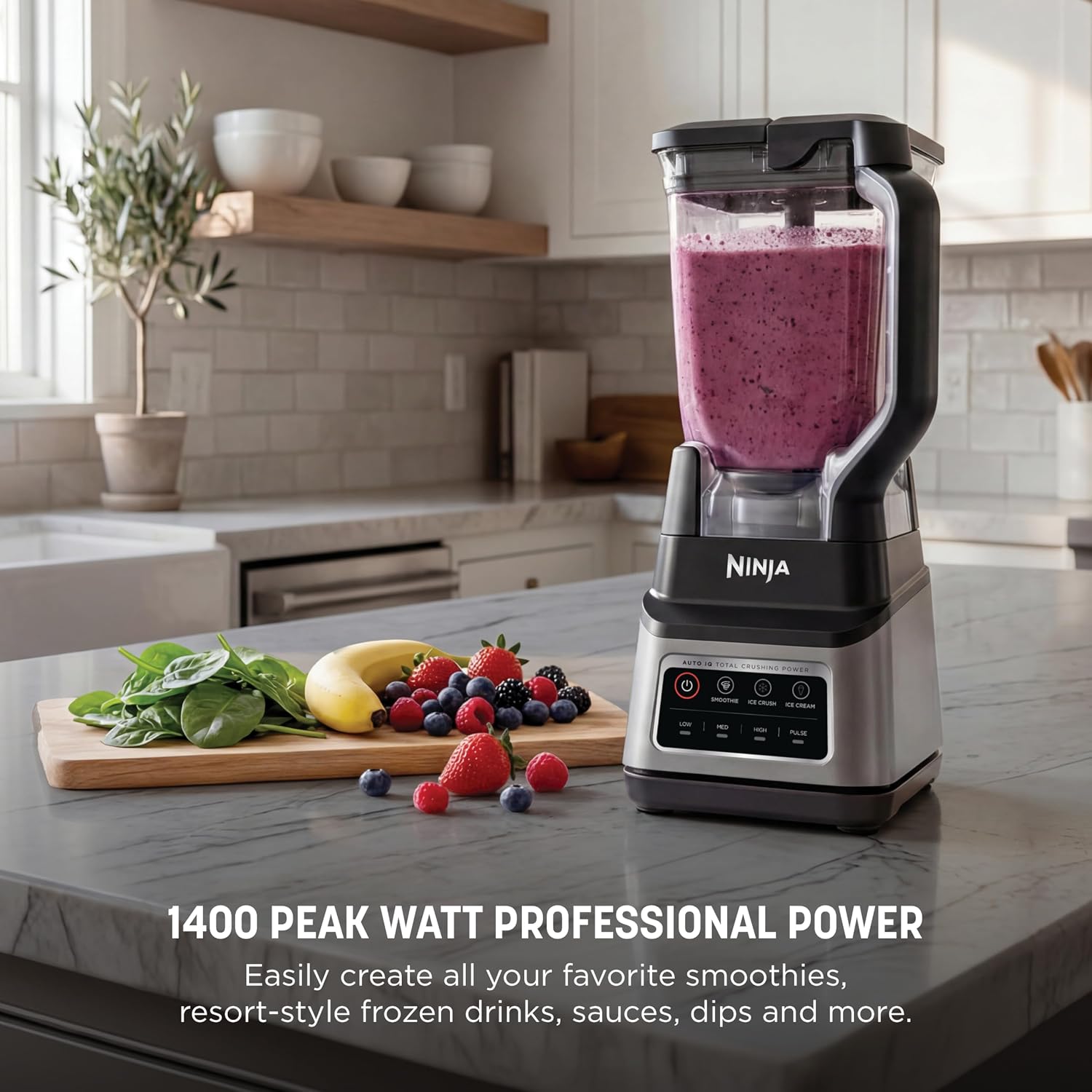
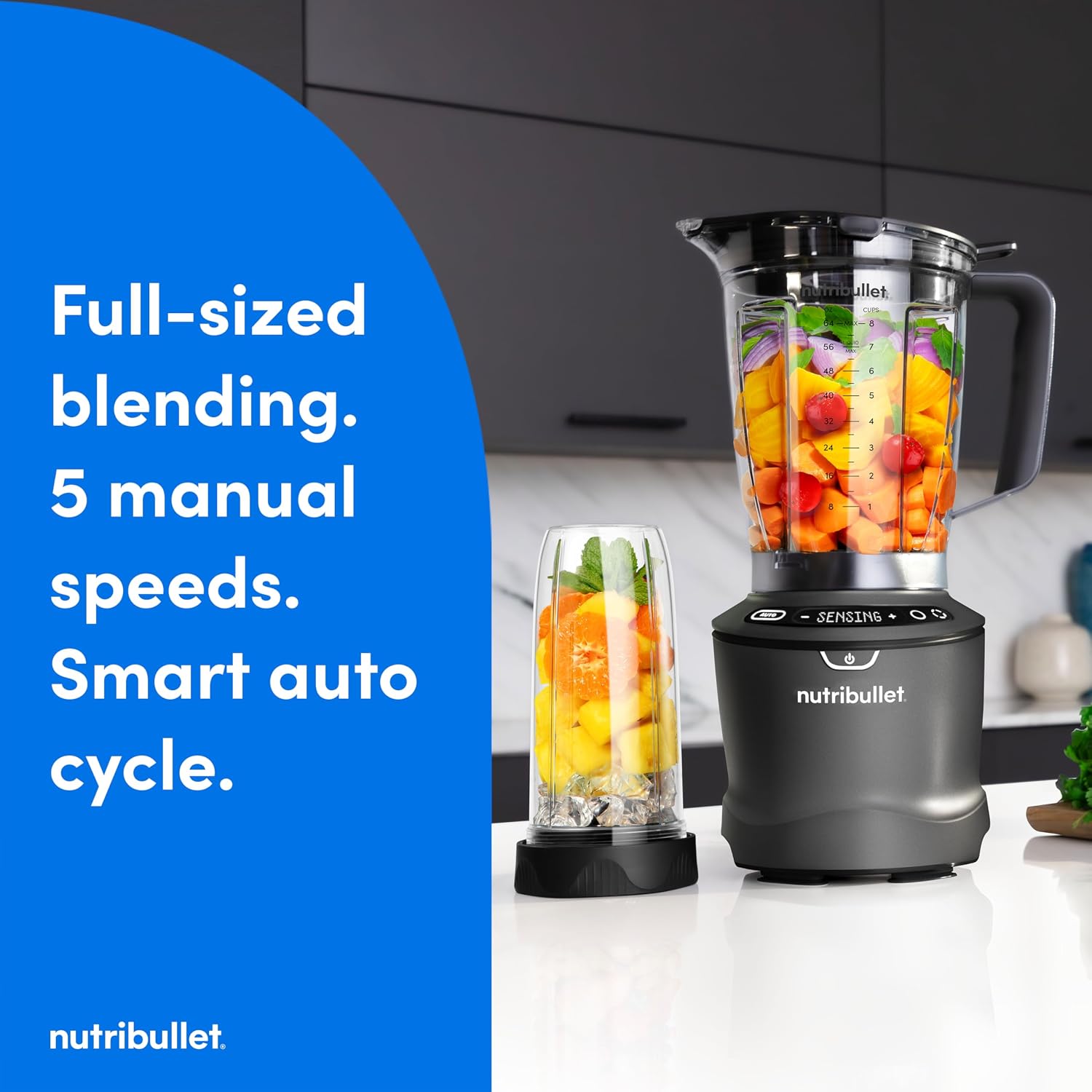
The third box exists for the households reading this census and feeling tired already: the nutribullet combo that senses which vessel you have mounted and adjusts its program to match. It is the opposite philosophy — instead of one base and your judgment, one base and its judgment — and for cooks who blend daily and think about blending never, that trade is worth money. What it does not change is the physics both machines share: 1400-ish watts, sharp blades, vessels that must be washed, gaskets that hide the past. Sensing does not rinse a gasket. I have not lived with the SmartSense long term, so I cannot judge how its guesses age as the vessels wear — a sensing machine is only as good as its sensors stay honest, and that is a year-three question this page cannot answer yet.
What the BL770 does not do, accumulated last, because disappointments accumulate too: it does not heat, so soup gets blended smooth and then goes back into a pot like it is 1987; it does not juice in any sense a juicer would recognize, leaving pulp management to a strainer and your patience; and its processor, for all its capacity, will not save a cook from a knife for the daily small work, as established, at length, by the onion. None of these are hidden flaws. They are the borders of a machine that does its center — frozen blending, in quantity or in a cup — about as well as anything at its price, and rents you a processor for the days the center is not the job. The census stands: cups daily, pitcher weekly, bowl monthly, base forever, and the kale phase of 2016 fully survived, though the kale smoothies tasted like lawn clippings with mango and no number of watts was ever going to fix the recipe.
Questions that come up
Is 1500 watts actually necessary, or is it a box number?
Mostly it is a box number, and the machine’s own family proves it — the 1400-watt sibling in the second box blends the same frozen fruit into the same smoothie, because what does the work is the stacked blade column meeting the ice at several heights, not the last hundred watts. Where wattage honestly matters is at the margins: a pitcher loaded to the line with big frozen pieces, back-to-back batches at a party, the longest, thickest blends. There the stronger motor holds its speed instead of sagging, and sagging is where chunks survive. For a daily smoothie and ordinary frozen work, buy the blade design and the vessels you will use, and let the wattage fall where it falls. I say this as someone who bought the 1500 partly for the number, in a former life, with a straight face. The number is fine. It is just not the reason the smoothies are smooth.
The processor bowl sounds great, but will I actually use it?
Run the onion test in your head: one onion, diced, for tonight’s dinner. If your honest instinct is still to get the big bowl out, wash it after, and put it away, you are a processor cook and the bowl will earn its shelf. If your instinct, like mine, is a knife and four minutes, the bowl will serve you at batch scale — salsa for a crowd, dough, a head of cauliflower — and those jobs are real but they are not daily for most kitchens. The bowl is not a disappointment waiting to happen; it is a monthly tool attached to a daily machine, and households do fine with that arrangement as long as they buy it knowingly. The people who feel cheated are the ones who bought it as a daily tool, and they were sold that idea by the word system, which implies a life more organized than the one anybody is living.
How do the single-serve cups change anything? They are just small pitchers, right?
They change the washing, and the washing changes the habit, and the habit is the whole game. A smoothie routine dies when the cleanup costs more than the smoothie feels worth, and a 72-ounce pitcher sets that cost high for a 16-ounce drink. The cup cuts it to a lid, a blade assembly, and a rinse — small enough that the routine survives busy mornings, which is when routines go to die. The one piece of upkeep the cups demand is the gasket in the blade lid: lift it out with a thin knife every so often and rinse what has been living under it, or the flavor of smoothies past moves in permanently. Beyond that, the cups are the least complicated success in the whole box — the part of the system that asks the least and gets used the most, which is a sentence that applies to more kitchen equipment than this one, now that I think about it.
The census is not finished, by the way. It never is. This morning the cups were in service before seven, the pitcher is standing by for a soup weekend, and the processor bowl is in the cupboard in its honorable reserve, waiting for a salsa large enough to justify its existence — and I caught myself, washing the cup’s gasket like a person with her life together, wondering if the bowl feels left out, and whether that is a reason to make more salsa, or just a sign I have owned this machine long enough to anthropomorphize the attachments.
This site contains affiliate links. We may earn a commission on qualifying purchases.