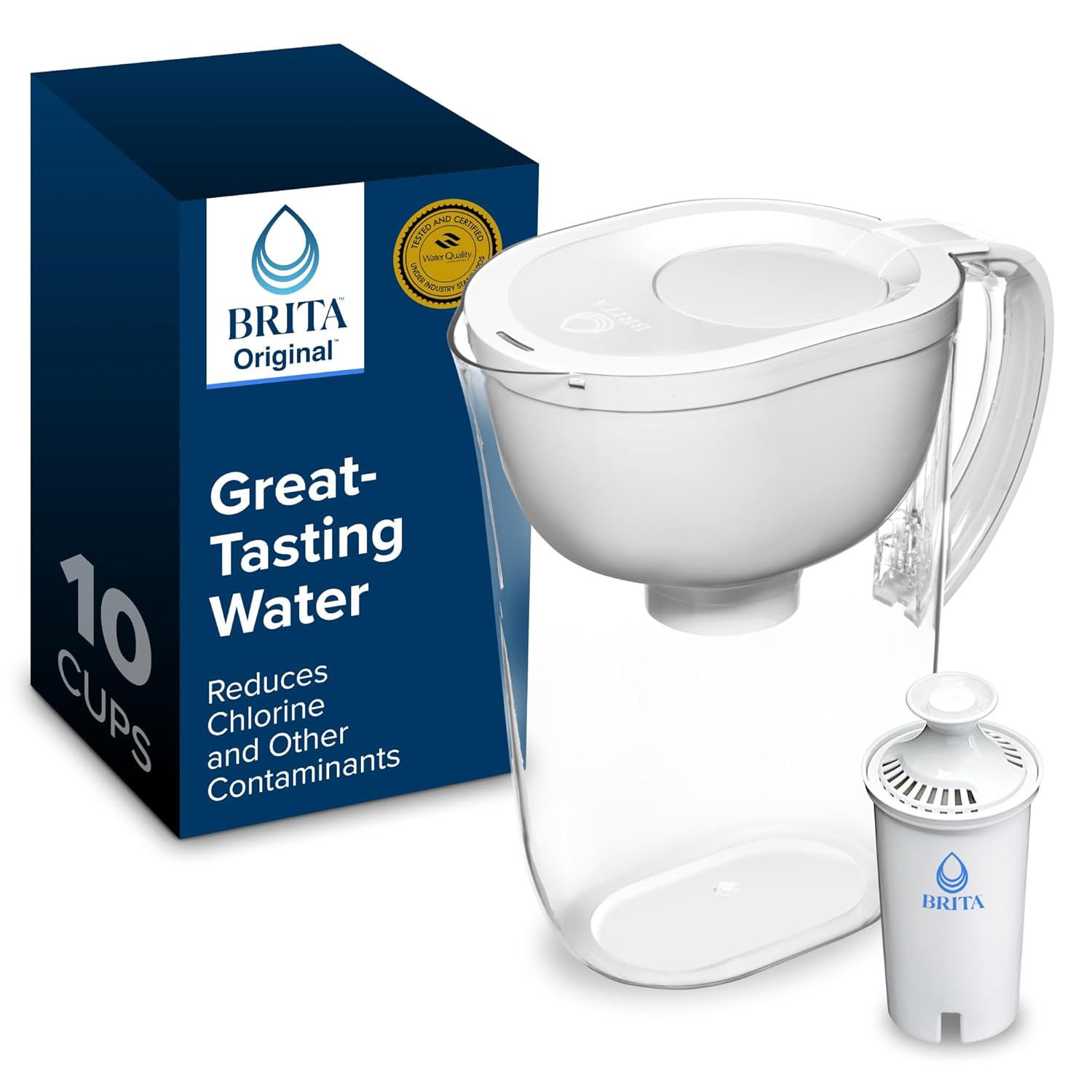
Brita Everyday 10-Cup Water Filter Pitcher Review
The Brita Everyday 10-Cup is the water filter pitcher most households actually buy — simple, affordable, and good at the one job most people want: making tap water taste better. This guide digs into what its basic filtration really does, where the PUR and ZeroWater alternatives earn their keep, and how to pick the right pitcher for your water and your fridge.
Quick Answer
Related: See our Vitamix 5200 Review for a detailed comparison.
Related: See our Keurig K-Express Review for a detailed comparison.
The Brita Everyday 10-Cup is the right pick if your main complaint is taste — chlorine flavor and odor, the stuff that makes tap water unpleasant. It keeps filter costs low and fits a standard fridge shelf. If lead reduction matters to you, step up to the PUR 11-Cup; if you want the purest-tasting water possible, the ZeroWater 10-Cup goes further but burns through filters faster.
Compare Top Water Filter Pitchers
Three proven picks side by side — choose the one that fits your needs.
Brita Everyday 10-Cup
The everyday default — clean taste, low filter costs, and a shape that fits a normal fridge shelf.
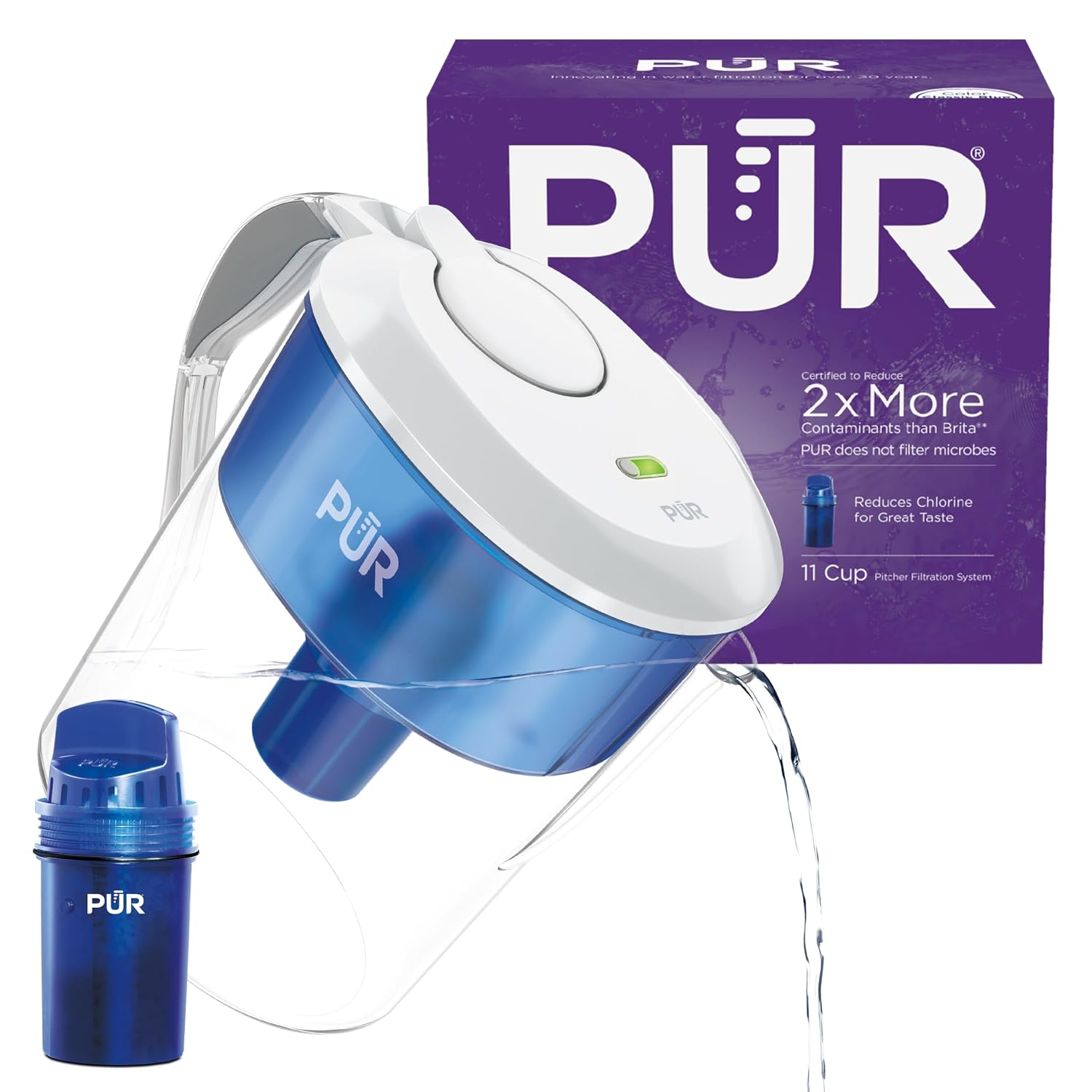
PUR 11-Cup Pitcher
The stronger filtration story — lead reduction plus more certified contaminants, one extra cup of capacity.
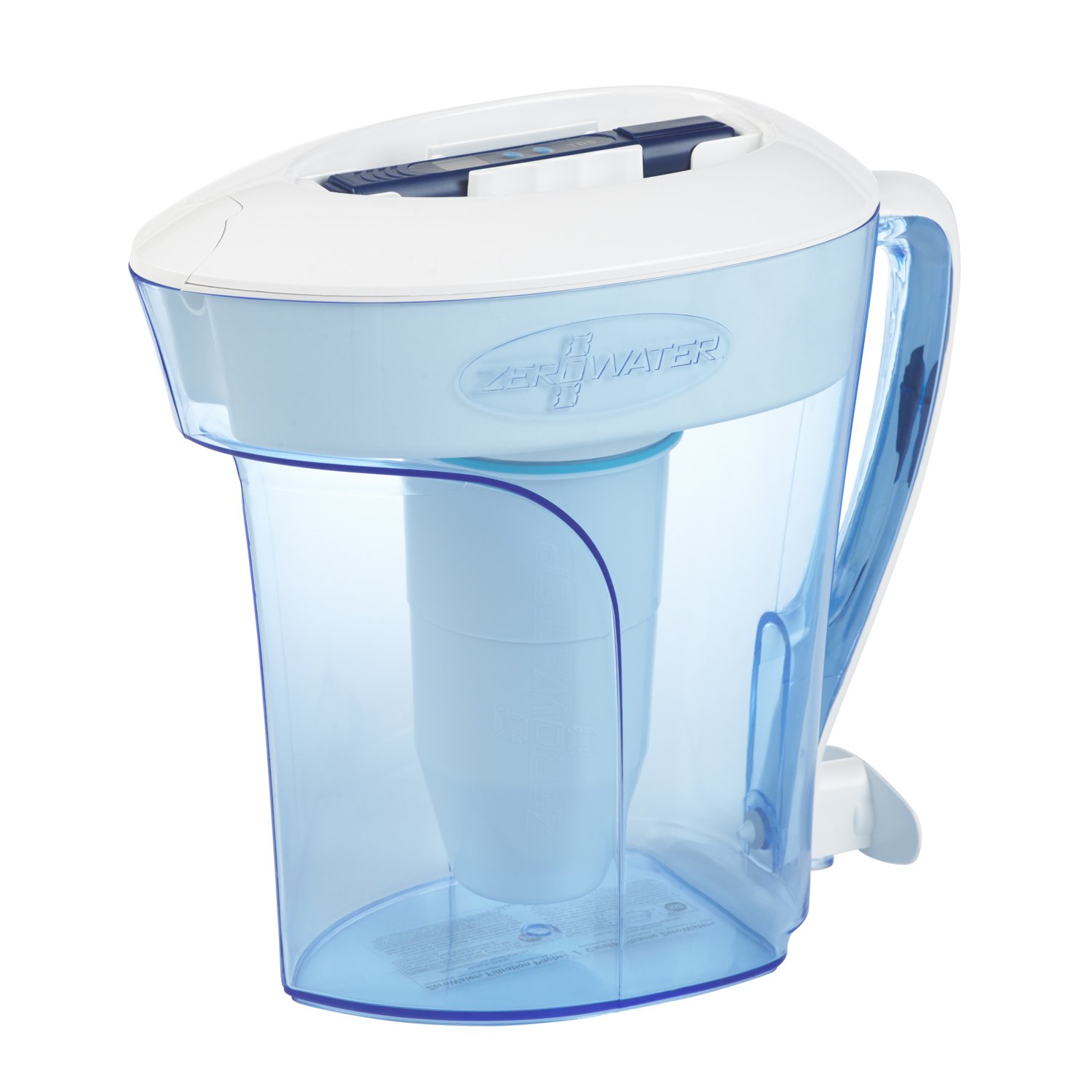
ZeroWater 10-Cup
The purity maximalist — 5-stage filtration with an included TDS meter, but filters run out faster.
Prices and availability may vary — tap any product to check the current listing.
What to Look For When Buying a Water Filter Pitcher
A filter pitcher is beautifully simple technology — water goes in the top, gravity does the work, better water comes out the spout. But the differences between a ten-dollar mindset and the right purchase live in the details most listings gloss over.
Filtration level: what are you actually trying to remove?
Start with your water, not the pitcher. If your complaint is “my tap water tastes like a swimming pool,” you’re dealing with chlorine taste and odor — and the Brita Everyday’s basic filtration handles exactly that. It’s the most common municipal water complaint and the easiest to fix. Done. No need to overthink it.
If your concern goes deeper — older plumbing, lead worries, a long list of “what else is in there” — that’s where the PUR’s lead-reducing filtration and the ZeroWater’s multi-stage approach earn their keep. They target more, and more specific, contaminants. The trade-off nobody mentions: stronger filtration usually means slower flow and shorter filter life. There’s no free lunch in filtration; every contaminant removed costs you either time or filter lifespan. Match the filter to the actual problem, not the scariest one.
Filter cost and lifespan: the real price tag
The pitcher is the cheap part. The filters are the subscription you didn’t know you signed up for. A basic Brita-style filter typically lasts around two months of normal household use; the more aggressive ZeroWater filters can exhaust much faster in areas with heavy dissolved solids — that’s the price of stripping nearly everything out of the water.
Do the ugly math: multiply the replacement filter cost by six per year, then by three years. That’s the price of the pitcher. The Brita Everyday wins this math for most households precisely because its filters are the most affordable of the three — which is why “cheapest pitcher” and “cheapest ownership” are the same answer here, unusually. I’ve seen people spend way too much on features they never use, but nobody regrets doing this particular calculation before buying.
Capacity and the fridge-fit question
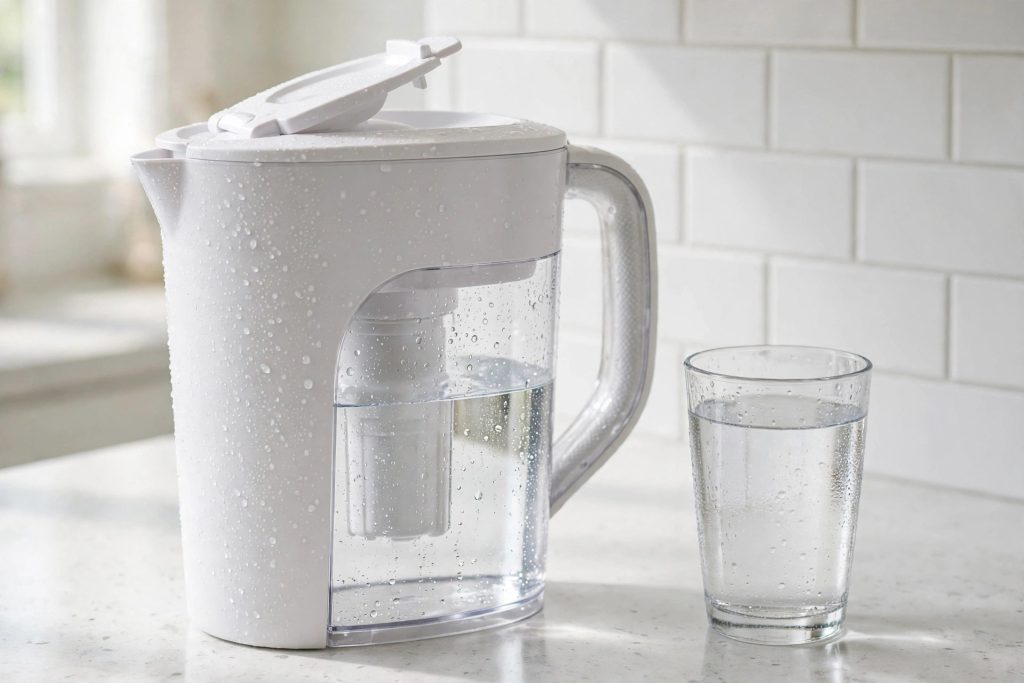
Ten cups sounds generous until you realize the reservoir holds less than the total — you fill, it filters, you pour, you refill. For one or two people drinking tap water through the day, 10 cups means refilling once or twice daily. For a family of four that cooks with it too, expect the pitcher to become a part-time job.
Then there’s the fridge. Measure your shelf clearance before you buy — pitchers are taller than they look in photos, and the lid needs room to open for refilling. The Brita Everyday’s slim profile is genuinely fridge-friendly; it’s shaped by years of “doesn’t fit” complaints. The 11-cup PUR is a touch bigger for a touch more water. A pitcher that lives on the counter because it doesn’t fit the fridge is a pitcher that serves room-temperature water, which defeats half the pleasure.
Pour speed and daily patience
Gravity filtration is slow. Basic filters flow noticeably faster than multi-stage ones — another quiet advantage of the simpler Brita approach. The ZeroWater’s thorough filtration takes its time, and in a busy morning kitchen, “thorough” can feel like “broken” when you’re waiting on the kettle. If you’re the household’s coffee maker, flow rate is not a footnote; it’s your morning.
Filter-change reminders
Nobody remembers when they installed a filter. The sticker-on-the-fridge method fails within a month. An electronic indicator or a phone reminder is the difference between “filtered water” and “water that passed through an exhausted filter six weeks ago” — which is arguably worse than tap, since you’re trusting it. Set a recurring phone reminder the day you install. Future you says thanks.
Materials and cleaning
Look for BPA-free construction (standard now, but verify) and dishwasher-safe parts — you’ll be washing this thing regularly, and hand-washing a pitcher with a narrow reservoir gets old fast. Slim designs clean easier than sculptural ones. This is the unglamorous criterion that determines whether the pitcher is still in use in year two.
How to Match the Pitcher to Your Situation
Three households, three right answers.
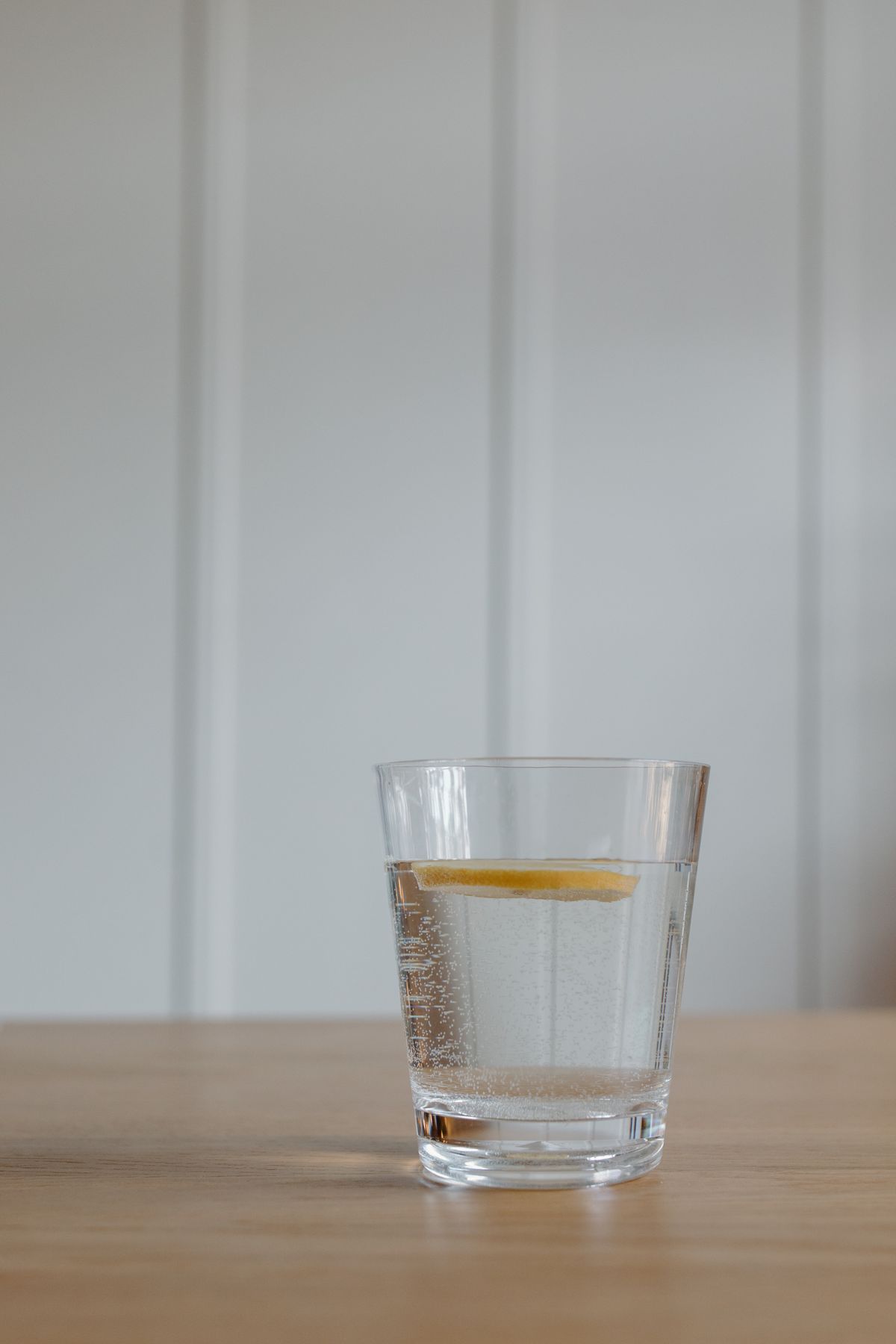
The taste-fixer: “My tap water just tastes off”
Brita Everyday, no contest. Chlorine taste and odor is its home turf, the filters are the cheapest to replace, and the 10-cup size covers one or two people comfortably. Don’t pay for lead reduction or TDS-stripping you don’t need — stronger filtration would just slow your mornings and cost more per year.
The cautious family: “We’ve got kids and old pipes”
Step up to the PUR 11-Cup. Lead-reducing filtration addresses the specific worry that keeps parents up at night, and the extra cup of capacity helps when everyone’s filling bottles for school. The filter costs a bit more per year than Brita’s — consider it the cheapest peace of mind in the kitchen.
The purity seeker: “I want the cleanest-tasting water possible”
ZeroWater. The multi-stage filtration and included TDS meter (a little gadget that reads dissolved solids so you know when the filter is done) make it the enthusiast’s pick. Go in eyes open: in areas with heavy tap-water solids, you’ll replace filters more often, and the annual filter bill is the highest of the three. For coffee and tea fanatics, though, the taste difference is real.
How the Tiers Compare
Filter pitchers sort into clear tiers by what they target. Here’s the map.
| Type / Tier | Best For | Price Tier | Key Feature | Watch-Out |
|---|---|---|---|---|
| Basic taste & odor (Brita Everyday) | Chlorine taste complaints, budget ownership | Budget-friendly | Cheapest filters, fastest flow, fridge-friendly | Doesn’t target lead or heavy dissolved solids |
| Certified lead reduction (PUR 11-Cup) | Older plumbing, cautious families | Mid-range | Lead-reducing filtration, 11-cup capacity | Higher annual filter cost than basic |
| Max purity multi-stage (ZeroWater) | Taste purists, coffee/tea fanatics | Mid-range | Near-zero TDS output, included TDS meter | Filters exhaust fastest; slowest pour |
| Faucet-mount / under-sink | High-volume households | Premium | Filtered water on demand, no refilling | Installation, and you’re married to the sink |
The basic tier is the quiet majority — most municipal water complaints are taste complaints, and this tier solves them for the least money per year.
The lead-reduction tier is the worry-solver — you pay a bit more annually for filtration that addresses specific contaminants basic filters don’t target.
The max-purity tier is the enthusiast’s choice — the best-tasting output of the three, with the highest running costs and the most patience required.
The faucet/under-sink tier is the escape hatch for households tired of refilling anything — different product, different commitment.
Questions People Ask Before Buying
These are the questions shoppers actually type into search and AI assistants when they’re close to buying. Straight answers, no fluff.
Is the Brita Everyday actually worth it, or should I just get the PUR?
If your complaint is taste — chlorine flavor, stale odor — the Brita Everyday is absolutely worth it and the PUR would be overkill, because basic filtration solves taste complaints completely while costing less per year in replacement filters — but if your worry is lead from older plumbing or you just want stronger certified filtration, the PUR 11-Cup is the right step up and the price difference buys genuine peace of mind.
Match the filter to the problem. Taste problem, taste filter. Contaminant worry, stronger filter.
Does Brita actually filter anything, or does it just make water taste better?
It does both, within its lane — the standard filtration reduces chlorine taste and odor plus common aesthetic culprits like the stuff that makes water taste metallic or stale — but it’s not designed to strip heavy dissolved solids or target lead the way stronger filters do, so think of it as a taste-and-odor specialist rather than a purification system, and judge it on that job.
Brita vs ZeroWater — which one gives better water?
ZeroWater produces the “purer” water by any technical measure — its multi-stage filtration strips nearly all dissolved solids, and the included TDS meter proves it — but “better” depends on your tap water and your patience, because in areas with heavy dissolved solids you’ll burn through ZeroWater filters far faster (and pricier) than Brita filters, while the Brita keeps flowing fast and cheap for ordinary taste complaints.
Enthusiasts love ZeroWater. Pragmatists love Brita’s filter bill. Both are right about different things.
How often do I really need to change the filter?
About every two months for a standard filter in a typical household — but “typical” does a lot of work in that sentence, because heavy daily use, large families, and challenging tap water all shorten filter life, and an exhausted filter is just a wet decoration — so set a phone reminder on installation day rather than trusting your memory, and if the water starts tasting off before the reminder, trust your tongue over the calendar.
Is 10 cups enough, or will I be refilling it all day?
For one or two people drinking and cooking with it, 10 cups means a refill or two a day — perfectly livable — but a family of four will find themselves refilling constantly, and at that point you’re choosing between a bigger dispenser-style unit or accepting the pitcher as a part-time hobby, so be honest about your household’s actual water throughput before you buy.
Small Fridge? Measure First
The number one “it doesn’t fit” regret in this category is completely avoidable. Pitchers are taller than photos suggest, and the lid needs clearance to open for refilling — a pitcher that fits only with the lid jammed against the shelf above is a pitcher you’ll hate filling. Measure from the shelf to the shelf above, then check the pitcher’s height with room to lift the lid.
The Brita Everyday earns its “Everyday” name partly here — the slim profile was shaped by a decade of fridge-fit complaints. If your fridge is a compact or a dorm mini, this is genuinely a deciding factor, not a footnote. A filter pitcher that can’t live in the fridge serves room-temperature water, and room-temperature “refreshing” is an oxymoron.
Coffee and Tea Drinker? Read This
Here’s a secret the coffee forums figured out years ago: your brew is 98% water, so the water is the recipe. Chlorine and off-flavors in tap water survive straight into the cup — a basic Brita filter noticeably cleans up drip coffee, and the difference in tea is even more obvious since there’s nothing to hide behind.
The rabbit hole goes deeper: serious coffee people argue about mineral content, with some insisting that ultra-pure ZeroWater-style water actually brews flat coffee because extraction needs some minerals to work with. There’s truth in it — the “best” water for coffee is clean but not stripped bare. For most drinkers, the basic filtered tier hits the sweet spot: chlorine gone, character intact. Don’t over-engineer your morning cup.
Common Mistakes Buyers Make
Running the filter past its life
An exhausted filter doesn’t just stop helping — you’re drinking water you think is filtered. Set the reminder on day one. When in doubt, change it early; filters are cheaper than the peace of mind.
Expecting it to fix hard water
A pitcher won’t soften hard water or remove limescale buildup — that’s a different technology entirely. If your kettle furs up in a month, you need a softener or descaler, not a prettier pitcher. Match the tool to the problem.
Buying the wrong replacement filters
Filter lines have lookalike cousins — standard vs. long-life vs. lead-reducing, often in near-identical packaging. Buying the wrong one means either overpaying or under-filtering. Check the model number on your current filter before reordering, every time.
Filling it with hot water
Hot water damages filter media and can leach things you don’t want. Always fill with cold tap water only. It feels slower when you’re in a hurry; do it anyway.
Why, How, What: Quick Answers
Why is the Brita Everyday the default recommendation for most people?
Because most people’s problem is taste, and it’s the cheapest complete solution to a taste problem — pitcher, filters, and three years of replacements cost less than the fancier alternatives’ filters alone over the same period. It fits standard fridges, pours fast, and does the one job without drama. Defaults exist for a reason; this one earned it.
How does the TDS meter change the ZeroWater experience?
It replaces guessing with knowing. Instead of calendar-based filter changes, you test the water — when dissolved solids creep up past the threshold, the filter is done. It’s oddly satisfying, and it means you never throw away a filter with life left or nurse a dead one. The meter is the rare pack-in accessory that actually justifies itself.
What can’t a filter pitcher do?
It can’t make unsafe water safe — pitchers polish municipal tap water; they don’t rescue well water with bacterial issues or chemical contamination beyond their design. It can’t soften hard water. And it can’t keep up with a household that drinks gallons a day without becoming a refill chore. Know the lane, stay in it, and it’s one of the highest-value purchases in the kitchen.
Frequently Asked Questions
How long does a Brita Everyday filter actually last?
About two months of typical household use — but heavy use, big families, and challenging tap water shorten that. The honest signal is taste: if the water starts tasting off before your reminder fires, change the filter. Your tongue is a better sensor than any calendar.
Can I use it for baby formula or is that overkill?
Filtered tap water is fine for formula prep in most municipal systems — that’s exactly what these pitchers are for. If your local water has a specific advisory (nitrates, lead), follow your pediatrician’s guidance over any pitcher marketing. When in doubt, ask the doctor, not the internet.
Does filtered water go bad sitting in the pitcher?
Kept refrigerated, it’s fine for a few days — the cold slows everything down. Left on a warm counter for a week, any standing water gets questionable. The practical rule: fridge it, drink it within a couple of days, wash the pitcher weekly.
Why does my filtered water taste weird at first?
New filters need flushing — run a couple of full reservoirs through and discard before drinking. That first-fill taste is loose carbon fines, harmless but unpleasant. If the taste persists past the flush, check that the filter is seated properly.
Can I put the pitcher in the dishwasher?
The pitcher body and reservoir are generally dishwasher-safe (top rack, and remove the filter first — never wash the filter itself). The lid with any electronic indicator should be hand-washed. When in doubt, hand-washing the whole thing takes two minutes and removes all doubt.
Is it cheaper than buying bottled water?
Enormously — even accounting for replacement filters, a pitcher costs a small fraction per gallon of bottled water over a year. The break-even point arrives within weeks for a regular bottled-water buyer. Your back will also thank you for skipping the case-hauling.
Final Recommendation
For most households, the Brita Everyday 10-Cup is the right filter pitcher — it solves the most common water complaint (taste) for the lowest annual filter cost, fits a normal fridge, and pours fast enough for busy mornings. It’s the default for a reason.
Step up to the PUR 11-Cup if lead or older plumbing is on your mind; go ZeroWater if you’re chasing the purest taste and accept the higher filter turnover. But if you just want your tap water to taste like water again? Brita Everyday, set a filter reminder on day one, done.
OUR TOP PICK
Brita Everyday 10-Cup
The everyday default — clean taste, low filter costs, and a shape that fits a normal fridge shelf.
Decision Tree: Should You Buy the Brita Everyday 10-Cup?
→ Main complaint is chlorine taste or odor? Yes → strong buy. That’s its home turf.
→ Worried about lead or old plumbing? Yes → get the PUR 11-Cup instead.
→ Chasing the purest taste for coffee/tea? Yes → ZeroWater, and budget for filters.
→ Household of 4+ heavy drinkers? Consider a dispenser-style unit — 10 cups means constant refills.
→ Tiny fridge or dorm mini? Measure first. The slim Brita usually fits where others don’t.
Key Takeaways
• Match the filter to the problem: taste complaints need basic filtration; contaminant worries need stronger filters.
• The real price is the filters — multiply replacement cost by six per year before comparing pitchers.
• Set a filter-change reminder on installation day; an exhausted filter is worse than no filter because you trust it.
• Measure your fridge shelf before buying — a pitcher that can’t live in the fridge serves lukewarm water.
Common Questions About Brita Everyday Water Filter Pitchers
Does the Brita Everyday actually filter water well?
It does the job most buyers want — reducing chlorine taste and odor plus common culprits like copper, cadmium, and mercury — which makes tap water taste noticeably better, though it's basic filtration, not the heavy-duty contaminant removal of advanced systems.
Know what you're buying: taste improvement, not purification.
For most municipal tap water, that's exactly the right level of filtration.
Brita vs PUR vs ZeroWater: which pitcher should I buy?
Buy Brita for the best balance of price, availability, and taste improvement — it's the safe default. Buy PUR if you want slightly more thorough contaminant reduction at a similar price. Buy ZeroWater if you want the most aggressive filtration and don't mind pricier, shorter-lived filters.
Match the pitcher to your water concerns, not to marketing.
For taste alone, Brita wins on value.
Is the 10-cup pitcher the right size?
For most households, yes — 10 cups covers a family's daily drinking and cooking water with a refill or two, while still fitting a standard fridge shelf. Singles can get by with smaller, and big families might prefer larger or a faucet system, so measure your fridge shelf height before buying.
Singles can get by with smaller, and big families might prefer larger or a faucet system.
Measure your fridge shelf height before buying; that's the constraint that surprises people.
How often do you need to change a Brita filter?
Roughly every two months or 40 gallons for the standard filter — the pitcher tracks this with an indicator, but heavy use, hard water, or taste changes are better signals than the calendar. An overdue filter doesn't just filter less; it can harbor buildup, so keep a spare on hand.
An overdue filter doesn't just filter less; it can harbor buildup.
Keep a spare on hand so changing it is a two-minute job, not a shopping trip.
Does filtered water taste better for coffee and tea?
Yes, noticeably — chlorine and off-flavors in tap water flatten the taste of coffee and tea, and a basic carbon filter removes exactly those, letting the beverage's real flavor come through. Coffee enthusiasts consider water the most overlooked ingredient, so try filtered water before upgrading equipment.
Coffee enthusiasts consider water the most overlooked ingredient.
If your coffee tastes flat despite good beans, try filtered water before upgrading equipment.