Cuisinart 14-Cup Food Processor Review: The Workhorse Your Kitchen Is Missing?
Every kitchen has a bottleneck — that one prep task that makes weeknight cooking feel like a chore instead of a pleasure. For a lot of us, it’s the chopping. This Cuisinart 14-Cup Food Processor review looks at the default answer for years: a big bowl, a strong motor, and controls so simple there’s nothing to learn. Is it still the workhorse to beat? Let’s find out.
Quick Answer
Related reading: For smooth blends beyond chopping, our Vitamix 5200 review is the benchmark most food processors get compared against. On a tighter budget, our Ninja BN701 blender review covers a strong mid-range blending option.
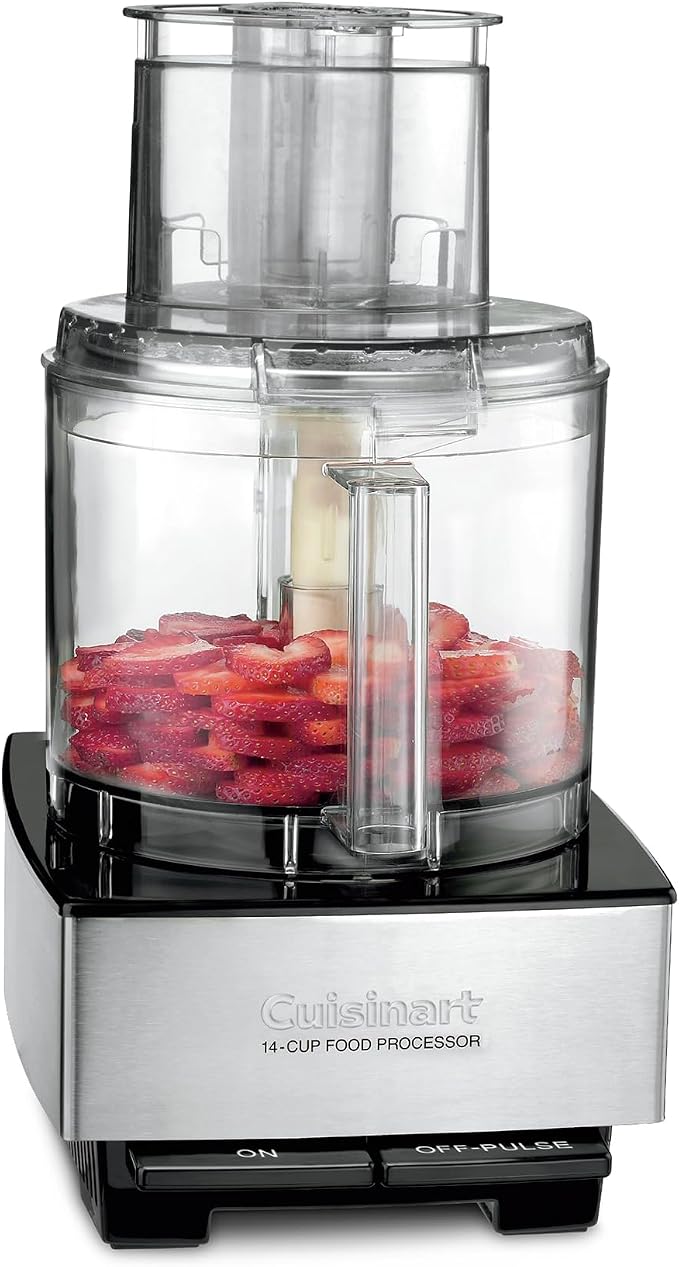
The Cuisinart 14-cup is the food processor equivalent of a good pickup truck: big, strong, unpretentious, and still running years later. The 14-cup bowl swallows family-scale jobs in one go, the motor handles dough without the labored groaning of budget models, and two buttons — on and pulse — are all you’ll ever press. The one genuine compromise: fixed slicing and shredding discs with no thickness adjustment. If that doesn’t bother you, nothing else in the mid-range beats this combination of capacity and durability.
Compare Top Full-Size Food Processors
Three proven picks side by side — choose the one that fits your kitchen.
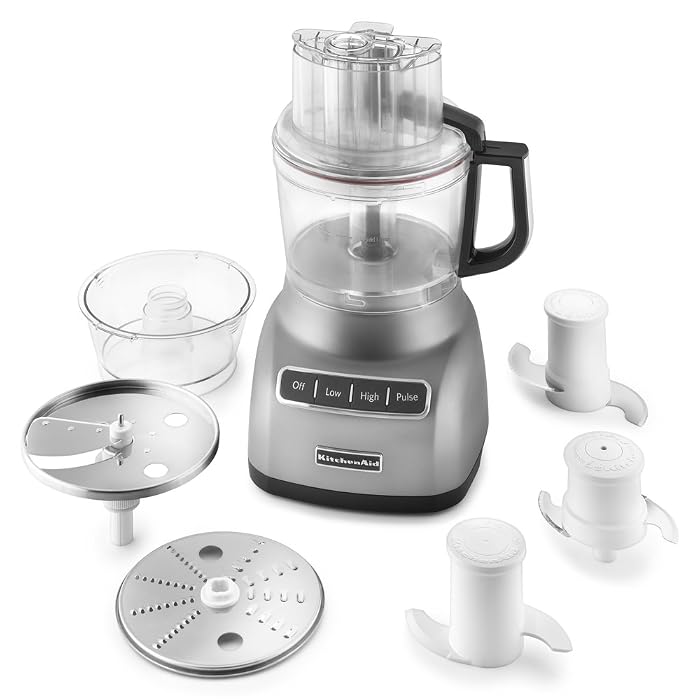
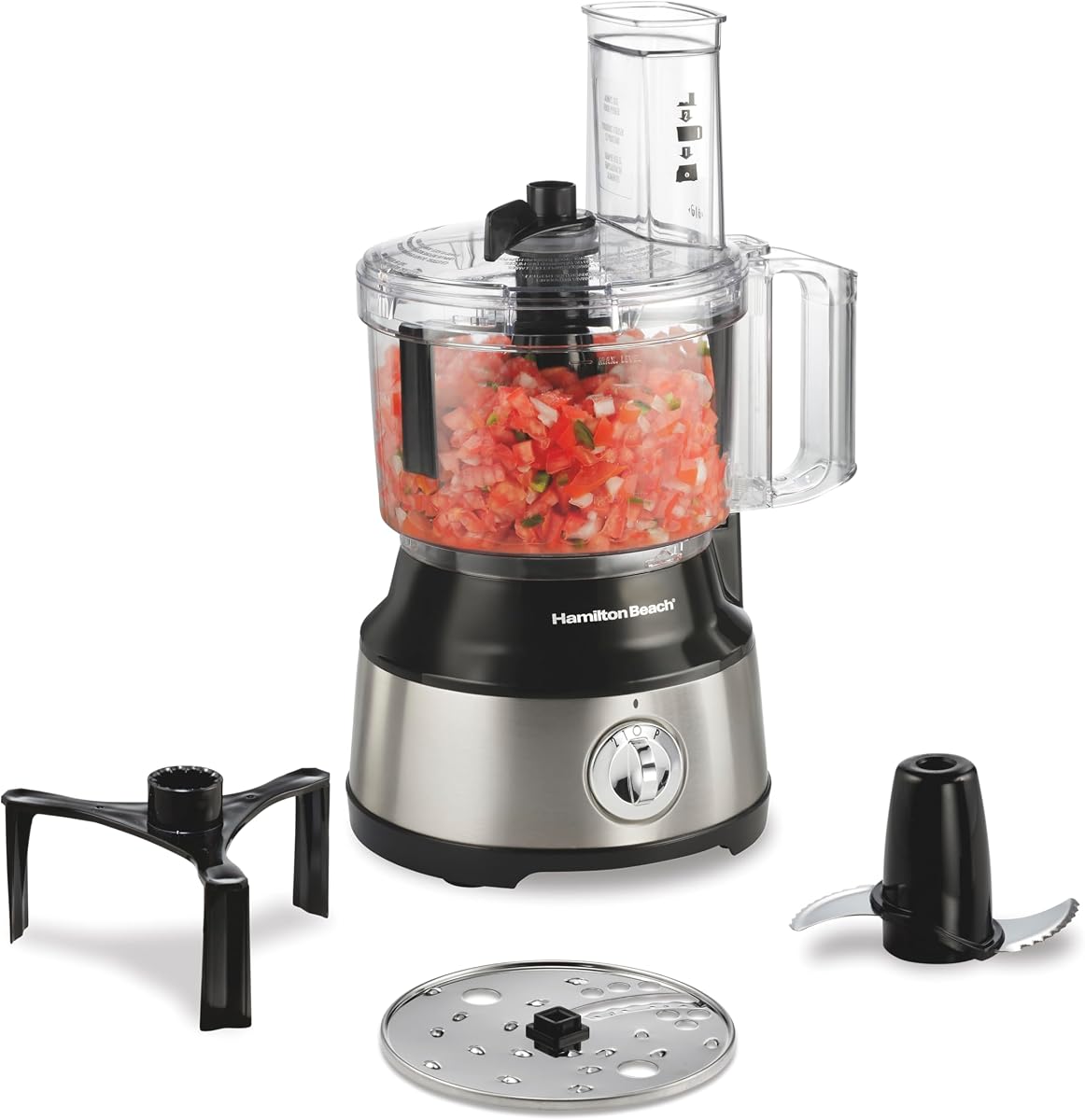
Prices and availability may vary — tap any product to check the current listing.
What to Look For When Buying a Food Processor
Food processors look interchangeable until you use one daily. Then the differences — motor behavior under load, cleanup effort, bowl design — become impossible to ignore.
Capacity: buy for the batch, not the dream
Bowl size is the first number everyone checks and the first one most people misjudge. Fourteen cups sounds enormous until you’re shredding cheese for lasagna or kneading dough for two pizzas — then it’s exactly right. The trade-off is storage: it needs a permanent counter spot or it migrates to a cabinet, which is the same as not owning it.
Motor strength: dough is the real test
Every processor chops an onion. The motor question only matters under load — kneading bread dough, grinding nuts into butter, processing a full bowl of dense vegetables. The Cuisinart’s motor handles dough without the labored groaning you hear from budget models. Cheaper processors don’t just sound strained; they can overheat on long dough cycles. A stronger motor isn’t about speed — it’s about surviving the jobs you bought it for.
Controls: simple beats clever
Two buttons: on, and off/pulse. That’s all a food processor needs. Pulse gives you control over texture — the difference between chopped and puréed is about three extra seconds — while continuous run handles dough and long blends. What matters in practice is the feel of the pulse button and whether the lid locks intuitively. Fiddly interlocks are a daily annoyance; a simple twist-lock you can work one-handed is a quiet joy.
Discs and blades: the honest weakness
The Cuisinart’s slicing and shredding discs are fixed — one thickness each, no adjustment. The KitchenAid’s externally adjustable slicing disc lets you go from paper-thin cucumber to thick potato rounds with a lever. If you slice a lot of vegetables and care about thickness, that’s a genuine functional gap. For chopping, mixing, kneading, and shredding, the included blade and discs do the job.
Feed tube: the size nobody thinks about
The feed tube determines how much pre-cutting you do before the machine takes over, and the Cuisinart’s extra-large tube is a real advantage — whole potatoes, halved onions, and long carrots go in with minimal trimming. Smaller tubes mean pre-slicing everything to fit, which defeats half the purpose. A wide tube with a proper pusher also keeps fingers far from the blade.
Cleanup and storage: the daily reality
A food processor has more parts than any other countertop appliance, and cleanup decides whether you reach for it on a Tuesday. The Cuisinart’s removable parts are dishwasher-safe. The KitchenAid’s accessories nest inside the bowl in a clever caddy, while the Cuisinart’s discs need drawer space of their own — measure your drawer before you buy, not after.
How to Match the Processor to Your Situation
The right processor matches how you actually cook. See which of these sounds like your kitchen.
The weekend batch cooker
Sunday is for getting ahead: sauce, shredded cheese, pizza dough, chopped veg for the week. The 14-cup bowl handles it in one or two runs instead of four, and the strong motor takes dough day in stride. Dishwasher cleanup. Done.
The daily dinner maker
You cook most nights and dread the prep — dicing onions, shredding carrots. The wide feed tube and pulse control matter most: fast, even chopping with minimal pre-cutting. You’ll appreciate the big bowl the first time you shred a whole block of cheese in thirty seconds.
The baker
Pie crust, pizza dough, cookie dough — motor strength under load is your deciding factor. The Cuisinart kneads without complaint and the 14-cup capacity handles double batches. Budget models that wheeze through dough are a false economy for bakers.
How the Tiers Compare
Full-size processors cluster into clear tiers. Here’s where the Cuisinart 14-cup sits.
| Type / Tier | Best For | Price Tier | Key Feature | Watch Out |
|---|---|---|---|---|
| Budget 10-cup (Hamilton Beach’s tier) | Occasional chopping, tight budgets | Budget-friendly | Bowl scraper, simple and light | Motor labors on dough; louder |
| Full-size classic (Cuisinart 14-cup’s tier) | Regular cooking and baking | Mid-range | Big bowl, strong motor, simple controls | Fixed discs; accessories need storage |
| Feature-rich 13–14 cup (KitchenAid’s tier) | Precision slicers, organized kitchens | Premium | Adjustable slicing, in-bowl storage caddy | Higher cost for features casual cooks skip |
| Mini choppers (3–4 cup) | Herbs, nuts, small jobs | Budget-friendly | Tiny footprint, quick cleanup | Useless for family-scale prep |
Budget 10-cup models like the Hamilton Beach are honest for light duty at a friendly cost. Push them into dough and the motor tells you about it, loudly.
The Cuisinart’s tier is the value peak for serious home cooks: a big bowl and a motor that handles dough. You give up adjustable slicing, which stings only if you slice precisely and often.
The KitchenAid’s tier adds real refinements — adjustable slicing, a dicing kit, in-bowl accessory storage. If you notice slice thickness, these aren’t frills; if you mostly chop and knead, they’re someone else’s priorities.
Mini choppers are complements, not competitors — wonderful for herbs, terrible at full-size jobs. Own one alongside, never instead of.
Feeding a Family? Size Matters More Than Features
It’s 6pm, tacos for five: two onions diced, cheese shredded, salsa blended. With a 14-cup bowl, that’s one continuous session. With a small processor, it’s three rounds of fill, process, empty, repeat, and dinner is late. Capacity is the feature you feel in your schedule — a bowl that fits the whole job beats fancy discs every time.
Dough Days: Where Motors Earn Their Keep
Pizza night is the stress test: a full dough cycle pushes the motor through stiff resistance for a minute or more, exactly where budget processors slow down and heat up. The Cuisinart takes dough in stride. One tip for every processor: don’t overload past the dough blade’s comfort zone, and rest the motor between double batches.
Common Mistakes Buyers Make
1. Buying too small to save counter space
The most common regret in this category: a compact processor forces batch-cooking purgatory — fill, process, empty, repeat. Match the bowl to your biggest regular job, not your smallest.
2. Over-processing everything into baby food
The number-one beginner error: holding the button down instead of pulsing. Three extra seconds is the difference between chopped onions and onion soup. Pulse in short bursts and check often.
3. Forgetting the blade is absurdly sharp
Everyone nicks themselves exactly once — usually fishing the blade from soapy dishwater. Handle it by the center hub and wash it separately where you can see it.
4. Storing it where you can’t reach it
A processor in a high cabinet is one you don’t own. Keep bowl and blade together in one accessible spot — hunting parts across three cabinets kills weeknight use.
Why, How, What: Quick Answers
Why does my food processor leave big chunks mixed with mush?
Almost always overfilling or under-pulsing. When the bowl is packed, the blade can’t circulate — the bottom turns to paste while the top stays chunky. Fill to two-thirds, pulse in short bursts, and redistribute halfway with a spatula.
How do you get evenly sliced vegetables?
Use the feed tube and pusher with steady, even pressure — jamming food down fast gives thick-thin-thick slices. Choose produce that fits the tube snugly so it can’t wobble. With fixed discs you get one thickness, done well.
What can you actually make besides chopped vegetables?
Pizza and bread dough, pie crust, hummus, pesto, nut butters, shredded cheese by the pound, breadcrumbs, even whipped cream in a pinch. The cooks who love theirs have replaced three other gadgets with one bowl.
Questions People Ask Before Buying
These are the questions shoppers actually type when they’re close to buying. Straight answers, no fluff.
Is the Cuisinart 14-cup food processor worth it?
Yes — if you cook regularly and want one machine that chops, shreds, kneads, and purées without complaint, the Cuisinart 14-cup earns its reputation: the big bowl handles family-scale batches in a single run, the motor takes dough without struggling, and two simple buttons stay out of your way. The fixed slicing and shredding discs are the honest compromise — one thickness each, no adjustment — but for most home cooks that trade is well worth it.
Cuisinart 14-cup vs KitchenAid 13-cup — which should I buy?
Buy the KitchenAid if adjustable slicing thickness and tidy in-bowl accessory storage justify the higher cost for you, since its external slicing lever and storage caddy genuinely reward cooks who slice a lot of vegetables; buy the Cuisinart if you want the bigger bowl, simpler controls, and lower cost of entry for essentially the same chopping, shredding, and dough performance.
What size food processor should I buy?
For a household that cooks most nights, go full-size — 13 to 14 cups — because it sounds like a lot until you’re shredding cheese for lasagna or kneading dough for two pizzas, and one batch beats three small ones every time. Smaller bowls only make sense for solo cooks doing light prep; everyone else should buy for their biggest regular task, not the smallest.
Can a food processor really knead dough?
A good one can, and the Cuisinart 14-cup is among the better ones at it, because its motor handles bread and pizza dough without the labored slowdown you hear from budget models that struggle under load, which is exactly where cheaper machines reveal their limits. Use the dough blade, don’t overload the bowl, and rest the motor between double batches — for weekly pizza and bread, it’s genuinely capable.
Cuisinart vs Hamilton Beach — is the expensive one worth it?
It depends on your workload: the Hamilton Beach 10-cup is an honest budget machine for light, everyday chopping, and if that’s genuinely all you do, you should save your money rather than paying for capacity and power you’ll never actually use in your kitchen. But its motor labors on dough, it runs noticeably louder, and the smaller bowl means more batches — so if you cook often, bake, or prep for a family, the Cuisinart’s bigger bowl and stronger motor pay back the difference in daily convenience.
Common Questions About Cuisinart 14-Cup Food Processor
Is the Cuisinart 14-cup dishwasher safe?
The removable parts — bowl, lid, blades, and discs — are dishwasher-safe, which makes daily cleanup painless. The motor base just needs a wipe. One tip: wash the blade separately where you can see it — it’s sharper than it looks.
Can it make nut butter?
Yes, with patience. Roasted nuts break down into butter after several minutes of processing — stop to scrape down the sides periodically and let the motor rest if it warms up. Slower than a high-speed blender for this job, yet perfectly doable. Just don’t run it nonstop for ten minutes straight.
Does it come with a dicing kit?
No — it ships with a chopping/mixing blade, a slicing disc, a shredding disc, and a dough blade, plus a spatula and recipe book. The slicing and shredding discs are fixed at one thickness each, not adjustable. If uniform dicing is a priority, look at machines that offer dicing accessories.
How loud is the Cuisinart 14-cup?
It’s not quiet — expect a solid hum, louder under dough loads, though smoother and less rattly than budget models. It won’t wake the house, but you’ll pause your podcast while it runs.
Can you put hot liquids in it?
Warm is fine; boiling is not. Let soups cool a bit before blending, and never fill past the liquid max line — hot liquid expands and can push past the lid seal. For piping-hot jobs, an immersion blender in the pot is the safer tool.
Final Recommendation
So, is the Cuisinart 14-cup food processor worth it? For the home cook who preps real food most nights — yes, and it’s the default answer for a reason. The 14-cup bowl swallows family-scale jobs in one run, the motor handles dough without complaint, and anyone in the house can use the dead-simple controls. The fixed discs are the one genuine compromise, and they only matter if you slice precisely and often.
Choose the KitchenAid 13-cup if adjustable slicing and tidy storage justify the step up — vegetable-heavy cooks will feel the difference. Choose the Hamilton Beach 10-cup if your prep is light and your budget is tight. But for the cook who wants one processor that does nearly everything well for years, the Cuisinart 14-cup is the workhorse to beat.
Decision Tree: Should You Buy It?
→ Cook most nights or prep for a family? Yes → strong candidate.
→ Bake bread or pizza dough regularly? Yes → the motor earns its keep here.
→ Need adjustable slice thickness? Yes → look at the KitchenAid 13-cup instead.
→ Light prep only, tight budget? The Hamilton Beach 10-cup covers the basics.
Key Takeaways
• Buy the bowl for your biggest regular job — one full batch beats three small ones.
• Motor strength matters most for dough; everything chops an onion, not everything kneads.
• Pulse in short bursts and fill to two-thirds — technique beats specs for even results.