This site contains affiliate links. We may earn a commission on qualifying purchases.
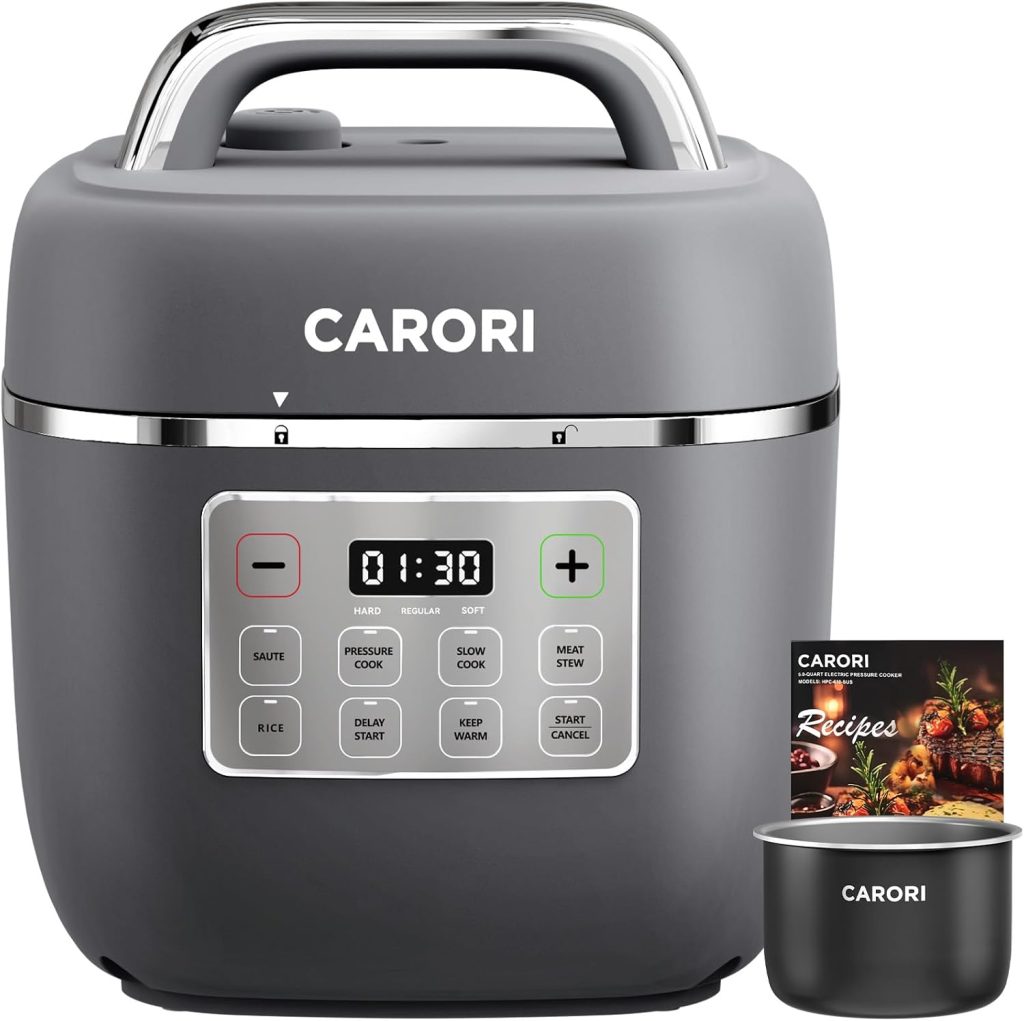
Three quarts is not a size. It is an argument about how a household actually eats, and it took me an embarrassing number of dinners to understand it. The CARORI 3QT at the center of this comparison is a compact 8-function electric pressure cooker with a ceramic nonstick pot, aimed at one to three people. Across from it sits the Duo Plus family from the Instant Pot side, in the 6-quart and 8-quart sizes that most kitchens end up with. The original version of this article promised a slightly different fight, Carori 8-in-1 against a 3-quart Duo Plus, and part of rewriting it honestly is saying that the 3-quart Duo Plus listing I used before could not be confirmed live today, and neither could the 8-quart Carori listing from the old draft. The boxes below use listings I could open and check today: the Carori in its real 3-quart form, and the Duo Plus in 6 and 8 quarts. The comparison that survives that correction is, I would argue, the useful one anyway.
Do the working math first, because quart numbers lie politely. A 3-quart pressure cooker fills to about two quarts under pressure, and only about a quart and a half for foods that foam or expand, beans and grains and their relatives. Two quarts of stew is dinner for two with a lunch left over. It is not dinner for four, and no function count changes that arithmetic. The 6-quart Duo Plus works at roughly four usable quarts, the 8-quart at a bit over five, and those two numbers describe two different households: one that cooks meals, and one that cooks batches. My own kitchen runs both sizes across a week, the small pot on weeknights more often than the big one, which surprises people until they watch the clock. The small pot comes to pressure faster simply because there is less steel, less liquid, and less air in it.
The Carori earns its counter space on three things, and I will put the strongest first. The ceramic nonstick inner pot changes the sauté step. Browning in a small stainless pot means fond that grabs; in this pot it releases, and since a 3-quart base concentrates whatever you brown — same onions, smaller floor — the deglazing step matters more, not less, than in a big pot. Skip it and the burn warning finds you, not because the machine is fussy but because a thin layer of stuck sugars has nowhere to hide. Second, the size is honest about storage: it fits in a cabinet a 6-quart will not, and in the small kitchens this site hears from constantly, that is not a footnote, that is the purchase. Third, it heats a small volume of soup back to a simmer with an efficiency the big pot cannot match. Physics. Not magic.
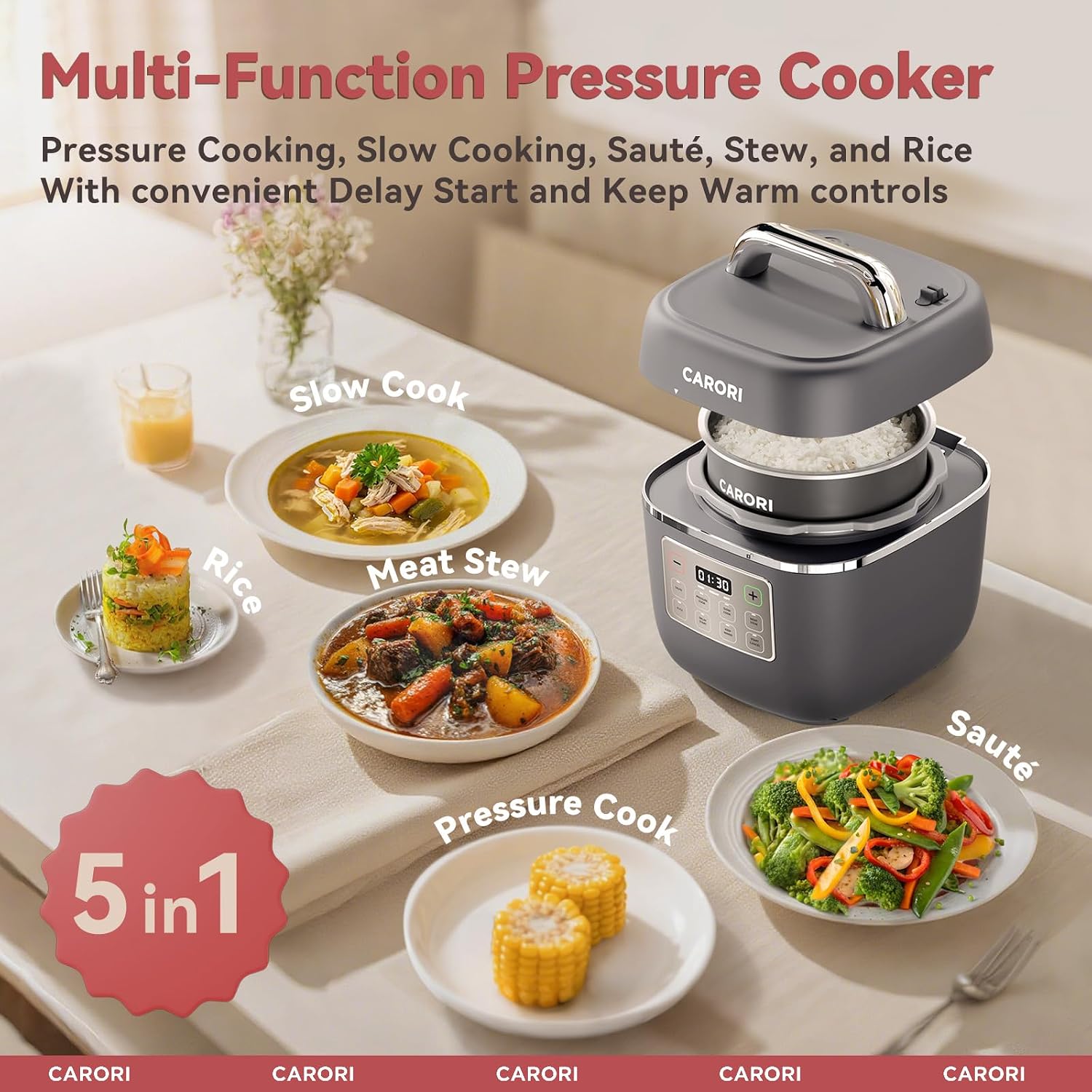
Where the little pot loses, it loses on time theater. People imagine a small cooker is faster at everything, and the truth is narrower: it reaches pressure faster, yes, maybe five minutes saved on a weeknight soup, but the cook time at pressure is the cook time, and natural release takes what it takes. A pot roast does not care about your quart size. The other loss is recipe gravity. Most pressure cooker recipes in the world are written for 6 quarts, which means the Carori owner becomes a halving person, halving ingredients and keeping times, and halving has one trap: the minimum liquid. A halved recipe that drops below the pot’s minimum will scorch no matter how faithful the math felt. the RIO and Duo Plus walkthrough works through the Duo Plus side of this family in more depth, including how the newer wide models change the sauté geometry entirely.
The Duo Plus side of the counter
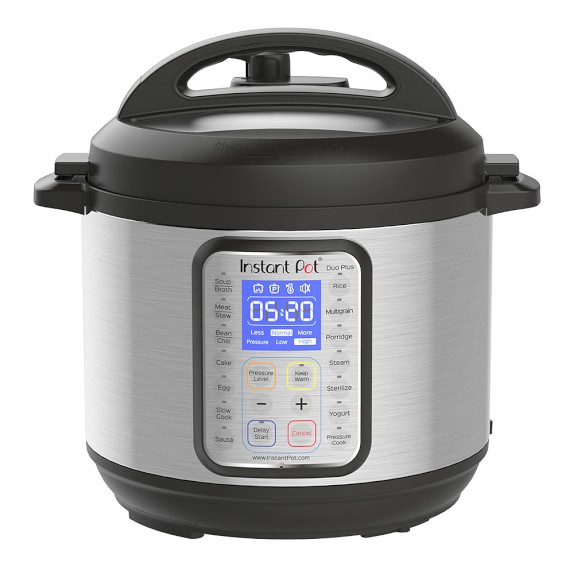
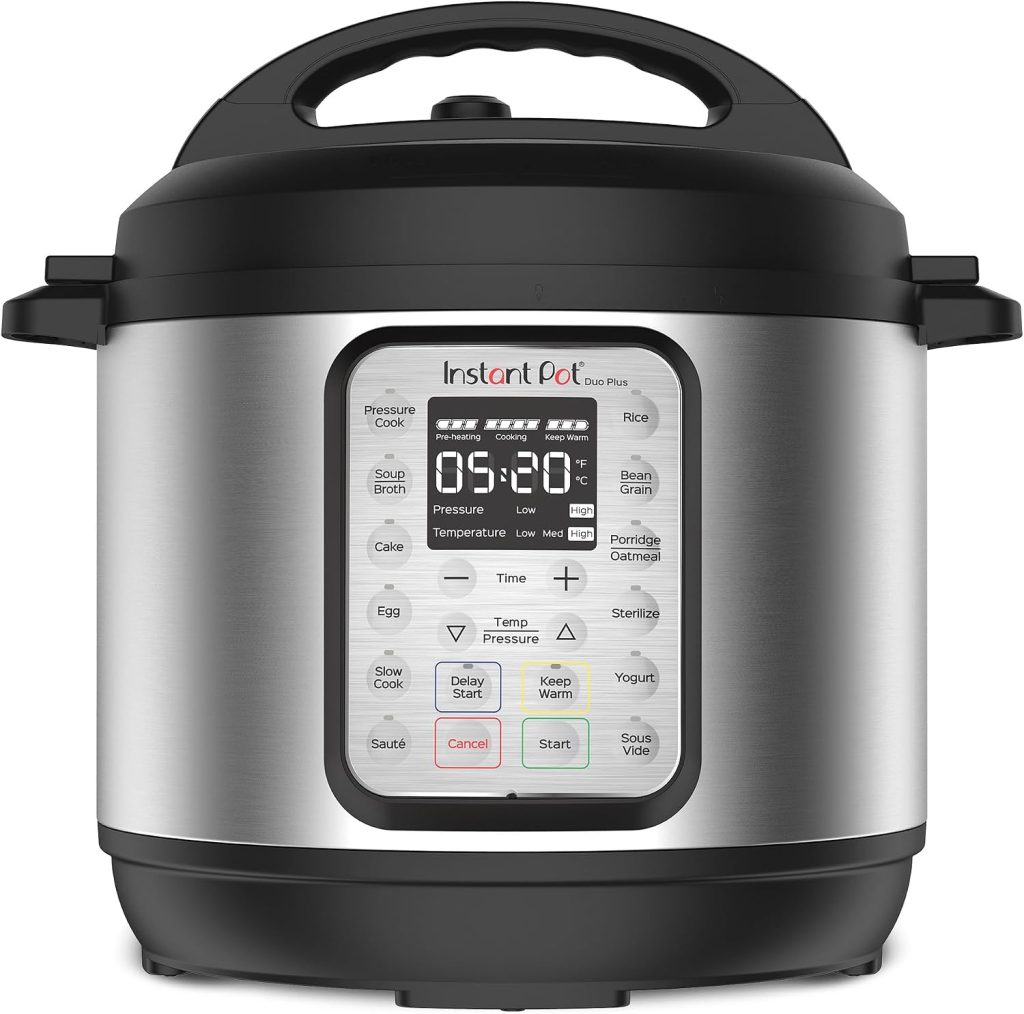
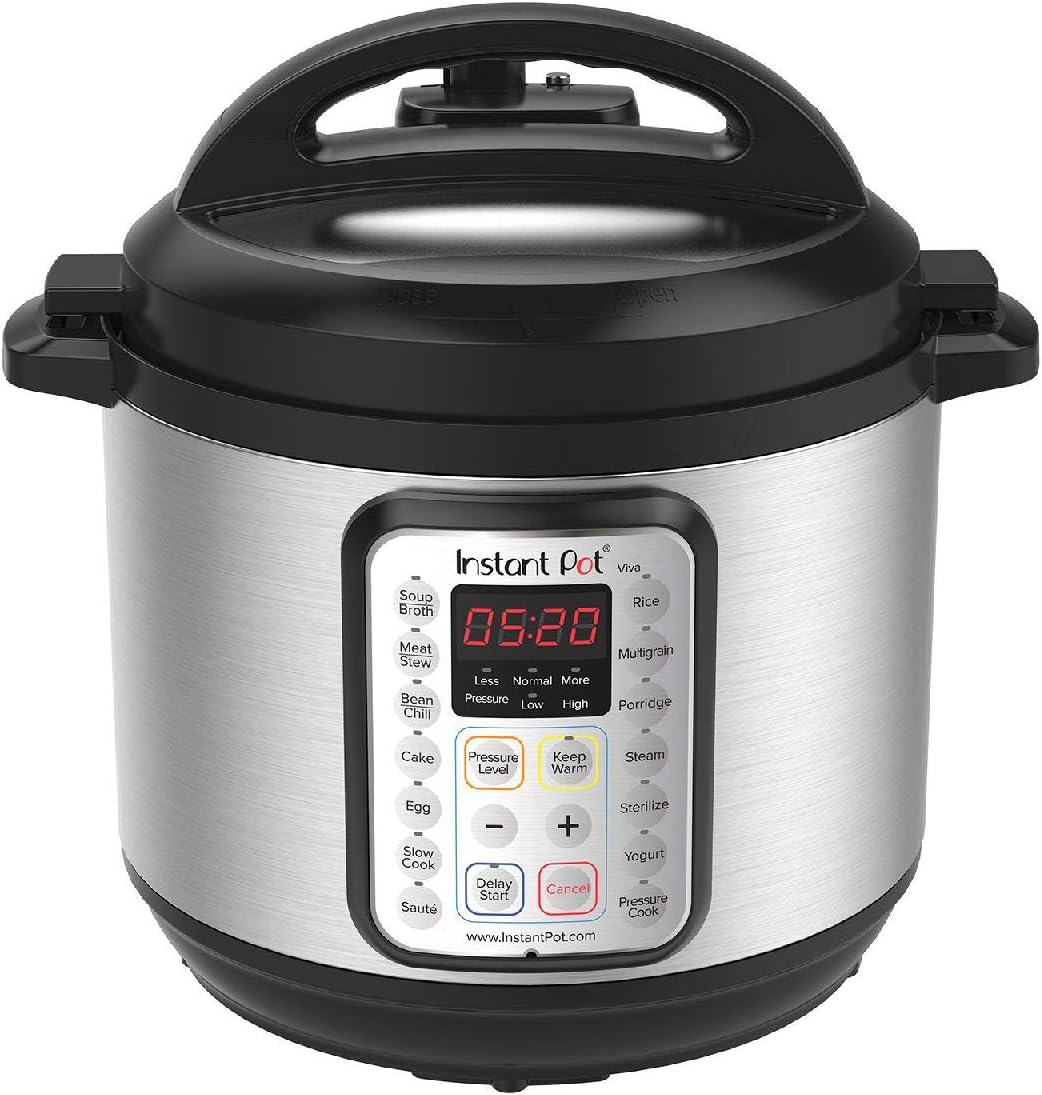
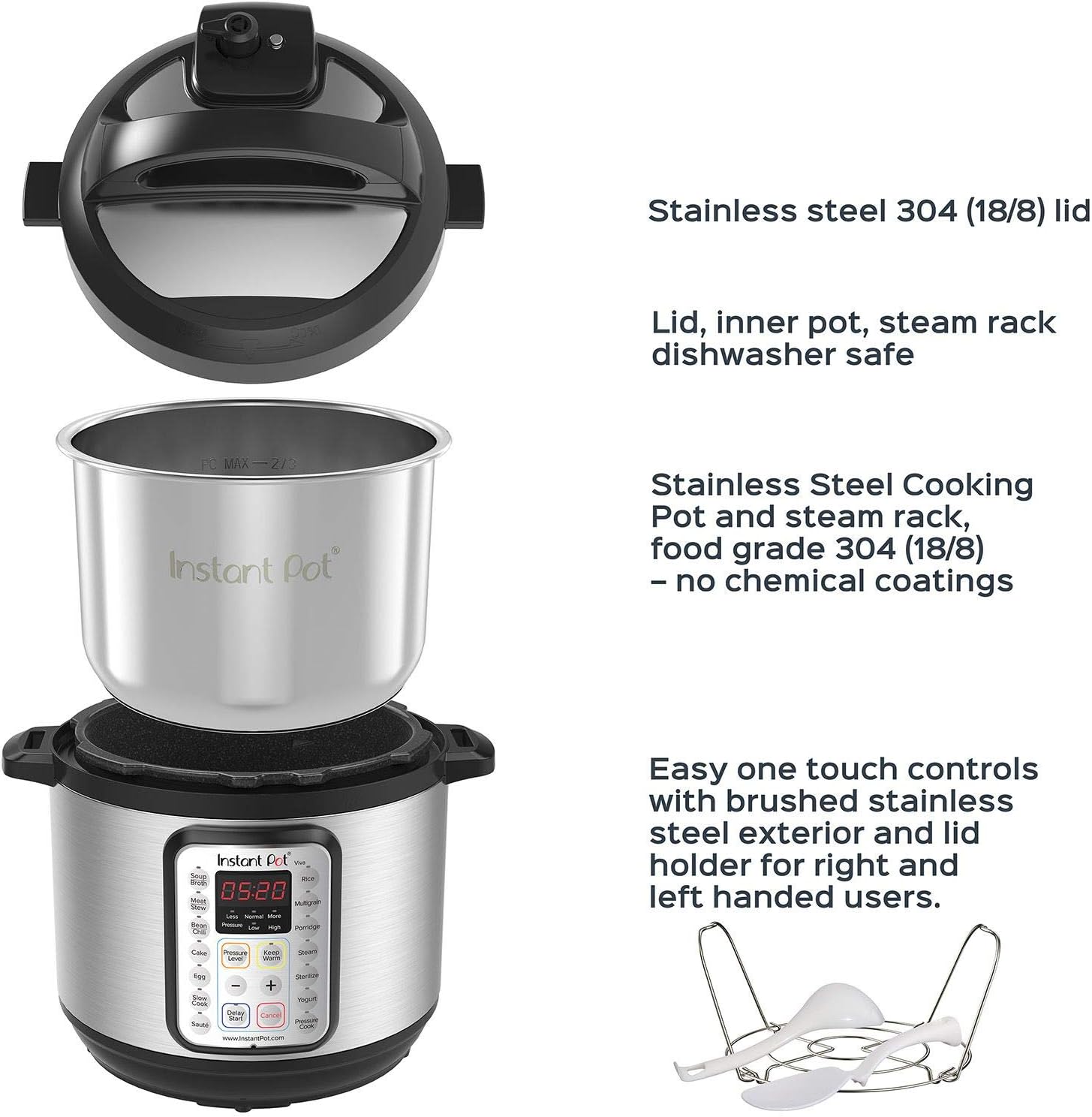
The 6-quart Duo Plus in the box is the current listing for the name — 9-in-1, fifteen one-touch programs, the WhisperQuiet steam release that this site has covered before in the Duo Plus 6 quart review. What the Plus buys over the small pot is not really the program count, since a pressure cooker is one heating element and a timer library wearing different hats. It buys headroom: a whole chicken that fits, a double batch of beans that freezes, a cheesecake in a pan that actually fits the diameter. It also buys the accessory world, because every third-party insert, rack, and spare gasket on the market assumes this size first. The 8-quart stretches the same idea for households that batch seriously, with the tax everyone forgets — a bigger pot needs more liquid to behave, so small meals in an 8-quart come out thinner and sadder than the same meal in the 3-quart. Size is not a ladder. It is a fit.
And the gasket. Every pressure cooker in this comparison seals with a silicone gasket, and every one of those gaskets absorbs the smell of the last strong thing you cooked, which is how Saturday’s curry gets into Tuesday’s rice. The fix costs a few dollars and no talent: keep two gaskets, one for savory and one for neutral, and swap them like you mean it. I have said this before on this site and I will keep saying it, because it is the single highest-value habit in pressure cooking and it is not in any manual’s first ten pages. The Carori’s smaller gasket is cheaper to duplicate, a small mercy. Storage of the lid is the other shared annoyance — these lids do not nest, they perch, and the condensation cup behind the rim fills quietly and announces itself only when it overflows onto the counter. Empty it when you wash the pot. Not when it announces itself.
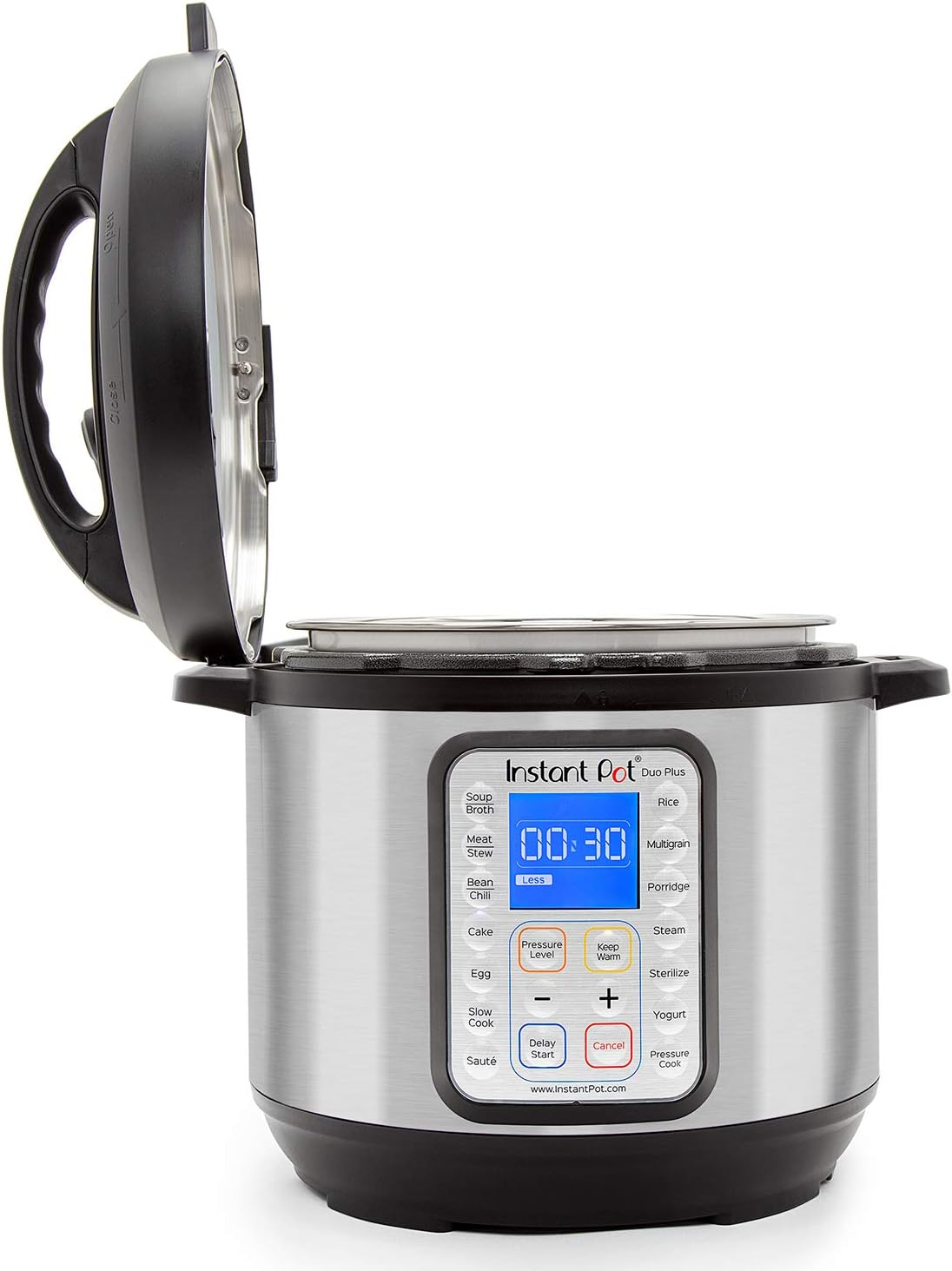
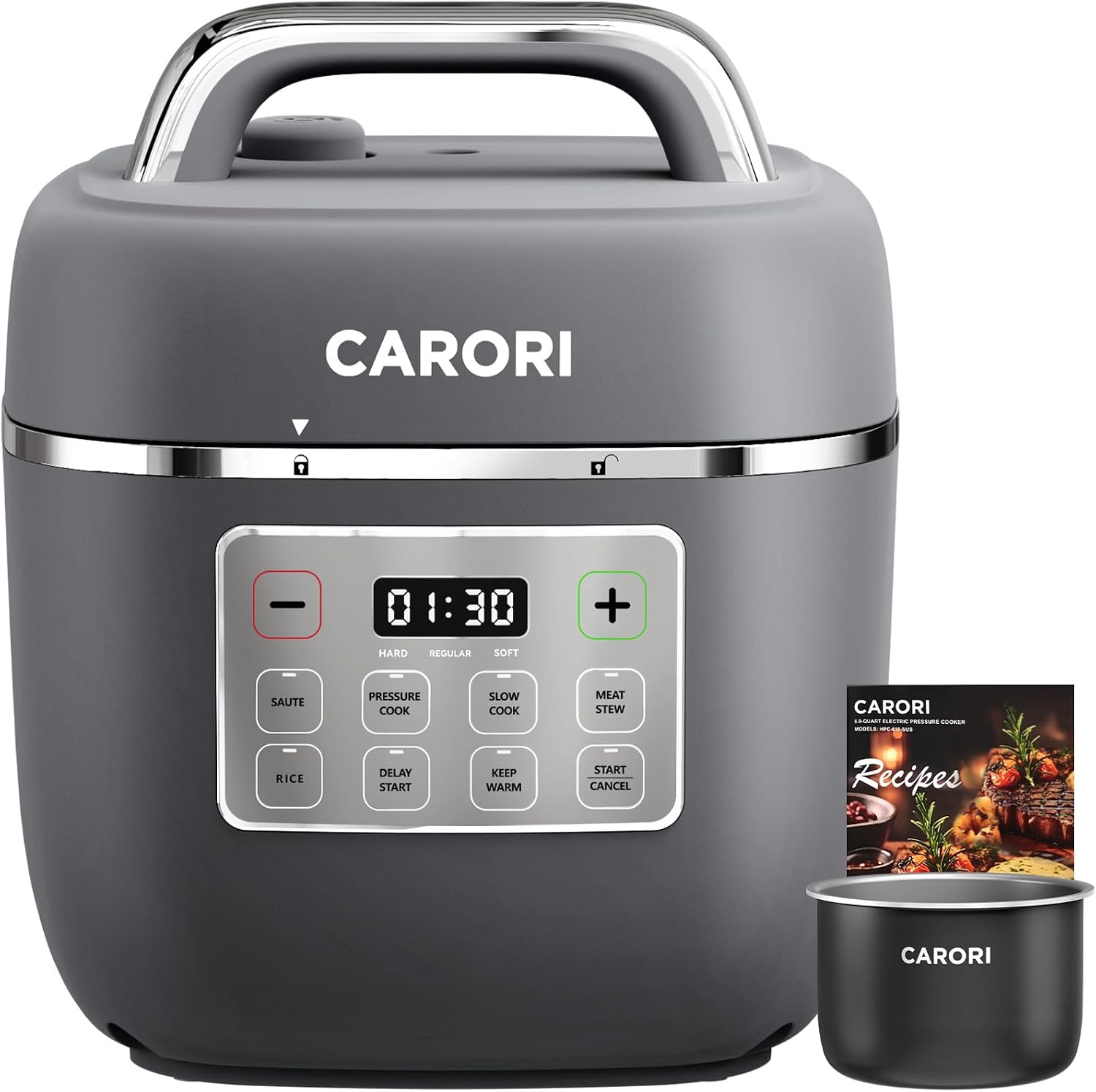
8 functions, ceramic nonstick pot, compact footprint
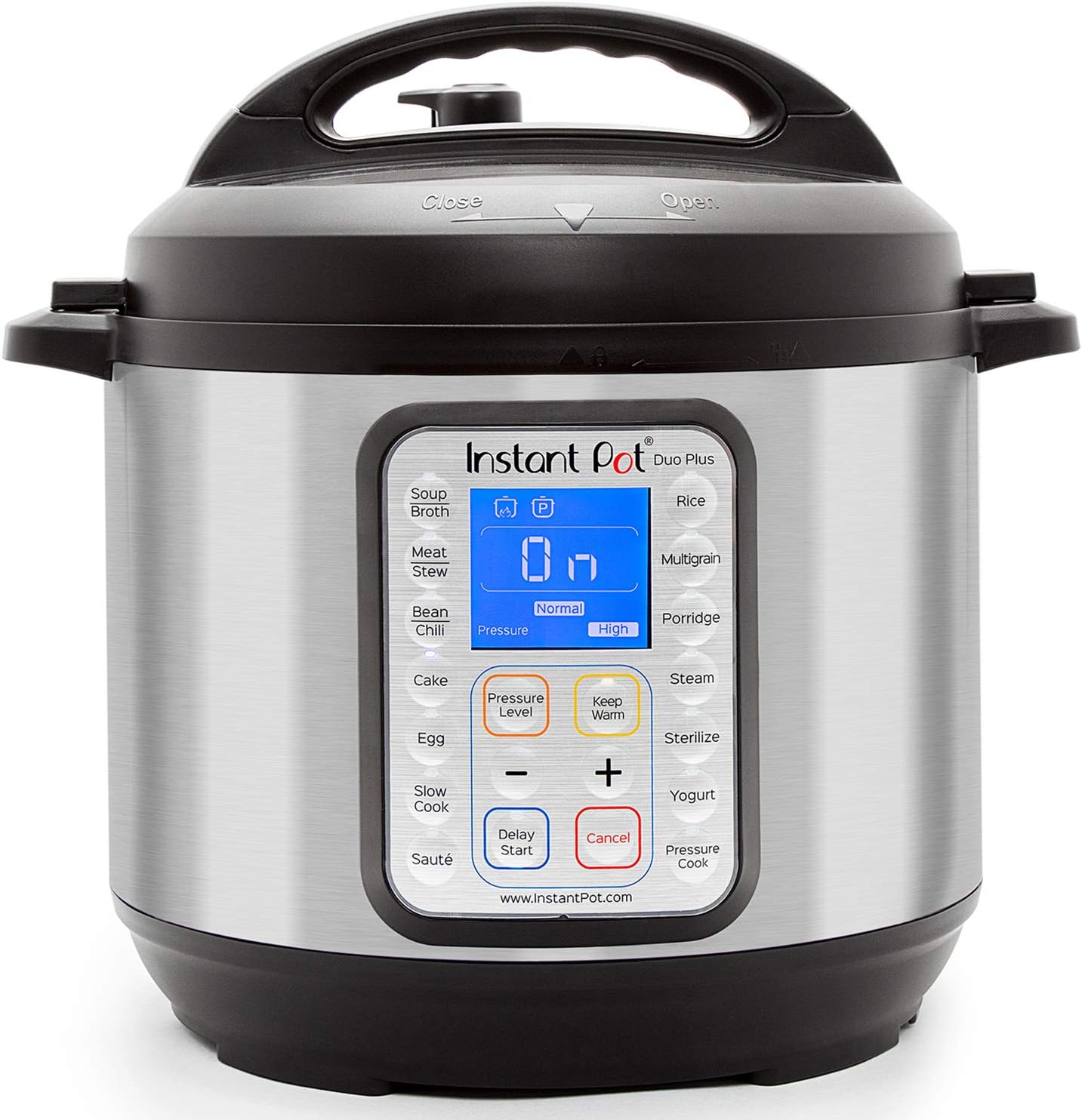
The current Duo Plus listing, 15 one-touch programs
Prices and availability change; the listing is the final word.
Programs, quickly, because someone will ask. The Carori advertises 8 functions and the Duo Plus 9-in-1 with fifteen programs, and both numbers describe the same underlying reality of pressure levels, temperatures, and timers. Yogurt mode is a gentle hold, slow cook is a low hold, and rice is a pressure cycle with a marketing name. What separates machines in this class is not the count but the interface: how fast you can set a manual pressure time with wet hands, whether the display reads at a glance from across the kitchen, whether the keep-warm kicks in politely or takes over. On those measures the Duo Plus is the more practiced design and the Carori is the simpler one, and simpler has genuine value at 7 a.m. with oatmeal involved. I have fumbled both. The fumbling was mine in one case and the button layout’s in the other, and I will leave the assignment of blame as an exercise.
Safety systems deserve one unglamorous paragraph, because pressure is pressure at any size. All three machines lock the lid against opening under pressure, vent through a float valve, and ask the same of you: keep the steam release clear, keep the anti-block shield under the lid rinsed, do not fill past the line for the food you are actually cooking. The small pot tempts one specific mistake — filling it like a saucepan, because it looks like a saucepan. Two-thirds is the law for most foods and half for the foamers, and the 3-quart owner who learns it once learns it cheaper than the 8-quart owner does. Ask me how I know. Actually, do not. The ceiling in my first apartment could tell you, and it has been painted since, which feels like the right note of wry to end the technical part on.
Questions that come up
I cook for two. Is a 3-quart cooker going to feel like a toy in a month?
It feels like a toy only if your cooking is batch cooking in disguise. For two people eating dinner and maybe a leftover lunch, the working capacity of a 3-quart pot — about two quarts under pressure, less for beans and grains — covers soup, stew, rice, and a small chicken cut down. It comes to pressure faster than a 6-quart and stores in cabinets the bigger pot cannot enter. Where it starts to pinch is guests, freezer stock, and whole birds. Households that host or batch on Sundays outgrow it. Households that cook fresh most nights usually find the opposite: the big pot was the toy, impressive and mostly empty.
Why did the products in this article change from the original version?
Because two of the original listings could not be confirmed live when this article was rewritten — the page for one returned a not-found response, and the other did the same. Rather than keep sending readers to listings that may no longer exist, the boxes now use pressure cookers that were opened and checked on the day of the rewrite: the Carori in its 3-quart form, which is the size the article was always really about, and the Duo Plus in its current 6-quart and 8-quart listings. The comparison itself did not change. Small pot against the mainstream sizes was the question from the start.
Everything I make in the small pot tastes faintly of the last strong dish. Is the pot ruined?
The pot is fine. The silicone gasket that seals the lid absorbs odors, and a small pot concentrates the effect because the same gasket serves a smaller volume of food. Wash the gasket, store the lid upside down so the gasket airs out, and if the ghost of curry past survives that, keep a second gasket for neutral foods like rice and yogurt and swap them by job. It is a few dollars. What does not work is scrubbing the pot harder — the smell was never in the pot — and scented cleaners on the gasket make the next meal taste like the cleaner instead, which is worse, and I say that as someone holding the empty bottle.
The 3-quart sits out on my counter where the big pot never earned a permanent place, and that, more than any program count, is the review. Small appliances live or die on whether they get left out. This one did. The Duo Plus still comes up from the cabinet for beans day, and probably always will, and I have made my peace with owning the argument in both sizes.
This site contains affiliate links. We may earn a commission on qualifying purchases.