This site contains affiliate links. We may earn a commission on qualifying purchases.
Here is the whole argument in one breath, because this little machine does not reward a slow build: the Dash 3.5-quart tilt-head stand mixer is a 250-watt, roughly-a-foot-tall, buy-it-with-my-own-money answer to a question the big-mixer world has spent decades insisting is ridiculous, which is whether a household that bakes a cake, a batch of cookies, a loaf of banana bread, and the occasional meringue actually needs five quarts and a machine that weighs as much as a toddler, and the answer the Dash gives, batch after batch, is that it does not, that 3.5 quarts is the honest size of ordinary home baking, that 250 watts is the honest power of ordinary home baking, and that the gap between the fantasy kitchen and the real one is where this small machine lives, unbothered, on a counter it fits under, in a kitchen the size of a hallway, doing ninety percent of what home bakers do at a price that does not require a payment plan or a permission slip from the household budget committee.
And because a breath has to land somewhere, let it land on the size first, since size is the thing the forums sneer at and the thing the machine gets most right: the bowl is 3.5 quarts, which in flour terms means a working load of about two cups of flour before the beater starts pushing dry ingredients up and out on the first slow stir, a single batch of cookie dough if the butter is properly softened — and properly softened is doing serious work in that sentence, because cold butter straight from the fridge will make a 250-watt motor strain in a voice you can hear from the doorway — one standard cake, one batch of whipped cream that seems to come from a bowl twice the size, meringue for days, and then, honestly, a wall, because the moment your ambitions double — two loaves, a party-sized batch, dough with intentions — the bowl is full and the machine is done apologizing, and you will either bake in two batches like a person with a small kitchen or start reading reviews of the third box on this page, and both of those are respectable outcomes, but only one of them was ever this machine’s job.
The walking is next, because every light mixer walks and pretending otherwise is how reviews lose their credibility by paragraph three: put 300 grams of flour’s worth of pizza dough in this bowl and the machine, which weighs very little because a small motor and a small body are the entire point, will travel, slowly and with great dignity, across the counter, making a sound like a distant lawnmower, until you put a hand on it or a damp towel under it, and I have come around to regarding this not as a defect but as the tax receipt for the machine’s virtues, since the same lightness that lets it wander under dough load is the lightness that lets you lift it one-handed into a cupboard, carry it to a friend’s kitchen, and store it in the vertical inches under a cabinet — about twelve inches of height, which is the first stand mixer I have met that can honestly say so — where the big machines, with their greater dignity and their total refusal to walk, also refuse to fit anywhere except the counter they will occupy, heavily, forever.
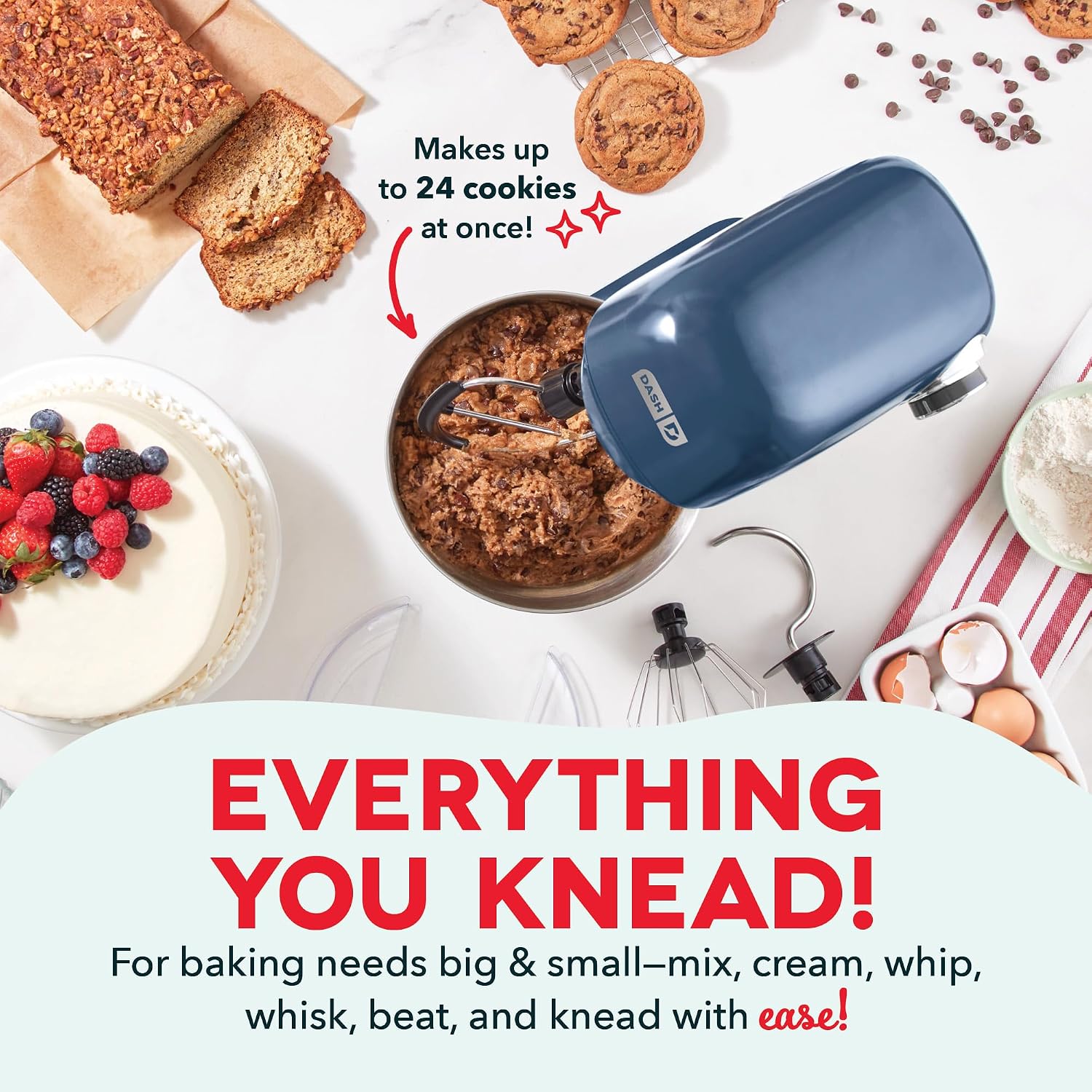
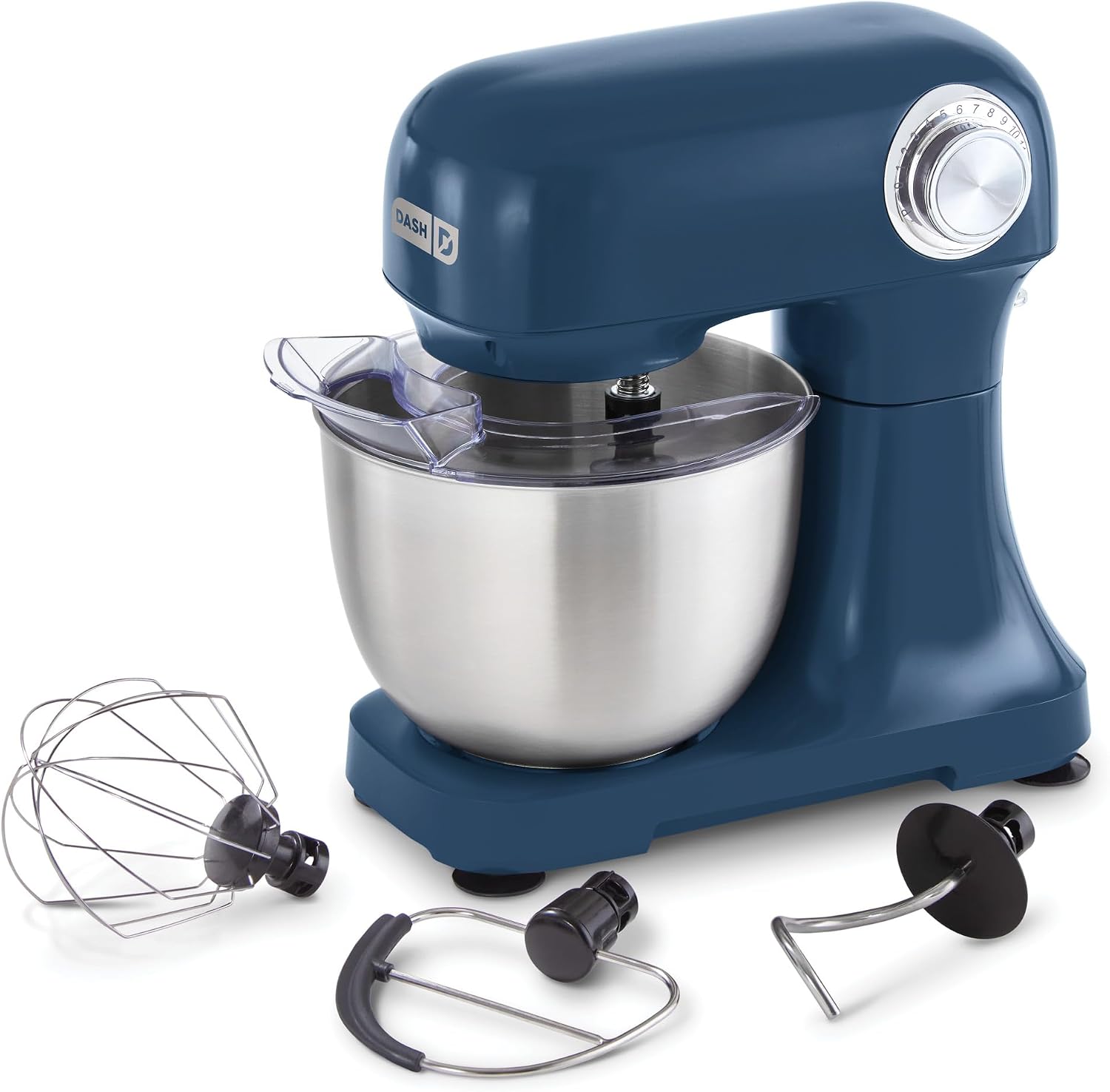
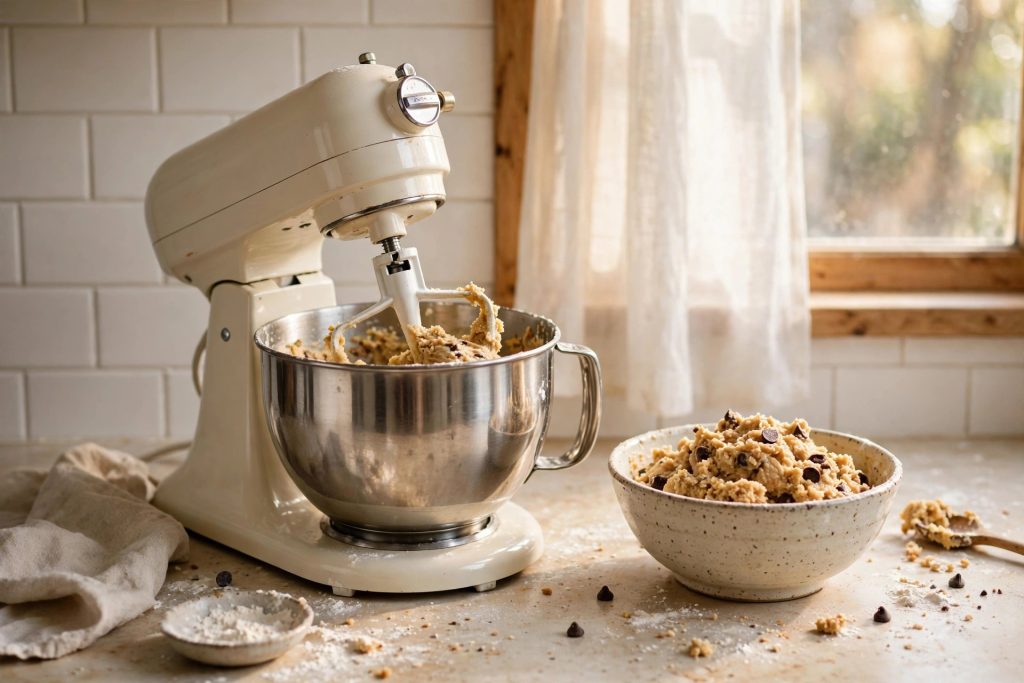
The subject — a 3.5-quart tilt-head machine with a stainless bowl and splash guard, built for counters that measure in inches of clearance
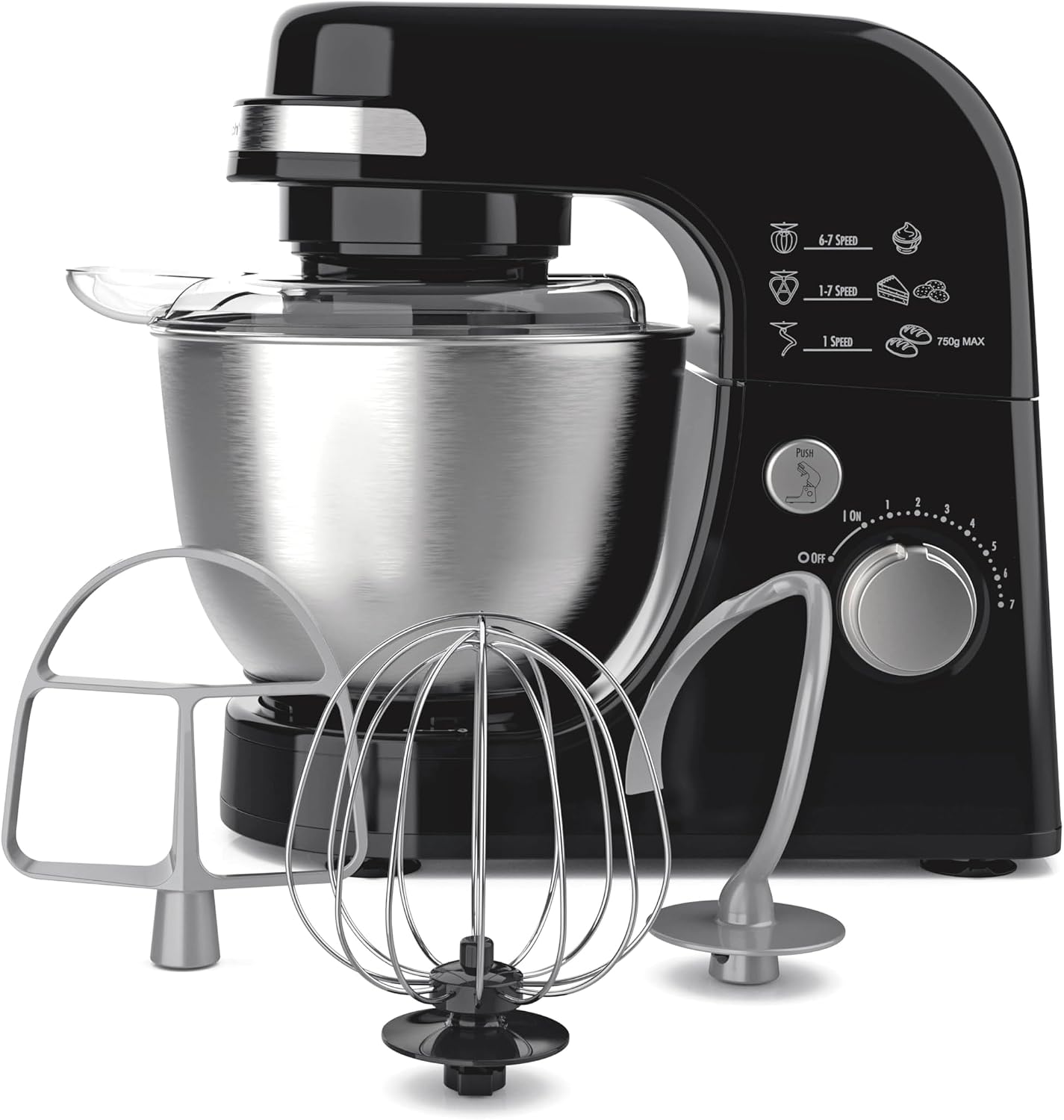
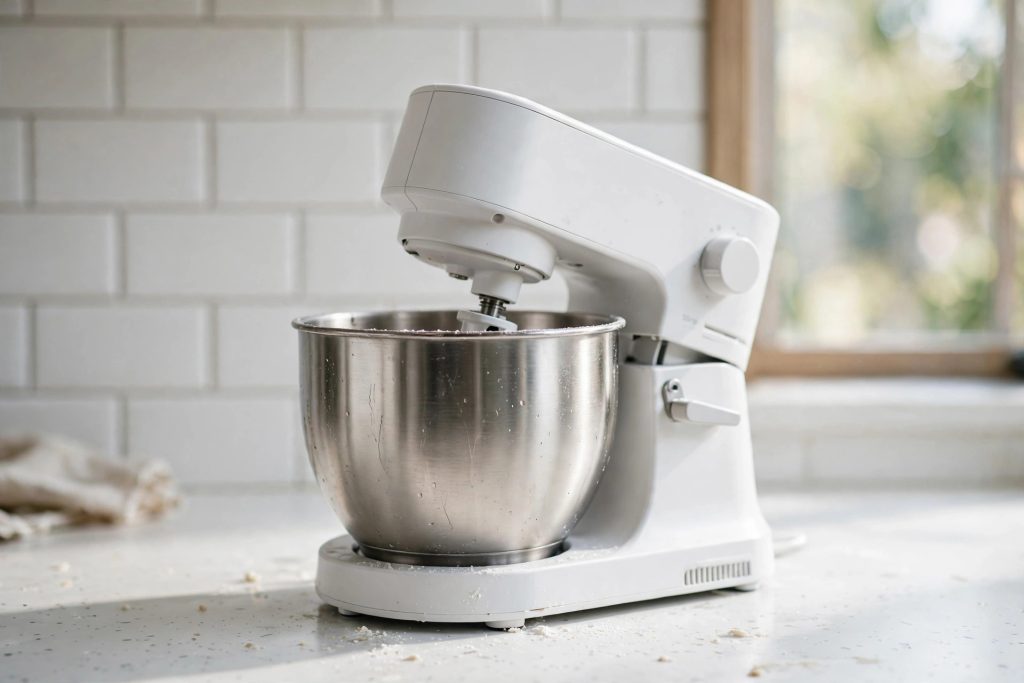
The half-step up — a 4-quart bowl and seven speeds from the other budget name, for bakers who push a little more dough through the week
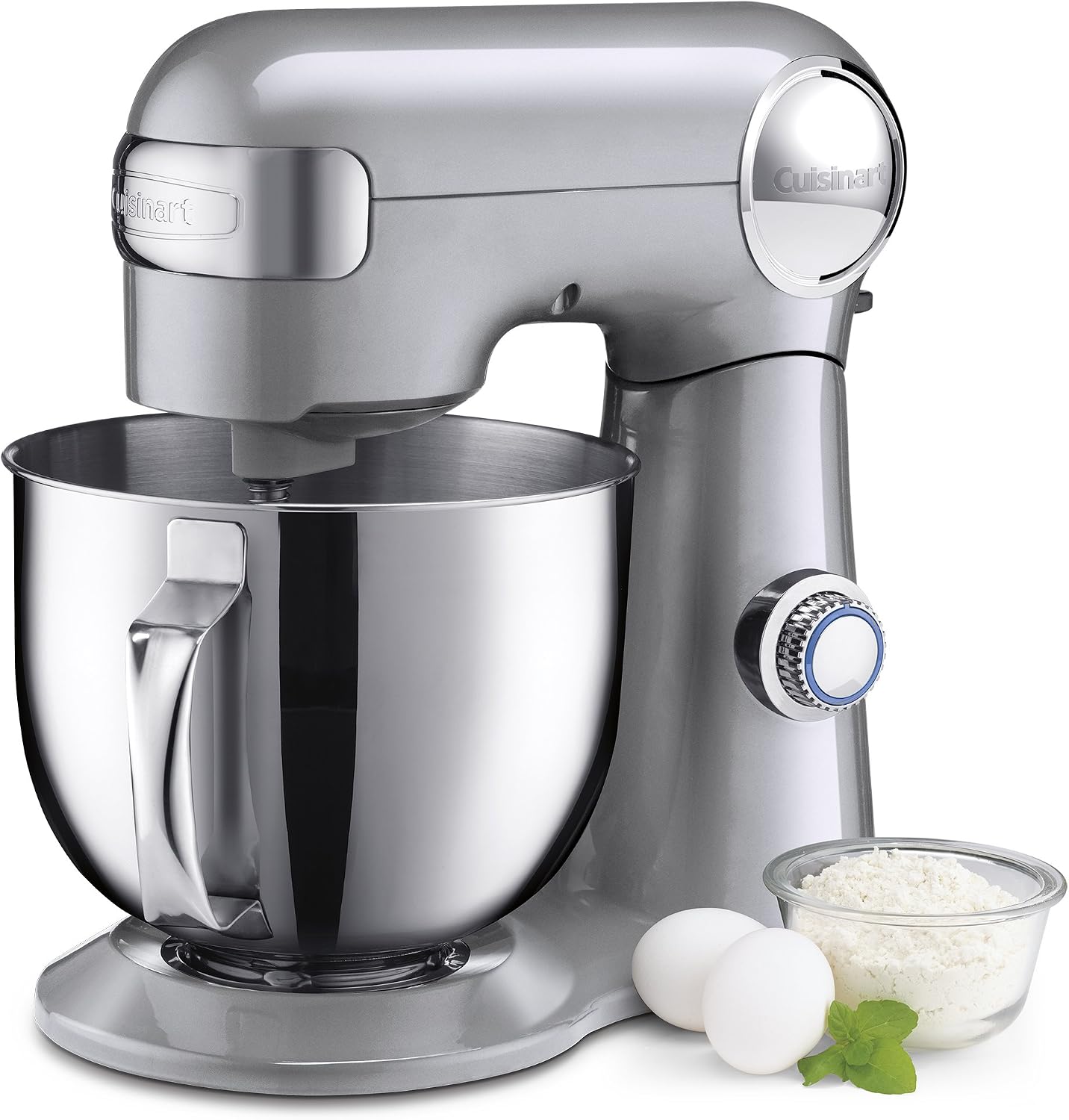
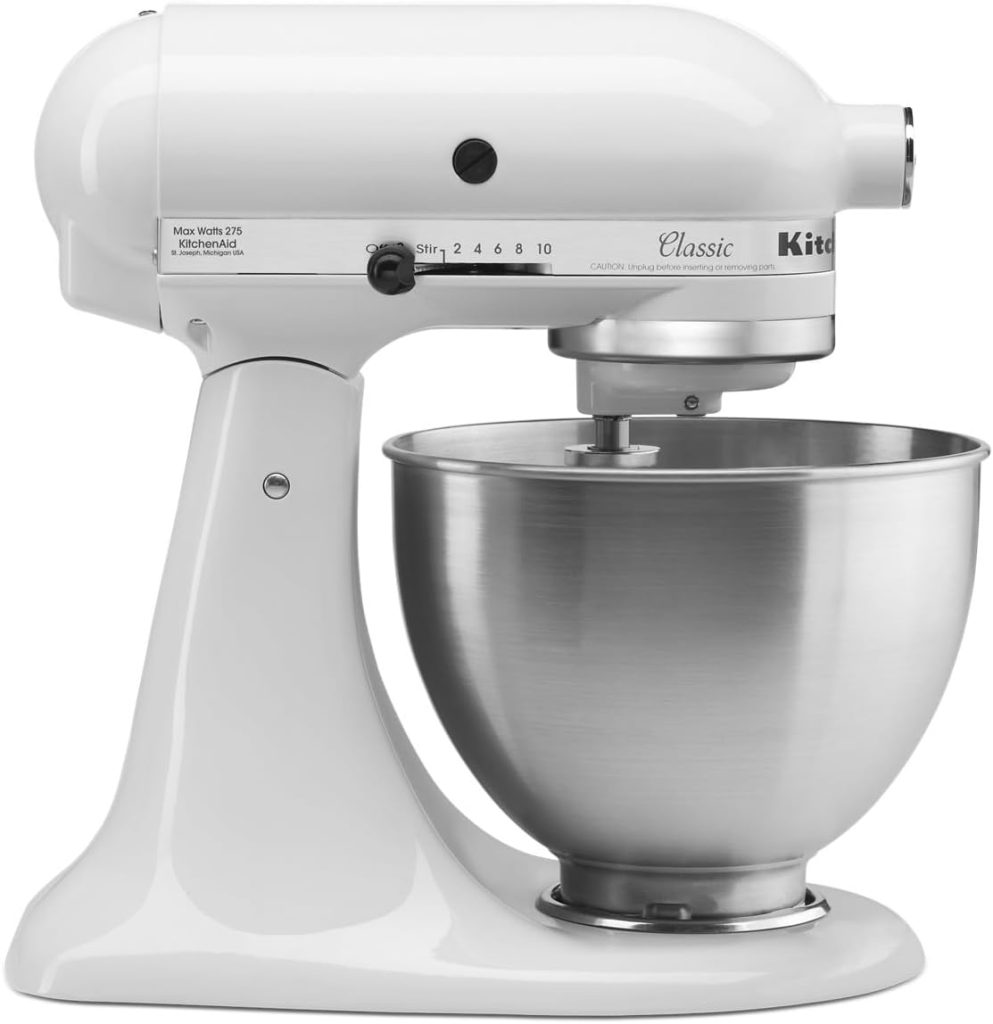
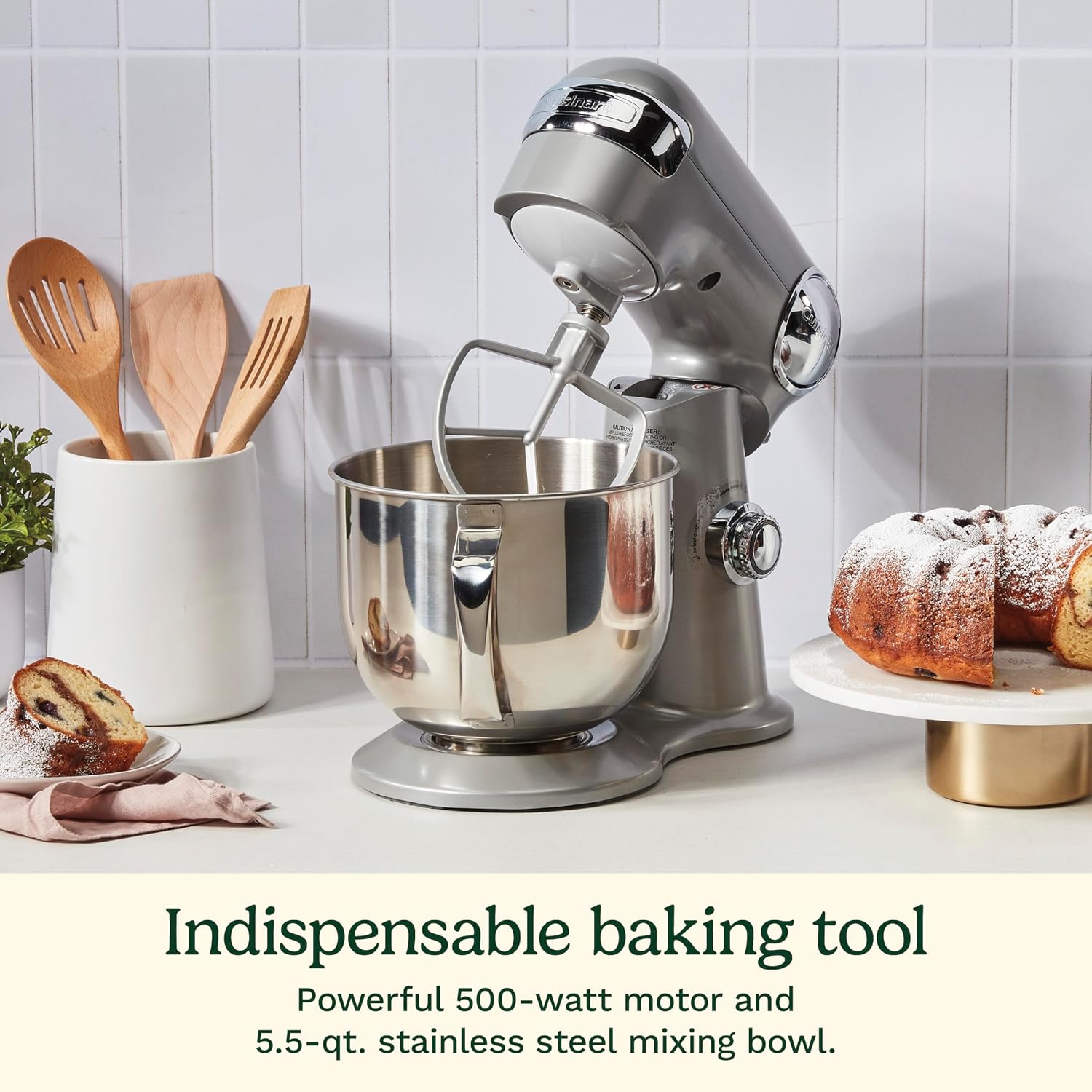
The full-size answer — 12 speeds, a 5.5-quart bowl, whisk, paddle, dough hook and splash guard, for the household that bakes in volume
Prices and availability change; the listing is the final word.
Speeds, attachments, the practical middle of the breath: the tilt head lifts clear of the bowl the way tilt heads do, the bowl is stainless and light enough to carry by its rim with batter in it, the splash guard earns its keep on flour days, and the beater does its work with one honest gap that every small mixer shares, which is the strip at the very bottom center of the bowl where a spoonful of batter hides from every pass, so you stop once, scrape once, and accept that planetary mixing is a phrase with an asterisk — and if you are comparing across this page, the Hamilton Beach in the second box gives you a 4-quart bowl and seven speeds for a similar spirit of money, which matters if your batches lean slightly bigger or your hand wants finer steps between slow and fast, while the Cuisinart in the third box is the grown-up end of the argument, 5.5 quarts and twelve speeds and a whisk and a dough hook that mean business, for the household whose baking outgrew small two years ago and has the sourdough starter on the counter to prove it, the Hamilton Beach 4-quart review being where the Hamilton Beach gets its own full hearing from a different kitchen than mine.
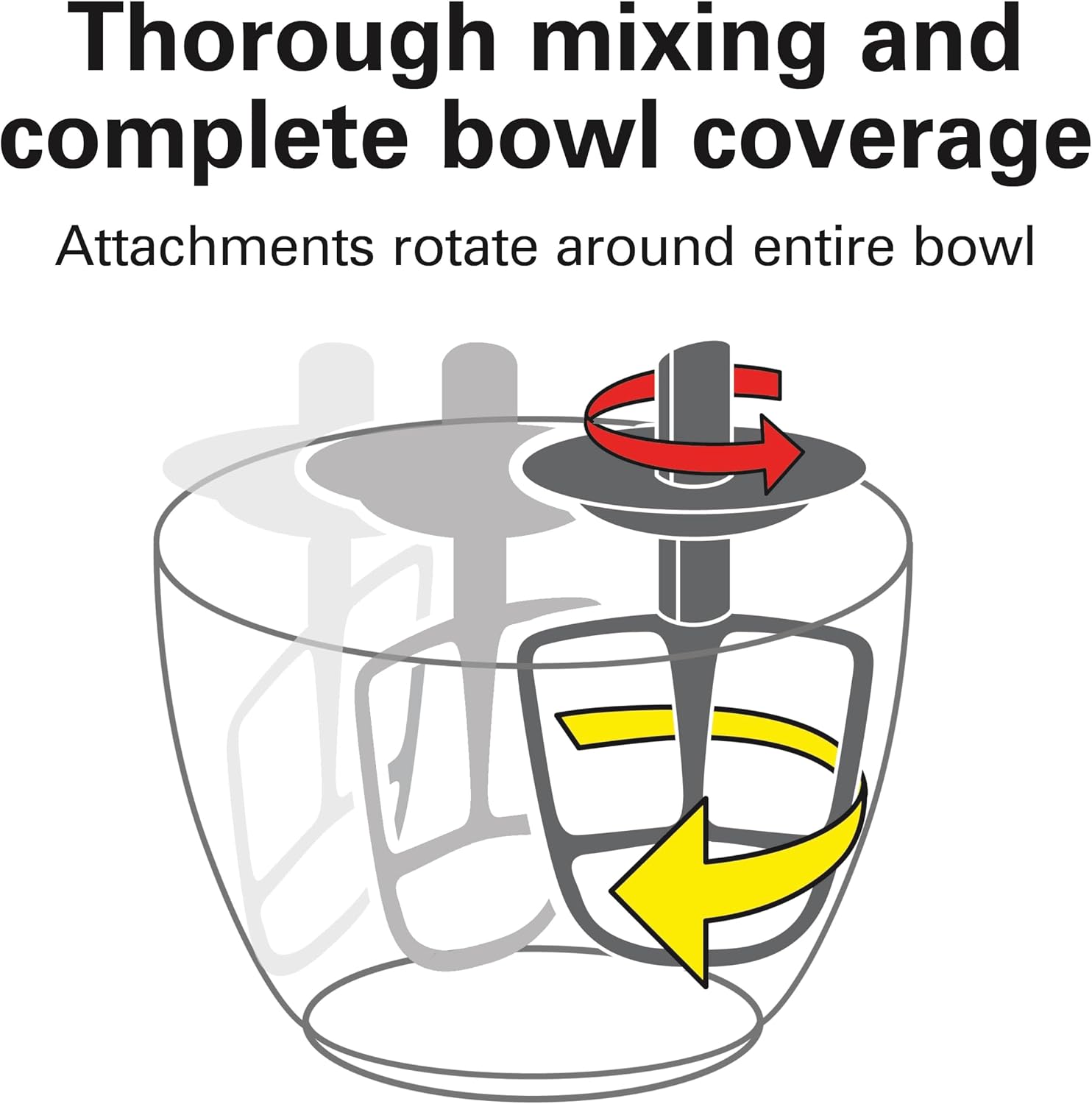
Now the part of the breath where I argue with the entire gift-guide industry, still in the same sentence if I can manage it: the 5-quart minimum is a recommendation built on an assumed household, a household that kneads weekly and bakes in volume and hosts the holidays, and it is broadcast at households that bake a cake, and the mismatch serves the makers, who would rather sell the large machine than the small one, and serves the enthusiasts, who get to feel serious at the expense of the banana-bread majority, and nobody involved in the broadcast has to stand in a small kitchen at 7 a.m. watching a small machine cream butter and sugar perfectly well — actually, hold on, let me correct the easy version of that sentence before it hardens into a claim I cannot defend, because the Dash does have a real ceiling and I have hit it, on dough, on doubled recipes, on a December cookie operation that ended with me borrowing a neighbor’s big mixer and feeling complicated about it, so the honest sentence is narrower and stronger: for batters, creams, meringues, single cakes and single cookie batches, this machine is not a compromise at all, it is simply the right size wearing a smaller number, and for dough in quantity it is the wrong tool, and the art is knowing which baker you are on the ordinary Tuesdays, not the ambitious Decembers, and the Aucma tilt-head review shows the other end of the tilt-head world if your Tuesdays turn out bigger than you thought.
I have not run the larger Cuisinart through a winter of bread, so I cannot judge whether its twelve speeds are twelve honest speeds or the usual staircase of three real ones wearing subdivisions — small mixers and big ones share that marketing habit, and the low end is where honesty matters, because a first speed that starts gently keeps flour in the bowl and a first speed that starts like a drag race redecorates the cook — and on the Dash the low end is behaved, which is a large part of why it survives flour at all, starting soft enough that the two-cup working load stays in the bowl while the butter gives in, and if I sound like a person grading on a curve, it is the curve of a hallway kitchen and a foot of cabinet clearance, and on that curve this machine is not passing. It is near the top of the class it actually enrolled in.
Questions that come up
Is a 3.5-quart stand mixer actually big enough, or is that reviewer generosity?
It is big enough for the baking most households do, and too small for the baking most households imagine, and the distance between those two sentences is the entire product. A single cake, a single batch of cookies, whipped cream, meringue, frosting for a crowd — the bowl swallows all of it without drama. Double batches are where it ends: two loaves of bread dough, a doubled cookie recipe, anything that starts with four-plus cups of flour will overwhelm a bowl whose comfortable working load is around two cups of flour at a time. The fix, when the big day comes, is mixing in two batches, which home bakers have done since before electricity. Buy the small machine for your ordinary volume. Rent your ambitions by the batch, not by the appliance.
Can 250 watts really handle cookie dough, or will it struggle theatrically?
It handles cookie dough on one condition, and the condition is the butter. Properly softened butter — the kind that dents under a finger and holds the dent — creams into sugar without a fight, and the motor sounds like a machine doing a reasonable job. Cold butter is another story: the beater meets a cold, dense mass, the small motor strains audibly, and you can hear exactly where 250 watts ends. This is not a flaw unique to this mixer so much as a law that small motors enforce more honestly. Soften the butter, add flour gradually instead of in one flour avalanche, and the machine does the work it was built for. Feed it like you are trying to prove a point about wattage and it will lose, and it will be right to lose, and you will have learned the same lesson every small-mixer owner learns exactly once.
Why does it walk across my counter when I make dough?
Because it is light, and because dough is a load that pushes back. A stand mixer stays put by weight and by suction feet, and a compact machine has little of the first to offer, so a stiff dough at working speed turns into slow travel across the counter — steadily, undramatically, in the direction of the edge if you are not watching. The household fixes are old and they work: a damp towel or a non-slip mat under the machine, a hand resting on it during the heavy minute, and batches kept to the size where the dough is being kneaded rather than the machine being dragged. What walking is not is a sign of a broken unit. It is the receipt for a machine light enough to lift one-handed into a cupboard, and every owner pays one side of that bargain or the other. Heavy machines stay. Light machines visit.
Should I just skip small and buy the 5.5-quart now, to grow into?
Only if your present tense already needs it, because growing into a stand mixer mostly means storing a big machine at full size while you bake small for years. The 5.5-quart in the third box is a fine machine for the household that double-batches now, kneads now, hosts now. For the household that might, someday, the big bowl spends its life under-filled — and under-filled big bowls mix small batches worse than small bowls do, with the beater skating over a cup of flour spread thin across a wide floor. Buy for the Tuesdays. If your baking genuinely grows, the small machine retires to a relative, a dorm kitchen, a second home in the cupboard for whipped-cream emergencies, and nothing about it was wasted. Appliances are not investments. They are tools sized to a life, and lives are allowed to be the size they are this year.
And the breath runs out where it started, in the hallway kitchen, with the machine back under its cabinet and a banana bread — one loaf, single batch, no heroics — cooling on the counter it did not have to share with a monument, while the December cookie operation and the neighbor’s borrowed mixer sit in my memory like a small, unresolved embassy from the country of bigger baking, a country I visit once a year and have not yet decided to move to.
This site contains affiliate links. We may earn a commission on qualifying purchases.